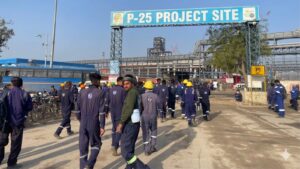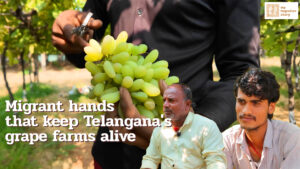
6 min read
Are migrants returning home due to improved economic opportunity?
The Migration Bulletin is a monthly round-up that captures issues related to migration that have been reported on various media platforms. In its fifth edition, we look at the Economic Advisory Council to Prime Minister’s report noting the slowdown in domestic migration and the gender pay gap in Southern India.


Recent Post

Sai Veena S Kuttoth

Maitreyee Boruah

Comments
- Uncategorized (0)
- Reportage (146)
- In focus (8)
- Analysis & Data (59)
- By Invitation (20)
- Videos (66)
- Photo Essay (9)
- Podcast (42)
- Roli Srivastava (16)
- Anuradha Nagaraj (5)
- Radha Rajadhyaksha (1)
- Vipul Kumar (0)
- Deekshith Pai (9)
- Tanmoy Bhaduri (4)
- Aishwarya Mohanty (7)
- P Anima (1)
- Rishabh Shrivastava (7)
- Amoolya Rajappa (5)
- L is for Labour (7)
- Ear to the ground (4)
- A Pandemic's Epilogue (13)
- The Heat Shift (13)
- Anuja (6)
- The Brickmakers (0)
- The Job Cycle (3)
- Climate Change (74)
- Just Transition (28)
- Gender (13)
- Policy and Law (101)
- More Reads (22)
- Art and Culture (21)
- Podcast & Video (84)
- PDAG (4)
- July 19 (0)
- Earth Shifts (13)
- Infocus Brickmakers (5)
- TMS Trainings (3)
26th julyair pollutionAll We Imagine As LightanalysisBagapatia resettlementBengaluru heat wavebrick kiln decarbonisationbrick kilnscashew plantationsCensus 2011challenges in measuring migrationCinemaclimate adaptationclimate adaptation storiesclimate changeclimate change adaptationclimate change displacementclimate cocktailclimate justiceclimate migration Indiaclimate refugeesclimate relocation Indiaclimate resilienceclimate social impactclimate-clean-upcoastal erosion Indiacommunity actioncommunity resiliencecommunity-led conservationcyclone impactcyclone Phailin impactCyclone Titlidebt bondagedebt trapdisaster management in Odishadisaster recovery housingdroughtEastern Ghatsecological restorationeconomic survey migration estimateselectionsenvironmental restorationerosionfishing livelihoods Odishafloodsforest livelihoodsforest rights in IndiaGajapati districtgender and climate changegender politicsgirl powerGLOFsGram Vikasheatheatwaveheatwave delhiice creamIndia elections 2024India jobsIndia rural jobsindigenous knowledgeinformal workersinternal migration datajobsjobs guaranteejuly 19just transitionKerala educationlabour migration in Indialandslidelandslides in Odishalatestlivelihoodlivelihood resiliencemanaged retreatMGNREGAmigrant workersmigrationmigration and agriculturemigration and climate changemigration in Indiamigration policy in India Readings on data on Migration in IndiaMo Jungle Jami YojanaNational Sample Survey migrationNICEocean warmingOdisha coastOdisha cyclonesOdisha Disaster Recovery ProjectOdisha pollOdisha relocationOdisha reverse migration & tourismODRPolive ridley sea turtlespandemic epilogue'sPayal Kapadia Cannes Film Festivalphoto essayPLFS migration dataPodampettapost-disaster recoverypublic datasets on migrationPVTG communitiesRamayapatna climate adaptationRayagada blockremittances and migrationresilience buildingrising heatriver erosionrural developmentrural to urban migrationSatabhaya displacementSaura tribesea level rise Odishaseasonal migration patternssericultureshifting cultivationshowcasesoil erosionsolar solutionsolutions journalismsustainable agriculturesustainable livelihoodstranslocality adaptationtribal rightsUttarakhand cloudburstuttarakhand crisiswater conservationwater crisiswater scarcitywavewomen and migration in Indiawomen empowermentwomen trek for water
- March 2026 (14)
- February 2026 (12)
- January 2026 (15)
- December 2025 (16)
- November 2025 (10)
- October 2025 (13)
- September 2025 (7)
- August 2025 (12)
- July 2025 (34)
- June 2025 (14)
- May 2025 (18)
- April 2025 (17)
- March 2025 (16)
- February 2025 (13)
- January 2025 (16)
- December 2024 (16)
- November 2024 (15)
- October 2024 (15)
- September 2024 (13)
- August 2024 (12)
- July 2024 (7)
- June 2024 (6)
- May 2024 (8)
- April 2024 (5)
- March 2024 (7)
- February 2024 (5)
- January 2024 (5)