68 days, 1.06 crore workers and a pandemic
Tracing the journeys of workers and that of a country five years after it set out to count them and connect them to welfare schemes

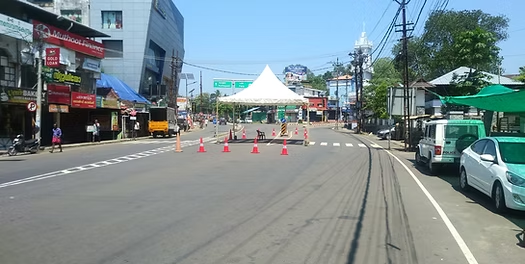
First phase of three weeks of world’s strictest and ‘complete’ lockdown to control the spread of Covid-19 pandemic announced in India at 8pm.
Lockdown implemented from midnight.
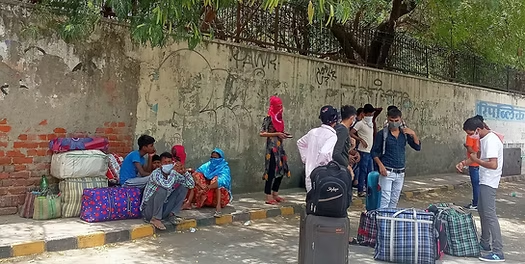
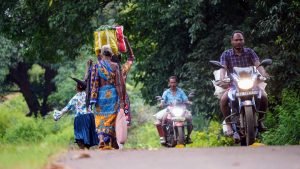
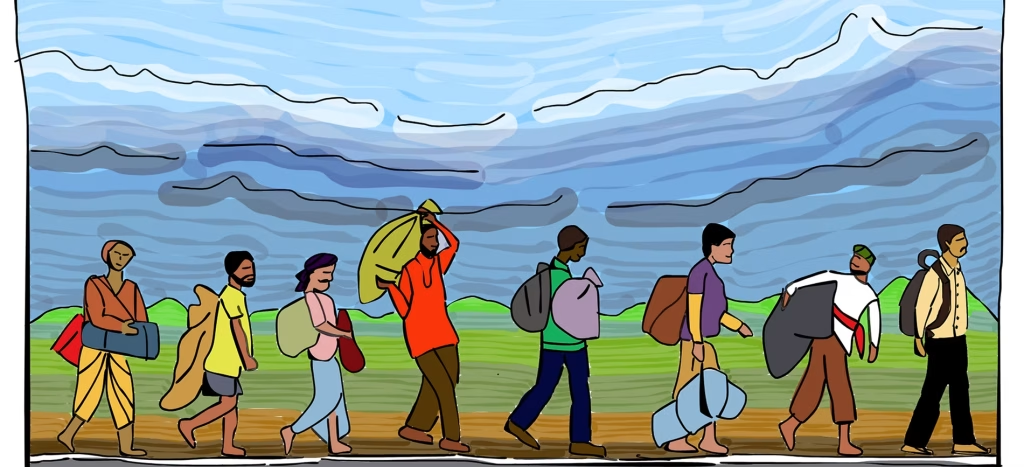
With industries shut and public transport suspended, thousands of migrant workers found themselves out of work and, with no wages to afford their rents in cities. So they started walking home.
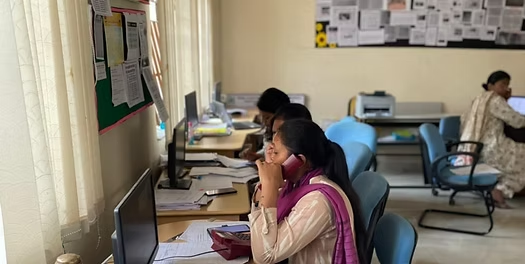
First of its kind initiative, aims to provide grievance redressal support and registration to social security benefits to returnee migrant workers. More than 5.3 lakh interstate migrants returned to Jharkhand during the lockdown.
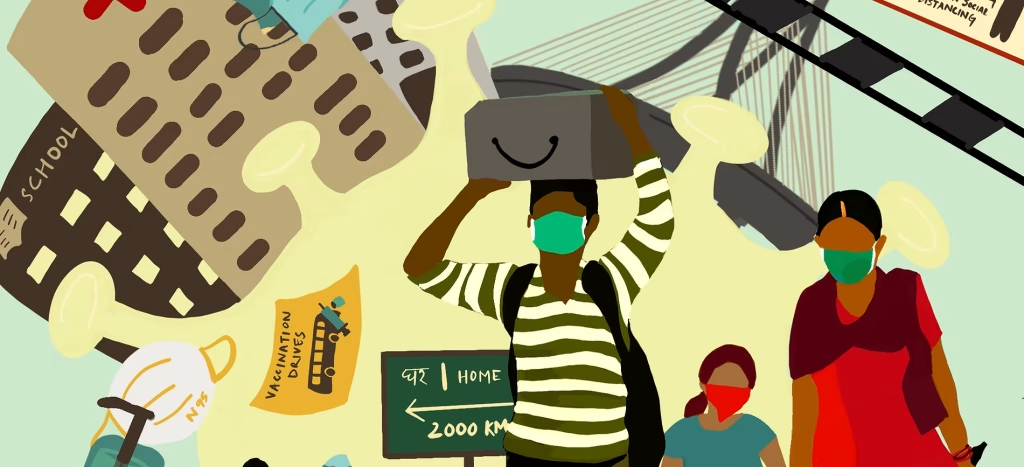
17 migrant workers lost their lives within three days of the lockdown in road accidents while returning home, according to news reports.
- Three women and a child killed in a forest fire in Tamil Nadu's Theni district as they took the path to return home on the first day of lockdown
- Four migrant workers run over by a truck at Virar in Maharashtra on fourth day of lockdown
- A 26 year old migrant worker, who worked at a shoe factory,died in Moradabad in Uttar Pradesh on the fourth day of lockdown.
Outrage over migrant workers being sprayed with disinfectant in Uttar Pradesh’s Bareilly, investigation launched.

A 19-day extension of the lockdown with reduced restrictions on farming operation, essential industries, movement of cargo
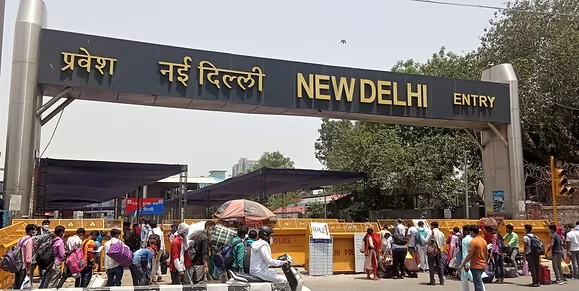
Government led repatriation facilitated the return of nearly 61 lakh stranded Indians from abroad

Nearly 38 days after the national lockdown was announced,
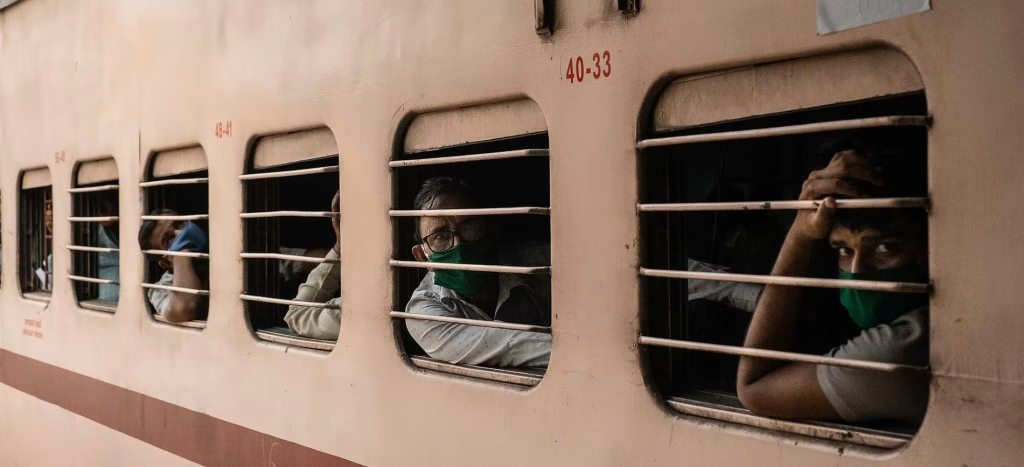
Shramik Special Trains were started.
Till August, these trains facilitated 63.19 lakh migrant workers to reach their destination.
Lockdown extended for two more weeks, with some relaxations based on identification of districts as hot spots.
16 migrant labourers, trying to return to their home state Madhya Pradesh on foot, were mowed down by a freight train between Jalna and Aurangabad districts of Maharashtra. One was seriously injured, while three escaped. With most train services suspended, the workers decided to rest on the tracks for the night.
Following uproar from migrants and labour unions, Karnataka government withdrew its order stopping trains for migrants.
At least five migrant workers died and 19 were injured as a truck they were travelling in overturned in Madhya Pradesh’s Narsinghpur.
The union government announced an economic package of Rs 20 lakh crore to assist the poor, labourers and migrants adversely affected by Covid-19.
At least 27 migrant workers died when a trailer truck carrying sacks of lime and 43 people (mostly migrants) rammed into a stationary truck.
Restrictions similar to Phase 1 applied in the more infected Red zones. Movement of vehicles allowed without any special conditions along with the opening of the industries.
At least 9 migrant workers died in Bihar’s Bhagalpur district during a collision between a bus and a truck, with whose driver the workers had taken a lift to return home.
Several instances of migrant workers facing action by police in different states. A report by Commonwealth Human Rights Initiative (CHRI) said at least 20 deaths (17 due to beating/caning by police) took place following police action during the lockdown period.
The apex court took suo motu cognisance of the ‘unfortunate and miserable conditions of migrant labourers walking on-foot and cycles from long distances’.
States like Uttar Pradesh announced they will create a database of migrant workers to re-employ them locally. Later on, similar efforts were reported from states like Tamil Nadu, Delhi, Maharashtra and Bihar among others.
As migrant workers headed home, business and industries were hit due to lack of workforce in destination cities
The union government launched the scheme to provide livelihood opportunities in areas with high returnee migrants. It concluded with a total of 50.78 crore person-days employment, with an expenditure of Rs. 39,293 crore.
198 migrant workers were killed during their commute back home over two months during the lockdown, according to a report by Save Life Foundation.

Accredited Social Health Activist (ASHA) workers played a key role in health screening of migrant workers. In Uttar Pradesh for instance, the ASHA workers tracked 30.43 lakh migrant returnees, the government informed.
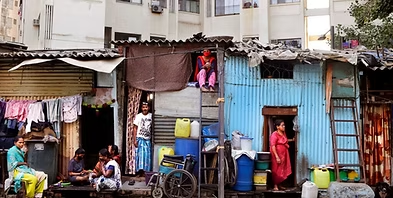
Scheme aimed to provide 83,534 flats to the urban poor and migrant workers. However, only 5,648 flats or 7% have been successfully transformed into rental housing after 3 years.
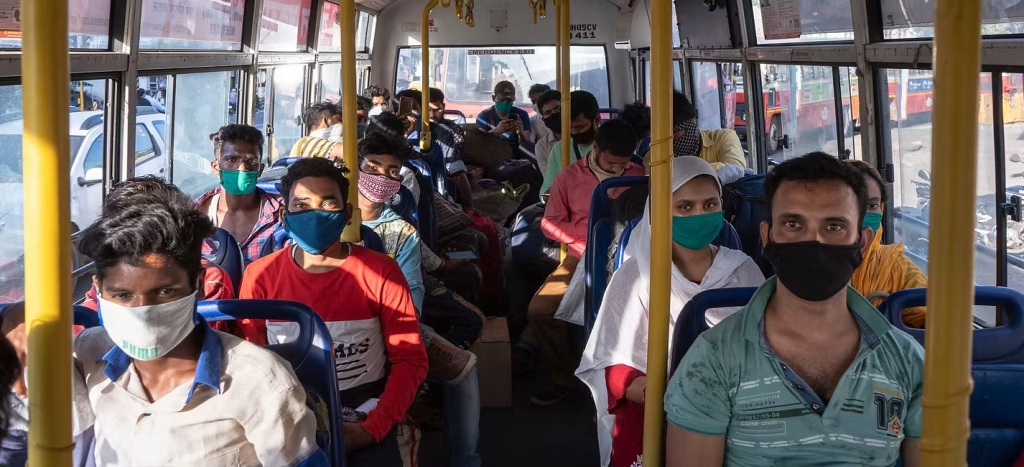
Labour ministry told Parliament in the monsoon session that there is no data on migrant deaths hence ‘question does not arise’ on compensation
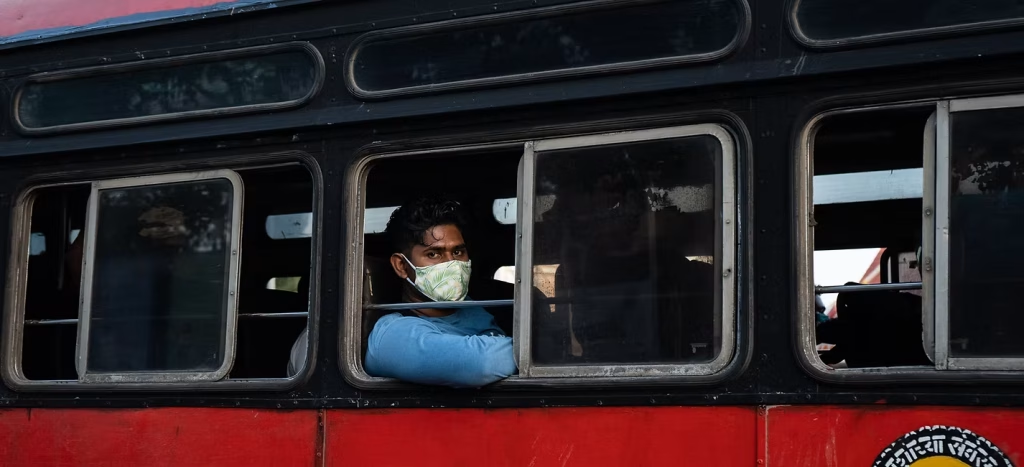
Picture Credit: Abhijeet Gurjar
1.06 crore migrants return
Labour ministry told Parliament that 1.06 crore workers returned to their home states during the lockdown. Bihar and UP account for 47.5 lakh workers.
Report says lack of a credible database has led to adverse impact on the implementation of relief and rehabilitation measures
18 states impose varying periods of lockdown amidst rising Covid-19 cases, and 14 states maintain restrictive movements without lockdown.
Migrants flag lack of access to vaccines, either due to digital gaps or shortage of doses.
8,733 people including migrants die on railway tracks in 2020
Kerala takes vaccines to doorsteps of migrant workers by setting up vaccination camps and putting up public health posters in local languages
Union government launches the e-Shram portal aimed to build a database of all unorganised sector workers. 30.7 crore workers have registered till March 31, 2025.

Jharkhand launches initiative to facilitate and strengthen policy actions to enable institutional welfare support to 5 lakh migrant workers and their families. Read about PDAG's experience here.
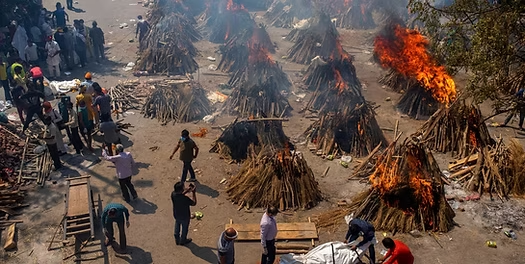
Pan-India roll out of the scheme with last state Assam joining. ONORC scheme allowed migrant beneficiaries to claim either full/part foodgrains from any Fair Price Shop (FPS) in the country through existing ration card, and their family members back home to claim the balance foodgrains on same the ration card. Watch our ground report on ONORC here.

Post pandemic, the West Bengal government offered Rs. 3,000 to the nominee of a registered migrant worker for cremation if the worker passed away at their workplace or residence away from home.
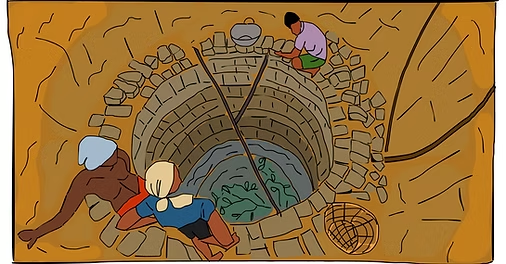
Odisha government announced 200 additional days of MGNREGA work in 30 migrant-prone blocks, fully funding wages at Rs. 352 per day.
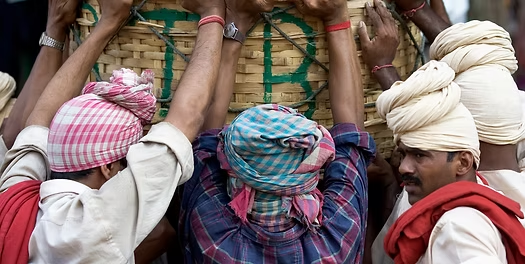
West Bengal launched a separate health card for migrant workers as a variant of the Swasthya Sathi scheme, which covers annual medical expenses of up to Rs. 5 lakh per family.

The Supreme Court directed the State Governments and Union Territories to grant ration cards to 8 crore workers in the unorganised sector who, despite being registered under the Center's e-Shram portal, do not have these ration cards.

Credits:
Compilation of events: Policy & Development Advisory Group (PDAG), Anuja
Illustrations: Abhiruchi Das, Harshika Tripathi, Sharanya Kunnath
Pictures: Abhijeet Gurjar, Anindito Mukherjee
Editing: Anuja
Web design: Pranav Kay, Divya S