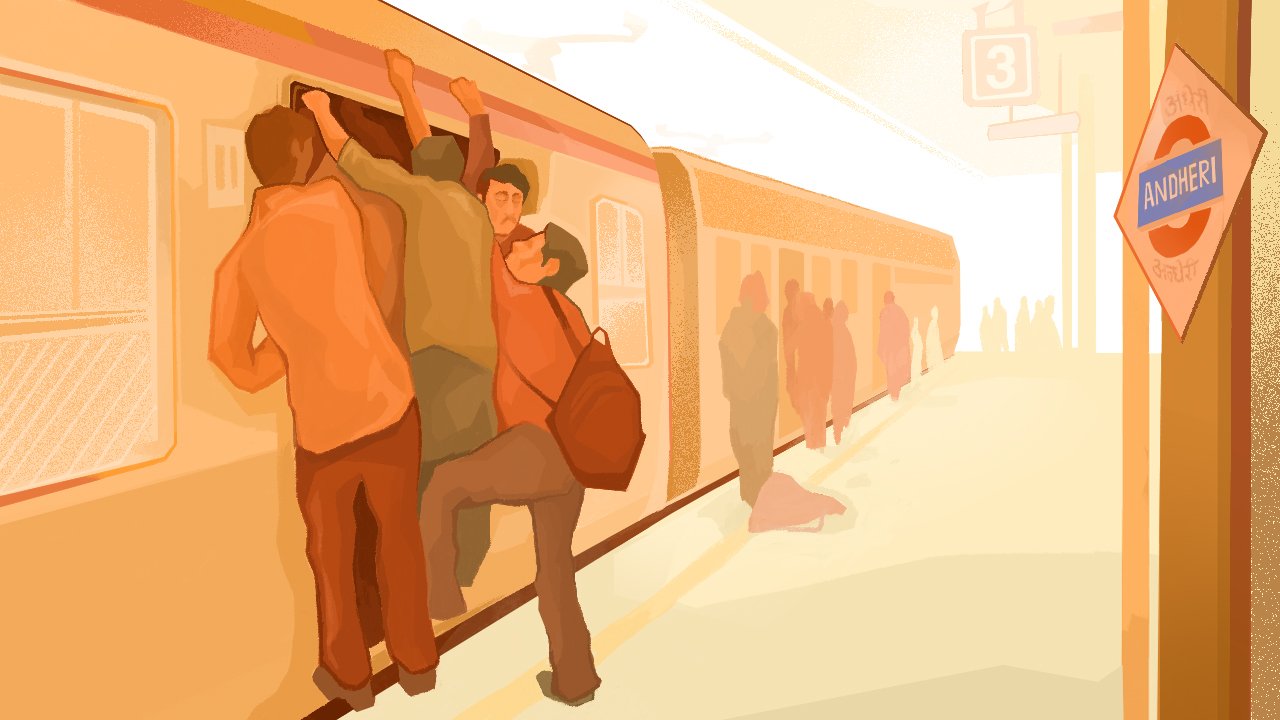
MUMBAI, Maharashtra: Every day, millions navigate Mumbai’s packed local trains, crowded platforms, crammed coaches and long commutes, all to make it to work on time.
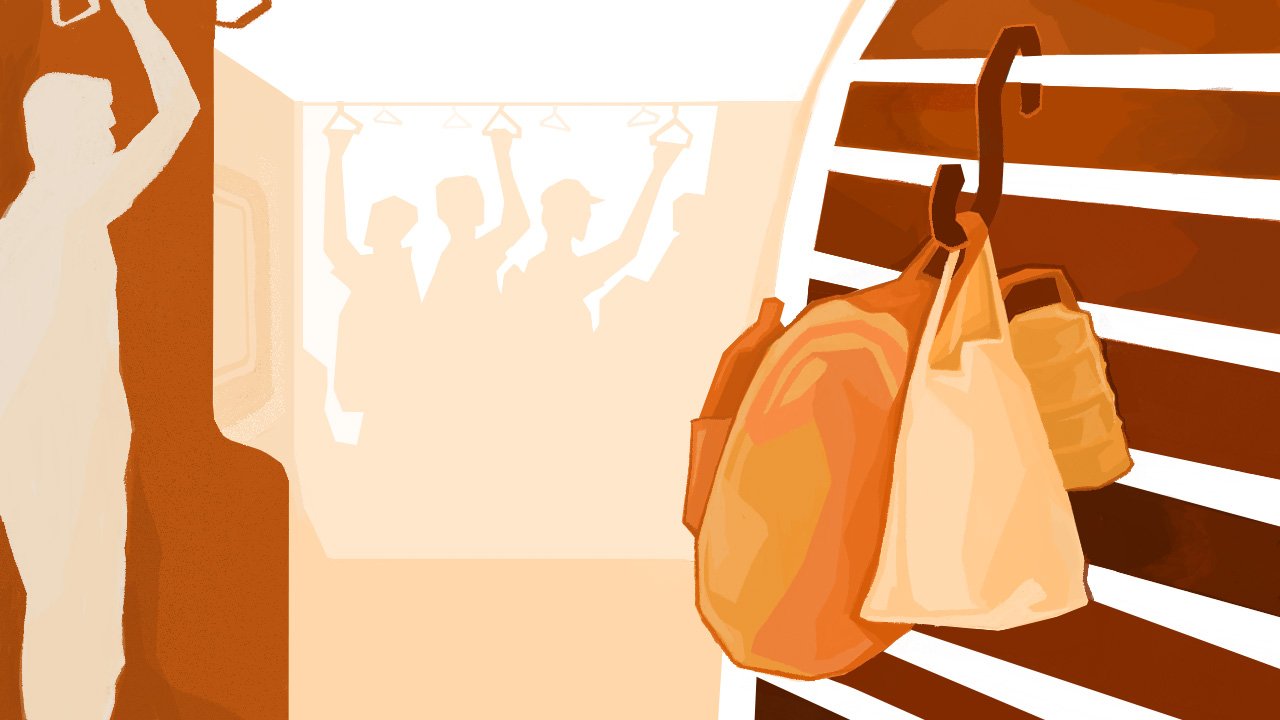
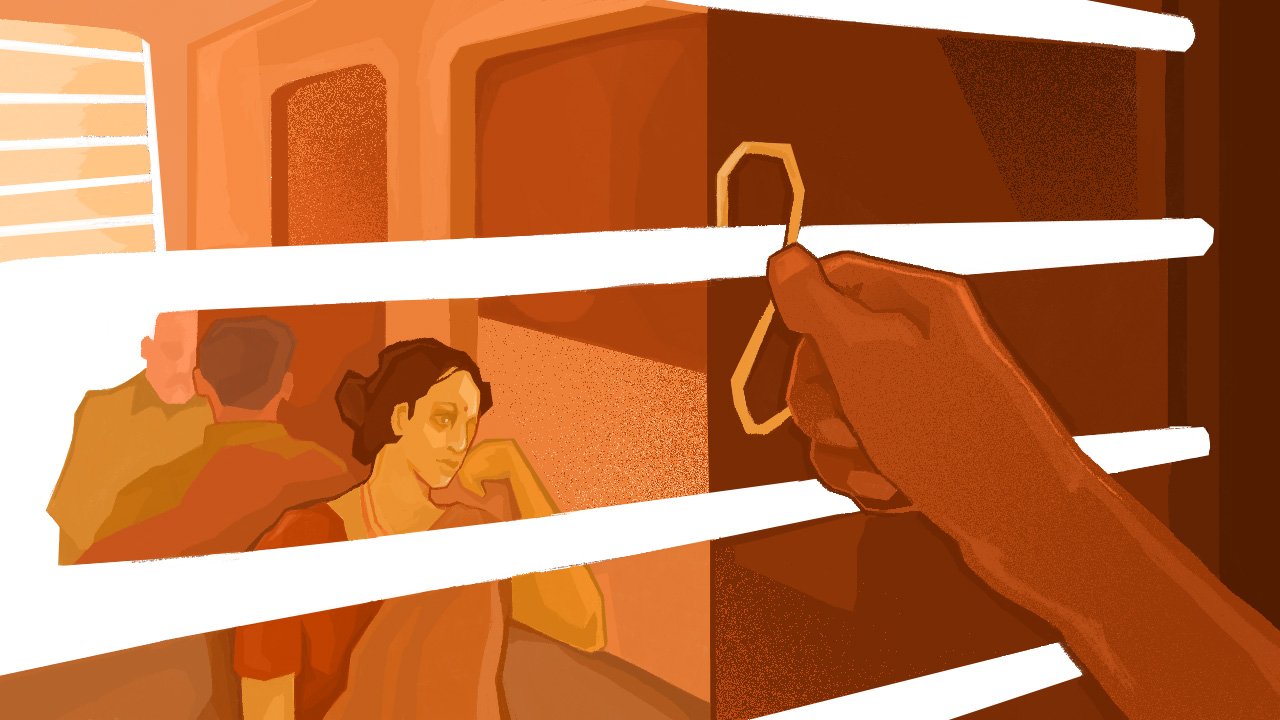
In the middle of this daily rush, there is a common thing that hooks the people travelling together: a curvy hook that latches easily to the metal handles that countless workers in the city use to shift the weight from their shoulders, albeit temporarily.
The hooks are ubiquitous, and yet invisible, just like the vast community of migrant workers they serve. Amidst a sea of hands clutching the metal handles in a packed Mumbai local, are yellow helmets, a bag carrying an extra pair of clothes, tools and also a homemade meal in steel and aluminium containers possibly packed before sunrise – all latched to the metal hook.
The Migration Story spoke to workers travelling on Mumbai’s local trains. Some worked at construction sites, others in restaurants, or as electricians, while many were daily wage workers.
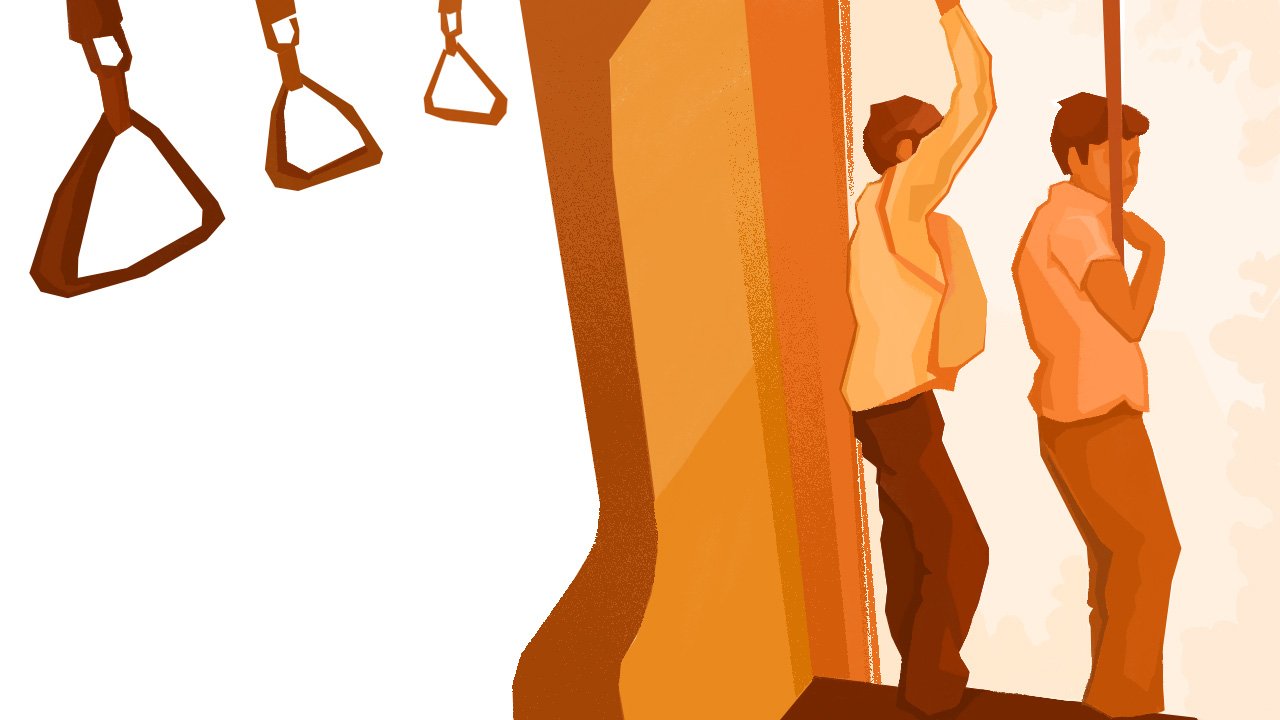
They spoke about long working hours, modest wages and the physical strain of both work and the daily commute. On crowded train journeys, where they often travel standing for long stretches, the small metal hook offers rare respite.
“I wake up before dawn every day because my journey to work is almost as tiring as the work itself. During rush hour, there’s hardly any space to stand and carrying a heavy bag for more than an hour becomes difficult,” said Rajesh Kumar, 34, who left his village of Madhopur in Bihar nine years ago when a dipping farm income could no longer support his family.
“That’s why I always carry this hook. It lets me hang my bag and gives my hands some rest. When I first came to Mumbai, I never thought such a small object would become part of my everyday life. Now, before leaving home, I always check if it’s in my bag, just like I check for my helmet or my lunch box,” he said.
Rajesh Kumar works as a construction worker and catches the 6am fast local from Kalyan on Mumbai’s outskirts, located in Thane district, to Dadar in central Mumbai.
Before leaving home, he packs his helmet, gloves, a water bottle and a steel tiffin, then clips a small metal hook onto his backpack, a habit he has followed for years. His commute is an hour-long, and he rarely gets a seat in the crowded train. But the hook, he said, is a small saving grace, saving him a little energy before a long day of physical work.
“People may walk past it without noticing, but for someone who travels like I do every day, even a little comfort matters,” he said.
“Pehle laga tha chhoti si cheez hai, ab lagta hai zarurat hai.”
(At first, I thought it was just a small thing. Now I realise it’s a necessity),” Rajesh said.
Ramesh Yadav, 42, moved from Bhadarsa village in Ayodhya district, Uttar Pradesh to Mumbai, 15 years ago. He works as housekeeping staff at a commercial office near Churchgate in south Mumbai, a business district flanked by colonial-era buildings and city landmarks. His morning routine is similar to that of Rajesh and the hook is as important to him as his train pass, he said.
“After so many years, I don’t even think about carrying it anymore,” Ramesh said with a quiet laugh. “It has become as important as my train pass. Before leaving home, I always check if I have both.”
His smile slowly fades as he looks around the crowded compartment before continuing.
“I have travelled through the monsoon, crowded festival seasons and countless early mornings. This small hook has been with me through all of it. I don’t remember exactly when it became a habit, but now I notice its absence more than its presence.”
“The train is always crowded, and this hook gives my hands some rest. Small things like this make our everyday journey a little easier,” Ramesh added.
The hook is not marketed or advertised. Most people learn about it from other commuters or just observe it carrying the weight of the bags and buy one for themselves.
Santosh Paswan, 31, left his hometown of Deoghar, Jharkhand, six years ago with a small suitcase and the hope of finding steady work in Mumbai, where he now works as an electrician for a private contractor. For six days a week, he takes the 7.15am fast local from Thane to Chhatrapati Shivaji Maharaj Terminus in south Mumbai. His day ends almost 12 hours later.
“My bag is always heavier than everyone else’s,” Santosh said with a laugh.
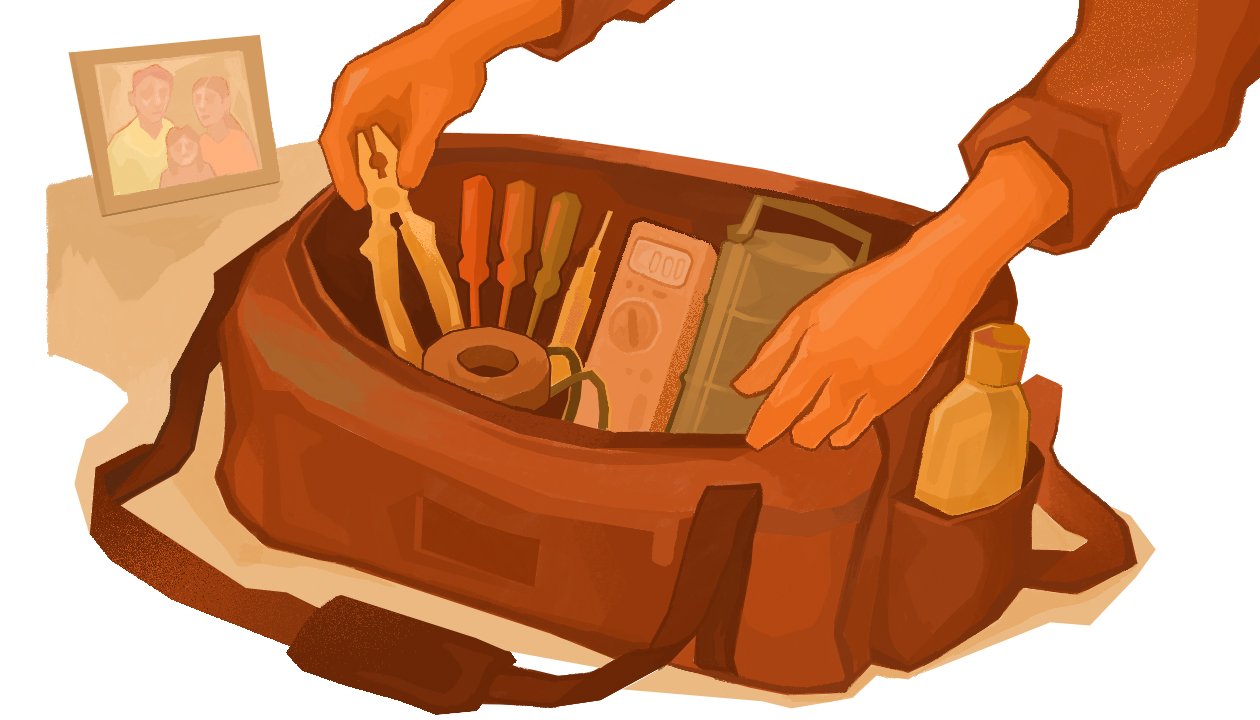
It’s filled with pliers, screwdrivers, electrical tape, testing tools, a water bottle and a steel tiffin (dabba), packed before he leaves home. He saw the hook being used by others and bought one for himself.
“One day, I saw a few workers hanging their bags on these hooks inside the train. The next morning, I bought one from a small shop outside the station. It costs around 30-40 rupees,” he said, glancing out of the train window.
Most shops outside the railway station now sell these hooks, from where the commuters can purchase them. However, some of them also make their own at home from steel pipes, a practical jugaad that provides a simple and durable alternative.
“My jobs have changed over the years. I’ve worked at shopping malls, office buildings and housing societies. My uniform has changed, the bags I carry have changed and even the stations I travel to have changed. But this hook has stayed the same,” said Prakash Chauhan, 46, who moved to Mumbai from Sikar district in Rajasthan, 18 years ago in search of a stable livelihood.
For Ashok Mandal, 27, the hook also means a ‘break’. “When I hang my bag, I stop worrying about holding it and get a few quiet minutes to myself. Sometimes I think about my parents back in Krishnanagar, and sometimes about the future I’m trying to build here. Those few moments remind me why I keep going,” he said.
“Thodi der ke liye dimaag ko bhi break mil jata hai.” (It gives my mind a short break),” he added with a soft smile.
Jayant is an illustrator and design student based in Mumbai. He works across editorial illustration, visual storytelling and creating meaningful narratives through design.