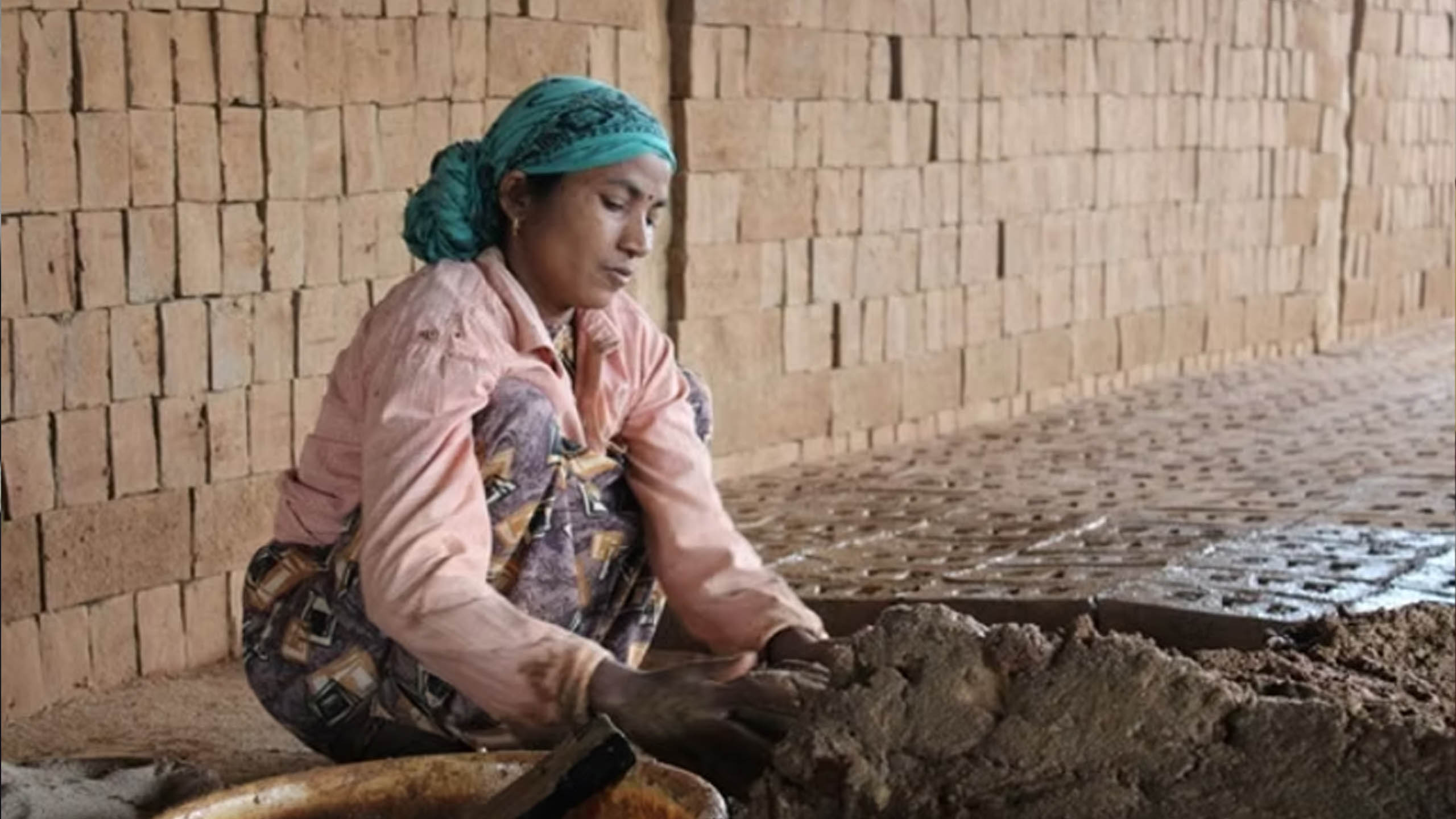
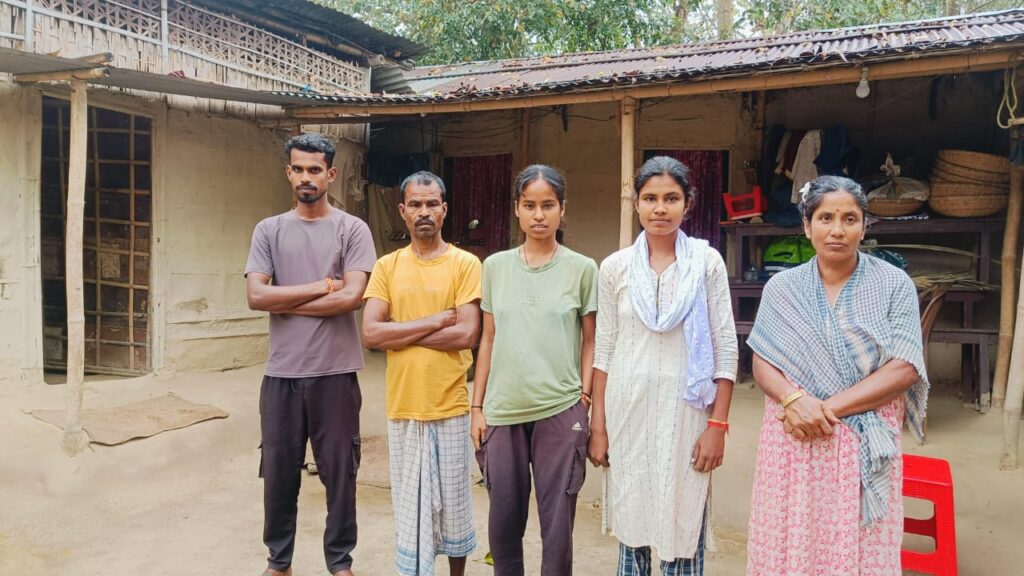
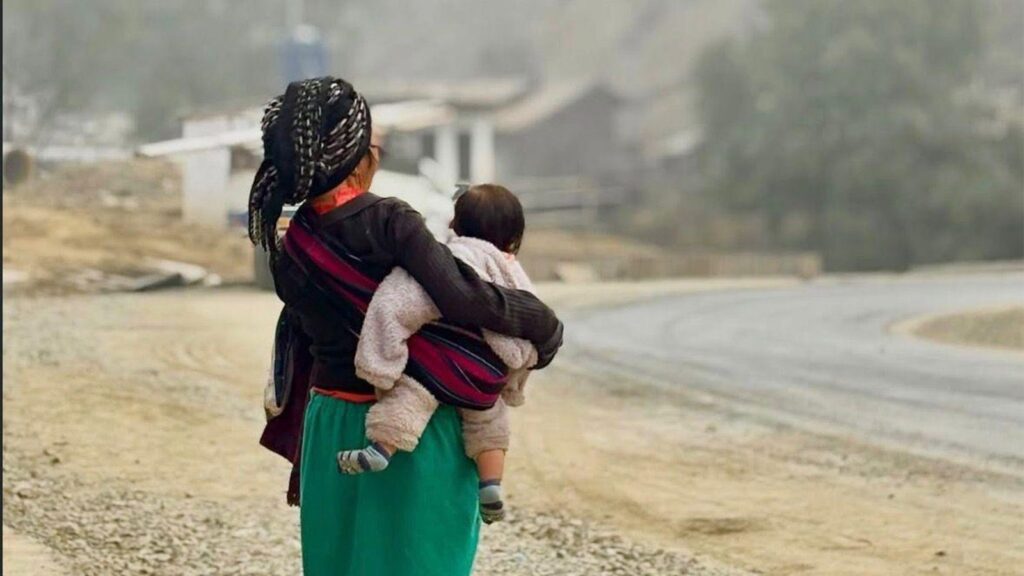
GUDAHATTI, Karnataka: Jamuna Malik’s hands move deftly as she rolls a lump of clay and flattens it into a mould, packing it with mud to set before adding it to the row of bricks waiting to be baked in a kiln on the outskirts of Bengaluru.
Fifty metres away, her husband Jairaj Malik creates a pool of water to make the mud malleable. Spade in hand, the 48-year-old works his way through mounds of clay, breaking them down to a dough-like consistency for his wife to shape into bricks.
Working as a team, the husband and wife aim to earn at least Rs 1,000 ($12) every day.
They have to send their three children to school, afford healthcare for Jairaj’s ageing mother and plough some of it back into their land in Odisha, more than 1,400 kms from Gudahatti village. The Maliks sell some of the vegetables and rice they grow, but most of it is for their own consumption.
“I have been doing this work from 6am to 5pm for the last 20 years,” said Jamuna, who is in her 30s, her fingers continuously patting mud into the mould.
There is now a certain comfort and familiarity with Karnataka, the kiln owners, and the life they have created here, and to which they have repeatedly returned over the past two decades.
“I have been doing this work from 6am to 5pm for the last 20 years”
-Jamuna Malik, brick kiln worker
“I learnt this work after I got married and have travelled with my husband almost every year since,” said Jamuna.
“Earlier our children would accompany us, but now the older two stay back in Odisha to study. It has become a way of our life.”
The Maliks’ way of life is about to change. As is that of more than 17 million people working in this critical sector for the rapidly expanding construction industry.
India’s traditional brick kiln industry, which people like the Maliks are an integral part of, is under scrutiny for being “highly polluting” and having “low energy efficiency”, as a World Bank report put it, besides being heavily dependent on coal.
According to research in 2023 by science journal Nature, the largely unorganised sector produces 233 billion bricks every year, using about 35 million tonnes of coal and 25 million tonnes of biomass. India, the world’s most-populous country with an ever-rising demand for electricity, accounts for 14 percent of global coal demand, according to the International Energy Agency (IEA).
In a report published in December 2023, IEA said the global demand for coal exceeded 8.5 billion tonnes for the first time as usage in India was expected to grow 8 percent and that in China by 5 percent.
The consumption of coal – considered the dirtiest fossil fuel and a major source of CO2 emissions responsible for global warming – is not expected to decline until at least 2026.
Yet, India has committed to cutting its ratio of greenhouse emissions to gross domestic product by 2030 to 45 percent of its 2005 level and to net zero by 2070.
Towards that end, the government outlined emission standards for brick kilns in 2018, followed by a number of orders from both the states and centre mandating kiln owners to switch to technologies that will cut dependency on coal.
Many missed deadlines and court cases later, several Indian states are now pushing for such a conversion by March. This has led to growing concerns over the closure of non-complying kilns and the subsequent loss of jobs among worker collectives.
“There are many unanswered questions around this transition in the sector,” said Gurpriya Singh, a campaigner with Buniyaad Initiative. “The key one being will the shift to new technology improve the lives of the workers, ensure a better work environment, and address occupational health concerns.”
Buniyaad Initiative is a collective of 60 kiln owners, workers’ unions, non-profits, researchers and pollution control board officials working to address the challenges of brick kilns in Uttar Pradesh, which has a high concentration of kilns along its Gangetic plains “Most kilns are an extension of the agriculture sector, co-existing on a patch of land near a farm. These are small, operate seasonally and are unlikely to have any financial support to transition. The fear of their closure is real.”
“Red bricks use a lot of coal, a lot of water. Fly ash bricks will cut the carbon footprint of each building,”
Subramani Chandrasekar, member secretary of the Bihar State Pollution Control Board
SLOW TRANSITION
According to government data from February 2023, there are about 140,000 registered and unregistered brick kilns in the country.
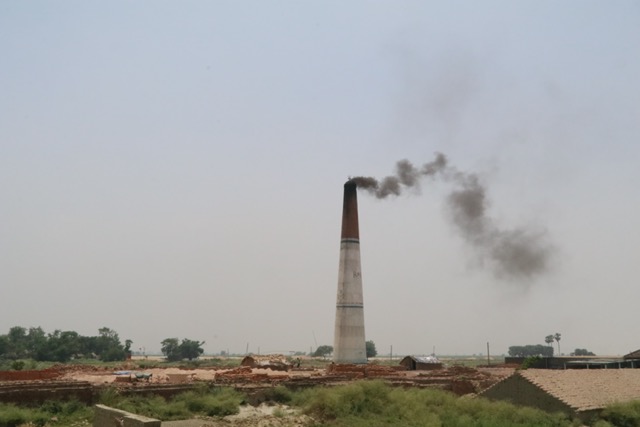
Most of the traditional kilns have towering chimneys, with a trail of black smoke snaking out of them into the sky. The pollution is attributed to the inefficient burning of coal, which is a result of the structure of the kiln and the way bricks are stacked in them to bake.
Brick kiln owners are being pushed to adopt the less polluting zig-zag technology or the use of piped natural gas as fuel to fire the chimney. They have also been encouraged to use bricks made of fly ash, a byproduct of coal fueled power plants, which reduce carbon emissions.
Subramani Chandrasekar, member secretary of the Bihar State Pollution Control Board, said that as zig-zag chimneys retain heat for a longer period of time, the kilns use less coal. The quality of bricks being produced has improved, he maintained.
“Red bricks use a lot of coal, a lot of water. Fly ash bricks will cut the carbon footprint of each building,” he told The Migration Story.
WORKERS’ WELFARE
Rajkumar Kohali spent years working as a fireman, lighting up kilns and ensuring they burnt consistently through the production season in Uttar Pradesh. He saw first-hand the challenges of poor wages and health issues that the workers – including moulders and loaders – were facing and began championing their cause.
“The new technology is good for the health of workers and definitely less polluting,” said Kohali, now a facilitator at Paryavaran Evam Prodyogiki Utthan Samiti (PEPUS), a non-profit focusing on workers’ rights.
“But there are other problems that are getting exacerbated. The fire in the new kilns require to be fed constantly, giving firemen no break,” he said, noting while this should mean more jobs for firemen, kiln owners are not investing in additional labour.
“To recover the cost of upgrading to new technology, they are continuing with fewer firemen, resulting in longer shifts for the same wages,” according to Kohali.
The government has not conducted any studies on the impact of the new regulations on workers – that’s what Ashwini Kumar Choubey, the minister of state in the environment, forest and climate change ministry, told Parliament in March 2023 when asked about workers’ welfare during this shift.
From February, the Central Pollution Control Board will begin a nationwide survey to assess the health of brick kiln workers, in collaboration with the Maulana Azad Medical College in New Delhi, said an official who requested anonymity as he was not authorised to speak to the media.
Many officials feel that the workers won’t lose out as the work is seasonal, and they have other jobs at construction sites or in the agriculture sector.
“This is not an exclusive sector where they work. Unemployment will not be a problem,” said Chandrasekar of the Bihar Pollution Control Board.
There were no options for Damodar and Lata Kalsai, who left their home in Odisha to work in a brick kiln in Karnataka a year and a half ago to pay off a loan taken for a medical emergency.
Owners of four acres of land in their home state, the couple sees their stint at the kiln as the only job that will give them a steady income.
“For now, this is the job that will secure our future,” said Damodar, 45, as he kept an eye on his four young children running around in the kiln.
The Kalsais had never migrated before, always managing to live off their land. But with the rising cost of agriculture, declining yield and a health emergency, they now work alongside the Maliks.
Hidden from the pothole-ridden road cutting across Gudahatti, the brick kilns they work in are largely quiet places – dusty, run-down and isolated from the bustle of the nearby village.
There are 40 workers in the cluster of kilns that the Kalsais and Maliks work in. Bihar resident Rajesh Kumar, 31, powers through with a cement mixing machine, switching from red brick manufacturing to cement bricks.
“Machines are coming in and we are adapting,” Kumar said, pointing to the divide between the clay and cement brick making units. “But the jobs are less now. Earlier, kilns would be bustling with people, now look around, there are a handful left.”
The Maliks agree.
“A machine has come to mix the mud and there are cement bricks also being made nearby,” said Jairaj, who first accompanied his parents as a young boy to a brick kiln.
His parents were paid Rs 10 for 1,000 bricks. Today Jairaj makes Rs 1,000 and said the facilities at the kilns and accommodation had improved.
“But nothing has changed in terms of the work,” he said. “I do what my father did. I don’t want that to change so I can ensure a better life for my children.”
Edited by Anindita Ramaswamy
Authors
-
Anuradha Nagaraj is an independent journalist and reports on labour rights, climate change and just transition. She has spent over two decades reporting on a range of issues across India. Anuradha started her career at The Indian Express newspaper as a reporter and rose to be the city editor of its Delhi edition. She also covered the Indian sub-continent for German news agency Deutsche Presse Agentur and Thomson Reuters Foundation. She is the winner of the 2018 Ulrich Wickert International Award for reporting on child rights. A certified media trainer, she does training workshops for journalists and civil society groups.
View all posts -
Roli Srivastava is a Mumbai-based journalist and reports on just transition, gender, migration and inclusive economies, focusing mainly on India’s marginalized communities. She has worked with the Thomson Reuters Foundation, where she was Climate and Just Transition Correspondent, India, and major Indian newspapers including The Hindu where she was Deputy Editor and The Times of India where she was Editor, Special Projects. She has won the Fetisov Journalism Award and the Laadli Media and Advertising Award for Gender Sensitivity for her investigation on a health scandal in rural India robbing women of their wombs. She undertakes training workshops for journalists.
View all posts