NEW DELHI: Kumar Pakhrin’s two-room rented space in Delhi’s Chirag Dilli comes to life at 6 am. The 37-year-old and his wife Sona begin their day by chopping vegetables, kneading flour dough and folding crescent-shaped momos, a form of dumplings popular in Tibet, Nepal and Northeast India.
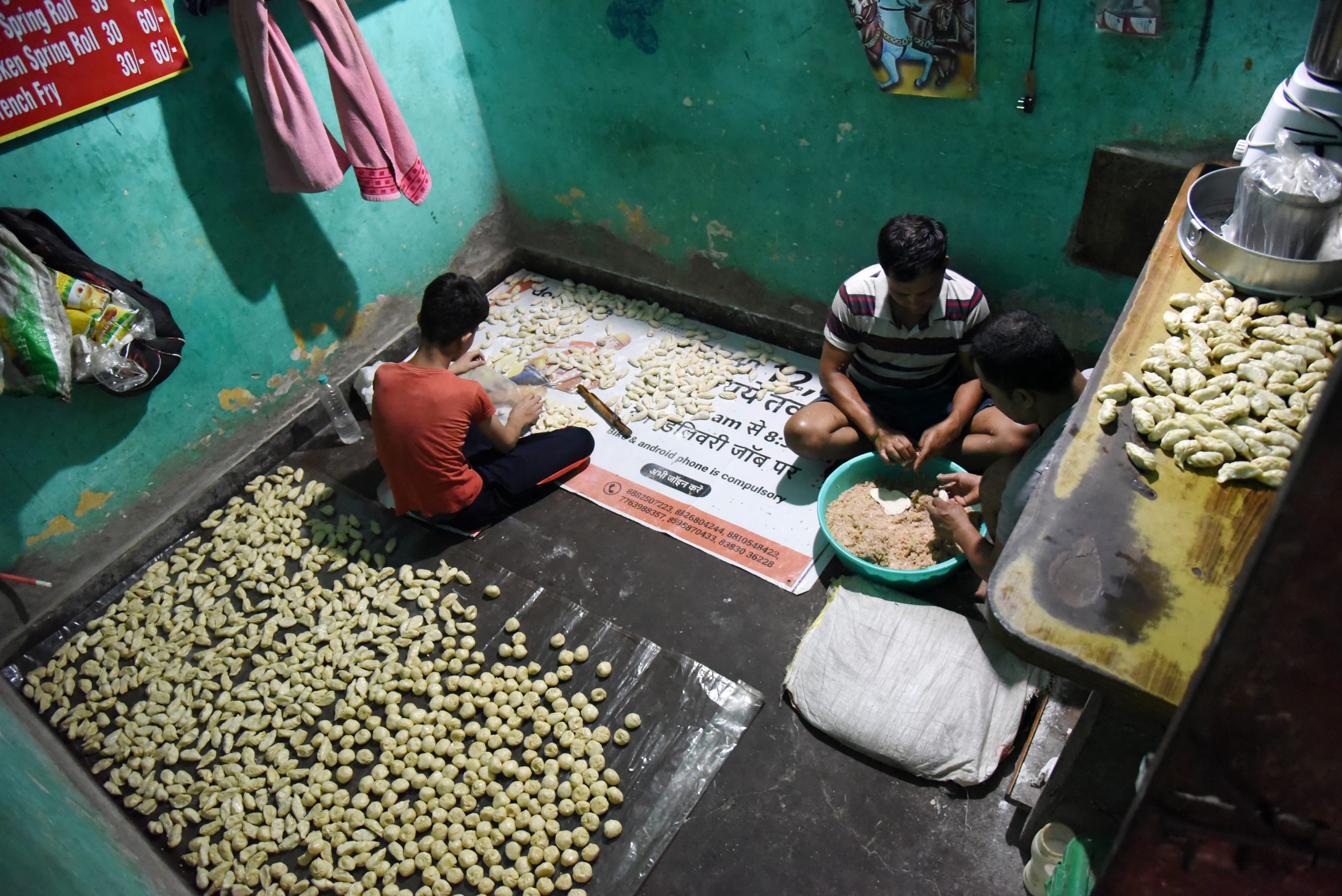
The modest rooms, each approximately 10 by 8 feet, are a hub of activity. One room is dedicated to preparing momos. Mixers and blenders buzz at one end, processing tubs of soaked vegetables or minced meat into stuffing. Spicy red chutney is also processed.
“Making so many momos is not easy,” Kumar told The Migration Story. “We wake up at 6 in the morning, cut vegetables, prepare dough, make our chutneys, and also prepare flattened sheets of dough by 10. After breakfast, we all sit and seal the momos.”
The Kumar household is not the only one that comes to life so early in Chirag Dilli. The cluster of ramshackle, low-cost constructions connected through a network of narrow lanes in this urban village is home to hundreds of migrant families who make and sell momos.
Surrounded by upscale South Delhi localities, Chirag Dilli is a poor neighbourhood. The affordable rents, flexible paperwork and fluid regulations on commercial activity on residential premises, has attracted migrants, including those from the Northeastern states.
Chirag Dilli is seven kilometres from the Qutub Minar and derives its name from the shrine of 14th-century Sufi saint Hazrat Nasiruddin Mahmud Chiragh-Dehlavi.
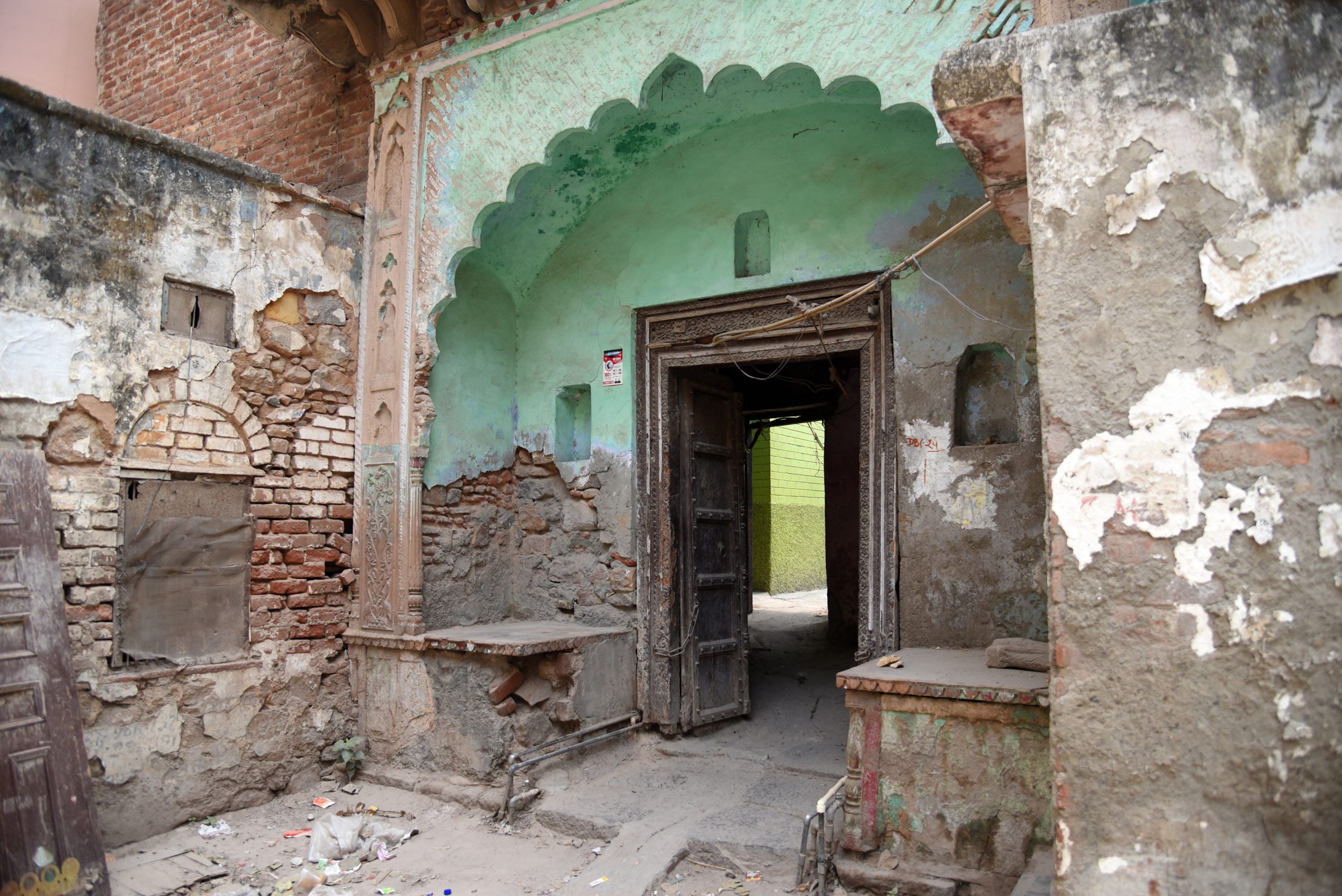
The locality boasts of a unique blend of historical haveli-style dwellings and modern adaptations driven by the influx of migrants. With the societal shift from extended to nuclear families, many of the grand havelis underwent a transformation. Small rooms were carved out and given on affordable rent to migrants.
But, for those who keep track of Delhi’s evolving street food culture, Chirag Dilli is known as the momo capital of the city.
It is the go-to place where many street vendors procure their daily supply of ready-to-steam-and-serve dumplings and spicy red chutney. Some like Kumar also make momos and sell them through street carts and stalls they run in other parts of the city.
VERSATILE AND AFFORDABLE
The Kumar couple sells upto 1800 vegetarian and non-vegetarian momos daily in Munirka, a neighbourhood 7 km away from Chirag Dilli. The stall they run there since 2014 opens at 4 pm, and the momos are sold out by 10 pm.
Their monthly profit ranges from Rs 40,000 to Rs 50,000, a quantum leap from the Rs 7,000 Kumar earned as a security guard in the Indian capital. He held that job for about seven years before starting his momo venture.
Momo stalls like Kumar’s have become ubiquitous, each a testament to the city’s love affair with these dumplings, which have come into the capital along with migrants from the Northeast. It has become popular across income groups.
“Over time, the humble momo, a migrant food, has become a reigning monarch in Delhi’s culinary landscape,” said Rana Safvi, a historian and author of The Forgotten Cities of Delhi.
“Its versatility, affordability, and wide availability across Delhi make momos a convenient and innovative street food choice for all tastes.”
The term ‘migrant food’ refers to food that has been introduced to a region by migrants who brought it from their place of origin and the market for momos runs across Delhi, including Connaught Place, Lajpat Nagar, Munirka, INA Market, Ambedkar Nagar, Malviya Nagar, Green Park, Greater Kailash, and beyond.
But the journey of the momos begins in Chirag Dilli, every morning at 6 a.m.
“Chirag Dilli stands as the city’s largest production hub, attracting migrants from India’s Northeast and Nepal. Some of them exclusively prepare momos for restaurants or other momo sellers as well,” said Veena Bhardwaj, an independent social worker, who has engaged with urban villages of Delhi and worked with women momo makers in Chirag Dilli.
WHY DOES CHIRAG DILLI ATTRACT MIGRANTS?
“It started with one person setting up house, then another, and eventually, entire families relocating to Chirag Dilli. They (migrants) must be the only ones who know what’s so special about Chirag Dilli,” she said.
Kumar too relocated to Chirag Dilli after a friend from his village introduced him to momo making.
Before that, his life had been a chequered one. He studied till Class X and worked as a daily wage labourer on farms and construction sites in his village in Sikkim.
But work was inconsistent, so his father sent him to Qatar, where he served as a guard for about three years, felt homesick and chose to return home and then moved to Delhi.
Once he started his momos venture, his wife and daughter joined him in Chirag Dilli. Life has been looking up for the family ever since. Kumar said he makes enough to save for his daughter’s higher education. She is currently in Class IX.
Similarly, 32-year-old Shoma Tamang and her husband moved to Delhi from Darjeeling in West Bengal in 2010 because they found seasonal farming of turmeric, potatoes and leafy greens not remunerative enough.
“My husband’s friend informed us that food stalls in Delhi yield good profit,” said Tamang. The friend helped the couple set up home in Chirag Dilli and found them a spot in the Defence Colony market to sell momos.
“It is the migrant network, where one person invites another, strengthening community ties, that has transformed Chirag Dilli into a hub for momo manufacturing,” explained Bhardwaj,
What also draws migrants to Chirag Dilli is the affordable rent. It’s easier to set up a kitchen-cum-home here than close to the markets where the dumplings are sold.
“A similar space on rent in Defence Colony would cost between Rs. 35,000 to Rs.40,000 per month. Here in Chirag Dilli, I pay only Rs, 7,000,” said Shoma. She and her husband have rented two rooms in a haveli owned by their landlord, Kishan.
THE ‘URBAN VILLAGE’ ADVANTAGE
Chirag Dilli being designated as an ‘urban village’ in the city’s Master Plan has been a major factor contributing to lower rents, according to Sukrit Nagpal, an independent researcher working on housing rights and social protection.
To tackle this, the planning authority introduced the ‘urban village’ category, exempting these villages from strict building regulations and allowing more flexibility in construction and renovations not requiring approvals.
This flexibility in regulations has led to people constructing, reconstructing their houses, adding more floors and also allowing commercial activity alongside the residential premises.
This enables house owners to maximise profits by subletting properties and offering cheaper rent options to migrants.
For 29-year-old Shirof Kumar from Assam’s Tinsukia, who arrived in Delhi two years ago, the allure of community bonds outweighs the low rent. He doesn’t mind shelling out an extra Rs 200 for a round trip to work.
“Even though rents in Madangir, where I work, aren’t exorbitant, my family found a deeper sense of community in Chirag Dilli,” he said. He proudly mentions how his daughter, who joined them last year, has already made friends.
Shirof echoes the sentiment of many of the other migrants who feel that the network and friendships that they have developed in Chirag Dilli are indispensable. “As outsiders in a big city,” he says, “survival hinges on these connections. I can’t risk losing this sense of community.”
But not only has the momo industry transformed Delhi’s culinary landscape and contributed to the emergence of new forms of living through its production, it has also undergone its own evolution.
Edited by Preeti Mehra