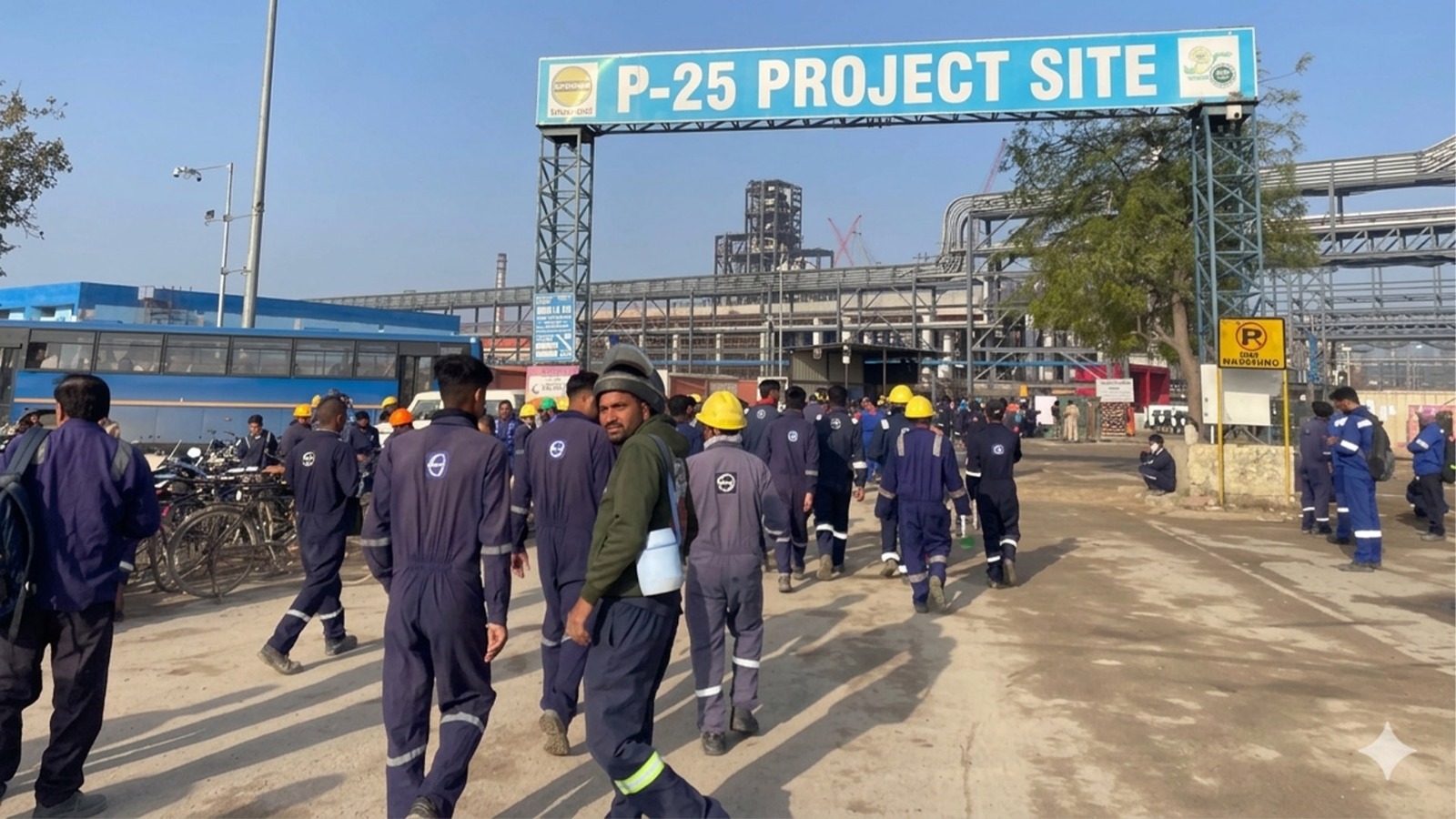
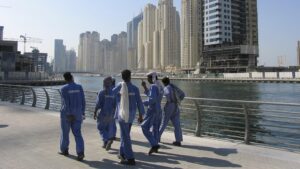
PANIPAT, Haryana: For the last four years, around 8 am every morning, including Sundays, thousands of men dressed in navy blue and orange overalls, yellow hard-hats and boots have queued up outside the gates leading to the ‘P-25 Project’ site. Hired by private contractors, they work at an intense pace to construct new processing units and expand the crude processing capacity of one of India’s largest government petroleum oil refineries in Panipat, 125 km from the national capital Delhi.
Once expanded, the Panipat refinery of the public sector Indian Oil Corporation Limited (IOCL) will help India substitute its petroleum imports. Byproducts such as polyester fibers made in its massive petrochemical complex, covering over 300 acres, will feed multi-crore textile parks and manufacturing hubs coming up near Panipat.
This year, on February 23, workers who had consistently been clocking over 12 hour shifts and awaiting much delayed salaries, heard the news of an accident at one of the construction sites at the project.
It was 11 am. As the news of an ‘accident involving a worker’ travelled through the project site, thousands of workers spontaneously stopped work and walked out of the site being managed by Kamlesh Kumar Singh Engineers Private Limited (KKSPEL), many workers and contractors recounted to The Migration Story at the refinery gates.
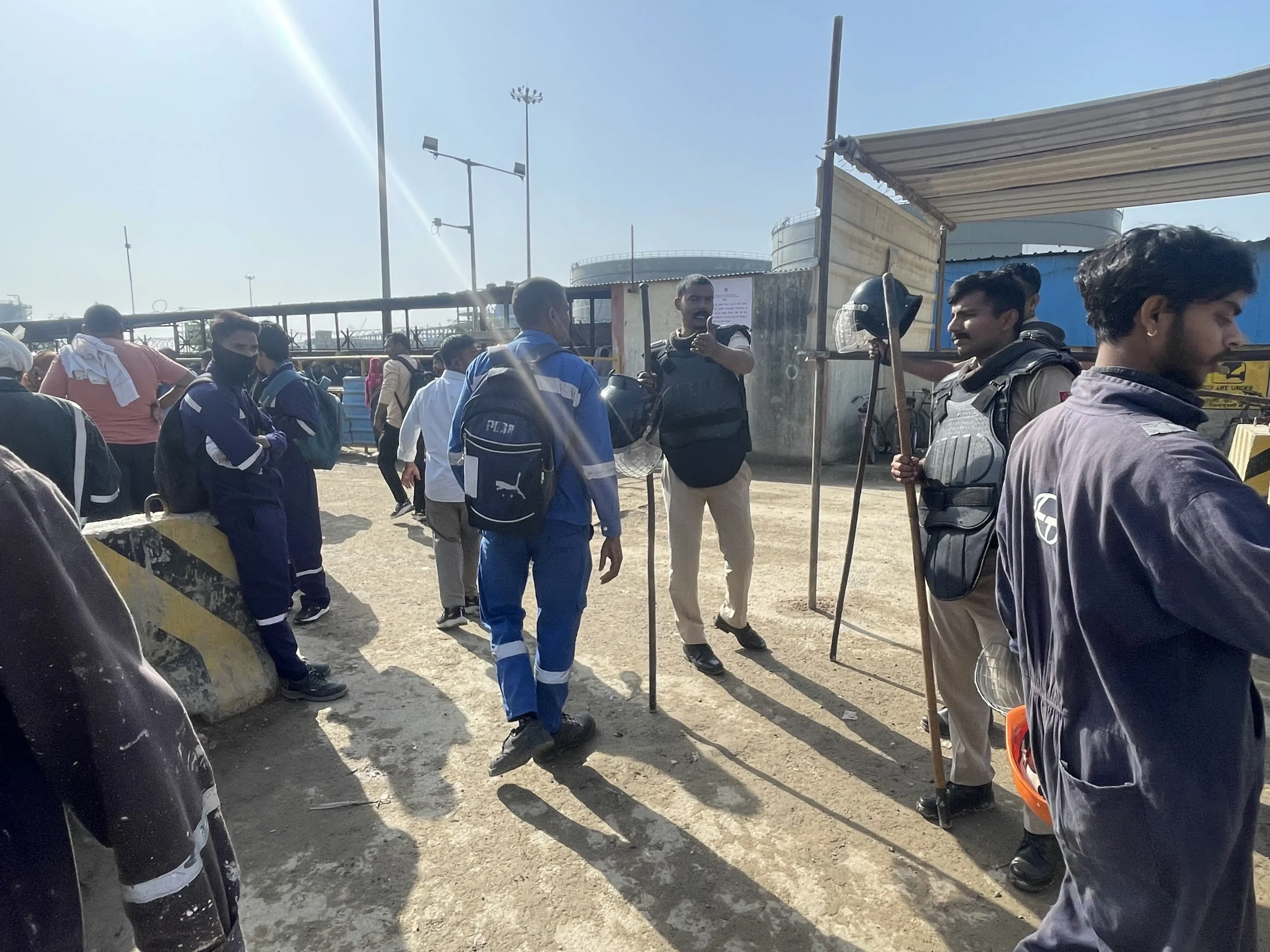
“When the workmen, thousands in number, started walking out and gathering at gate 4, the paramilitary posted at the gates carried out baton charge,” recalled Jogender Singh*, driver of large excavating machines and water tankers at the refinery.
“The workers tried to run back, and it created a stampede-like situation. Then, they charged forward at the Central Industrial Security Force (CISF) guards and attacked them,” said the 60-year-old from neighbouring Karnal, who has been working at the refinery complex since the 1990s.
That week, all work stopped for over five days, and as per estimates by the contractors, more than half of over 30,000 workers fled the site, delaying their construction targets by over a year.
KKSPEL did not respond to questions on email at the time of publishing.
Today, dozens of policemen, and paramilitary forces continue to monitor workers at this refinery complex that supplies fuel to the national capital and is an energy hub for northern India.
The protest also had a ripple effect 1,100 km away in Gujarat. A few days after the Panipat workers’ strike, on February 27, more than 5,000 workers hired on short term contracts by Larsen and Toubro (L&T) to construct and triple the capacity of an integrated steel plant at the ArcellorMittal Nippon Steel project site at Hajira in Surat also stopped work.
As they demanded fewer and regulated hours of work and an increase in pay, they pelted stones and set several vehicles on fire, as per The Indian Express, and the Gujarat police fired 35 teargas shells and detained 20 workers.
Surat Deputy Commissioner of police zone 7 Shaifali Barwal was quoted as saying that this was an effect of the workers accessing visuals on their mobile phones of the Panipat strike and confrontation.
At Panipat, labour organisations’ representatives said that a vast majority of the striking workers had no contact with the trade unions till a day after the incident and carried out their actions spontaneously.
Pal Singh, an executive member of Jan Sangharsh Manch, an organisation working with construction workers and those working in the rural employment guarantee scheme in five districts of Haryana, was at the refinery site on February 24.
“There were so many, they were unmanageable for the security forces and the company,” said Singh. “After this spontaneous action and successful strike of February 23, the next day, six workers not affiliated to any union submitted a hand-written note of eight demands to the IOCL management.”
The demands included payment of wages by contractors before the seventh of every month, 26 work-days a month and medical insurance in case of accidents, among others.
A notice outside the refinery gate in mid-March stated that IOCL had accepted the workers’ demands but IOCL officials did not respond to
The Migration Story requests for comment on the phone or SMS.
The Hindu quoted the officials as stating that several of their contractors would now provide additional drinking water and L&T, one of the main contractor firms, would provide eight additional mobile toilet facilities at the site.
Several workers expressed uncertainty and said they would wait for April 1 to examine if any substantive changes were made by IOCL’s contractors to improve wages and payment schedules.
A two-hour drive from Delhi, the way to the refinery complex goes through Panipat’s industrial areas and is dotted with amusement arcades, logistics parks, glass facades of international schools, and past the famous highway eateries at Murthal.
On a March weekday morning, three weeks after the intense protests, the work at the refinery had only partially resumed, said contractors.
A few hundred workers from nearby districts rode to its gates on bicycles or in the back of tempos on roads along fields of ripening wheat in Badauli and Chhoti Rajapur panchayat villages.
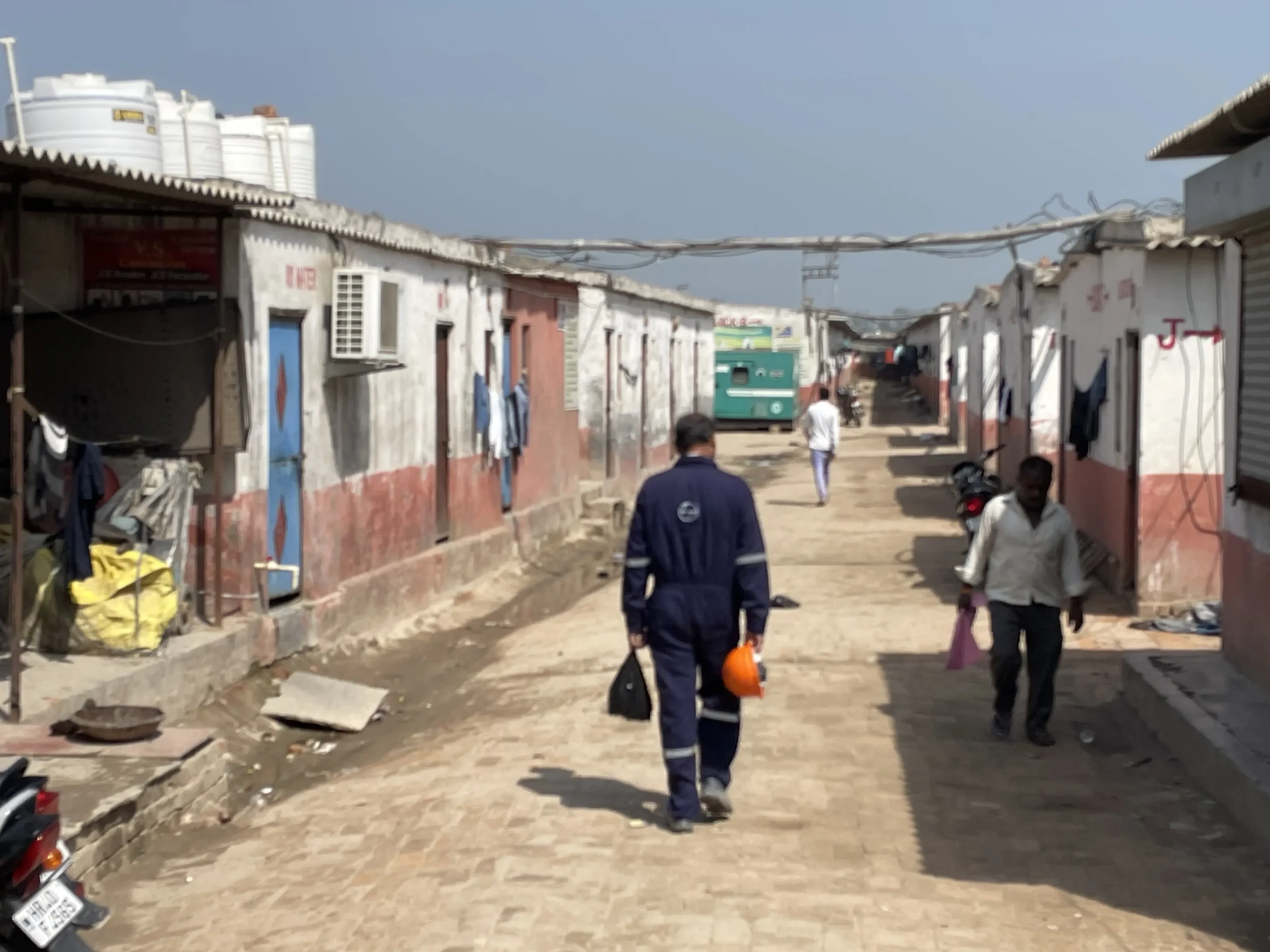
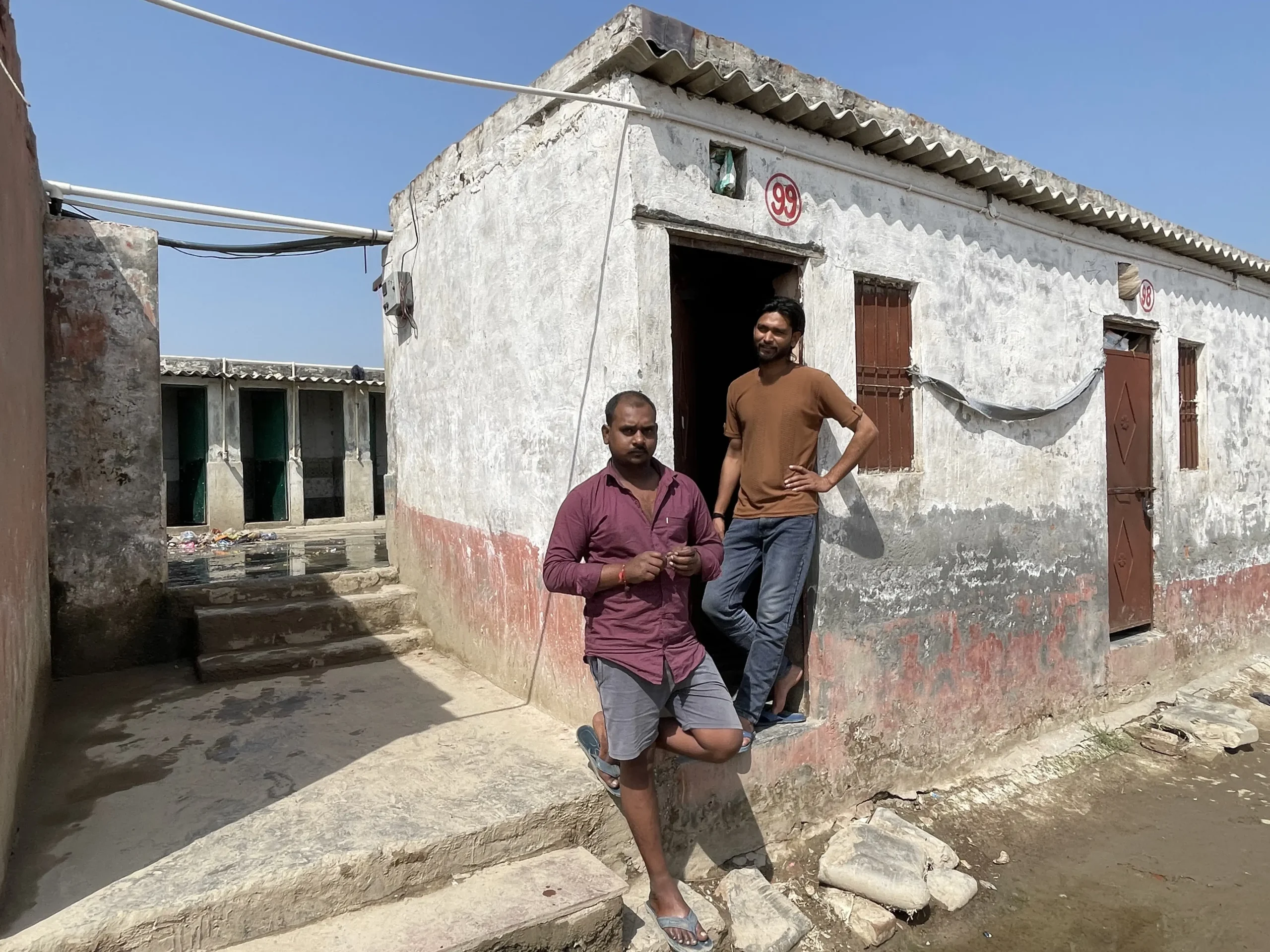
Thousands of others, mainly temporary migrant workers from Uttar Pradesh and Bihar, walked to the refinery from “labour camps” built all along dirt roads leading to the refinery.
Rajnish Singh, a middle-aged worker from Vaishali district in Bihar, who does scaffolding work tying poles for construction on the P25 site, said the contractors did not formally record overtime hours in violation of laws and operated without adequate safety.
“That day, I was in refinery 3, and we heard, a worker was installing sariya, setting steel bars, when he fell and injured his legs,” he recounted. “Accidents go on daily. Forget help for injuries, such as giving us health benefits, such as under the Employee State Insurance Corporation. They have no concern for us and we feel they will throw our bodies into the construction site or a canal rather than compensate our families if we die working here.”
Deepak Kumar, a welder from Uttar Pradesh, said the pay of 540 rupees a day was so little that most workers even after working for years had no savings and depended on the contractors to give them 1,000 rupees ‘kharchi’ or weekly expenses. This was deducted from their wage at the end of the month.
THE PRESSURE OF WORK AND TIME
As per the Chemicals and Petrochemicals Manufacturer Association, IOCL is India’ largest refiner. It processes high-value petrochemicals at units in Panipat, besides Uttar Pradesh, Gujarat, Tamil Nadu, Odisha, Assam. Since 2021, it is expanding its refinery capacities across India by over 30 percent, with a 1 lakh crore rupees budget.
The Indian Oil government website calls the Panipat refinery, commissioned in 1998, “technically one of the most advanced public sector refinery complexes” to help India develop import substitutes. Through pipelines, trains, tankers, it supplies high grade petrol and low sulphur diesel to Delhi, and NCR.
It consists of a refinery, a township, an aromatics complex, one of India’s largest “naptha cracker complex”, with over 100 storage tanks and over 1,600 km of pipelines, The refinery complex produces a range of plastics and polymers used for making carpets, ropes, wrap films, food containers, pipes, syringes, even automotive parts. A green hydrogen plant is being built here over the next 12 months to help India meet its green energy goals.
India has a
total refining capacity of 258 million metric tonnes per annum (MMTPA) of crude oil. Of this, the Panipat refinery accounts for refining 15 million metric tonnes per annum. It is in the process of expanding capacity by over 60 percent to 25 MMTPA, and the protesting workers were employed for the construction of several new structures, fabrication, storage tanks.
The work is being done at a capital expenditure of 32,946 crore rupees, though one of the main complaints of the workers at the site remains that they are not paid sufficient wages, or overtime pay.
“We wake up at 5 am, are at the site from 8 am till 8-9 pm, then go home to cook and clean. We barely get to sleep five-six hours before beginning again, without a break,” said Kuldeep Singh, whose work is to assist colleagues who fit steel bars to reinforce the concrete structures of the refinery.
“Helpers” like him are categorized as unskilled workers and earn 541Indian rupees a day. “Skilled” workers like welders, those working on boilers or erecting scaffolding based on drawings provided to them are paid 760-780 rupees a day.
Singh, who has worked here for two years, said many of the private companies employing the workers on temporary contracts had not changed the rates in a decade.
Manish Chandel has worked as a safety staff at the Panipat refinery for over 18 years, most recently hired through Madhya Pradesh based Lion Insulation Private Limited, a firm that provides insulation solutions to companies like IOCL. According to him, there are more than 2,000 contractor companies at the IOCL site and workers were able to negotiate for higher pay based on the access contractors had to hiring new workers.
“There are a few large firms such as L&T, and more than a couple thousand “petty” contractors who hire a handful of workers,” said Chandel. “The main refinery has facilities such as canteens, drinking water. This under-construction refinery site, despite being spread over a hundred acres, has no facilities, no HR, no official to look after workers’ grievances who sometimes are not paid even 2-3 months.”
Jogender Singh said that compared to the industrial area workers at nearby Haryana industrial parks, the workers in refinery construction worked very long hours at great personal risk at an intense pace.
“You are building at 200 feet height,” he said. “The pressure of work and time is so much, that even if a worker needs to urinate, he feels compelled to do so somewhere at that height in a corner thinking that how will he go back down and then walk 1 kilometer to a mobile toilet and then lose time climbing back to site?”
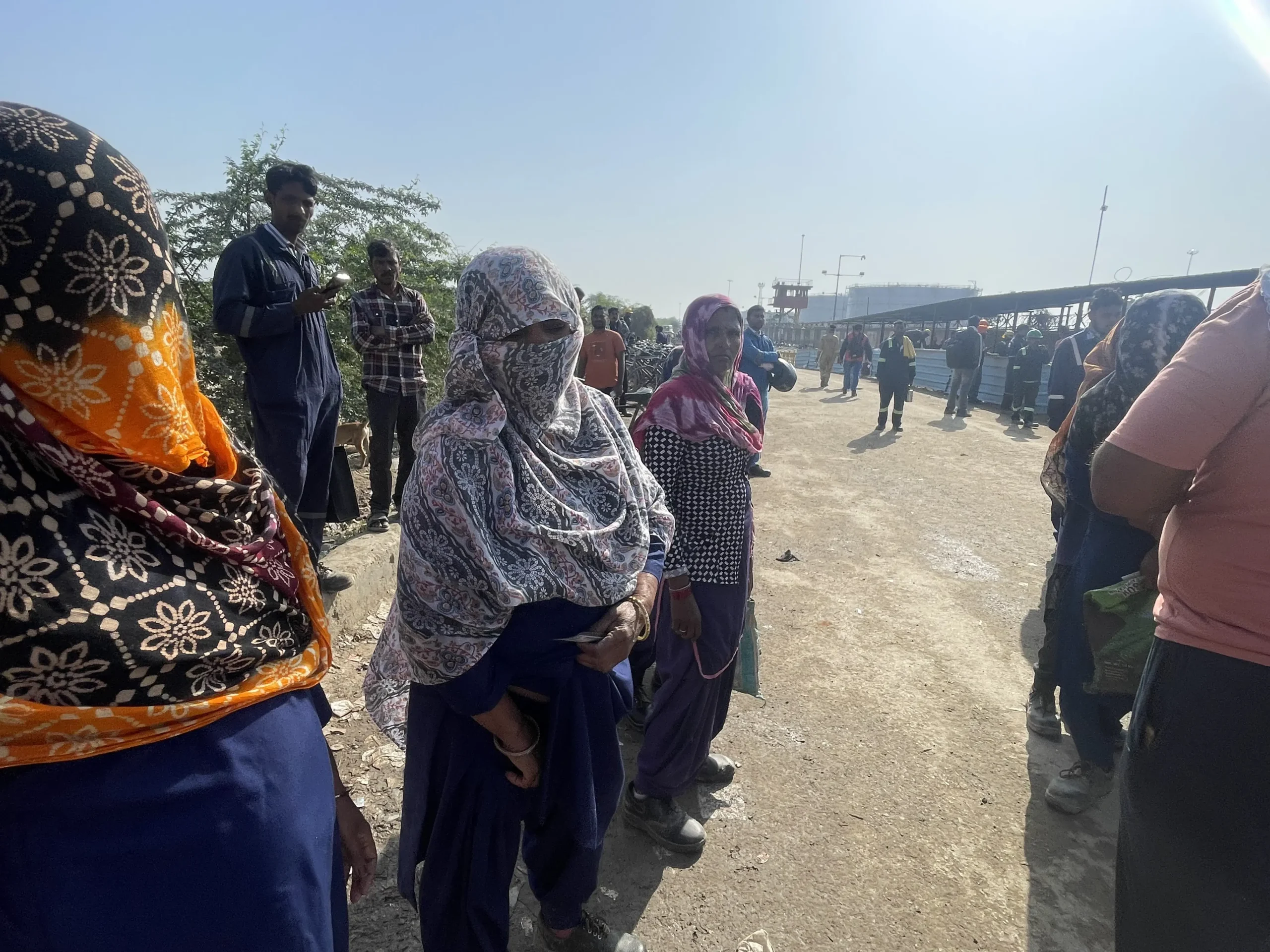
A row of women workers who work as cleaners at the site stood with their faces covered with scarves, waiting to be let inside the refinery at gate 4 after security checked their gate passes.
Draupadi Sahu, a migrant from Panna in Madhya Pradesh, said women on average were paid almost one third less than the men. She had started work at 90 rupees a day, and now earned 400 rupees a day, an increase of only 300 rupees in two decades. “I started sweeping, cleaning work at oil and gas plants near Panna 20 years ago and in these years, I have worked with over 20 contractors at such sites,” she said.
Nearly all workers, especially the migrants, complained about having to shell out 2,000-1,000 rupees as bribes to the contractors’ men for accessing gate passes to enter the refinery, which expire after a specific number of weeks, a hassle especially for migrant workers.
They then had to show proof of having Aadhaar, a 12-digit biometrics ID, a bank account, and also the proof of having enrolled compulsorily in contributory government insurance schemes such as Pradhan Mantri Jeevan Jyoti Beema Yojana, for which their paid 150 rupees to computer operators and for which 436 rupees were deducted from their accounts. The workers said they had never heard of any worker getting an accident payout.
THE REFINERY JOB CIRCUITS
Panipat Sadar police station’s Station House Officer Neeraj Kumar told The Migration Story that the police had registered two first information reports against unnamed workers for rioting and violence. He said the police had detained and then released a handful of workers for “spreading rumours” about the accident on February 23.
Pal, the workers’ union representative from Haryana, pointed out that district officials had told local press that one worker had suffered injuries on his legs, but that contrary to rumours, no workers had died on site.
On March 16, several armed policemen kept watch over the men and women workers assembling at the gates.
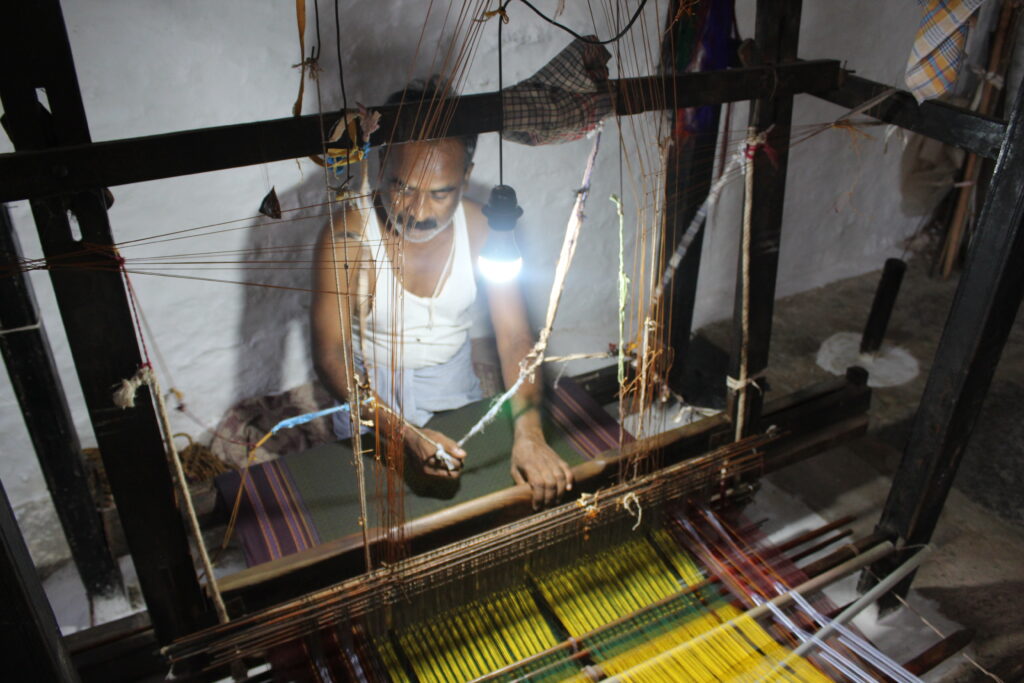
Though the vast majority of workers worked without any written contracts, were not part of any organisation or unions that formally organised them, they shared similar living conditions. Several of them maintained ties with other workers as they moved from state to state building refineries and energy infrastructure across India, hired by a series of private contractors, working temporary jobs in similar precarious conditions.
Like Sahu, several workers recounted working at multiple refineries of IOCL and other petroleum entities.
Binay Kumar recounted this was the sixth refinery he had worked at as a temporary welder for over the last 20 years, after completing high school in Dibiyapur near Kanpur.
“I started working for just 15 rupees a day as a teenager at Dahej, Surat in Gujarat,” recounted Kumar as he waited warily at a tea shop for his gate pass. “Then a refinery was being built by GAIL at Kanpur and I went there as a welder. Next, I worked at Bhatinda oil refinery in Punjab, then again went back to work in Dahej.” Kumar said he had even worked for a year in New Zealand through a contractor firm, earning Rs 27,000 a month.
“I worked constructing the Bina oil refinery in Madhya Pradesh. Then, I stayed home for a year. I came here to the Panipat refinery after hearing they are looking for workers here,” he added, stating that he had been offered work at 25,000 rupees per month at the Panipar refinery.
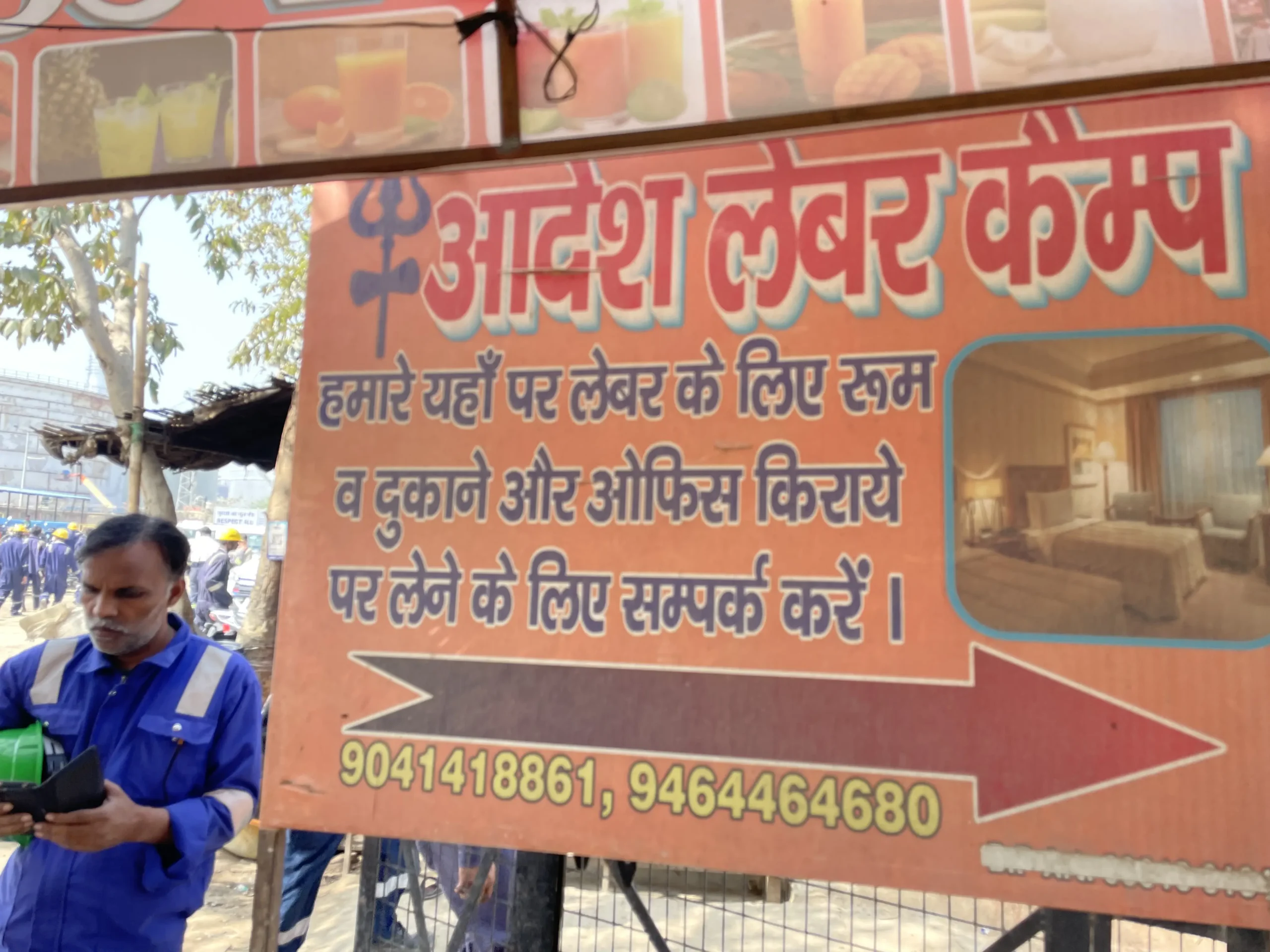
At Adarsh Labour Camp, Sunil Kumar, a lanky bearded man in his early 30s, was chatting with other workers from Bihar as they waited to resume work at the Panipat refinery. He said in the last 15 years, he had worked at Vishakhapatnam oil refinery, at the IOCL’s Bongaigaon refinery in Assam, at Reliance’s Jamnagar refinery, besides in odd construction jobs in Jharkhand’s Dhanbad.
He too had started work in his late teens as a construction worker on temporary contracts at the Barauni refinery, Begusarai district, where IOCL’s second oldest refinery is located, 120 km from Patna.
Sunil Kumar identified Barauni as the origin of the wave of protests in February that had a ripple effect in Panipat, 1,200 km away.
“For days, there was talk here at Panipat that the contractual workers in the Barauni refinery were protesting,” the young worker from Patna said. “We got news and videos of it regularly on our mobile phones.”
News reports of the ongoing protest at Barauni in eastern India are sparse. One of the few videos from the site documents interviews published on February 3 with angry workers, young and old, gathered at the refinery gates, dressed identically in blue overalls and yellow hard-hats.
In the video in Hindi, the workers take turns to describe an incident from January 31 when they allege a worker was locked up inside a container at a construction site inside the refinery managed by a local contractor employed by IOCL.
They expressed dissatisfaction that daily wages were stuck at 400 rupees while their work hours increased to over 12 hours a day and included Sundays. They alleged that the contractors charged 2,000 rupees to issue fresh gate passes to enter the IOCL sites under new terms when their work contract had ended. This was exploitative and aimed to keep workers bonded to one contractor and his terms, one Barauni worker alleged.
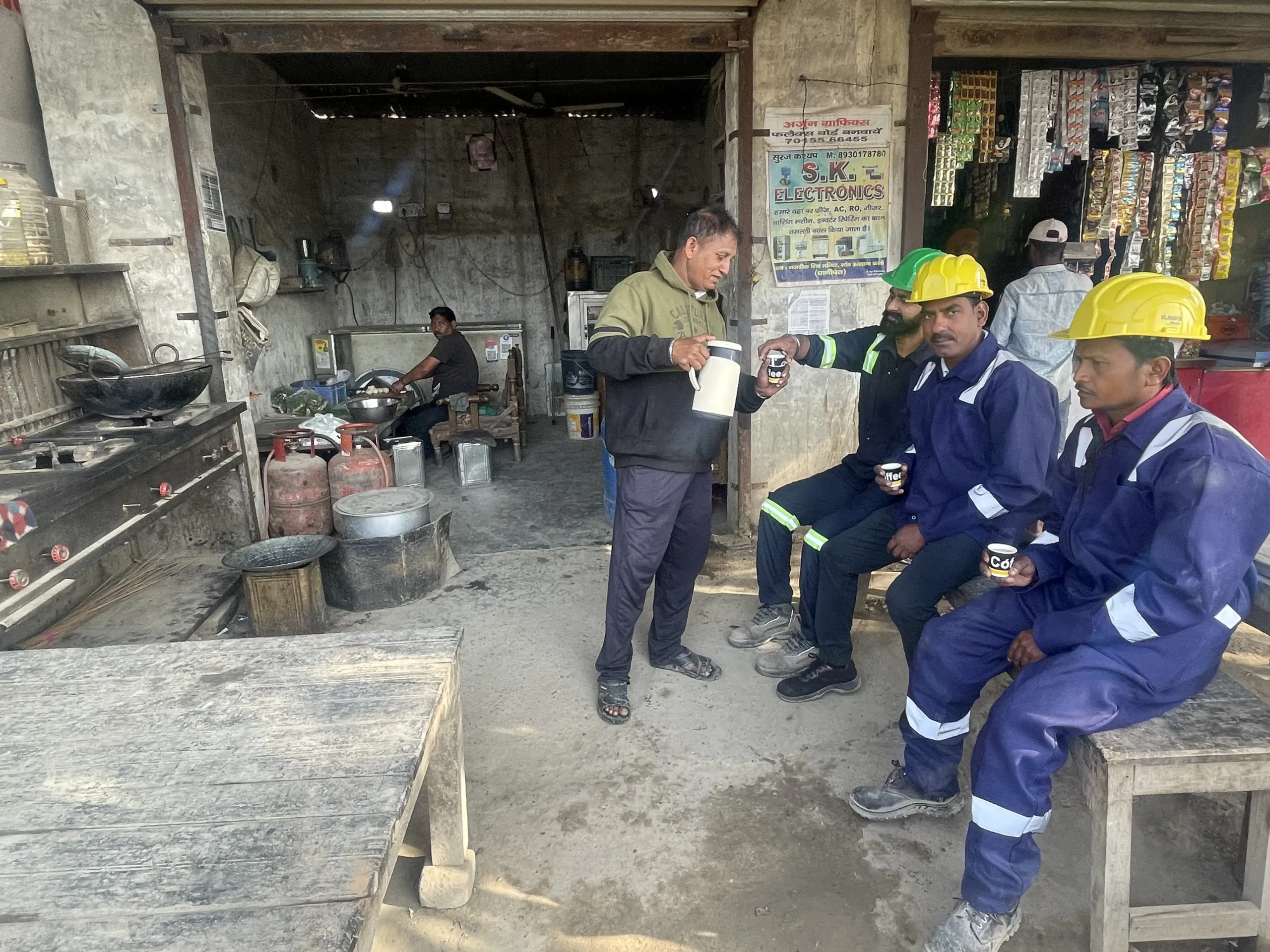
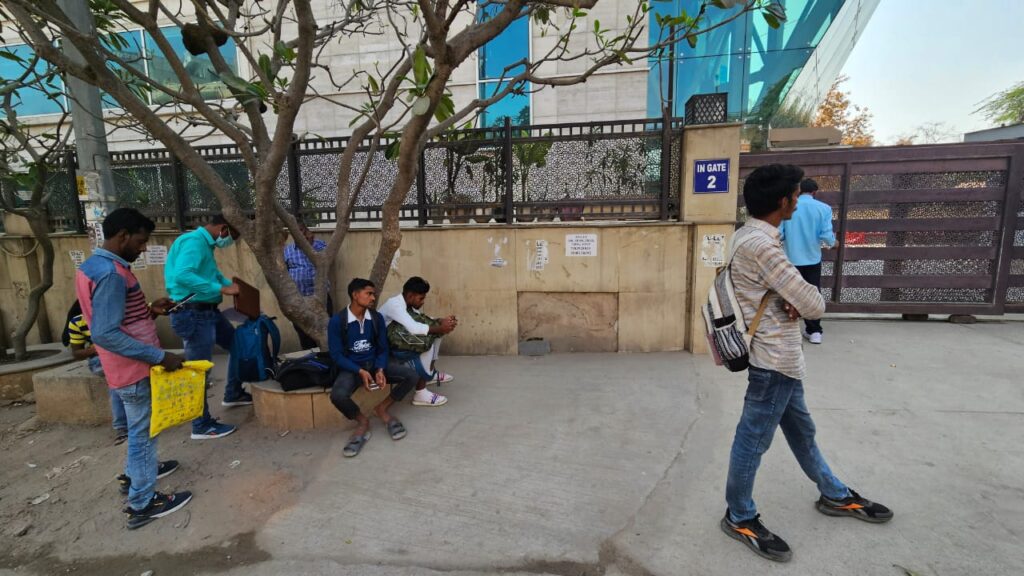
At Panipat, around 1 pm outside gate 4 workers stepped out and walked to the tea shops nearby. This is the only break they get during their 12-hour work day.
Among the younger workers who had gathered, Dharma, 23, and Manoj Yadav, 25, work in erecting scaffoldings at the site and said they had left for work without any food that morning.
The young workers spoke of withdrawing from the work-site, back to their village, as the only possible relief. Both men were from the same village near Dhurki in Jharkhand’s Garhwa where they owned small paddy farms. Last year, they said, they had boarded the train together from a small station Nagar Untari near their village directly to Panipat. Then, they had left after working for just four months, once they had saved Rs 45,000 each.
“Now, we are back here after Holi. We may leave early, as soon as we manage to save 20,000 rupees,” said Dharma, adding that they were waiting to see if the company and the contractors enforced the 8-hour work day and paid overtime.
Older workers such as Jogender Singh, the driver of large excavating machines who has worked at this refinery since the 1990s, remain sceptical on whether the February strikes in Panipat, Surat and Barauni would bring substantive changes in workers’ conditions.
“Workers rebelled here and in Surat because a drowning man looks for straws. How long can one tolerate such conditions?” he questioned.
* WORKERS’ NAMES HAVE BEEN CHANGED TO PROTECT THEIR IDENTITY.
Anumeha Yadav is a freelance journalist. Her reportage focuses on the rights and social security of lower income workers, primarily migrants to India’s metropolises