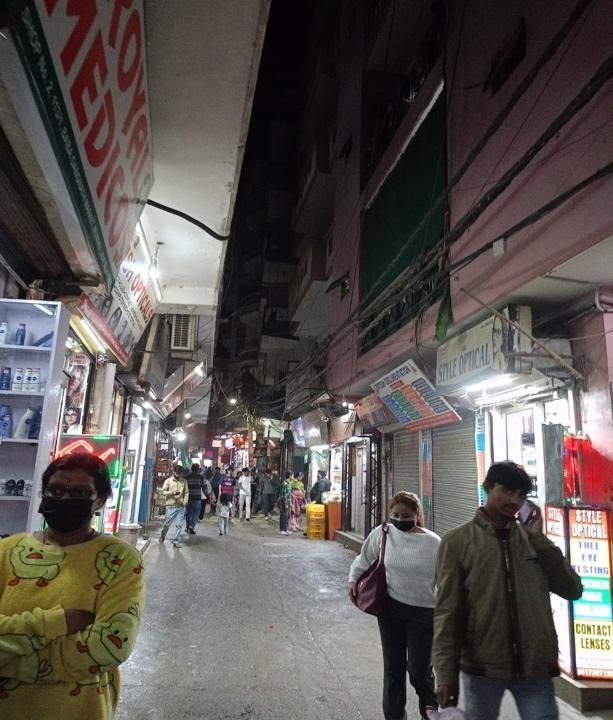
MUNRIKA, New Delhi: On most evenings, the smell of hot oil and boiled noodles wafts through the streets of Munrika in South Delhi. Its crowded lanes are lined with cafés and eateries that serve food from India’s North East and employ migrants from the region.
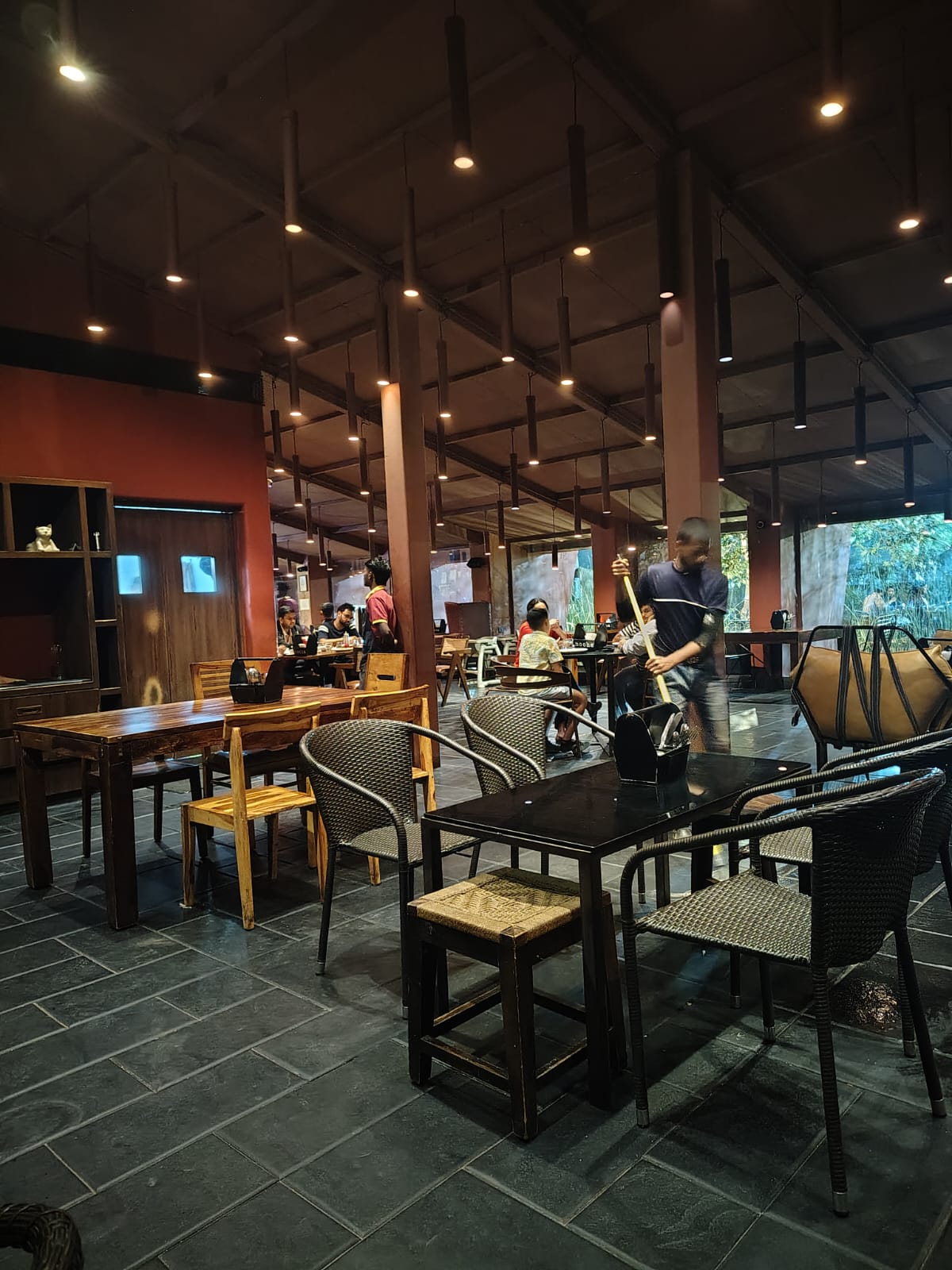
Inside one such café, wedged between a grocery store and a mobile repair shop, two young women move quickly between tables, carrying plates of chow mein and fried rice. A ceiling fan spins slowly overhead, while delivery-app riders wait outside for take-away orders.
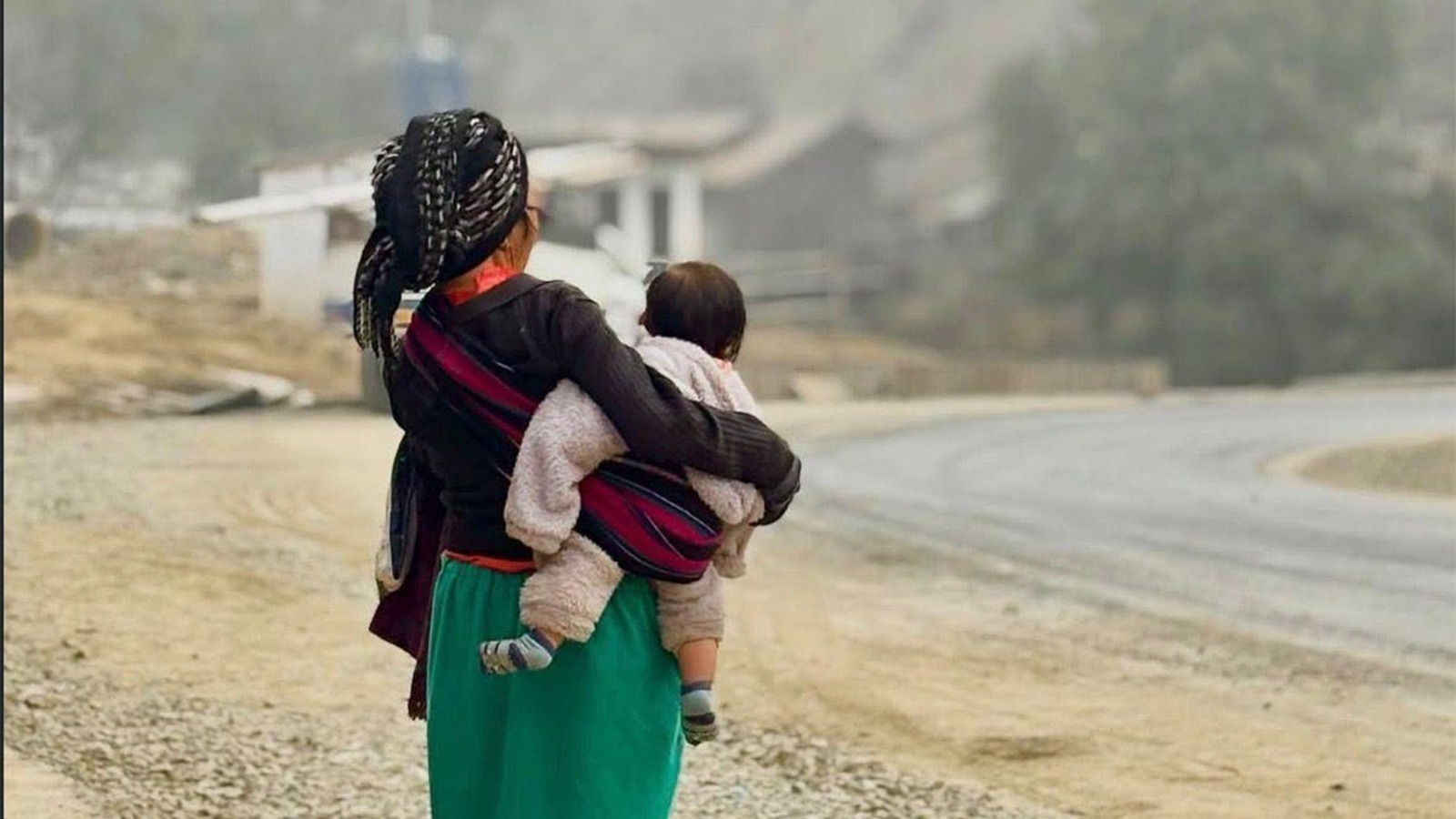
One of the women is Thangjam Ningol Devi, 24, a member of the Kuki community, who is originally from Manipur’s Kangpokpi district. The state’s ethnic conflict, which began in 2023, forced Devi to leave her village, Kalapahar, two years ago. She and her family were displaced by the violence between the majority Meitei community and the minority Kuki-Zo communities, along with over 60,000 people, according to official figures.
The economy in Devi’s village collapsed due to the clashes. Her family members, who worked as farm labourers and sold vegetables in the local market, were left without a source of income. And that’s how she ended up migrating to New Delhi. Devi now rents a tiny room near the café with three other women — it can barely hold two thin mattresses and a stove. “I came here thinking Delhi would give me stability,” Devi said during her lunch break. “But life here is also a struggle,” she added with some resignation.
The Migration Story interviewed several Manipuri women who said that though they have found safety in the capital, the jobs they found — at eateries, salons and shops — are insecure, underpaid, taxing and increasingly, harder to find.
ESCAPING VIOLENCE TO REBUILD LIVES
Manipur’s ethnic conflict, which began in 2023, displaced tens of thousands of people from the Meitei and Kuki-Zo communities — and many still live in relief camps across the state. Homes, businesses and places of worship were attacked, vandalised or burnt down; markets that once supported small traders shut down, leaving many without incomes. As a result, some people migrated to neighbouring states like Mizoram and Meghalaya, others to cities like Delhi.
The capital has long been an important destination for migrants from the North East, who have come here seeking education and work. Many have settled in North-Eastern hubs like Munrika and Humayunpur. Since the conflict began, an increasing number of Manipuris have moved into these areas (especially from districts affected by the violence), making the search for work and housing that much tougher, said several Manipuri migrants.
“We came here because of the violence,” said Laishram Chanu, a member of the Meitei community, who moved to Delhi from Imphal East district in 2024. Her family’s stationery shop in the Khurai Khongnang Makhong area was destroyed during the violence, leaving them with no livelihood. “There was no safety and no work in our village,” she added.
Chanu’s story is not an isolated one. She said that several women she knows had to migrate after their families could no longer make a living where they were. Local economies collapsed due to the conflict — small businesses were destroyed, fields were burned, and local markets shut down. “We did not plan to leave. But after the conflict [started], there was nothing left for us.”
THE LONG ROAD TO THE CAPITAL
Many North-Eastern migrants come to New Delhi through support networks of relatives and friends already living in the city. But for Chanu, the journey to the capital was sudden.
She recalled the day she decided to leave Manipur. “My father told me it was no longer safe for me to stay,” she said. “So, we packed quickly and I left for Guwahati.”
From there she travelled to Delhi by train with a friend who had already migrated to the city. The journey took nearly two days. When they arrived in the capital, everything felt overwhelming to Chanu.
“At first I was afraid to even cross the road,” she said, laughing. “But slowly you learn.”
Work for Chanu begins before sunrise. She wakes up at five each morning and in half an hour, boards a crowded bus from Munrika, where she lives, to Safdarjung, where she works at a small North-Eastern eatery. She is at work till the eatery closes at 11 pm, sometimes midnight.
“I send most of my salary home,” she said during a work break. “My parents depend on that money.” She earns around 12,000 rupees a month, and nearly half of her salary is spent on her own rent and food. The rest she sends home.
She confessed that she sometimes wonders what she is doing in New Delhi. But returning home is not an option for her. “There is nothing there right now,” she said.
DISCRIMINATION IN DELHI
Economic hardship is only one of the challenges these women face — discrimination is another. Devi narrated an incident to this reporter, which demonstrated this.
One evening after work, Devi and her colleague (also from the North East) were waiting for a rickshaw outside the café where they work. Some North Indian men who were passing by slowed down and started to stare at them. “Where are you from?” one of them asked loudly. “China?” another one laughed. Devi said she and her colleague ignored them and walked away.
“Things like that happen often,” she said. “Sometimes people treat us like we are not from this country.”
Earlier this year, a video surfaced online that showed a couple shouting racial slurs at migrants from Arunachal Pradesh in South Delhi’s Malviya Nagar. In another reported case, a Manipuri woman, who had objected to racist remarks being made about her, was beaten up in a public park in Saket.
Devi said that such discrimination reinforces the insecurity she feels in New Delhi. It is one the main reasons why lives in Munrika, where she is surrounded by others from the North East.
Alem Pamei, a New Delhi-based activist who is originally from Manipur’s Tamenglong district, told The Migration Story that most North-Eastern women find work in eateries, salons or grocery stores serving migrant communities. As with most migrants, they end up informal jobs without contracts or labour protections.
“These women [who came after 2023] escaped violence, but arrived in a city where survival becomes the first priority,” she said. “Many migrants have been traumatised by the recent violence. They have lost homes, businesses and communities. But when they reach Delhi, there is very little support available to help them rebuild their lives”
Many women share small rooms with three or four others to keep expenses at a minimum. Devi, who shares a meal with her flatmates (also from the North East) after work every, told this reporter about an exchange she had with them recently.
“One evening while chopping vegetables, one of them joked: ‘If we were in Manipur, we would never eat noodles this many times a week.’ The others laughed. Then the room fell quiet.” After a moment, Devi said softly, “Back home, my mother would cook for all of us [in the family].”
LIVING BETWEEN TWO WORLDS
Thounaojam Rina, a Kuki who is originally from Churachandpur town, now works at a salon in the posh Green Park area. “Before the conflict, I helped my mother run a small shop, but when everything closed, we had no income,” she said.
Churachandpur was a major flashpoint during the ethnic clashes, and thousands of families from the town remain displaced as the local economy is still recovering from the strife. Small markets, which once supported entire households, are struggling to reopen. Women who once sold vegetables or snacks at roadside markets now face uncertain futures, Rina added.
Langthianmung Vualzong, a Manipuri academic who teaches political science at the Indira Gandhi National University, New Delhi, said that the migration of young people after the ethnic violence began was partly driven by economic collapse. “When violence disrupts local markets and livelihoods, migration becomes a survival strategy,” Vualzong said.
He added that women are often among the first to migrate because they can more easily find service-sector jobs in cities. “But migration alone cannot resolve the trauma they carry from conflict,” he explained.
In January this year, the Manipur government announced that it would resettle 10,000 of the more than 40,000 internally displaced persons (IDPs) by March 31, 2026. It has set aside 734 crore rupees from the 2026-27 state budget for the rehabilitation and resettlement of IDPs.
Additionally, the government announced plans to strengthen women-led self-help groups and provide financial assistance to them, apart from generating employment for the youth and supporting skill development programmes.
However, those displaced and still living in relief camps remain uncertain about when it will be safe for them to return home.
Meanwhile, in Munirka, while Devi was working at the café one night, she had a text exchange with her sister, which she shared with this reporter. She was clearing plates and wiping tables when her younger sister texted to ask if Devi could send money for her school fees.
This was why, Devi said, she had to work in New Delhi to continue to support her family. In her own words: “Life is not easy, but we have to continue [to be here].”
With inputs from Chebawk Duria in Churachandpur town, Manipur.
Edited by Subuhi Jiwani
Gaurav Kumar works as a research assistant at the United Service Institution of India, a New Delhi-based think tank. He is interested in conflict, geopolitics and strategic affairs.