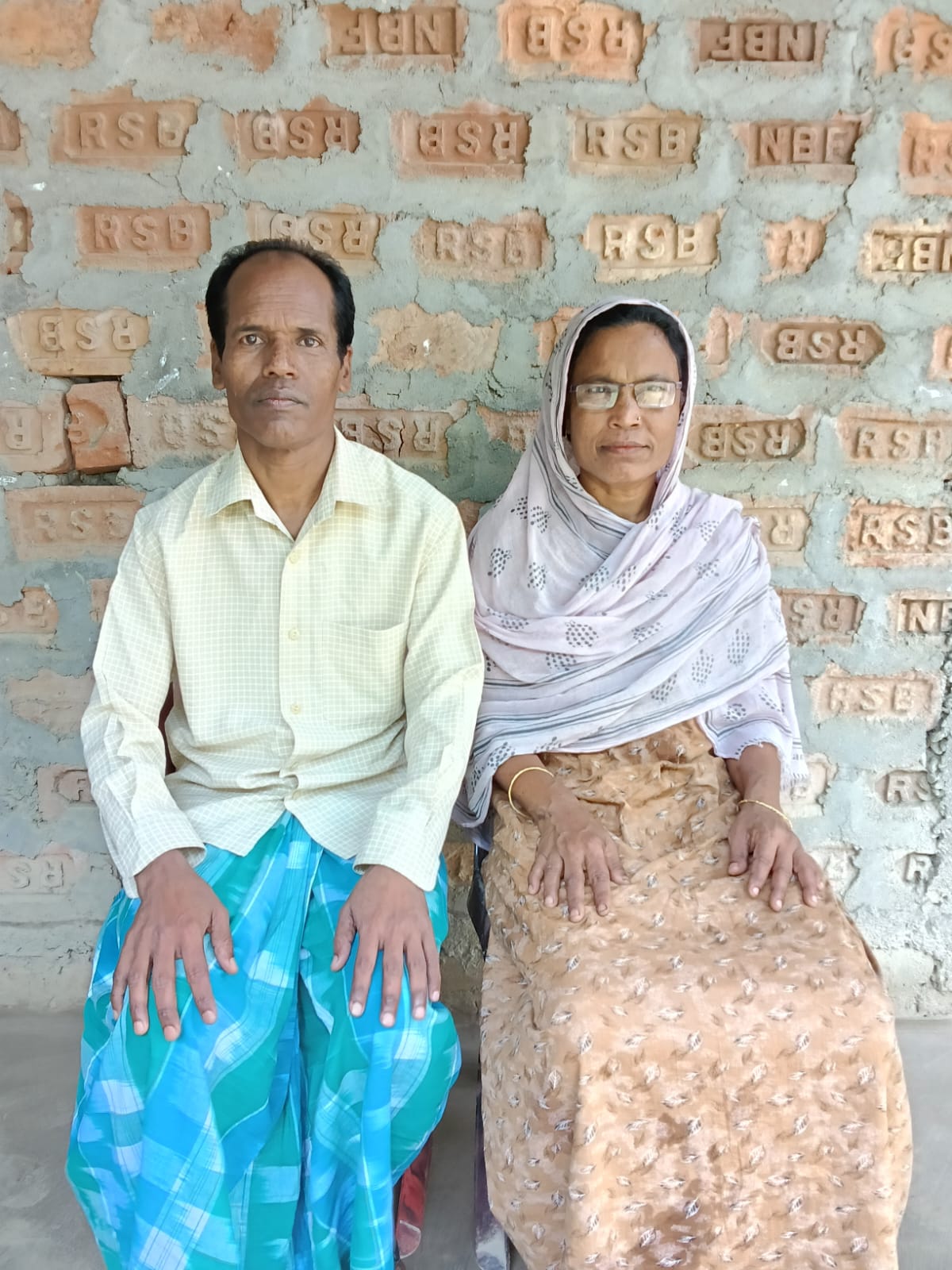
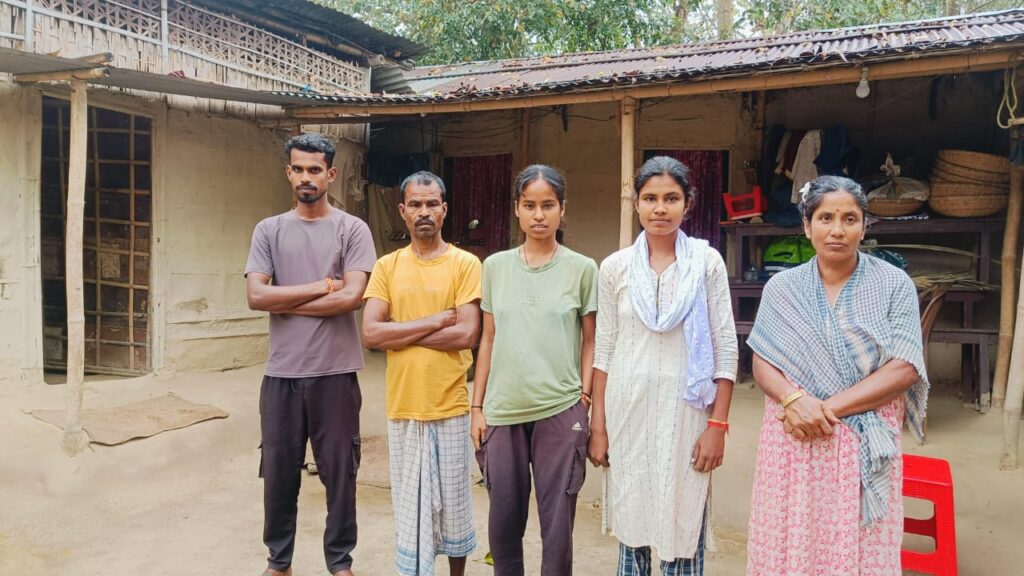
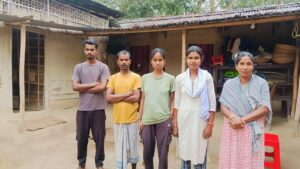
DARRANG, Assam: It took Kitab Ali four days of non-stop travel to get from Bengaluru to his home in Darrang district’s Ghiladhari village. He arrived on April 3, just in time for the state election on April 9.
On previous trips, Ali, 52, would travel for only three days to see his wife, 45-year-old Hamida Khatun, who lives in their village home by herself. Ali works as a laundryman at a five-star hotel in Bengaluru.
But this time, his journey was longer, and Ali incurred more expenses. He spent around 8,000 rupees on the one-way trip that covered 3,000 kilometres and used multiple modes of transport: two trains, two buses and one tomtom (e-rickshaw). He spent even more on food and water.
Scores of migrants like Ali, working in faraway cities like Bengaluru, Hyderabad, Kochi, Delhi and Mumbai, headed home to vote in the Assam assembly election scheduled for April 9. Despite the long and arduous journey, Ali said that it was worth the trouble.
“I can’t forgo the opportunity to vote. It is the only right poor people like us are left with,” he said.
EXERCISING THEIR DEMOCRATIC RIGHT
Government data from 2023 shows that over 5.7 lakh people have migrated from Assam to different parts of the country. Bengaluru, where Ali relocated for work three years ago, has emerged as a popular destination for them. In 2019, the city was home to an estimated 2 lakh people from the state, according to a nonprofit working with Assamese migrants in Bengaluru.
Ali told The Migration Story that thousands of migrant workers were headed back to Assam to cast their ballots. This made getting a train ticket that much harder. Though his initial plan was to celebrate Eid on March 21 with his wife and fellow villagers, he could only leave Bengaluru on March 30.
“The tickets to Assam were sold out, so I decided to travel to Danapur [in Bihar’s Patna district] by train. Then I took a connecting train to Guwahati, which I reached at around 10 pm on April 2. Thereafter, I boarded a bus to Kopati in Darrang district — a 100-kilometre journey. On the morning of April 3, I finally reached Ghiladhari on a tomtom from Kopati,” he said, describing his journey in detail.
He spent close to half his monthly salary of 18,500 rupees on the trip. “I have taken 20 days of leave from work. It means I won’t be paid for those days, and I’ll be losing around 600 rupees daily,” he added.
The train journey was also physically exhausting for Ali. “It was agony, and I was unsure about whether I would make it home this time. I did not sleep for four nights and my whole body was aching, but I rested after arriving and ate my wife’s delicious food to recuperate,” he said with a sense of relief writ large on his face.
His wife, Khatun, who works as a midday-meal cook at the lower primary school in Ghiladhari, was ecstatic to see her husband after almost a year. She lives alone in their one-bedroom house ever since Ali moved to Bengaluru; their daughter, who is married, lives in Bakultala village in neighbouring Udalguri district.
“I was waiting for the election more than Eid this time as I knew my husband would come home to vote. The election is a good enough reason for poor people like us to come home and exercise our democratic right,” said Khatun, who makes 1,500 rupees a month.
Ali worked as a mason all his life in cities near Ghiladhari, where he built residential and commercial buildings. But work started to dwindle drastically after the Covid-19 pandemic. Though Ali wanted to grow paddy as his father had before him, floods had eroded their land many years ago.
Ghiladhari and areas nearby in Darrang experience floods every year due to their proximity to the Brahmaputra River and its tributaries, especially the Dhansiri River. This makes Ghiladhari more vulnerable to floods and soil erosion, according to a 2012 study by the National Disaster Management Authority of India.
Assam has lost over 3.8 lakh hectares of land due to soil erosion since 1954, says the website of the Assam State Disaster Management Authority. This area constitutes seven percent of the state’s total area.
“All we have is a house and a small courtyard. So, I had to move to Bengaluru to earn,” Ali explained.
RURAL DISTRESS PUSHES PEOPLE TO MIGRATE
Joydeep Baruah, a political economist at Guwahati’s Krishna Kanta Handiqui State Open University, told The Migration Story that Assam has witnessed an increase in employment-related out-migration in recent years.
“The bulk of this out-migration is intra-state and about six to nine percent of it is inter-state, especially to the southern states, where livelihood opportunities are more and wages are relatively higher,” Baruah said.
He attributed widespread out-migration from Assam to rural economic distress. “There is a shift in the pattern of out-migration. About two decades ago, it primarily originated from areas affected by floods and soil erosion. In recent times, however, agriculture has become increasingly unremunerative due to the predominance of small landholdings, rising production costs, lack of assured markets and inadequate prices. Moreover, agriculture is largely seasonal,” he added.
A 2022 academic paper based on Census data shows that Assam’s inter-state out-migration rate rose from 24.13% in 1991 to 25.48% in 2001 and to 32.54% in 2011. It also states that the reasons for out-migration from Assam include employment opportunities, marriage, education and business, among others.
‘VOTING HAS BECOME COSTLY’
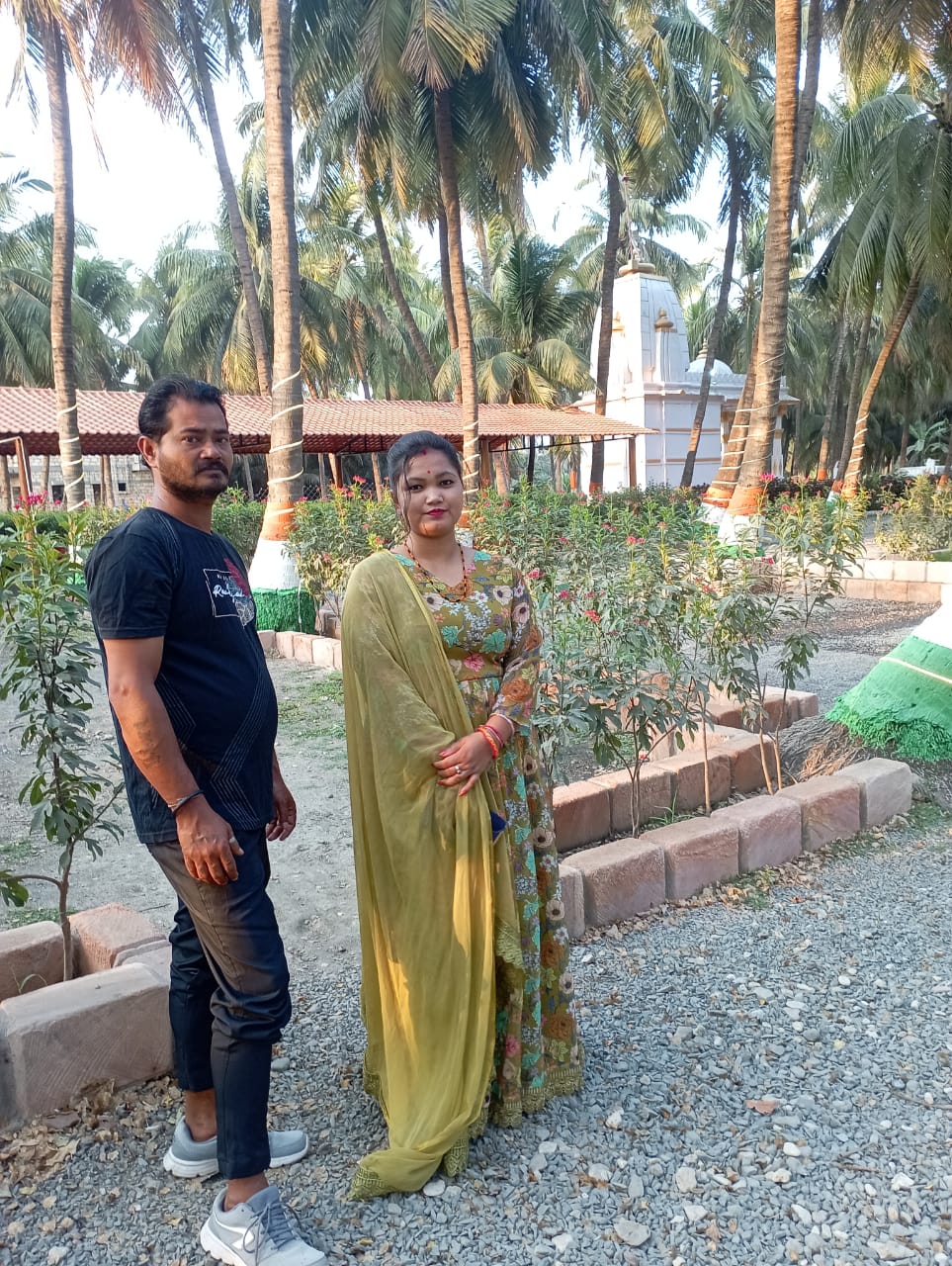
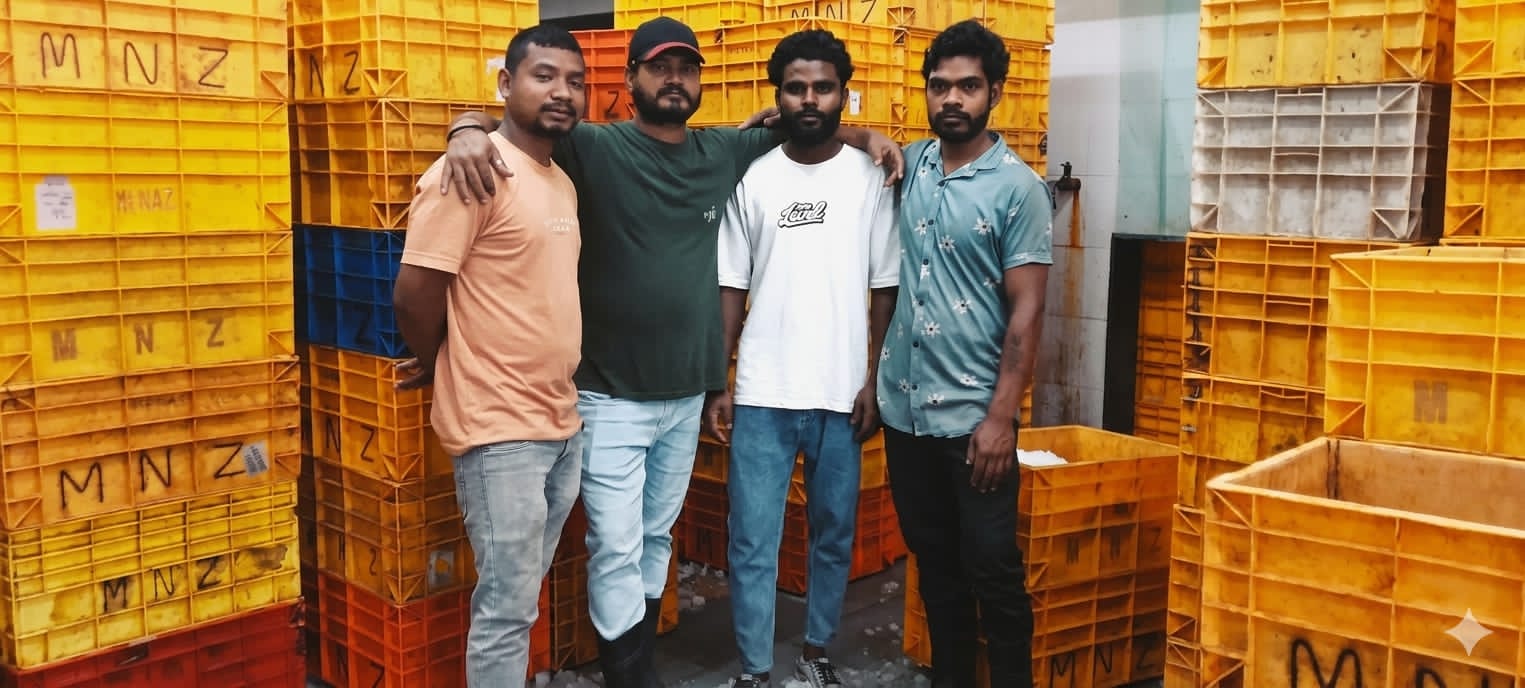
Amal Das, 30, and his wife, Anjali, 28, tried their best to return home to Rani village in Assam’s Kamrup district from Gujarat’s Veraval this March, but couldn’t get train tickets in time. The couple has been working in the fish packaging industry in Veraval for a decade.
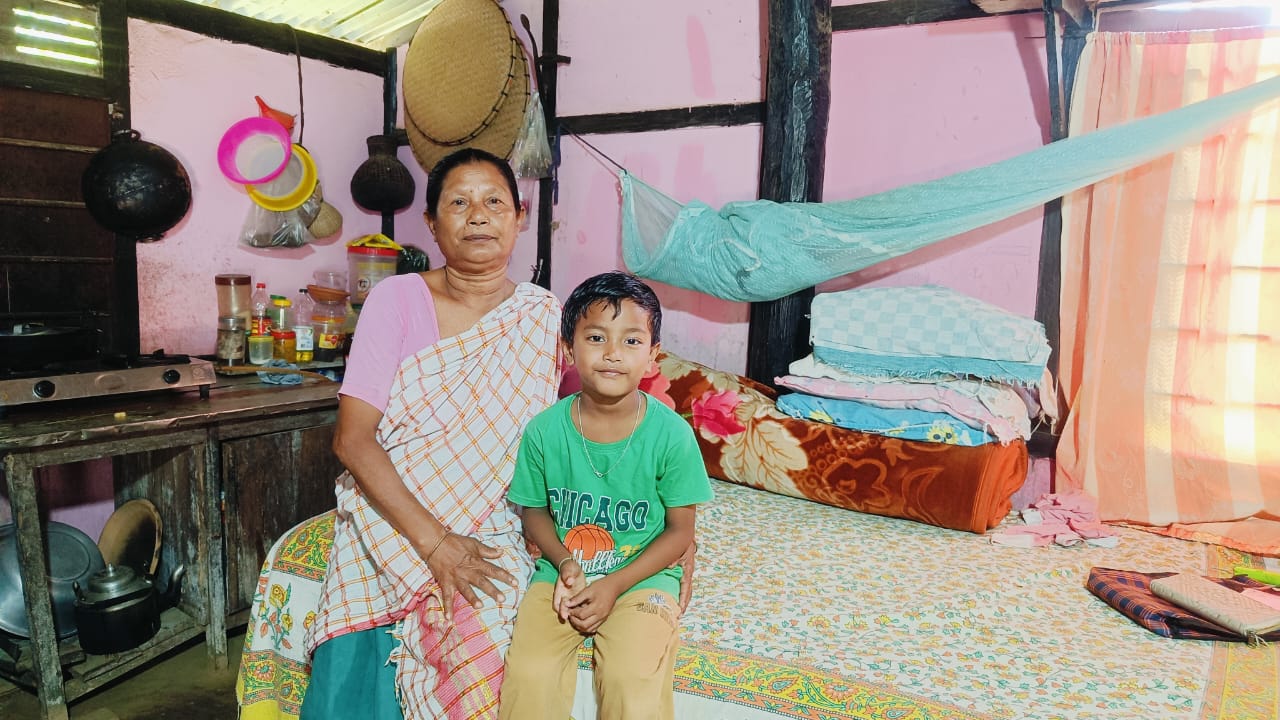
The couple didn’t want to come back only to vote — they were desperate to see their seven-year-old son, Kunal, who lives with Amal’s mother, Putli Das.
“The train ticket prices soared and they are unavailable due to the rush of migrant workers returning to Assam. I can’t spend much on tickets as my wife and I each earn 11,500 rupees a month and send a part of our earnings back home for my son’s education and other needs. The other part [of our salaries] is spent on food, and we hardly save anything at the end of each month,” Amal said over the phone from Veraval.
“Voting has become a costly affair,” he added.
It was not only Amal and Anjali for whom returning home had become difficult. There were others too. A recent viral video showed an Assamese man working in Bengaluru asking Assam’s current chief minister, Himanta Biswa Sarma, to arrange special trains for migrant workers to come home and vote.
Several people in Rani, around 20 kilometres from the state capital Dispur, told The Migration Story that many Assamese migrants spent 12,000–15,000 rupees on flights to Assam because they did not get train tickets.
Dinesh Das, an activist and farmer in Rani, also said that despite the difficulties of travelling to Assam from far away, many voters spent hefty sums on trains and flights.
He explained their reasons behind doing so thus: “Villagers risk being blacklisted and denied benefits under the government’s social welfare schemes if they don’t vote. Also, marginalised Bengali-speaking Muslims, who are being targeted by the political class as suspected illegal immigrants, never miss voting. Otherwise, they fear they would labelled as ‘foreigners’ and could be evicted from their lands and deported.”
But it hasn’t been hard only for the returning migrants. Amal’s mother, Putli, and his son, Kunal, are saddened by the fact that Amal and Anjali cannot join them for Rongali Bihu festivities, which begin on April 14. Rongali Bihu is Assam’s biggest festival.
“We are not celebrating Bihu this time because my son and daughter-in-law are not coming home. We are poor people and always have to make adjustments. Why else would my son and daughter-in-law have to go to Gujarat and work?” asked Putli, a 51-year-old widow, who has been raising her grandchild in Rani.
“Amal and Anjali stay in a place arranged for by their employer, where male and female workers live separately. But they cook and eat together. Children cannot stay there and so, my nati (grandson) has been staying with me since he was only two years old. I feed and clean him and take him to school; I have become his mother,” Putli said with a smile.
At one time, Putli used to weave gamosa and mekhela chador (traditional Assamese clothes) and sell them in the market. “I have stopped weaving because I can’t afford the high cost of yarn anymore. These days, I am raising ducks and chickens, and I sell their eggs. I also sell the betel nuts I grow in my garden,” she added. She earns 1,000–2,000 rupees a month, with which she covers household expenses.
When Putli took a pause during her interview, a vehicle with a loudspeaker passed by in the lane close to her home. It played a peppy Assamese song urging voters to cast their ballots for a particular party.
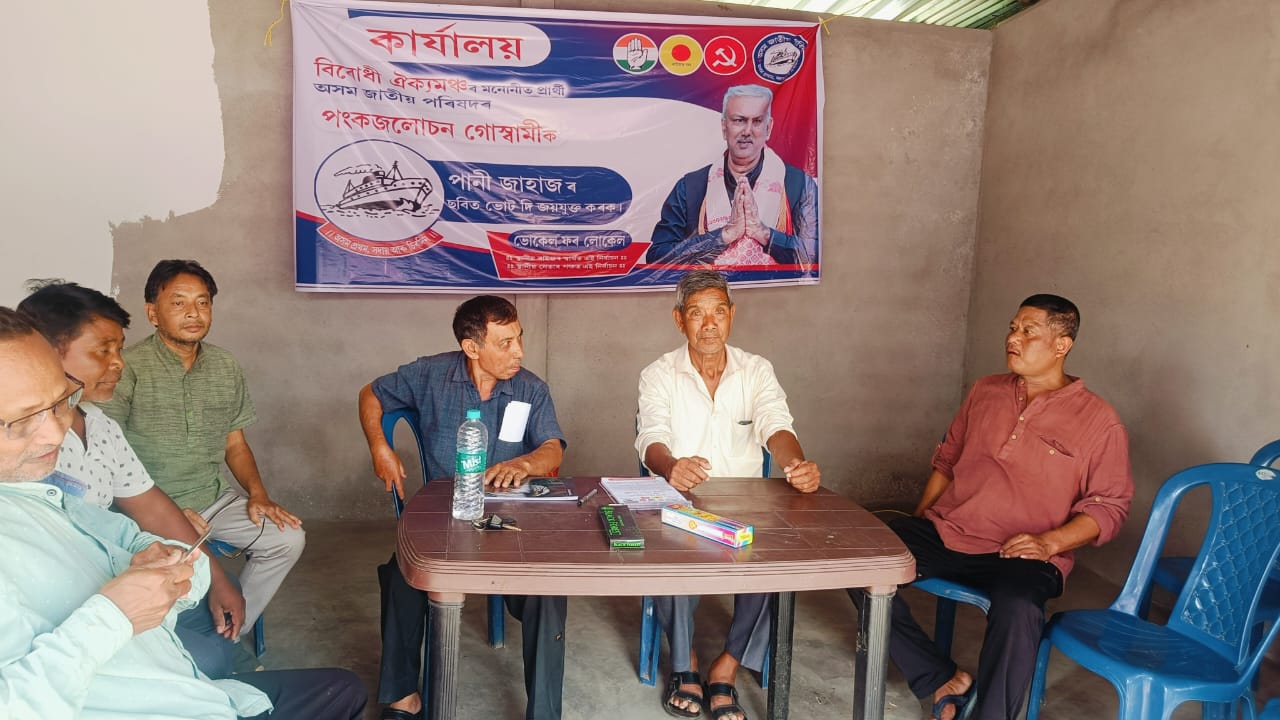
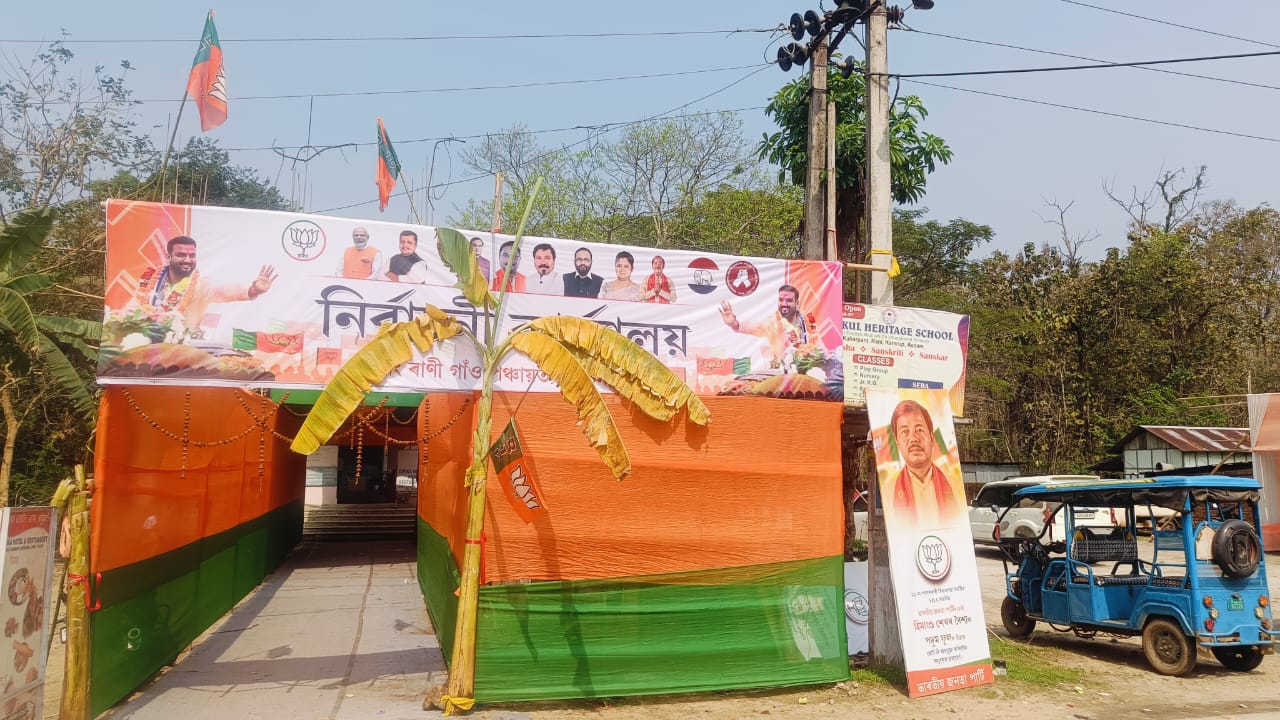
Otherwise a sleepy village, Rani looks now colourful with posters of rival candidates pasted all over. Political parties have also set up makeshift campaign offices alongside roads in several parts of the village.
Villagers throng to these offices to discuss politics over several cups of tea. “The political parties are also hosting feasts regularly. Voters are being wooed by serving them meat and fish,” Putli added.
Rani falls under the Palasbari assembly constituency, and its two main candidates are Himangshu Shekhar Baishya of the Bharatiya Janata Party (BJP) and Pankaj Lochan Goswami, a joint candidate of the the Indian National Congress (INC) and the Assam Jatiya Parishad.
Though Putli did not say who she was going to vote for, she insisted that “whoever wins should help migrant workers like Amal and Anjali get a job in Assam”.
ELECTION PROMISES FAR FROM GROUND REALITIES
Nayanjyoti Bhuyan, an independent senior journalist from Guwahati, told The Migration Story that rural youths from the state move to industrial hubs across India more for the sake of survival than opportunity.
“Out-migration from Assam is not episodic. It is structural and deeply embedded in the state’s political economy,” he told The Migration Story.
Data from the state’s Directorate of Economics and Statistics shows that over 11.9 lakh people are employed in Assam’s formal sector in 2025. While over 4.8 lakh are employed in the public sector, a little over 7 lakh work in the private sector.
Under the Viksit Bharat–Guarantee for Rozgar and Ajeevika Mission (Gramin), a national rural wage employment guarantee scheme, there were over 40 lakh job card holders in Assam and 21,478 rural households for whom employment was generated for 100 days in 2023-2024.
As per the Economic Survey, Assam, 2025-26, the state government under the BJP provided 1.25 lakh public-sector jobs. But 21 lakh unemployed ‘educated’ people in the state (including those who have passed class 10 or 12, graduates and postgraduates) are registered with employment exchanges that connect them to employers, according to the survey.
However, the National Multidimensional Poverty Index by NITI Aayog put Assam’s poverty rate at 19.35% in 2023 — higher than the all-India rate of 14.96%.
Eyeing a hat-trick in the assembly polls, the BJP, in its manifesto, promised 2 lakh government jobs. In the same document, incumbent Chief Minister Himanta Biswa Sarma wrote: “The creation of over 1.64 lakh government jobs and support extended to more than 40 lakh Orunodoi families reflects our commitment to transparent employment and social responsibility.”
The Orunodoi scheme is a flagship Assam government initiative that provides monthly financial assistance of 1,250 rupees to women from economically disadvantaged households.
But Guwahati-based activist and farmer Pramod Kalita said the ruling dispensation had failed to understand the ongoing rural distress in the state, which in turn is behind the large-scale out-migration, particularly of youths.
“We are facing a huge unemployment crisis. It cannot be solved only by creating or promising one to two lakh government jobs. We need jobs in much larger numbers and the problem cannot be solved by giving financial aid either. Every household wants its sons and daughters to get government jobs, which are not always possible to provide,” Kalita added.
On March 31, INC Rajya Sabha member Syed Naseer Hussain spoke at a campaign rally for his party in Barpeta district’s Pakabetbari block, which is one of the state’s 126 assembly constituencies. He said that in his hometown of Bellary in Karnataka, which is a mining hub, hundreds of Assamese youths, including women, work as daily-wage labourers. “Assamese people are working in all big cities like Chennai, Hyderabad, Delhi… and they are mistreated,” Hussain said in Hindi.
On the same day, at a press meet in Guwahati, Hussain reiterated that “the lack of employment opportunities in Assam is forcing people to migrate outside the state.” He went on to say that the absence of structured economic planning and industrial growth in the state is restricting local employment generation.
In its own manifesto, the Congress, which is attempting to make a comeback in Assam, highlighted the importance of “11 resolutions, covering governance, identity, healthcare, infrastructural development, industrialisation, agriculture, rural and urban development, climate change and a ‘secure Assam’.”
Karnataka Deputy Chief Minister D. K. Shivakumar, on his own recent visit to Assam, said that his party, the INC, will focus on creating jobs for Assam’s youths so they can earn a decent livelihood in the state.
THE ANSWER TO ASSAM’S OUT-MIGRATION CRISIS
In response to a question about what needs to be done about Assam’s out-migration crisis, activist-farmer Kalita said that the government must create an atmosphere of trust and confidence among those engaged in agriculture, animal husbandry, sericulture, handlooms and handicrafts, among other sectors. It must also provide them with insurance and a market for their products, he added.
He also spoke of the in-migration that takes place in Assam, of people from Bihar, Odisha, West Bengal and Jharkhand, who end up in the informal sector in the state.
“Mere tokeism is not enough: we have to work seriously or else men and women will continue leaving Assam. It is also not like Assamese migrants have safety and security [after they relocate]. They work in low-paying jobs even though they have travelled hundreds of miles,” Kalita said, who works with rural women on the outskirts of Dispur.
Political economist Baruah said that comprehensive employment planning was needed in the state to stem out-migration. “It is important to identify sectors with high growth potential and strong employment elasticity. Sectors such as agriculture, horticulture, fisheries, and tourism hold significant promise in this regard.”
He added that “a substantial public investment is needed to develop infrastructure for the production, logistics and marketing [of these sectors]. At the same time, systemic reforms and capacity-building initiatives must be undertaken at multiple levels. There is a need to institutionalise comprehensive and universal social security provisions to protect people from vulnerabilities [such as joblessness, migration and poverty].”
Senior journalist Bhuyan said that when it came to out-migration, the dignity, safety and security of Assamese migrants in destination places needed to be looked at. “Assamese youths are not only migrating out of the state, but dying in destinations under mysterious circumstances,” he said. A recent media report stated that in the last six months 162 Assamese migrant workers have died at their places of work in different parts of India.
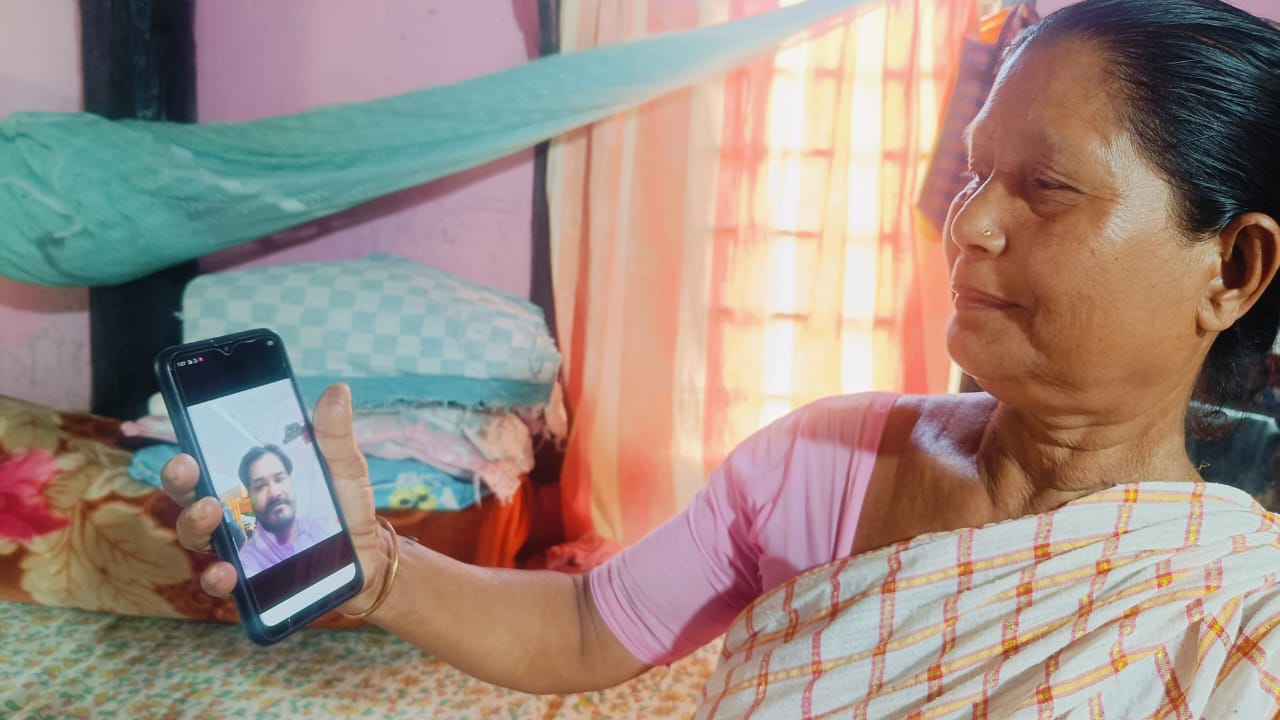
Back in Rani village, Putli, too, worries for her son, Amal. When this reporter met her, she was sitting on her bed and speaking to Amal on a video call. He was still in Veraval. Amal asked her about his own son Kunal and then enquired about what she had made for lunch that day.
“I have cooked rice, dal and drumstick curry in mustard paste,” she answered. “Drumstick curry is my favourite!” Amal reacted. “Yes, I know. Come home soon, son,” Putli said before she ended the call.
Maitreyee Boruah is a Guwahati-based independent journalist