10 min read

Under the neon lights, the hidden risks for workers

The Goa nightclub tragedy followed a script that is only too familiar. As the year-end party frenzy sees increased footfalls in nightclubs, pubs and cafes across cities, the occupational risks for the bearers, kitchen staff, cleaners and front-desk personnel who keep them running remain high

Amoolya Rajappa

Pic credit: Wikimedia Commons

An old note dated October 22, 2021 reads like a floor plan drawn from memory: “A low-hanging roof in places, double-height open spaces in the middle, a mezzanine level that stands out, an unused snooker table and a shabby mannequin on the wall. Partitioned seating spaces ranging from cosy to clumsy to claustrophobic. Ever-smiling staff sporting black uniforms and well-groomed hair moving seamlessly between tables”.

I found this note buried among ethnographic observations from my doctoral fieldwork on migrant workers and mobile media use in India’s changing urban landscape. As I skimmed through colour-coded sheets describing informal workspaces, my mind returned to one particular site: Mudpipe Hookah Bar in Koramangala, Bengaluru, now infamous for a fire that broke out, akin to the recent Goa tragedy.

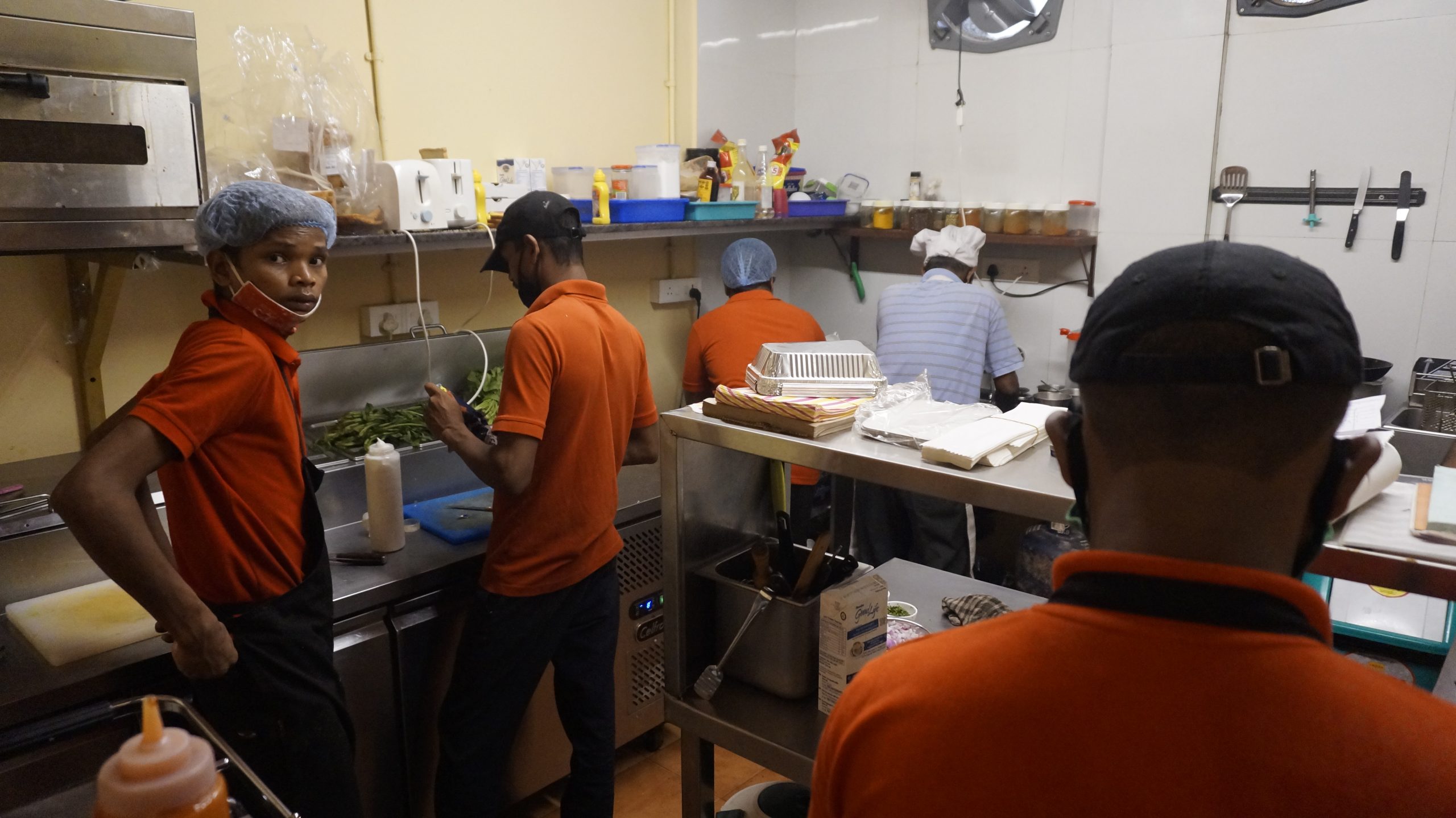
Mudpipe occupied the entire rooftop of a corner building on Hosur Road, very close to Forum—now Nexus—Mall, the city’s first full-fledged shopping complex in Bengaluru. The interiors were unremarkable: large wooden tables at the centre, high stools with worn-out cushions along the edges, and the whirring sound of air coolers that blended with the relentless hum of traffic below. The kitchen was crammed into a narrow corner, with more people than space to move. It was not a place designed to be remembered. Yet, it is etched into my mind because of the people who worked there.

My first interaction at Mudpipe was with Pramod, one of the senior waiters, who has over a decade of experience in Bengaluru’s hospitality circuit. He had left his hometown near Darjeeling as a restless young man in search of stable work. After a brief stint at a fast-food outlet, he joined Mudpipe in 2011 through a friend’s recommendation. By the time I met him, Pramod was one among eight to ten young adults from India’s North Eastern Region (NER) working at the bar.

For many like Pramod, the hospitality sector, known to be a highly fragmented and labour-intensive sector, has generated tremendous job opportunities in recent years and is a significant source of foreign exchange for India. On the whole, the hospitality industry comprises various sectors, including travel and tourism, the food and beverage (F&B) sector, lodging, event planning, and recreation.

Recent market estimates indicate that India’s hospitality industry is experiencing rapid growth, with pubs, bars, cafés, and lounges emerging as key revenue drivers within the food and beverage sector.

According to the data released by the International Market Analysis Research and Consulting Group (IMARC), the PBCL market was valued at approximately USD 2.8 billion in 2024. It is expected to nearly double over the next decade, driven by factors such as rising disposable incomes, higher leisure spending, and the increasing popularity of nightlife among the urban working population.

People like Pramod who work under flexible, unstandardised working conditions are among several faceless labour who continue to propel the growth of the hospitality industry, especially post the rough run of the pandemic years.


Employed as bearers, kitchen staff, cleaners and front-desk personnel, they occupy the lowest rungs of the hierarchy, invisible to patrons but indispensable to the industry’s success. Their lives are marked by occupational risk and precarity, the kind which was laid bare in the recent fire at Birch by Romeo Lane, a nightclub in Goa, where 25 people lost their lives. A majority of the deceased were migrant workers trapped in the island facility’s basement kitchen.

NO LESSONS LEARNT

On October 19, 2023, an explosion occurred at Mudpipe Hookah Bar due to a gas leak. Twenty-nine-year-old Prem, the chef of the restaurant, hailing from Nepal, jumped from the fourth-floor terrace to save his life as the fireball-like blast rapidly engulfed the rooftop café. News reports attributed the incident to the negligence of the café owner, who failed to comply with required licenses serving hookah despite only having a license for food catering and sidestepped basic fire safety protocols (absence of emergency exits, narrow entrance).

As I watched the disturbing visuals, captured by bystanders on their smartphones, of Prem taking a hesitant plunge to escape the bellowing flames, I remember feeling a deep sense of despair mixed with helplessness. It was the same kind of feeling I felt last week, watching news of workers from Uttarakhand, Jharkhand, Nepal and Assam being burnt alive in Goa in what could have been an easily avoidable fire accident.

The Goa nightclub tragedy followed a script that is by now depressingly familiar. An audacious nightlife empire built on ecologically fragile khazan land (low-lying coastal wetlands traditionally meant for agriculture & aquaculture), designed to attract tourists with visually pleasing but highly flammable materials such as wood, bamboo, fabric and thatch.

Licences were allegedly subverted, fire safety norms ignored, and regulatory oversight mediated by political patronage. None of this is new. What is equally predictable is the governance response that follows- sealed premises, hurried arrests, suspended officials, fire safety audits and FIRs that rarely translate into culpable action.

Workers at Mudpipe enjoy a brief break on the abandoned terrace of the rooftop Cafe and Hookah Bar in Bengaluru. Amoolya Rajappa/The Migration Story

The hospitality industry contributes over 7% to India’s GDP and remains one of the most diverse occupational sectors, encompassing lodging, food and beverage services, transportation, and recreation. Even within the F&B segment, working conditions vary widely—from fine-dining restaurants and casual cafés to restobars, hookah parlours, cloud kitchens and informal catering units.


And across all these settings, migrant labour forms the backbone of everyday operations. During my doctoral fieldwork, I met with cooks in paying guest accommodations across Bengaluru, who often hailed from Bihar, Uttar Pradesh and West Bengal.


On a recent visit to the coastal town of Kannur in Kerala, I was struck by how all the support staff at a holiday homestay spoke fluent Hindi, despite being hundreds of kilometres away from their homes. However, these workers are always just one untoward incident away from their lives being irrevocably altered.


WHY GOA, BENGALURU OR KERALA?


Ramesh, 42, the then newly appointed manager of Mudpipe Hookah Bar, had over 12 years of experience supervising labour in the hospitality sector. In an interview with me, he shared how it was the English communication skills and commitment to work that made workers from the Northeast region highly employable.


When questioned how the described commitment is different in comparison to local labour, he had come up with a practical answer that strangely continues to upset me a bit. “These youngsters do not migrate with their families. They cannot visit their hometowns often due to the long distance. Hence, more commitment to work,” he shared.


According to the Census of India (2011), a little over one million out-migrants were from the seven states of Northeast India, which constitutes about 2.2% of the Northeast population. Several studies have also revealed a noteworthy trend, indicating that a substantial 90% of migrants from Northeast India belonged to the youth demographic, specifically within the age bracket of 15-30 years.


The significant drivers of out-migration from the region include abysmally low economic development, a lack of higher education, inadequate infrastructure, and political unrest. Since the 2011 census, numerous studies have also highlighted a notable shift in Northeast migration patterns from northern to southern regions of India, such as Chennai, Kerala, and Bengaluru.


In a 2021 paper titled “Job-Seeking Behaviour, Employment, Labour Employability Skills, Dissatisfaction and Job Mobility: A Study of North-East Migrant Workers in Bengaluru,” Marchang Reimeingam used a mixed-method sampling technique to collect primary data from 255 migrant workers from NER employed in different areas across Bengaluru.


His study noted some important findings: a) it was the dearth of employment prospects in NER and the abundance of opportunities in Bengaluru that motivated youngsters to move into the city; b) a majority of these workers worked in the retail sector and depended highly on their social networks to find jobs; c) they tended to find work within shorter periods due to employability skills such as communication and flexibility.


Kaun Goa nahi aana chaahta? (Who doesn’t want to come to Goa?)” remarked Ashish Rawat, cousin of Jitendra Sharma, who died in the midnight fire at Birch by Romeo Lane in Goa’s Arpora.


While Goa’s coastal allure draws migrants from across the country, Bengaluru’s salubrious weather and IT-led growth have quietly fueled the expansion of allied sectors, such as hospitality, creating a steady demand for migrant labour. This trend, however, raises a critical question: are there particular attributes associated with workers from the Northeast that render them especially employable in industries such as hospitality, or is this demand shaped more by structural inequalities than individual skills?


OF OMNIPRESENT AFFABILITY


Recent studies have gathered affirmative evidence in this regard, suggesting how “English language skills, a general cosmopolitan outlook and their fair complexion,” contribute towards employers preferring to recruit workers from NER in the emerging hospitality sectors in urban areas.


In an ethnographic study of a placement centre in Dimapur that offers grooming classes for hospitality jobs, anthropologists Dolly Kikon and Bengt Karlsson trace the journeys of young migrants from Nagaland trained as waiters for India’s expanding service economy.


Their work extends beyond employability to examine how these workers learn to perform care, attentiveness, and emotional labour—skills increasingly demanded in cafés, pubs, and hotels. It also situates this mobility within a larger social transformation, where migration becomes both opportunity and discipline.


As the authors observe in their conclusion, these workers are effectively “produced as servers for the market” under a tightly regulated labour regime, shaped by corporate ideas of soft skills, appearance and constant presentability.


Most workers I interviewed routinely worked two shifts of nearly nine hours each, often stretching to 10–12 hours depending on customer footfall. Gelled hair, visible tattoos and an ever-ready smile were common among frontline staff, who were expected to appear affable regardless of fatigue. At Mudpipe Hookah Bar, this omnipresent friendliness reinforced the premium placed on soft skills as a cornerstone of customer service.


Breaks were scarce during peak evening hours, when business was brisk. During quieter moments, workers huddled around their mobile phones, even in the presence of their managers, to watch news reels, IPL matches and occasionally to indulge in PUBG matches.


“I did not even know what Hookah meant,” laughed Pranav Gurang, one of Pramod’s friends and coworkers. “But once I joined, I had to adapt and learn. I know it is not good for health, but it’s a stable job and pays well for now,” said the 27-year-old who found work at Mudupipe through Pramod.


“I am not keen on this nature of work, but I do it because it is a stable job at times when unemployment is rampant everywhere,” shared Sujoy, who worked in the food and snacks supply section at Mudpipe. The 32-year-old from Tripura also lamented about the lack of employment opportunities back home.


As migratory corridors become increasingly complex and motivations to move defy easy categorisation, the need for empathetic and informed policy responses becomes urgent. Destination cities that thrive on migrant labour must move beyond seeing these workers as endlessly adaptable service providers—and begin recognising the structural vulnerabilities, failing which tragedies such as the Goa nightclub fire risk being met with routine indifference rather than accountability or reform.


The deaths of migrant workers in Goa barely registered in public consciousness beyond fleeting headlines and constantly churning news cycles, even as nightlife continued in India’s party town this holiday season. It is no wonder, then, that the gleam of rooftop lounges and curated urban leisure across India’s metropolises often obscures the labour that sustains it.


(Names have been changed in the essay to maintain anonymity of the workers.)

Amoolya Rajappa is an Assistant Professor at the Department of Media Studies at Christ University, Bengaluru. She is also an independent journalist who reports on labour, internal migration, climate change, and displacement in India.

Author

  • Amoolya Rajappa is a Bengaluru-based independent journalist and reports on labour, internal migration, climate change and displacement in India.
    View all posts

Resent Post

Comments

Leave a Comment

26th julyair pollutionAll We Imagine As LightanalysisBagapatia resettlementBengaluru heat wavebrick kiln decarbonisationbrick kilnscashew plantationsCensus 2011challenges in measuring migrationCinemaclimate adaptationclimate adaptation storiesclimate changeclimate change adaptationclimate change displacementclimate cocktailclimate justiceclimate migration Indiaclimate refugeesclimate relocation Indiaclimate resilienceclimate social impactclimate-clean-upcoastal erosion Indiacommunity actioncommunity resiliencecommunity-led conservationcyclone impactcyclone Phailin impactCyclone Titlidebt bondagedebt trapdisaster management in Odishadisaster recovery housingdroughtEastern Ghatsecological restorationeconomic survey migration estimateselectionsenvironmental restorationerosionfishing livelihoods Odishafloodsforest livelihoodsforest rights in IndiaGajapati districtgender and climate changegender politicsgirl powerGLOFsGram Vikasheatheatwaveheatwave delhiice creamIndia elections 2024India jobsIndia rural jobsindigenous knowledgeinformal workersinternal migration datajobsjobs guaranteejuly 19just transitionKerala educationlabour migration in Indialandslidelandslides in Odishalatestlivelihoodlivelihood resiliencemanaged retreatMGNREGAmigrant workersmigrationmigration and agriculturemigration and climate changemigration in Indiamigration policy in India Readings on data on Migration in IndiaMo Jungle Jami YojanaNational Sample Survey migrationNICEocean warmingOdisha coastOdisha cyclonesOdisha Disaster Recovery ProjectOdisha pollOdisha relocationOdisha reverse migration & tourismODRPolive ridley sea turtlespandemic epilogue'sPayal Kapadia Cannes Film Festivalphoto essayPLFS migration dataPodampettapost-disaster recoverypublic datasets on migrationPVTG communitiesRamayapatna climate adaptationRayagada blockremittances and migrationresilience buildingrising heatriver erosionrural developmentrural to urban migrationSatabhaya displacementSaura tribesea level rise Odishaseasonal migration patternssericultureshifting cultivationshowcasesoil erosionsolar solutionsolutions journalismsustainable agriculturesustainable livelihoodstranslocality adaptationtribal rightsUttarakhand cloudburstuttarakhand crisiswater conservationwater crisiswater scarcitywavewomen and migration in Indiawomen empowermentwomen trek for water

Support The Migration Story- become a member!

Scroll to Top