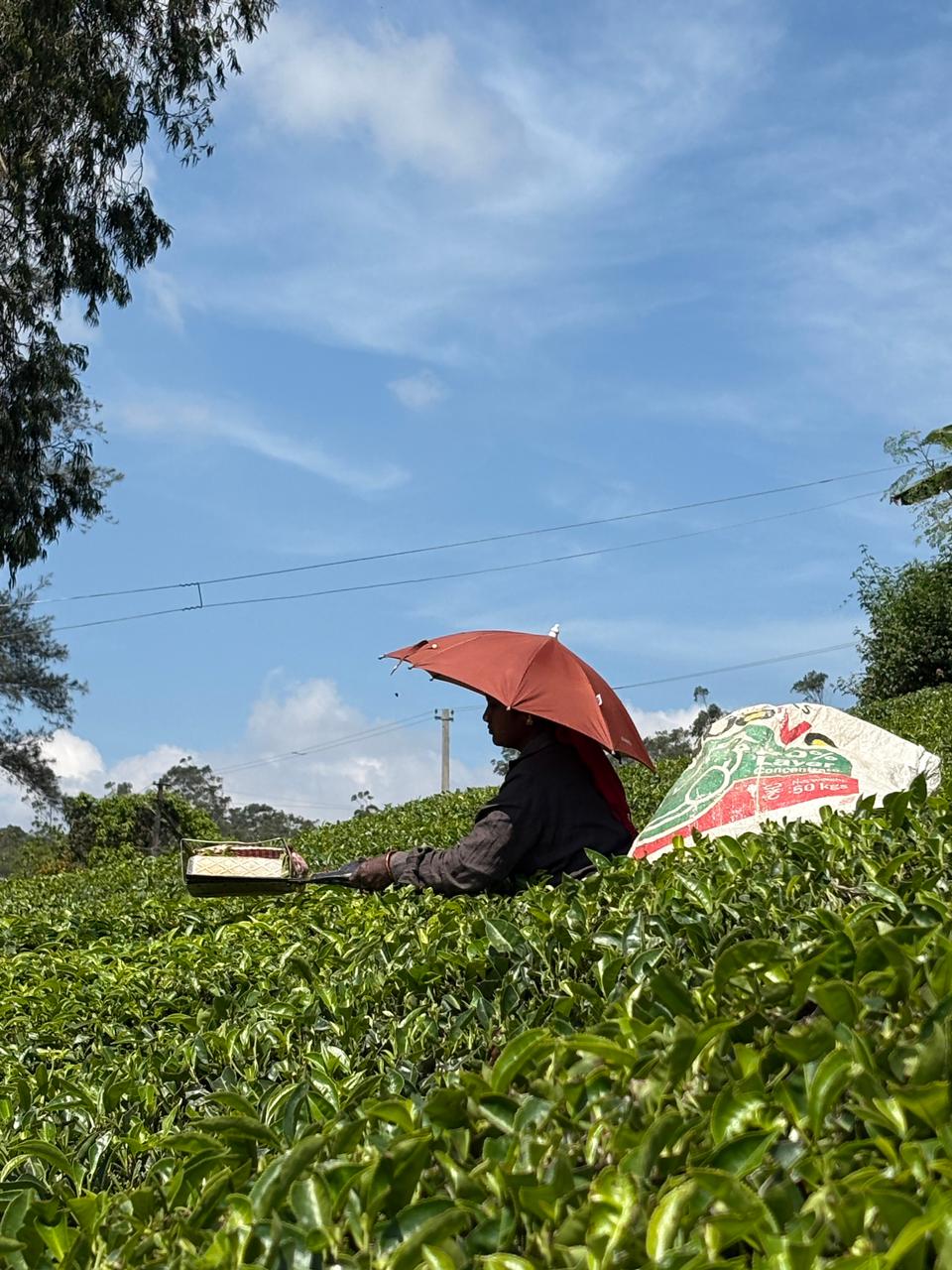
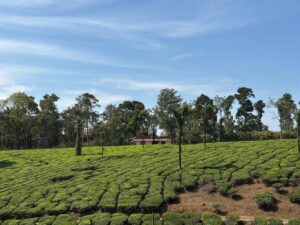
IDUKKI, Kerala: By 1:30 pm, the plucking work was done. It was a mildly hot summer day. Workers, mostly women, with green mesh sacks of freshly plucked tea leaves, slowly gathered under a large tree. Behind them was the vast lush tea gardens. As they wiped sweat from their foreheads and waited for the truck to come, jokes flowed in Malayalam, Assamese, Tamil and Hindi. An Assamese worker teased the Tamil supervisor, “Onnume illa sir!” she said and started laughing. The supervisor smiled and nodded.
This is a relatively new scene. Until a decade ago, a majority of migrant workers at Idukki’s famous plantations were primarily from Tamil Nadu, with which Idukki shares a border. Many of these workers have settled in Idukki, even registering to vote locally. However, in the past decade, Idukki, like other districts in Kerala, has witnessed a demographic shift in its workforce, both workers and unions said.
In the Peerumedu taluk’s tea estates, the newer migrants are mainly from Assam, Bihar, Jharkhand and West Bengal. They are filling the labour shortage left as some workers return to their native place, and new Tamil migrants seek more white-collar jobs.
“From 10% [about a decade ago] to now almost 60% of the workforce consists of other state migrant workers,” Renjith Sreenivasan, an advocate in his early 30s and the Idukki District Secretary of the Kerala Migrant Workers Union told The Migration Story, adding that organising is never an easy task.
Plantation workers are particularly vulnerable because most of them live entirely inside the plantation. Facilities such as religious spaces, Anganwadis, cemeteries and dispensaries are all provided for them within the estates. But over the decades, the Tamil workers have unionised, and held strikes and agitations that have secured them rights including reasonable working hours, benefits like PF and gratuity, and separate living quarters known as layams or lines.
In contrast, Assamese and other migrant workers shared layams between multiple families, had unsanitary living conditions, and worked longer hours than the Tamil workers. These migrants faced exploitation from multiple actors including contractors, employers, plantation staff and middle men. They also faced sexual violence, making it important to secure their rights and protections, union members said.
In 2018, Sreenivasan was tasked with unionising in Peerumedu. Organising the more recent migrants presented the unions with new challenges as they are a floating population. “They stay for a few years and leave and come back after six months, which mostly led to not including them in the muster roll, PF and other benefits,” said Sreenivasan.
WE ARE MIGRANTS, WE ARE HERE!
The turning point came when the Covid-19 pandemic hit.
“During the Corona era, all plantations were closed. Workers were living in the layams inside the plantations. Life was hard,” said a union worker requesting anonymity. The workers were stranded and rations were almost over. The unions stepped in and worked to ensure that the workers had enough food, the union member added.
“When someone enters with five kilos of rice [during the lockdown], they don’t think about who it is!” said Sreenivasan. Democratic Youth Federation of India (DYFI) was distributing food packets for one meal each day. But for people who eat three meals a day, this was not enough. This gap was filled by the High Range Estate Labour Union which was able to arrange five kilos of rice and wheat.
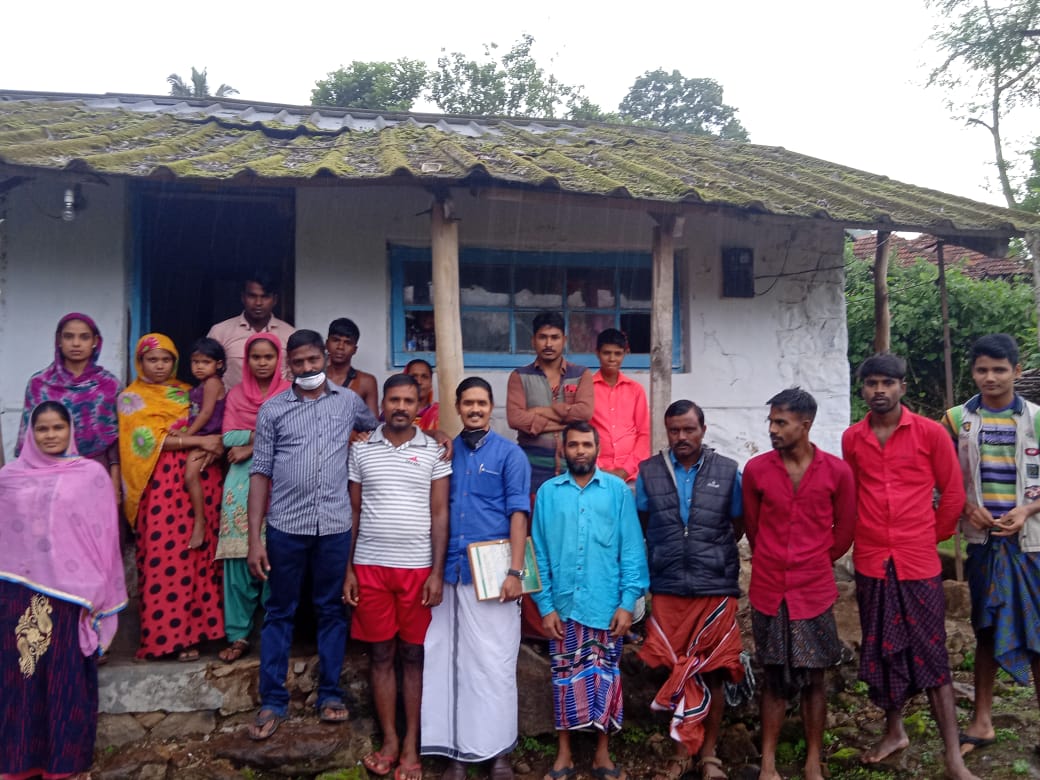
Amirudheen, a plantation worker from Assam, started working at an estate in 2011, until three years ago when he met with an accident. “One day MLA Soman sir [a senior leader of the AITUC] came and said that ration has been provided for us [the workers in the plantation] and if we have any problem further, we should talk to them. He then told us to join their union and if there is any problem, he will take care of it. That’s when I joined the union,” he told The Migration Story.
“During the pandemic the District Collector reported that there are no migrant workers in Idukki district. Challenging this, we planned a march from plantations to the deputy labour office with 1,500 workers violating [the pandemic time restriction of not more than] five people and also raised slogans like ‘We are migrants, we are here’,” said Sreenivasan.
Such interventions which focused on the issues relevant to migrant workers gradually built trust between the workers and the union.
There were communication gaps as most of them spoke Assamese and other languages which made it hard to integrate them into the existing unions. The communication was initially in Hindi, as some of them knew the language and were able to communicate with workers and the union.
Unions also appointed leaders from the migrant population, like Amirudheen, based on how long they had worked there and if they knew languages spoken by different groups of workers such as Tamil, Malayalam and Assamese. This helped in mobilising and registering more union members.
However, the union couldn’t be registered in Idukki.
“I mobilized a lot of people as part of the registration process, but when it reached its completion stages [around 2023], it did not happen due to changes in certain political and social contexts,” said Sreenivasan. The passing of advocate Vazhoor Soman MLA, the president and founder of the National Migrant Workers Union (NMWU), in August 2025 was also a blow to unionising efforts in Idukki. However, workers were able to organise in Trivandrum where registered and non-registered unions across Kerala combined and formed the National Migrant Workers Union of Kerala, affiliated to AITUC, in June 2025.
FROM AGITATION TO CONCILIATION
The nature of fighting for labour rights has changed from strikes and agitation to prevention and conciliation. While serious complaints are taken to the Labour Office for conciliation, “we talk first,” said Sreenivasan.
The convener, the connection between the worker and the company’s welfare officers, communicates workers’ grievances to the union leaders, who then speak to the manager of the company.
“Some things will only happen if the union people come and ask,” said Udayakumar, a ‘watcher’ (guard) in one of he tea an estate, and a generational migrant from Tirunelveli in Tamil Nadu, and a convenor of AITUC union, saidThe union was also able to intercede on Amirudheen’s behalf. “He [MLA Soman] solved our problems in 2021. When my wife was going into delivery, the company initially said they wouldn’t give work or delivery benefits. A union representative spoke to the manager and, though we didn’t get the work, we received 35,000 rupees as delivery benefits,” said Amirudheen.
“We handle everything through the union mostly. It is better to ensure everything is going right than leading to a strike,” said a plantation office staff requesting anonymity and alluding to the impact and power of the unions.
There are union leaders from within each of these communities that live with the workers they represent, and speak their language. Workers have also learned the languages spoken by others in their layam. There are Assamese workers who now speak Tamil, and Tamil workers who speak Assamese.
“If there are 300 workers in my division, among that 100 will be part of AITUC, 100 will be part of CITU, 50 will be part of INTUC and 10 in BMS. and this is the case across all divisions in the plantation,” said Udayakumar, indicating that today most of the workers in Idukki, including the newer migrants, are part of one of the unions.
Sai Veena S Kuttoth is pursuing her Master’s in Development at Azim Premji University. Her work primarily focuses on migration, informal labour, social movements and everyday politics.