GURUGRAM, Haryana: At the end of every month, Vivek Kumar used to send a large part of his income to his mother and sister in Uttar Pradesh’s Hathras district. This March, however, he couldn’t send as much.
Vivek, 25, works at an Amazon India warehouse in Jamalpur village, Gurugram district. He says that in the last month his living expenses have increased sharply due to the rise in cooking gas prices. And this has left him with little money to send home. Amazon told The Migration Story it was taking care of its associates, seeking regular feedback and addressing their concerns.
The crisis of the workers is part of the bigger one unfolding in different parts of the country. Panic about shortages of liquid petroleum gas (LPG) because of the West Asia conflict has driven prices of the cooking gas through the roof, especially in the informal market.
Migrants like Vivek often don’t have local identity documents, which limits their access to LPG through official channels. So, they are forced to buy it from the black market and are vulnerable to sudden price rises.
“There is a constant sense of worry,” Vivek told The Migration Story, anxious about the weeks ahead. “I keep thinking about how we’ll survive if gas prices go up even more.”
THOUSANDS AFFECTED BY LPG PRICE RISE
India depends heavily on LPG imports, with nearly 60 percent of its supply coming from abroad. Around 90 percent of these imports travel through the Strait of Hormuz, a narrow shipping route connecting the Persian Gulf and the Gulf of Oman. But the Iranian government’s closure of the strait soon after the war began has disrupted global energy supply chains.
On March 26, government officials in New Delhi tried to calm fears about LPG shortages in India. The Ministry of Petroleum and Natural Gas stated that the country’s LPG supply is “fully secure and under control”, stressing that there is no shortage of the cooking gas anywhere. It urged citizens not to be misled by rumours about its unavailability.
But with each escalation, the West Asia conflict disrupts lives like Vivek’s thousands of kilometres away. He works at one of Amazon India’s six warehouses in the Manesar–Gurugram industrial and logistics corridor — one of the fastest-growing such corridors in India — which also has facilities of the e-commerce platforms Flipkart, Myntra and Meesho.
Approximately 25,000 workers are employed at these warehouses in Manesar, of which around 12,000 work at Amazon India’s facilities, estimates Dharmendra Kumar, secretary of the New Delhi-based nonprofit Janpahal, which works with low-income migrant families.
He told The Migration Story that, in all, 20,000 of these warehouse workers have been affected by the LPG price rise. At an Amazon India’s warehouse in Jamalpur, he added, a total of 1,800 employees work across two shifts every day and 1,500 of them — all internal migrants — have been impacted.
Since the war in West Asia began in late February, LPG prices in informal markets have climbed sharply, from around 100 rupees per kilo to nearly 400 rupees, said workers this reporter interviewed in Gurugram district.
COOKING INSTANT FOOD OR LEAVING FOR HOME
Vivek and his cousin, Suresh Kumar, felt the impact of rising LPG prices in mid-March, when their five-kilo cylinder ran out. Suresh, originally from U.P.’s Kanpur Dehat district, works at a Flipkart warehouse in Jamalpur.
When their cylinder first ran out, the young men didn’t know what to do. Vendors in nearby areas told them that cooking gas wasn’t available, and each failed attempt to refill their cylinder meant that another meal was postponed or improvised.
“On the third day, I finally rode about 10 kilometres on my bike to Panchgaon [a cluster of villages], where the vendor charged me 350 rupees per kilo. But he refused to fill the cylinder completely. After a lot of requests, he agreed to give me three kilos,” Vivek recalled.
This partial refill cost him a little over 1,000 rupees. At earlier prices, the same money would have bought him an entire five-kilo cylinder, enough to last for nearly three weeks.
Now, to stretch this expensive refill for as long as possible, the men have started cooking only dinner at home and eating lunch at the warehouse canteen. But Vivek added that the price of samosa at the canteen had gone up from 10 to 15 rupees. Though he doesn’t enjoy the canteen food, he said, “I have to eat it to keep on working.”
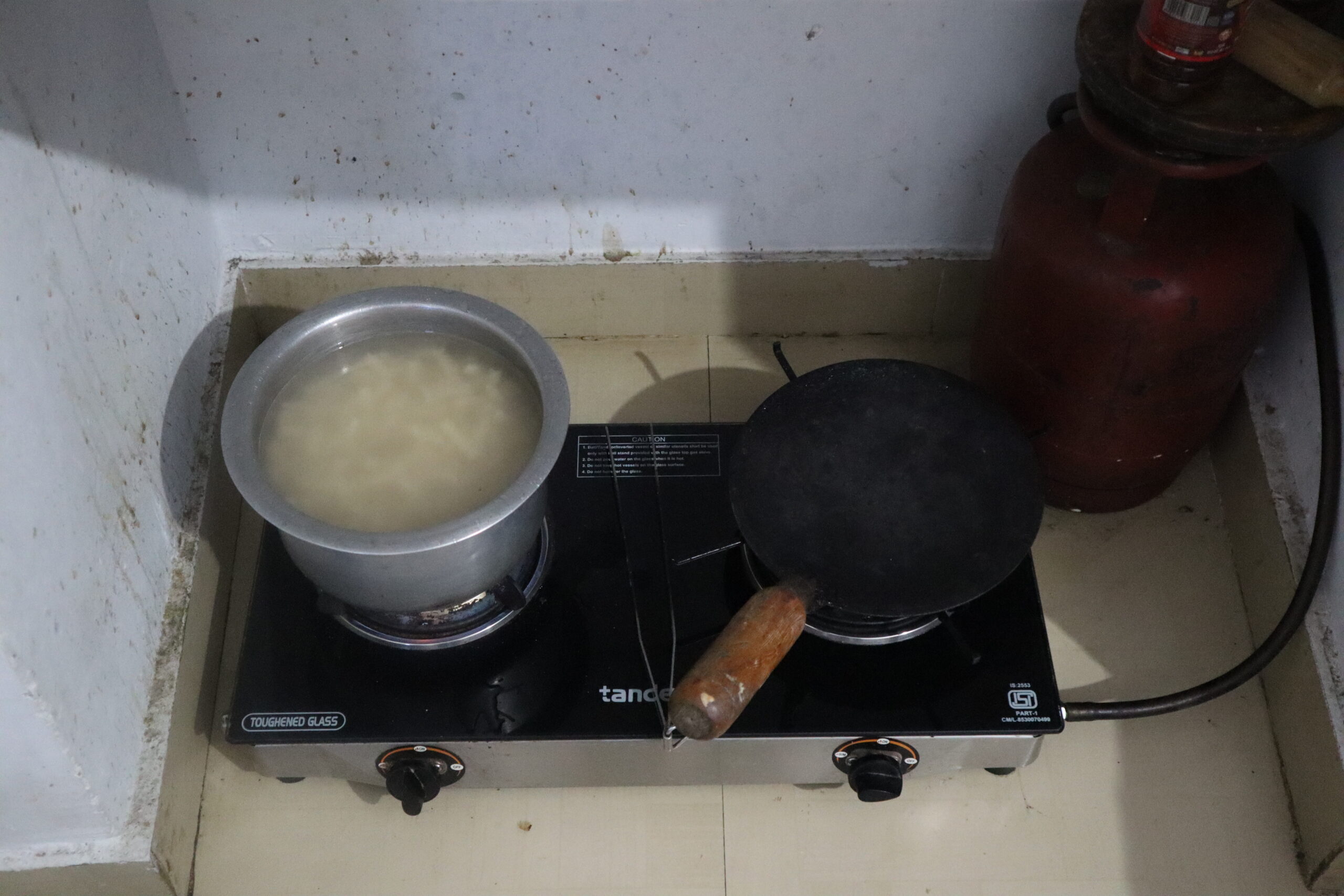
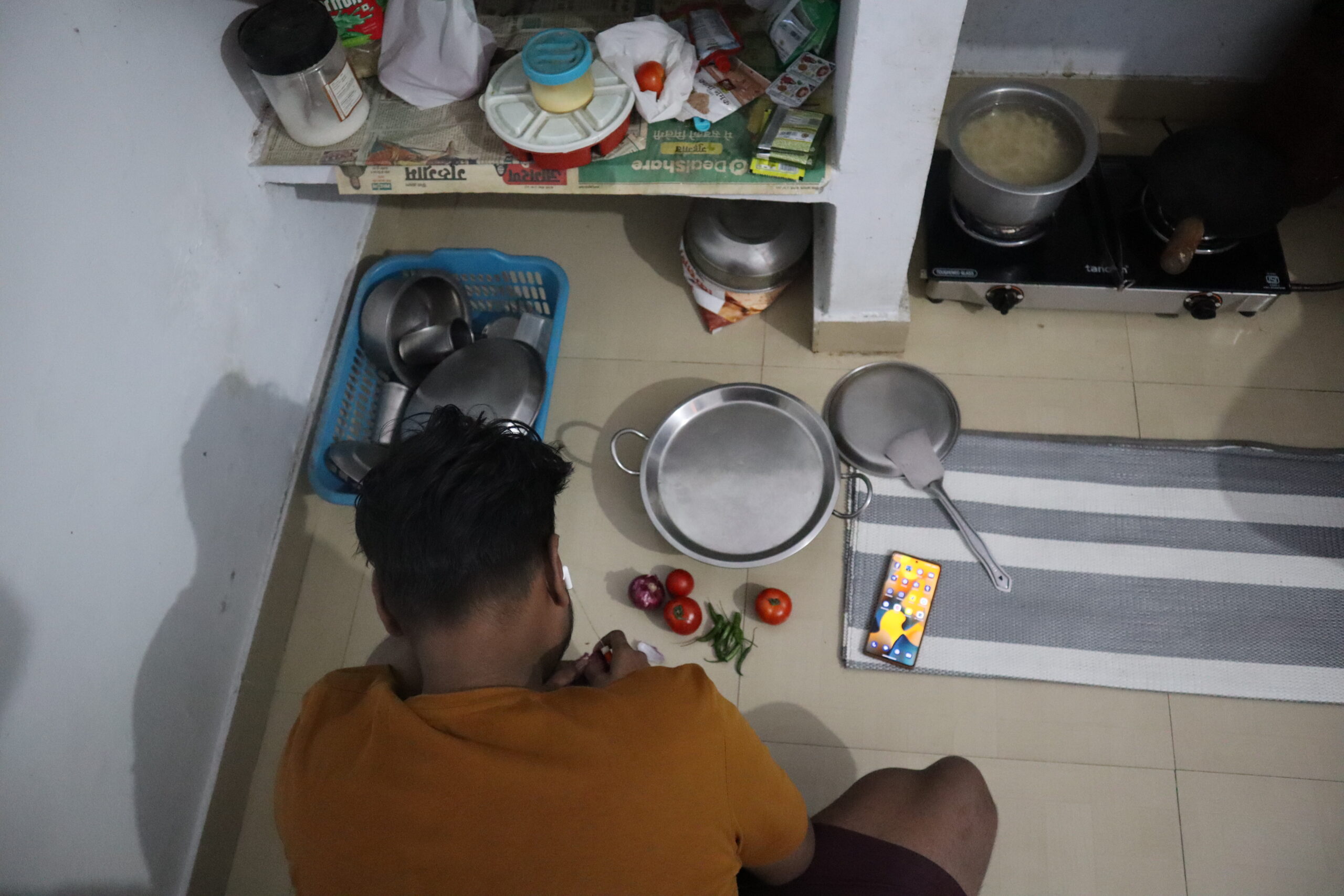
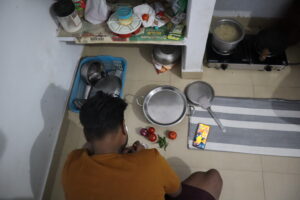
At home, the men have started making instant meals like Maggi noodles or pasta, bought at nearby grocery stores. “This way, we use even less gas,” Vivek said while boiling packaged macaroni on a small stove in their 10-by-10 room. “We cook once a day and sometimes, eat that same food thrice.” He and Suresh have been on this LPG-conserving diet for two weeks.
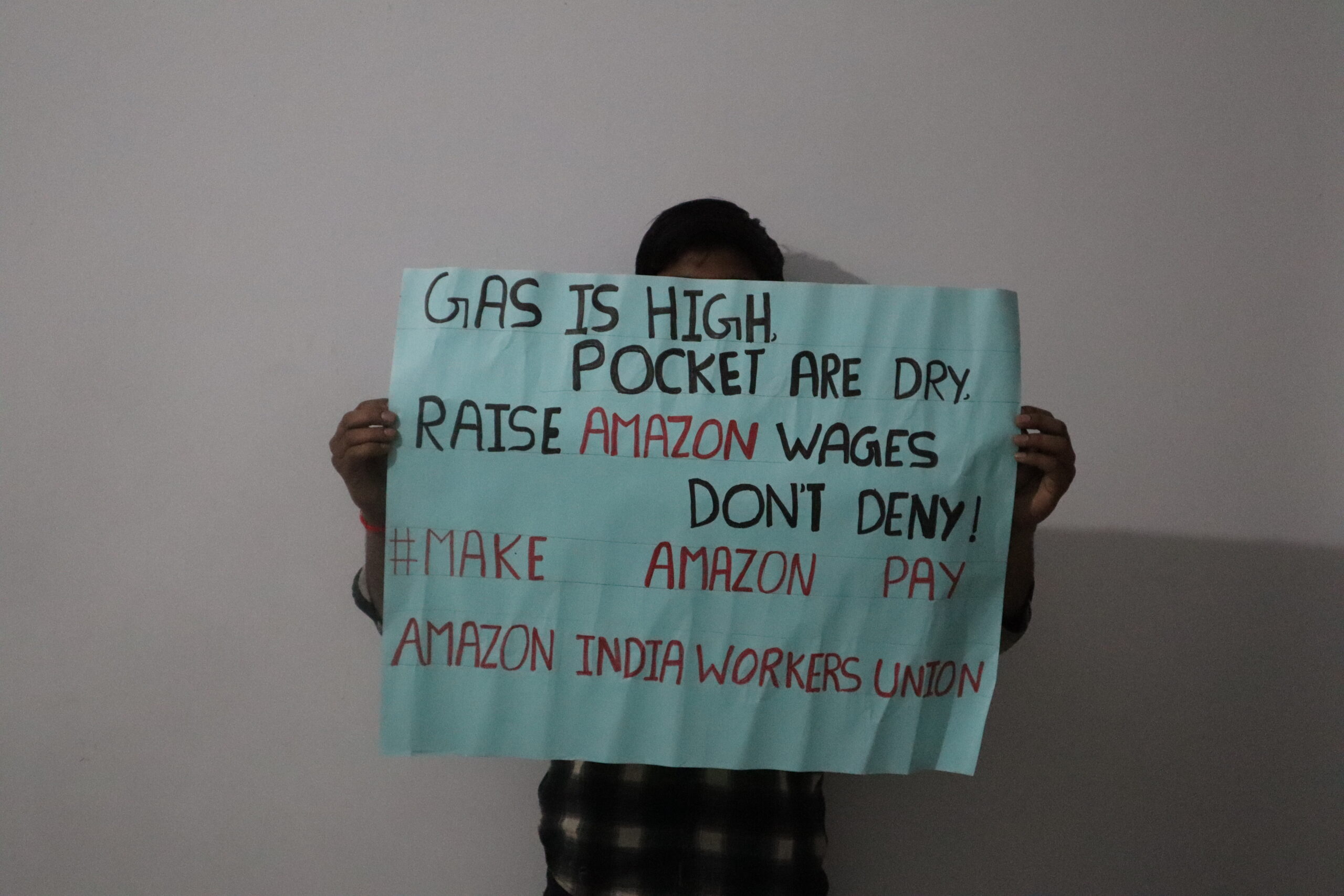
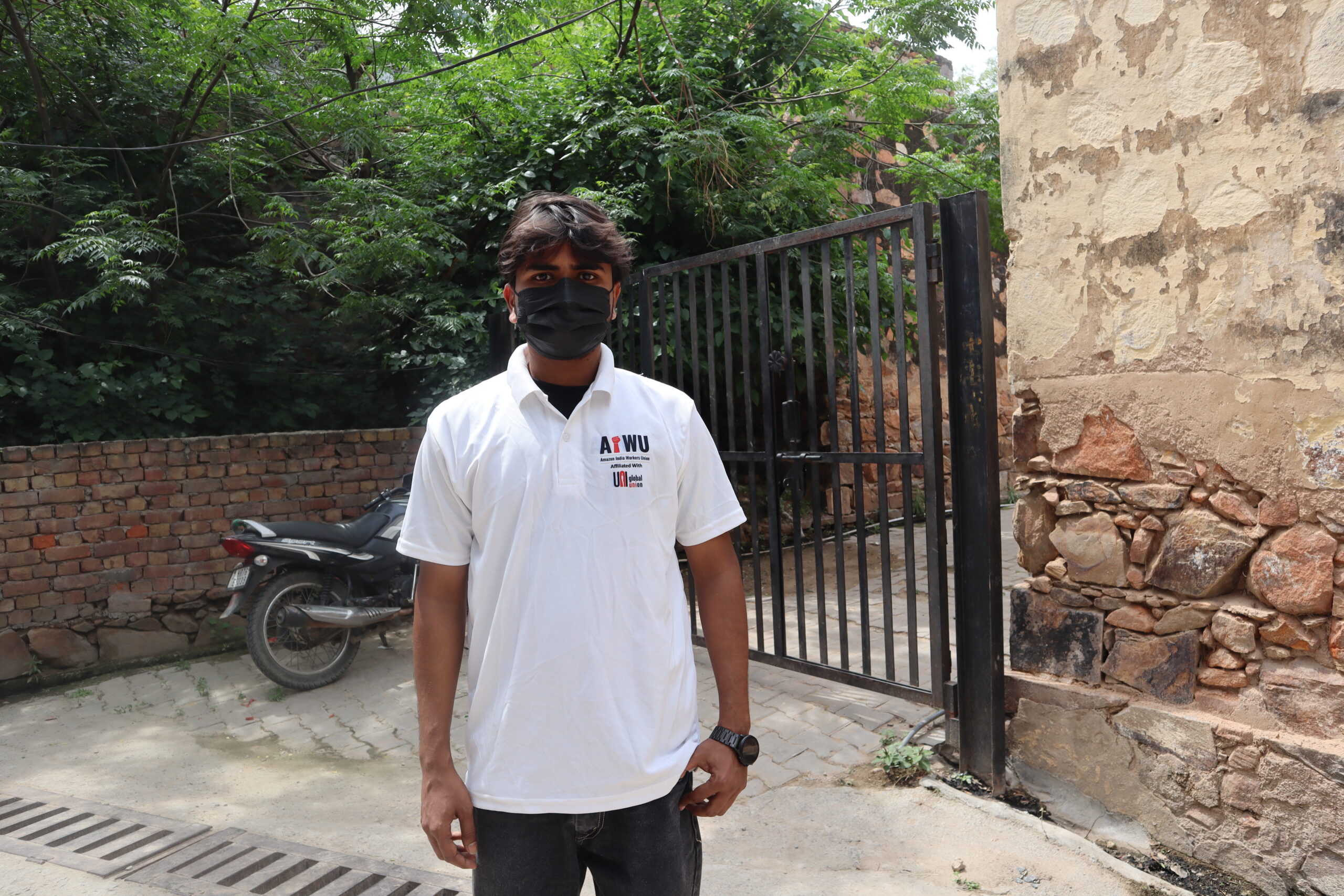
After learning of workers’ rising living costs, the Amazon India Workers Union (AIWU) emailed the company on March 17 requesting a salary increase, said Pawan Singh Sisodiya, the union’s general secretary. The union is still waiting to hear from Amazon India.
When The Migration Story contacted Amazon India, a spokesperson for the company said that the rise in LPG prices was “a broader industry issue and not specific to Amazon’s operations” and that the government has been taking steps to address it.
The spokesperson added: “Tens of thousands of associates at Amazon’s industry-leading fulfilment centres across India continue to have access to hot meals at the same nominal prices as before, despite the recent increase in input costs.”
Even though workers have come up with diverse survival strategies to deal with higher everyday expenses, some workers decided to leave for their villages, said AIWU vice president Rajesh Singh. And workers this reporter spoke to in Jamalpur also said that some rooms rented by migrants now stood locked.
MIGRANTS FACE THE BRUNT IN THREE STATES
LPG prices have risen dramatically in other parts of the country as well. In Surat, prices skyrocketed to 500 rupees per kilo, according to this news report. Some migrants working in the city’s textile mills asked factory owners for financial help; others simply left for their home states. In Vadodara, migrant workers spoke of having only one meal a day for three days straight before deciding to leave for their villages.
In Mumbai, black marketeers were charging up to 5,000 rupees for commercial LPG cylinders and 3,000 for household ones, said Deepak Paradkar, an activist working with Aaajevika Bureau, an organisation that supports informal-sector workers in three states. When bought through government channels, a household LPG cylinder, with a capacity of 14.2 kilos, costs 912.50 rupees.
In the last week of March, Paradkar received nearly 50 calls from migrants asking for help with accessing cooking gas or readymade food. While some waited in lines for cylinders all night, others spent more than they could afford on food at small eateries, and still others were surviving on vada pav (a local snack), bananas and soaked chana (gram), he added.
“Most migrants don’t have gas connections or cards and are completely outside the system. The government [when it says the country has enough LPG] is only talking about those within the system. But no one is paying attention to migrant workers, who come from outside to do development-related work in the city,” Paradkar said.
DIFFICULTY GETTING WELFARE BENEFITS
The problem that Vivek and other migrants face is accessing LPG through the government’s welfare systems and not so much its shortage, Janpahal’s Dharmendra Kumar explained.
While LPG is classified as an essential commodity under the Essential Commodities Act, 1955, Kumar said that workers often struggle to get it at subsidised rates from the state. “Because they are migrants, the welfare services they accessed in their home states do not move with them [when they relocate],” Kumar told The Migration Story.
Short-term employment arrangements further complicate access, he added. Contracts for warehouse workers employed by most e-commerce platforms usually begin with a one-month agreement that is later renewed for three months and subsequently, for 11 months.
Additionally, migrant workers often don’t have official documents with local addresses (such as Aadhaar cards, rent agreements or utility bills) in the places where they have moved, making access to welfare benefits impossible. So, they are forced to buy cooking gas from informal markets, where it is sold by the kilo, and as a result, become vulnerable when prices climb sharply.
SIMPLE MEALS FOR TOUGH SITUATIONS
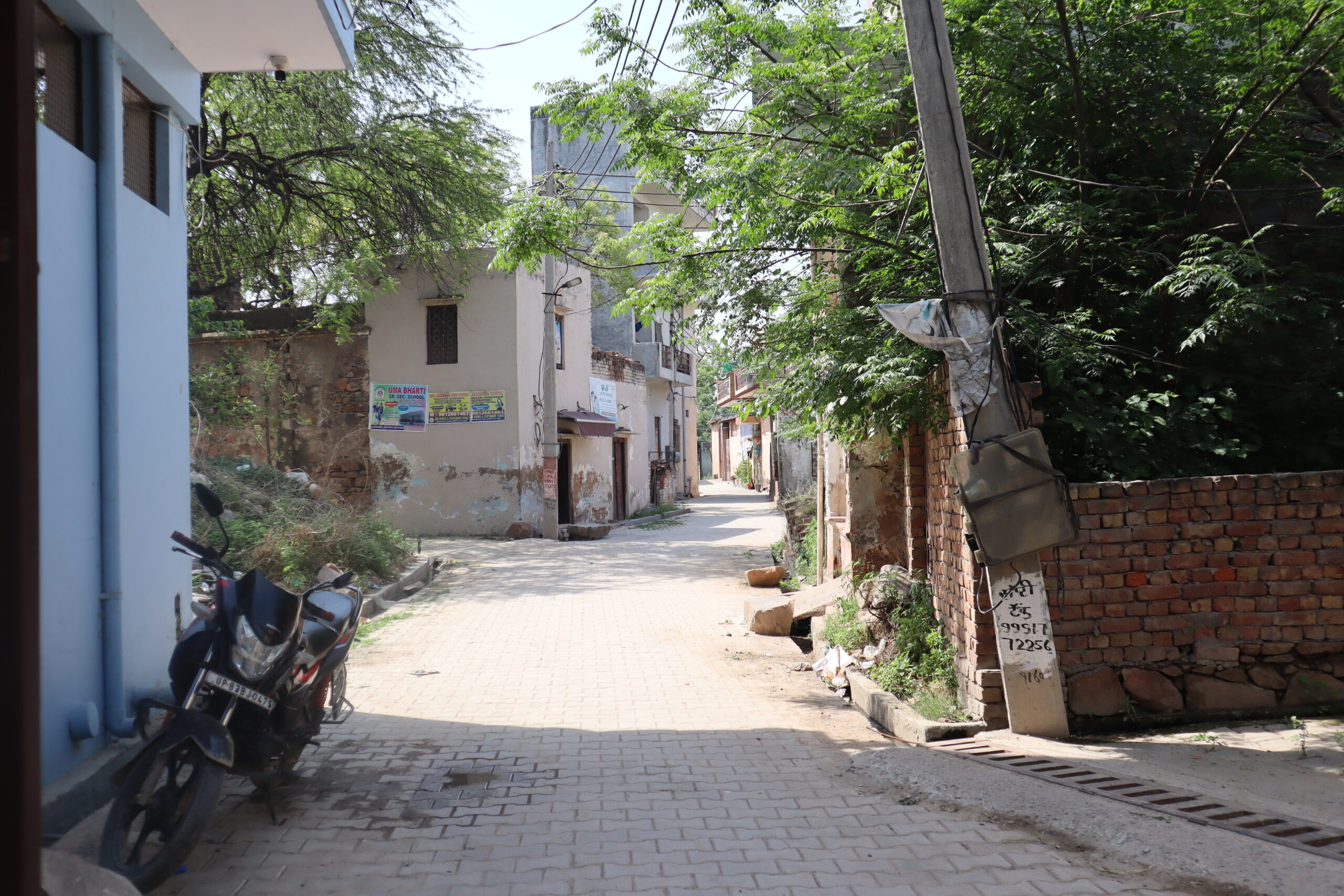
In late March, when this reporter met Vivek and Suresh, they were relaxing in their room in Baslambi village, not far from Manesar and around three kilometres from Jamalpur. Hundreds of migrants from U.P., Bihar, Rajasthan and Punjab — many of whom work at the Amazon India warehouse in Jamalpur — rent small rooms in these villages, and the warehouse is roughly midway between them.
Every day, workers at the warehouse unload trucks, pick items off shelves, and pack orders. Most earn between 12,000 and 13,000 rupees a month — the minimum wage for a semi-skilled worker in Haryana was 12,410 rupees in July 2025. The workers usually live within walking distance of the warehouse as this helps them save money on commuting.
Vivek works ten-hour shifts, five days a week, and gets two 30-minute breaks for lunch and tea. At the end of the month, he gets 15,000, from his income and company allowances for travel, night-time duty and house rent. Until recently, he sent 8,000 rupees to his mother and sister in Girdharpur village, Hathras district, U.P.
When he spoke to The Migration Story, it was his day off, but his eyes showed clear signs of fatigue. Other workers, too, said they felt exhausted due to the long work shifts. “We spend our two days off sleeping like the dead,” said Naveen, 24, who also works at the Amazon India warehouse with his wife Rekha.
Originally from U.P.’s Ghazipur city, the couple now rents a small room in Jamalpur. Their work at the warehouse involves picking items off shelves and handing them to packers.
Like Vivek, Naveen and Rekha eat lunch at the warehouse canteen, spending 50 rupees on a basic thali (plate of food with different items). Mornings begin with a few biscuits, and they only cook dinner in their room to minimise LPG consumption. Earlier, all three meals were made at home.
Dinner is usually dal (lentil soup) with rice or curd with poha (flattened rice). These simple meals are chosen not for their taste, but for how slowly they use up the gas the couple has left in their cylinder.
“I’ve even lost the desire to eat,” Naveen said. “Maybe when we can properly afford cooking gas again, we’ll think about having paneer (cottage cheese).”
A NECESSITY BECOMES A SOURCE OF ANXIETY
Naveen joined the conversation with Vivek and Suresh, just outside the building where the cousins live in Baslambi village. A mini truck with gas cylinders had stopped nearby to make a delivery. Several workers rushed out of their rooms hearing the clanking sound of the metal cylinders being unloaded.
“Seeing so many cylinders,” Naveen said with a faint, half-joking smile, “you feel like stealing one.”
The remark drew laughter, but only for a moment. The rise in gas prices had felt sudden and disorienting, the workers said. Naveen recalled how only a few days after the West Asia war began, the rising cost of LPG had made an everyday necessity a source of anxiety.
“Salaries aren’t increasing while the cost of living keeps rising,” Vivek added. Decisions about what to cook and how often, once shaped by habit, have now become careful financial calculations for many in Jamalpur and Baslambi.
Kumar of Janpahal also pointed to a widening gap between statutory minimum wages and the actual cost of living — something migrant workers faced even before the war started. “Minimum wage calculations were made around older assumptions about expenditure on housing, food and travel,” he said. “But today, workers have new essential costs, such as for the internet, which are not adequately accounted for.”
If conditions do not improve in a month, Naveen said that he and Rekha may return home. “A plate of food cooked in our rooms now costs us nearly 200 rupees. Why wouldn’t anyone think of going back?”
PHYSICAL AND EMOTIONAL STRAIN ON WORKERS
For 30-year-old Kiranjeet leaving Baslambi is not an option. Her earnings at the Amazon India warehouse pay for the daily needs and medical expenses of her parents in Wadala Granthain village in Punjab’s Gurdaspur district. “But sending that money now is becoming difficult, and I have told them so,” she said over the phone.
In her village home, she can switch from an LPG stove to a mud stove quite easily and burn wood or cow dung if the cooking gas runs out. “But here [in Baslambi], the landlord doesn’t allow us to do that,” she added.
Buying an induction stove is an alternative, but it would cost more than 3,000 rupees — an expense Kiranjeet cannot afford right now. Vivek, too, considered buying one on instalments, but it would likely rack up his electricity bills, he said.
As workers cut back their expenses on food, the effects are showing up in their bodies, especially among women.
“We feel weak if we don’t eat properly,” Kiranjeet said, recalling how a co-worker fainted at work after she started skipping meals. Colleagues had rushed to help her sit up and waited around till she recovered.
The strain is not limited to the workplace, however. The impact of rising expenses has begun spilling over into workers’ personal lives as well. Naveen said that the financial pressure the couple is experiencing has led to frequent arguments with his wife.
“She keeps telling me to find a better job,” he said. “She thinks we wouldn’t be struggling like this if I earned more.”
He paused before sharing a sentiment likely felt by other migrant workers here: “The war is happening somewhere else, but we, workers, are facing the consequences.”
The names of the workers interviewed for this story have been changed at their request.
Editing and additional reporting from Mumbai by Subuhi Jiwani.
Sanskriti Talwar is an independent journalist based in New Delhi. Her work centres on in-depth storytelling about rural India and migration, with a focus on gender, labour, agriculture and social justice
This is the first in a series of stories on the impact of the LPG crisis on migrant worker lives