“During the summer, it’s hot inside the houses. We don’t have electricity here. How will we sleep at night? Some people sleep outside at night. Some try to sleep, while others just end up sitting. That’s how people try to survive,” he explained.
As climate change intensifies, the report calls for new policies that relieve migrants from having to adapt on their own to a rapidly changing risk landscape.
“Solutions must be embedded within policy and government frameworks designed to address migrant needs. The well-intentioned efforts from bureaucracy would have to be backed by robust implementation mechanisms, support and coordination by different stakeholders,” says Chacko.
Access to social protection could play a crucial role in reducing vulnerability to extreme weather events by serving as a key response mechanism, minimizing negative coping strategies, and supporting mitigation and adaptation efforts.
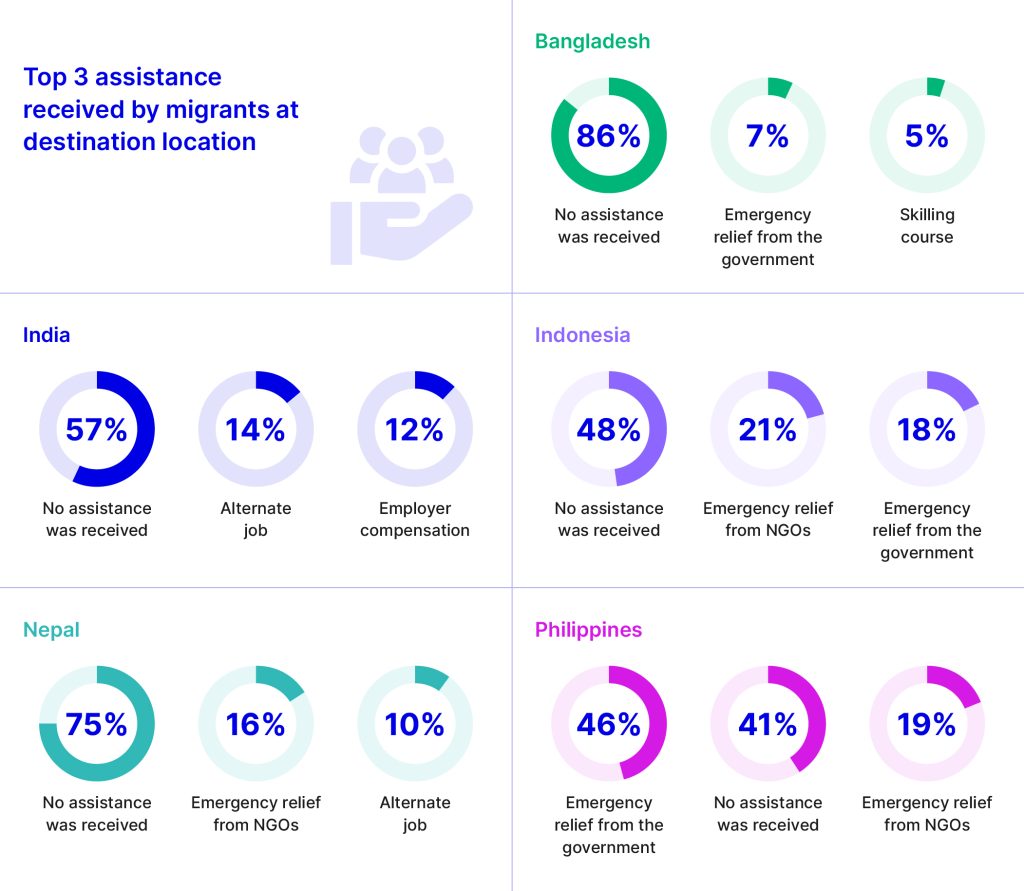
However, over half of those surveyed at destination locations reported not receiving any external assistance. In India and Nepal, government emergency relief, already limited at the source, was even lower at destinations (17% and 22% at source, compared to 8% and 3% at destination). The Philippines, nonetheless, stood out as an outlier with more accessible emergency relief, with 46% receiving aid at destination, compared to 75% at source.
In the absence of significant social security schemes, many migrant workers across South-Asian countries either tap into savings, or depend on family, friends and informal moneylenders to deal with the impacts of extreme weather events.
The report highlights a concerning trend of how more migrants at destination locations reported having no coping mechanisms compared to those at source locations. In the Philippines, nearly a quarter of respondents lacked such strategies, while over 20% in Indonesia faced similar challenges.
While some coping mechanisms may have negative consequences, having none at all underscores the vulnerability of these migrants, who are left with little or no options to mitigate the long-term impacts of extreme weather or other crises.
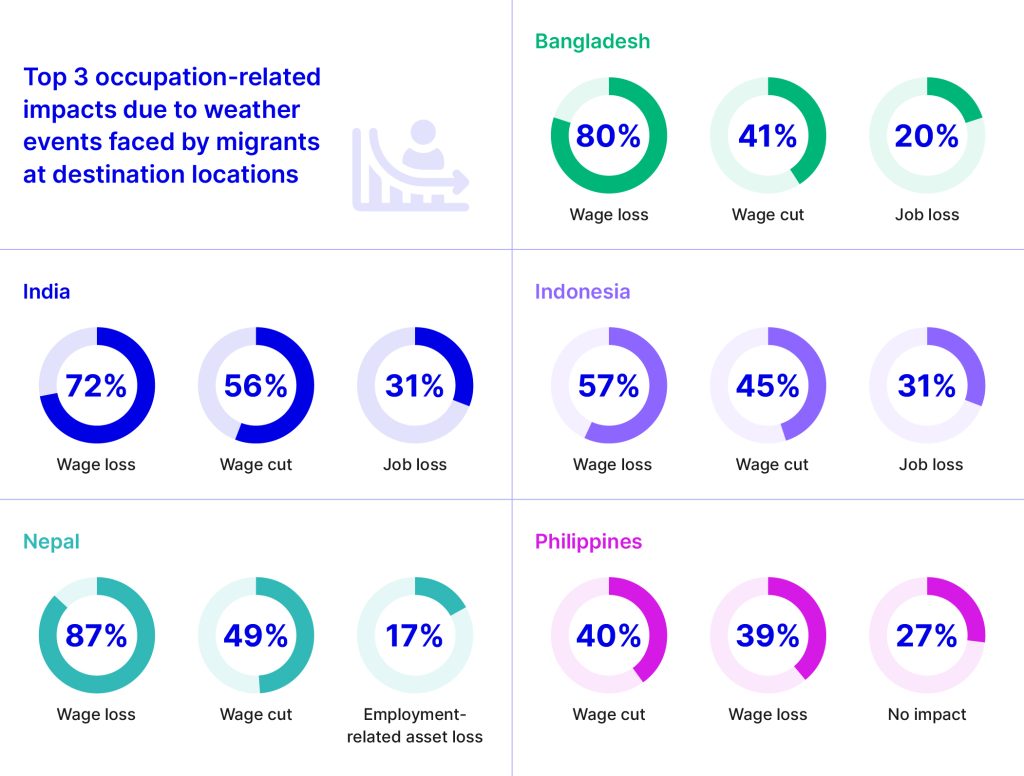
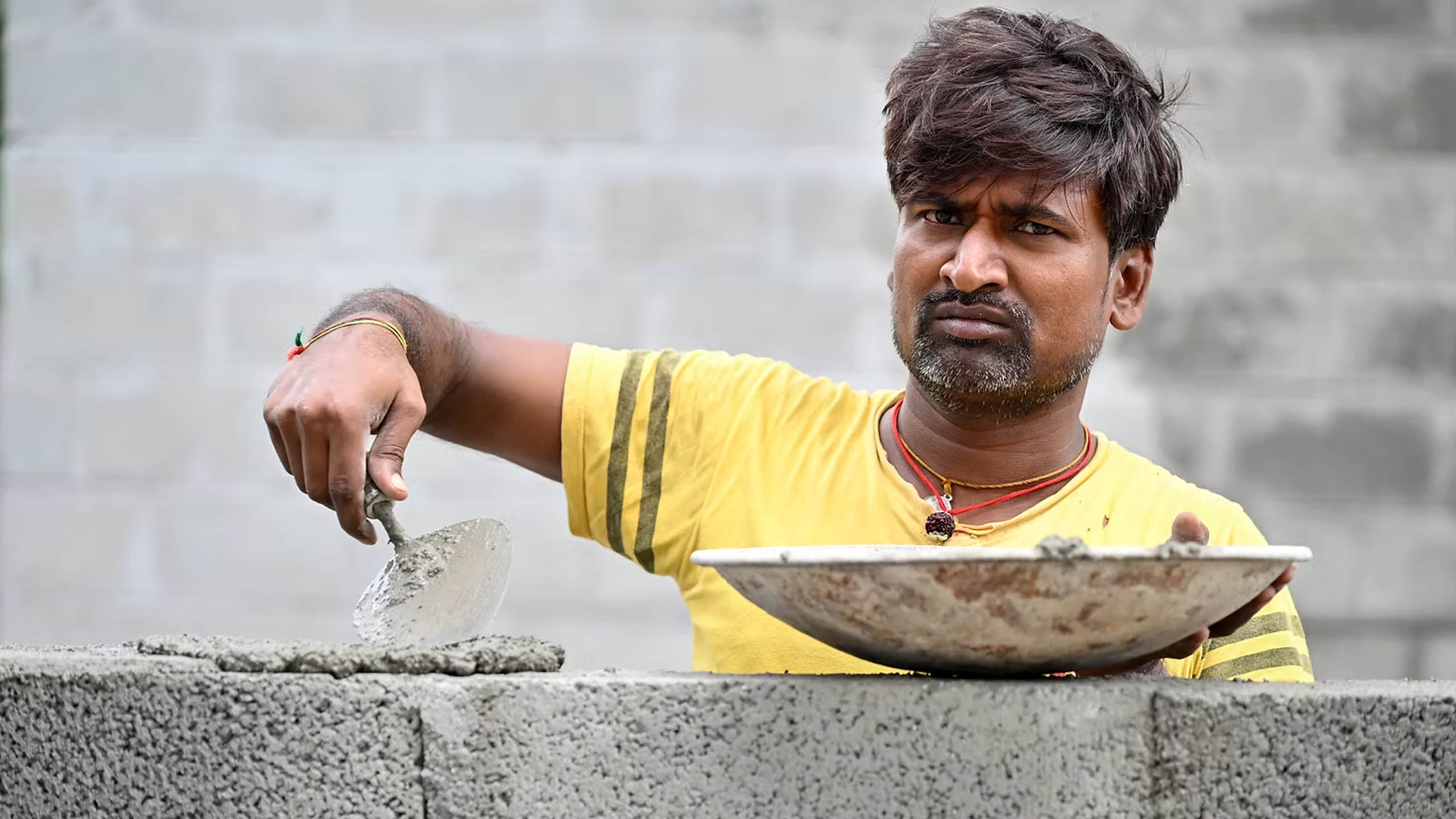
“What can we do? What we plan never happens. We work for a week and then go home,” shared Manoj from Noida, describing the struggle of dealing with wage loss during extreme heat.
Among one of its key recommendations, the report proposes designing social protection and assistance programs that target the negative impacts of extreme weather events on livelihoods and households while strengthening coping mechanisms for migrants. It also advocates for policies to address needs beyond immediate post-event relief.
“While immediate relief measures are helpful, migrant workers employed under precarious conditions with little or no savings would benefit from anticipatory assistance such as access to universal health schemes, introduction and expansion of portability of entitlements, cash transfers before imminent events, among others,” said Kidwai. “These measures can both minimize impacts from extreme weather events and build long-term resilience”.
URGENT NEED FOR SOCIAL PROTECTION
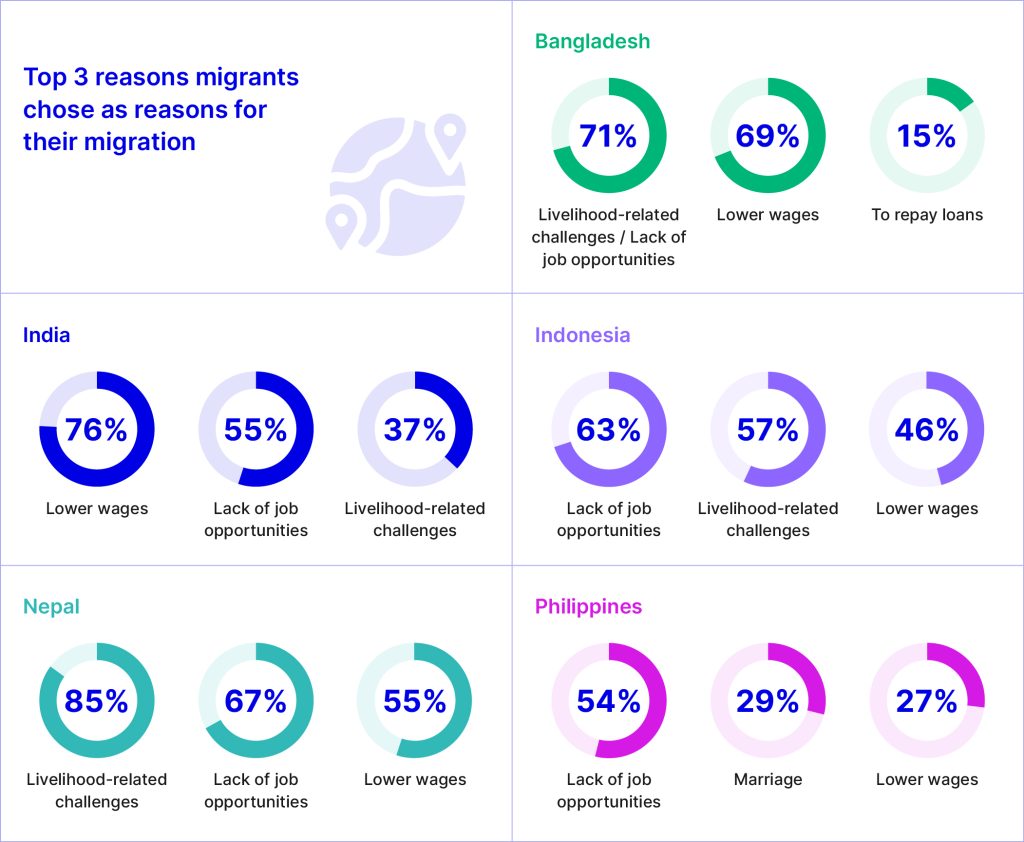
A global estimate suggests that climate change could create over 200 million additional internal migrants by 2050. Occupation or income-related impacts from weather events are already widespread across source and destination locations in the surveyed countries, and as extreme weather events become more frequent and intense, these challenges are expected to further escalate.
Yet, social protection schemes in these countries remain significantly underfunded as compared to developed countries. According to ILO estimates, public spending would need to increase by 70% to 430% to provide universal coverage for basic benefits such as health care and income security for vulnerable groups. However, even such investments would fall short of addressing the added burdens posed by climate risks, highlighting the urgent need for climate-focused social protection measures.
The larger data gathered across five countries, while highlighting both commonalities and differences, also emphasizes the importance of understanding the contextual nuances within South and Southeast Asia. As the report shows, addressing the challenges faced by migrant workers in these diverse socio-cultural and occupational set-ups requires solutions that are tailored to their unique needs and circumstances.
The report and labour rights campaigners both emphasise that by prioritizing participatory and inclusive planning, governments across the Global South can create environments that better support these workers, allowing them to not only survive but thrive. The economic benefits of such efforts will far outweigh the costs, underscoring the importance of investing in solutions that empower migrant workers and contribute to broader societal progress, they say.
All charts sourced from: Kidwai, A.,Venkateswaran K., Ashraf, A., Samuel, E.,MacClune, K., Roychowdhury, P.,Norton, R.,Chacko, S., Behani, V. (2024). Coping with Climate: How extreme weather is already impacting internal migrants. People’s Courage International and ISET.
Amoolya Rajappa is a Bengaluru-based independent journalist and reports on labour, internal migration, climate change and displacement in India.