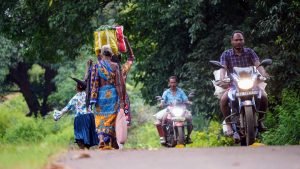
Left with no option but to leave, we began driving towards the next district, Bareilly, around seventy kilometres away. We had gone only a few kilometres on NH 24 when we spotted some people hiding behind trees in the fields. When they saw us approaching, they ran away. Only when we assured a local farmer, who had come to offer food and water to them, that we were neither police nor administration did he summon them back. They were hiding from the police. The farmer called out to them, ‘Arey, media waale hain. Tumhari samasya sunne aaye hain.’ They are from the media. They only want to highlight your plight. So they sat down with us and opened up. ‘If we get caught, the police send us back to quarantine centres and delay our journey.’ One of the eight migrant workers explained that they were taking a short break as they had been on their feet for eight days at a stretch, walking from Haryana to their native villages in Gorakhpur district. Arvind, a lean, acutely tanned man in his late thirties, said, ‘I haven’t eaten a morsel of roti since I started walking.’ ‘I had carried some belongings but had to get rid of them midway as I couldn’t drag the load,’ Dharmraj said. Ramu, the third migrant, spoke about the brutality and apathy of the state, ‘Some of us have already spent a few days in quarantine centres. If another district’s police nabs us now, our two-three-day journey will get extended by six more days.
Before he could finish his sentence, he broke down. ‘I just want to see my children.’
By the time the migrants finished telling their stories, the local farmer had become agitated about the government not having made any arrangements for the poor workers. ‘Every day we see 20,000 to 25,000 people crossing this highway. We can’t bear to watch their suffering. So whatever little we can do, like providing food and water, we are doing.’ On this note, we ended our assignment for the day. The state may not have spared a thought for the migrants, but the villages they crossed were offering them shelter, food and the comforting words, ‘they were not alone.’
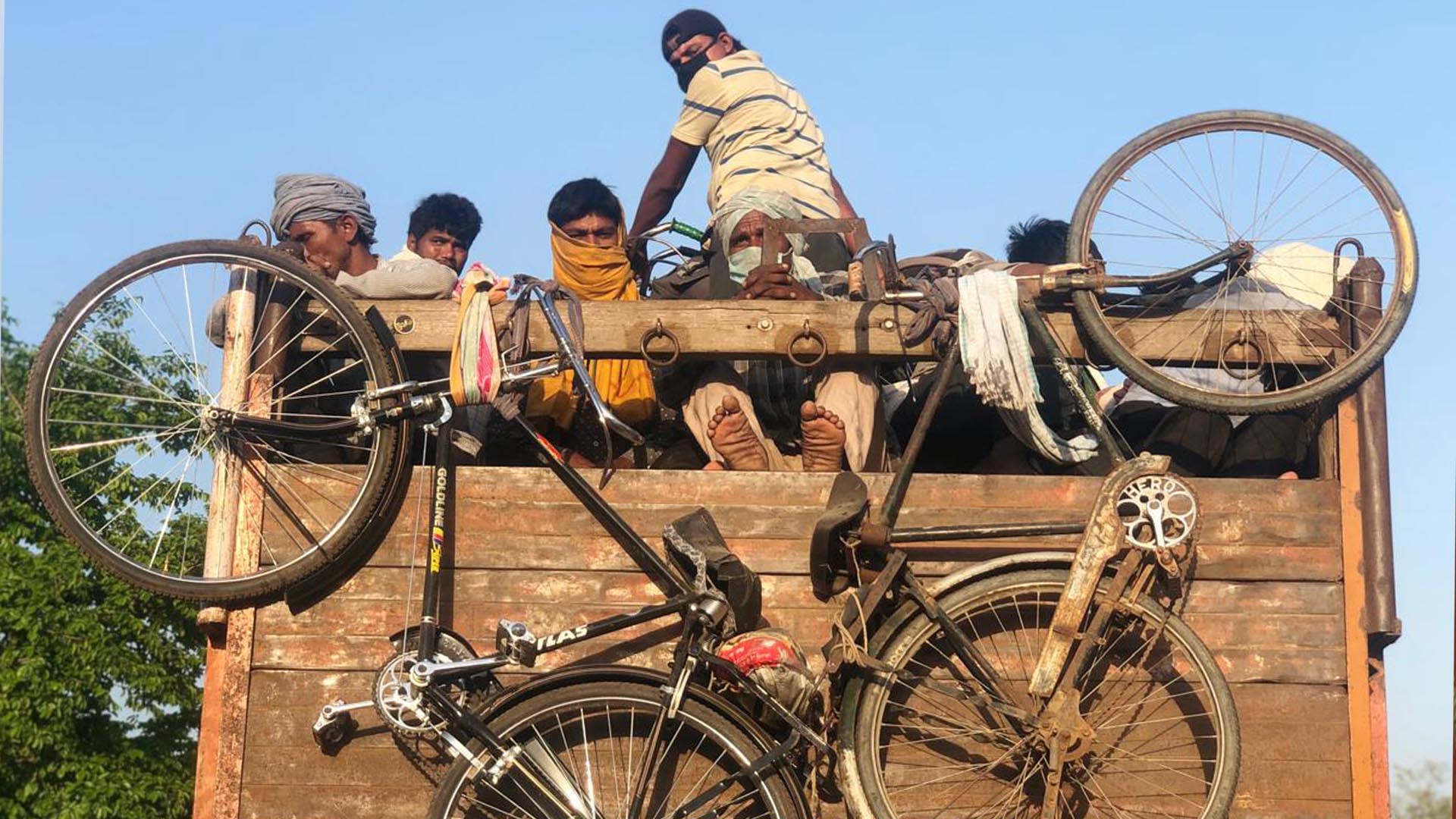
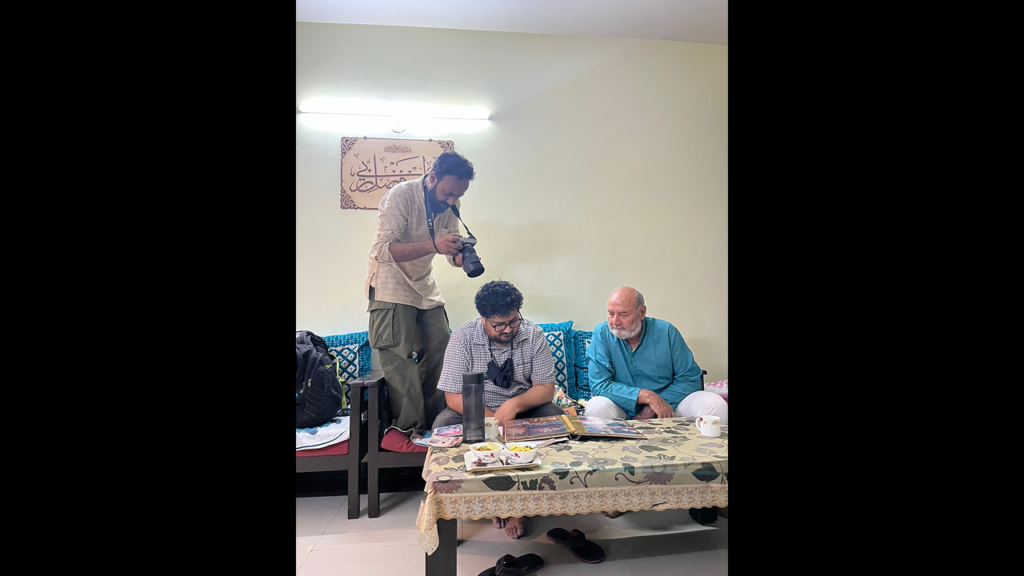
We had left for Bareilly in the hope of finding accommodation but ended up chasing a very crucial story: the Shramik trains. On our way to the district headquarters, we found buses and trucks filled with people. They had walked thousands of kilometres; they were tired, helpless and lonely. Buses and trucks were parked outside petrol pumps as they navigated the guidelines that each district administration had enforced. It was at dawn that we got into one of the buses to talk to those who could afford the fare to return home. To our surprise, they had endured the same hardship and suffering as those who were penniless. They were paying as much as 5,000 rupees per seat. Even for a ride on a truck loaded with concrete, a migrant worker had paid a 1,000 rupees. We reached the town late in the evening. We seemed to have lost our bearings. This place was unfamiliar to all of us. It was Bismee’s first on-ground assignment outside Delhi. I had already spent a year on the road, but I had never been to Bareilly. So, there weren’t many sources we could rely on. Still without a place to stay (and periodically calling our friends in Delhi for help), we made our way to the railway station. A Shramik Express was due to arrive with more than a 1,000 migrants from Punjab’s Ludhiana. Policemen, railway officials and district officials were all set to welcome the migrants with packets of food and water. While the policemen wore face shields and other officials had gloves on, the migrants had their white gamchhas wrapped around their faces as makeshift masks. After an eleven-hour train journey without any halts, or food or water, when they got down at Bareilly Junction, there was temporary relief on the tired and restless faces of the migrants. Healthcare workers screened the migrants while sanitation workers sprayed disinfectants around the platform. Forty-three buses had been arranged to drop people off at their respective districts and blocks. When a wave of migrants rushed to the buses, the police, anticipating chaos, were on the alert. They started announcing the number plates of the buses and the places they would head to. As Bismee and I waited at a distance, we spotted twenty-eight-year-old Nooni Ram anxiously looking for the bus that would take him to Aonla town, a tehsil in Bareilly district, about sixty kilometres away.
But his journey wouldn’t end in Aonla. He, his wife and their child would travel a further eighteen kilometres to reach Hardaspur, their village.
‘If we don’t get conveyance, we will have to walk eighteen kilometres to get home,’ Nooni Ram said as he showed us a message on his phone. ‘We got a message from the office of district magistrate, Ludhiana at 10 o’ clock in the night that the train for Bareilly will start at three in the morning. We got only five hours to pack and reach the station. How are we supposed to prepare for anything at such short notice?’ he asked.
The message also said that they would be allowed to board the train only if they cleared the COVID test screening. ‘Bring your own food and water. Punjab government wishes you a safe journey,’ that’s how the message ended. A 1,000 migrant families didn’t catch a wink that night. They had left in whatever condition they were; some couldn’t even pack their bags, so they threw their things in buckets and carried them. The five-hour notice was nowhere near enough for people who lived far away from the railway station. Nooni Ram’s wife fed her two-and-a-half–year–old from the food packet the couple had received upon their arrival, the child sitting between them as the bus headed home. We never found out if the family of three found a ride home or walked the last eighteen kilometres to their home in the dead of night. The first Shramik train was flagged off on 1 May, the International Labour Day. In the days that followed, Shramik trains would have brought Nooni Ram and thousands like him to the Bareilly station. But the humiliation that migrants like Nooni Ram were subjected to in the days that followed was appalling. They were already out of jobs. They had limited ration on their plates and mere pennies in their pockets. Their plight was made worse by the haggling between the states and the Centre. The Centre got caught up in political tussles in the states where opposing parties were in power, leading to a lack of coordination between them. One glaring example of this was the mismanagement of Shramik trains, including the poor food and travel arrangements for migrants. Like every other government aid, this too was politicised. On 2 May, the railway ministry notified the state governments that they were to collect the ticket fare from migrants and hand the amount over to the railways. This move triggered a social media storm. The netizens ran a campaign on how the railways had 151 crore rupees to donate to the Prime Minister’s Citizen Assistance and Relief in Emergency Situations Fund (PM CARES Fund) but not enough to run these special trains. The opposition vehemently criticised the decision. The Congress’s then interim president, Sonia Gandhi, even announced that her party would foot the ticket fares. The government then said that the cost would be borne by the Centre and the states at an 85 per cent 15 per cent split. At this stage in the lockdown and COVID crisis, local administrations across Indian states were not just setting up quarantine centres, marking containment zones, managing Shramik trains that arrived in their districts, screening the lakhs of migrants and arranging food for them, providing shelter to the homeless, creating employment, compiling a real-time database, but also attending to thousands of SOS calls, regulating permissions for emergency travel, etc. The centre’s role should have been that of an advisor, a facilitator laying down SOPs for the states so that each state could fight its battles in a more organised way. For example, district magistrates in several districts of Bihar had, two weeks before the national lockdown, imposed Section 144 to disperse large gatherings and curb the spread of the virus. However, the Centre was wary of spreading unnecessary panic since the severity of fatalities and the virus’s controllability remained uncertain until then. The orders were rolled back when the health ministry said that Coronavirus wasn’t a medical emergency.
If the states had been afforded some autonomy in crisis management, the state and district decisions would have been far less harsh than a complete, nationwide lockdown, which froze all activity in the country. The Centre tried to take charge but ended up creating chaos and confusion. The BJP’s national spokesperson, Sambit Patra, lashed out at Rahul Gandhi: ‘The Railways has subsidised 85% and the state governments should pay 15%.’7 But in reality, the central government didn’t pay 85 per cent of the fare, it admitted in the Supreme Court on 28 May during a virtual hearing on a PIL about the hardships faced by migrants stranded in different states amidst the lockdown. They clarified that the cost was borne by the states. Punjab, like several other states, had created an online portal to help migrant workers register themselves. 6.44 lakh migrants registered.The government had sanctioned a budget of 35 crores in the first phase to send stranded migrants back to their home states. Hence this chatter over most of the cost being borne by the Railways remained a hot political debate until K.B.S. Sidhu, Punjab Special Chief Secretary, Revenue, hit back.The Punjab government also ordered all the deputy commissioners in the state to provide food, snacks and water to the migrants. However, Nooni Ram and his fellow passengers did not receive food or water. It was a hectic day for us. We had reported two stories: one, of the marching migrants being randomly nabbed by the police and thrown into quarantine centres; and two, the facts about Shramik trains. It was yet again time to find lodgings. Another colleague of mine helped us find a hotel that arranged some home-cooked food for Manish, Bismee and me. The hotel rooms had been shut for more than a month and they smelt bad. Most of the staff had left so the place was running with just two or three men, but we couldn’t complain. We ate our dinner and sat down to type our stories and send the video footage to our colleagues in Delhi.
Jyoti Yadav is an award-winning journalist known for her gender-sensitive reporting and groundbreaking features on rural India, transformative policies, and systemic injustices. Faith and Fury is her first non-fiction book. It is a compilation of her COVID ground reports from rural parts of North India. She is based in New Delhi.