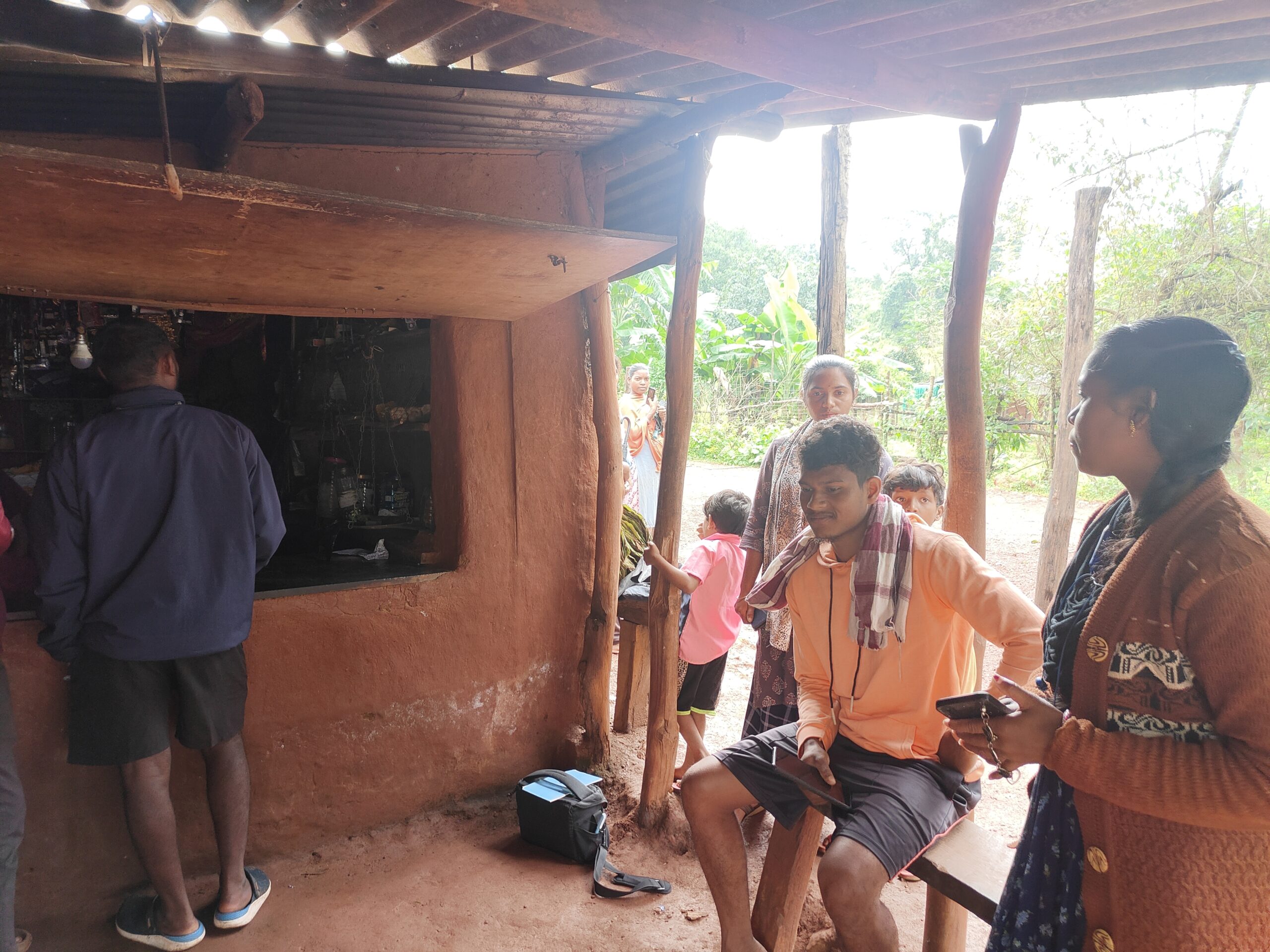
KANDHAMAL, Odisha: Raja Pradhan sat cross-legged in shorts and an orange hoodie, scrolling on his phone in his village in eastern India when a green WhatsApp chat bubble popped up on the screen.
“Namaskar! Apana bahare kama pain jauthibe? Apananka suchana diaantu.”
(Hello! Are you going outside for work? Please share your information.)
He read the message twice on the Meta-owned free messaging app, unsure whether to respond.
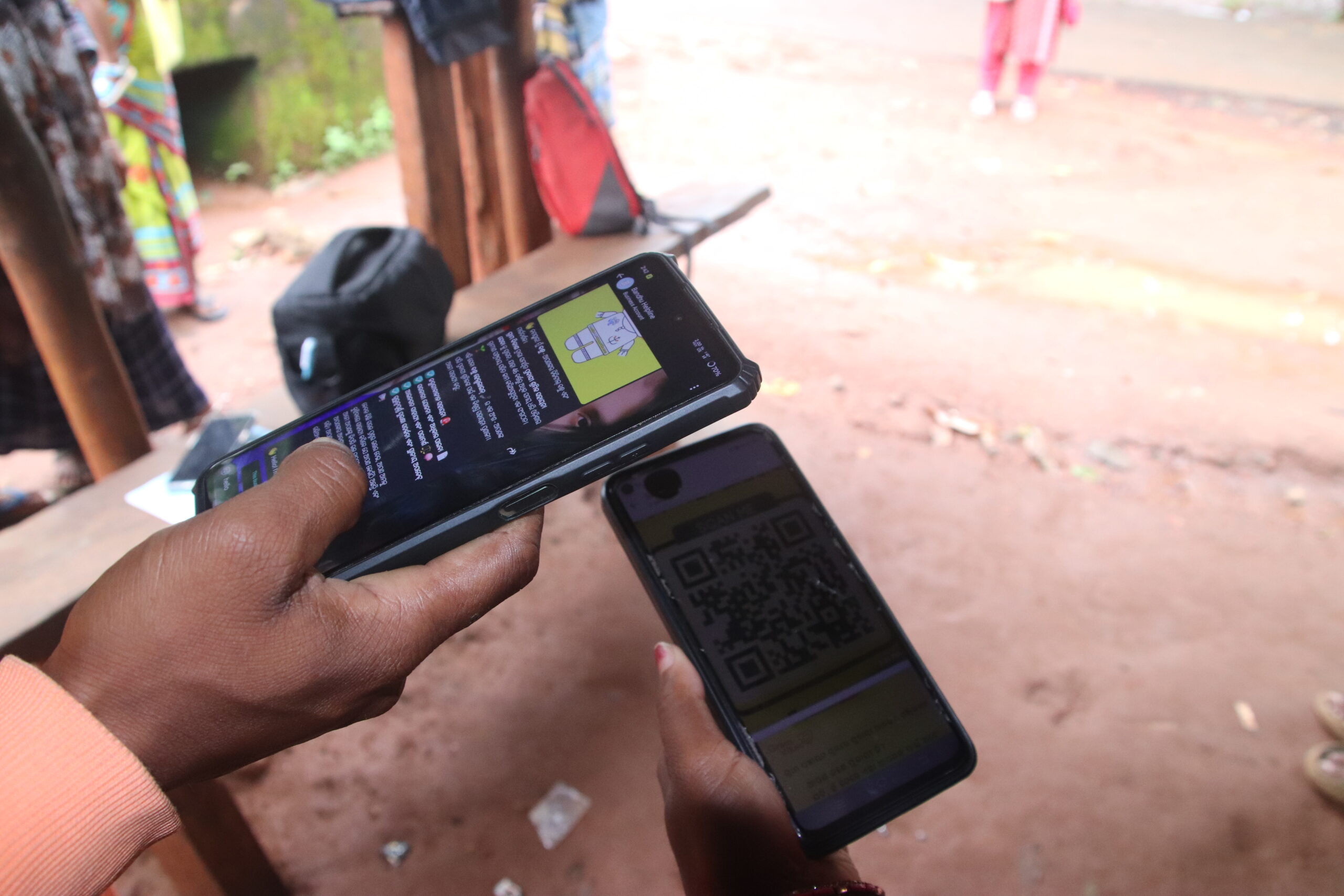
A volunteer from a nonprofit explained it was a chatbot called Bandhu (Friend) that aims to connect the largely undocumented migrant workforce to emergency services and keep their families in one of India’s most migration-prone states updated on their current location.
India has an estimated 140 million inter-state migrant workers, according to nonprofits and researchers who point to large gaps in data on their numbers and locations. This has led to inadequate and delayed responses during emergencies such as the Covid-19 pandemic, when tens of thousands of workers were forced to walk home after the central government imposed a nationwide lockdown in a disorganised attempt to stop the virus from spreading.
State governments have failed to account for their migrant workforce despite promising better tracking. According to the 2011 census, India’s last population survey, 8,51,363 workers migrated to other states from Odisha in search of jobs.
However, during the pandemic, more than 10 lakh migrant workers returned to Odisha. At the time of the pandemic-induced lockdown in 2020, the authorities also struggled to identify stranded migrants and coordinate their return. This evidence gap has impacted access to and delivery of welfare and aid, researchers and campaigners have repeatedly flagged.
More than 400 migrant workers from Odisha have died over the last nine years while working in other states, according to a written reply to the State Assembly by Labour and Employees’ State Insurance Minister Ganesh Ram Singhkhuntia in December 2024. But neither local administrations nor nonprofits have a clear way of knowing the exact location of workers.
Bandhu, the WhatsApp chatbot that has been rolled out by Gram Vikas, a nonprofit working with migrants, aims to bridge this gap. It has, so far, covered 620 villages in Odisha, one of India’s poorest states where half of its 30 districts record migration, government data shows.
The initial idea of creating a record on paper of migrants and their employers was abandoned because the constantly moving workforce would make it quickly redundant.
Gram Vikas then came up with the idea of a chatbot – which it developed with tech firm Tech4Dev – through which migrants can share their location using Google Maps. Gram Vikas said it has paid Tech4Dev an initial subscription of 1,20,000 rupees.
Tech4Dev uses its Glific open-source, WhatsApp-based, two-way communication platform, with pre-designed questions. The responses are collated in an excel sheet.
Bandhu, which is in Odia and English, emerged from the collaboration of tech, data and design companies and nonprofits over a year, when they built the questionnaire and designed the chatbot with feedback from migrant workers, making changes before rolling it out in December 2025.
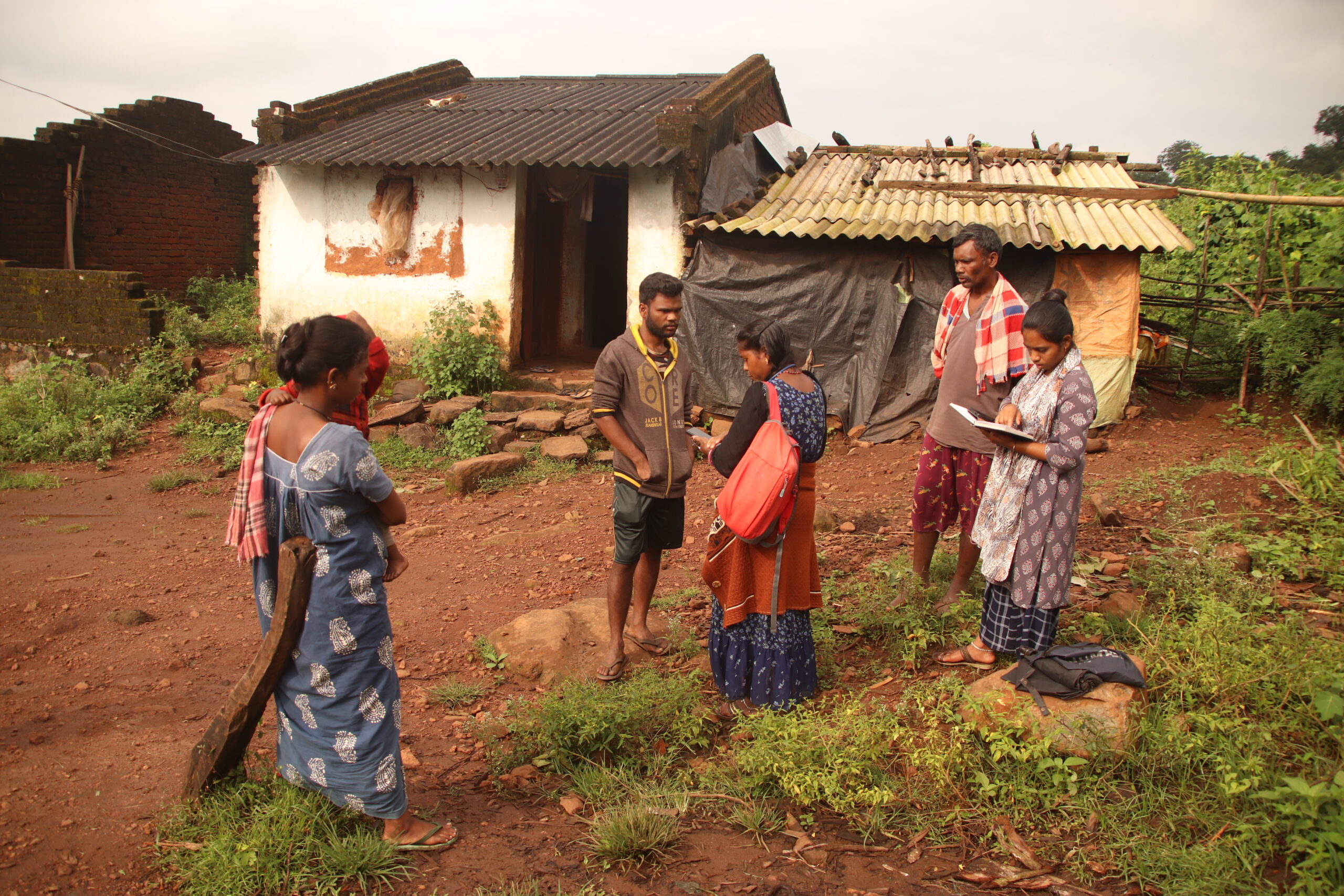
Over the past two months, Gram Vikas field staff has been assisting migrants visiting Petumaha village, where Raja is from, to complete the digital form, while also reaching out to workers already at their destination.
USE OF PERSONAL DATA STIRS PRIVACY CONCERNS
The details in the form include the person’s name, source district and village, date of birth, emergency contacts in Odisha and destination state, as well as location via Google Maps, among other details.
Raja, 24, remained apprehensive even as volunteers were tackling fears about the digital questionnaire.
Sitting in front of the grocery store stacked with packets of biscuits, soap and cooking oil, Raja said he had never filled out an online form in his life. Now, someone was asking for his details on WhatsApp with questions that he said “sounded official”: name, village, age, destination, and employer. He looked confused.
“I don’t know where this information would go,” Raja told The Migration Story.
“Would someone use it against me? The internet can be tricky at times. Why should I even share my details in the first place?” he said.
Gram Vikas’s field worker Subhalata Pradhan patiently explained that Raja’s information would be added to a larger database of every person who migrates from Petumaha, which is in Kandhamal district’s Danekbadi gram panchayat (village council).
The information collated is maintained by Gram Vikas and the database for each village is handed over to the sarpanch (village council head), as has been done in Danekbadi.
“Your details will not be shared publicly. It is only to help you in case of emergencies,” Subhalata assured.
Raja eventually added his details on his phone, his responses flowing into a database that, for the first time, records his name among the thousands who leave villages like Petumaha each year in search of work.
For Gram Vikas, the idea behind such village-level registries is to make the information available during times of crisis. “In migration-prone districts of Odisha, families often know only the state to which a worker has travelled. Precise details are rarely available. That absence of information becomes critical during emergencies,” said Liby Johnson, Executive Director at Gram Vikas.
“Cyclones, floods, industrial accidents or distant disasters increasingly affect populations that are mobile rather than stationary. In that context, simply knowing where citizens are working at any given time can significantly shorten response time and improve coordination with destination states,” Johnson said.
SCALING UP A DIGITAL DATABASE
The grocery store where Raja was waiting is located at the intersection of a dusty road that leads to Petumaha, cutting through paddy fields. It’s a meeting point for young men before they leave the state for work.
Few departures are documented here. Even the family members of migrants don’t know where exactly they’re headed.
Raja currently lives in the Angamally municipality area of Ernakulum district in the southern state of Kerala, his third destination in the last two years.
“My family just remembers Kerala, they can’t remember any other names. I just tell them I am in Kerala,” he said.
But with Bandhu, they would know.
His details are now part of a growing digital record in the village council, one that currently lists 119 others like him who work outside Odisha.
So far, 1,196 people from 620 villages across 22 districts of Odisha have registered through the chatbot, of who 90% have registered using their own phones, while 10% have registered using other’s phones, data from Gram Vikas shows.
Six field workers from Gram Vikas have been deployed to collect the data, with two others feeding the information into Google Sheets and categorising it by village.
Migrants can update their location if they change workplaces or cities, which happens frequently in sectors such as construction, hospitality and brick kilns, said campaigners. Maintaining updated communication – mainly location tracking – through a registry, field workers said, not only improves workers’ sense of security but also increases employer accountability.
In the future, the migrant workers may also be able to seek help using the chatbot, which will allow them to register grievances.
Gram Vikas aims to expand this initiative in four focus districts – Daringbadi in Kandhamal, Surada in Ganjam, Thuamal Rampur in Kalahandi and Mohana in Gajapati – in the next year. It plans to collaborate with other nonprofits in Odisha to expand its reach, with the long-term aim of getting the government to make the migrant registry a state programme.
“We will develop the model and process, and demonstrate how gram panchayats can do this. Our experience will also suggest what tech platforms can help with the scaling up. The data will have to be with the gram panchayats,” Johnson said, adding that this would then be taken to the government.
A senior official from the state Labour and Employees’ State Insurance Department, who did not want to be named, said: “We do not know about this exercise yet. Can comment only after we know about it.”
For now, this digital intervention faces the challenge of penetration in rural Odisha where about 64% of all households have smartphones, according to 2022 data from the Annual Status of Education Report (Rural), a nationwide household survey that assesses the status of children’s enrollment and learning outcomes in rural India.
Gram Vikas said it is easier to get younger migrants to register as they usually own smartphones, unlike the older generation who also migrate but most often use basic mobile phones with more limited functions.
Villagers are working alongside Gram Vikas staff to increase migrant registrations.
“There is a possibility that there are 300 or more migrants from the village who are yet to be documented. This is still a work in progress,” said Nanjay Pradhan, sarpanch of Danekbadi panchayat which comprises six village councils – including Petumaha – with a total population of more than 1,100.
Nanjay has also asked ASHA (Accredited Social Health Activist), Anganwadi and Panchayati Raj Institution (PRI) workers to “step up and register the outgoing migrants”.
Across Kandhamal district, where Petumaha is located, departures like Raja’s are routine. The district is one of 14 identified as high migration areas in Odisha, with significant distress migration occurring from blocks such as Daringbadi and Baliguda.
The oldest of three siblings, Raja left for Kerala in southern India two years ago to work at a restaurant, where he chopped vegetables and cleaned tables, a job he found through a friend. The second-generation migrant.had never worked in a kitchen before.
“My father worked as a driver in Bhubaneswar (Odisha’s capital city). We hardly saw him at home. I studied until class 12 and wanted to look for work closer to home. But there was no work,” he said.
Working on a farm, cultivating paddy and turmeric, never brought in enough money.
“I have two more siblings to take care of. They are still in school. So, I decided to migrate for work,” he said.
In Kerala he earns 15,000 rupees a month and said he manages to send more than half his salary home.
LOCATION UNKNOWN OF A MOBILE WORKFORCE
In Jadatoga, which lies a few kilometres from Raja’s village, 22-year-old migrant worker Lintu Pradhan returned home for a few days because his wife was unwell. He works in Kerala as a heavy vehicle driver, having migrated like many before him for better wages.
As a private taxi driver, he earned 12,000 rupees in Bhubaneswar. He now makes 26,000 rupees a month as a heavy vehicle driver in Aluva municipality of Kerala’s Kochi district.
His older brother also works in Kerala.
When asked about the city where his brother works, Lintu hesitates. He is not sure.
“Who remembers the name of the city. I know he is in Kerala. We stay in touch on phone,” he said.
Sumitra Pradhan, his sister-in-law, is also unaware. “My husband keeps moving from one place to another. We talk everyday on the phone, but I never ask him where he is. I only know that he is in Kerala,” she told The Migration Story.
People involved in the essential work of feeding the database said it could help reduce the disparities in information.
Field staff assist migrants who come back to visit their families, while also reaching out by phone to workers already at their destination.
“We first reach out to individual homes and find out if there is anyone who has left for work and try to contact them or if someone has returned home for a break, we help them fill the form with us,” said Kalabati Pradhan, a Gram Vikas field worker entrusted with the process in Jadatoga and nearby villages.
“Earlier we had nothing,” Kalabati said. “Now at least we know who to start calling,” she said, explaining that the registry can help them with initial contact information they lacked.
Maintained at the panchayat level the registry provides disaggregated information on destination districts and states, gender, caste, type of livelihood at home, type of work taken up outside, employer details, and emergency contacts both in Odisha and at the destination.
DATA COLLECTION COUNTS IF IT IMPACTS POLICY CHANGE
At the panchayat office at Danekbadi, ward member Jay Krishna Pradhan said they request villagers to inform authorities before leaving. But only a few do.
“During Covid, a database was created as a lot of migrants started returning to their villages. We had a list, but that list is now kept somewhere, unattended. We could not update it. It is difficult to. We can provide labour cards from the labour department for every person migrating out for work, but the person should come to us, which they do not,” Jay Krishna Pradhan said.
“If there is an accident, or wages are not paid, or someone dies, tracing becomes extremely difficult. Sometimes even the family doesn’t know the exact location,” he added.
Migrant workers said registering with the government is cumbersome and time consuming.
“I do not have a labour card. I will have to go to the labour office to get myself registered and get a card. I will lose a day’s wage and also spend money on the commute. Who will compensate me for that?” said Thomas Pradhan, 25, from Satari village.
“So I haven’t registered and do not wish to either,” said Thomas, who has worked at brick kilns in Tamil Nadu in southern India and as a driver in Bhubaneswar. He started migrating for work six years ago.
He recently learnt about the digital registry but is yet to register through the chatbot.
Odisha’s government has attempted to register migrants. In 2018, it initiated the migrant support and resource centres Shramik Sarathi programme, a voluntary registration programme, specifically for the migration-prone districts in western Odisha, to focus on financial services and support for migrant households. A total of 52,140 migrant workers were registered, but the initiative failed to continue.
Last year, the State Labour Department also started a portal for labour registration compliance, and welfare services, called PAREshram portal , but it is yet to pick up, officials said.
“We have faced issues with registration programmes that were voluntary. The pick up is low despite awareness about the benefits. At a lot of places, specially from where we have witnessed distress migration, workers directly rely on contractors who pay advances and surpass the registration process,” a senior official from the state Labour and Employee’s State Insurance Department said.
Campaigners said that if administrations know which labour corridors are most active, which blocks send workers to which states, and into which sectors they can plan inter-state coordination, improve access to food security and health insurance portability.
“They can also design skill training programmes aligned with actual migration patterns rather than assumptions,” Johnson of Gram Vikas said.
The senior government official further said migrant-focussed projects that involved reaching out to the worker and not the other way round, yielded better results.
For example, a large household survey carried out in collaboration with the National Law University in Odisha, covered 475 gram panchayats across the state, to understand migration patterns and address the lack of livelihood options that often push families to leave.
The survey findings are being used by the government to help identify local employment gaps and plan livelihood interventions accordingly.
The idea, the official said, is that better data at the village level can help administrations move from reacting to migration crises to anticipating them, by improving livelihoods at the source as well as tracking workers once they leave.
But experts argue that the collection of such ground-level data can only be a successful effort if it ultimately feeds into policy.
Migration researcher S. Irudaya Rajan, chair of the International Institute for Migration and Development, argues that the real problem is not just lack of numbers, but lack of usable data and the challenge is ensuring that collected data actually informs decisions.
“Just collecting data has no implications unless it feeds into policy,” he said, adding that one needs to see how such information could help regulate distress migration, improve welfare access, or shape incentives.
“The same data could also help enrol workers into social protection schemes, including accidental insurance or health coverage, and ensure they are linked to benefits such as One Nation One Ration Card or Ayushman Bharat and other available schemes. And for this policy dialogue between data collectors and policymakers is crucial. Otherwise it remains just an exercise,” he said.
In February, a few months after he first filled in the form, Raja’s phone buzzes again. The chatbot asks where he is now. He types “Kochi.” Another question follows, asking whether his work is going well. He replies yes.
The exchange lasts barely a minute.
But in that minute, his location gets updated in the database, his contact information remains active. And for the first time, his journey becomes traceable.
Edited by Anindita Ramaswamy
Aishwarya Mohanty is Special Correspondent with The Migration Story.
This is the third story in a three-part series – The Job Cycle – that documents stories from the Odisha-Kerala migration corridor