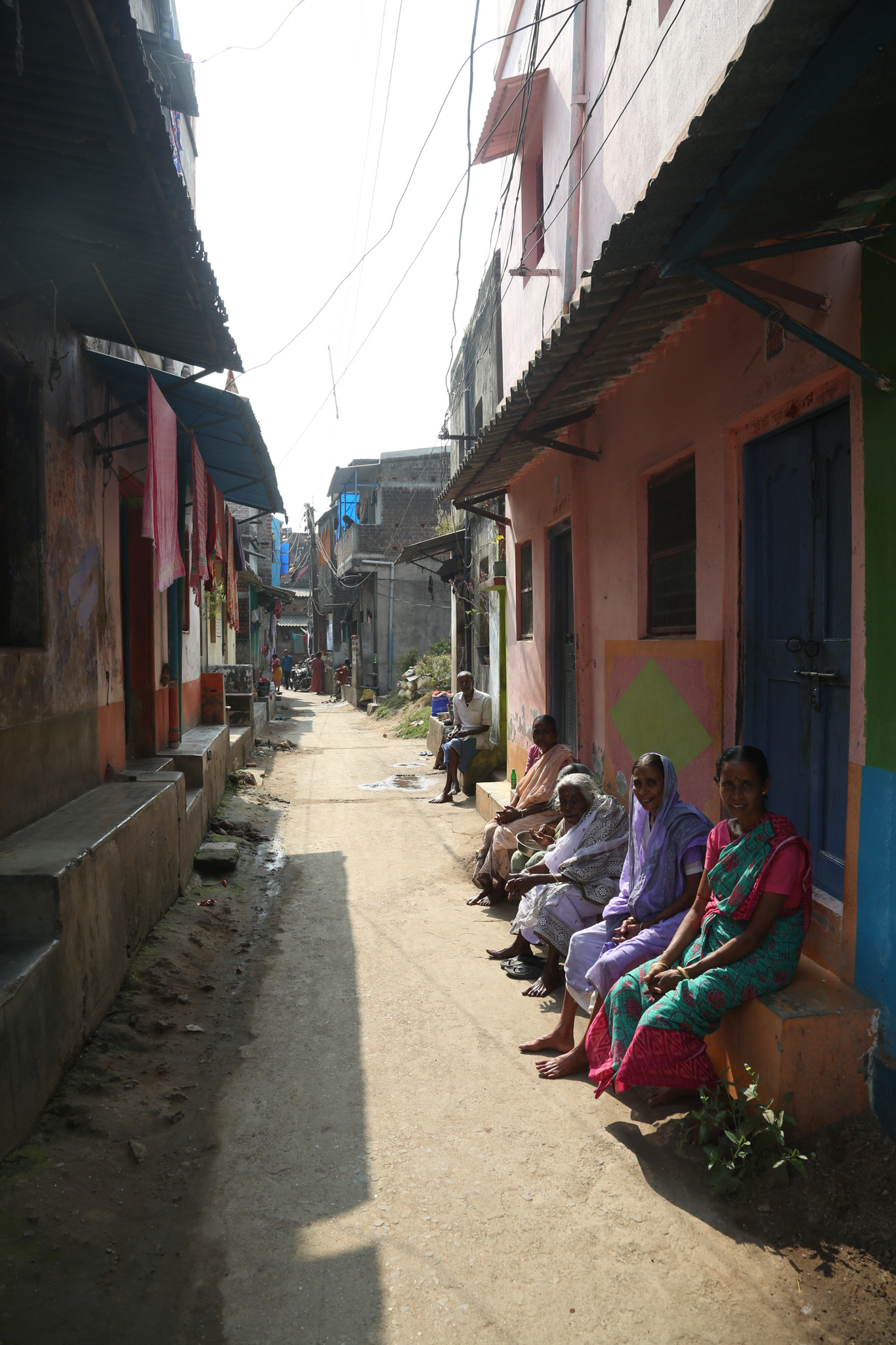
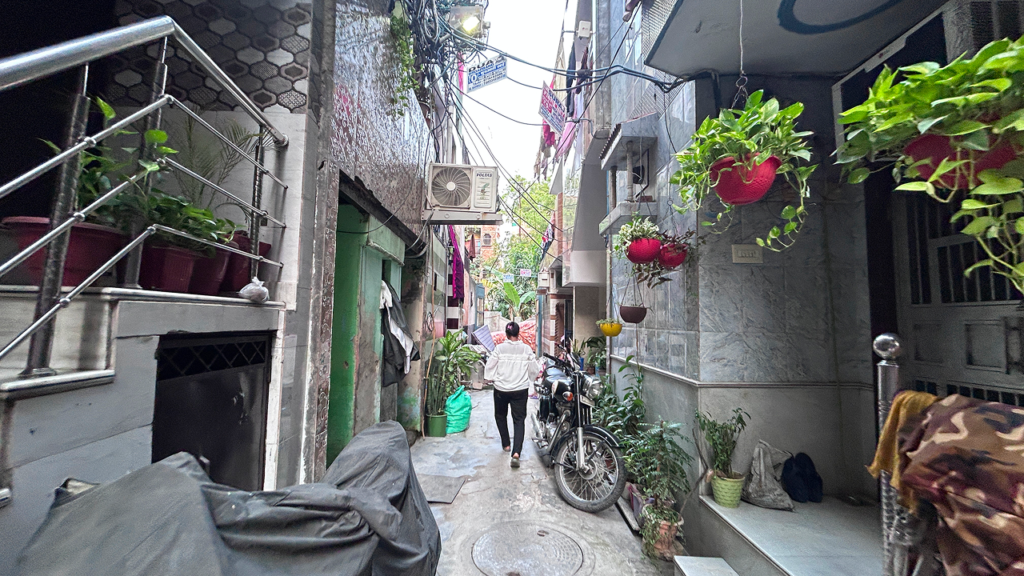
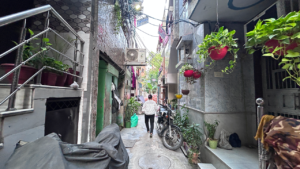
BANKURA, West Bengal: In Kenjakura, mornings are not what they once were. Five years ago, its narrow lanes resounded with the rhythmic clatter of tant or wooden handlooms. Today, that sound has been replaced by the sharp drilling of machines making beads from the hard cover of the bel (wood apple) fruit.
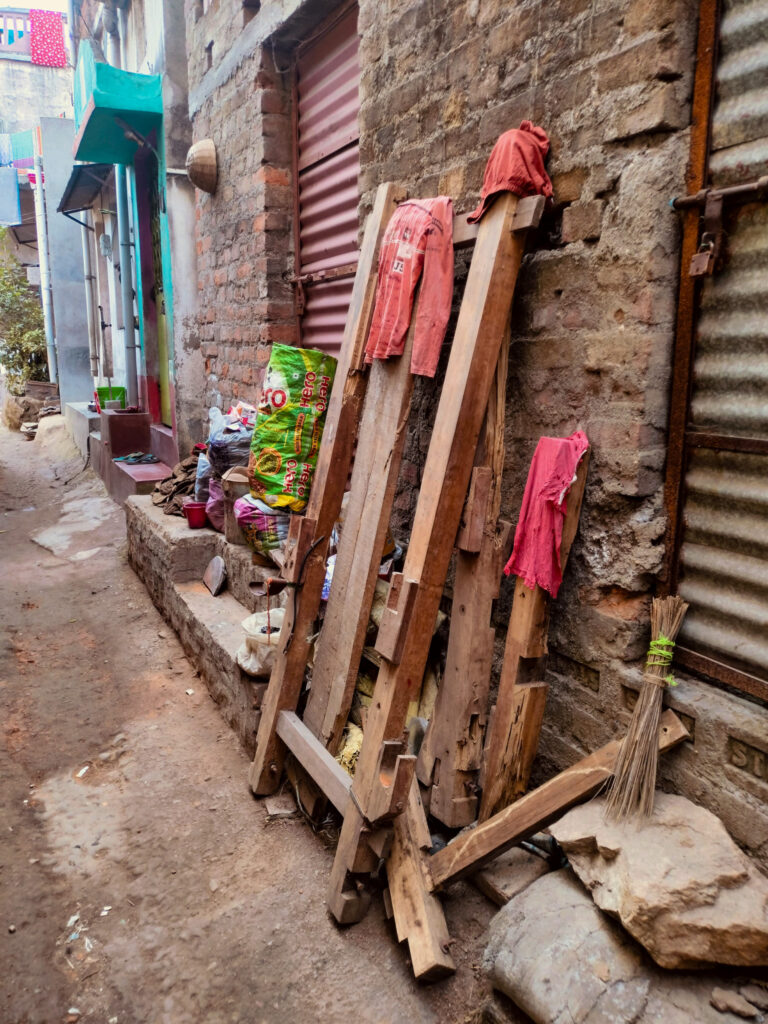
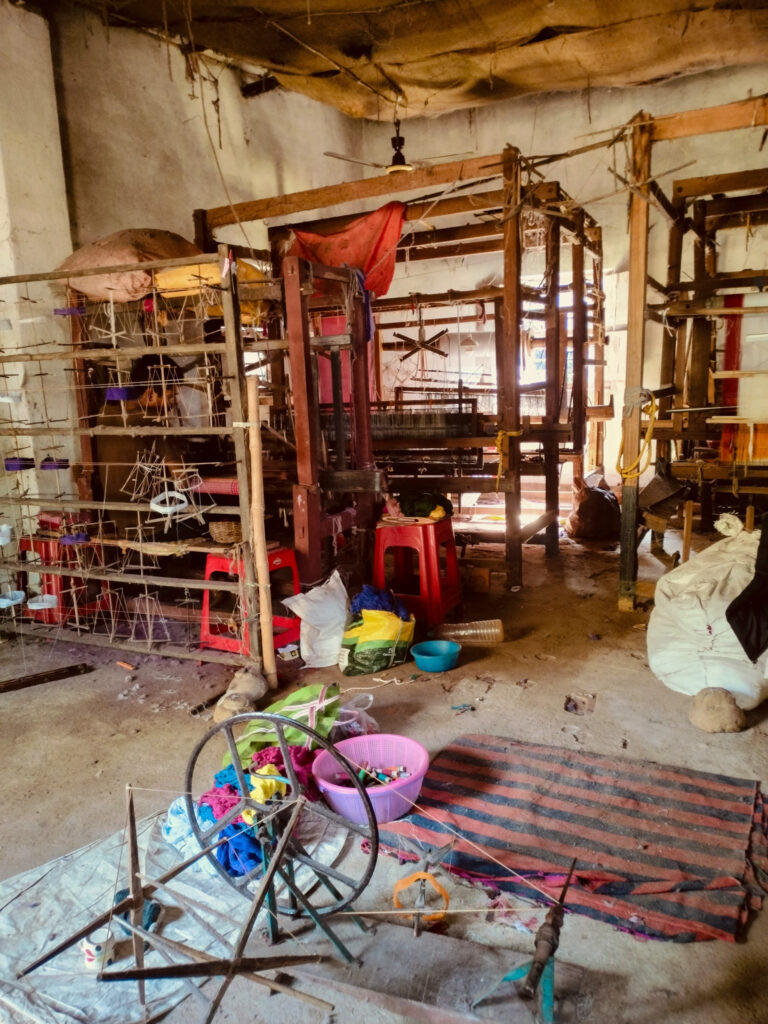
In a village where most families once had two to four tants, it is now difficult to find even one in their homes. On a recent visit, dismantled looms lay scattered—some abandoned on rooftops, exposed to the elements for years, others on the streets, covered in moss.
Close to 2,000 families live in Kenjakura, but fewer than 35 work on tants, said Rahul Das, a young weaver and mahajan (trader) who supplies fellow weavers in the village with yarn. In the absence of official data, Das was the only source for these figures.
He recalled that eight years ago, around 500 families wove sarees and gamchas for a living. But by 2024, that number had fallen to 120. Today, it stands at just 35. Das attributed this to the decline of tant handlooms because of competition from powerlooms nearby.
Artisans in Kenjakura told The Migration Story that they could no longer sustain themselves and their families on the income they made from weaving—often less than 100 rupees a day. So, older weavers have now taken up small jobs or daily-wage labour close by, while young men migrate to cities or neighbouring states in search of better-paying work.
DEEPENING POVERTY, SILENT LOOMS
Siddheshwar Nandi, 65, was a weaver his entire life, but four years ago, he was forced to give up his craft—it could no longer sustain his family. “We are tanti (tant weavers). Tant is my everything. The loom I had was first operated by my father; my elder brother, my sons and I all learned to weave on it,” he recalled with a tinge of sadness.
“Both my sons have left this family trade as they cannot earn enough to support their own families,” he told The Migration Story. One of Nandi’s sons works at a lodge in Haridwar, while the other is a helper at a fast-food outlet near the village.
Nandi now works at a sweet shop near the village and earns 290 rupees a day, or around 7,500 rupees a month. As a tanti, he earned only 160 rupees a day—and that was when he received an order, which was not often.
“None of my sons like what they are doing, but there are no other options left here,” Nandi added.
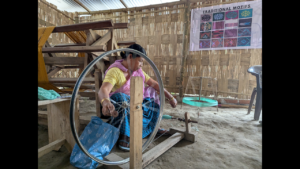
Dismantled looms lie scattered across Kenjakura as the number of families practising weaving has fallen from 500 eight years ago to a mere 35 today. Joymala Bagchi/ The Migration Story
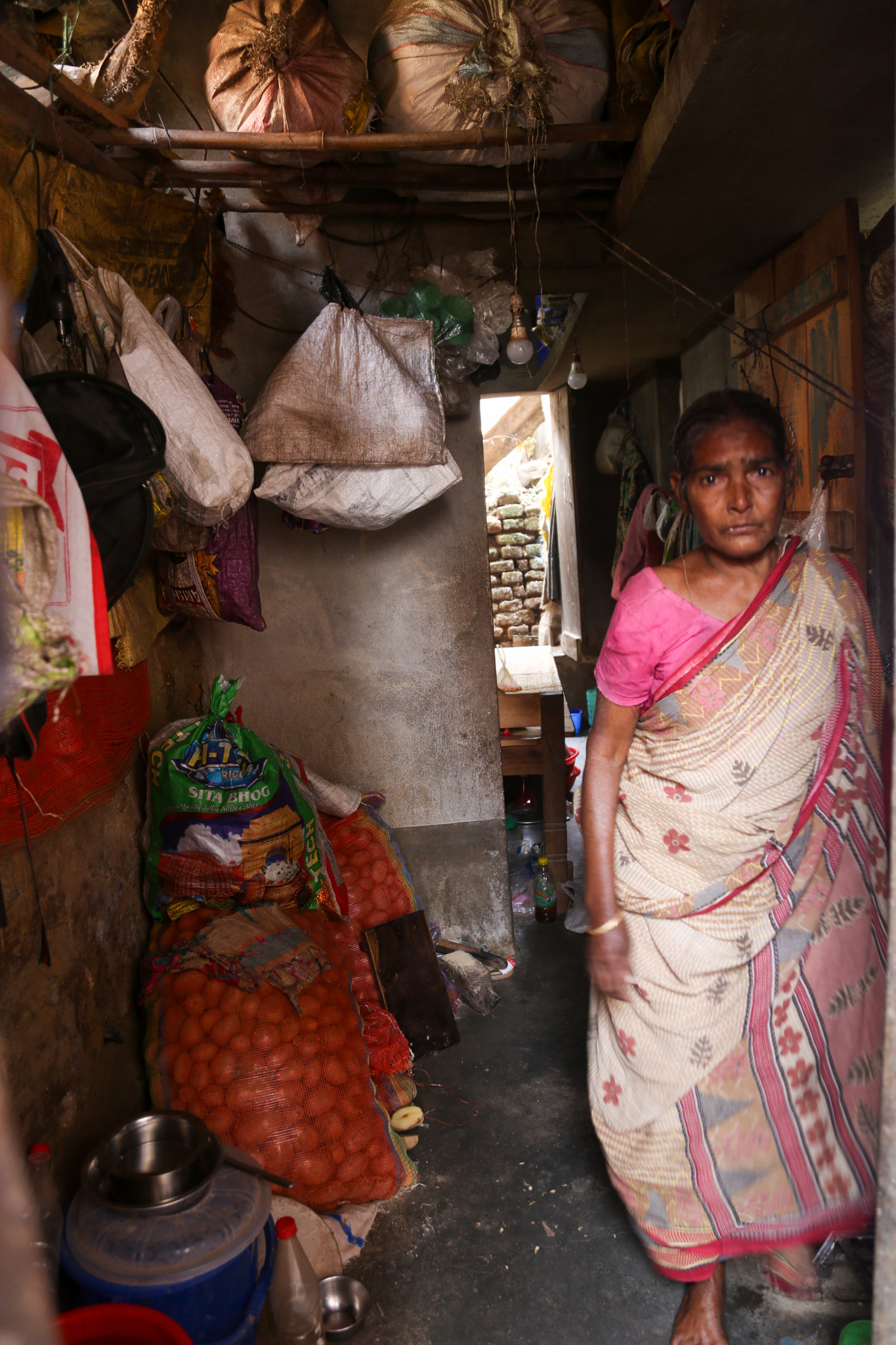
Others in the village shared similar stories. Malati Das, a widow in her 60s who was deeply attached to her tant, held on to it for as long as she could. A year ago, she sold it for a mere 1,500 rupees, when weaving could no longer meet the family’s expenses.
“Even today, the part of the wall where the dismantled loom once stood remains empty,” she said, seated outside her brick-and-cement home.
“But it required a lot of physical effort and no longer helped me earn enough,” she added. “With my health, it is not possible to work on it by myself.”
When Malati’s son and daughter helped her at the loom, the family made 3,000 rupees a month. This is far below rural wage rates specified under the Mahatma Gandhi National Rural Employment Guarantee Act (MGNREGA), a national work guarantee scheme for rural households.
After Malati daughter’s marriage, her son migrated to the city for work. “My son is in Bangalore now and earns a living that weaving cannot fetch anymore,” she rued. He makes 15,000 rupees a month, plus incentives, as a helper at a lodge and supports his MOTHER.
WHY TANT HAS FALLEN ON HARD TIMES
Since 2016, rising prices of yarn, unsteady demand, delayed payments and cheaper powerloom alternatives hit the tant handlooms industry hard. The Covid-19 pandemic only added to its woes—the supply of raw materials was disrupted because of consecutive lockdowns.
Weavers in Kenjakura told The Migration Story that they would sell finished sarees and gamchas (scarves) to middlemen, who paid them no more than 100 rupees a day, sometimes, even less. With the rising costs of raw materials, supporting a family on this income was nearly impossible, forcing these artisans to abandon their traditional occupation. Over time, village youth didn’t want to take up this labour-intensive work either, given its meagre and uncertain returns.
In the last six years, nearly 50% of young men left Kenjakura for cities like Agra, Surat and Bengaluru, according to villagers’ estimates. They now work in hotels, restaurants and chemist shops.
Elders who stayed behind took on small jobs, such as helping at restaurants, sweet shops or ice cream carts. They now have a steady, if small, monthly salary.
But Madhusudan Das, 32, who left weaving a decade ago, decided to stay in the village. He gives tuitions to students and is learning to make wooden toys.
“My family had two handlooms, but we could no longer make a living. We feel bad—the entire village feels bad—about how our hereditary handloom is vanishing so rapidly. But do we have any other options?” he asked.
“Powerlooms and no proper places to sell [what we make] have led to the decline of our tant. Our village does not have a powerloom yet, but others do, and powerlooms don’t need as many labourers,” he added.
Madhusudan also had space constraints. “A loom requires space, but we no longer have space in our home,” he said. His house, like others in the village, was made under the Banglar Bari (Gramin), a rural housing scheme that helps families build pucca (permanent) homes. But they often have only one or two small rooms.
Though the houses in the village were semi-permanent earlier, made of mud and thatch, they were much more spacious, with enough room for a tant in the courtyard or elsewhere.
Sukhdev Bit, 32, who stopped weaving only two months ago, had similar space issues. “My family has a proper [pucca] house now, with a small kitchen and a bedroom occupied mostly by the bed. But if I have to continue weaving, I’ll have to rent a space where I can keep the loom,” he said.
But with a monthly income of 5,000–7,000 rupees, Bit couldn’t afford to rent a space just for weaving. So, he started a phuchka (snack) business instead.
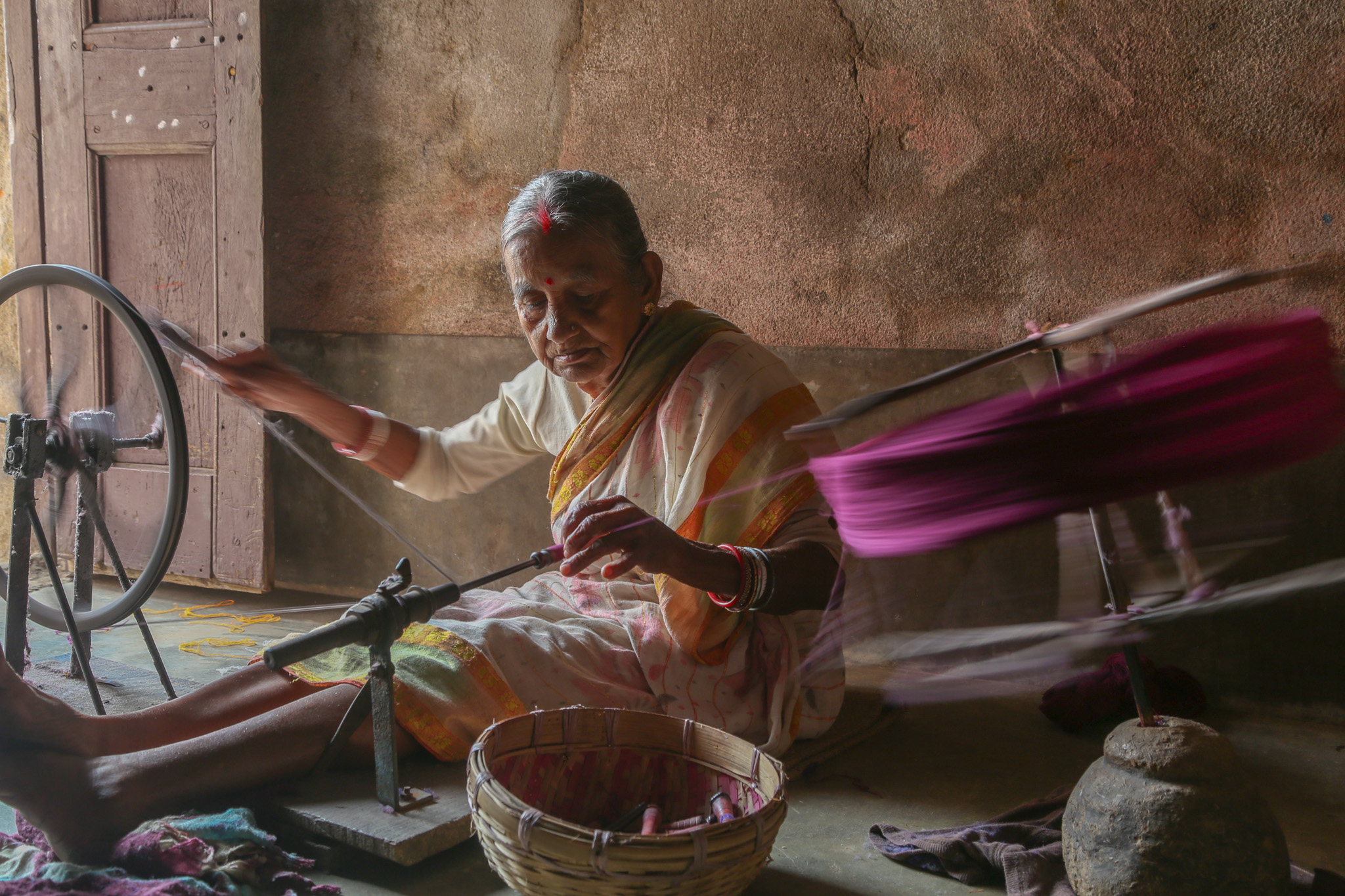
Women, too, have started businesses of their own. Earlier, they worked alongside their husbands—spinning yarn on the charkha, detangling it, dyeing it and laying it out to dry.
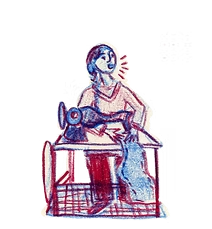
But now they make bel malas (beaded garlands made of wood apples) or work as tailors. Demand for bel malas varies, but the women can make up to forty bel malas a day, which earns them a wage of 200 rupees.
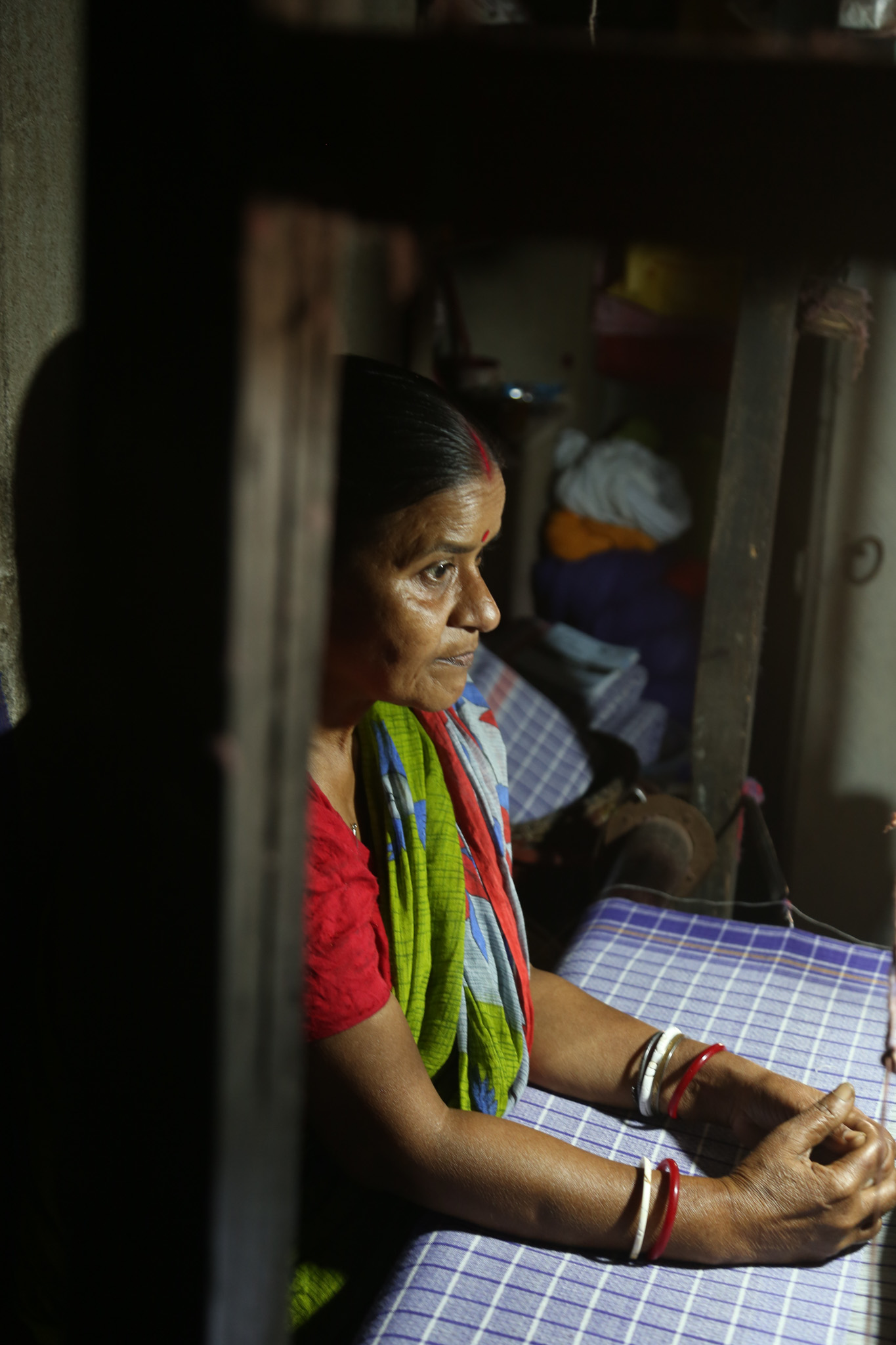
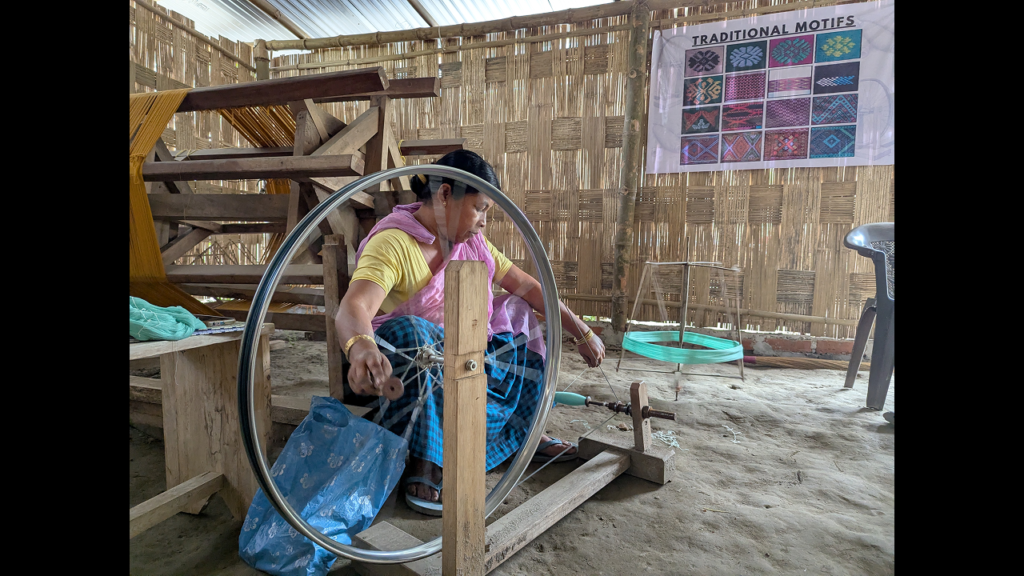
Also, since men began migrating for work, women have started making gamchas—many of them are excellent weavers. Among them is fifty-year-old Rina Dutta, who started weaving at the age of 12.
“My husband works at a sweet shop, but it is not possible to support a family on one person’s income. So, I weave as much as I can [for the additional income]. It’s how we got our older daughter married,” she said.
Even though a gamcha only fetches her 50–80 rupees and takes an entire day to finish, it still brings in extra money for the family.
Dutta’s younger daughter studied till class 12 and doesn’t know how to weave. So, she makes bel malas at home and recently, bought a drilling machine to carve beads from the bel fruit. Though it cost her 2,000 rupees, the machine helps her work faster—and make 40 malas or 200 rupees a day.
THE THREAT OF THE POWERLOOM
While Kenjakura’s weavers are adapting to the decline of tant, this isn’t only their story. In villages of Bankura, Purba Bardhaman, Nadia and Hoogly districts, many skilled weavers share a similar fate.
Biren Basak, 51, who once owned eight handlooms in Samudragarh village, Purba Bardhaman, still struggles to support his family. Powerlooms that produce lakhs of clothing items a day are pushing his enterprise—and those of other weavers—to the margins.
“A handloom saree takes at least two days to complete, even if the weaver works continuously,” he said. “But powerlooms produce in lakhs every day and their sales are much higher. Customers prefer the cheaper [powerloom] option, but who is going to judge authenticity?” Biren asked.
Apart from this, many powerloom sarees from Bangladesh are sold as handlooms in local markets, he added, insisting that the government look into this.
Though Samudragrah, a vibrant weaving hub once, drew migrants from North Bengal, today workers here are leaving for Assam’s textile mills. For instance, Gopal Basak, a 26-year-old college graduate, gave up weaving a year ago and now works as a waiter in a Bengaluru hotel.
“Powerlooms have taken over everywhere,” Gopal said. “They use low-quality yarn and the sarees they make are not durable. Customers do not always understand this. There are duplicates in the market too, so people are turning away from our sarees. How many can afford good-quality sarees at high prices?”
A tant handloom saree is priced at least 1,000 rupees, while its powerloom counterpart costs anywhere between 400 and 600 rupees.
In 2025, the West Bengal government launched Shramashree, a scheme for migrant workers that provides them financial incentives to return to the state and supports them until they find employment. The Migration Story contacted a government official, but he was unavailable for an interview.
Biren, however, is unconvinced about the effectiveness of government schemes. “Schemes can never replace work. Lives will not improve through schemes alone. The government should strengthen tant, so that we do not have to migrate for our daily bread,” he said.
Families of migrant workers in other states also live in constant anxiety. “We keep seeing [disturbing] news about migrant labourers and whenever my son calls from Agra, I tell him to stay calm, accept what is said, and avoid arguments. Just a few days ago, I told him to return home and work here,” said Kusum Basak, 57, who lives in Serampore city, a hub for traditional Bengali handloom products.
Although the state has schemes to support handlooms, there are implementation issues, said Nilay Kumar Basak, a PhD candidate at Visva-Bharati University who is studying textiles.
“The government is trying to save handlooms, but the main problem remains untouched. According to the Handlooms Reservation Act, tant sarees top the list of eleven kinds of textiles that cannot be made in powerlooms. Every state has an office of the [central] Development Commissioner (Handlooms) and Weavers Service Centres, but implementation [of their welfare mandates] on the ground is weak,” Basak explained.
The Handlooms (Reservation of Articles for Production) Act, 1985, is meant to protect India’s handloom weavers from encroachment by the powerloom and mill sectors—and to preserve their livelihoods.
Basak also said that the decline of tant handlooms began roughly a decade ago. “The pandemic severely affected weavers, but the rapid expansion of powerlooms has brought the sector close to collapse in West Bengal. Most young weavers are migrating, older artisans are driving totos or working as helpers in shops, and the number of migrant workers is rising every year.”
Despite the odds against tant, Kenjakura’s Rahul Das is keen to revive his traditional occupation and create new markets for it. The 33-year-old not only gets orders for fellow weavers, but also helps to sell the products they make. But he told this reporter that the handlooms industry in Kenjakura will only survive for another two to five years.
“I am talking to weavers, telling them about the importance of handlooms, and trying to bring in new designs, so consumers will feel like buying them,” he said.
In 2017, Banglanatok, a social enterprise, had visited Kenjakura to conduct trainings for weavers and discuss design and marketing ideas with them, he added. “They provided us with a few customers too, who would buy from us. But after two years of the pandemic, things declined drastically and never revived, not even a bit. Now, handloom isn’t just stagnant, but in rapid decline.”
For Das, reviving tant feels like a race against time. “I’m chalking out ideas and discussing how we can save our ancestral trade.” About a quarter of weavers are on board with his new plans of adopting new designs, making dress materials, and creating markets in other states. But they are yet to be implemented.
If he fails, however, Das said that he will “have no choice but to shift to powerlooms, against my will.”
But there are others in Kenjakura, like Das, who dream of tant.
From the age of 12, Bablu Das, now 50, learnt weaving from his parents and grandfather. Unable to learn a decent livelihood from it as an adult, he left for Agra when he was 20.
There, he worked as a helper at a lodge—cleaning, providing room service and doing maintenance. But he always wanted to return to his village—and return to weaving. So, he came back to Kenjakura four years ago with hope and started working at his loom.
“Who does not want to come back to one’s own village and work here? At the end of a day’s work here, I return home. I always wanted to do something of my own in weaving, the art that is my family’s tradition,” Bablu said.
But with each passing year, his struggle and that of his wife and three children only increased. After facing significant financial hardships, he decided to leave for Agra again.
“It becomes burdensome to keep dreaming while your family goes through a financial crisis,” Bablu said. “I earn the minimum wage in Agra and will get a monthly income of 15,000 rupees, which is far more than what I can earn here.”
He has move to another state for work, he added, like many others who are compelled to do so. “I am an artist, but being a migrant labourer once again is my destiny,” he sighed, seemingly resigned to his fate.
Edited by Subuhi Jiwani
Joymala Bagchi is an independent journalist writing on migration, humanitarian crisis, environment and politics
This is the first in a two-part series on the decline of weaving and its impact on communities engaged in the practice.