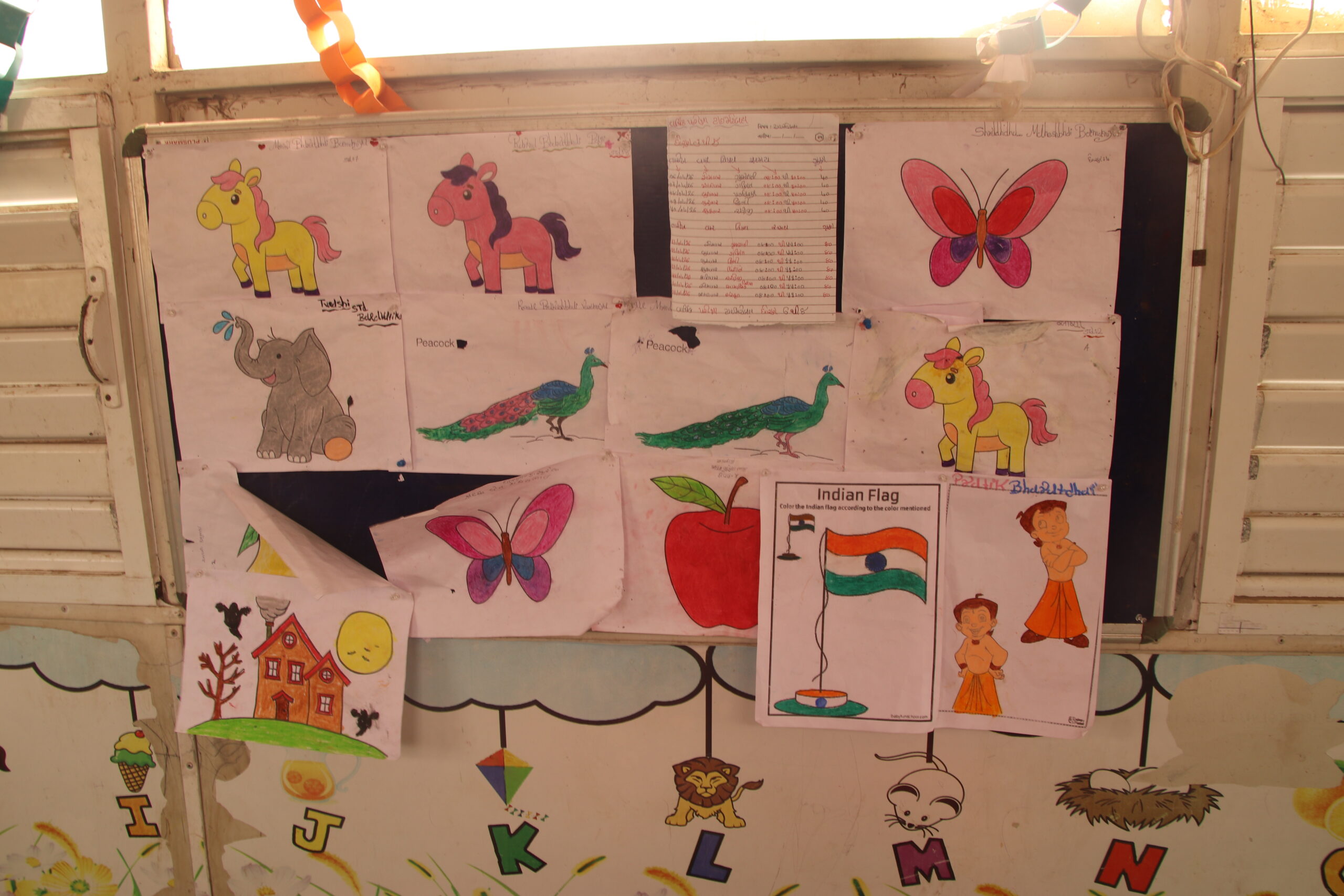
Inside a makeshift classroom in Little Rann of Kutch, the small board displays the art and craft of children who migrate with their parents to salt pans for eight months a year and drop out of school
For tens of thousands of children in India, the sound of a departing truck or the clatter of a construction site replaces the sound of a school bell. As their parents move across states in search of seasonal work in brick kilns, salt pans, or urban infrastructure projects, these children are frequently uprooted from the formal education system.
The Right to Education (RTE) Act promises universal schooling, yet for the children of the estimated 140 million internal migrants in India, this right remains elusive. Moving between states often means facing language barriers, the loss of documentation, and the constant dilemma of returning home to yet another school.
A study by Aide et Action, highlighted that 95% children do not get access to education at destination locations.
In a written reply in the Rajya Sabha, in December 2025, Minister of State for Women and Child Development, Savitri Thakur, said that India recorded nearly 8.5 lakh out of school children of which 3.7 lakh were girls. She mentioned migration as one of the key reasons for children dropping out of school.
To address these gaps, across the country, individuals, non-profit organisations and even the government have taken steps to help these children continue their education.
Through this essay, we document some of the vital work of individuals, organisations and bridge schools that refuse to let these children fall through the cracks.
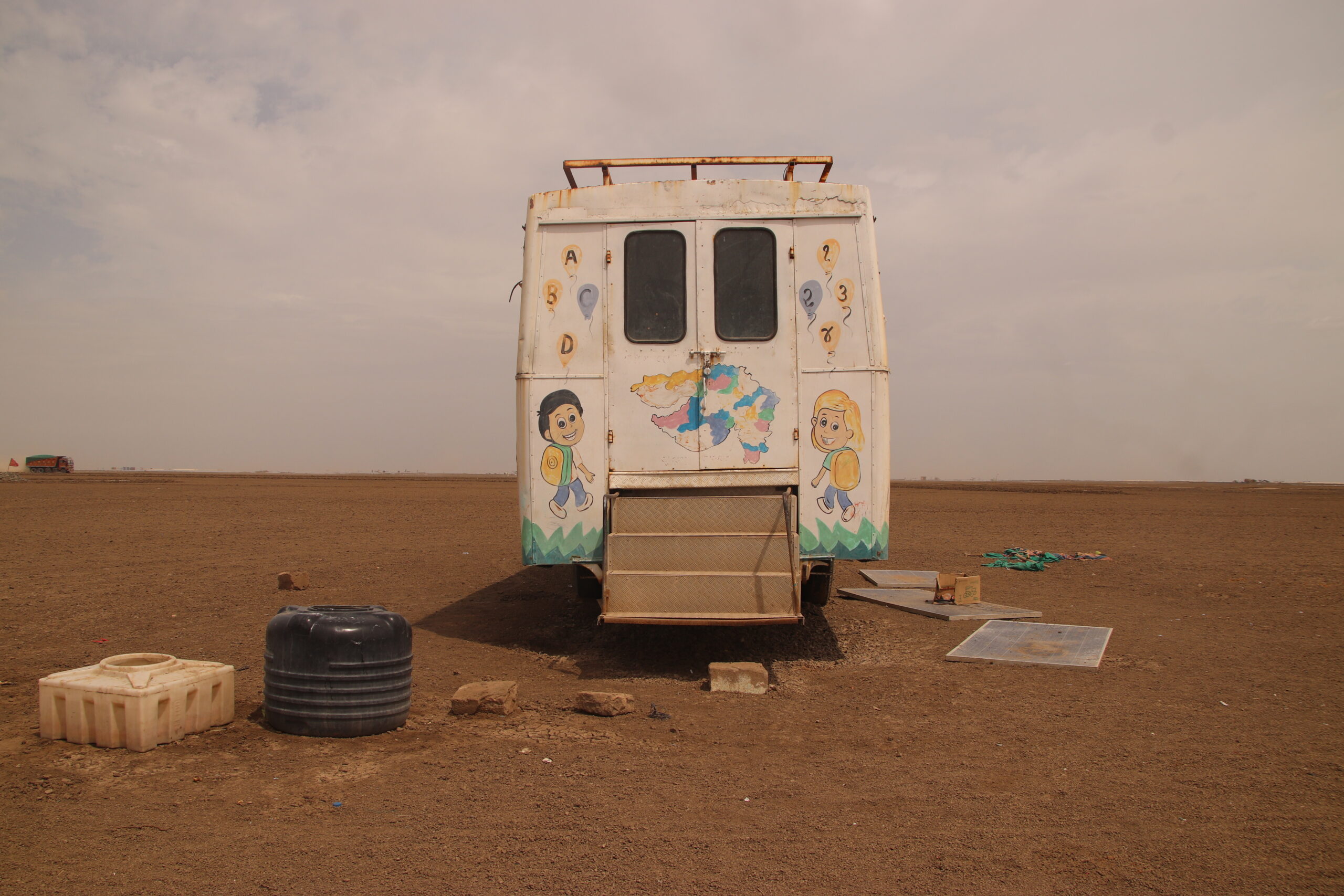
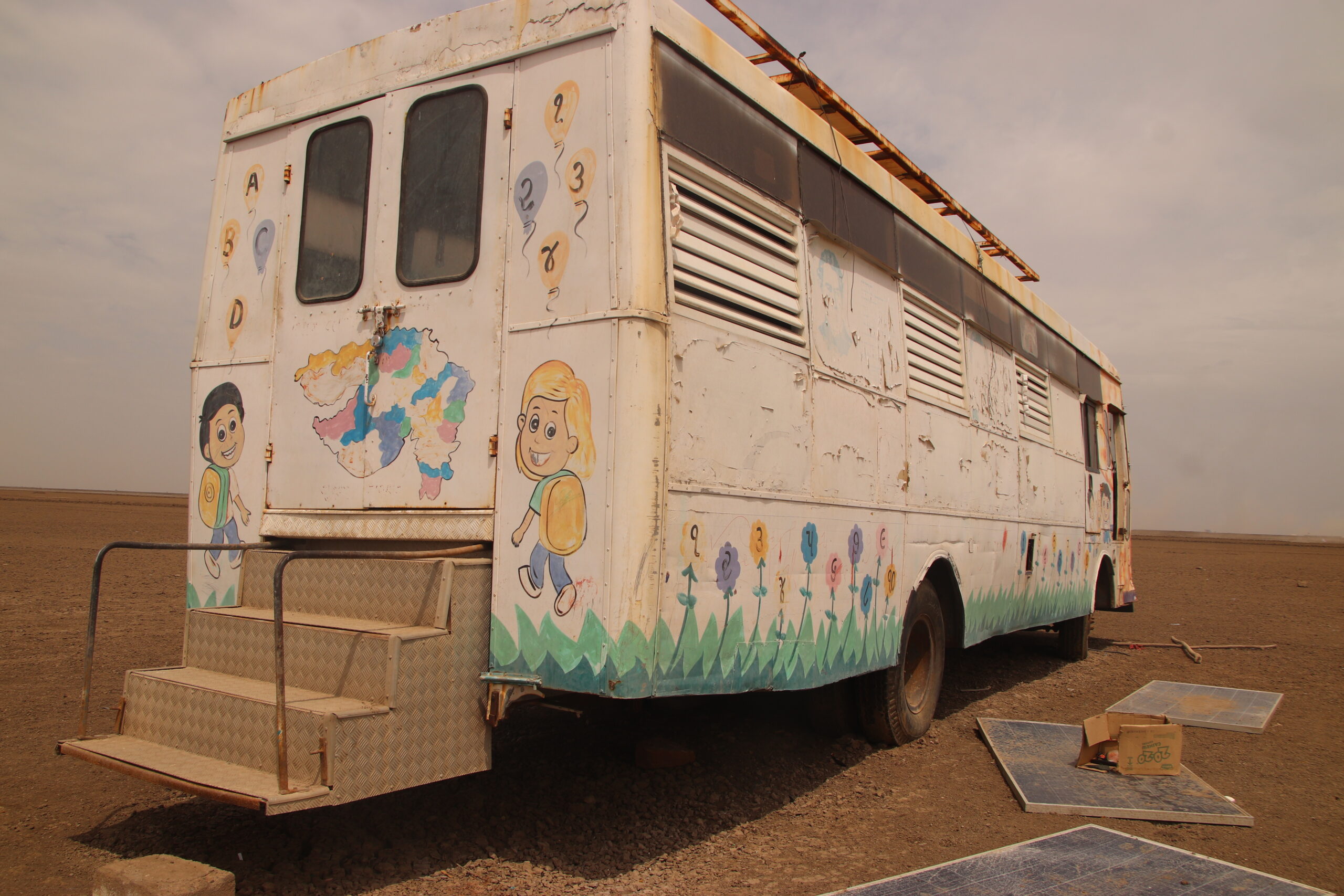
An old rusty state transport bus, playfully painted, stands at the centre of the desert in the Little Rann of Kutch. Every day between 9am and 4pm, the bus becomes lively with the chatter of the students and synchronised poem recitation
In the salt pans of Little Rann of Kutch, where Agariyas or the salt producers migrate from their villages for eight months – October to May, these old state transport buses become the school for the children of these families – Rann Shala.
Since the 1970s, when the LKR was declared as a nature reserve, no permanent buildings are permitted in the Rann. Since 2009, tent schools braved the fierce desert winds, but today, education has taken the driver’s seat through these discarded Gujarat State transport buses.
These buses have been transformed into high-tech mobile classrooms, in collaboration with the government scheme of Sarva Shiksha Abhiyan, the Government of Gujarat and Agariya Heet Rakshak Manch, a non-profit working for the welfare of the Agariyas. Powered by solar panels, these buses are equipped with fans, LED televisions, and interactive smart boards.
“I have to bring my daughter along with me. I can not leave her for eight months back in the village. I am glad there is this arrangement. She gets mid day meals. She loves the food. She cycles to school everyday. We bring her cycle with us every time we come here,” said Devi Bamaniya, whose seven year old daughter studies in this school.
For every 50 families, there is one bus stationed across the 5000 sq km salt desert. Under the guidance of dedicated teachers and local Balmitras, students from mixed grades gather to learn Gujarati, English, and Math.
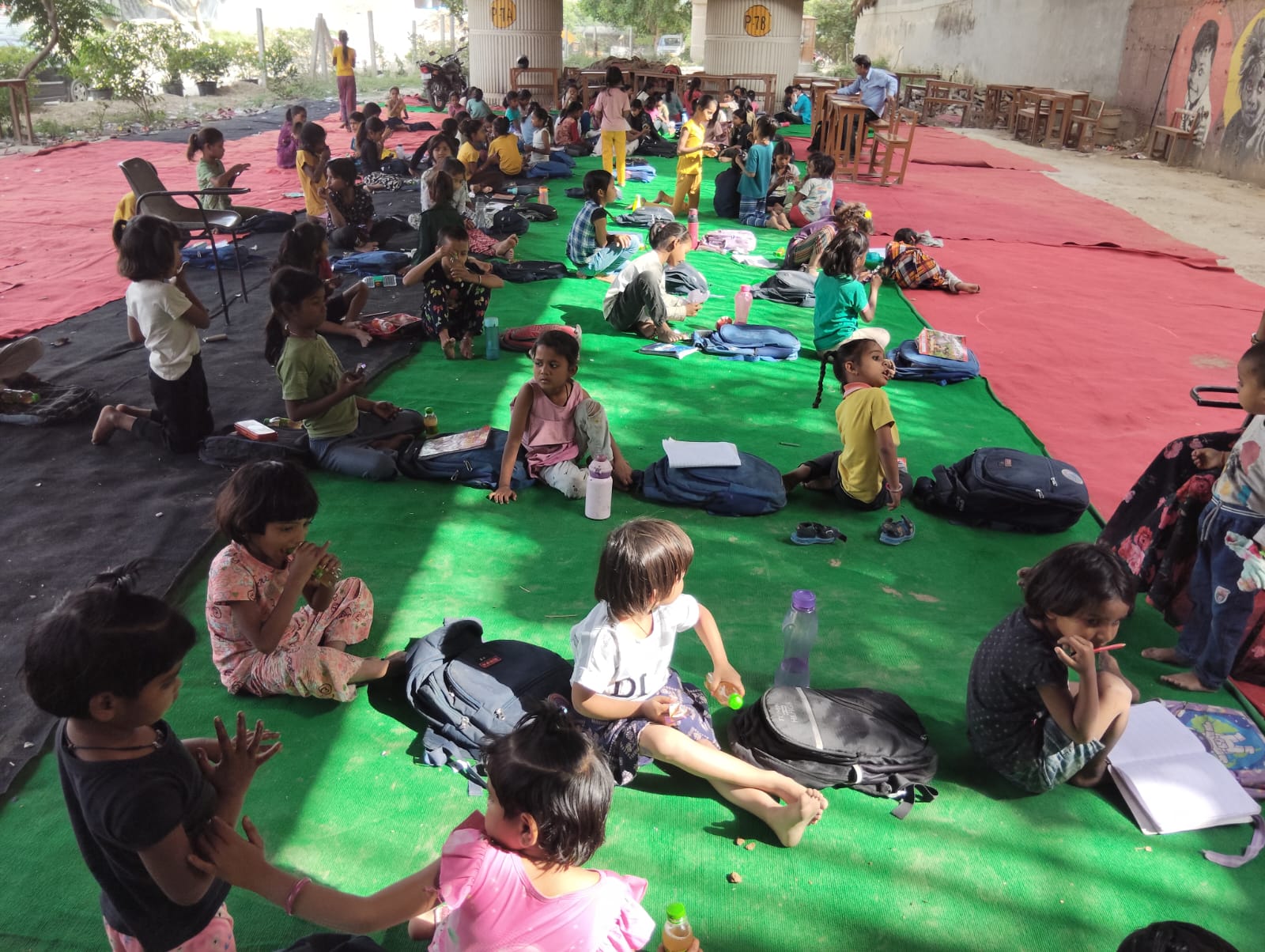
For the past 20 years, this narrow space beneath the shadow of Delhi’s soaring metro line, has turned into a classroom of hope. Here, amid the rumble of passing trains and the rush of the city above, more than 200 children from nearby slum settlements gather each day to learn in the open air.
In the country’s capital, Laxmi Chandra along with Rajesh Kumar Sharma, are trying to make education accessible to migrant children. Under a metro flyover, on the banks of Yamuna, Chandra and his colleagues have been providing free education to nearly 250 migrant children living in nearby slums since 2006.
The walls of the flyover are painted with bright colours and drawings of tall trees and giant roses. Five blackboards hang against these very walls, transforming this area into an open-air, makeshift school.
A graduate in Physics, Chandra began his journey as a teacher in Nalanda, Bihar in the 1980s. He shifted to Delhi in 1996 in search of a livelihood. With no place to stay, he lived in the slums, teaching local children. In return, the slum residents gave him food. And from there, as the number of students started growing, he shifted to the Yamuna riverbank.
And this initiative was named ‘Free School Under the Bridge.’
In a conversation with The Migration Story, Chandra said how teaching children without any cost barely supported him and his family financially. “When I realised that the kids had no education or any means to access study, I decided to follow an ideology I believe in – everyone should study and move forward,” he said.
Over the years, this school has received a lot of media attention. Actor Nawazuddin Siddiqui
upon hearing his story called Chandra “Manjhi” of the education field. A son to agricultural
labours, Chandra is providing a very fresh perspective of schooling to children who do not get to attend school because their parents – migrants or informal workers – are undocumented.
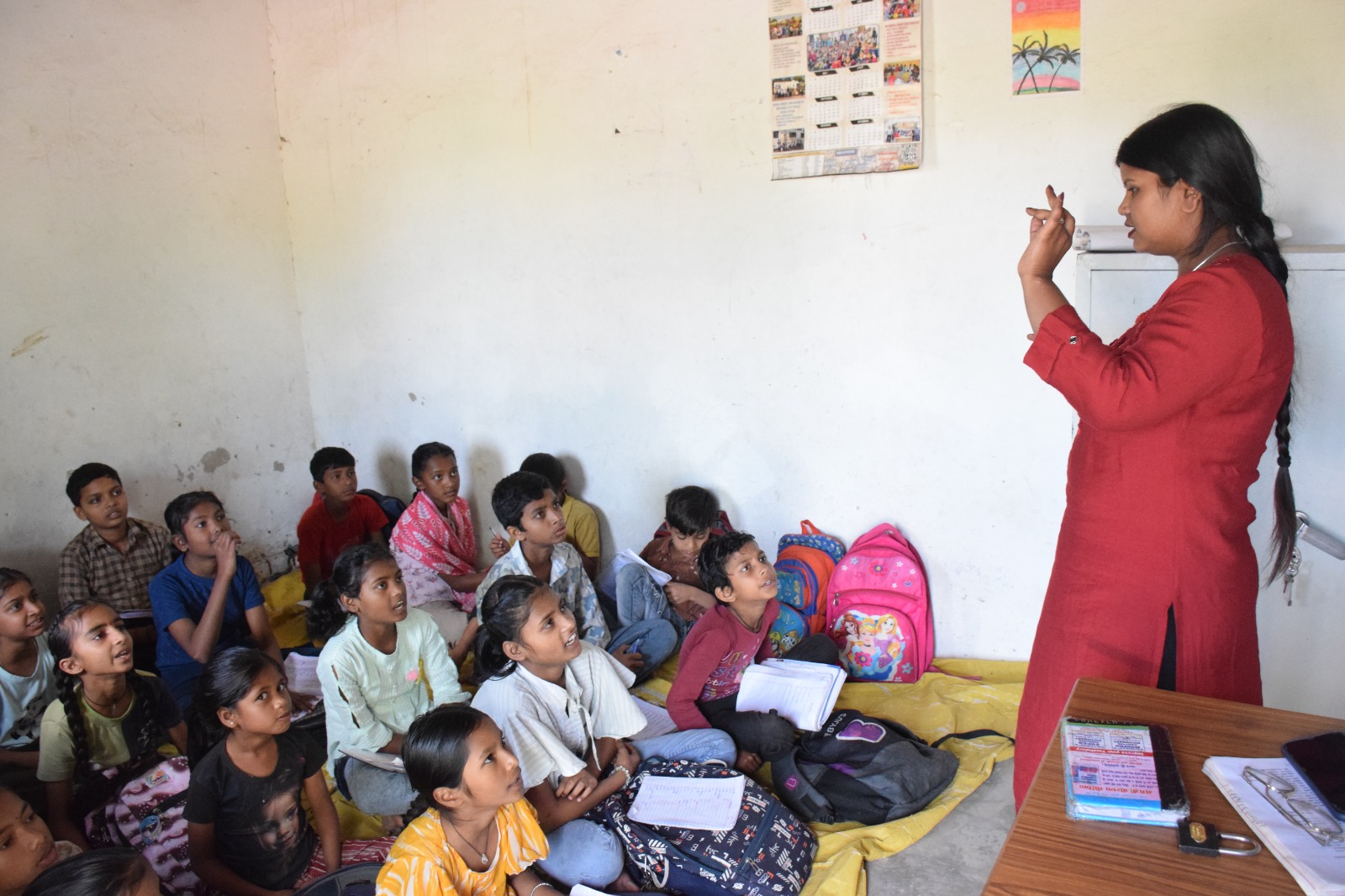
Elementary students at a remedial centre in Chandigarh use an English–Hindi guide to build basic vocabulary and speaking skills.
Established in 2008 in Chandigarh, the Don Bosco Navjeevan Society functions as a remedial education center for children of migrant families, primarily from Uttar Pradesh and Bihar. As per 2011 census, over 2 lakh migrants reside in the city. Many occupy the unorganized sector as unskilled laborers, rickshaw pullers, and domestic workers, often residing in colonies such as Dhanas, Maloya, and Dadu Majra, key residential areas in the city, primarily known for housing rehabilitation projects.
The society operates across ten such slums and colonies, addressing the educational gaps caused by seasonal migration and unstable living conditions. Every Monday through Saturday, from 2:00 to 5:30 PM, classes of 30–40 students gather for foundational instruction, that focuses on basic essential literacy like reading, spelling and numeracy skills,
Beyond academics, the organization provides medical checkups, nutrition, and personality development through child parliaments. The long-term impact of these transitional spaces is evidenced by former students who have moved from interrupted schooling to pursuing professional degrees, including B.Tech and B. Com.
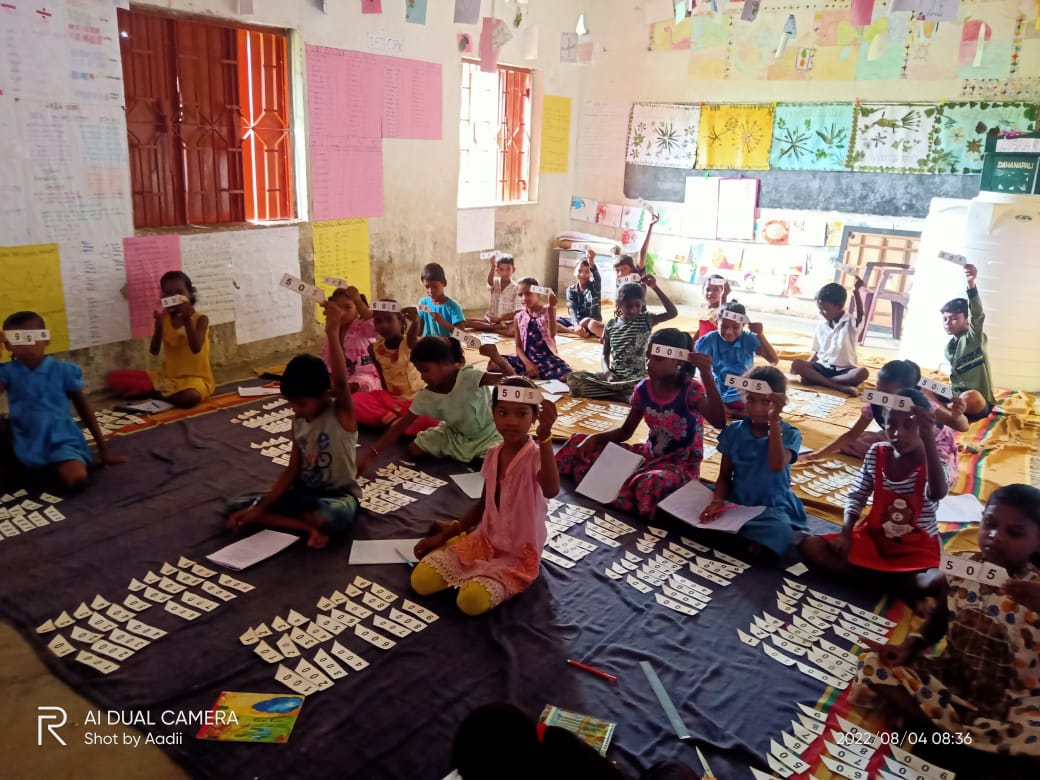
Children at one of the seasonal hostels in Khariar, learn numbers through interactive classroom learning, using flashcards and peer participation.
In the drylands of Western Odisha, the “Pathuria” system had long dictated the lives of children. Under this debt-bondage tradition, labor agents recruit families as units, specifically valuing children for their tiny hands and light bodies. These children were tasked with making mud balls or walking between narrow rows of drying bricks to flip them, tasks adults are too large to perform without damaging the product.
To address this and put these children back to school, seasonal hostels or residential care centres were pioneered in the early 2000s by Lokadrusti, a non-profit that opened the first seven hostels in Khariar to protect 193 children from the kilns. These hostels soon became a state-wide mandate under the Right to Education Act, managed by the government with Lokadrusti providing technical expertise.
These hostels address the invisible dropout crisis, children who remain on school rolls but vanish for six months to labor in brick kilns across state lines. The children now study in these community-managed spaces from October to June, and then get a transfer certificate to return to village schools. In these hostels, the only thing being molded isn’t a brick, but the potential of a child finally given the space to grow.
Over the years, these centres have helped children pursue higher education, some have landed private jobs, while some have become teachers and village council members, ensuring welfare of the next migrant children in line.
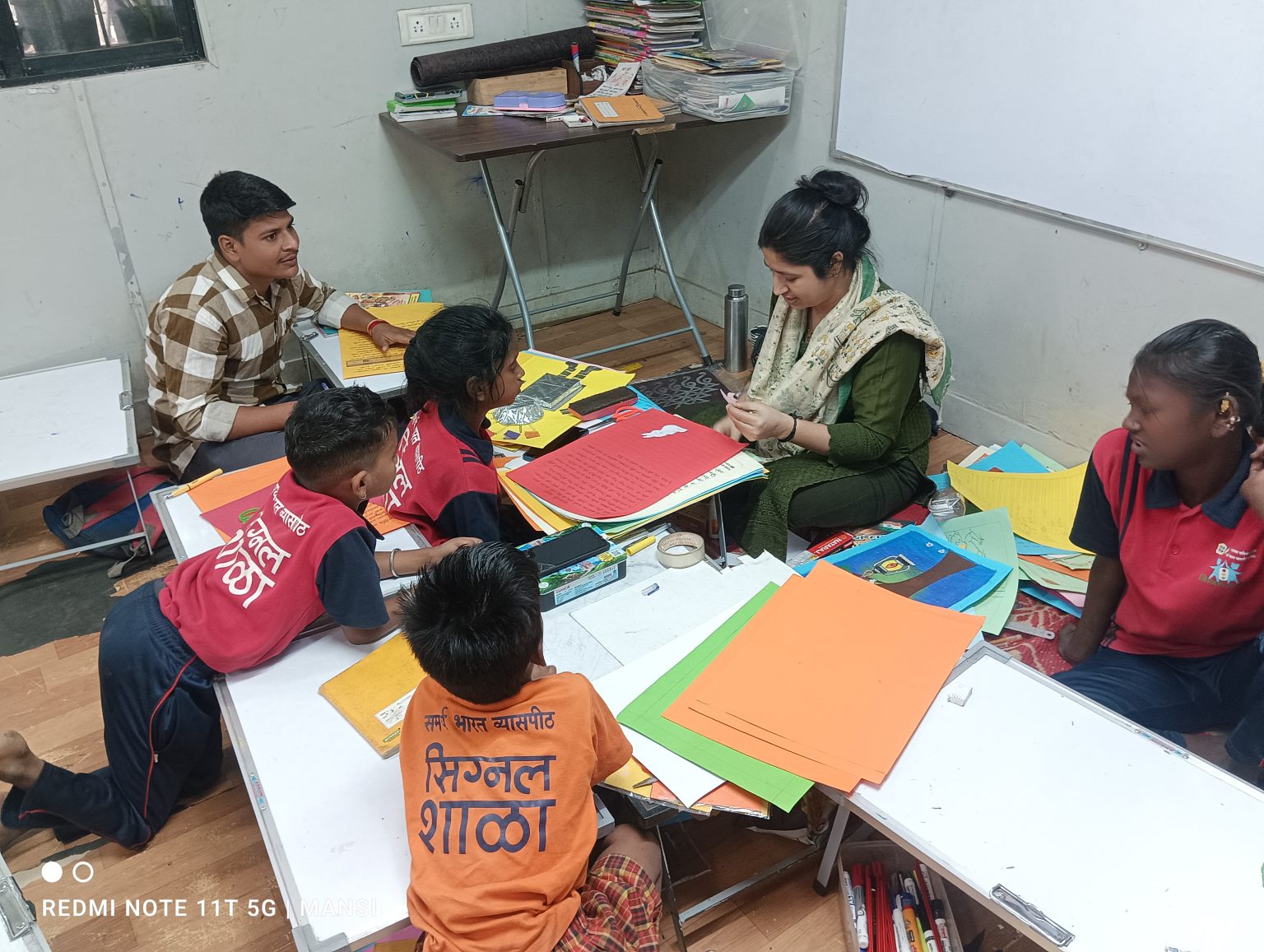
A teacher helps students with creative learning as they gather around wearing colourful uniforms from Signal Shala
At Teen Haath Naka—one of Thane’s busiest junctions where 22 roads from Mumbai, Navi Mumbai and Thane converge in a constant stream of honking traffic—stands an unlikely place for learning. Aptly named Signal Shala, this school began in 2016 inside a single refurbished shipping container placed beside the signal, created for children of migrant families living under nearby flyovers, on pavements, or in makeshift settlements.
Today, it has expanded into a vibrant campus with multiple classrooms, a canteen, computer and robotics labs, a vocational training centre, bathing facilities, and even a small playground.
Signal Shala started with just 18 students, most of them children of families surviving through informal work such as vending flowers, daily wage labour, waste-picking or begging at traffic signals. Today, the school serves dozens of children from play school to Grade 10.
“When circumstances make it difficult for some children to go to school, the school should go to them,” said Bhatu Sawant, founder of Samarth Bharat Vyaspeeth, the non-profit that runs the school. Teachers first learned local dialects to build trust, then introduced formal curriculum, ensuring education met children where they were rather than demanding they first fit the system.
Its alumni now include diploma students, job seekers, and young adults who once sold trinkets at traffic lights. Here, amid the red, amber and green of a traffic signal, children have found their own green signal to move ahead.