6 min read

The Migration Bulletin: Crowded platforms, silent factories

From an LPG shortage sending migrants back home to the fear of names going missing from electoral rolls - India’s migrant workers navigated multiple challenges in April

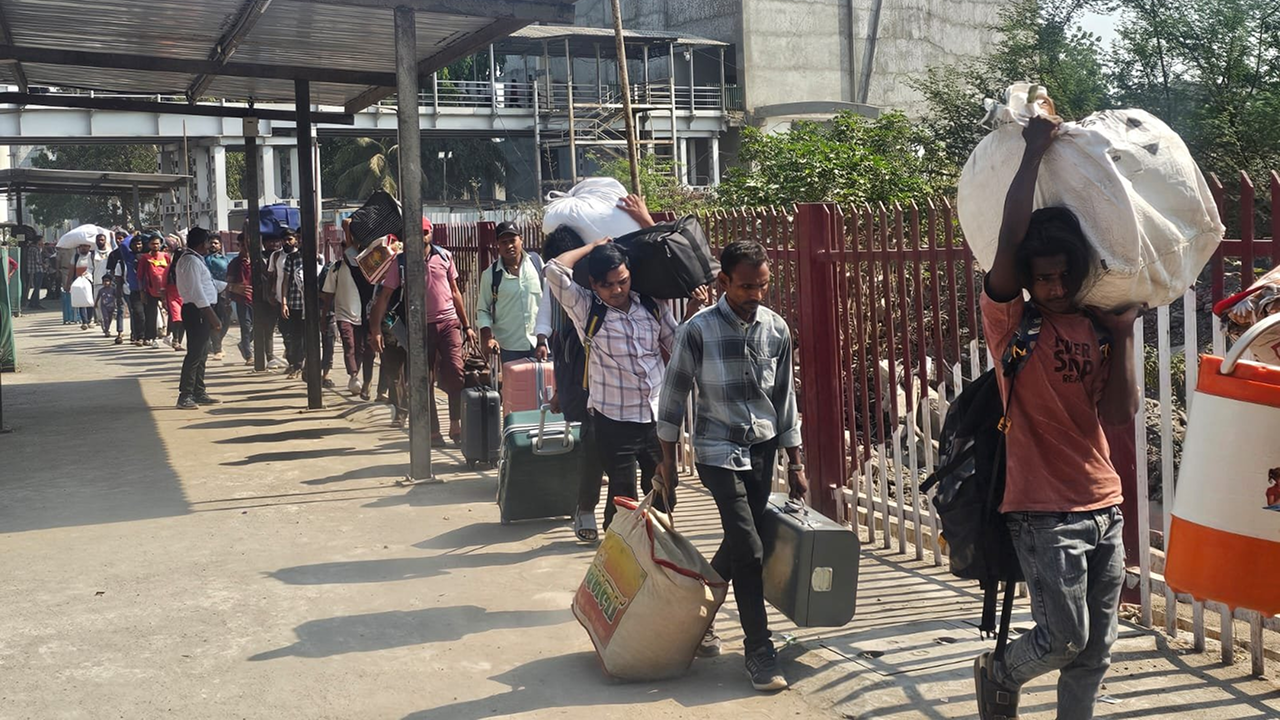
Following the heavy crowds at Udhna station, Western Railway later shared photographs showing well-managed queues and crowd control arrangements at the station (Credit : DRM - Mumbai Central, WR/ X)

April was the cruellest month for scores of migrant workers across the country.

From railway stations and factories in Gujarat to labour colonies in Bengaluru, brick kilns in Andhra Pradesh, chilli farms in Telangana and informal settlements in Himachal Pradesh and Lucknow, the events that unfolded all through the month of April reflected how lives of migrant workers in India remain tied to larger political and economic developments.

This monthly round-up tracks some of the key developments reported across media platforms.

LPG SHORTAGE, SEASONAL TRANSIT AND TURMOIL AT UDHNA STATION

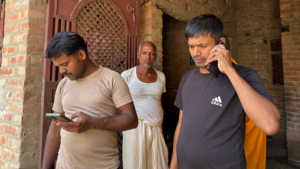
On April 23, visuals of long queues of workers standing outside the Udhna Railway station in Surat, Gujarat, went viral, with one man saying on camera, “Ab nahi aunga dost (I will not return, my friend”). Udhna Railway Station in Surat, is a primary transit hub for India’s diamond and textile workers, working in the city.

Railway authorities, along with the Railway Protection Force quickly intervened and also resorted to mild lathi charge to manage the crowd.

Surat has a massive migrant population estimated at roughly 4.18 million people, majorly from the states of Odisha, UP and Bihar.

Over the past few weeks, migrant workers from the city had been returning to their native villages due to marriage season, LPG shortages and even a few factories shutting down due to the ongoing crisis.

Thousands of migrant workers from UP, Bihar and Odisha crowded the station to board the long distance trains on April 23.

The sheer volume of travelers led to significant unrest at the terminal. Udhna railway station in-charge Y S Thakur noted that the influx resulted in workers jumping fences and running across tracks to secure spots on departing trains.

GEOPOLITICAL FALLOUT IN THE MORBI CERAMICS HUB

440 kms from Surat, in Gujarat’s Morbi district, the heart of India’s ceramics industry, a deepening industrial slowdown is pushing thousands of migrant workers into a crisis reminiscent of the 2020, COVID lockdowns.

Morbi produces over 80% of India’s ceramic output, and employs more than 4 lakh workers, mostly migrants. However, the hub is also reeling from the fallout of Middle East tensions.

According to a report by Al Jazeera, nearly 450 of Morbi’s 600 ceramic units have shut down, halting production. This shutdown is triggered by disruptions in gas supplies linked to tensions around the Strait of Hormuz and has affected an estimated 200,000 workers, many of them migrants from Uttar Pradesh and Bihar. Over a quarter have already returned home, fearing prolonged uncertainty.

But beyond job loss, workers also face a serious health risk. The Aljazeera report mentions cases of silicosis – an incurable lung disease caused by inhaling silica dust found in rock, sand quartz and other building materials.

Moreover, workers are also denied social security under various Indian laws regarding salaries or pension funds, since doing so would establish proof of employment.

Manoj Arcadiya, president of the Morbi Ceramic Manufacturers Association said they had shut down the units till April 15, hoping that the Middle East crisis would be resolved by then, but even today, only around 100 units have opened. Most of these units have still not begun the manufacturing process and for at least 15 more days, the situation is likely to remain the same.

INFORMAL SETTLEMENTS AND FIRE INCIDENTS

On April 15, a fire that ripped through Lucknow’s Vikas Nagar, home to the city’s migrant workers, left around 1000 residents homeless after their houses were gutted in the fire.

It was reported that residents heard a series of explosions as LPG cylinders caught fire intensifying the blaze and making it harder to control.

In yet another incident, on 24th April, a fire broke out in the Lalsinghi village in Una, Himachal Pradesh which destroyed at least 40 thatched huts housing migrant workers’ families. With most migrant workers out in the fields for the rabi harvest, the fire spread quickly through the cluster of huts.

The incident occurred at about 12 noon and the locals immediately informed the fire department. It took about one and a half hours to douse the flames. As reported by The Tribune, the Revenue Department, under the supervision of the Una tehsildar, has been tasked with assessing the damage, while fire department officials confirmed that four fire tenders were used to fight the blaze. The cause of the incident is also being assessed.

Una is currently experiencing an intense heatweave with temperatures soaring above 40˚C which often aggravates the risks of fires breaking out in the densely packed, temporary settlements. Such incidents in the migrant workers’ colonies have been reported almost every year in the village.

Despite repeated directions from the district administration, many local landlords have yet to construct ‘pucca’ houses with sanitation facilities for workers, even as workers continue to pay rent for the dwellings.

ATTACK AND CONSEQUENCES

On 3rd April, a 20-year-old domestic help in Varthur, Bangalore, was brutally assaulted by a group of migrant workers. The victim said the assault was triggered after she objected to the lewd behavior of the accused who had been stalking her and repeatedly asking for her phone number.

In the aftermath, the police arrested 5 of the accused and reportedly summoned landlords of the labour colony along Balagere Road where the accused resided. Subsequently, a week after the assault, on 10th April, hundreds of migrant labourers residing in the labour colony were allegedly forced to vacate their homes by their landlords, triggering concerns over displacement and alleged rights violations, as reported by The Hindu.

About 5,000 migrant families, most of whom hail from West Bengal were affected. While landowners denied any police pressure behind the eviction, several migrant workers alleged that the eviction followed the police intervention on the assault case even though most workers had no connection to the crime.

RESCUE FROM BONDAGE

Multiple rescue operations to free migrant workers from bondage were reported across various states.

Dindori district administration in Madhya Pradesh, rescued 26 migrant workers from Telangana, who had gone to the state for chilli harvesting in January. They alleged that they were neither paid their dues nor allowed to return. After a public grievance hearing in Dindori, where a family member raised the issue, the workers were rescued and their wages of 5.96 lakh rupees were also paid.

Similarly, in Andhra Pradesh, the Tirupati district administration rescued sixty migrant workers from Odisha who had been forced into bonded labour. The migrant families from Odisha had been working at a brick kiln at Pudipatla village in Tirupati Rural mandal for nearly five months, according to a report published by The Hindu.

Each family was paid an advance of 45,000 rupees and 1,000 rupees per week, with restrictions imposed on their movement and employment, indicative of bonded labour.

While initiating a probe under the Bonded Labour System (Abolition) Act 1976, the Collector issued release certificates for the rescued workers, formally recognising them as bonded labourers, which will ensure them rehabilitation benefits.

Edited by Aishwarya Mohanty

Aadhya Angirish and Nihira Pillai are second year students pursuing Bachelor’s in Media Communications at Symbiosis Centre for Media and Communications, Pune.

Both are currently interning with The Migration Story

Authors


Recent Post

Comments

Leave a Comment

26th julyair pollutionAll We Imagine As LightanalysisBagapatia resettlementBengaluru heat wavebrick kiln decarbonisationbrick kilnscashew plantationsCensus 2011challenges in measuring migrationCinemaclimate adaptationclimate adaptation storiesclimate changeclimate change adaptationclimate change displacementclimate cocktailclimate justiceclimate migration Indiaclimate refugeesclimate relocation Indiaclimate resilienceclimate social impactclimate-clean-upcoastal erosion Indiacommunity actioncommunity resiliencecommunity-led conservationcyclone impactcyclone Phailin impactCyclone Titlidebt bondagedebt trapdisaster management in Odishadisaster recovery housingdroughtEastern Ghatsecological restorationeconomic survey migration estimateselectionsenvironmental restorationerosionfishing livelihoods Odishafloodsforest livelihoodsforest rights in IndiaGajapati districtgender and climate changegender politicsgirl powerGLOFsGram Vikasheatheatwaveheatwave delhiice creamIndia elections 2024India jobsIndia rural jobsindigenous knowledgeinformal workersinternal migration datajobsjobs guaranteejuly 19just transitionKerala educationlabour migration in Indialandslidelandslides in Odishalatestlivelihoodlivelihood resiliencemanaged retreatMGNREGAmigrant workersmigrationmigration and agriculturemigration and climate changemigration in Indiamigration policy in India Readings on data on Migration in IndiaMo Jungle Jami YojanaNational Sample Survey migrationNICEocean warmingOdisha coastOdisha cyclonesOdisha Disaster Recovery ProjectOdisha pollOdisha relocationOdisha reverse migration & tourismODRPolive ridley sea turtlespandemic epilogue'sPayal Kapadia Cannes Film Festivalphoto essayPLFS migration dataPodampettapost-disaster recoverypublic datasets on migrationPVTG communitiesRamayapatna climate adaptationRayagada blockremittances and migrationresilience buildingrising heatriver erosionrural developmentrural to urban migrationSatabhaya displacementSaura tribesea level rise Odishaseasonal migration patternssericultureshifting cultivationshowcasesoil erosionsolar solutionsolutions journalismsustainable agriculturesustainable livelihoodstranslocality adaptationtribal rightsUttarakhand cloudburstuttarakhand crisiswater conservationwater crisiswater scarcitywavewomen and migration in Indiawomen empowermentwomen trek for water

Support The Migration Story- become a member!

Scroll to Top