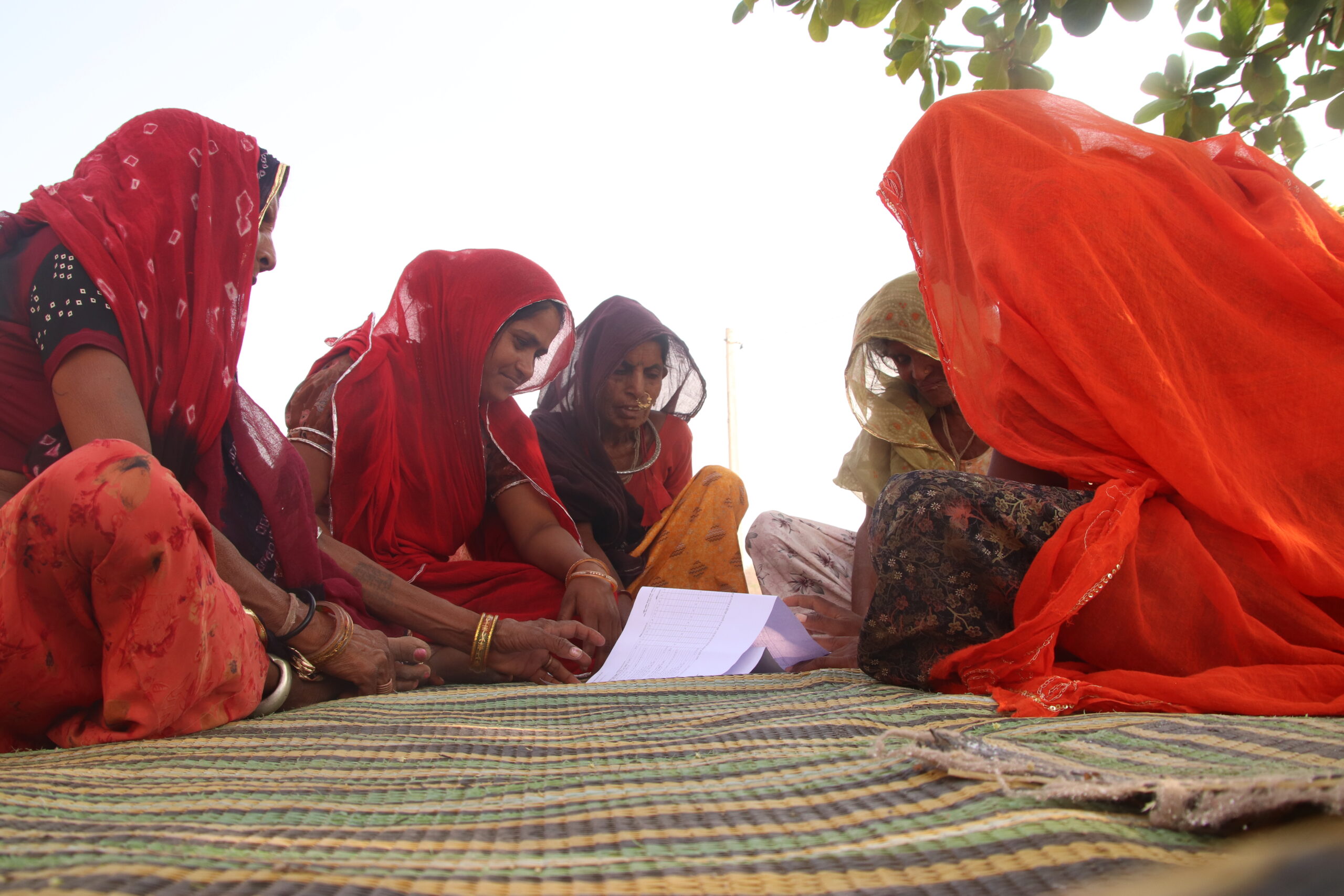
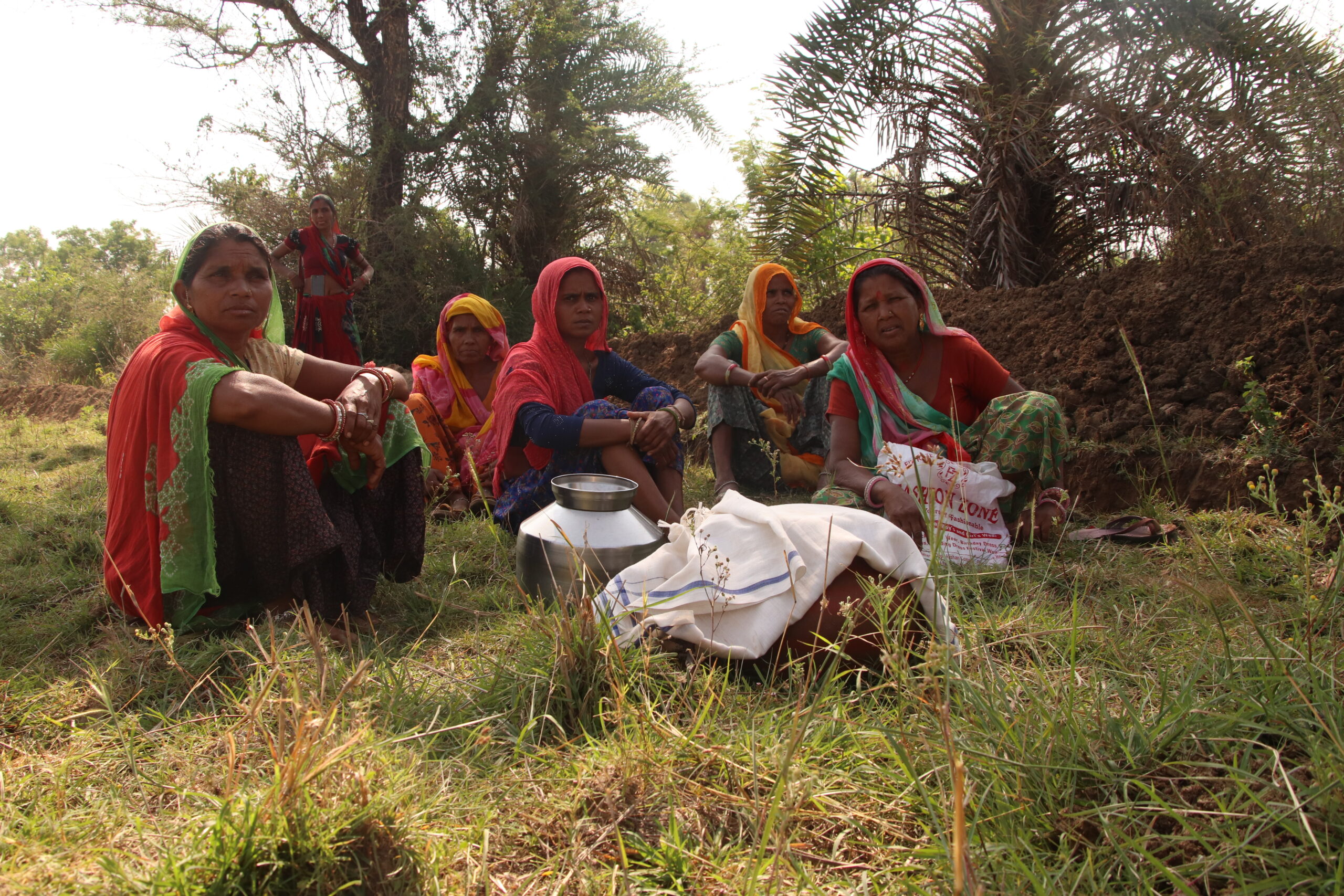
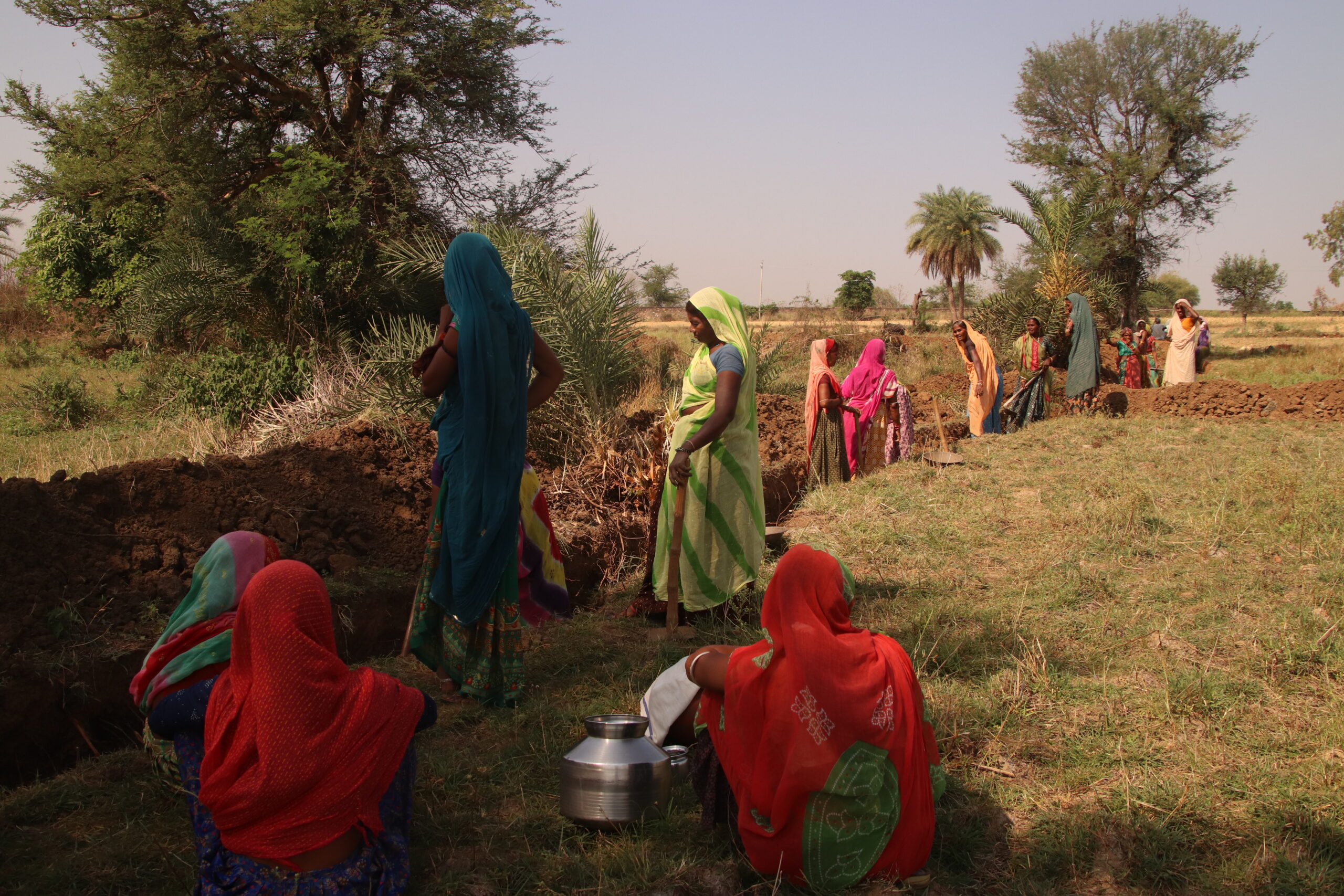
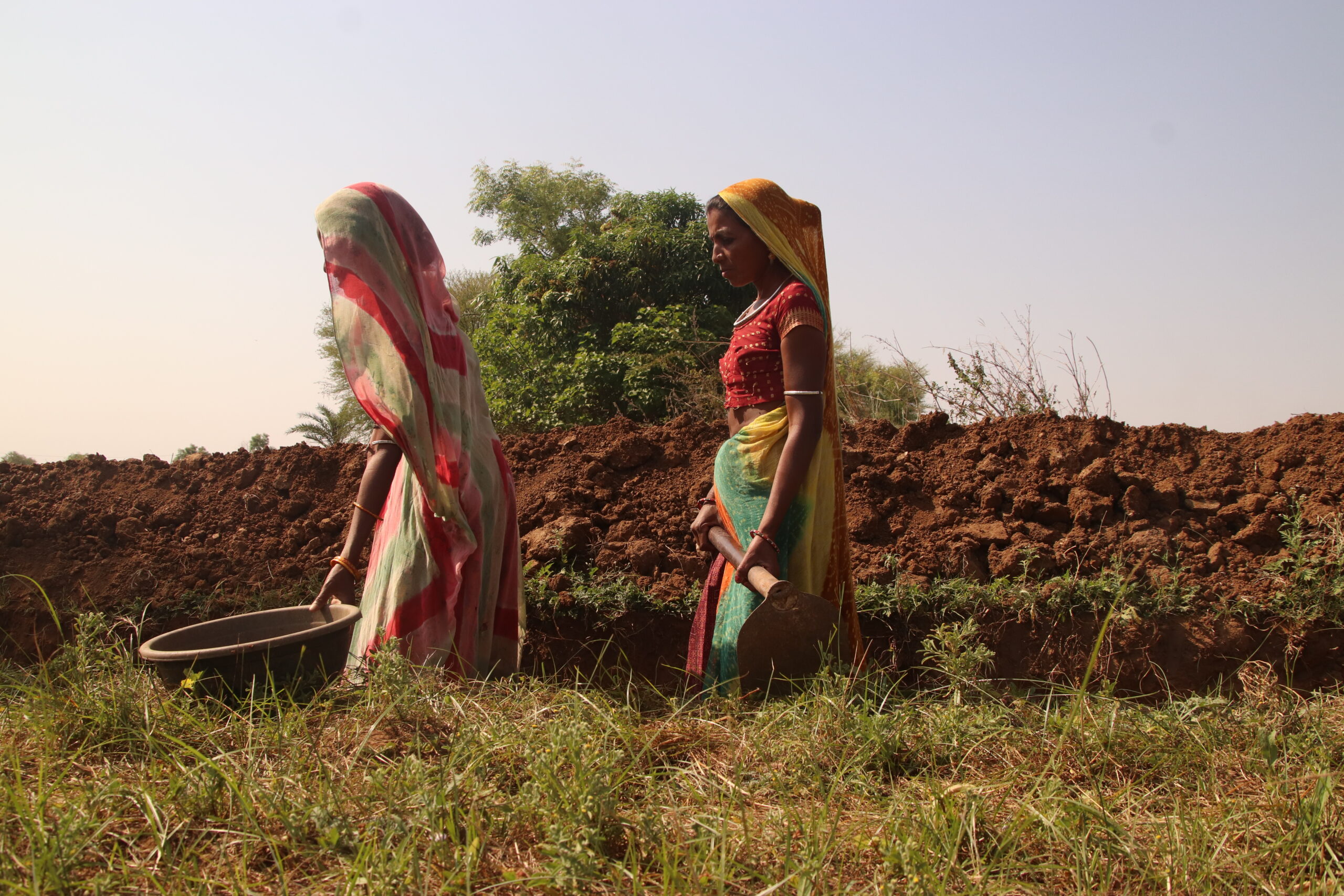
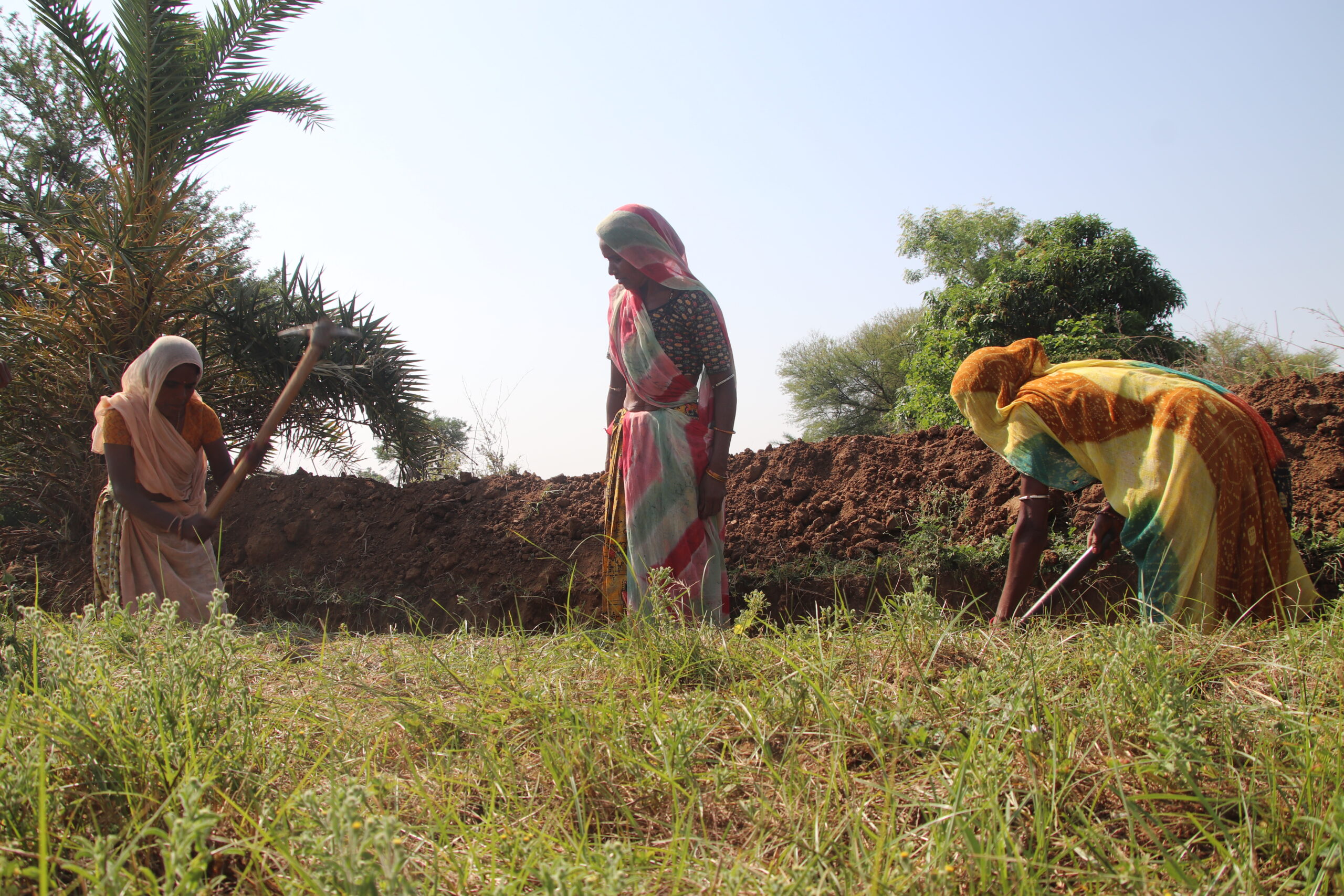
DUNGARPUR/BANSWARA, Rajasthan: On a Tuesday morning in late April, under a harsh sun, around 20 women had gathered at a worksite under the government rural employment scheme in Patan Pura village, in Rajasthan’s Dungarpur district. Some were already working; others sat on one side, waiting to record their attendance on an app installed on the mobile of the official in charge of the worksite.
Among the workers was Venki Devi, in her early forties. Her husband, who worked as a heavy vehicle driver on the Rajasthan–Madhya Pradesh corridor, had returned home due to ill health in March. Her son, who worked at a construction site in Mumbai, had come back home because of the LPG crisis in April.
Suddenly, the household’s fragile livelihood rested almost entirely on Venki’s shoulders.
For six straight days, she reported to the worksite but could not actually work. She spent the first two days standing in the dust, watching others work, as the app failed to register her attendance. She could not figure out why.
“I would be asked to change my location, stand a few metres away, move to the left, move to the right, blink my eye, not blink my eye… Fifteen minutes of this futile exercise and still nothing,” Venki said.
On the third day, she learned that the photo on her Aadhaar card was too old and did not match her current face, which the app scanned to register her attendance. She would need to complete a Know Your Customer (KYC) verification first at the nearest centre, 12 kilometres away.
By the time Venki did her KYC again, only nine days of work remained before the revised muster roll would come out. And she couldn’t be sure that her name would be on it.
In her seven years of working under the Mahatma Gandhi National Rural Employment Guarantee Scheme (MGNREGA) – the world’s largest rural jobs programme – this had been the least of her problems.
“Earlier, group photos could be uploaded as attendance proof. Now, individual biometric or facial recognition is mandatory. Women whose Aadhaar photos were taken years ago often fail face-matching checks,” said a MGNREGA Mate, the official in charge of the worksite, requesting anonymity.
A few weeks earlier, on April 1, 2026, MGNREGA was replaced with the Viksit Bharat – Guarantee for Rozgar and Ajeevika Mission (Gramin) (VB-GRAM G), a new rural employment scheme that promises up to 125 days of work annually.
Under VB-GRAM G, which is in the early stages of roll-out, registering attendance digitally has become mandatory for workers. Though it was meant to reduce fraud and improve transparency, according to MGNREGA experts, it has introduced a new daily hurdle for people in remote villages.
In February, the Mate was briefly trained on how to use the app by the Block Development Officer, but received little guidance since, especially about the changes expected with VG-GRAM G.
“Attendance is marked between 6 am and 8 am, but the app frequently crashes or fails to load because of poor mobile connectivity in this hilly terrain. There are also multiple updates on the app, and I have to keep updating it. It is very difficult to keep up with the updates and the changes [in the scheme],” he said.
At times, it takes ten minutes just to upload one person’s photo, he added. If the app doesn’t open, the women sometimes have to wait until 11 am to register their attendance, and if they fail to do so by noon, the app gets locked.
“I have to face their anger despite having no control over the software,” the Mate said, holding up a manual attendance sheet he also maintains for the worksite.
But for women like Venki, it means a loss of the day’s wage.
“Every day that I return home without work, my husband scolds me — for not doing household chores, not tending to our cattle and not even getting a wage. He thinks I am wasting time, but I was just waiting for my attendance [to be registered],” she said.
“This is the violence you escape when you bring money home,” she said.
DEMANDING WORK AND FINANCIAL SECURITY
Seven years ago, Venki was part of a small group of women in Patan Pura village who decided they could no longer wait for work to come to them. They had to go out and get it.
So they formed Ujala Sangathan, a local collective, and began repeatedly petitioning the gram panchayat for work under MGNREGA. After several visits to the panchayat office, they finally started getting work — nearly 80 to 90 days a year.
Most women had landholdings of less than 1.5 acres, but yields were uncertain owing to erratic rainfall and little irrigation. Most men migrated seasonally to nearby states in search of work, while the women stayed back to manage their homes and farms. But even together, the income was not enough. The jobs guarantee programme changed that.
Over time, the women helped build approach roads to the village, small check dams and water-harvesting structures that slowly transformed the village’s water situation and ensured that women in the village secured a regular income.
Many women experienced financial security for the first time, which they said they now fear losing under VB-GRAM-G.
“In the last seven years too, work did not come easy. We had to demand, negotiate and then get work. Delay in payments happened too, but the money eventually always came. Overall, it helped us secure an additional income and also made us confident.,” said Kripa Devi, 31, also a member of Ujala Sangathan.
Many women in the villages of Dungarpur and Banswara districts said the sense of security they had earned was slipping away, citing concerns over fewer projects and fewer days of work being generated, in addition to names getting dropped from the muster rolls.
In early April, 40 women from Sarodiya village of Banswara district went to the panchayat samiti (which oversees several gram panchayats in a block) and demanded work under the job guarantee scheme with the slogan “Pura kaam, pura daam! (Full work, full wage!)”. But officials repeatedly told them there was no budget for projects. The women said it took them multiple visits before the muster roll for work was released under the new scheme.
“The central government seems to be winding up MGNREGA without being ready for VB-GRAM G. This is creating a dangerous vacuum at a time of looming crisis [due to the West Asia conflict],” G. Jean Drèze, noted economist and one of MGNREGA’s architects, told The Migration Story.
He said employment generation under MGNREGA was about one-third lower in the second half of 2025-26, compared with the same period in the previous year, and if this continues, agricultural wages will stagnate.
“Things could easily get worse this year,” he said.
This April, Kripa Devi along with 19 other women from Patan Pura started building a small check dam or kaswarodhak bandh in the Vagadi language — the last active MGNREGA worksite in the village. The April of 2026, they said, was much quieter than April last year, when work on 10 pre-monsoon projects was underway as against the one project this year.
Work on the check dam was ongoing, they said, but were unsure whether it could be completed under the new scheme the muster roll for the project (revised every 15 days) had not been released even in early May.
This fear of uncertainty was all-pervasive from the beginning of April itself when the women working at the site counted the projects they had completed for their village over the years, which tackled the parched village’s drinking water problem.
Located in southern Rajasthan near the Gujarat border, Patan Pura is marked by rocky terrain, scattered forests and small rain-fed farms. The women would walked at least 2 kilometers twice a day to fetch water from closed mining sites where water was stored in pits, villagers said.
The women’s collective over the years built small dams to stop rainwater runoffs and recharge the groundwater, dug borewells to store water, tackling the village’s drinking water problem, reviving farms and eating better.
As water availability improved, life inside homes changed too.
“We could grow some vegetables near our homes in small patches. This is just for our consumption, but we do not depend on the markets anymore and there is better nutrition on our plate,” Kripa said.
But the wins appear to be slipping away like grains of sand through their fingers, they said.
“During the peak summer months, we managed to get at least 50 days of work last year. But this year, it’s just 15 so far,” Kripa said, watching workers cement the floor of an extra room she was building for her one-room house, made possible by her earnings over the years.
In Sarodiya village, about 30 kms from Patan Pura, women got 11 days of work this April through VB-GRAM G, though they said they were promised 15 work days, said Tulsi Devi, 30, while digging a seepage canal which she and 39 other women of her village were working on.
But this group too was uncertain about whether they would get work again.
“In March this year, we worked only for one day and were given 111 rupees instead of [the usual] 281 rupees. We were told that the work was incomplete and couldn’t be paid for in full,” she said.
“There is no clarity anymore. We just have to wait and see,” she said.
MIGRATION, RETURNING MEN, AND MONEY
Water scarcity in Patan Pura and Sarodiya fuelled migration from these villages, with men leaving for cities in Gujarat, Madhya Pradesh and Maharashtra to find work at construction sites or as truck drivers. Local residents of the villages said that even women would migrate earlier with the men.
But as MGNREGA started yielding jobs back home, many started to stay back, tending to farms and also finding work under the scheme.
Across India, women accounted for nearly 60% of the total MGNREGA workforce, government data for 2022-23 shows. Work under the job guarantee programme was adding to household earnings, also substituting for farm losses, with average daily earnings estimated at 281 rupees in Rajasthan.
Though the amount was small, Kripa described it as a “significant” addition to her household income that helped her build the additional room.
“We continue and discontinue work on the room as and when we have money. So I save from the wage earnings and contribute to this construction,” she said.
In Jawada village, Banswara district, farmer Kamala Devi spoke of the pre-MGNREGA time when she would barter the wheat she grew for salt and oil at the grocery shop.
“But things changed after I started getting work under the rural jobs scheme. I could save for my children’s school fees and for medical emergencies,” she told The Migration Story, as she recounted that both her husband and she have job cards but no job under the rural employment scheme this year.
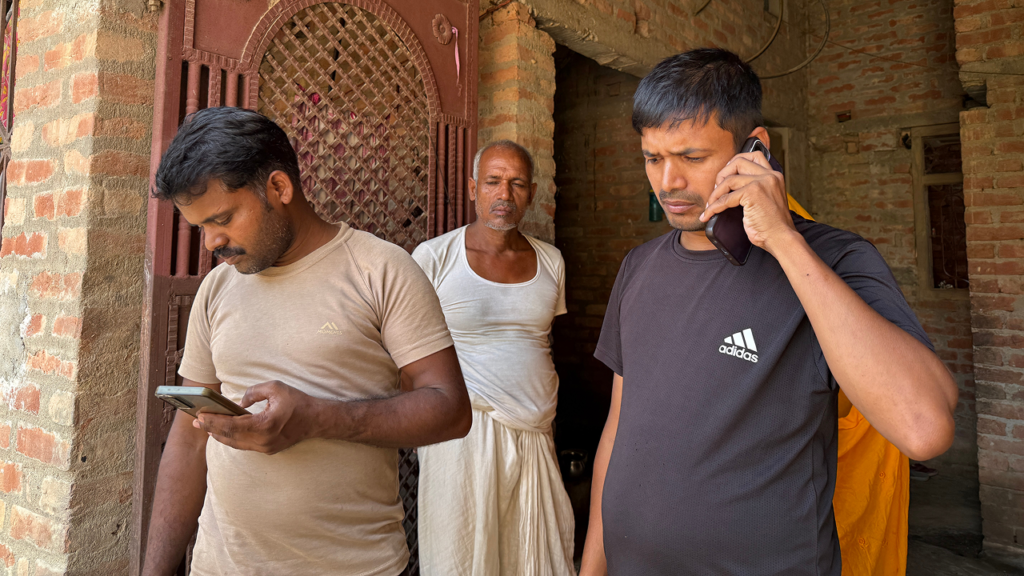
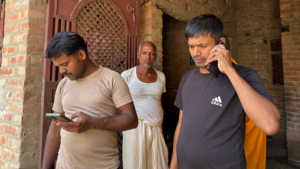
Kamala’s husband too had returned to the village from Ahmedabad, where he worked at construction sites, due to the LPG fuel crisis. In the absence of any agricultural work during the summers, he is now looking for daily – wage work in the nearby town of Ghatol.
Concerns around earnings were building up in the region owing to delayed payments and names going missing from the muster rolls.
A gram rojgar sevak, who implemented MGNREGA at the village level and requested anonymity, told The Migration Story that there is a lack of clarity on VB-GRAM G. “We are not yet aware of the modalities of the new scheme. How can I sanction any work and where do we pay from? I do not know if we can sanction the work anymore,” he said.
In Sarodiya village, MGNREGA wages of women have been pending since January.
“That is why a lot of them are also sceptical of working, afraid that even after toiling in the sun for so many hours, their wages won’t be cleared,” Tulsi said, looking exasperated.
Hardly 10 kilometres from Sarodiya, in Jawada village, no work through VB-GRAM G had opened up in April. The women this reporter spoke to said that muster rolls were released thrice for the same project, but no budget was sanctioned for it.
“In January, I worked for 13 days, but my wages are yet to be cleared. We demanded work [at the gram panchayat office] at least five times. On three occasions, they [officials] released the muster roll but said there is no budget for the small pond we wanted to dig for water conservation,” said Raju Devi, 25. The pond, the women had hoped, would help them conserve water and irrigate their farms even after the monsoon.
Even as she was tackling the loss of wages in her village, Raju’s husband, who migrates every year to work at construction sites in Ahmedabad, returned during the peak of the summer because of the LPG crisis. “My husband was not able to afford an LPG cylinder as rates shot up, so he returned home with many others from the village. Here, he managed to get a job selling ice cream on a cycle trolley,” she said.
“That’s our only income this month, but it depends on how many ice creams he can sell. Living off just his income will be very difficult for us,” she said.
Villagers in the districts of Dungarpur and Banswara The Migration Story spoke to said they were also worried about the 60-day work suspension during the monsoon under the new scheme.
“We are already losing out on work during the summer and once again, there won’t be any work during the monsoon. So when will we get the promised 125 days of work?” Kripa asked.
“We have small farms and there isn’t a lot of work for us during the monsoon. It doesn’t require full-time labour. Earlier, we could ask for specific monsoon-related work, like the plantation of trees, but this year, there is no scope for that,” she said.
The women in these villages feared the new scheme could potentially rob them of the agency they had now.
“We hardly stepped out of our homes. But now we decide what projects are important for the village. We take them to the panchayat, we demand our rights, we are more aware,” said Fauji Devi, in her late fifties, who was working on the seepage canal in Sarodiya village.
In February this year, VB-GRAM G was allocated 95,692 crore rupees under the Union Budget — 49.18% of the total budget of the Department of Rural Development. At the same time, there was a budget allocation for MGNREGA, but it was reduced from 86,000 crores in 2025-26 to 30,000 crores in 2026-27 — a third of the previous year’s allocation.
“The budget announced for MGNREGA is for the transition period, but there are previous dues which also need to be cleared first. And there is no clarity on when VB-GRAM G will actually get operationalised on the ground,” said Chakradhar Buddha, co-founder and researcher at LibTech India, a New Delhi-based nonprofit working on improving transparency and accountability in rural policies.
“At the same time, state governments are very jittery about taking up any work because they are not certain they will be able to pay wages. Unlike MGNREGA, where the central government was funding 100% of wages, the VB-G RAM G introduces a cost-sharing model where states bear 40% of the total expenses,” he added.
On April 18, Shivraj Singh Chouhan, who is in charge of the central ministries of Rural Development and Agriculture & Farmers’ Welfare, chaired a meeting with ministers of rural development from the states and union territories to review MGNREGA’s implementation and assess the preparedness for VB-GRAM G. He emphasised the importance of providing work demanded by villagers and the timely clearance of their wage payments.
But concerns over dwindling work under the scheme have come up from different parts of the country like Karnataka, with women workers saying the decline has hit them particularly hard.
In a statement issued last month, the NREGA Sangaharsh Morcha, a coalition of workers registered with the job guarantee scheme, said that VB-GRAM G generated less than one crore jobs this April compared to 10.5 crore jobs in April last year. “Wage payments have also stalled, with nearly 10,000 crore rupees pending and almost no payments cleared since January 21, 2026,” it said.
While the VB-GRAM G emphasises improving water access and building climate-resilient infrastructure in vulnerable rural areas, it also pushes for technology-enabled transparency, which means using digital systems to geo-tag worksites and record workers’ attendance.
This, however, has proved difficult for women in Patan Pura as internet access in remote hilly villages is limited and digital awareness among the women is low.
“It is also difficult to keep up with the changing schemes,” said Fauji Devi.
“First, we didn’t know MGNREGA existed and by the time we became familiar with it, there was a digital update. Most of us do not even have smartphones. It took us a while to understand [the app] and now there is something new [the VB-GRAM G]. How are we supposed to be up-to-date with all of this?” she asked.
For Venki Devi, this is a difficult summer. For the last seven years, the worksites she worked on gave her pride, and hope.
“Earlier it was just the farm and my home for me, MGNREGA changed that. Back then, I hardly stepped out of the home,” she said as she adjusted the veil on her head.
“But today I have a voice that speaks for the village, not just my family. We have bunds in the village that I can say ‘Maine banaye’ (I made them).”
Aishwarya Mohanty is special correspondent at The Migration Story.