Video Credit: Prashant Nakwe
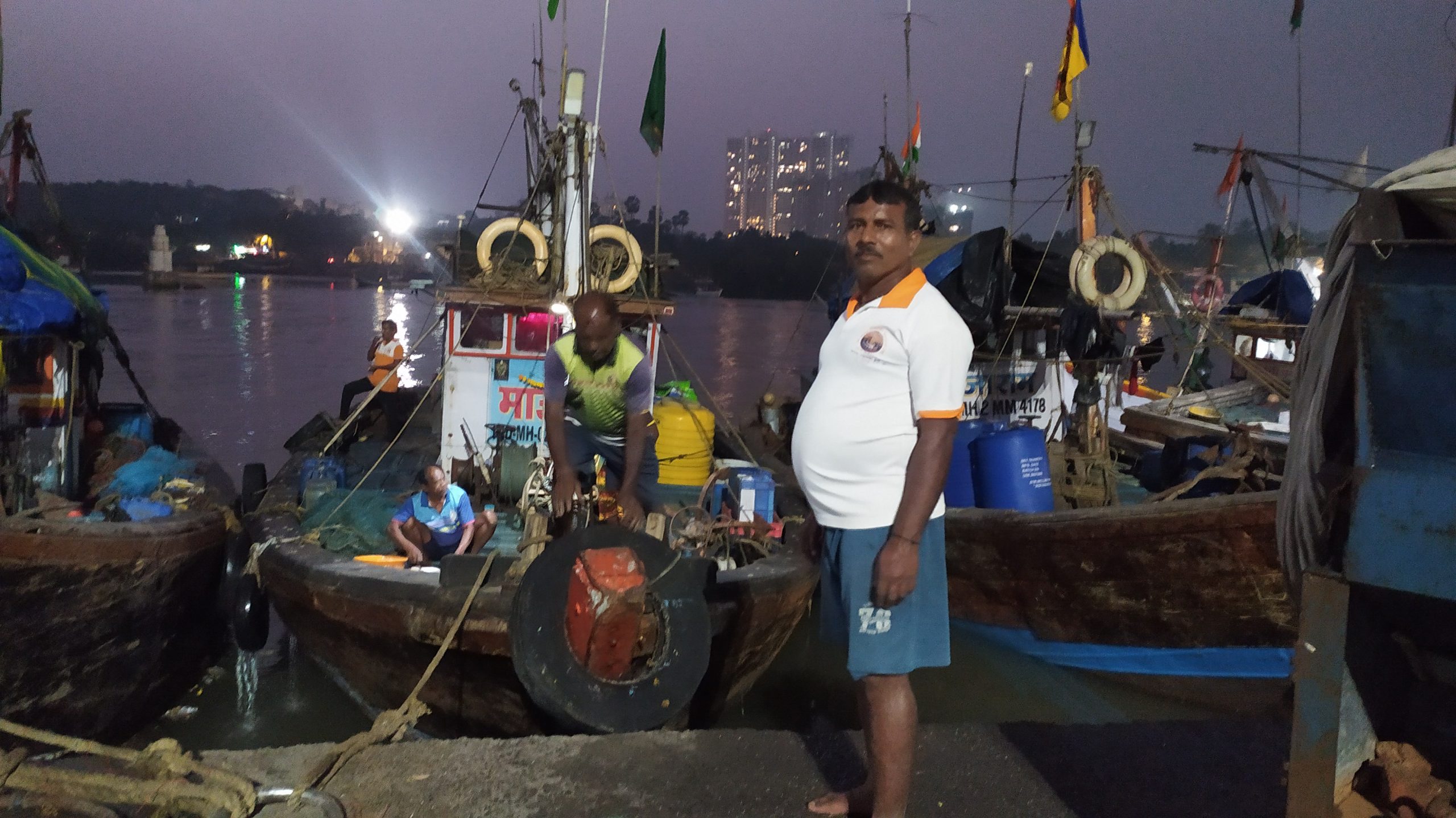
MUMBAI: For eight fishing months every year, a mechanized fishing trawler roughly the length of a cricket pitch, is home as well as workplace for 49-year-old Vishwanath Laxmi Patil.
He had arrived in Mumbai almost 25 years ago from Kharoshi village in Pen taluk in Maharashtra’s Raigad district – about a 100 kms from Mumbai – to work in the city’s famed fishing sector. Now, as a tandel, the local term for the lead who oversees management and operations of a deep-sea fishing vessel, Patil takes care of the nitty-gritties of long fishing expeditions on the boat named Mauli — ‘mother’ in Marathi — on the Versova coast.
Patil and his six boat-mates, most of them migrants from within Maharashtra, are set to spend about a fortnight at sea. The preparations for the long haul are extensive. He watches as labourers carry sacks of groceries and vegetables, necessary stock for their time at sea, and deposit it in the lower chamber of the vessel that serves as the kitchen.
Over time, the number of days the kitchen works have gone up as fishermen spend increasingly longer spells at sea as a good catch is now increasingly elusive as waters warm pushing the fish away.
“There are times when we return empty or with little stock. At times we do not catch enough to meet even our food needs on the boat; then we make do with dal and rice. We now carry a stock of rice, dal, onions, and vegetables that will last a fortnight. Fish used to be our staple on the boats,” said Patil.
“Irrespective of whether we manage a good catch or not, we are forced to return to land as fuel levels fall,” said Patil.
Despite aids such as transponders to give information on potential fishing zones, geo fencing, weather information and advisories, fishing today has become a longer and more difficult exercise, he observed.
“Earlier we would return in a day or two with the catch. Now we are out in the deep for over a fortnight,” said Patil.
Concurred Rajhans Tapke, a member of the National Association for Fishermen.
Fish yield has been depleting for several years, despite a recovery witnessed recently. In 2023, Maharashtra had contributed 6% of India’s marine fish landings and ranked fifth among the states in fish yield, according to the Central Marine Fisheries Research Institute. Mumbai ranked highest in the state in terms of yield contributing around 33% of the total catch volume.
Maharashtra has witnessed a drop in fish production from 6.06 lakh tonnes in 2017-18 to 5.24 lakh tonnes in 2020-21, according to the Department of Animal Husbandry, Dairy and Fisheries, Government of India. This yield was 3.63 % of the national fish production of 162.48 lakh tonnes.
However, in 2021-22, it recorded a 24.3% rise with 5.90 lakh tonnes of fish catch.
Video Credit: Prashant Nakwe
“Fish being cold-blooded animals, tend to migrate towards favourable temperatures, both for availability of food and breeding. Climate change has impacted fish resource patterns as fishes tend to go deeper into the sea,” he said.
Coastal estuaries, the nursery for fishes, are affected by coastal denuding and fall in green cover. Effluents released from coastal cities have polluted marine waters, consequently impacting yield. Human intervention, fishing beyond the maximum sustainable yield with increased frequency and in higher quantities, has also affected fish production, added Shridhankar.
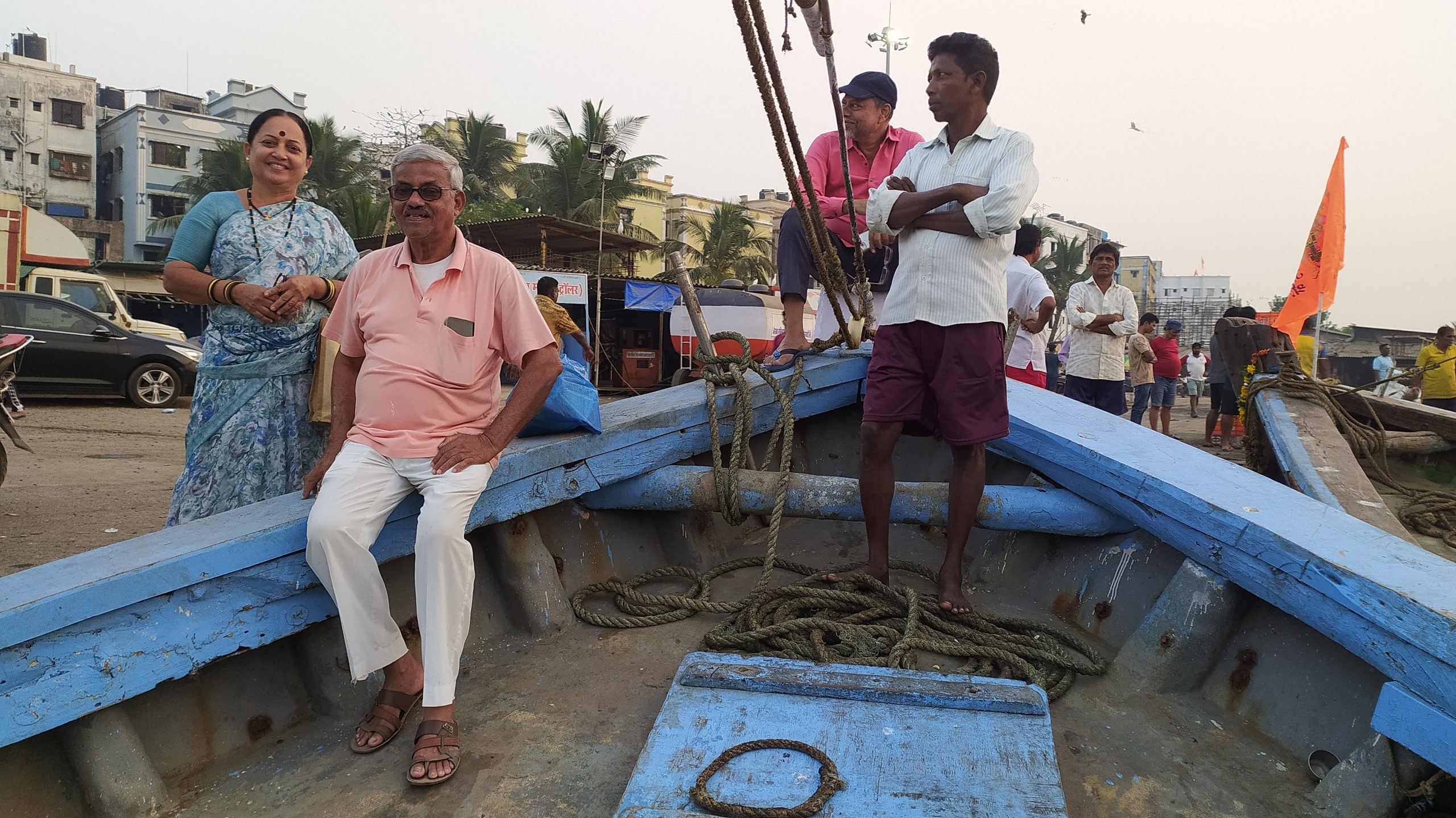
Premnath Kathin, a 74-year-old from the traditional Koli community in Versova, has been a witness to the changing tides. A fisher since he was 18, he recounted fishing in the early years, “We would return in a day or two as the yield was good and the catch enough to fill our boats.”
Modern-day fishing along Mumbai suburbs such as the Versova coastline is now largely performed by migrant workers, mainly from the tribal belts of Maharashtra, all the way up till the state’s border with Gujarat.
Gulab Unse Vedge, 60, who hails from the adivasi community near Talasari in Palghar district, said that unlike farming, which his family still practices in their native village, fishing provided a regular source of income at the time he took it up.
Not any longer.
The lure of work in Mumbai’s boats has fallen considerably owing to the drop in profit margins and availability of better work elsewhere. “I have three sons and a daughter and none of them have followed me here to work in Mumbai’s boats,” said Vedga. Dwindling catch has meant lesser earning opportunities which makes fishing unattractive for the younger generation.
“Migrant workers entered the fishing industry in the late 1990s to fill the labour shortage as the educated, younger generation of Koli people, the traditional fishing community of Mumbai, moved on to white collar jobs,” said Tandel.
On the other hand, Harsha Tapke, 54, from the Koli community, said the younger generation is discouraged from taking up the profession. “My son works in the insurance sector. Fishing is unsustainable and can strain resources today. Sending a boat into the sea costs around Rs two lakhs including fuel, ice costs, and groceries. Alongside, we have to stock food supplies for the crew and pay them irrespective of whatever the catch is,” said Tapke who manages the boat she got from her father. Workers are employed on boats either on monthly or daily wages whether or not the boat is out at sea or docked at the jetty.
Tapke’s husband Rajhans added that a fishing trip which costs around Rs two lakhs barely brings back fish worth Rs 2.5 lakhs, which should be considered break even costs, since it includes maintenance costs of repairing nets and boats.
Kathin observed that boats along the Versova shores have dwindled from thousands to barely a hundred now.
Greater involvement in the fishing sector has come at a cost for migrant workers as well, including campaigns against them for appropriating a traditional business of the Koli community. Nevertheless, migrant workers have found their space in the trade. Dwindling catch and falling profit margins have played its role in the demographic shift witnessed in Mumbai’s fishing waters.
With Patil’s work having grown more gruelling and less lucrative over the years, fishing is less likely that be a strong lure for a second-generation migrant workers.
Edited by P Anima
Hepzi Anthony is an independent journalist based out of Mumbai