NEEMUCH, Madhya Pradesh: For three days in February, Baleswar Kushwaha waited in a small room in an Ahmedabad lodge, his travel bag resting against the wall. Every few hours he checked his phone, hoping that his recruiter would call with good news. But he only called with bad news. The flight Kushwaha was supposed to take to Bahrain on February 28 was postponed because of the West Asia conflict.
Kushwaha, a carpenter from Uttar Pradesh’s Gorakhpur district, saw his flight’s departure date shift repeatedly. First, it was pushed to March 2 and eventually cancelled.
His migration plan, like tens of thousands of Indians who migrate to the Gulf every year, has been thrown off course following the US-Israeli joint strikes on Iran on February 28, which have since escalated into a wider conflict after retaliatory attacks. The ongoing war has had a cascading effect on the India-Gulf labour migration corridor — one of the world’s largest — with blue-collar workers like Kushwaha amongst the worst hit.
“On March 3, I was told that no one knows when we will fly out next. I didn’t have money to go back to Hyderabad, where I had worked last, or even to my village,” he told The Migration Story over the phone from Ahmedabad, wondering when things will normalise.
Kushwaha is one of nearly 10 million Indians who migrate to the Gulf countries for work, according to a recent statement by India’s External Affairs Minister S. Jaishankar. Over the next two months, it is likely that up to 400,000 people working in the Gulf will be impacted by the conflict, said Sureshkumar Madhusudhanan, the managing director of Seagull International Group, a global consulting firm that helps workers find employment in the region. These include new recruits and also those who were travelling to India on a break and will now struggle to travel back to West Asia, he added.
The effects of the war are being felt not only by workers like Kushwaha but also by recruiters, added D. S. Reddy of the Overseas Manpower Recruiters Association, a body of Indian recruiters. They report that employers in the Gulf have slowed down hiring and companies have adopted a wait-and-watch approach.
With projects getting postponed, people across the board are facing uncertainty – workers, recruiters and employers. Industry observers said the slowdown may affect the migration of new workers and the redeployment of older ones (whose contracts have ended), potentially creating a backlog of workers waiting to travel.
With depleting funds, the mounting expenses of waiting endlessly in Ahmedabad and unpaid loans, Kushwaha took up work in Bharuch – about 190 kms from Ahmedabad – where another migrant helped him find carpentry work.
“I will earn here and first repay the money to my friend and then book a ticket to go home or to Hyderabad. I don’t have a concrete idea about what I will do,” Kushwaha said.
LOANS SPENT WAITING FOR JOBS
The Gulf Cooperation Council (GCC) countries — Bahrain, Kuwait, Oman, Qatar, Saudi Arabia and the United Arab Emirates (UAE) — have long depended on Indian workers for large-scale infrastructure and service-sector jobs, while millions of Indian households have relied on the remittances family members sent home.
Kushwaha first heard about a potential job in Bahrain on a WhatsApp group while he was working as a carpenter in Hyderabad. Such groups function as informal labour markets and circulate messages whenever companies abroad require workers, he told The Migration Story.
Workers call these postings “want”. “Ek message aya, carpenter ki want ayi thi Bahrain me [A message was posted, saying carpenters were required in Bahrain],” he recalled. “So I applied.”
Next, the recruiter asked Kushwaha to travel to Surat for an interview and a test — essentially, a few questions on carpentry and a small practical exam to assess his skills. After being selected, he was told the company would provide him with the visa and the flight ticket. Workers call this “free recruitment”, but they have to pay for their domestic travel and lodging before boarding the flight.
Kushwaha quit his Hyderabad job to fly to Bahrain, but first visited his village in Gorakhpur to see his parents, wife and children before leaving for Ahmedabad.“I didn’t know when I would see them again. Usually, when people go overseas, they typically return after a year or two,” he said.
On February 21, he boarded a train from Gorakhpur to Ahmedabad, where he was supposed to catch the flight for Bahrain, keeping enough time before his scheduled departure on February 28.
On reaching the city, he rented a room in a lodge for 800 rupees a night. He said that the extra lodging costs he had to pay while waiting for the flight and his train ticket had already wiped out the 20,000-rupees loan he had taken from a friend.
Migrant workers often start overseas employment already burdened with debt, according to a 2025 study by the Sharjah government and the British University in Dubai. Many take loans to cover migration-related expenses or to cope with financial pressures at home, including rising living costs, it noted.
These loans may come from formal sources like banks, microfinance institutions and self-help groups or informal sources like moneylenders, friends and family members. The latter are often verbal agreements, according to the study.
A 2024 report by the International Organisation for Migration on returnee migrants in Telangana states that nearly 72% of returnees had borrowed money to migrate and loans often ranged from 50,000 to 2 lakh rupees.
“If recruitments are done through companies, most of them pay for the major expenses. But if they are done through non-authorised agents, the costs can be very high, which prompts people to take loans to finance their travel and other expenses,” said Reddy.
Kushwaha is the sole earner in his family of six including his elderly parents, wife and two children.
Two years ago, Kushwaha had worked briefly in Bahrain, installing electrical cables in a high-rise building. A friend, who still works there, called him with some news after the war began. “The building where we had laid cables was damaged during an attack,” said Kushwaha, quoting his friend. “He joked that we might have to build it again.
But the loans Kushwaha had taken weighed heavily on his mind. “I took one for my sister’s wedding and hoped to repay it from my earnings in Bahrain. After my father’s accidents, I told him that I will take care of everything.”
Another worker waiting to leave on the same flight as Kushwaha was 21-year-old Shri Prakash. For him, the journey to Gujarat was supposed to be the beginning of a new chapter.
Prakash, who hails from Harnahi village of Deoria district in Uttar Pradesh, studied up to class 12 and then took up a carpentry course at a government-run Industrial Training Institute that offers vocational training to school passouts. Subsequently, he worked as a finish carpenter in Kochi and Bengaluru, doing more skilled carpentry work.
His brother-in-law, who works as a painting contractor in Dubai, encouraged him to apply for overseas work. When he was selected for a job in Bahrain, Prakash borrowed 10,000 rupees from a neighbour to buy new clothes and pay for his journey to Ahmedabad. He, too, travelled for three days to get to the city.
“I wanted to buy a nice shirt and a pair of pants because I had never boarded a flight before, forget going abroad,” he told The Migration Story on the phone from Vadodara . If he had reached Bahrain, he would have been the first person from his village to work abroad.
On February 28, he travelled to the airport only to learn that the flight had been cancelled. “I did not know about the cancellation. I did not know what to do at that moment,” he recalled.
Even though he was stranded in an unfamiliar state, he travelled to Vadodara after someone told him that getting work was certain there.
“There are labour nakas [squares] in Vadodara, where I spent two days, hoping to be picked up by some contractor. Finally, on the third day, I was hired,” he said.
He is currently earning 600 rupees a day as a carpenter and rents a room with a worker he met at a naka. Prakash has three older sisters who are married and a younger brother who is still in school.
“I wanted to support my family financially and also provide a good education to my brother. That is why I wanted to go to Bahrain. My mother is also unwell often, and I wanted to take her to a good doctor and get her proper treatment. But now my priority is to first repay the loan of 10,000 rupees,” he said.
But Prakash still worries about how long it will take him to pay back the loan, even if it is interest-free.
For many like him, the cancelled flights have meant losing a first chance to work abroad for the first time. Among them is Saddam Hussain, 29, from West Champaran town in Bihar, who was issued a passport in 2019, but never got the opportunity to use it.
It was a friend who first told him about job opportunities in the Gulf. “He said there is good work there,” Hussain recalled, speaking on the phone from Surat.
Encouraged by the possibility of earning more, he applied for a job as a machine operator in Bahrain. He travelled to Surat for the recruitment process and back again to Ahmedabad to catch the flight.
But the war stalled his deployment. Now Hussain works as a helper in a textile unit in Surat, waiting for news about the flight for his overseas job.
“I am trying to earn enough so I can go home for Eid. There is no other plan,” he told The Migration Story.
JOBS ABROAD HELP INCREASE SAVINGS
Despite the uncertainty, Prakash has decided not to give up on his dream of working overseas and stay in Gujarat a little longer. “If I go home and the flights resume and I am called again, it will be an additional expense to bear,” he said, thinking ahead. “I will stay here for a month or two. Maybe the flights will start again.”
Recruiters said the uncertainty was taking a toll on workers, and employers as well.
Madhusudhanan of Seagull International Group said that the crisis has created an extremely unprecedented situation for employers who have projects on hand but no labour to complete it.
But D. S. Reddy of the Overseas Manpower Recruiters Association felt that the war’s impacts will continue to be felt, even after things normalise. “We expect the situation to remain uncertain for at least another 10 days,” he said. “Once flights resume, there will be heavy pressure on tickets and fares are likely to go up. Companies may, therefore, delay bringing workers immediately, even if the jobs are still available.”
Remittance flow to India from the Gulf will also be hit, Reddy said.
“Over the next six months, the conflict could start affecting the Gulf’s economy. If oil facilities and projects remain disrupted, hiring could slow down. Salaries in Gulf countries like the UAE have already stagnated over the past decade, and if demand for labour drops further, migration from India may also decline,” he added.
However, being able to save more in the Gulf continues to draw Indians to work there, despite the risks and similar wages.
Muhammad Shanu, 28, from Uttar Pradesh’s Moradabad town has worked in Dubai for 15 months in the past. “I was able to save more money there,” he said. In India, he explained, earnings disappear quickly due to travel, social obligations and daily household expenses.
While doing sporadic jobs in Kerala, Karnataka and Andhra Pradesh, he made 1,000 rupees a day or 30,000 rupees a month, if he managed to get work every day. The contract for the Bahrain job said he will be paid 120 dinar a month, which also totals up to around 30,000 rupees a month at the present conversion rate.
“But here, in a year, everything gets spent,” he said. “There, the money gets saved.”
So, Shanu had applied to work abroad again and was scheduled to fly out from Delhi. He was forced to return home to Moradabad after his flight got cancelled. Now, he works at a small brass unit run by one of his relatives and earns 700 rupees a day.
His elderly father and wife are dependent on him, and he said that he hopes to migrate again once the situation stabilises. “I know that once I am there, I will be safe and there won’t be an issue as such. I am just waiting for the flights to resume,” he said.
STILL HOPEFUL FOR A LIFE IN SHARJAH
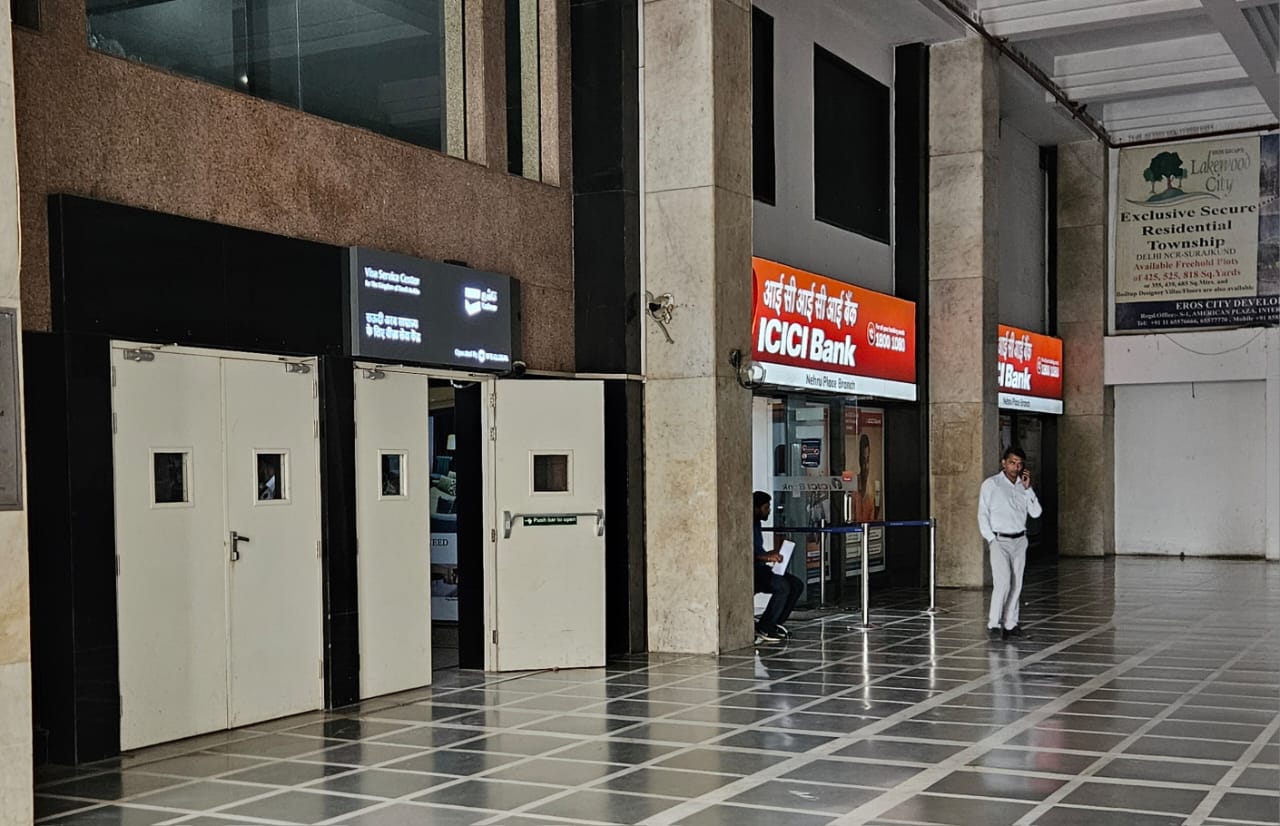
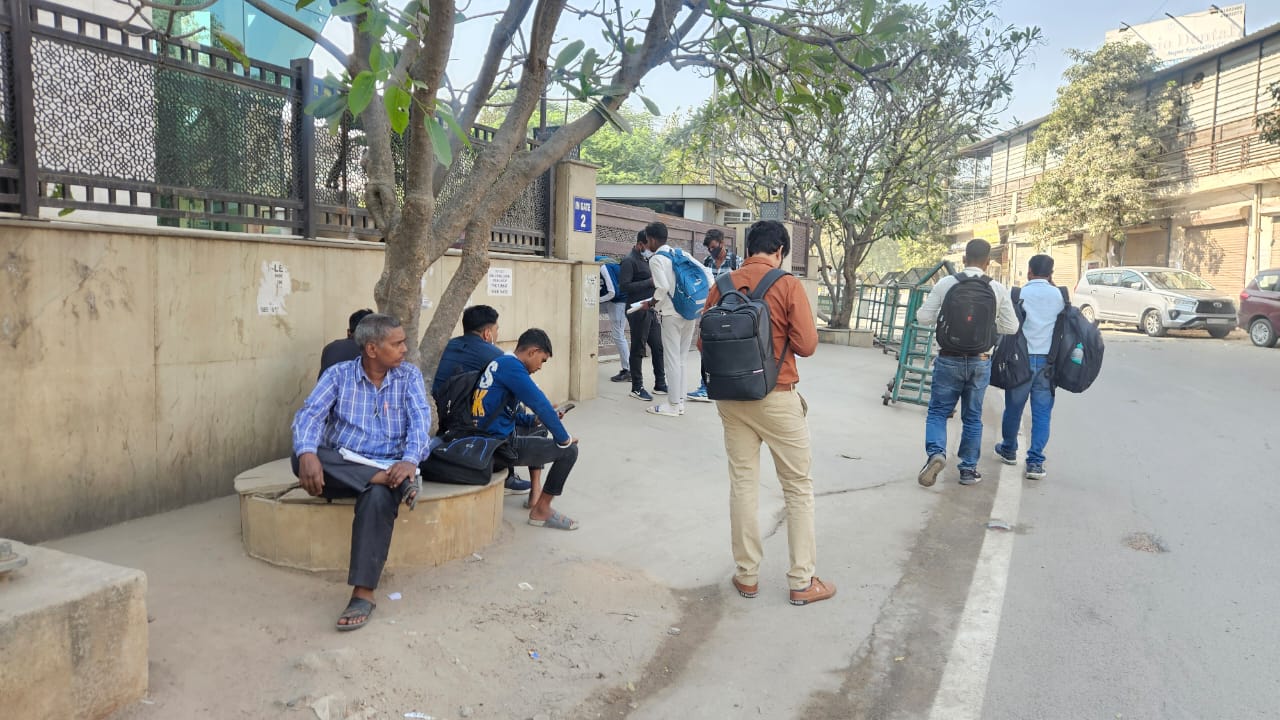
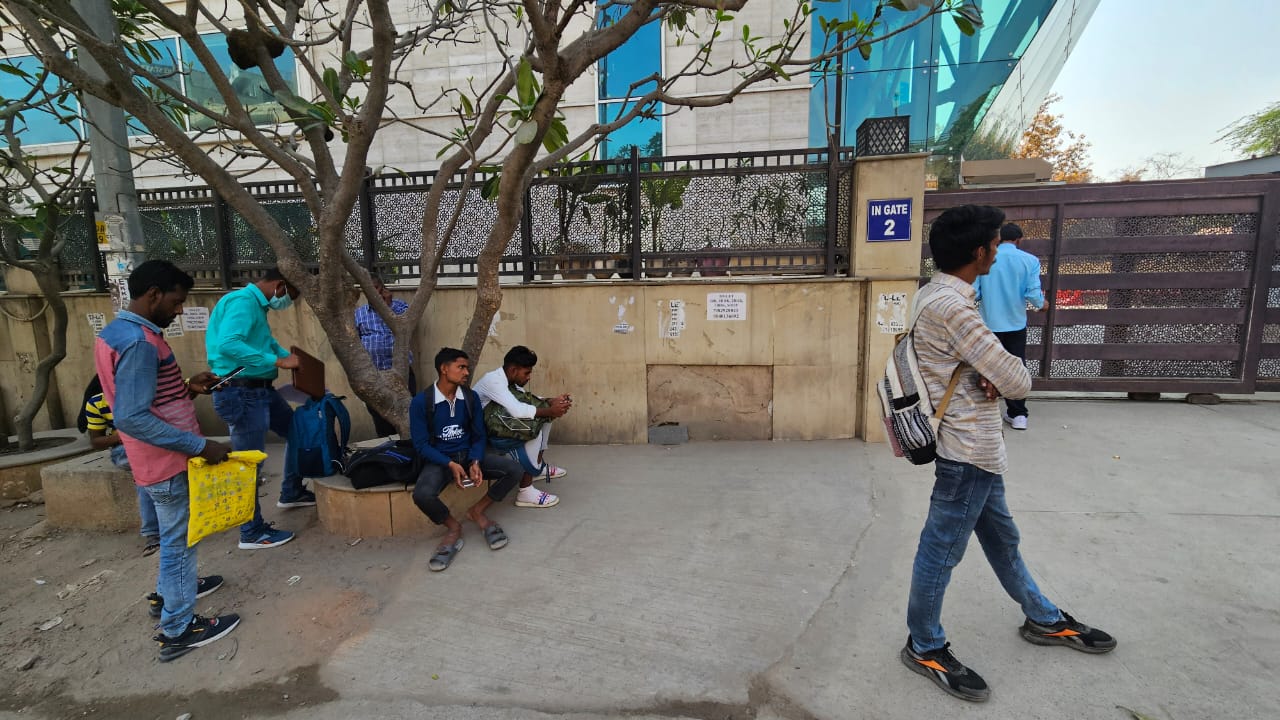
Outside the visa offices of the U.A.E. and Saudi Arabia in New Delhi, queues were shorter this week compared to last week, said guards stationed at the office. But there were still hopefuls waiting in line, like 20-year-old Mandeep Kaur, who had her visa interview on March 11.
Originally from Punjab’s Sangrur town, Kaur was accompanied by her 29-year-old brother, Jaspreet Singh. Kaur is hopeful of joining her elder sister in Sharjah where she works at a grocery store and Singh too plans to migrate to the UAE in the future.
“Life is tougher here compared to there. People do not fight with each other there [like they do here], and there are no drugs,” Singh told The Migration Story. “However, if you fall sick here in India, you do not have to worry much [about the employer’s reaction]. But there, they deduct your salary.”
Still, the prospect of earning more abroad than they would at home has made migration attractive for the siblings.
Even though the family, including the three siblings and their single mother, has already spent almost 100,000 rupees on travel to New Delhi and Kaur’s visa application, working in Sangrur just isn’t a viable option, Singh added.
So, in spite of the war and the uncertainty it brings, the siblings remain hopeful for a life in Sharjah. By Wednesday evening, they said they will board a train back to Sangrur and wait for flights to resume.
Edited by Subuhi Jiwani
Aishwarya Mohanty is Special Correspondent with The Migration Story.
Additional reporting by Sajid Ali in New Delhi