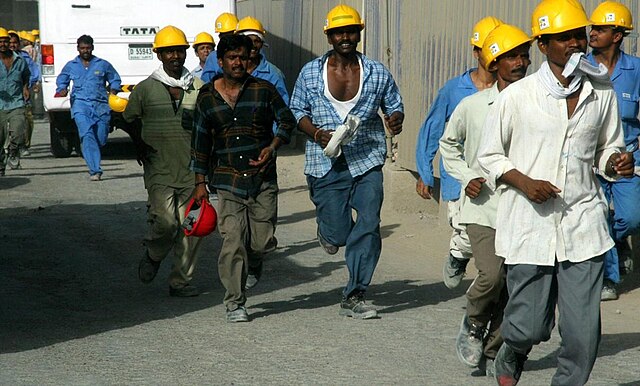
The unfolding geopolitical tensions in the Middle East raise the possibility of a disruption to Indian labour migration to the Gulf that could prove historically unprecedented. Recent developments already suggest how quickly migration disruptions can translate into return movements. In just the first week of March 2026, more than 52,000 Indians travelled back from the Gulf to India as regional tensions escalated across West Asia.
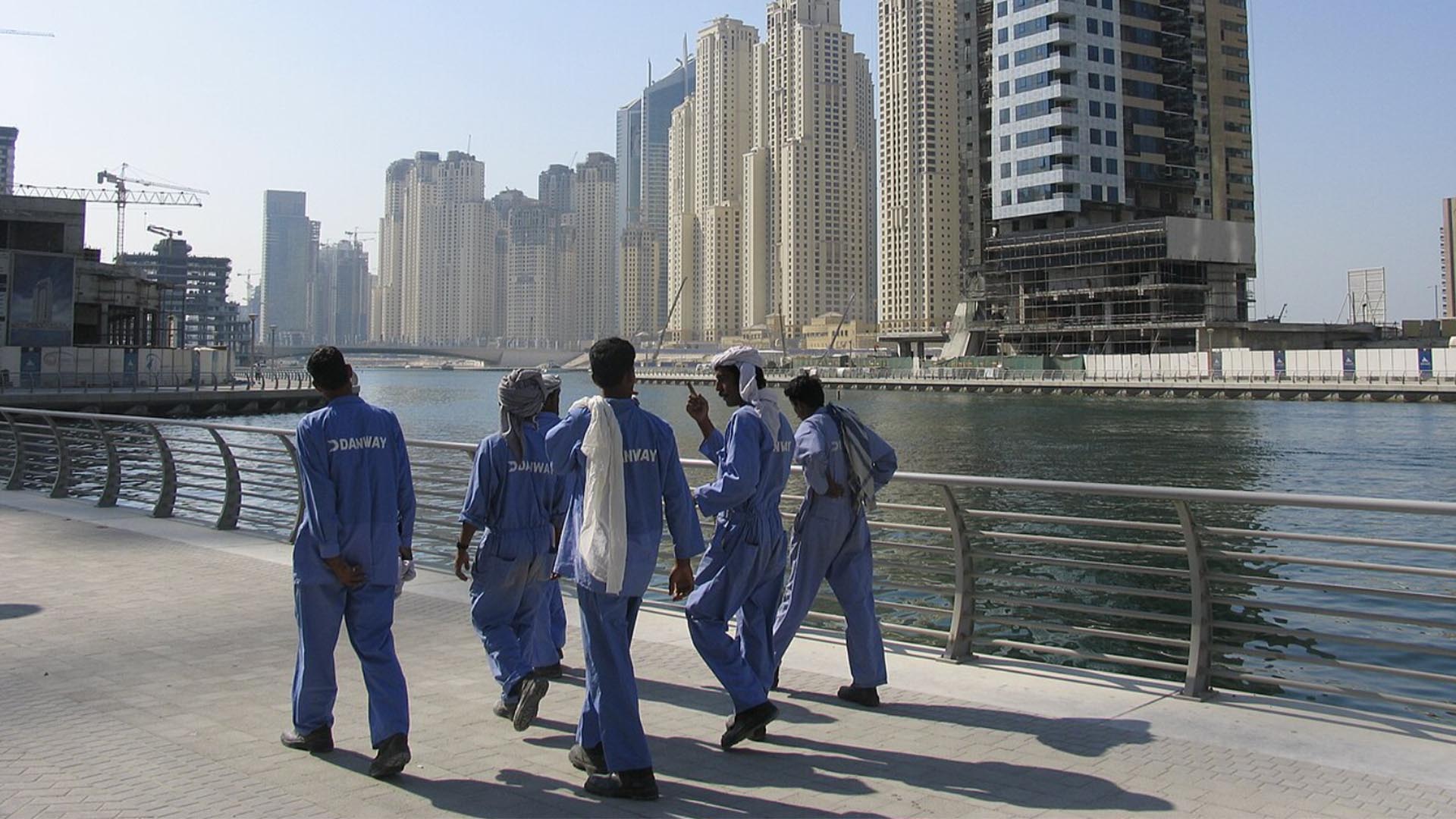
According to the Ministry of External Affairs, there are nearly 10 million Indians living and working across the six GCC countries, making it one of the largest overseas labour communities in the world. The United Arab Emirates hosts the largest Indian community, followed by Saudi Arabia, with substantial migrant populations also present in Kuwait, Qatar, Oman, and Bahrain. The magnitude of this presence underscores that developments in the Gulf are closely intertwined with India’s migration patterns, and if geopolitical tensions persist or escalate, they could trigger broader waves of return migration.
Migration from India to the Gulf has not been immune to disruption. Periods of geopolitical conflict, economic downturns, and global crises have repeatedly unsettled migrant livelihoods and mobility patterns across the region. Historical experience shows that Indian migration to the Gulf has been profoundly disrupted during major crises, including the Gulf War, the Global Financial Crisis, and the COVID-19 pandemic, each of which produced large scale return migration.
LASTING IMPACTS OF GLOBAL CRISES
For many younger readers today, some not yet born when it occurred, the scale of disruption during the Gulf War more than three and a half decades ago may be difficult to fully appreciate. Yet for those who witnessed it, the shock was immediate and structural. Kuwait’s labour market collapsed almost overnight, abruptly displacing a vast migrant workforce, many of them blue collar workers from India, including large numbers from Keralam. India executed one of its largest civilian airlifts in history. The episode left a lasting imprint on India’s migration history and offered a historical reminder of how geopolitical conflict can abruptly rupture established labour migration systems and the livelihoods built upon them.
Nearly two decades later, the Global Financial Crisis between 2007- 2008, triggered by the bursting of financial bubbles and the collapse of global credit markets, revealed another layer of vulnerability within this migration architecture.
Unlike the Gulf War, this was not a geopolitical conflict but a financial crisis that exposed the risks of overleveraged markets and deep global economic integration. Its repercussions quickly reached Gulf labour markets. Construction activity slowed, infrastructure investments were deferred, and real estate expansion weakened. As labour demand declined in sectors heavily dependent on migrant workers from South Asia, including India and Keralam, a large majority of workers faced job losses, triggering significant return migration.
More recently, the COVID-19 pandemic brought an unprecedented disruption to global mobility. This is a crisis we have all witnessed directly. Across the Gulf, lockdowns, flight shutdowns, mobility restrictions, and a sharp curtailment of economic activity led many sectors to face sudden contraction or closure.
Thousands of Indian workers, many employed in labour intensive sectors and the services industry, experienced job losses, wage insecurity, and distress return migration. The shock was not only immediate but also long-lasting, with lingering consequences for migrant employment and household livelihoods. The pandemic offered a stark reminder that the livelihoods of migrant workers and the development trajectories of remittance dependent regions remain deeply vulnerable.
PROTRACTED WARS, REVERSE MIGRATION AND ITS FALLOUT
The current geopolitical tensions raise a deeply unsettling possibility. Given the scale of Indian workers employed across Gulf economies and their heavy concentration in migrant intensive sectors, any prolonged or intensified conflict could trigger return migration of exceptional magnitude. The potential fallout for Indian migration to the Gulf could therefore be unprecedented in the history of India’s long-standing migration to the region.
Although the geopolitical situation continues to evolve, serious concerns remain that if the conflict escalates or spreads across the region, the resulting return migration could exceed the disruptions witnessed during the Global Financial Crisis and the COVID 19 pandemic combined.
What makes the present moment particularly concerning is the widening regional exposure of the conflict. Earlier crises affecting migration, including the Gulf War, were severe but geographically contained. Today, the strategic landscape is far more interconnected. Military bases, alliance commitments, and strategic installations are spread across multiple countries, and recent strikes on military facilities across the region underline how quickly escalation can move beyond a single theatre.
Gulf countries themselves could be drawn in, directly or indirectly, creating repercussions that extend beyond the immediate theatre of conflict, while other states across West Asia may respond in turn, widening the circle of instability. In such circumstances, regional stability itself could come under strain, unsettling the broader middle east geopolitical space stretching from the Mediterranean to the Gulf.
When wars become prolonged and protracted, their consequences rarely remain confined to the battlefield. They begin to reshape economies, labour markets, and migration patterns. The age of swift and decisive wars appears largely over. The Gulf War ended within roughly six months. That was another era. Contemporary conflicts tend instead to stretch for years, often without clear closure. The war in Afghanistan lasted nearly two decades, while the Iraq war extended for almost a decade. The Russia–Ukraine war that escalated in 2022 continues without resolution, and the Israel–Gaza war likewise shows how conflicts today can drag far beyond early expectations. When wars persist in this way, the risks of displacement and return migration inevitably deepen over time.
Over the past several decades, the Gulf has carefully cultivated an image of stability, prosperity, and opportunity, an economic oasis marked by rapid development, modern infrastructure, expanding tourism, and a dynamic business environment. This image has attracted global investors, international businesses, skilled professionals, and millions of migrant workers seeking economic mobility.
Moments of geopolitical tension, however, inevitably cast a shadow over this carefully constructed narrative. In such circumstances, uncertainty itself becomes economically consequential. Information from the ground often remains tightly managed, narratives are carefully shaped, and reliable assessments of evolving conditions are not always easy to obtain. Even when official assurances emphasise continuity and stability, perceptions of risk can shift quickly. The long-nurtured image of the Gulf as a stable and forward-looking hub of economic opportunity may come under strain and restoring that confidence may take time. In such conditions, economic activity may slow, weakening labour demand and raising the prospect of job losses and pressure for return migration.
As such, regional instability would inevitably reverberate across migration flows linking the Gulf with the wider world. Migration to the Gulf is not confined to South Asia; it also includes workers and professionals from Western and other developed economies. However, migration from Western countries, often tied to tourism, business, and professional mobility, may face disruptions but remains fundamentally different from migration flows originating in South and Southeast Asia. The implications are therefore far more profound for the latter, whose workers form the backbone of labour-intensive sectors across Gulf economies.
The consequences would not be confined to migration from India and Keralam alone, but extend across South Asia, where overseas employment in the Gulf constitutes a critical pillar of national livelihoods for several remittance dependent economies. For millions of South Asian migrants employed in the Gulf, migration is closely tied to household livelihoods and wellbeing. Instability in this regional migration system therefore carries deeper consequences, shaping the economic security of migrant families dependent on overseas incomes.
Data from the Kerala Migration Survey 2023 highlights the overwhelming dependence of Keralam’s overseas migration on the Gulf region. As much as 80.5 per cent of all emigrants from Keralam reside in GCC countries, underscoring the centrality of this corridor to the state’s migration system. The United Arab Emirates alone accounts for 38.6 per cent of Keralam’s emigrants, followed by Saudi Arabia (16.9 per cent), Qatar (9.1 per cent), Oman (6.4 per cent), Kuwait (5.8 per cent), and Bahrain (3.7 per cent). This concentration illustrates how deeply Keralam’s migration, and the livelihoods it sustains, remain tied to the economic and political stability of the Gulf region.
Occupational data from the Kerala Migration Survey 2023 provide further insight into the employment profile underpinning Keralam’s migration to the Gulf. Among male emigrants, a substantial share is concentrated in blue collar and service occupations closely aligned with the labour demands of Gulf economies, underscoring the importance of labour-intensive sectors in sustaining migration from the state.
In contrast, female emigrants exhibit a markedly different occupational pattern. A majority are employed in health and care related professions, with nursing accounting for 51 percent of female emigrants. Disruptions in Gulf labour markets would therefore disproportionately affect blue collar male workers and, importantly, female migrants employed in the care economy.
Educational profiles from the Kerala Migration Survey 2023 further illuminate the structural vulnerability embedded within this migration pattern. Among male emigrants, a significant proportion possess primary to secondary education at 29.8 percent or higher secondary qualifications at 19.9 percent, while 14.3 percent hold diploma level training. These educational backgrounds often channel migrants into technical, manual, and service-oriented occupations that form the backbone of Gulf labour markets.
The vulnerability therefore lies not merely in the presence of blue-collar employment, but in the concentration of migrants in mostly elementary to mid-level roles closely tied to fluctuations in construction, transport, and service sectors.
Return migration patterns from the Kerala Return Migration Survey 2023 illustrate the fragility of migrant livelihoods tied to overseas employment. A notable share of migrants returns due to labour market disruptions and employment related vulnerabilities. For instance, 18.4 percent returned after losing their jobs or being laid off, while 13.8 percent cited low wages and 7.5 percent poor working conditions as key reasons. Health related challenges also feature prominently, with 11.2 percent returning due to illness or accidents. In addition, 16.1 percent reported preferring to work in Keralam, reflecting the complex economic and social considerations shaping migration decisions. Gulf migration thus mostly remains structurally precarious, pointing to deeper vulnerabilities within this migration pattern.
These patterns suggest that even under relatively normal circumstances, migrant employment remains highly sensitive to shifts in labour demand, income security, working conditions, and occupational health. If such return dynamics occur during periods of relative stability, the consequences during periods of geopolitical uncertainty or economic disruption could be far more severe, exposing the fragile foundations of Gulf migration that sustain millions of households dependent on the continuity of overseas earnings.
THE IMPACT ON REMITTANCE DEPENDENT HOMES
Remittance use patterns from the Kerala Migration Survey 2023 illuminate the livelihood dependence embedded within this migration pattern. The largest share of remittances is allocated to debt repayment over the past years. This is followed by spending on savings and investment in immovable assets such as land, indicating the role of remittances in longer term household asset formation.
Beyond these uses, remittances also sustain everyday household needs. Monthly expenditure accounts for a significant share, while education receives an important allocation, reflecting how migrant earnings support human development and upward mobility. Together, these patterns underscore the centrality of remittances not only for consumption but also for investment in education, health, and household welfare, reinforcing how deeply household wellbeing in migrant sending regions remains tied to continued employment in the Gulf.
In such circumstances, large-scale return migration would carry serious consequences for household financial stability and welfare. Remittance dependent families may face immediate pressures on consumption, education, and healthcare, while migrants themselves may struggle to reintegrate into domestic labour markets that are not always prepared to absorb large numbers of returnees.
At the same time, the prominence of debt repayment within remittance use might suggest financial burdens associated with migration. Some of these debts may be linked to the costs of securing overseas employment, including recruitment processes, travel, and settlement expenses. In this context, the risks posed by the current regional instability take on deeper significance. If tensions escalate or persist, the possibility of large-scale return migration cannot be dismissed. Migrants returning prematurely may still carry outstanding debts linked to their migration, and the consequences would therefore be felt not only by individual workers but also by households whose welfare depends on remittances. In such circumstances, a crisis in the Gulf does not remain a distant geopolitical event; it quickly becomes a household economic shock in migrant sending regions.
It is also important to understand that the vulnerabilities of Gulf migration are not confined to the precarious labour markets of the Gulf alone; they are also embedded in the migration process at home. Recruitment practices, high intermediation costs, informal contracting arrangements, and uneven regulatory oversight often shape the conditions under which migration takes place.
Many migrants depart with financial obligations incurred during recruitment, creating a form of precarity that begins well before they reach their destination. This pattern highlights an important policy dimension. While migration can serve as a pathway for economic mobility, reducing the financial costs of migration and strengthening migrant protection mechanisms remain essential to ensure that workers and their families do not fall into cycles of debt in the pursuit of overseas opportunities.
These realities highlight the need to strengthen migration governance in migrant sending regions. Reducing recruitment costs, regulating intermediaries, improving transparency in contracts, and expanding institutional support for migrants are essential steps to limit the financial risks associated with migration. At the same time, strengthening domestic employment opportunities and social protection mechanisms would help cushion households against sudden disruptions in overseas labour markets.
When geopolitical tensions in the Gulf escalate, the consequences do not remain confined to diplomacy or energy markets; they travel quickly through labour markets and ultimately reach migrant households themselves. Gulf migration has long delivered opportunities for economic mobility, but the underlying labour regime remains structurally precarious. Strengthening migration governance is therefore not merely a policy option but an essential safeguard for protecting the social and economic wellbeing of millions of migrant families and ensuring economic stability in migrant sending regions such as Keralam.
S. Irudaya Rajan is the Chair at The International Institute of Migration and Development (IIMAD), Thiruvananthapuram, Keralam.
Rakesh Ranjan Kumar is a senior research fellow at The International Institute of Migration and Development (IIMAD), Thiruvananthapuram, Keralam.