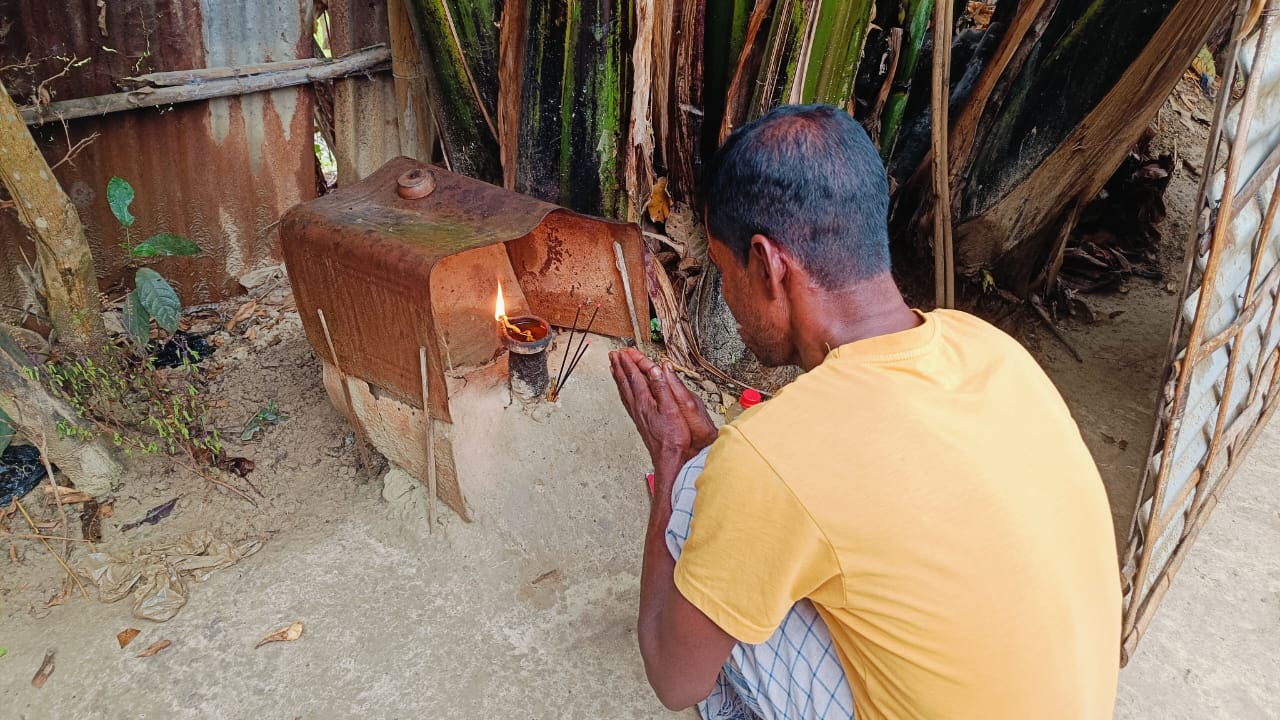
NALBARI, Assam: On March 13, as the first flush of seasonal rain swept across Assam, the Dekas, the lone family of Number 2 Dhanara village, sat together and prayed.
“We prayed for the rain God’s mercy not to turn torrential. Otherwise, a heavy downpour means flooding across the village. Whenever water rises knee-deep, we usually leave our home along with our cows and goats,” Bimal Deka, the head of the family, told The Migration Story.
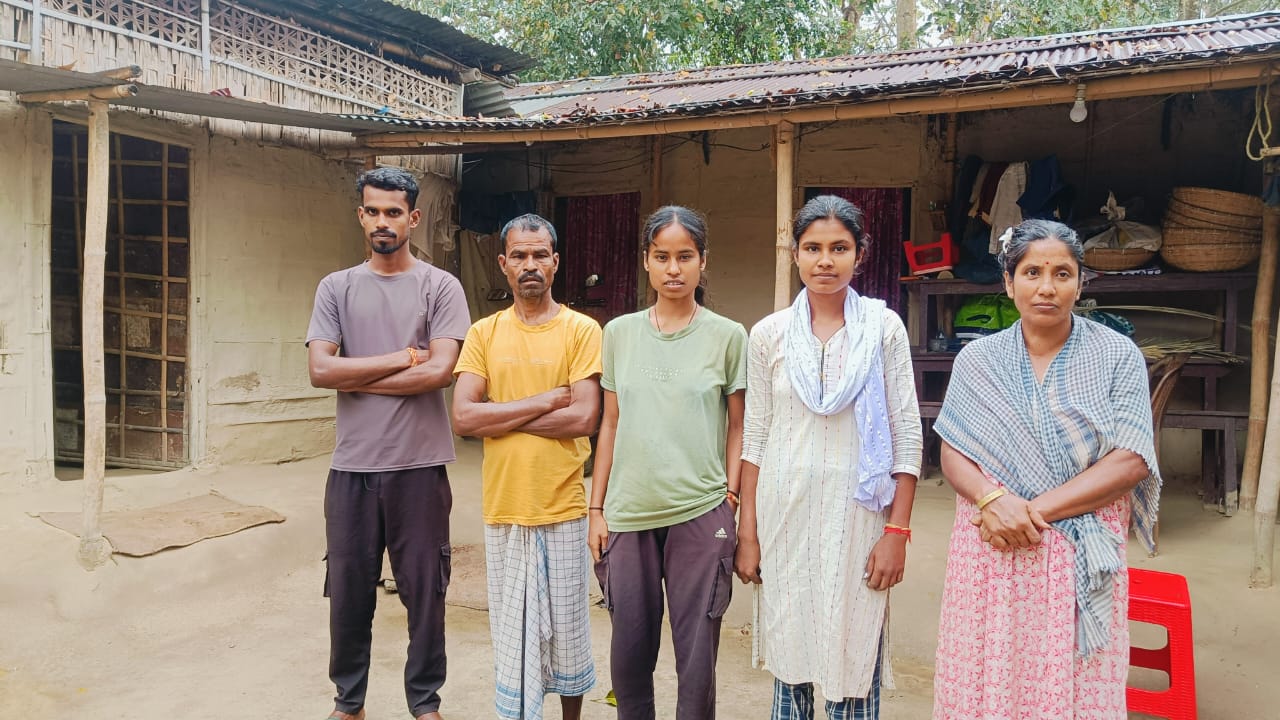
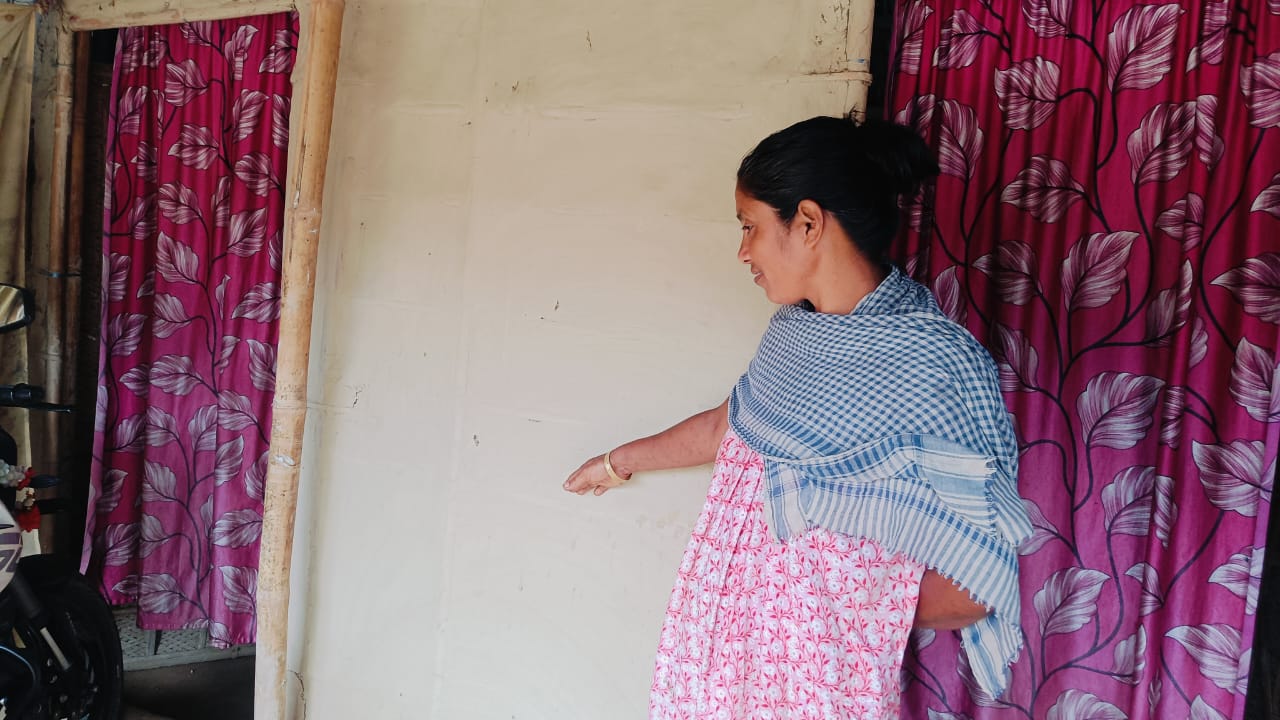
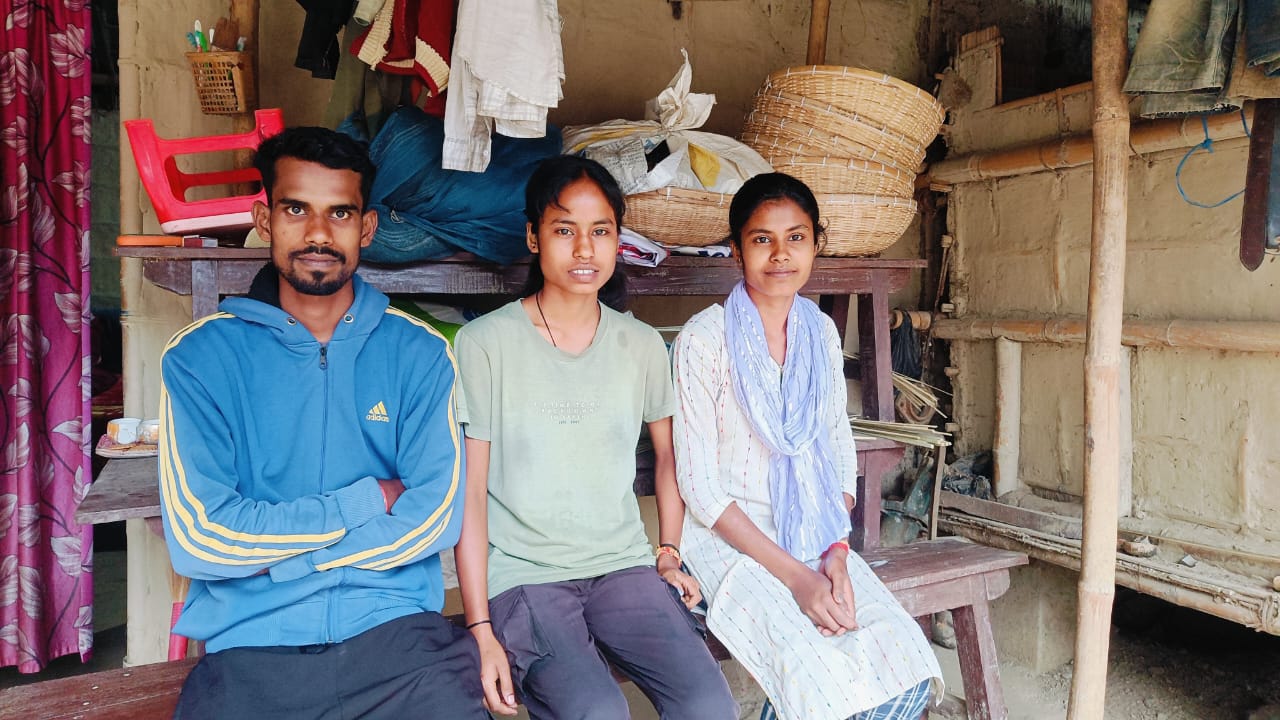
Deka, 48, his wife Anima, and their three children, Naren, Dipali, and Seuti, are the only five residents of this flood-prone village in Nalbari district, according to state-appointed village head Ramen Bujorbaruah.
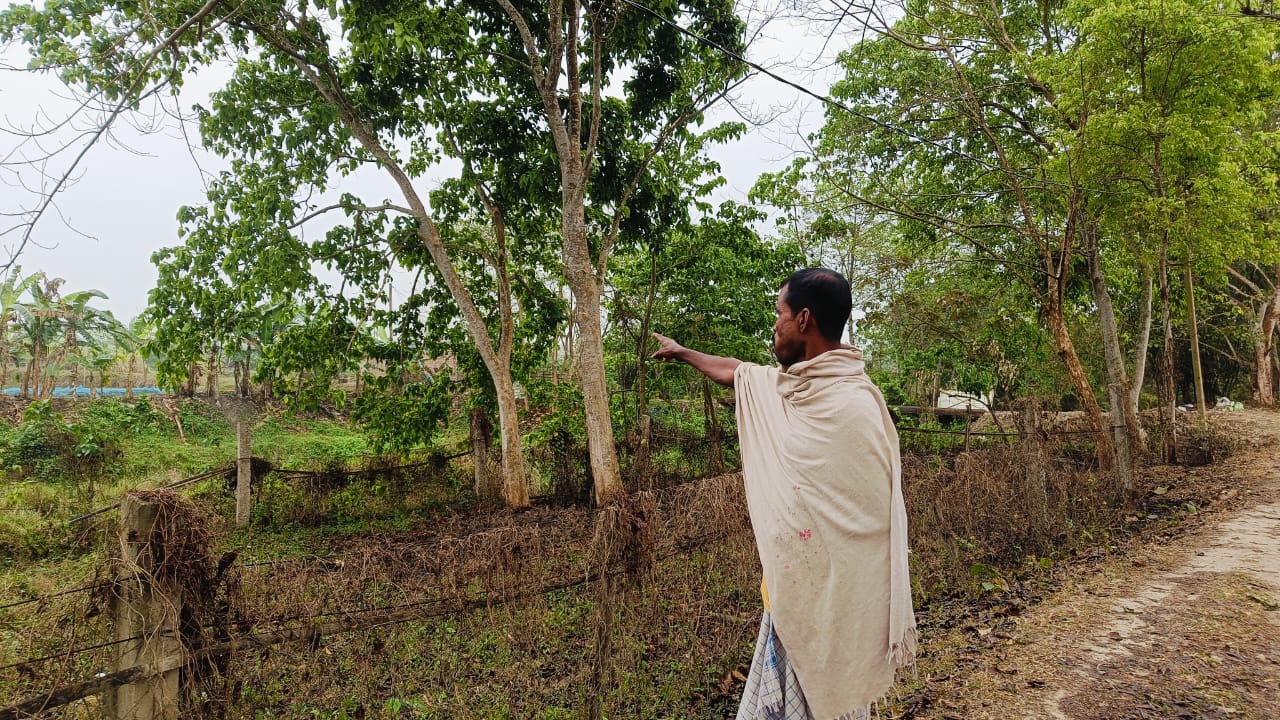
Their ramshackle bamboo-and-mud hut with a rusted roof is the sole structure amid 661 acres, or roughly the size of 500 American football fields. The village once teemed with people, the Dekas recall fondly. But now an eerie silence prevails. Huts have been razed, leaving trees, fields, and ponds as witnesses to endless disasters, sometimes two or three yearly.
“We are helpless and terribly lonely. The emptiness shows what floods do: kill, destroy fields and homes, force migration to unknown places,” said Bimal.
SEEKING REFUGE EVERY YEAR
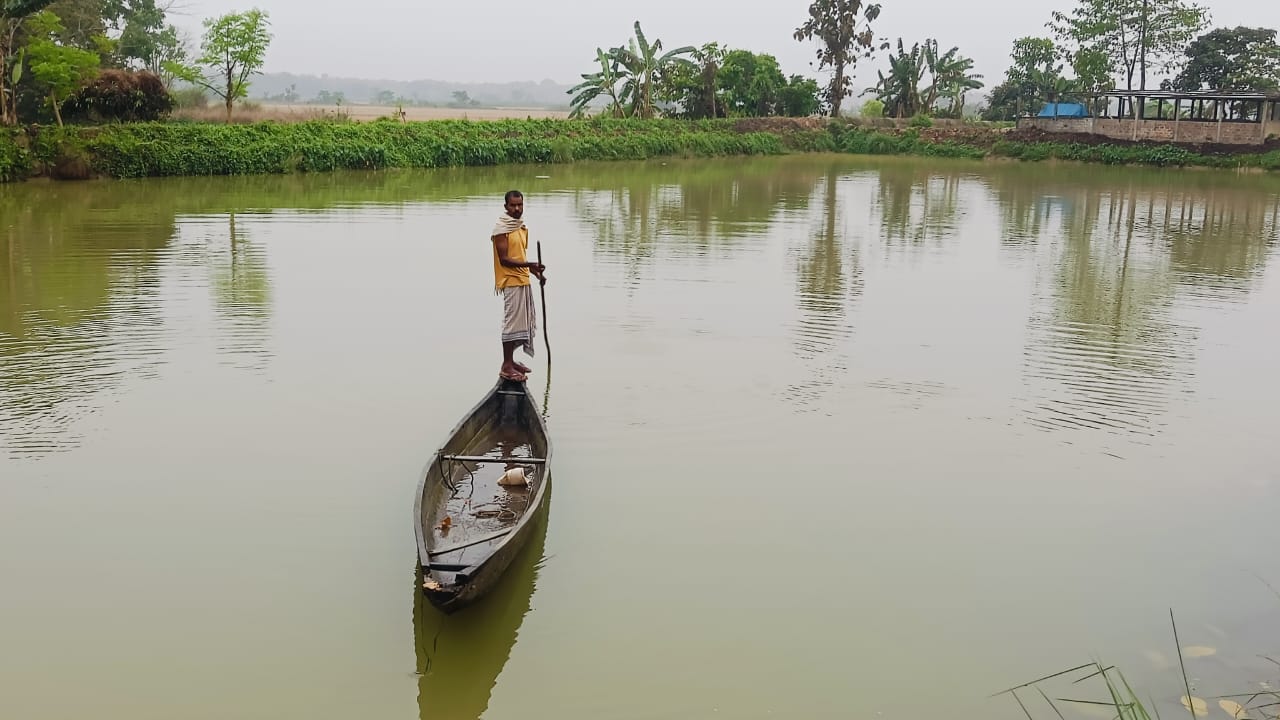
The Dekas have an annual ritual: they cram into their battered country boat, looking for refuge, often several times a year. They typically seek shelter on the nearby Ghogra embankment, or farther to a state-run camp by the national highway.
Belongings like clothes, food, and the hut get damaged each time.
“I have to make multiple journeys in my country boat to bring the animals to a safer place. Sometimes my son also accompanies me,” said Deka.
Anima, 46, who was born in the village, remembers 50 families and 250 residents, mostly paddy growers, living in Number 2 Dhanara when she was a child.
“As floods turned severe with each passing year, growing rice became almost impossible. So they all migrated, one after another, in the last two decades in search of safety and a livelihood. Most of them have settled in nearby villages or towns in Nalbari,” added Anima.
There is no official record of how long the family has been living alone in the village.
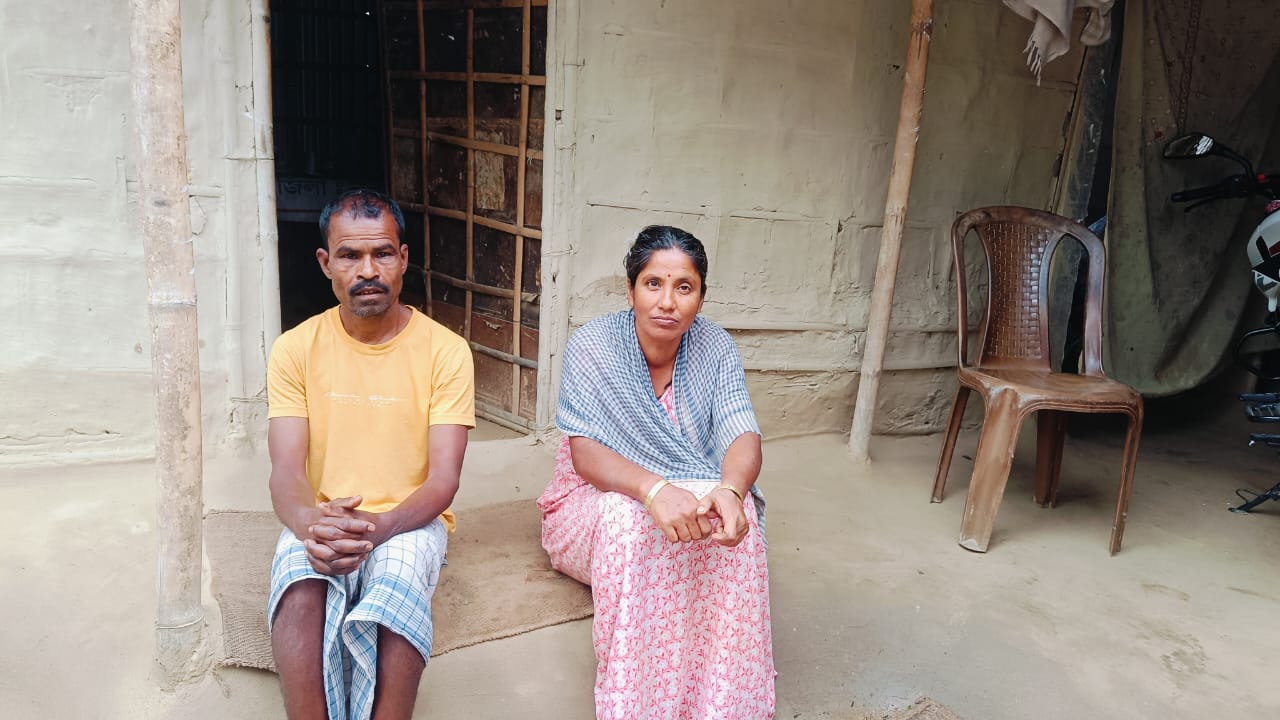
The Dekas live in Anima’s ancestral home. “Being the only child of my parents, I inherited their land and hut,” said Anima.
Around 27 years ago, Anima and Bimal fell in love and got married. Bimal is a native of Narayangaon, a village in nearby Tamulpur district.
“Since my family is big with brothers and sisters, I decided to settle in Number 2 Dhanara village so that Anima could look after her ageing parents,” said Bimal, adding that her parents died more than 20 years ago.
“But it is mostly love because of which he did not want to leave me and my village,” laughed Anima.
“The floods make love and living hard. But we are surviving,” added Bimal.
ONE FLOOD AFTER ANOTHER
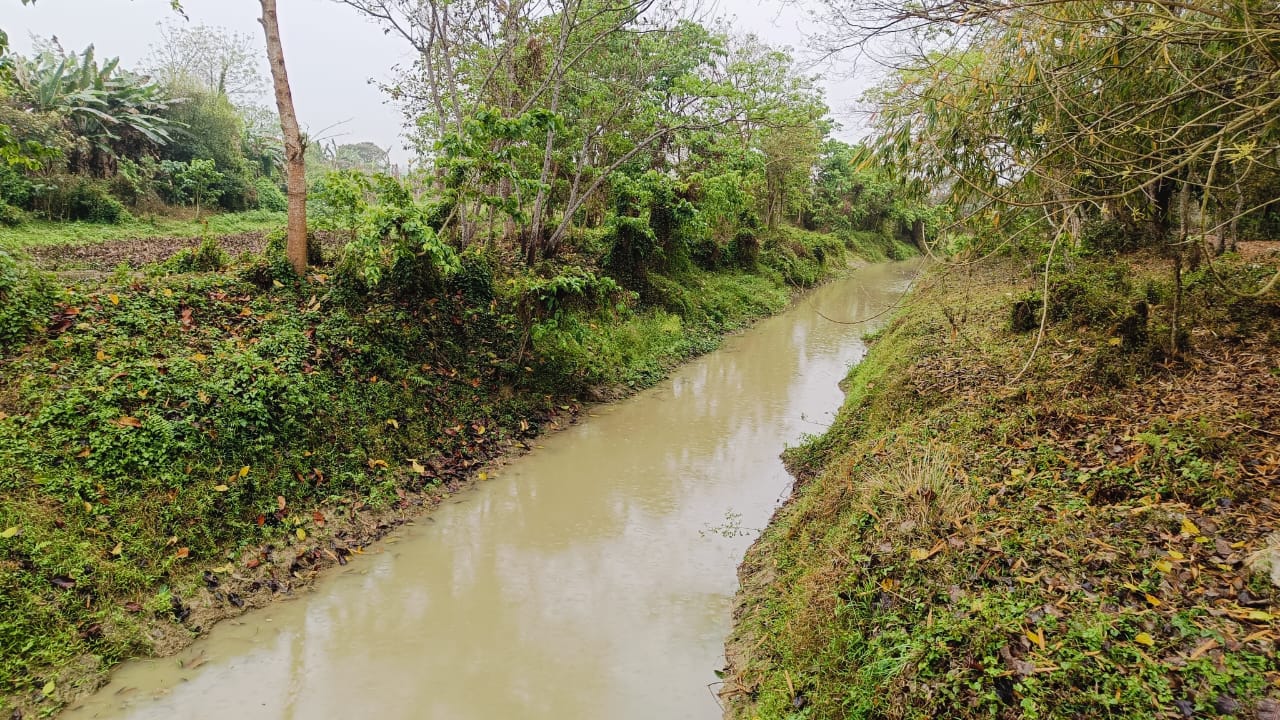
Floods hit Number 2 Dhanara twice or more yearly. Ramen Bujorbaruah, the village head who lives in neighbouring Latima village, said Nalbari district is one of the most flood-prone regions of Assam, with Ghogra canal and Pagladia river, a Brahmaputra tributary, spilling in during rains.
The Assam Flood Memorandum 2024 stated that all 35 districts of the state were affected by floods that year.
The floods came in three waves. It was one of the episodes in the last decade, which saw at least 110 people dead, 7,794 villages inundated, and 49,580 hectares of agricultural land destroyed.
Farmer Khagen Das from neighbouring Dakhingaon village says all 87 villages in Ghograpar revenue circle in the district flood annually.
“Floods are part and parcel of our lives. No one is spared from it. The situation for the Deka family is more precarious as they live alone in their village,” he said.
Last year was an aberration for the Deka family.
“It was the first time in my life when I did not leave my home because of floods. The water remained in the courtyard and did not enter my home,” said Anima.
“Otherwise, 2024 was horrible, as floods created havoc thrice. So was 2023,” she added.
The opening of Nalbari Medical College and Hospital in 2023 offered some hope to locals.
“Our health emergencies will be addressed faster now. But the issue of flooding and loss of agricultural produce is yet to be addressed by the authorities,” said Das.
TO MIGRATE OR NOT?
The Deka family said they wanted to migrate to a safer place.
“We want to leave the village and settle somewhere else. It is impossible to live in a place where we have to rebuild or renovate our home every year. The bamboo and mud structure can’t withstand floodwater damage. We can’t even grow paddy. The floods destroy the crop too,” said Anima.
“We don’t have the money to buy land and settle in a different place. So we are the only family living in the village,” added Anima.
Village head Bujorbaruah said the family refused to leave. “We have tried so many times to persuade the family to settle in a nearby village, but they don’t want to do so,” he said.
Nibedan Das Patowary, district commissioner of Nalbari district, said the administration had come up with a contingency plan to rescue and rehabilitate people in case floods hit during the upcoming monsoon season.
“Every year, we rescue marooned people and provide them shelter in relief camps, food, clothing and healthcare facilities. Once floodwaters recede, we help them to rebuild their lives,” the official added.
The district commissioner told The Migration Story that he was unaware that a single family had been staying in Number 2 Dhanara village.
“If the family needs any support, they can come and meet me. I will do the needful,” he said, much to the delight of the Dekas who said they would take him up on his offer.
WHY FLOODS ARE TURNING DESTRUCTIVE
Dr Rahul Mahanta, director of Guwahati-based Centre for Clouds and Climate Change Research at Cotton University, said that people in the Brahmaputra valley have been living with floods for a very long time.
“The civilisation evolved because we used to get regular floods. Earlier, the floodwater rose slowly, and it went back to the rivers or replenished wetlands,” he said.
“People knew floods would come annually. Their indigenous knowledge helped them to cope with floods and navigate the crop cycle. Now that knowledge has become totally obsolete due to this new cycle of floods,” he added.
“These are flash floods. They come in bursts and are very destructive. Now, floods are followed by a prolonged period of dry season. These are the main reasons people in rural areas are getting displaced and migrating to other parts of Assam. After all, it is a question of their livelihood and survival,” he added.
In 2022, floods displaced nearly
55,00,000 people in Assam. In 2024,
25,00,000 people were displaced.
Dibakar Deka, co-founder of Assam-based NGO Gramya Vikash Mancha, which works on rural labour and livelihood issues, said villagers are constantly migrating.
“It is generally the male members of families who migrate in search of livelihood, as farming in flood-affected areas has become hard. Sometimes, the whole family leaves … It is not easy to survive flood after flood forever. Floods have put people into debt, caused mental agony, and loss of identity due to forced migration,” said Dibakar.
Scientist Mahanta said floods were directly related to changing rainfall patterns over several decades.
“It may be due to climate change,” he said.
ELECTION TIME
It is election season in Assam, with people set to cast their votes on April 9. Yet, political parties have said nothing about environmental disasters, including floods and soil erosion
Union Home Minister Amit Shah said that the ruling Bharatiya Janata Party (BJP) would make Assam flood-free in five years during his visit to Assam on February 20.
Jayanta Buzarbarua, senior BJP leader from Assam, echoed Shah.
“The BJP’s central and state leadership have been sincerely working towards making Assam flood-free. Environment-related issues need a holistic approach. We are hopeful of doing better in the coming years if we come to power for the third time in the upcoming (state) elections,” said Buzarbarua.
Jagadish Bhuyan, a senior leader of rival Assam Jatiya Parishad urged all parties to prioritise floods and soil erosion in elections.
“Our manifesto will have an elaborate analysis and mitigation plan on environmental disasters.”
LIVING IN ACUTE POVERTY
The Dekas said that apart from the free ration, including 25 kilograms of rice, oil, and salt every month, they had never received any financial aid from the government after floods.
Anima gets 1,250 rupees ($13) every month under the
Orunodoi scheme, which gives financial assistance to women from low-income households.
“The money is too little for a family of five,” Anima said.
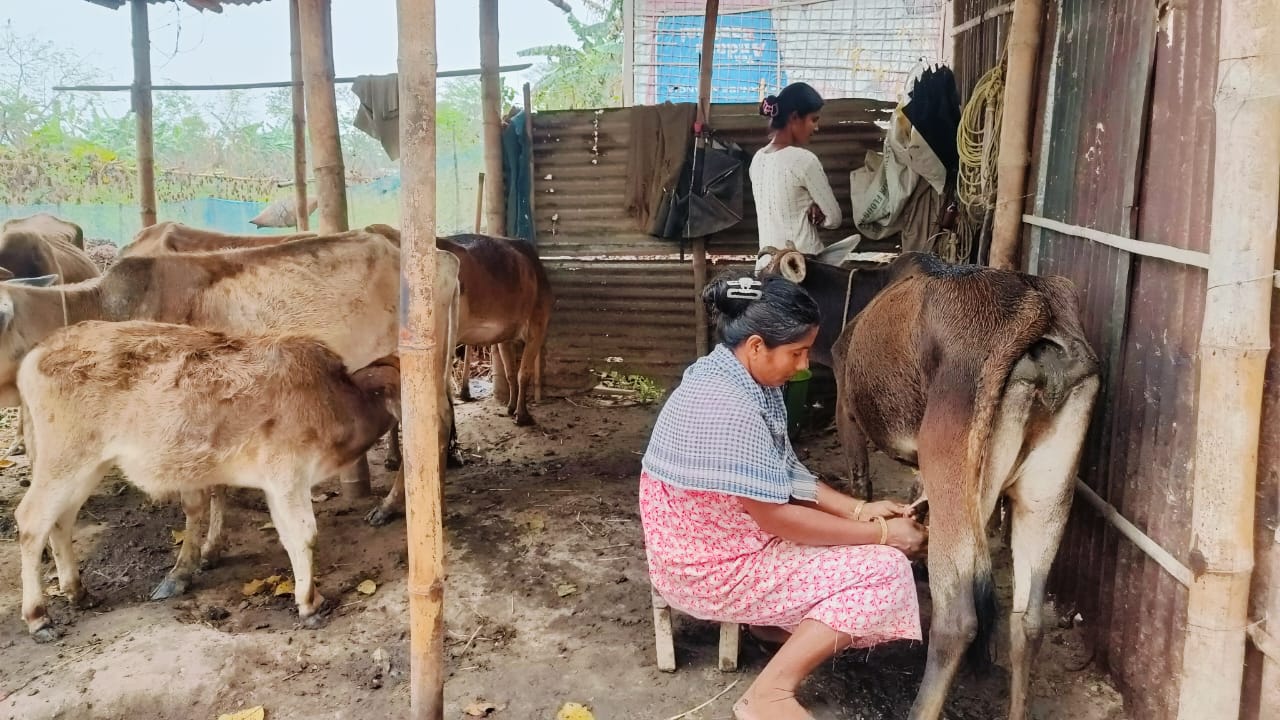
The family has been rearing cows and goats for the last 12 years. “We have 20 cows and four goats. We sell four to five litres of milk every day. Each litre fetches us 60 rupees. We earn around 240 to 300 rupees a day,” said Naren, 26, the eldest of the children.
Every morning, Naren walks 3 kilometres to sell milk at Narpara, a marketplace where villagers bring their agricultural produce to sell.
“When things turn difficult, we also sell our cows and goats. Last time we sold a cow … we got 5,000 rupees,” said Anima.
The entire family rears the animals. Anima wakes up at 4am to prepare for the milking process, and her daughters, Dipali, 22, and Seuti, 20, take the cows for grazing in nearby fields.
Bimal said he was too weak to do physical labour these days. Anima said she wanted him to work as a daily wager in neighbouring towns but that “he was never interested” even though “money is always scarce”.
EDUCATION, THE LAST HOPE
Despite hardships, Anima and Bimal – both school dropouts – ensured their children got an education. Naren graduated four years ago and is preparing for government jobs, as is Dipali, who graduated last year. Seuti, currently in college, is doing the same.
Anima added that she saved every rupee to finance her children’s education. To ensure her children did not miss lessons, she ferried them in their country boat.
“There were times when the floodwaters wouldn’t recede for weeks. Maa rowed the boat to take us to school or college. She never let us miss our classes for long,” said Dipali, who wants to be a teacher.
Naren and Seuti aspire to join the police force. “It is the only way for us to break free from poverty and floods. Once one of us gets a job, we will be able to shift to a safer place and start our life afresh,” she added.
A fresh start at a new place could also mean having neighbourhood friends, which they grew up without.
“There was no one to play with or talk to. I was around six or seven when the village was deserted,” said Naren.
“I often spend most of my time with my friends at neighbouring Barjabari Hati village but Dipali and Seuti spend time here with Maa, helping her with household chores or rearing the animals.”
Edited by Annie Banerji
Maitreyee Boruah is a Guwahati-based independent journalist