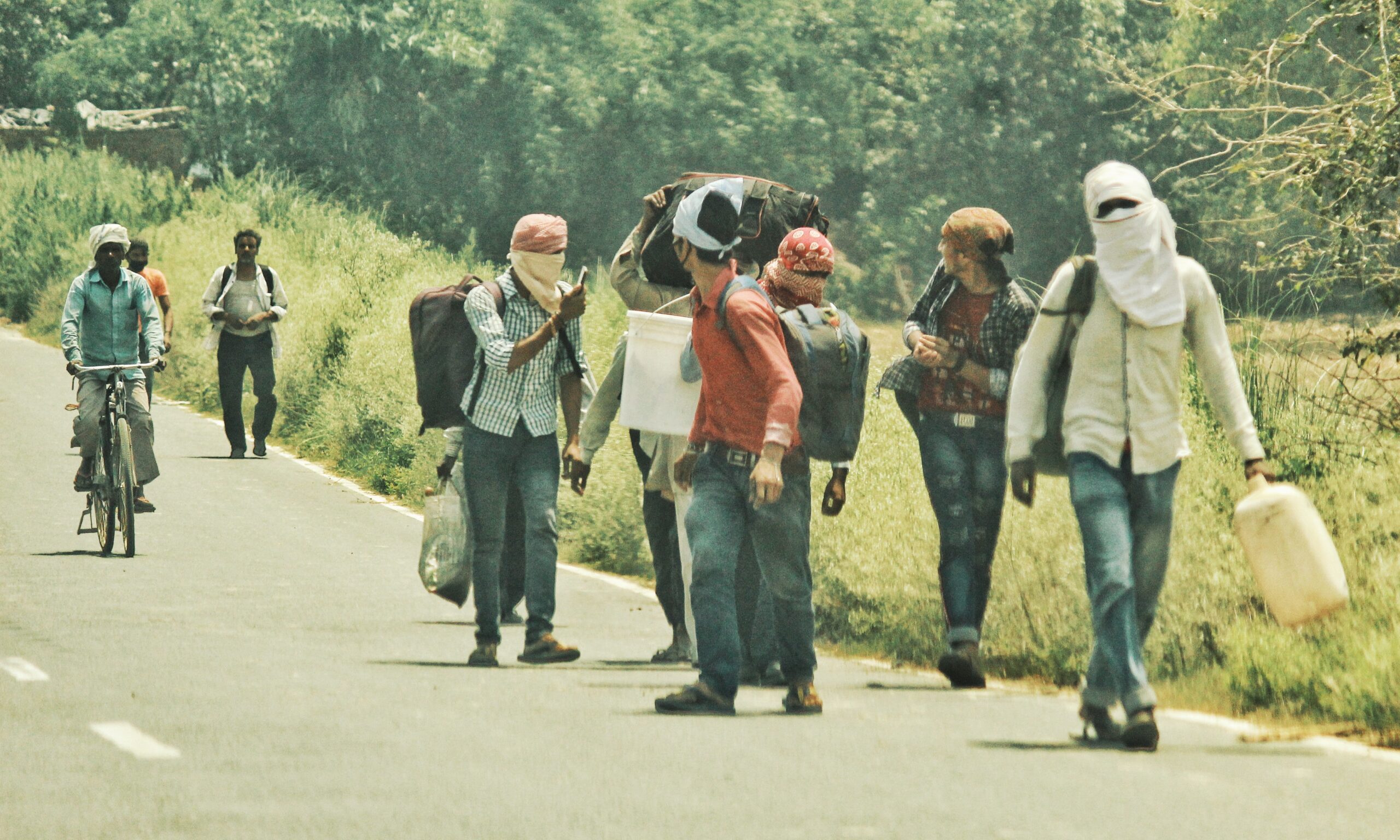
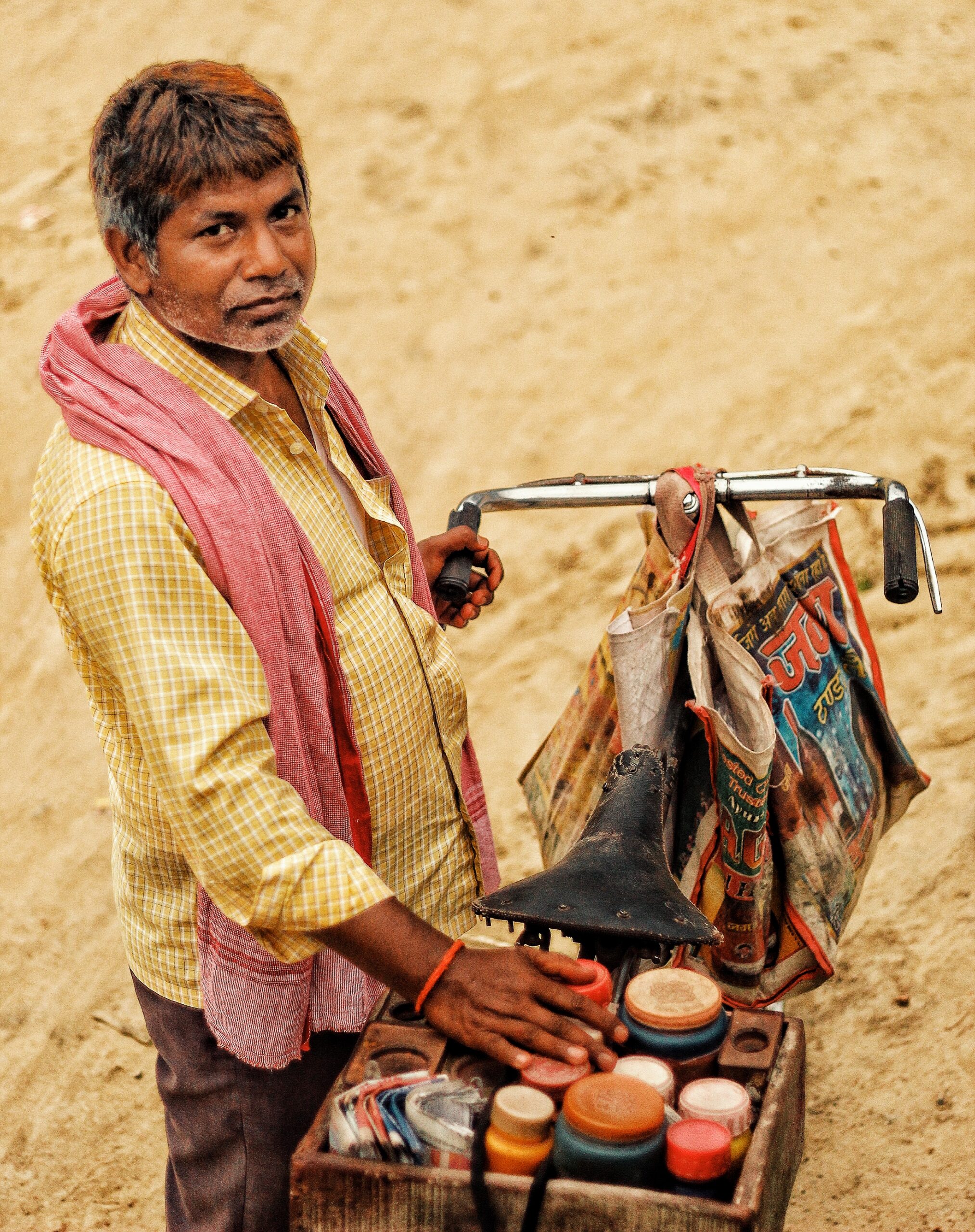
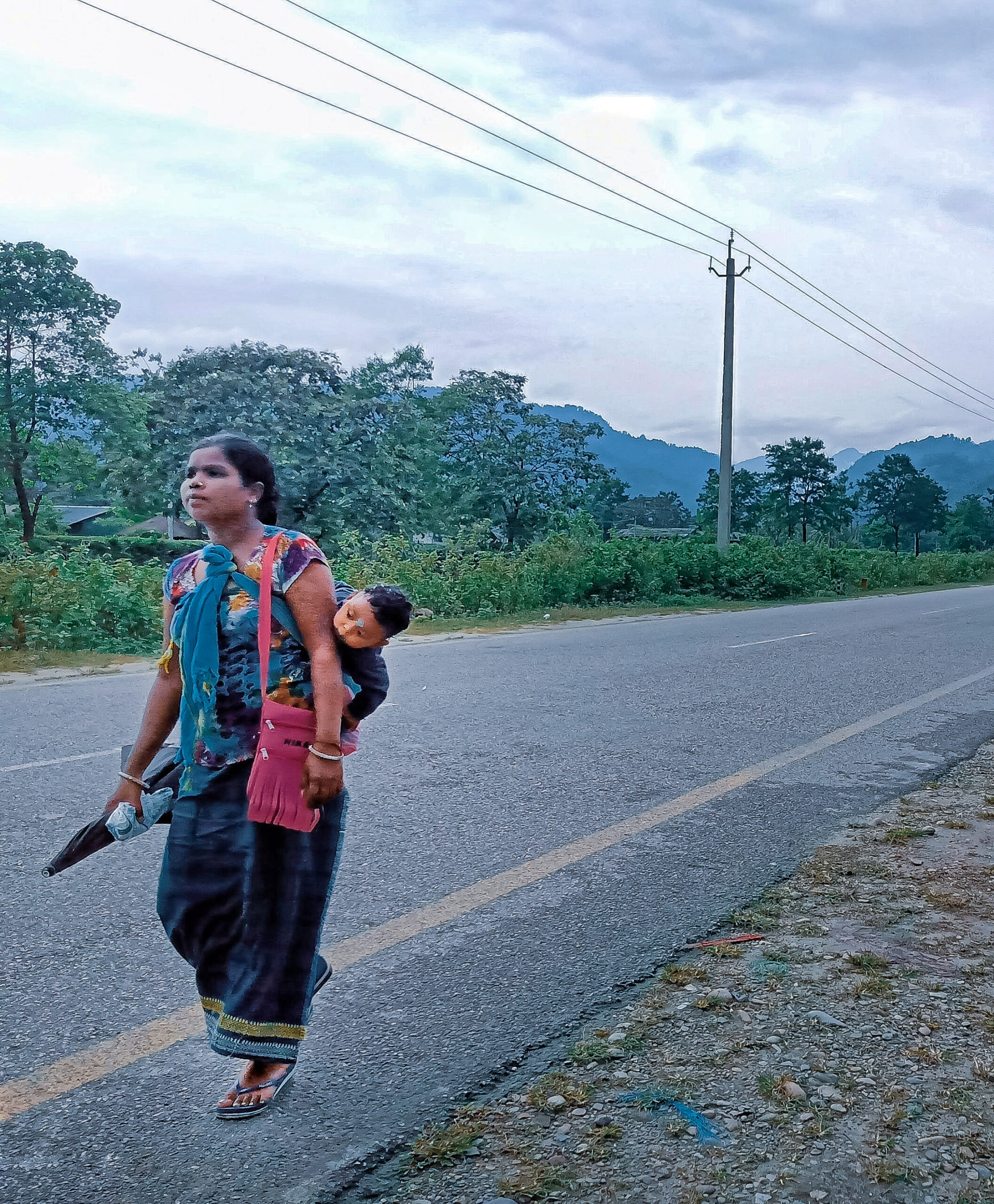
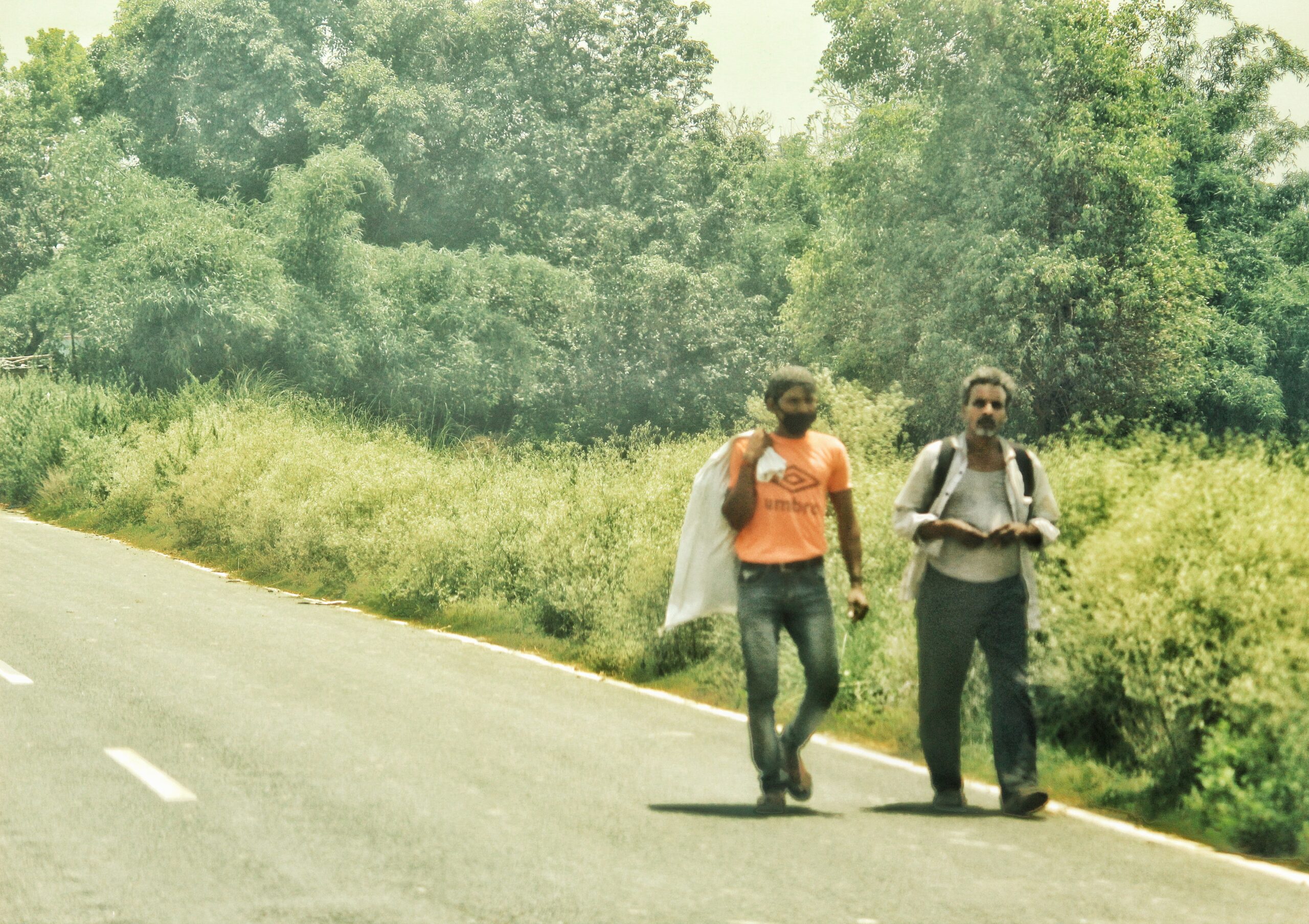
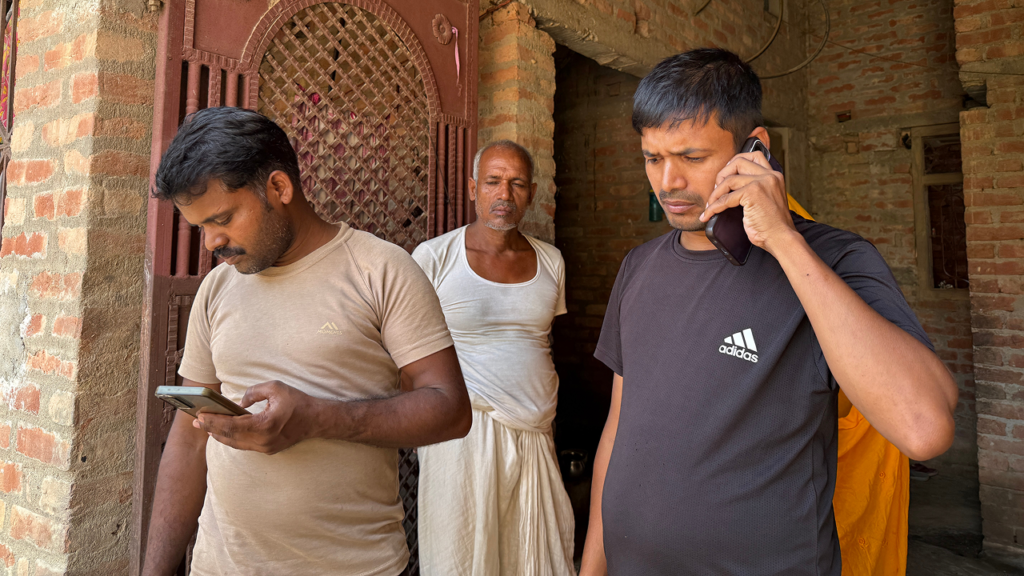
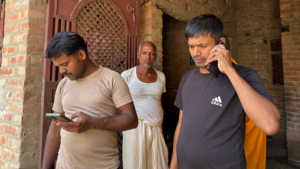
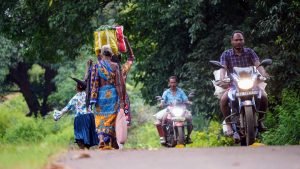
BALLIA, Uttar Pradesh – Beneath a large mango tree in Revati village of Ballia district, nearly 700 labourers had gathered to leave for Delhi and Ludhiana in April. One of them was 38-year-old Ramavatar Manjhi, a seasonal farm labourer who leaves Uttar Pradesh every year to find work in textile factories and construction sites in other states.
This year he packed up earlier than usual.
“For the past 15 years, I used to leave home during the third week of June,” said Manjhi, sitting with two bags, a steel trunk and a rolled-up bedding bundle as he waited to board a bus to Ludhiana later that evening.
“But this time, the heat became so intense as early as late February that the wheat grains shriveled up. By the time April arrived, it felt as though fire was raining down from the sky,” he said.
“The village doctor explicitly warned us that the children were at risk of heatstroke and urged us to leave for the city immediately.”
Manjhi said that while 200 people from his village migrated during April last year, this time the number had more than tripled.
As India battles unprecedented heatwaves, the most vulnerable are often the country’s vast majority of workers who generally work outdoors in sweltering temperatures, say labour rights experts.
India’s weather department has been warning of a hotter-than-normal summer this year.
In April, Uttar Pradesh was home to some of the hottest cities in India, with Banda topping the chart at 47.4 degrees Celsius (117.3 degrees Fahrenheit), or about 5 degrees higher than normal, according to the India Meteorological Department (IMD).
Higher temperatures raise risks for key winter-sown crops such as wheat, rapeseed and chickpeas, farm experts warn.
“The untimely rise in temperatures during February and March causes the wheat grains to lose weight, resulting in a 25 to 30% decline in yield,” said Dr. Arun Kumar Srivastava, Head of the Agro-Meteorology Centre in Prayagraj.
He added that the summer season had become longer in Uttar Pradesh over the past decade, beginning 22 days earlier and ending 18 days later. He cited this to global warming driven by humans, or “anthropogenic warming”.
Extreme heat and the crop and income losses it brings are reshaping migration patterns in the state, forcing many to leave home early in search of work and stay for longer durations in cities like Pune and Mumbai, Ludhiana, Delhi, Gwalior and the diamond polishing hub of Surat.
From construction sites, brick kilns and farms to factories and textile mills, migrants from Uttar Pradesh find work in urban areas where they say they get access to fans, drinking water, cooling centres, and medical help, which are largely absent in villages, say the migrating workers.
Over the past 10 years, the number of heatwave days during the months of April and May has increased by 250% across the districts of Gorakhpur, Basti, Deoria, and Kushinagar in eastern Uttar Pradesh, according to IMD data.
In 2014, the average maximum temperature in April stood at 37.2 degrees. By 2024, it had climbed to 40.1 degrees.
As hotter days increase, so do the number of migrants moving out of the state.
Uttar Pradesh is India’s most populous state, home to about 240 million people, and – based on analyses of the last available Census of 2011 and subsequent migration studies – is considered the single largest source of migrants leaving their home state, whether seasonally, temporarily, or permanently.
“We are simply unable to accurately measure climate migration. When a labourer migrates in April solely to escape the heat, it is not a matter of personal choice, it is an act of compulsion,” said Farhat Basir Khan, a professor at Delhi-based Jamia Hamdard University who has expertise in migration and climate-related displacement.
“We estimate that 28 to 30% of the total annual migration from Uttar Pradesh now occurs specifically during the months of April and May, a figure that stood at a mere 7 to 8% in 2015,” he added.
Keshav Das, a 45-year-old farmer, said premature migration was happening across villages in Jhansi district. “More than half of the labourers in our village have already left for Gwalior and Delhi, a mass exodus that, in the past, was typically observed only toward the end of May,” he said.
“The gram crop withered away as early as late February. The water table in the borewells has plummeted to a depth of 70 feet,” he lamented.
Extreme heat is pushing food systems to the brink across the world, putting the health and livelihoods of more than a billion people at risk, according to an April report by the United Nations’ food and weather agencies.
The Food and Agriculture Organization (FAO) and the World Meteorological Organization (WMO) found that heatwaves are becoming more frequent, prolonged and intense, damaging crops, livestock, fisheries and forests.
As global warming accelerates, the risks are only set to rise, the agencies warned. They called for better risk governance and early-warning weather systems for preventive action.
For farmers in Uttar Pradesh, Dr. Srivastava suggested using heat tolerant wheat varieties like HB 4, and practising zero tillage farming, shifting sowing dates to late November, and mulching with micro irrigation.
“These require capital that marginal farmers simply do not have,” he said.
In the village of Cholapur in Varanasi, 65-year-old Ramji Gond, a fourth-generation migrant labourer, said he has been witness to the changing patterns of migration over the course of his lifetime.
“In my grandfather’s era, labourers would leave home before Holi (typically March) and return before Raksha Bandhan (August),” he recounted, sitting under an ancient banyan tree.
“But look at it now. All the young men pack up their belongings and leave even before Akshay Tritiya (typically late April). And the return journey now takes place before Diwali because even in October the mercury here still hovers above 35 degrees.”
Outside the purview of heat action plans
Migrant workers say that the cost of shifting migration patterns is not only poor health and job insecurity.
“(It) disrupts children’s education and leaves the elderly behind to fend for themselves,” said Shivshankar Nishad of Prayagraj, a boatman who ferries tourists across the confluence of the Ganges and the Yamuna rivers.
India’s labour ministry issued advisories to all states and union territories in April, urging them to take immediate steps to protect workers from extreme heat, especially those in outdoor and labour-heavy jobs. The ministry called for flexible work hours, adequate drinking water, shaded rest areas, cooling arrangements and emergency supplies such as ice packs and ORS, among other measures.
It also asked factories, mines and construction firms to slow work during peak heat where possible, and to pay special attention to daily wagers, casual labourers, brick kiln workers and construction workers. It urged public bodies to run awareness programmes on heat risks, hydration, rest breaks, heat-stress symptoms and first aid.
While Heat Action Plans exist in 33 of Uttar Pradesh’s 75 districts, the provision of cooling centres, drinking water, and fans has failed to extend beyond district headquarters, said a panchayat secretary from Ballia.
The secretary, who requested anonymity fearing official reprisals, said there was no dedicated government financial aid for heatwave-related unemployment.
“By the end of April, most soil and water conservation work grinds to a halt. Working under the scorching sun becomes physically impossible for the labourers. In May and June, work virtually comes to a standstill,” he said, talking about jobs under the rural employment scheme MGNREGA.
The Migration Story requested comments from various state offices, including the State Disaster Management Authority (UPSDMA), the UP Labour Department, and the Commissioner for Relief and Rehabilitation, but did not receive any responses.
A junior UPSDMA, who requested anonymity as he was not authorised to speak to the media, said “all 33 districts have (heat action) plans implemented”, declining further comment.
Dr. Ravi Shankar Sharma, a former member of the UP State Planning Commission, said heat action plans were “paperwork exercises”.
“Cooling centres, shaded bus stops, drinking water kiosks, rescheduling of work hours – these require political will and budget. Heat is not a ‘glamorous disaster’ like floods. Until the Election Commission forces action, no district collector will prioritise this,” he said.
He urged authorities to implement a range of solutions to prevent heat-related deaths and illnesses, including night work sheds with fans, mobile water vans, heat-linked health alerts in regional languages.
He also suggested shifting MGNREGA jobs to winter months, and providing thermal shelters at rural block levels. For the long term, he advised more agroforestry for shade, and the use of heat tolerant crops and solar-powered cold storage.
“Labourers don’t vote where they migrate (to). They are invisible,” he said.
For millions like Ramavatar Manjhi of Banda, the only solution is to leave every summer.
“This has become the new norm,” he said as he hoisted a sack over his shoulders.
“Whether the government takes action or not, we at least must save our own lives.”
Ayush Krishna Tripathi is a journalist, researcher, and documentary photographer based in New Delhi. His work focuses on media, culture, society, climate, and visual storytelling.