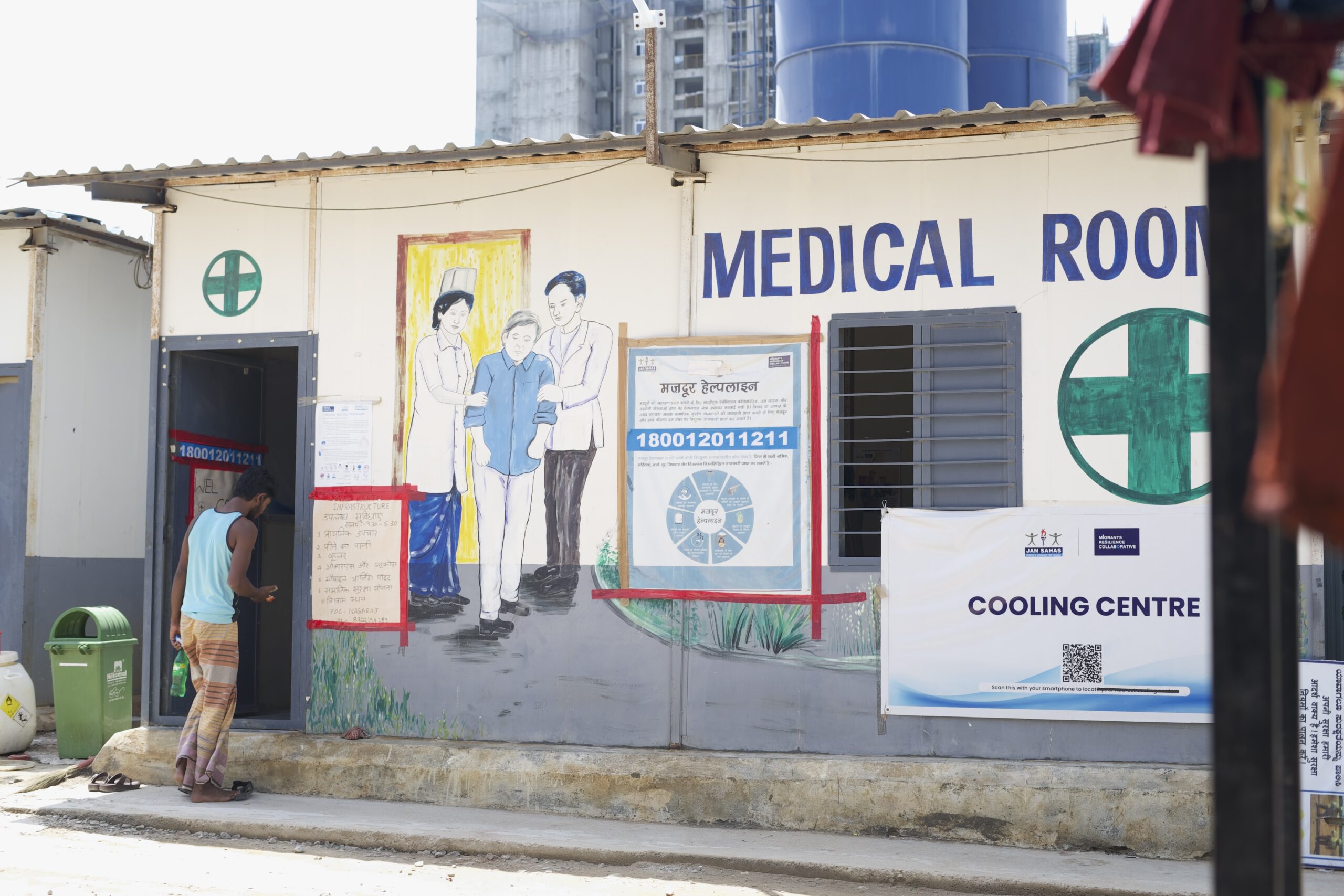
BENGALURU, Karnataka: Just a few minutes before noon, the harsh sun beats down on the vast, dusty expanse of a construction site off Soukya Road, near Whitefield on the eastern periphery of Bengaluru. The site reverberates with the constant noise of heavy machinery and trucks transporting raw materials, while construction workers move about their tasks, seemingly indifferent to the heat and swirling dust.
Towering apartment blocks under construction dominate one side of the site, while the other houses facilities that sustain workers’ daily lives, including a beeline of residential quarters, a kitchen and canteen, and a cooling centre that has assumed greater importance this summer.
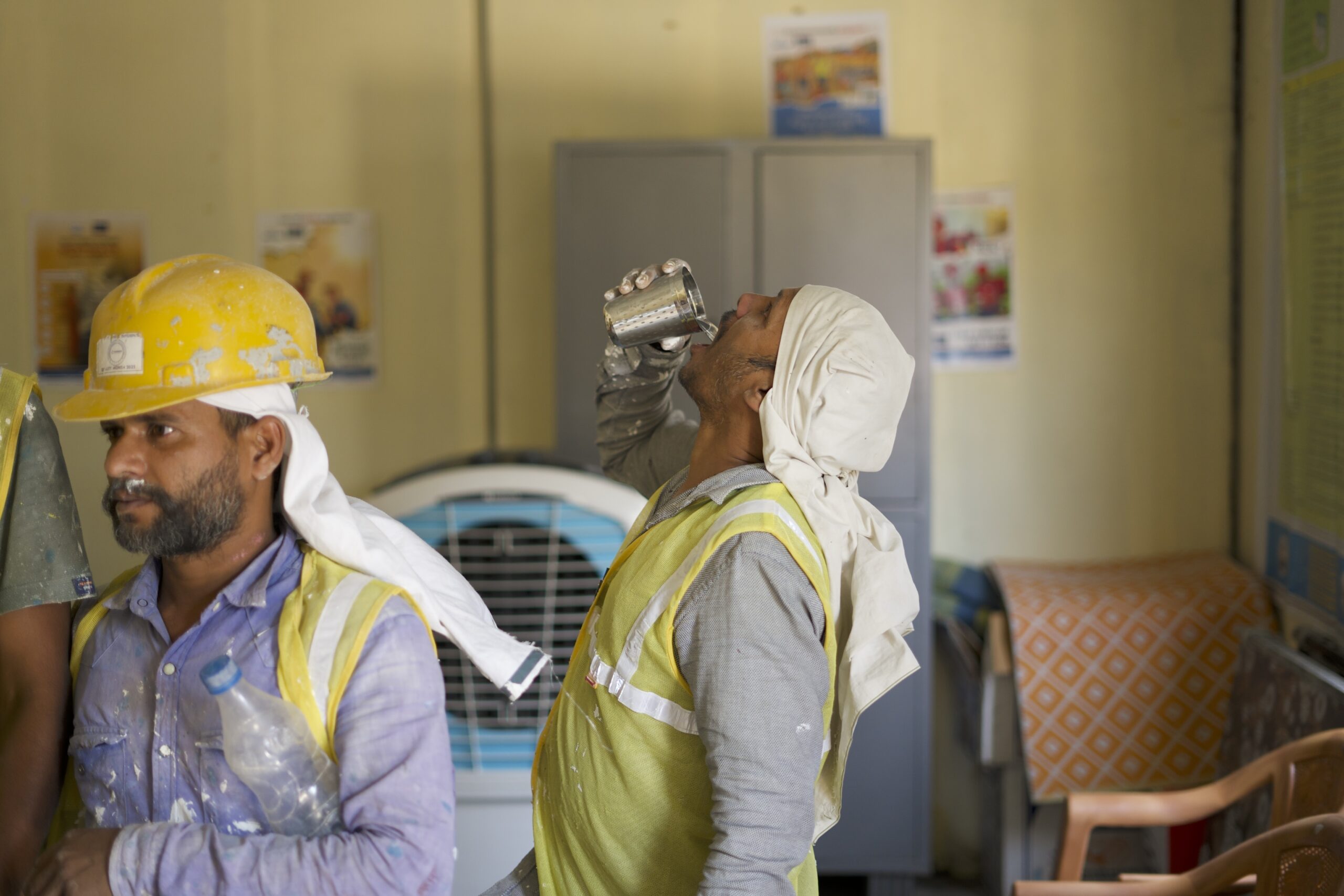
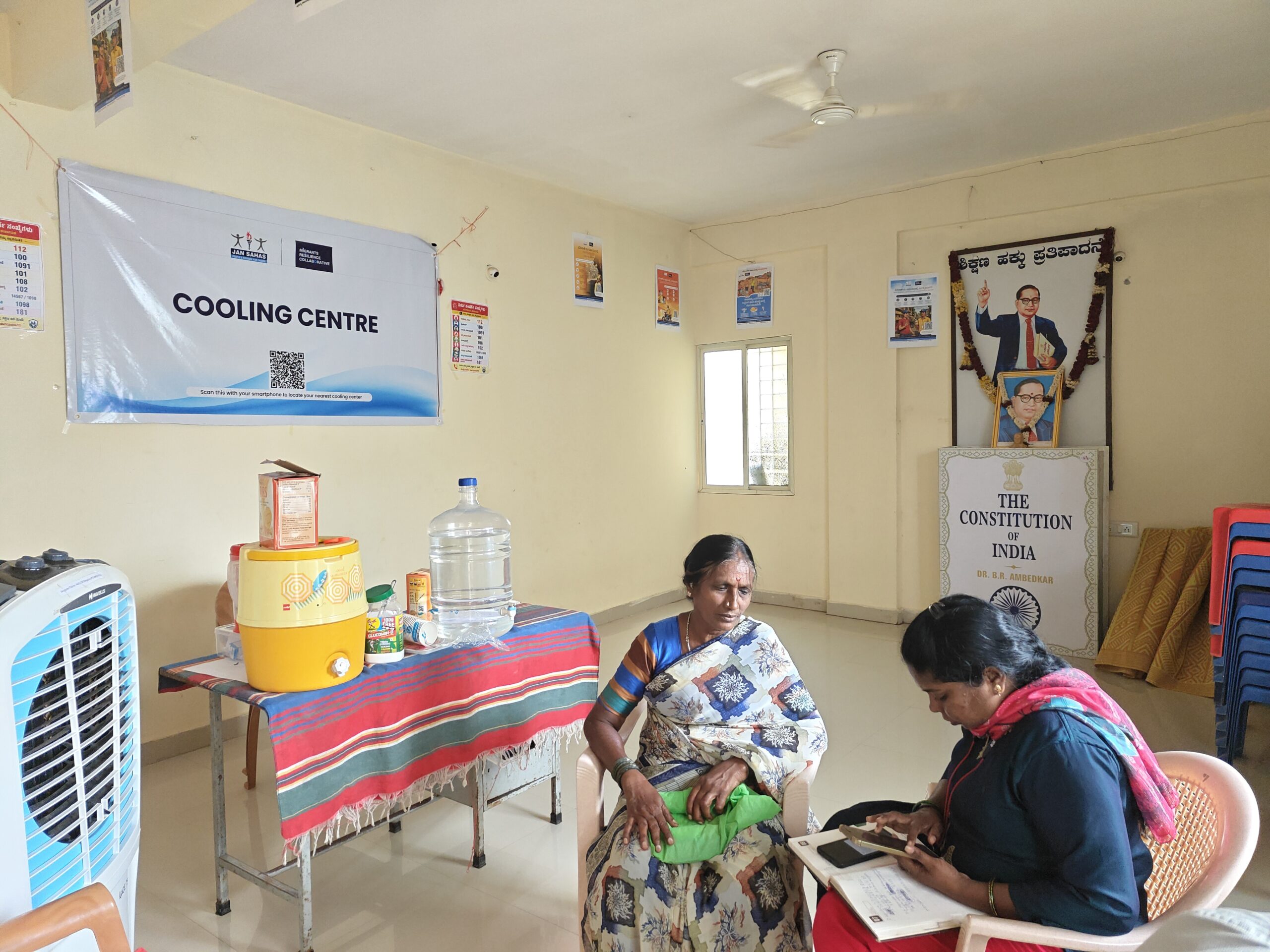
A little past noon, the first worker of the day walks in—a lean man in his 20s, dressed in a lungi and grey shirt. “Ek packet ORS,” (one packet ORS) he asks B. Ashok, who oversees the centre’s operations. Ashok promptly hands him one and asks him to sit for a while. The worker declines and walks away. Beyond ORS, the centre offers drinking water, glucose, air coolers and a few charpais—cots—where workers can rest before returning to work. Ashok told The Migration Story that many, however, avoid sitting in front of the air coolers for too long. “Once they cool down, they find it difficult to go back and work in the heat,” he explained. Over the next few hours, more workers come to the centre for a reprieve from the scorching summer. “During peak summer in April, nearly 100-120 workers visited the centre each day. After the first rains, the footfall has dropped to around 70-80,” Ashok said.
The centre is run by the Migrants Resilience Collaborative (MRC), a grassroots-led multi-stakeholder initiative initiated by Jan Sahas, a civil society organisation working with vulnerable communities on safe migration, workers’ protection, and climate-responsive social protection and insurance. It is part of a growing network of cooling facilities established across the country as low-cost heat adaptation infrastructure for informal workers, who are among the most vulnerable to extreme heat exposure.
According to the 2025 edition of the Lancet Countdown on Health and Climate Change, people in India experienced an average of 19.8 heatwave days in 2024, including 6.6 days that would not have occurred without climate change. The same year also saw a record loss of 247 billion potential labour hours globally due to heat exposure, a 124% increase over the 1990–1999 average. Construction alone accounted for one-fifth of these losses, underscoring the growing vulnerability of outdoor workers due to extreme heat.
Indian cities are increasingly adopting cooling centres as a practical response to rising heat stress, with different models designed to address local needs. In a first-of-its-kind initiative launched in 2024, the Mahila Housing Trust, in partnership with Jodhpur Nagar Nigam North, established a net-zero cooling station in a heat-vulnerable neighbourhood identified under the city’s Heat Action Plan (HAP). The station uses simple passive cooling techniques, including water-cooled khus panels, to provide low-cost, energy-efficient relief from extreme heat. Last year, the Greater Chennai Corporation introduced air-conditioned rest lounges for gig workers and construction labourers. This year, the Delhi government set up 14 cooling zones in the city as part of its heatwave response.
The Migration Story visited two MRC-run cooling centres in Bengaluru and spoke with on-site workers and the people responsible for their operations. The initiative enjoyed broad support despite practical limitations, including a fixed operational window. Workers valued the respite offered by shade, drinking water, ORS and glucose. We spoke to experts who stated that cooling centres could become a scalable response to rising heat stress among India’s most vulnerable populations. At the same time, workers’ organisations cautioned against relying on these centres as the only means of combating extreme heat—pointing to broader structural changes that can be adopted for a more holistic response to heat.
According to the National Disaster Management Authority (NDMA), cooling centres are designated locations that provide temporary refuge from extreme heat by offering a safe and cooler environment. These may include air-conditioned or otherwise cooled buildings, as well as shaded outdoor public spaces. Intended primarily for people with high heat exposure and limited access to cooling, they are recognised as an effective short-term heat adaptation measure under the HAP.
Gaurav Dubey heads the operations at Jan Sahas and leads MRC’s nationwide initiative to establish and operate 20 cooling centres across cities, with six in Delhi and the National Capital Region. Other cities include Lucknow, Indore and the Mumbai Metropolitan Region—each with two centres—and Kanpur, Jaipur, Hyderabad, Pune and Kolkata, each with one centre. Dubey told The Migration Story that they selected the locations based on the organisation’s previous work with migrant communities in these neighbourhoods and were guided by principles outlined by the NDMA.
“The challenge was to ensure the centres remained accessible to workers who need them the most and have limited access to cooling at their workplaces or at home,” he said. The centres, he added, aimed to serve construction workers, gig workers, street vendors, and other outdoor labourers who spend long hours exposed to extreme heat and had to be within walking distance so people could reach them even during the hottest parts of the day.
The centre in Jaipur, Dubey said, was within walking distance of a prominent labour naka, the Thane centre operated beneath a flyover, and the Noida centre was housed within a construction site owned by Tata Consultancy Services. At the time of publishing, seven of the 20 centres had been closed down with the onset of the monsoons.
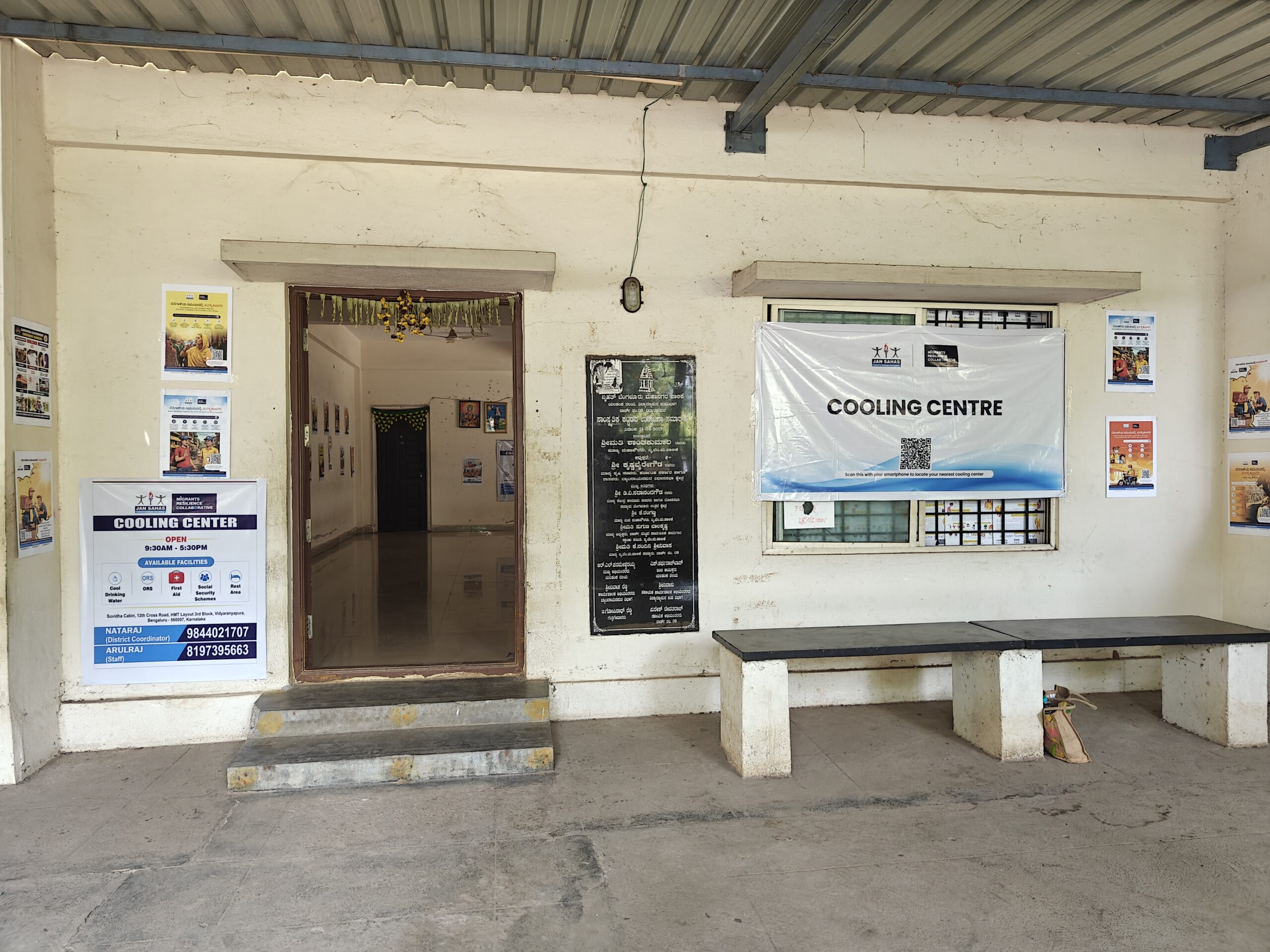
In Bengaluru, the organisation operates three cooling centres, each on a different fringe of the city. Along with the one in Whitefield, located on the construction site of Starworth Infrastructure & Construction Ltd, the MRC operates cooling centres in Vidyaranyapura, housed within the Greater Bengaluru Authority’s (GBA) public facilities, and above an Anganwadi in Allalasandra. They opened on 10 April and were phased out by the first week of July.
Dubey said that the period during which the centres operate varies across cities, reflecting the onset and severity of summer in the region. “The plan to close the cooling centres was formulated in accordance with the weather predictions of the India Meteorological Department,” he said, adding that priority was given to closing centres early in locations where the monsoon arrived sooner and the number of workers was lower. Centres in Mumbai, Kolkata, and Bengaluru were closed first, he said, and the remaining centres will be shut down in phases. “Due to the likelihood of a delayed and weak monsoon in several areas, the plan is to close the cooling centres in those states by the last week of July. These states include Rajasthan, Delhi-NCR, and Uttar Pradesh,” he said.
At the Whitefield site, Ashok knows it is almost lunchtime when groups of workers in orange safety vests and yellow helmets stream past the cooling centre on their way to the canteen. Among them is 35-year-old Krishnakumar, a painter from Ramnagar village in Bihar’s Saran district who arrived in Bengaluru just two months ago after securing the job through a contractor. He told The Migration Story that he discovered the cooling centre when one of the field officers beckoned him inside, saying, “Aao, juice peelo” (Come, have some juice). “We rarely receive this kind of respect and empathy,” he said with a smile.
Although his work often takes him outdoors, Krishnakumar said Bengaluru’s heat is manageable compared to the harsh summers back home. What he values most is the chance to rest in a cool space before returning to work after lunch. “The ORS and glucose are really helpful. I hope they continue providing them throughout the year,” he said, without paying much heed to when or why he feels like drinking it.
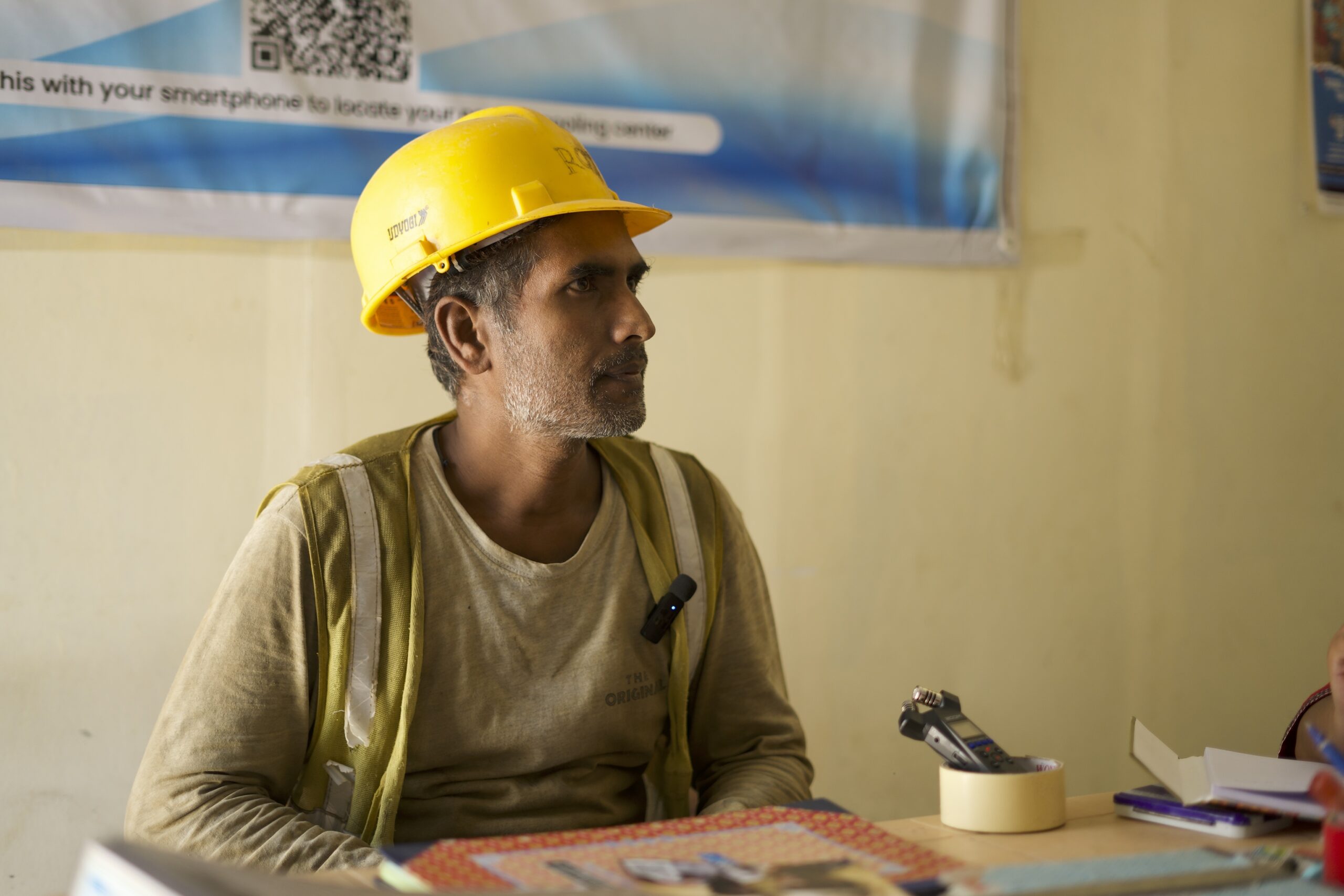
For 40-year-old Phani Bhushan Roy, who has spent eight years working at construction sites across cities including Pune and Hyderabad, the cooling centre’s biggest advantage is far simpler: reliable access to clean drinking water. “At some construction sites, we are expected to drink water from the supply tank, so we end up buying drinking water ourselves and carrying it to work,” Roy, who is originally from Aradha Danga village in Malda district of West Bengal, said. “Having access to filtered water here makes a big difference because staying hydrated is a must for us. The glucose water helps too,” he added.
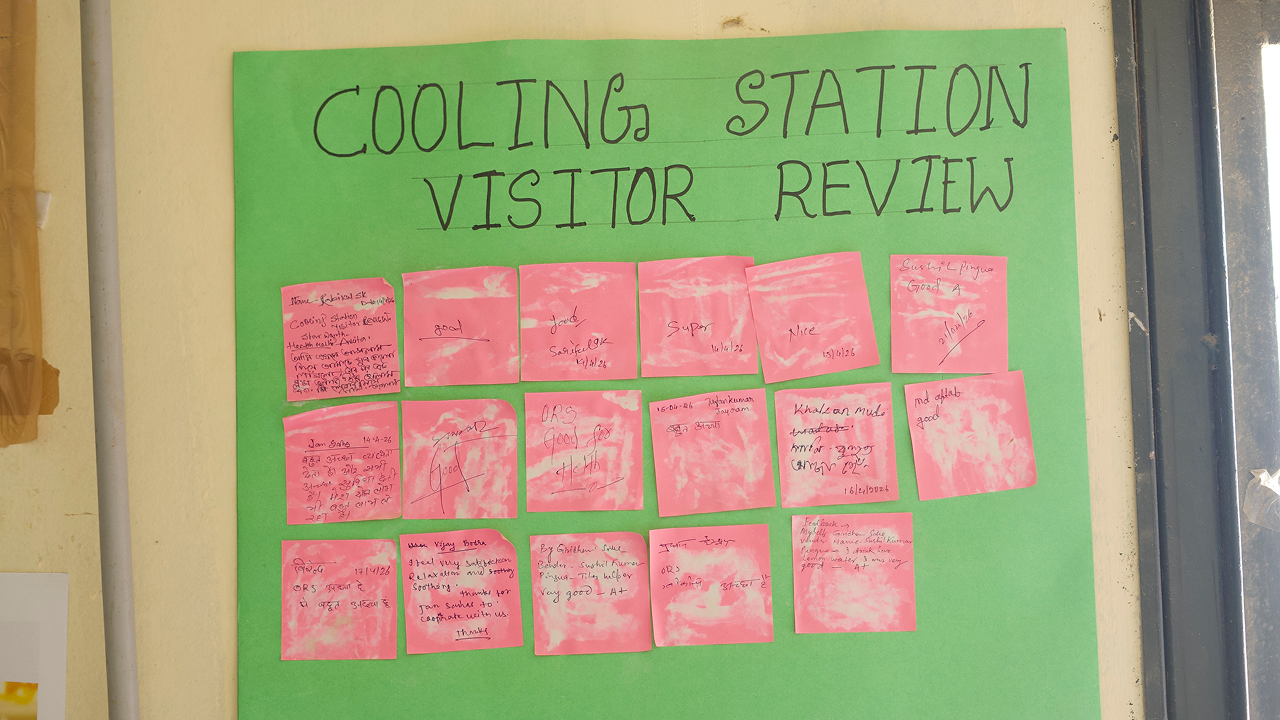
The centre also encourages workers to provide feedback. Ashok pointed to a chart paper covered with Post-it notes. “Many have suggested adding lemonade and chilled drinking water to the list of facilities,” he said. The facility is also equipped with a basic first-aid kit, although Ashok said workers often dismiss heat-related discomfort as part of the job. “Bar benders and carpenters sometimes complain of burning hands during the summer, but they carry on because they’re used to it,” he said, “I keep telling them that heat stress isn’t something to ignore and that heatstroke can become serious at any time, but not everyone listens.”
Since taking charge, Ashok said most workers spend around 10 to 15 minutes after lunch. “When we first opened in April, many workers were excited because they had never seen a cooling centre before,” he said. The footfall, he added, dropped during the elections in West Bengal and Tamil Nadu, as many workers went back home. “It gradually picked up again.”
Tapan Behra, who oversees the workers’ colony at the construction site that houses more than 900 workers, said the response to the cooling centre had been largely positive. “We’ve received good feedback from the workers. At the same time, I haven’t observed any decline in productivity during the summer months,” the 31-year-old said.
However, while the workers interviewed were happy about the presence of the centre, they stated that they could use it only during their lunch break and added that heat-related fatigue could affect them at any time of day. “If we feel too hot or tired, we take a brief break from work on the same floors we are working on,” Rahul Kumar Singh, a 28-year-old painter from Bhagalpur, Bihar, told The Migration Story. Moreover, the centre remains open between 9.30 am and 5.30 pm, closing half an hour before the workers’ shift ends, which means they are unable to avail themselves of the facility after a full day’s work and before they head home.
Dubey said that while most centres operate until 5.30 pm, field officers have the flexibility to determine the final operating hours. “They assess factors such as the centre’s location, the working shifts of its intended users, and the time of day when footfall is expected to be highest, ensuring the centres remain accessible when they are needed most,” he said.
MORE THAN JUST A COOL ROOM
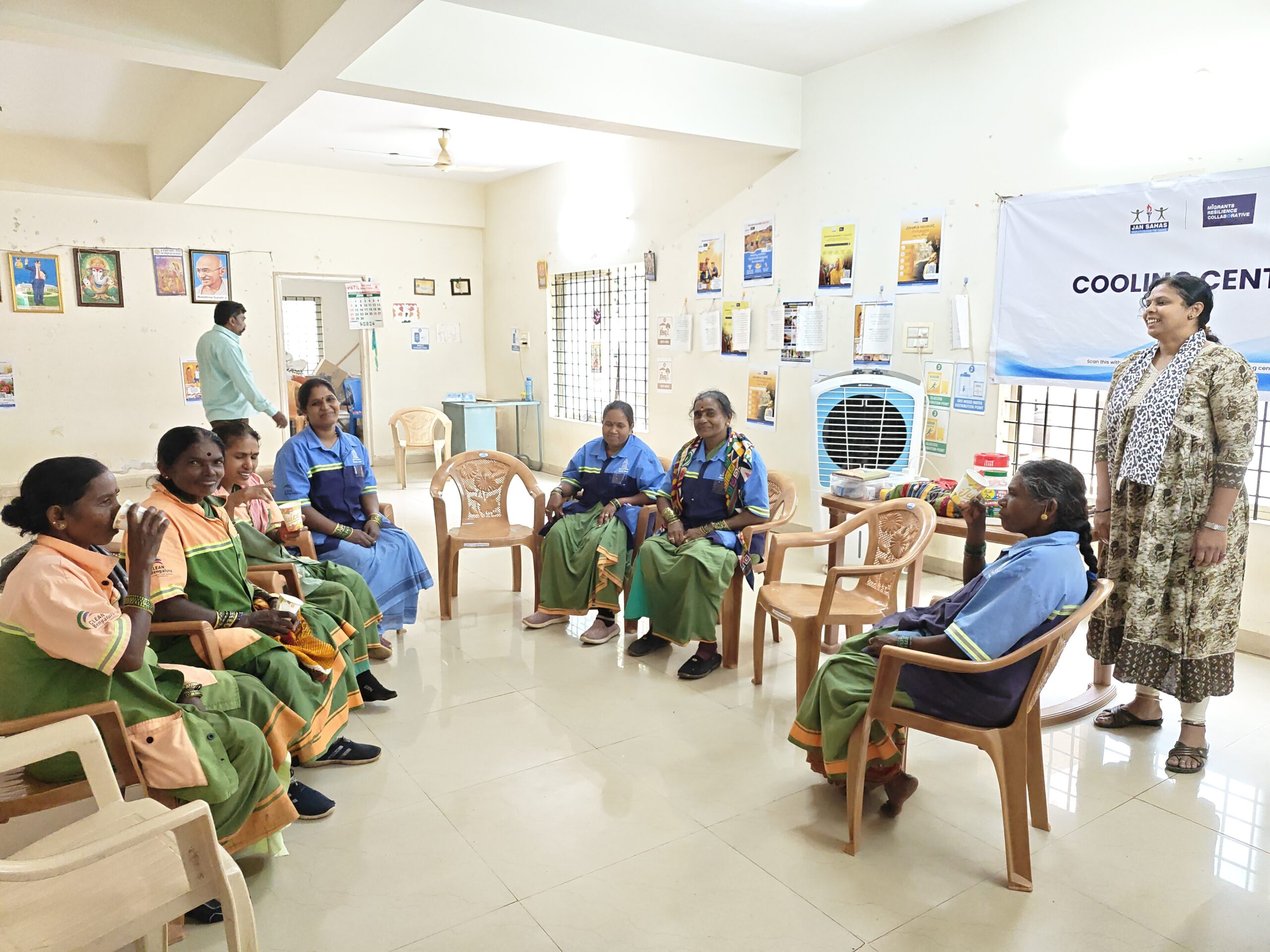
The cooling centre at Vidyaranyapura is housed in the same building as a senior citizens’ community centre and library. It sits alongside other public amenities, including the Indira Canteen, Namma Clinic and the Suvidha Cabin. “The location is ideal because many informal workers, including construction labourers and gig workers, stop here for lunch,” Geetha P.N, who oversees operations at the centre, told The Migration Story.
The centre is open from Monday to Saturday between 9.30 am and 4.30 pm. By around 10.30 am, the centre receives its first visitors, usually a group of middle-aged pourakarmikas, the sanitation workers employed by the GBA and responsible for sweeping streets and maintaining public spaces. They visit the premises each day to record their biometric attendance. “Many of the older women find it difficult to work outdoors during the hottest part of the day. Sometimes, they want to sit in the shade for 10 minutes before they even think about having their packed breakfast,” Geetha said.
“Earlier, we didn’t know the purpose of the centre. But then the in-charge madam explained it to us, so now we make sure to come here every day,” 44-year-old Akkaiamma said. When we asked what she liked most about the facility, she smiled and replied, “The ORS is always ready here,” prompting laughter from her colleagues.
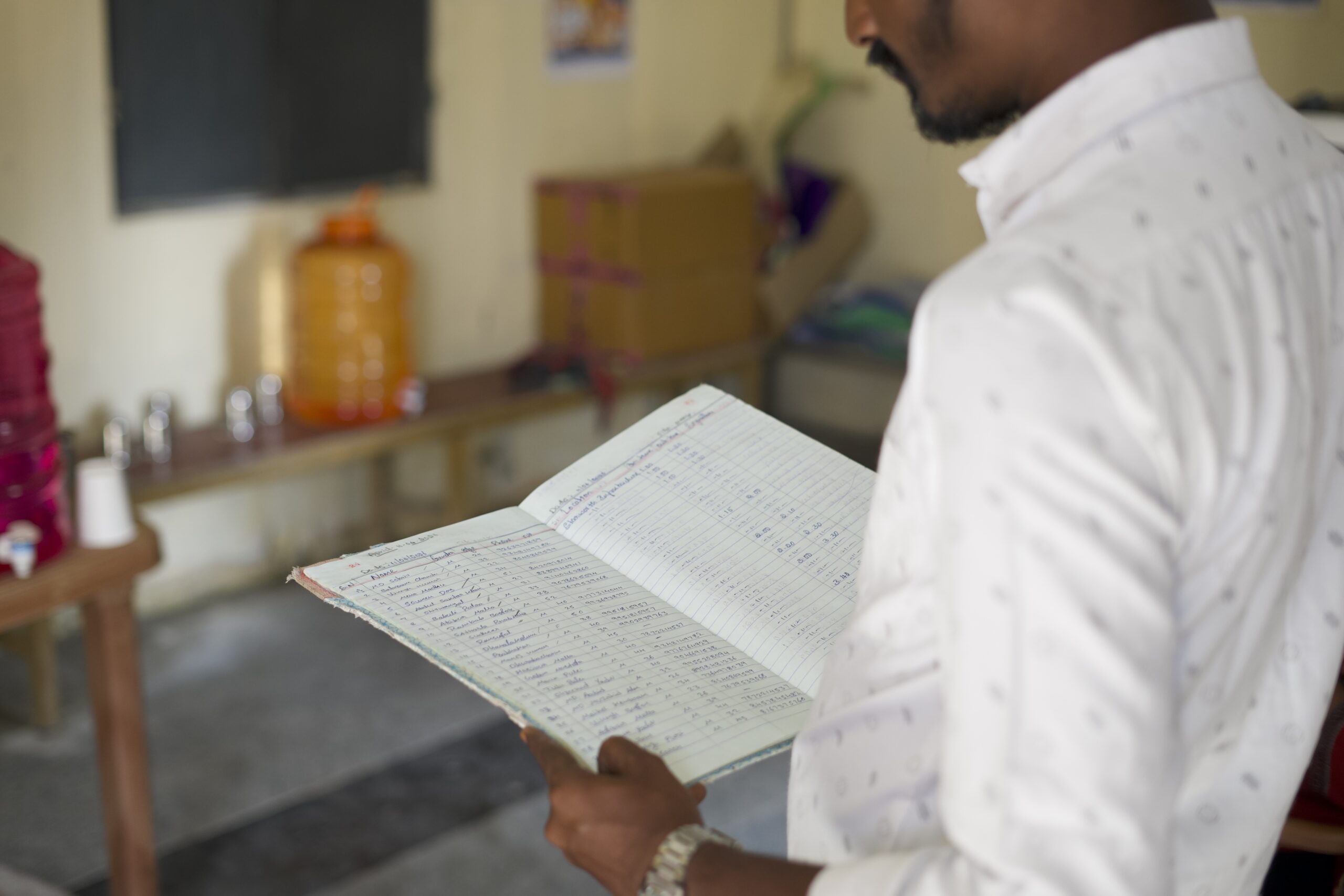
By 11 am, Geetha’s register had already recorded nearly 20 visitors, most of them pourakarmika women. She said that she logs the daily footfall, along with the number of water cans used and ORS sachets distributed, into a mobile application developed by Jan Sahas for its projects at the end of each day.
Exertion and thirst were among the most common complaints Geetha got from the women. “Earlier, they disliked the sour taste of ORS and preferred glucose instead. But we first have to check if they are diabetic before giving them glucose,” she said. Geetha added that for many workers, toiling in the sun had become normalised, and they were unaware of the long-term health risks of heat exposure. We saw heat-awareness posters displayed across the centre. “We encourage them to take short breaks, practise deep breathing and rest in the shade whenever possible,” she said.
The centre has also become a point of access to other forms of support. Basavanthamma, a 52-year-old pourakarmika, told us that it helped her obtain an Ayushman Bharat card, which provides access to government-funded health insurance, and register on the e-Shram portal, which provides social security benefits for unorganised workers. In the two months since the Vidyaranyapura cooling centre opened, Geetha said the facility has helped more than 10 workers apply for the Building and Other Construction Workers card, while around 60 workers have registered for Ayushman and e-Shram benefits. Basavaraja Samshi, the Karnataka State Lead at Jan Sahas, told The Migration Story that enabling better access to social security schemes was one of the organisation’s core priorities. “Integrating these services within the cooling centres was an added advantage,” he said.
NOT A STANDALONE SOLUTION
Even as cooling centres emerge as part of India’s broader heat action and climate adaptation efforts, Abhiyant Tiwari, who leads the Health & Climate Resilience initiatives at NRDC India, a private firm that advises and provides solutions to organisations advancing climate goals, said that they should be viewed as an emergency response rather than a standalone solution. Their effectiveness, he argued, depended as much on accessibility and public awareness. “Infrastructure alone cannot save lives,” he said.
Having played a key role in developing and implementing Ahmedabad’s first Heat Action Plan in 2013, Tiwari believed India should adapt cooling centre models to local contexts rather than replicate those used in the West. “The first step is to map existing infrastructure. For example, cyclone shelters along the coast can be repurposed as cooling centres during the summer, particularly in humid regions,” he said and advocated a more distributed and locally embedded network of public heat-relief infrastructure.
The NDMA guidelines, released in November 2025, outlined strategies for both existing buildings designated as cooling centres and temporary cooling facilities. Tiwari said that old structures should be repurposed as cooling rooms, which “should progressively adopt nature-based solutions through low-cost, sustainable designs like solar energy and graded roofing to provide thermal comfort without increasing emissions or energy consumption.”
Dubey said that after operating a smaller network of centres last summer, when around 12,000 workers used 11 centres over two and a half months, the MRC expanded the initiative.
“This year, the number has already reached around 80,000 across 20 centres,” Dubey said. While the organisation plans to scale up further, Dubey says the biggest challenges are securing formal partnerships and obtaining permissions to repurpose government buildings, as commercial rents in high-footfall locations are prohibitively expensive.
Dubey said that MRC planned to expand selected cooling centres into year-round ‘Resilience Hubs’ to support informal workers affected by extreme climate events, including flooding, inundation, cold waves, and heat. He added that Delhi-NCR and the Mumbai Metropolitan Region had been identified as the preferred locations to pilot this model.
Dubey said that partnerships with platform companies could help identify areas with a high concentration of informal workers, but that they had received limited support from these companies. Shaik Salauddin, Founder President of the Telangana Gig and Platform Workers Union, echoes this concern and questions the long-term impact of short-term corporate initiatives such as Rapido’s Summer Relief Campaign in Mumbai.
“Migrant workers employed by gig platforms often experience giddiness, headaches, and physical and mental stress from riding through traffic and dust to ensure timely deliveries. Cooling centres are a welcome change, but better mapping, rigorous implementation and accountability can go a long way instead of quick fixes,” says Salauddin.
As the MRC began phasing out its cooling centres in Bengaluru, some workers like Akkaiamma were reluctant to see them close. “It would be better if it were available throughout the year,” she said, as Geetha quietly handed her another glass of ORS.
Amoolya Rajappa is an Assistant Professor at the Department of Media Studies at Christ University, Bengaluru. She is also an independent journalist who reports on labour, internal migration, climate change, and displacement in India.