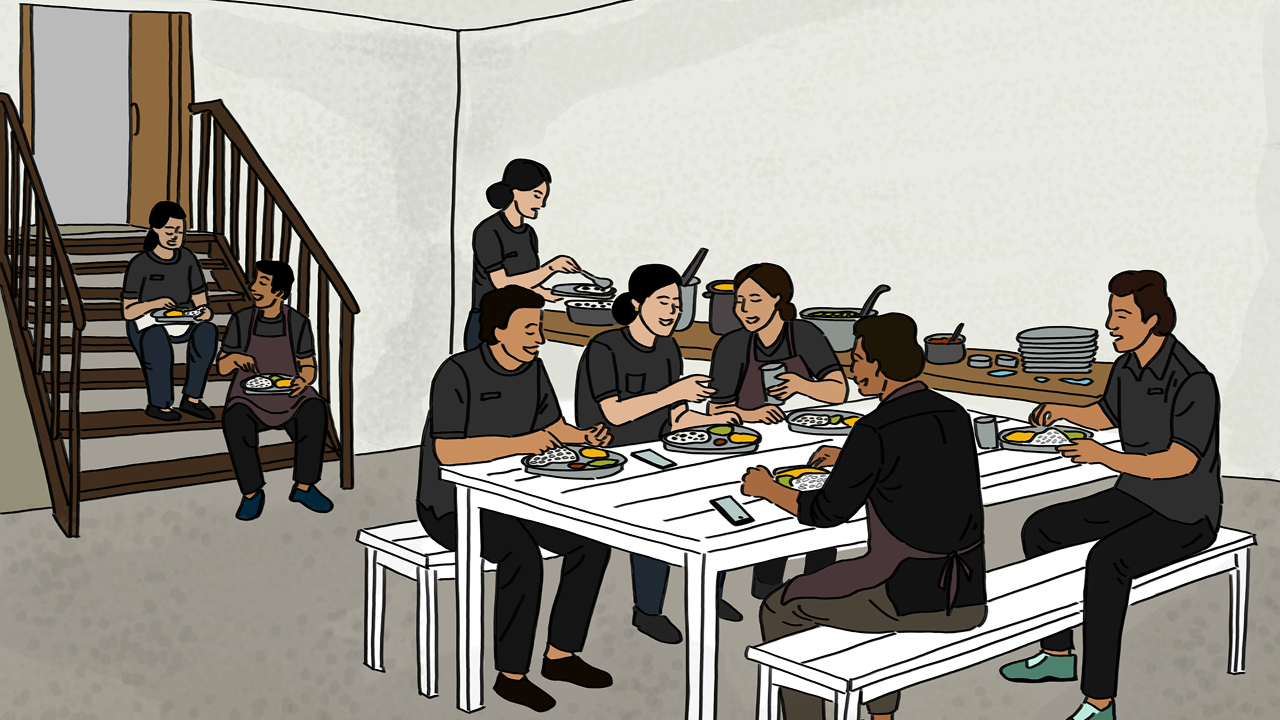
BENGALURU, Karnataka: Just before one in the afternoon, beneath a restaurant in Bengaluru, workers lined up at a wooden counter. Some loosened their aprons as they waited, while others rolled up their sleeves. Steel thalis sat stacked on one side, still wet from washing. Some workers shook off the water, while others wiped the plates dry before taking them to the counter.
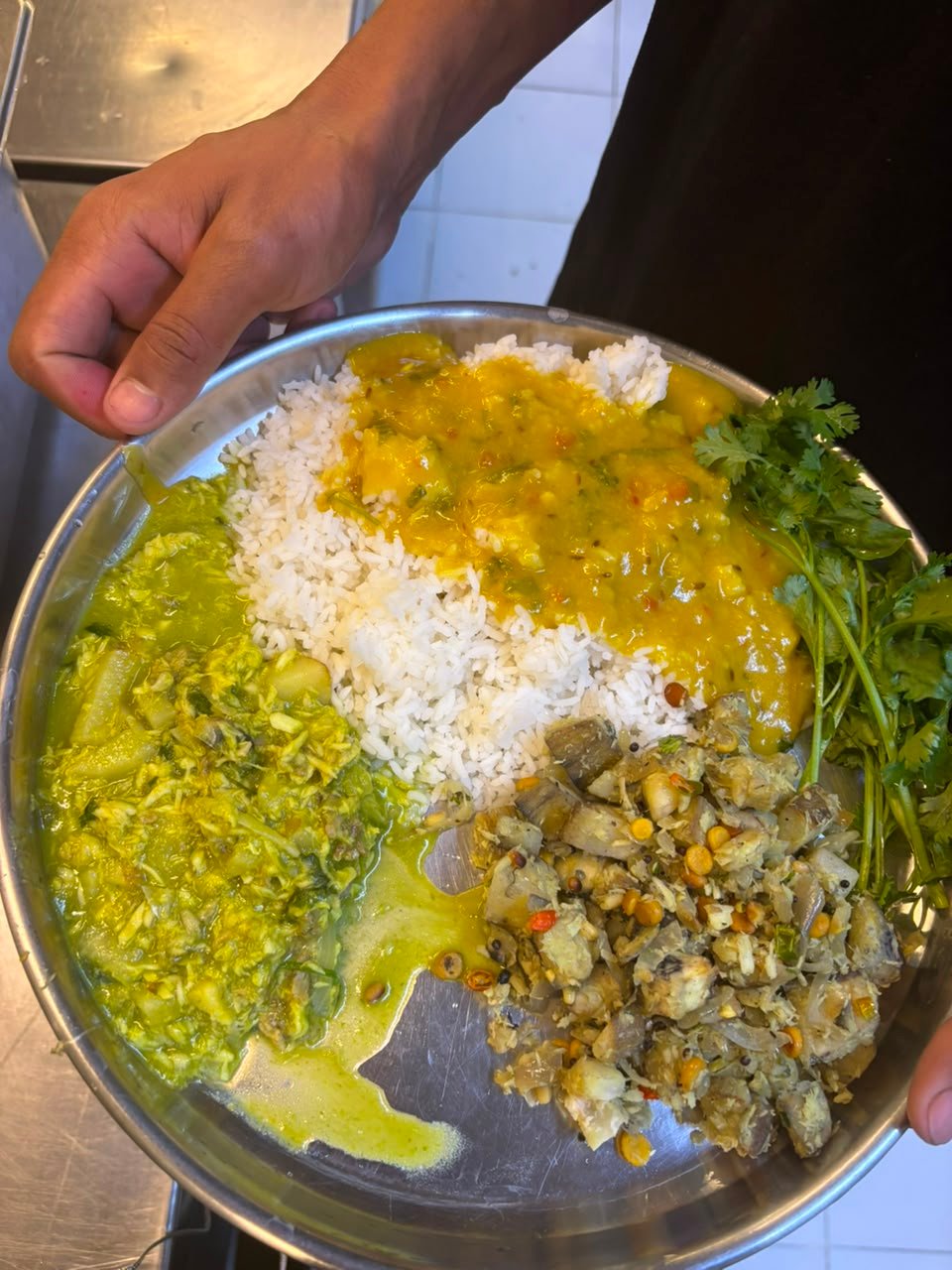
Fayaz lifted each lid, releasing steam. That day’s lunch was white rice, ridge gourd sambhar, lime pickle, raw onion and cucumber. As workers filled their plates, they spread out across the basement. Gracy, Fayaz, and Bobby sat on the bench. Others perched on parked bikes or settled on the stairs. Fayaz mixed his rice, ridge gourd sambhar, and sliced cucumber and onion together without looking down. Across from him, Bobby shaped the rice and sambhar into balls, leaving the ridge gourd. Gracy bit into a piece of ridge gourd from her plate.
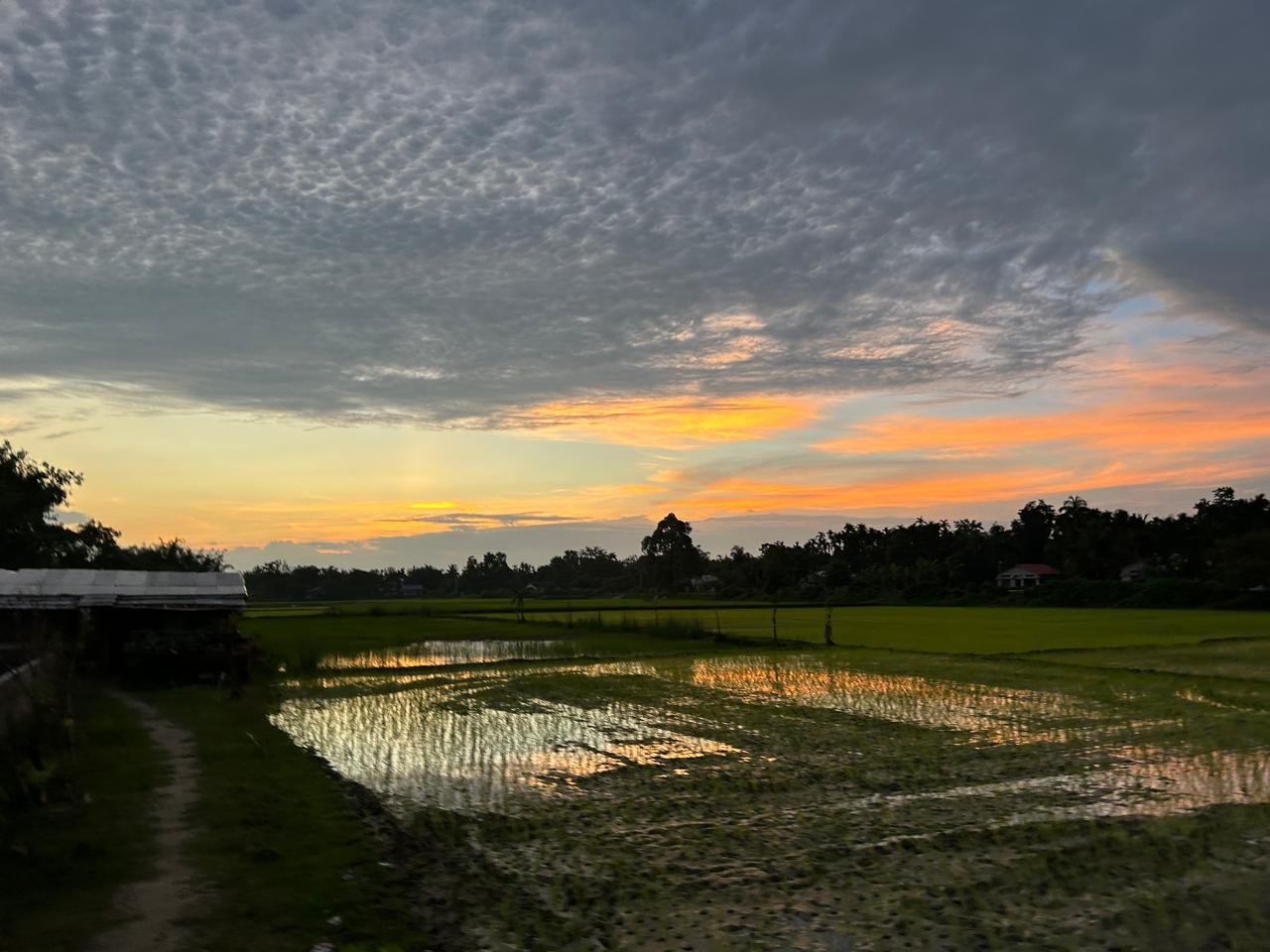
“We cook this very differently back home,” said Gracy, a 23- year-old from Wokha, Nagaland, who works as the head receptionist at a Bengaluru gastropub. “My mother makes it into a stew, with ginger, garlic, and cloves. We’d eat it with rice, looking out at the hills.”
Fayaz looked up and smiled. “Oh, you eat the flesh?” he asked. “Abbu fries the ridge gourd seeds into a snack.”
Bobby joined in. “Ma prepared dal bhat (lentil stew and steamed rice) and ridge gourd gravy with chana dal,” he said. “We ate together, looking over the fields.”
For a few minutes, their conversation took them from the hills of Nagaland to a backyard in Bihar and fields in Assam, making the basement fade away. This vegetable brought them a sense of home.
“Every region has its own typical foods, methods of cooking, souring agents, fats and so on,” said Dr Kurush F Dalal, an archaeologist and culinary anthropologist. “As a result, you build up a region-specific flavour profile in your head. If you cannot meet the requirements of that profile, it does not taste like the food from home.”
Migrant workers form a significant part of Bengaluru’s restaurant workforce. For workers on modest salaries, employer-provided meals can reduce daily expenses and leave more of their income available to send home. A 2021 exploratory survey by the Centre for Budget and Policy Studies found that, across its full sample of migrant workers in Bengaluru, basic expenses accounted for about 45% of monthly income, while approximately 28% went towards remittances.
For Fayaz, staff meals were more than a workplace benefit; they were an economic lifeline. Employer-provided meals and accommodation helped him remain in Bengaluru. “If I had to pay for rent and food, I don’t think I could have stayed,” said Fayaz, who works as a junior chef.
For Bobby, Bengaluru started as a dream. After finishing Class 12 in Biswanath Chariali, Assam, he spent his days with friends, smoking and swimming in the river. “I wasn’t doing anything. I even started stealing, like cigarettes, a little cash, and things from the market.” One morning, he overheard a neighbour talk about his job as a security guard in Bengaluru. “He spoke about the city as a place where people had jobs and money. I wanted that life.”
Bobby started his journey with 1,000 Indian rupees he had borrowed, a spare T-shirt, and a toothbrush. It was his first time at a railway station. Overwhelmed by all the shops and food, he spent most of his money on snacks, cigarettes, and a plate of mutton curry and rice before realising he didn’t have enough for a train ticket. With 300 rupees left, he boarded a train to Bengaluru without a ticket, only to find out a day later that it was actually going to Chennai.
Four days later, tired and hungry, Bobby finally arrived at Krantivirra Sangolli Rayanna (KSR) Bengaluru Station. “Back home was a pond,” he said. “Bengaluru felt like an ocean.” One of the young men he met on the train invited him to visit the tech park where he worked. Bobby found his first job clearing tables in the food court—collecting used plates, emptying leftover food into the dustbin, and wiping down tables.
Nearly 10 years later, Bobby has worked his way from cleaning tables to managing an upscale restaurant. When he first came to Bengaluru, he didn’t know any English, but now he speaks English, Assamese, and Hindi fluently. New recruits often come to him for help, reminding him of his own early days.
For Gracy, Bengaluru was a stepping stone. Growing up in Nagaland she saw many young people from her community leave for jobs on cruise ships and at hotels abroad. She realised that working in a restaurant was the first step. Leaving home was harder than she thought. She cried on the platform before the train left. At Dimapur, she lost her friend in the crowd while boarding, and they found each other again only at Cantonment Station in Bengaluru. For the next 57 hours, she barely left her seat. The only bag she kept opening was the one with roast chilli pork and machihan (a spicy, tangy dried fish chutney from the Lotha tribe of Nagaland). “We still joke that the machihan kept me alive.”
Now, Gracy is a head receptionist. She is still working toward her dream of joining a cruise ship.
Fayaz told The Migration Story that leaving his hometown of Bettiah, Bihar, was a way to escape the burden of his caste. “Sometimes,” he said, “the weight your surname carries is a lifelong burden.” Before he boarded the bus, his Abbu gave him a box of fried ridge gourd seeds and an envelope with 2,500 rupees. Written in Urdu on the envelope were the words “something to get you started”.
Fayaz first took a bus to Patna. With no train tickets available for two days, he counted every rupee, stayed in a dormitory near the station, and timed visits to relatives’ homes around mealtimes. “It was awkward,” he said. On the train, he met a cook from Bengaluru who offered him a place to stay until he figured things out. “I was like a child in a new world,” he said. “But deep inside, I was scared. At the end of the day, I was following a stranger.”
Six years after arriving in Bengaluru, Fayaz had moved from restaurant service into the kitchen and now works as a commis 1, a junior chef in a professional kitchen. The city he once saw as an escape became the place where he built his career. “ I now earn 23,000 rupees a month, send money home and imagine a future in Bengaluru that once seemed out of reach,” he said. “ My work is giving me recognition.”
Ingredients
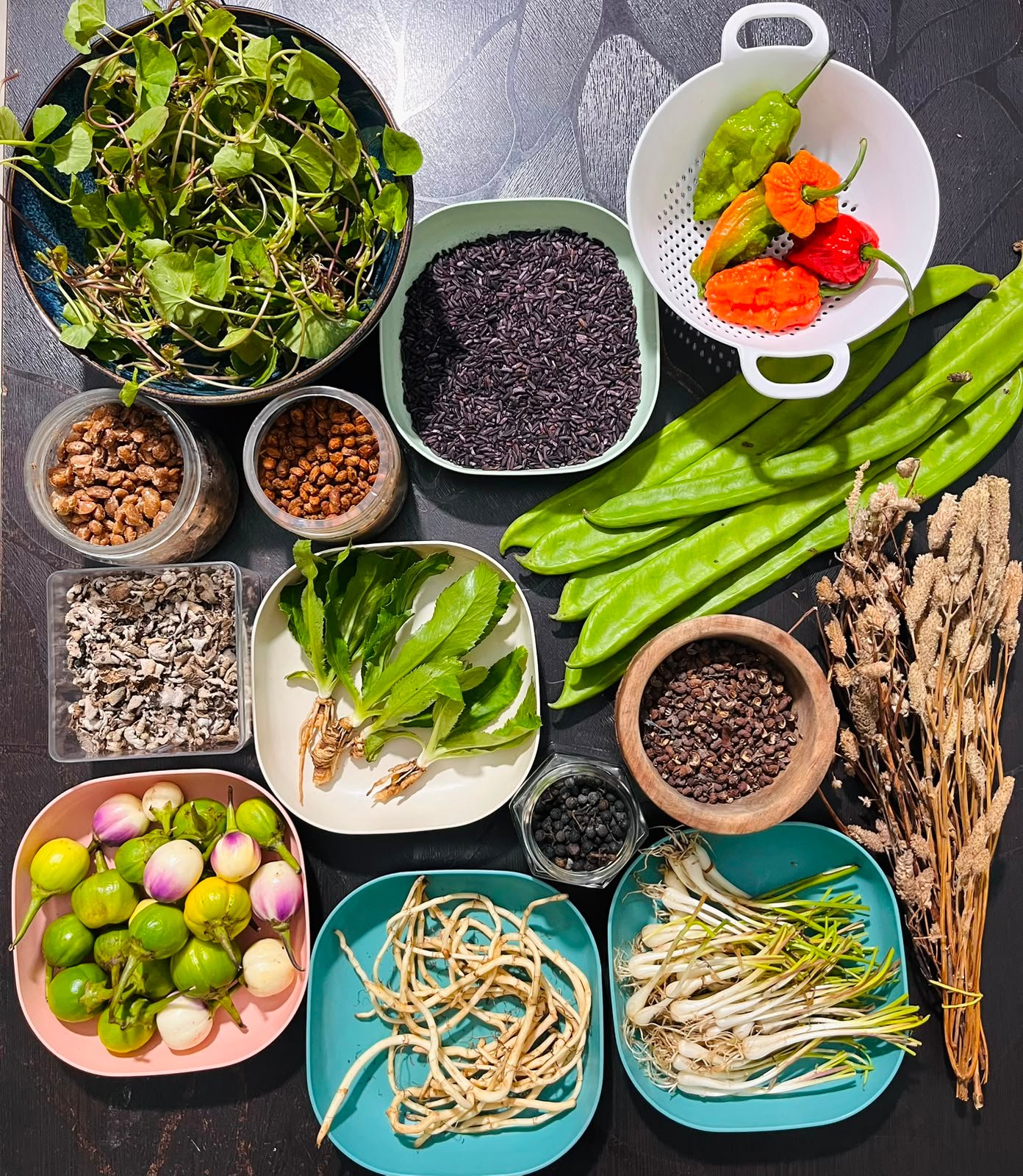
10 green chillies, or more as per your spice preference
2-medium-sized eling mas (dried fish)
Method
Wash the dried fish well and cut it into small pieces. Boil the tomatoes, green chillies, dried fish and salt in water. Once the mixture comes to a boil, add the bitter gourds. Add the brinjal towards the end as it cooks quickly. When everything is soft, pound it together with the garlic using a mortar and pestle until it forms a coarse chutney. Taste and add more salt if needed. Gracy’s family usually eats it with steamed rice, freshly boiled vegetables and whichever pork dish is prepared
for the day.
A few more staff members came into the basement, leaving no space on the bench. The storeroom door closed with a bang, the generator hummed, and two-wheelers roared. They served themselves and stood by the two-wheelers.
A young recruit, new to Bengaluru, pointed at the sambhar, a South Indian lentil stew. “Isko kya bolte hain? (What do you call this?)”
“Sambhar,” Bobby replied. “ Aadat kar le, bhai; yaha yeh bahut khate hain (Get used to it, brother, they eat this a lot here).”
Fayaz and Gracy laughed. Years ago, Bobby had looked at his first meal in the city—a plate of idli-sambhar—with the same doubt.
“I saw a white blob floating in dal with all the vegetables mixed together,” Bobby said. “Back home, dal and sabzi were always separate. I remember thinking, ‘Why would anyone cook like this?’”
But over time, sambhar became his comfort food.
Sibi Venkataraju, co-founder of microbrewery Toit, told The Migration Story that meals and accommodation are “a basic necessity to be able to hire and retain staff.” The weekly menu is planned by the executive chef and is designed to offer a mix of dishes that changes every four weeks. Given the diversity of the workplace, the food is kept relatively neutral in terms of spice and taste. “Preferences are hard to manage for the chef and team,” he said. Staff who want their food spicier are provided pickles and sauces.
Quality is monitored through regular audits, and everyone from the founders to the corporate staff eats the same food. “In general, it comes down to asking the people who run the business if they are okay to eat the staff meals every day. If yes, you can be sure of reasonable satisfaction levels among the staff,” Venkataraju said.
Bobby learned to enjoy South Indian dishes such as rasam, palya, kootu, and mor kuzhambu. “Adjust maadi” (please adjust) is now one of his favourite phrases.
Gracy laughed about how adjustment had its limits. “Adjust aagala” (I cannot adjust),” she said. “I eat spicy food, but our spice comes from chillies, not masala. Four years later, masalas are still difficult for me.”
For Gracy, food was just one part of adjusting to a new city. For the first two months, she lived in Murugeshpalya, sharing a room with other girls from Nagaland, Mizoram, Manipur, and Darjeeling. “It was comforting and not comforting at the same time,” she said. “You saw people who looked like you and spoke your dialect. You even smelled familiar foods. But the city was crowded. Back home, there were valleys and space between houses. Here, you look out your window and see a wall, or you hear someone bathing and singing.”
Gracy now lives with a young woman from Manipur, who showed her a small shop in Austin Town that sells bamboo shoots, dried red chillies and other ingredients used in Naga cooking. Gracy cooks two to three times a week, preparing dishes she grew up eating, such as galho, beef with fermented soybean, and boiled mixed vegetables.
Finding the shop was one of the happiest moments of her time in Bengaluru. ‘Walking through its aisles and seeing familiar ingredients immediately reminds me of home and of shopping with my mother and sisters,’ she said.
Dalal described recreating familiar food as being about more than the final act of eating. “The entire process is home, and then eating it is home. That is how you keep a slice of home alive hundreds, if not thousands, of miles away,” he said.
For Fayaz, adjustment also meant understanding the unspoken dynamics within a restaurant. At one of his earlier workplaces, where he was a server, he noticed that working in the kitchen came with small advantages around food. “Every now and then, the cooks would make something from leftover meat or vegetables that would otherwise be thrown away,” he said. “I felt they had access to food in a way servers didn’t unless you had a good relationship with the cooks. If I was late for the staff meal on meat days, I was often left with the gizzard, liver, or neck. It was one of the reasons I decided to move from service into the kitchen.”
While they ate, a small goods van rumbled into the basement. The security guard paused his meal and watched as sacks of rice and crates of vegetables were carried into the storeroom. The new recruit scraped the last of the rice and sambhar from the buffet trays. By now, lunch was almost over.
As the staff cook cleared the buffet containers, the three rinsed their plates, stacked them, and moved closer to the single standing fan. With 20 minutes left before duty started again, Bobby, Fayaz, and Gracy took out their phones. Bobby showed them clips of a stand-up comedian mimicking Bengaluru quirks, and the three burst out laughing. Gracy called her sister, and Fayaz played some Bihari music.
Slowly, the basement emptied. Fayaz buttoned his chef’s coat, put on his cap, and splashed water on his face. Gracy put on her jacket and used her phone’s camera to reapply her makeup. Bobby rolled up his sleeves and sprayed deodorant.
Then, Bobby’s phone rang. He knew what his mother’s first question would be. “What have you eaten today?” He looked around the basement and saw the last few workers finishing lunch. “Sambhar and rice,” he said.
The names of the workers have been changed to protect their identities.
Pratima Chabbi is a Bengaluru-based writer whose work explores food, labour and culture. She previously worked in the food and hospitality industry and is the author of a children’s picture book and The MTR Story: A Labour of Love