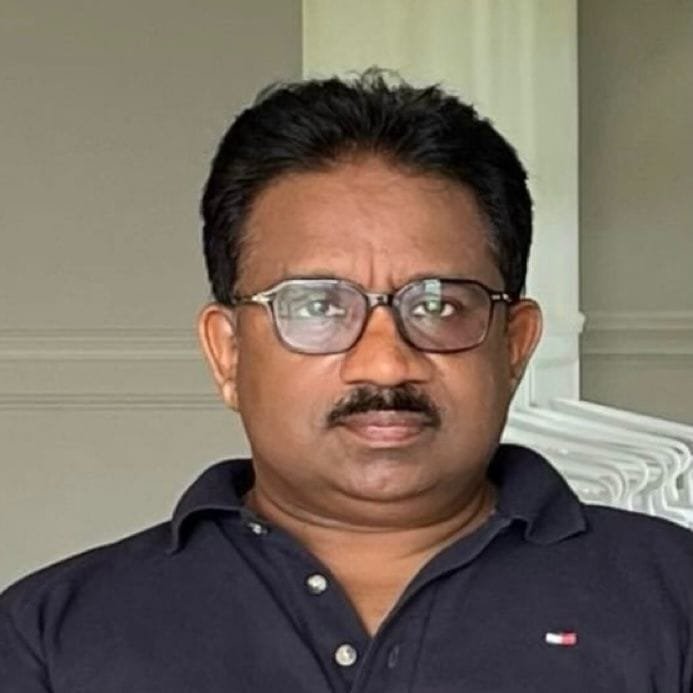
DUBAI, United Arab Emirates: Sudhakar Govindan measures the price of an Indian passport differently from the government. Officially, renewing a passport costs 450 Emirati dirhams. For him, the real price is closer to 620 Emirati dirhams.
The 38-year-old construction worker has been in Dubai since 2021, working on civil projects across the United Arab Emirates (UAE). He must take a day’s leave, travel from his labour accommodation on the outskirts of the city to the passport service centre, and pay the additional charges that accompany the application. The renewal, he calculates, costs him nearly 11 days’ wages, or the equivalent of what he would save in two months.
Sudhakar earns 1,700 Emirati dirhams, nearly 44,000 rupees, a month. His employer provides accommodation and one meal a day. Every month, he sends about 950 Emirati dirhams to his family in India, spends roughly 450 Emirati dirhams on his own expenses and is left with savings of around 300 Emirati dirhams.
“It is too much,” he told The Migration Story in July, weeks after India’s Ministry of External Affairs (MEA) announced a hike in renewal fees for passports. “There are many here who earn even less than I do,” Sudhakar said.
The fee for a standard 36-page passport rose to 2,500 rupees from 1,500 rupees this month. For Indians living in the UAE, the cost of renewing a passport increased from 285 Emirati dirhams, roughly 7,125 rupees, to 450 Emirati dirhams, around 11,700 rupees.
SAME DOCUMENT, DIFFERENT PRICES
In response to a query in the Lok Sabha on July 24, 2026, the MEA said that the “increase in passport fees was unavoidable” and cited higher administrative costs, upgraded security features and modernisation of the Passport Seva system. But Indian citizens living abroad must pay over four times more than those living in the country—11,700 rupees as compared to 2,500 rupees. It is even starker when it is seen as a proportion of income in India. Sudhakar’s younger brother Murali, who is a carpenter in Mumbai, will also renew his passport later this year and will have to pay 2,500 rupees. At his daily wage of about 1,400 rupees, renewing his passport will cost him less than two days’ work.
YA Rahim, former president of the Indian Association Sharjah, told The Migration Story that complaints about the disparity between domestic and overseas passport fees have existed for years. “People have been paying four times more for a long time,” he said. Until June, renewing a passport in India cost 1,500 rupees, while those in UAE had to spend roughly 7,125 rupees.
This correspondent wrote to the MEA asking them about this disparity. We will update our story when we receive a response. The Indian Embassy at Abu Dhabi provided a circular citing the new rates but did not offer an explanation for the disparity between the fees paid by Indians abroad and those living in India.
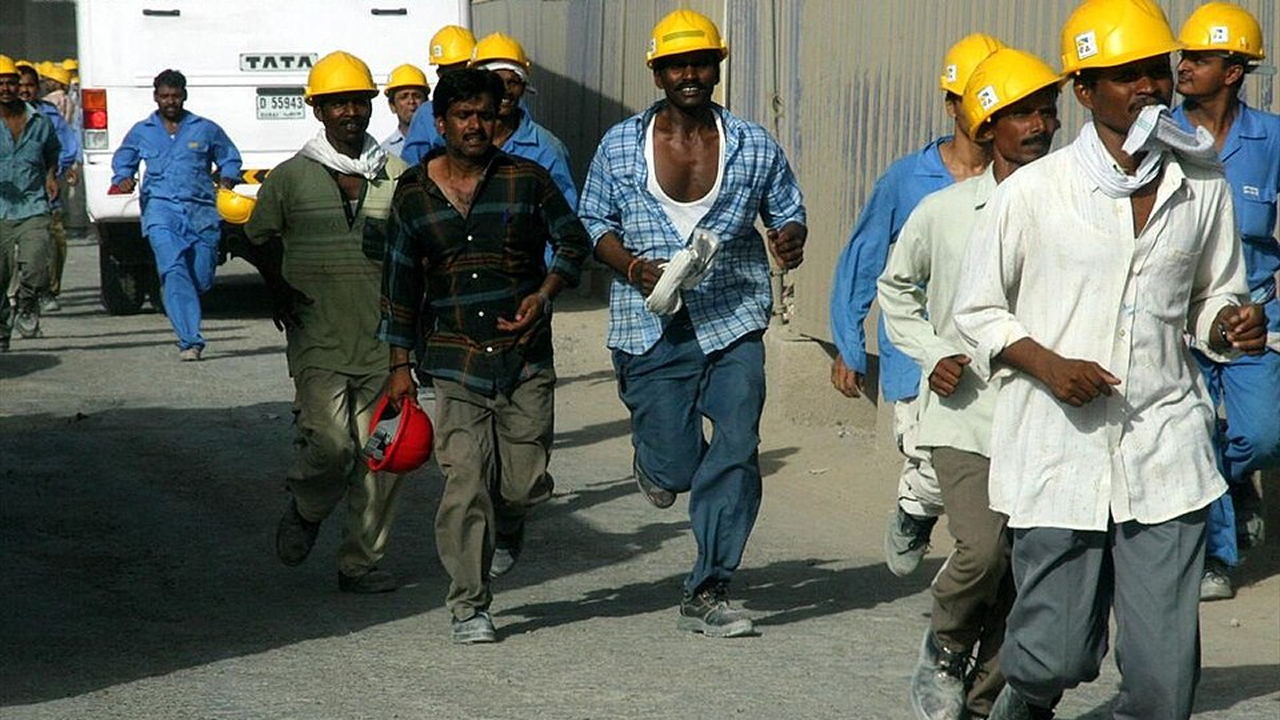
The Gulf countries are home to the largest overseas Indian community in the world, numbering nearly 4.5 million residents. In 2024-25, Indians abroad sent home 135.46 billion US dollars—the highest remittance inflow in the world. The Gulf countries contributed a substantial share.
The majority of Indians working in Gulf countries are not highly paid professionals but workers whose monthly earnings often fall between 800 Emirati dirhams and 3,000 Emirati dirhams. The money they send home pays for their children’s education, medical bills, housing loans, and everyday household expenses. For many of them, every dirham already has a purpose before the month begins.
Had Sudhakar renewed his passport before July 1, he would have spent around 165 Emirati dirhams less—more than half of what he normally saves in a month.
Anil Kumar, from Kerala’s Kozhikode district, knows that arithmetic well. His monthly salary of 1,200 Emirati dirhams has remained unchanged since he started working at a grocery store in Sharjah several years ago. After paying rent, food expenses and sending money every month to support his family, he said he barely covers a month’s contingencies. “In between all this burden, now this too,” he told The Migration Story, referring to the passport fee hike.
Sara John, a nurse in Sharjah who has lived in the UAE since 1999, also echoes a similar sentiment. “We manage. But there’s not much left to save,” she said. Her husband travels frequently to India to care for his elderly mother and uses a 60-page passport, which now costs 630 Emirati dirhams. “We are managing it because we have to. Even if it is expensive, we somehow find a way,” she said.
STAGNANT WAGES AND THE HIDDEN COSTS OF RENEWAL
For many workers, the fee hike is only the beginning. The revised structure has prompted concern among Indian community organisations in the UAE. Rahim said that the Indian Association Sharjah had planned to raise the issue formally with the Indian authorities after reviewing the revised fee structure. “We have already conveyed our concern to embassy and consular officials,” Rahim said, but added that they had not yet submitted anything in writing.
Dr Puthur Rahman is the president of the Indian Social Club in Fujairah and head of Global KMCC, which provides welfare support to Indian workers across the Gulf. He told The Migration Story that applicants had to pay a service charge and contribute to the Indian Community Welfare Fund. “The passport service centres also collect their own service charges,” he said.
Sudhakar said that he will have to spend an additional 170 Emirati dirhams to renew his passport, including the cost of transport to the service centre, a meal outside his usual accommodation, and the wages he will lose for taking the day off. His passport, therefore, will effectively cost about 620 Emirati dirhams. Had he renewed it before July 1, he would have spent around 165 Emirati dirhams less—more than half of what he normally saves in a month.
However, it’s not just the hike in passport fees that is causing distress. Sudhakar said that his salary has barely moved. During his early years in Dubai, he received annual increments of 50 Emirati dirhams. Over the past five years, however, his wage has increased only by 200 Emirati dirhams, around 12%.
The International Labour Organization has documented a similar pattern globally, with wage growth failing to keep pace with rising living costs for many workers. Salary surveys in the Gulf (including Hays Middle East recruitment data and PayScale analyses of construction and service sector wages) point in the same direction: meaningful pay increases remain limited outside higher-income professions.
Sudhakar and Anil said that inflation and near-stagnant wages had made it harder to send money back home. Consumer prices in June 2026 were 5.5% higher than in the same period last year. Food prices, utilities, and rental costs have outpaced wage growth by a substantial margin. The effect is cumulative. Monthly finances get tighter with each passing month. Against this backdrop, a passport renewal ceases to be a routine administrative expense and becomes another financial hurdle for workers to surmount.
MORE THAN A TRAVEL DOCUMENT
To many Indians living at home, a passport is used occasionally. For Gulf workers, it is part of everyday working life. Residence visas, work permits, travel to India, re-entry into the UAE and most dealings with immigration authorities depend on it. Without a valid passport, employment itself can become uncertain.
Sudhakar recalled a colleague who had misplaced his passport while living in workers’ accommodation. “He spent a lot of money getting another one,” Sudhakar said and added that the process was also time-consuming.
Rahman has seen similar cases repeatedly through his welfare work. “We meet workers who lose passports in floods, fires and other accidents. Most of the time we help them replace or renew the passport because they cannot manage the financial burden alone. Losing a passport in a foreign country also causes enormous mental stress,” he said.
Sudhakar sends nearly two-thirds of his salary home every month. Yet the document that allows him to do so costs him several times more than it costs his brother in Mumbai.
Under the revised fee structure, replacing a lost or damaged passport now costs 900 Emirati dirhams through the normal process and 1,350 Emirati dirhams under tatkal, before additional service charges. For many workers, that is more than a month’s salary.
Rahman highlighted a case of a domestic worker whom they had helped to renew her passport. Rahman said that she approached their organisation last year after learning that her mother in India was seriously ill and wished to return home immediately. He added that her work visa was about to expire and her passport had expired six months earlier because she could not afford to renew it on a salary of 800 Emirati dirhams.
Community leaders believe that the administrative costs associated with overseas processing can be recovered in several ways, including service charges and consular fees, which would make the system more equitable. They point to countries like the United States of America, the United Kingdom and China, where passport fees remain largely unchanged, and applicants pay additional service charges where required.
Rahman argued that any new policy should pay particular attention to lower-income migrant workers and added that the demand was not to eliminate fees. “It is about whether the same pricing structure should apply equally to a software engineer earning several thousand dirhams a month and to a construction worker earning 1,700 dirhams,” he said. Rahim said that passport affordability was one of several issues that increasingly affected lower-income workers. Both believe that an affordability assessment should have been conducted for low-income migrant workers before the revised fee structure was approved.
They also point to Bangladesh, which has adopted a differential pricing approach. Under Bangladesh’s current passport fee structure, workers and students applying through diplomatic missions abroad pay significantly lower fees than general overseas applicants for the same passport. The rationale is straightforward: migrant workers form the largest single group of passport users in Bangladesh’s diplomatic missions. They generate the highest remittance volumes. But they are also the least able to absorb steep fees “Bangladesh’s model isn’t perfect, but it shows that differential pricing for migrant workers is possible. India could learn from it,” Rahman said.
Sudhakar sends nearly two-thirds of his salary home every month. Yet the document that allows him to do so costs him several times more than it costs his brother in Mumbai. The discussion of passport fees extends to a larger question about citizenship in an age of migration. Should the cost of the same national document vary so sharply depending on where a citizen happens to live?
For workers like Sudhakar, the calculation is not measured in rupees or dirhams, but in days of labour, delayed savings, and the quiet arithmetic of migration—where every added expense means something else must be put on hold.
K.T. Abdurabb is a Gulf-based Indian journalist with more than 35 years of experience covering the Middle East. He has held editorial positions with Khaleej Times, Gulf Today and Arab News.