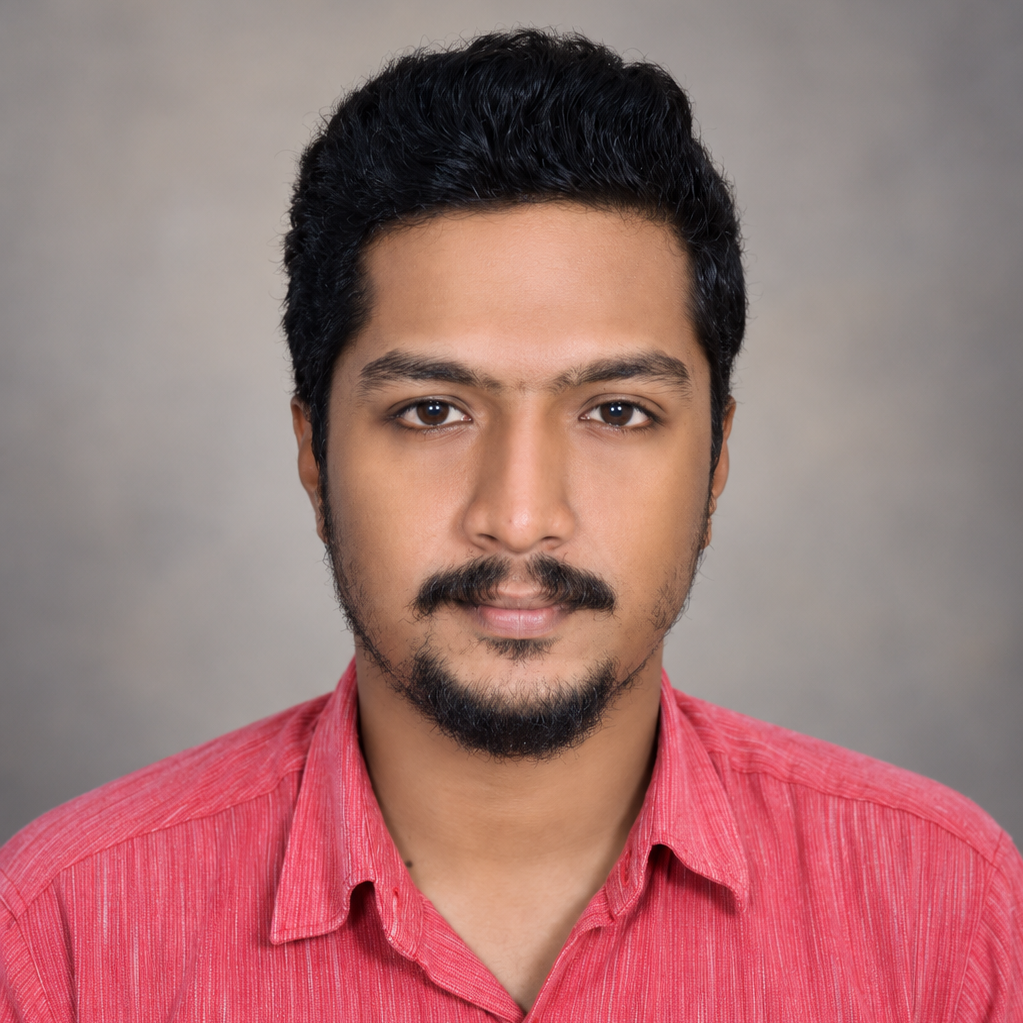
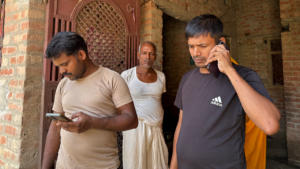
CHANDIGARH: “I don’t have a name,” Amith S. said as he introduced himself.
Born in Chandigarh to Tamil labourers from Virudhachalam in Cuddalore district, he was named Thoondikaran after the family deity. At primary school, a teacher who could not pronounce his name decided to call him Amith, after the teacher’s own son. It has followed him onto every document since.
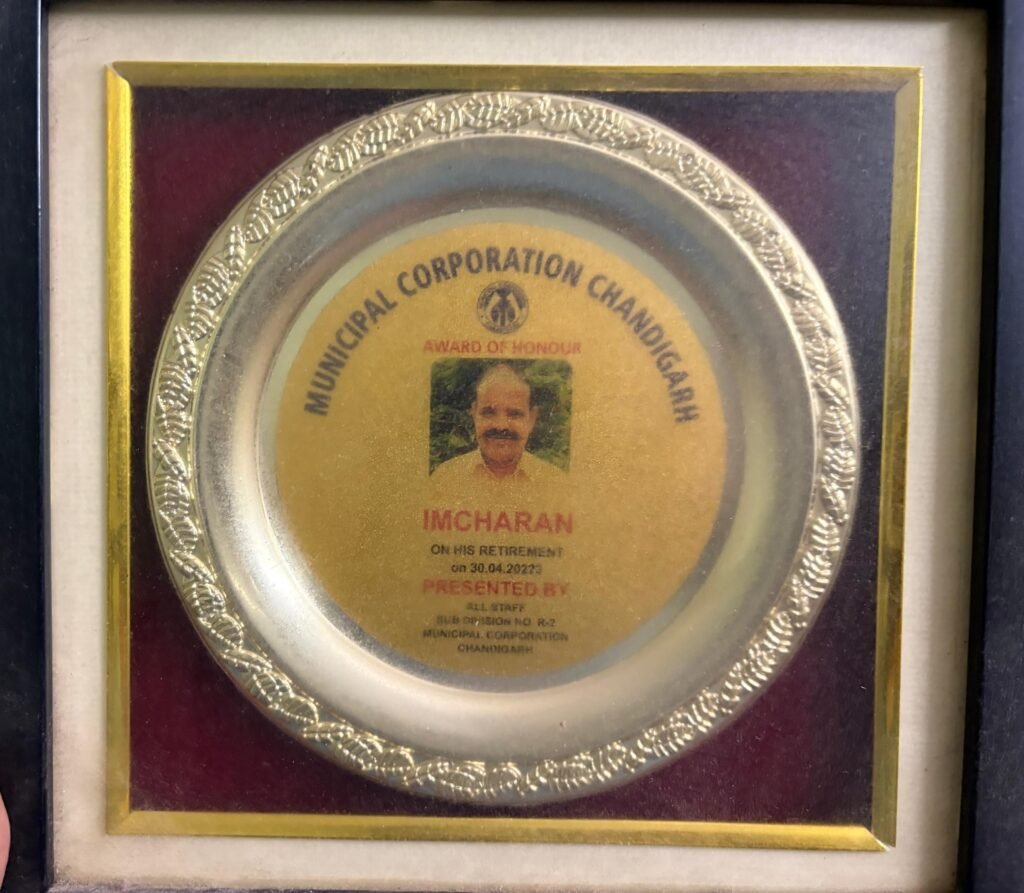
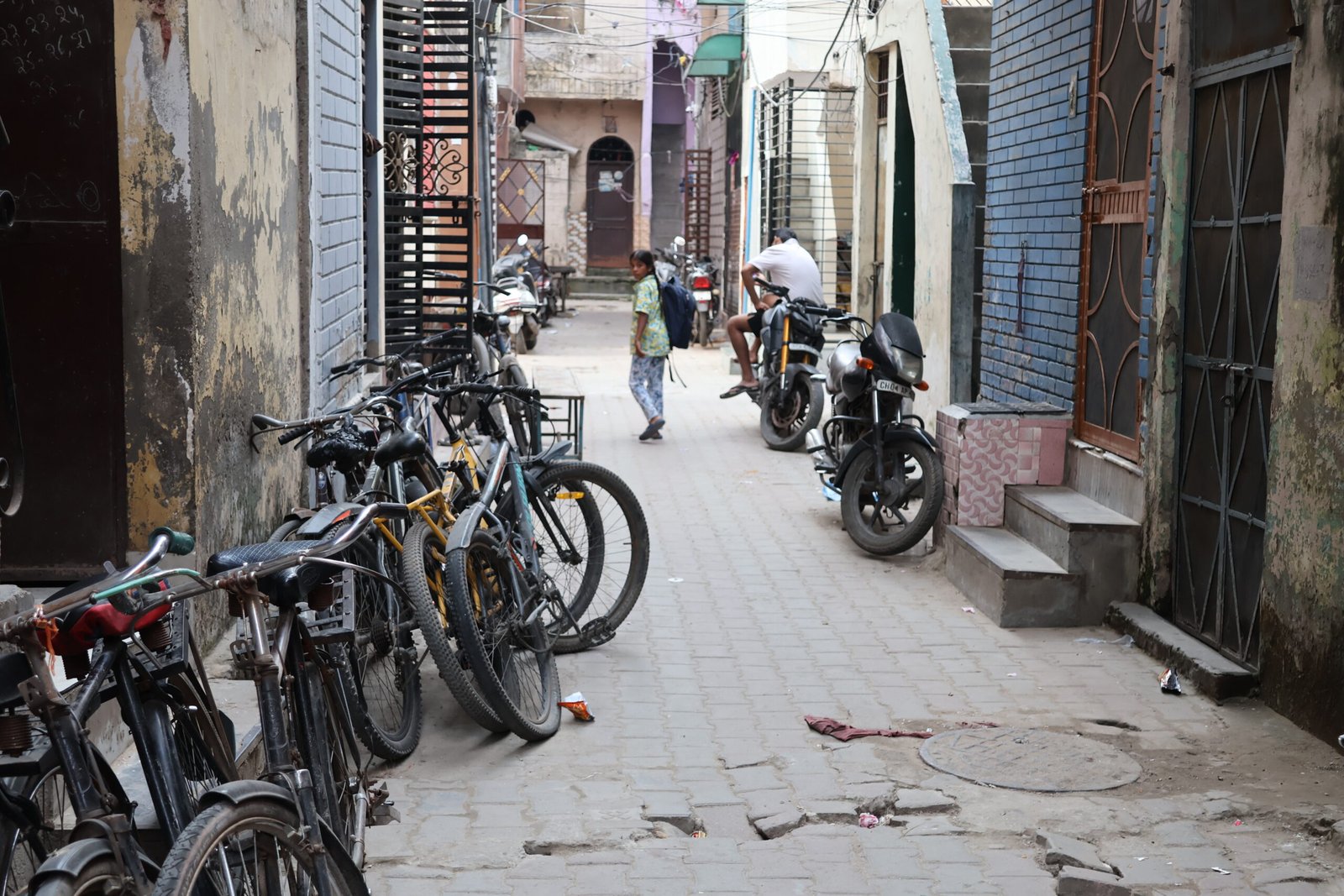
In the 11 Tamil settlements on Chandigarh’s edges, nearly every family has a version of this story. In the records, Anbazhagan became Amabalkar. A worker named after the actor and chief minister M.G. Ramachandran became Imcharan. Vadivel became Vadi Lal, Palanivel became Panivel, Anjalai became Anjali.
“When they said their name in Tamil, the [clerks] would write it in Hindi,” said K. Ramakrishnan, 81, who taught Tamil at Panjab University from 1967 to 2001. As most of those who migrated to Chandigarh in the 1950s and 1960s, didn’t know Hindi, they couldn’t correct them. These misspellings still sit in service books and pension files.
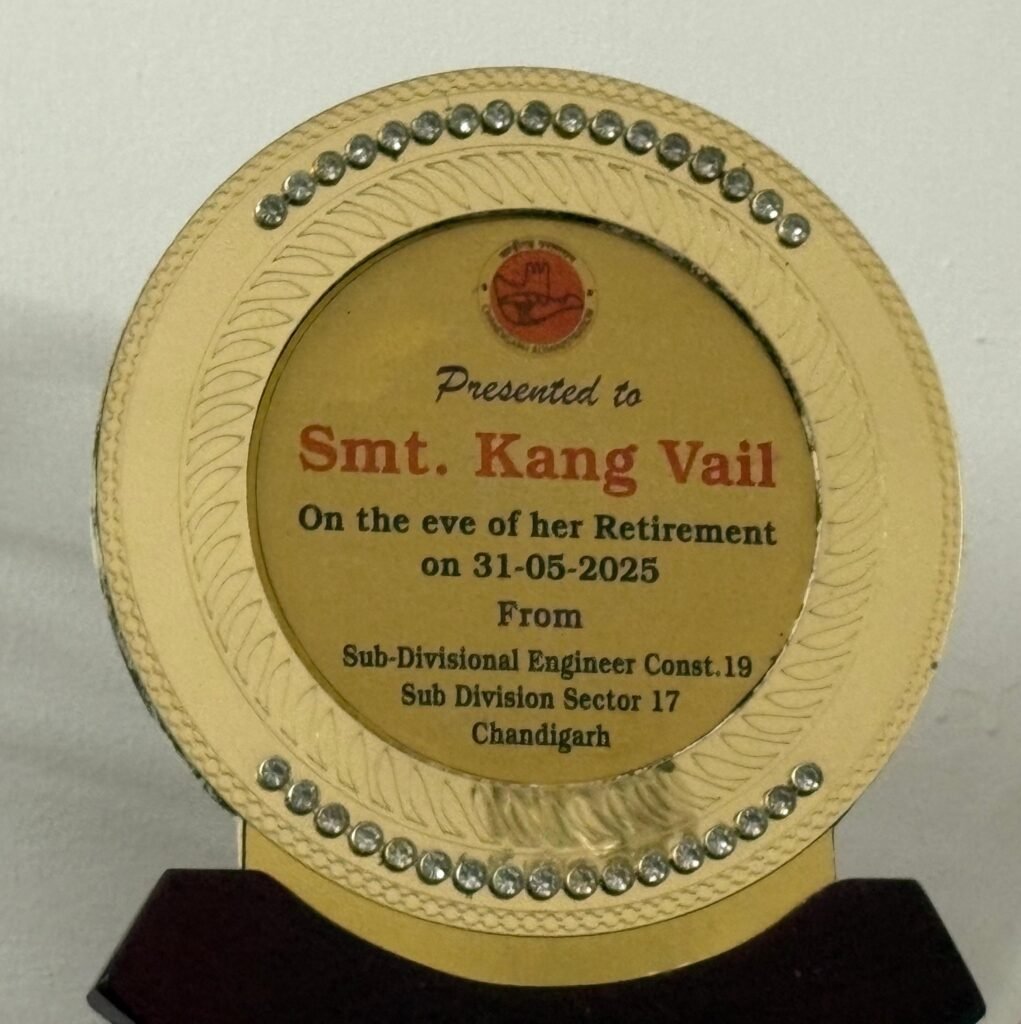
Ages were guessed too. “Almost no one knew their date of birth, so some officers fixed our ages as they wished,” said V. Vadivel, 64, a retired Public Works Department (PWD) employee in Vikas Puri. Gangai Ammal, 55, whose name was recorded as Kang Vail, was given an older age and retired before her time; others retired late. “We were illiterate at those times,” she said. “What to do?”
Chandigarh is among India’s most studied cities, but the labourers who laid its roads and planted its trees barely appear in that record. 70 years on, the first generation is retiring, dying or returning to villages in Cuddalore, Kallakurichi and Perambalur. Their Hindi-speaking grandchildren are the last who will hear this history first-hand.
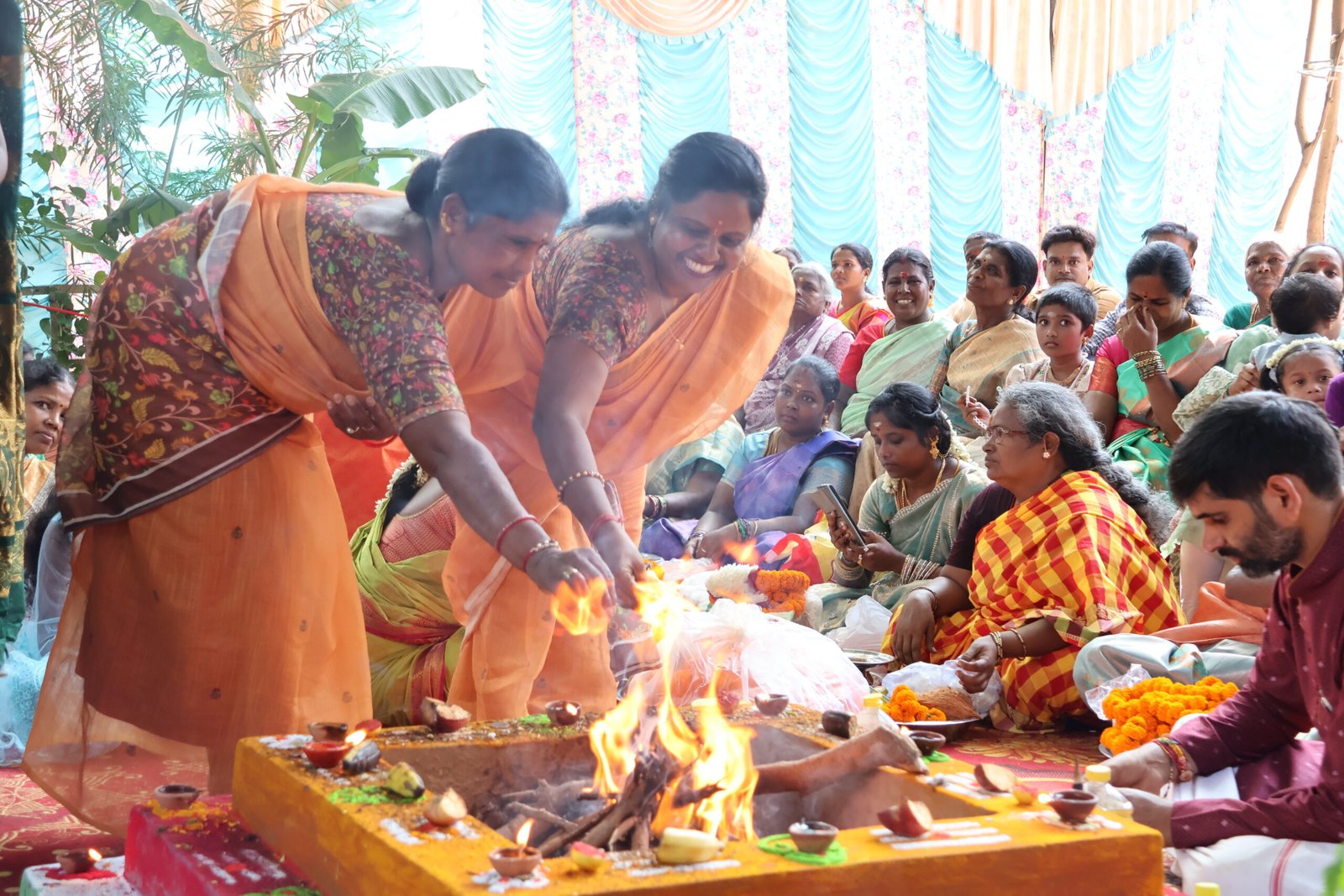
I reached Chandigarh during the Sannasiyappan temple festival in Maloya colony in September. Hundreds of Tamils performed rituals just as they would in Tamil Nadu. Some fell into arul vakku, a trance in which the speaker’s words are believed to be the deity’s own. For a Tamil reporter, it was a strange homecoming. The deities were familiar, but conversations slid between my Tamil and their Hindi, often mid-sentence.
The first Tamil workers to come to Chandigarh were migrant labourers in Delhi who heard of a new city in the Shivalik foothills. Then, word spread. P. Govind Vel, born Kuzhandaivel, was 19 when he left A. Maroor in Cuddalore in 1975. “There were droughts everywhere near our places,” he said. So, when a villager back from Chandigarh said the government was hiring and paying well, Govind Vel went with 11 others.
T. Kaliyamurthy, orphaned young and schooled only till Class 1, arrived from Pa. Kothanur in June 1977 to earn 6.25 rupees per day, against two rupees at home and 5.25 rupees in Punjab and Haryana. The journey took five days.
“Chandigarh was nothing but kulla kaadu [scrubland],” A. Murugesan, who came in 1968, said. In the scrub behind Panjab University, they made huts of sugarcane stalks and fashioned shelter from discarded pipelines. They were moved from site to site until they were allotted houses at Maloya in 1983.
“For 1,000 Tamil workers in a department, only 30 to 40 were from other states,” Govind Vel said. A 1996 community count found 21,000 Tamil families, 19,000 of them labourers. Most became Class IV workers in the PWD, municipal corporation, or the horticulture and electricity departments.
After decades of service, Tamil workers still carry the incorrect names clerks wrote down.
Nacchinarkkiniyan M./The Migration Story
They laid roads by hand in shifts of 10 to 12 hours. “If you dig the ground, it is Tamil sweat and blood,” said P. Anbazhagan, 62, whom the records call Amabalkar. “Several died in labour, several drank and died, several ran away too.” He came from Kallur Pudaiyur in 1980, laid roads for 39 years before being made permanent in 2019, and retired two years later.
Tamils in the Horticulture Department planted most of the city’s trees, said S.P. Rajasekaran, a former Air Force sergeant who heads the Chandigarh Tamil Sangam. Tamil labourers were also the main builders of Chandigarh’s famous Rock Garden and its sculptures, according to the account he heard directly from Nek Chand, the PWD road inspector who secretly began its construction from the city’s rubble.
The creative imprint of Tamil workers on Chandigarh is not confined to the Rock Garden. T. Rajavel, who came at 14, has created over 2000 cement statues for government gardens and bungalows of judges and officers. “They would give me a photograph, and I would create the sculpture,” he said. He retires in four months. “After me, no one is there [to make such sculptures].”
THE GODDESS IN THE FOREST
Periyasamy, from Aasanur near Ulundurpet, worked in Mumbai before arriving in Chandigarh in the 1960s. He rose to mettu, or supervisor, and eventually retired as a road inspector.
But that was not the only job he held. In the late 1950s, his brother fell into arul and said that the goddess wanted a shrine there. Thus, the city’s oldest Tamil shrine, the Periyanayagi Amman temple, also known as Masani Amman was built. Periyasamy was its first priest, a post he held until his death. “The temple and the forest area were a refuge for any new Tamil person who came to Chandigarh looking for work,” said his daughter Manasa, now 47, who was born in Chandigarh and is the president of the Muthumariamman Society and dharmakarta of the Sri Muthumariamman temple. Every March, thousands of Tamils still return for the Mayana Kollai celebration.
By the early 1970s, the worker’s families were evicted from the area. The goddess, reclining in the Tamil manner, stayed. Manasa said Hindi-speaking devotees who started a langar there gradually took over. “When we say Periyanayagi Amman temple, they call it Priyanka Devi temple,” she said.
If the clerks’ spellings record what the city forced on its Tamil workers, the names they chose for their children record what they adopted of the city.
Manasa was named after the Mansa Devi temple in Panchkula, where her parents prayed for her. For her first child, relatives wrote names on slips of paper. Kannagi was pulled out first, and Manasa, hearing another name of her goddess, agreed. While expecting her second child, not wanting another girl, she prayed at the Kartikeya temple. The boy became Karthik. When their third child was conceived, Manasa’s husband quit alcohol, so the baby was named Yog Karan, which means good fortune.
Periyasamy, Manasa, Kannagi, Karthik, Yog Karan: three generations of names trace a family’s drift from Kallakurichi into the Hindi heartland. Manasa answered most of my Tamil questions in Hindi, and spoke to her son in Hindi too. Yog Karan, 25, speaks a Tamil thick with Hindi. But when I asked Yog Karan whether he felt Hindi-speaking or Tamil, he did not pause. “I am a Tamilian wherever I go. It is Tamil blood that is in me,” he said. “We may not be fluent in Tamil, but we wear South Indian clothes, we make kolams, we eat sambar rice.” A make-up artist, he dresses as Amman at temple festivals and performs her story in the community’s folk dramas, while Karthik plays the pambai drum.
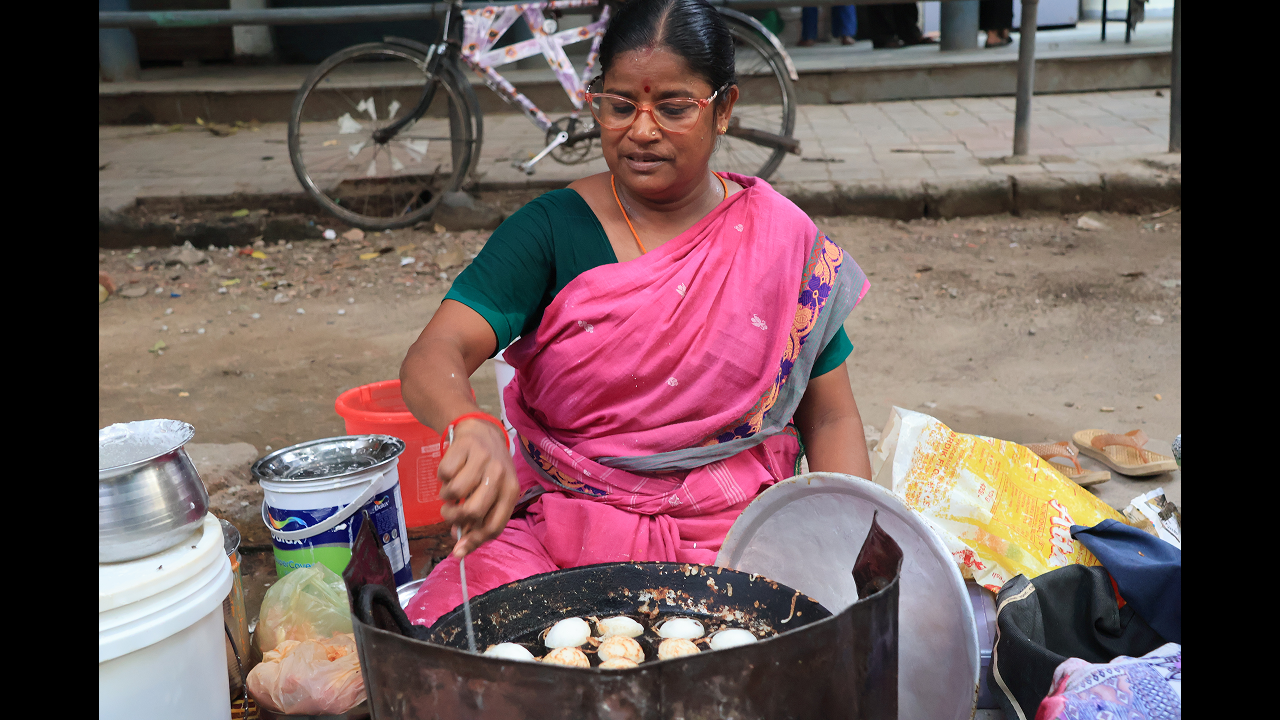
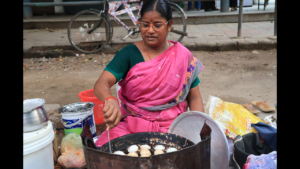
The borrowing goes both ways. Saroja D., 62, a Punjabi neighbour and Manasa’s best friend of nearly 40 years, followed every question I asked in Tamil and answered in Hindi sprinkled with Tamil. In the evenings in Vikas Puri and Mauli Jagran, Tamil women fry vadas and paniyarams at roadside stoves for customers from every community. Shanthi, in her late sixties, has sold paniyarams for 15 years. Her Hindi-speaking regulars have even given them their own name: “chotti idli.”
THE PRIEST POLITICIANS CONSULT
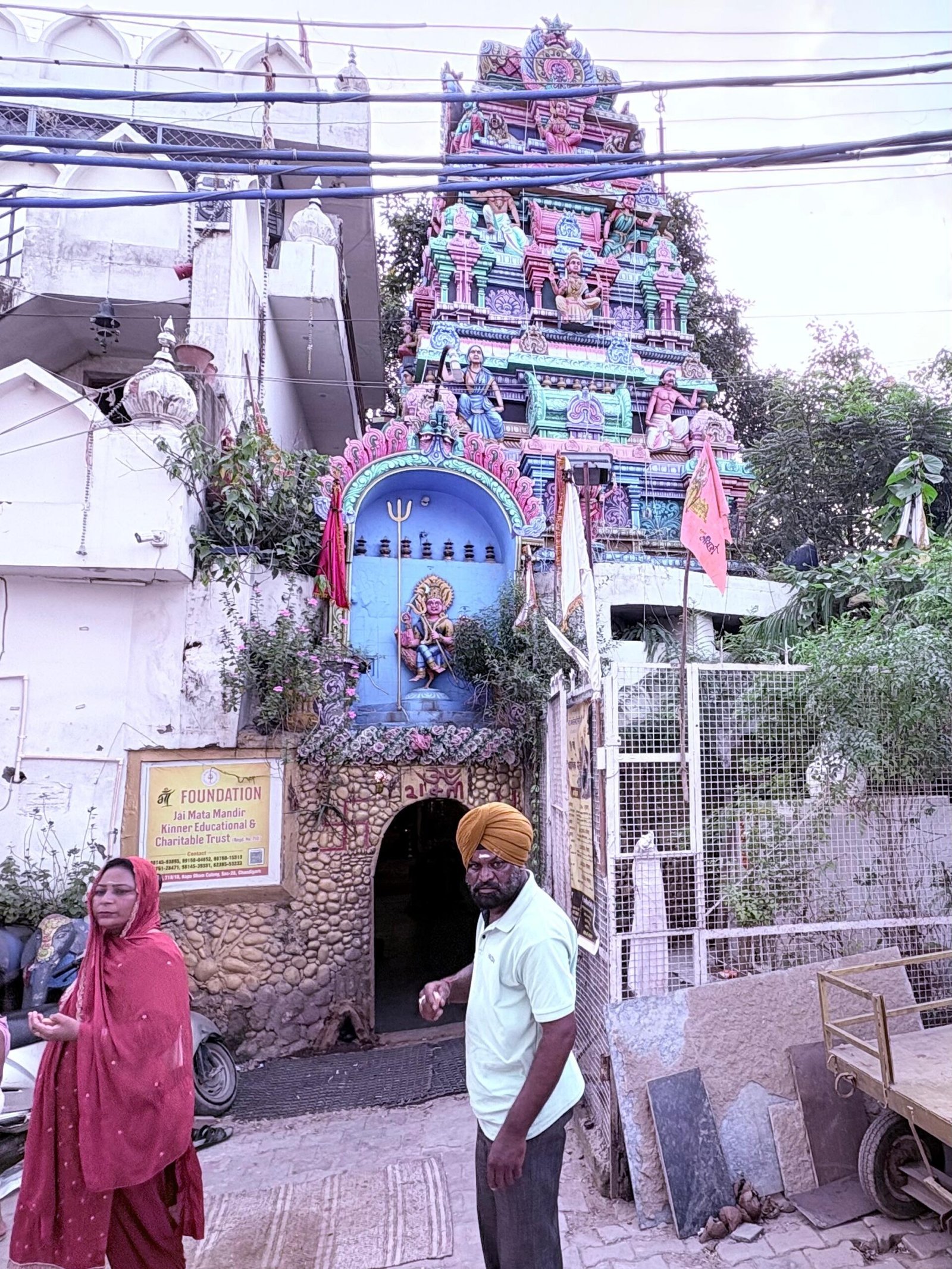
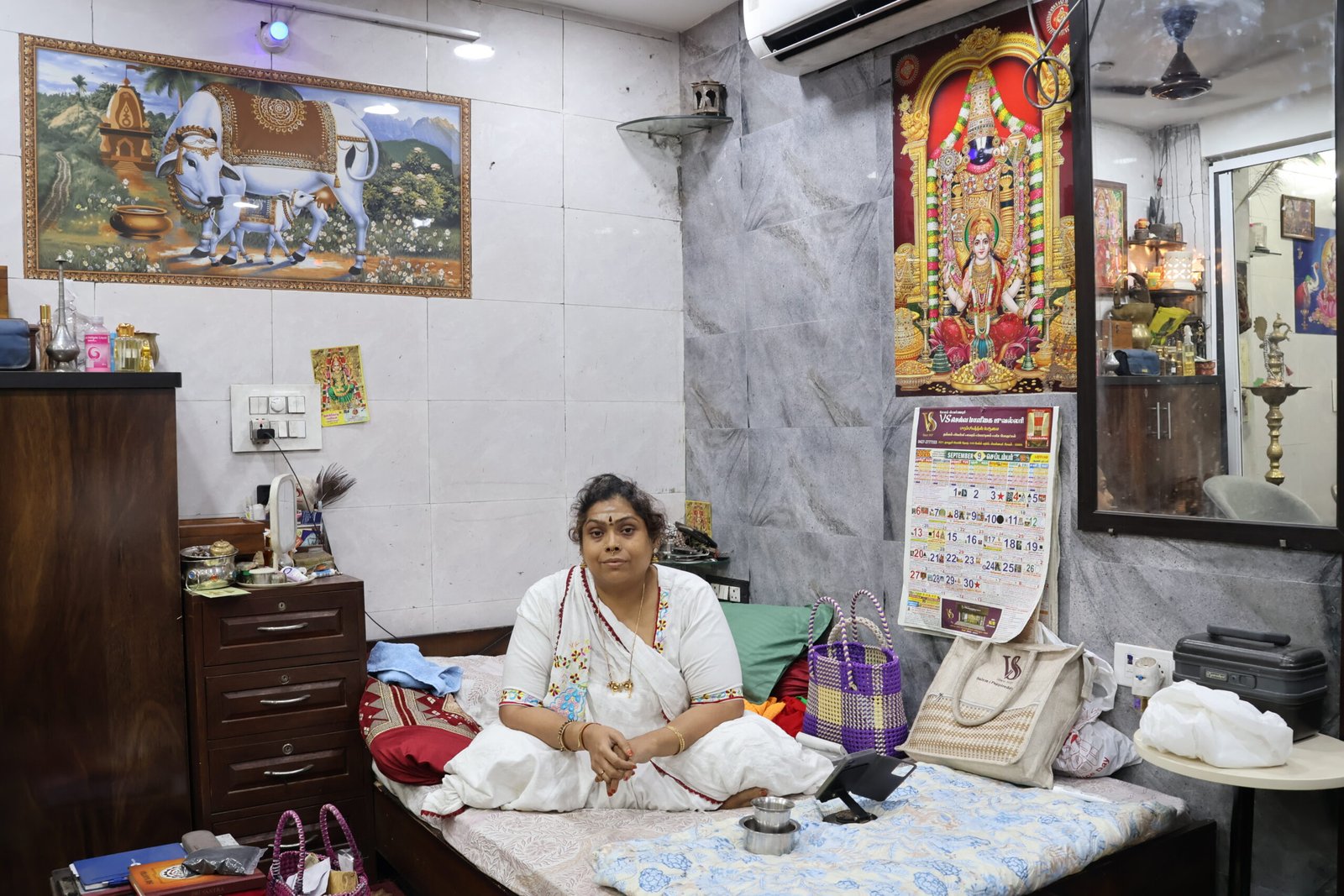
“As a priest, I belong to both Tamil- and Hindi-speaking people,” said Kamali, head priest of the Kinnar Jai Mata Mandir in Babu Dham colony. This is even reflected inside the temple where Samayapuram Mariamman of Tiruchi sits beside Bahuchara Mata of Gujarat. Hindi-speaking politicians consult Kamali on important matters, trusting her spiritual guidance. I saw first-hand a number of candidates seeking her counsel for an upcoming council election.
The temple dates to 1977 and has always been run by Tamil transgender women. Its founder, Kunjithammal, was originally from Chidambaram, and had previously performed in several Tamil dramas in Tamil Nadu and Sri Lanka. She came to Chandigarh in her late 50s. At the time, many Tamils were working in the mandis. Kunjithammal would go to their shops and bless them. In Babu Dham Colony, she even intervened with officials to get houses allotted to many people. People came to call her ‘Amma’. The current priests continue her legacy with pride.
Education was not as easily integrated. “We faced discrimination, bullies. ‘Oh, Madrasi aa gaya,’ sometimes vulgar words,” Yog Karan said. Schools were either English or Hindi medium, so in the 1970s, Ramakrishnan arranged Tamil-medium textbooks from Tamil Nadu for the labourers’ children. Classes in Tamil were conducted in a government school, which was initially in Sector 25 and later moved to Maloya, but went only up to Class 5. After that, children were sent to Tamil Nadu to study, or dropped out.
Megaraj S., born here in 1991, was sent to Perambalur, Tamil Nadu with all four of his siblings for better access to Tamil medium education. R. Nagarajan also went to Tamil Nadu to study, came back as a peon and worked his way to Senior Assistant at the High Court.
Today the schools in Sector 26 and Maloya, that most of the worker’s children attend, have only one teacher each who teaches Tamil, Govind Vel said. And even that is as a second language, not the primary medium of education. (Each school has two teachers.) Some children attend schools without any Tamil, like Nagarajan’s children who study in English medium, with Hindi. “At home, we speak in Tamil,” he said.
63,800 VOTES AND NO PARTY
The Tamil Sangam counted about 63,800 Tamil voters in Chandigarh at the last Lok Sabha election, Rajasekaran said. With children, the community numbers more than one lakh. The numbers got them a train. Twice a week, the Madurai–Chandigarh Superfast Express covers about 3,100 km in just over two days, more than halving the duration of the once a five-day journey. But it skirts Cuddalore, Villupuram and Kallakurichi, where most families come from.
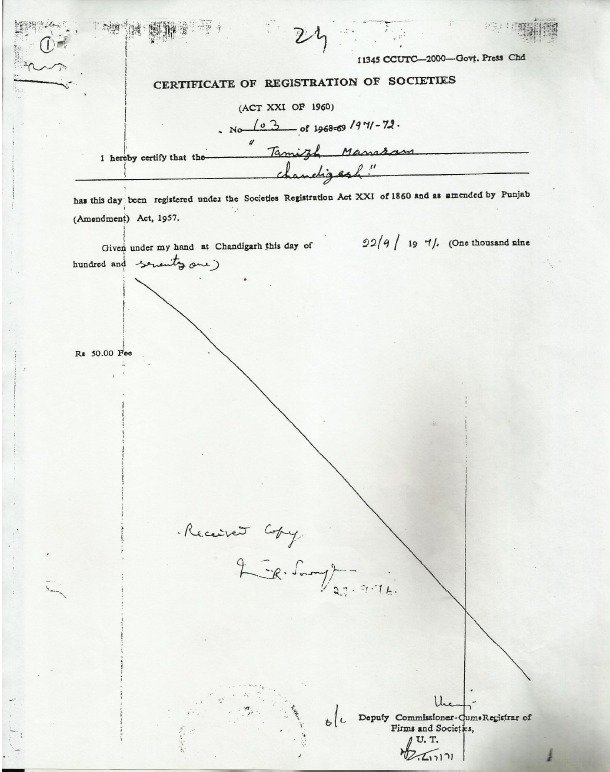
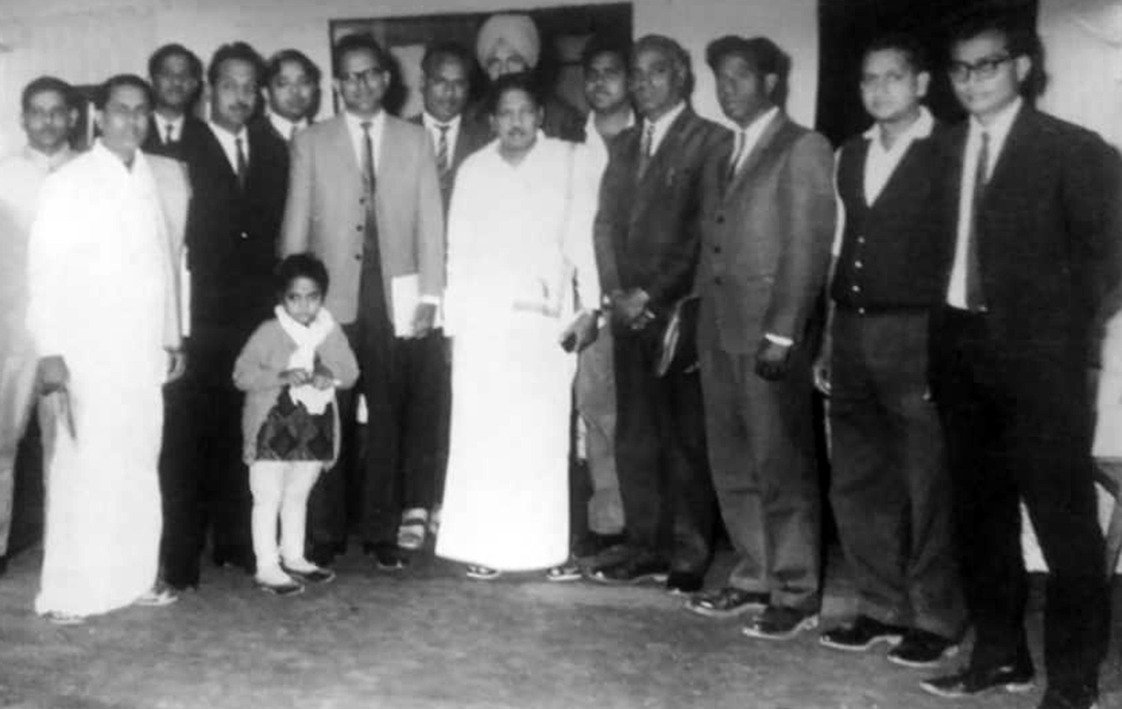
Governments also noticed. In 1969, visiting for Guru Nanak’s 500th birth anniversary, Tamil Nadu chief minister M. Karunanidhi met the Tamils and gave them 25,000 rupees to build a Tamil Sangam, Ramakrishnan said. Tamil Nadu, Haryana and Punjab governments, governors and MPs have funded it since. Under M.K. Stalin, Tamil Nadu gave it 50 lakh rupees, and the Haryana chief minister 25 lakh rupees, Rajasekaran said.
The older generation, grateful for housing and government jobs, backed the Congress, according to T. Velmurugan of Maloya. However, it is the BJP that has recognised the community’s political strength and swayed young voters, Kaliyamurthy said. For example, ahead of the December 2021 municipal elections, the BJP brought in Vanathi Srinivasan, the then Coimbatore South MLA and head of its women’s wing, to woo Chandigarh’s Tamil voters at a series of meetings. This is a cause of tension between the generations. “Since I’m in BJP, they are not able to handle me,” Manasa, who is also the BJP Mahila Morcha’s mandal pradhan in Babu Dham colony, told The Migration Story.
However, the Tamil families have not been able to organise as a political block. “Bihari working-class people have a party, UP people have a party, but Tamil people have no party or organisation working for them,” Rajasekaran said. In literary Tamil, Kamali was blunt. “There is no unity among Tamil people. People here are frozen in time and completely cut off from developments. Lack of political consciousness and infighting are the major reasons. There was no proper planning for the future of those who came here in the early days,” she said.
Govind Vel estimates that about 95% of Chandigarh’s Tamil labourers are Dalits, mostly Paraiyars and Arunthathiyars, with a few Vanniyar and Chettiar families. Though they are Scheduled Castes in Tamil Nadu, the administration here has repeatedly told them it can certify only castes on the Chandigarh, Punjab and Haryana lists. The nearest local category, Valmiki, “is not us”. “I built the city, but in employment we don’t have reservation of any sort,” Manasa said. “That pushed our community further backward,” Govind Vel said.
The permanent government jobs are gone. “Several workers’ rights are being curtailed,” said Ranjendran, son of Pichamuthu, of the Road Workers’ Union Federation. In Maloya, home to about 300 Tamil families, around 70% of workers are on contract, T. Velmurugan said.
With job prospects declining, many families from the older generation are looking to Tamil Nadu as a place to retire or return to farming. Imcharan, 65, born MGR, came from Thittakudi in 1984. His son, 21, dropped out of school and has no work. “I want to go to Tamil Nadu,” he said. Anjali, 48, who came as a bride in 1995 and fries vadas outside her house each evening, agrees. “My husband was born here. My children were born here. But I don’t like it here,” she said.
There is also a perception that things are getting better in Tamil Nadu. “We never used to put up banners of Tamil actors or politicians at our functions. Now we have our Chief Minister, Thalapathy Vijay,” said Sandeep of Maloya. “Change has come to Tamil Nadu,” said K. Dhanasekar, who was born and married in Chandigarh.
Govind Vel retired as a road inspector in 2019 and returned to his village, where his sons work and the family has land. He had built temples in Vikas Nagar and Ram Darbar. “It was the city where I spent the most active years of my life,” he told The Migration Story. “Yet I could not stay, because my sons had no future there.” He still visits two or three times a year.
But many have grown deep roots here. “If our children adapt well, we cannot go back to Tamil Nadu,” said A. Velmurugan, 45, whose late father, Ammavasai, worked for the Municipal Corporation.
Gangai Ammal was carried here as a baby. She lost her husband and only son; her three daughters live in Tamil Nadu. She visits them for weddings but hurries back. She became a Baptist here, and at least three times a week, she joins a multilingual group of Tamil and Hindi-speaking families for jabam (prayer). The city still knows her as Kang Vail.
“I am a Tamil, but definitely a Chandigarhite,” she said. “Even if I go to Tamil Nadu, my athma would be here. This is my land.”
Nacchinarkkiniyan M. is a New Delhi-based senior reporter and freelance journalist. Over the past eight years he has reported for The Hindu and The New Indian Express, covering national events and ground-level stories on poverty, caste and human rights.