DEMAND EXCEEDS SUPPLY
In her decade-long stay in Bengaluru, Manthamma (40) describes this as the worst summer she has witnessed.
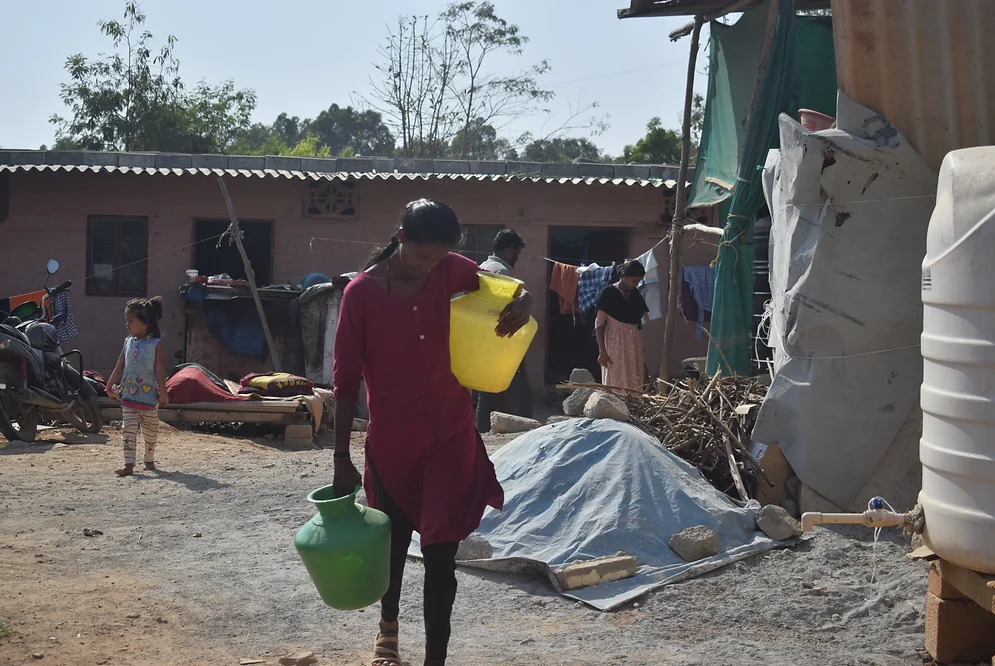
She lives with her seven-member-family, including her mother, brother, sister-in-law, and their three children, in a one-room shed in Jakkur, North Bengaluru, which lacks both a tap water connection and an attached toilet.
They rely on two piped connections provided by the City Municipal Council for their water supply, which also cater to the needs of 20 other migrant shanties nearby.
“Unlike last year, this year the water is supplied only once in two days for just about half an hour to one hour. We queue up to collect at least four pots per household even with the thin flow of water. But sometimes, there are power cuts and overcrowding,” said Manthamma, who works as a domestic help.
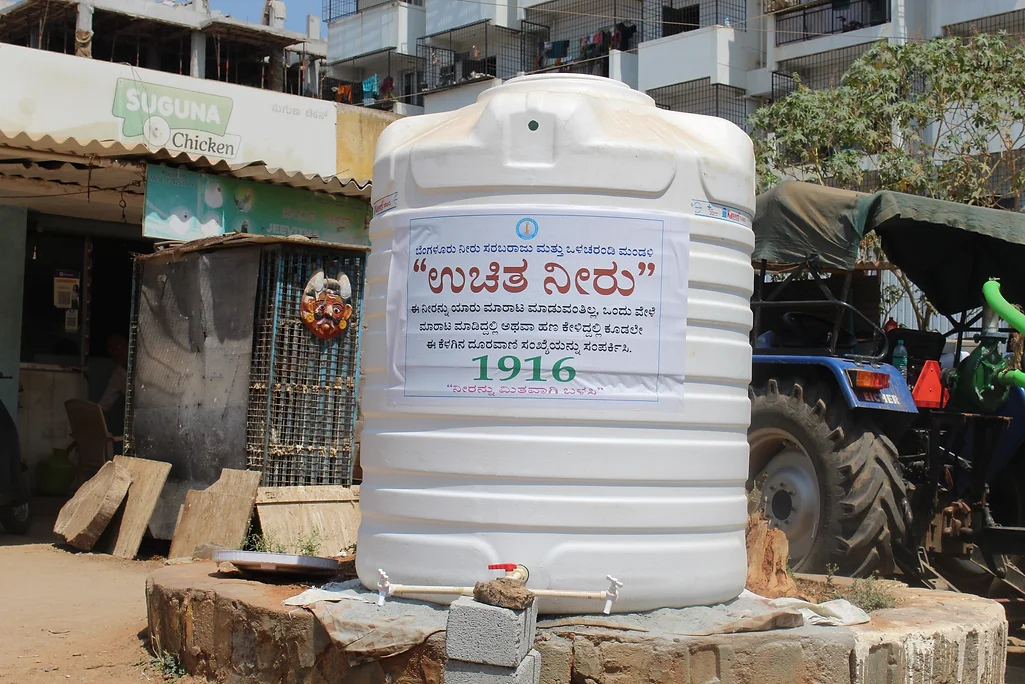
In an attempt to make up for the shortages, a temporary white tank with a notice that reads ‘free water’ is stationed at the entrance of their shanties by the Bangalore Water Supply and Sewerage Board (BWSSB).
However, the tank outside Manthamma’s house has been refilled just thrice in the last two weeks, and never lasted more than a day. Every time the water tanker visits, collecting and storing water becomes a family affair, with girls and boys of all ages huddling around swiftly to fill as many pots as possible.
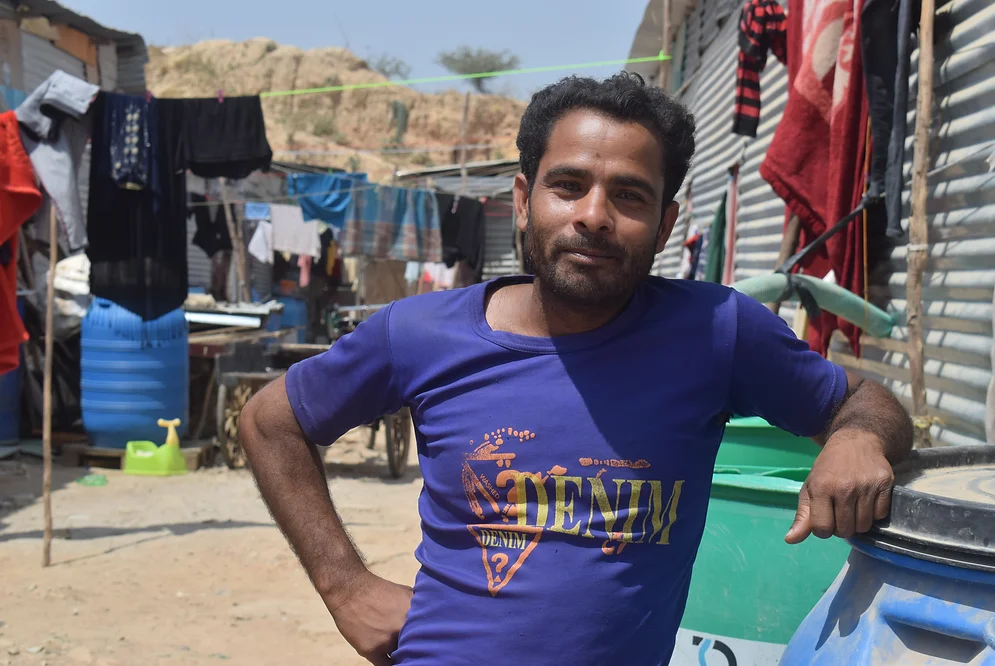
On the opposite side of the city, in Doddakannelli in south-east Bengaluru, Nagaraj (29) pays Rs 4 for a small plastic pot of water and Rs 6 for every bucket, exactly double the amount he paid for the same quantities last year. “I spend over Rs 700 a month just on water these days,” shared Nagaraj.
Since migrant workers buy water on a per-unit basis, they end up paying much more than other residents who typically purchase entire tankers.
Manthamma and Nagaraj’s families are among scores of people who migrated from the arid regions of north Karnataka to Bengaluru, to escape agrarian crisis marred with land degradation and frequent droughts.
“Of late there is no severe water shortage, but back home jobs do not pay as much. I earn Rs 1100/day for my construction job here as compared to Rs 700 in my district. So, migration is the only way to earn some savings and send remittances back home,” Nagaraj said.
RAPID URBANIZATION
The sharp growth in its metropolitan population over the last few years has posed new challenges in urban planning and infrastructure development for Bengaluru. A recent study found that from 1973 to 2022, Bengaluru saw a 51.86% increase in built-up areas alongside a 26.28% decrease in green cover.
“The city has been so concretized that we have lost most of our lakes, wetlands and interlinked drainage networks that acted as sinks and sponges allowing rain water to percolate and recharge groundwater levels,” said Harini Nagendra, professor of ecology at Azim Premji University, who has written extensively on impacts of urbanization on ecosystems.
“The city was never meant to expand and sustain as many people as it does today,” she added.
Globally, the number of people living in such cities and experiencing water scarcity is expected to rise significantly, crossing two billion by 2050, the differential impact of which will be borne by vulnerable populations such as migrant workers.
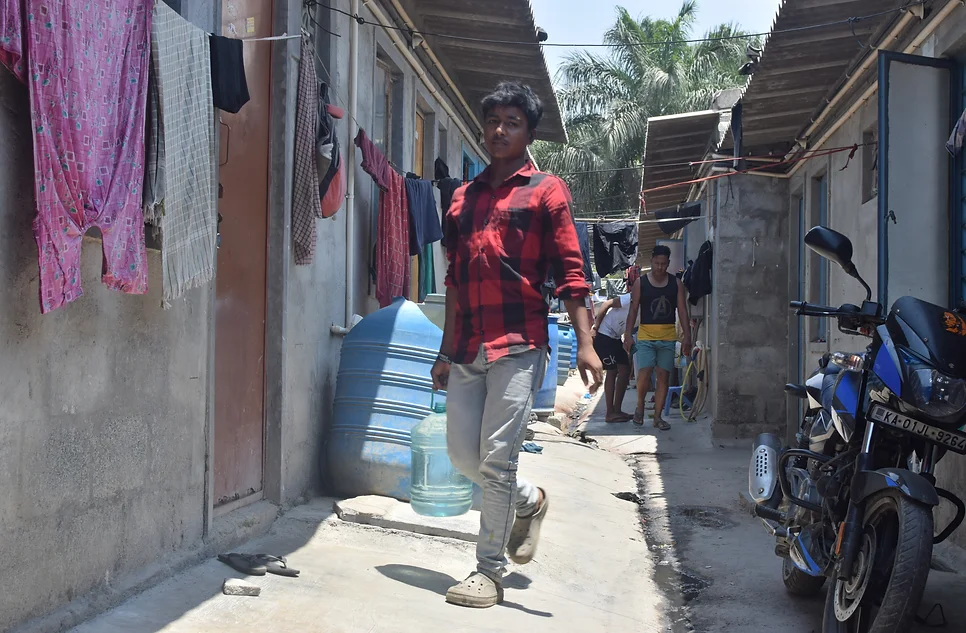
But for cousin brothers Abdullah and Sahil, leaving Bengaluru is not an option.
“Back home, there is water but no jobs and, in the city, it is just the opposite,” said Abdullah. The constant worry about water has dampened the usual festive spirit of the families as the month of fasting heads to a close, giving way to Eid celebrations.
“Water is essential for life, what can one do without it?” remarked Sahil.
Edited by Anuradha Nagaraj
Amoolya Rajappa is a Bengaluru-based independent journalist and reports on labour, internal migration, climate change and displacement in India.