WEST KARBI ANGLONG, EAST KARBI ANGLONG, HOJAI, Assam: On September 9, a police car pulled up in front of Birison Sangma’s home in Satgaon, a sleepy village in central Assam’s West Karbi Anglong district. Birison’s wife, Tirina, his 14-year-old son Barlian and his two brothers, Elphison and Amerson, somberly lined up outside their two-room home to greet the police officers.
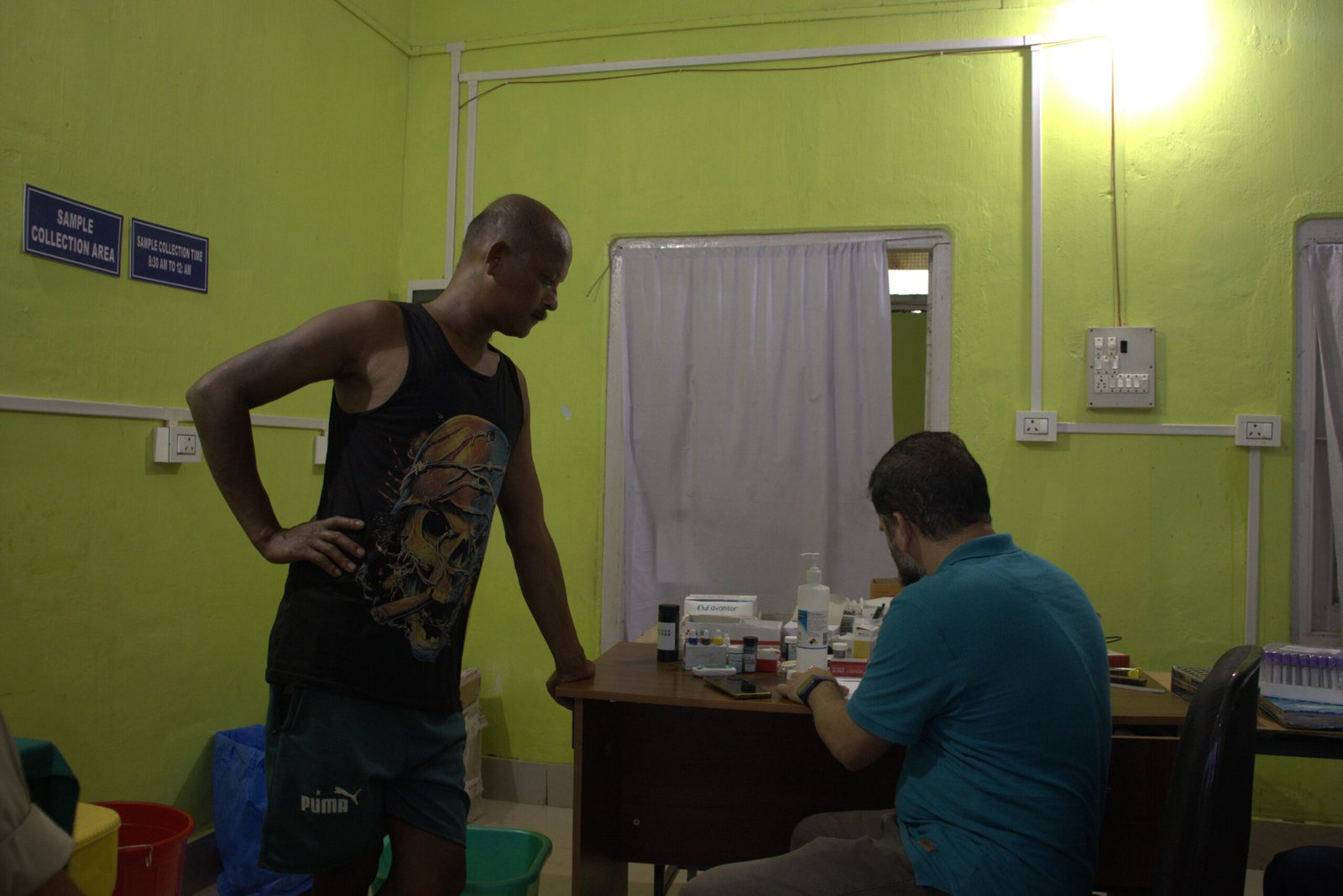
The police were there to accompany the three adult Sangmas, members of the tribal Garo community, to the local hospital to give their DNA samples for a possible match with Birison. The 36-year-old immigrant worker to Nepal has been missing after the Himalayan state’s flash floods on August 26 swept away the hydropower project where he was working. “If my brother has died in the floods, this is our only hope of identifying him,” said a distressed Elphison, who fortuitously survived the disaster in the same plant in Rasuwa district.
As of September 24, 1,453 bodies had been recovered from the mud and rubble while 5,550 people remained missing after the floods, triggered by an ice avalanche, battered schools, homes, and hydropower projects along the Trishuli river in northern and central Nepal. Of the bodies recovered, only 112 had been identified, while DNA samples had been collected from 1,329 bodies and 2,000 relatives, Reuters reported.
The deluge destroyed at least 13 hydropower projects, the total damage toll accounting for 10% of Nepal’s electricity generation capacity. Thirteen workers from Assam worked in different departments of these, especially at the 216-megawatt Upper Trishuli 1. Assam chief minister Himanta Biswa Sarma confirmed that eight of them, including Elphison, were rescued and brought back home on August 31, while the rest remained untraceable as of October 2.
According to disaster epidemiologists, the odds of survival decrease radically for those trapped in tunnels and under rubble after a 72-hour window, as access to water becomes difficult. With Birison missing for over a month after the apocalyptic torrent, his family faces a dilemma: whether to hold out hope to Birison’s son and wife or prepare them to accept the tragedy. “I don’t know how to tell them that he may never return,” Elpison said. “The way the flood rampaged through everything, he may either be buried in the mud or swept away somewhere never to be found.”
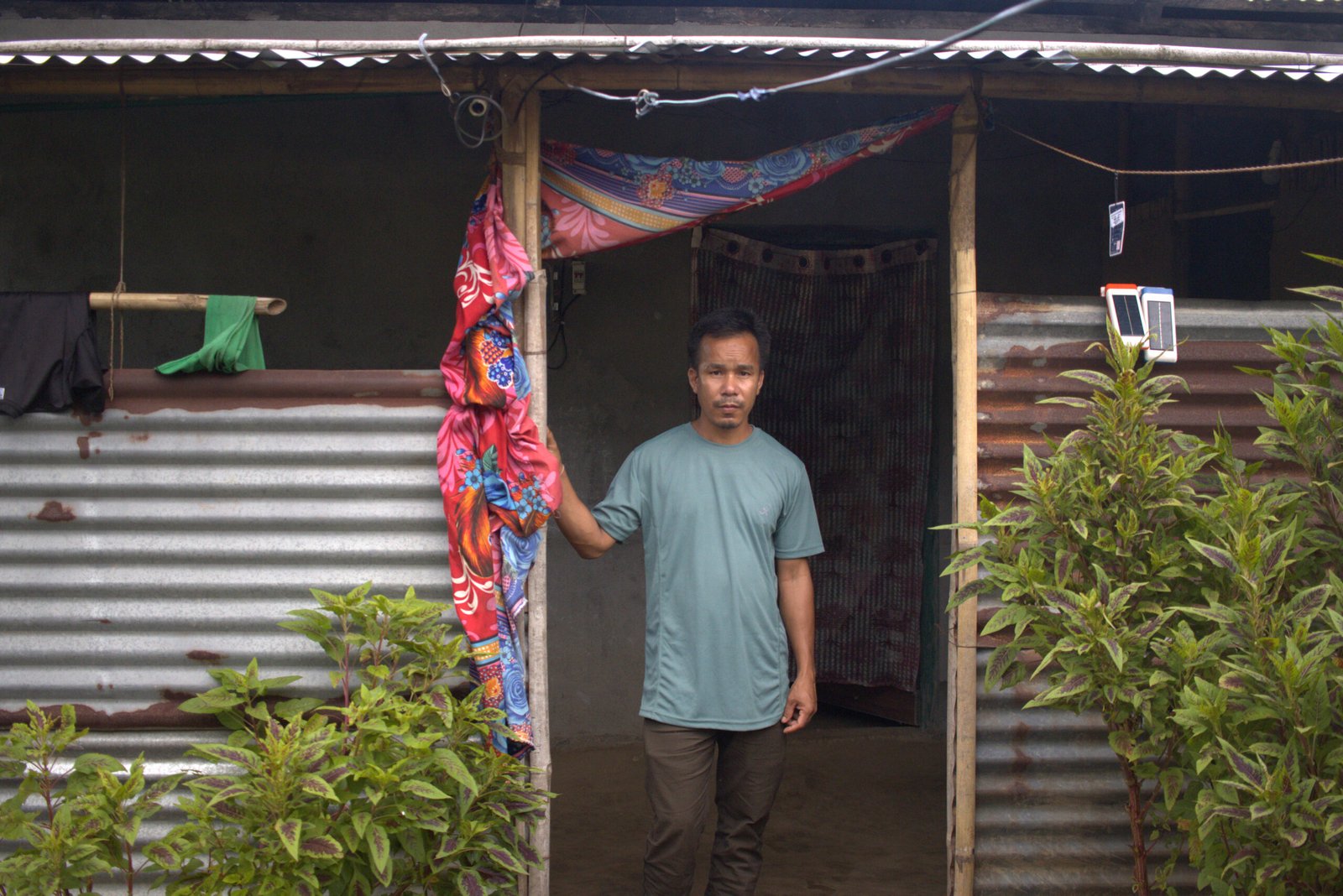
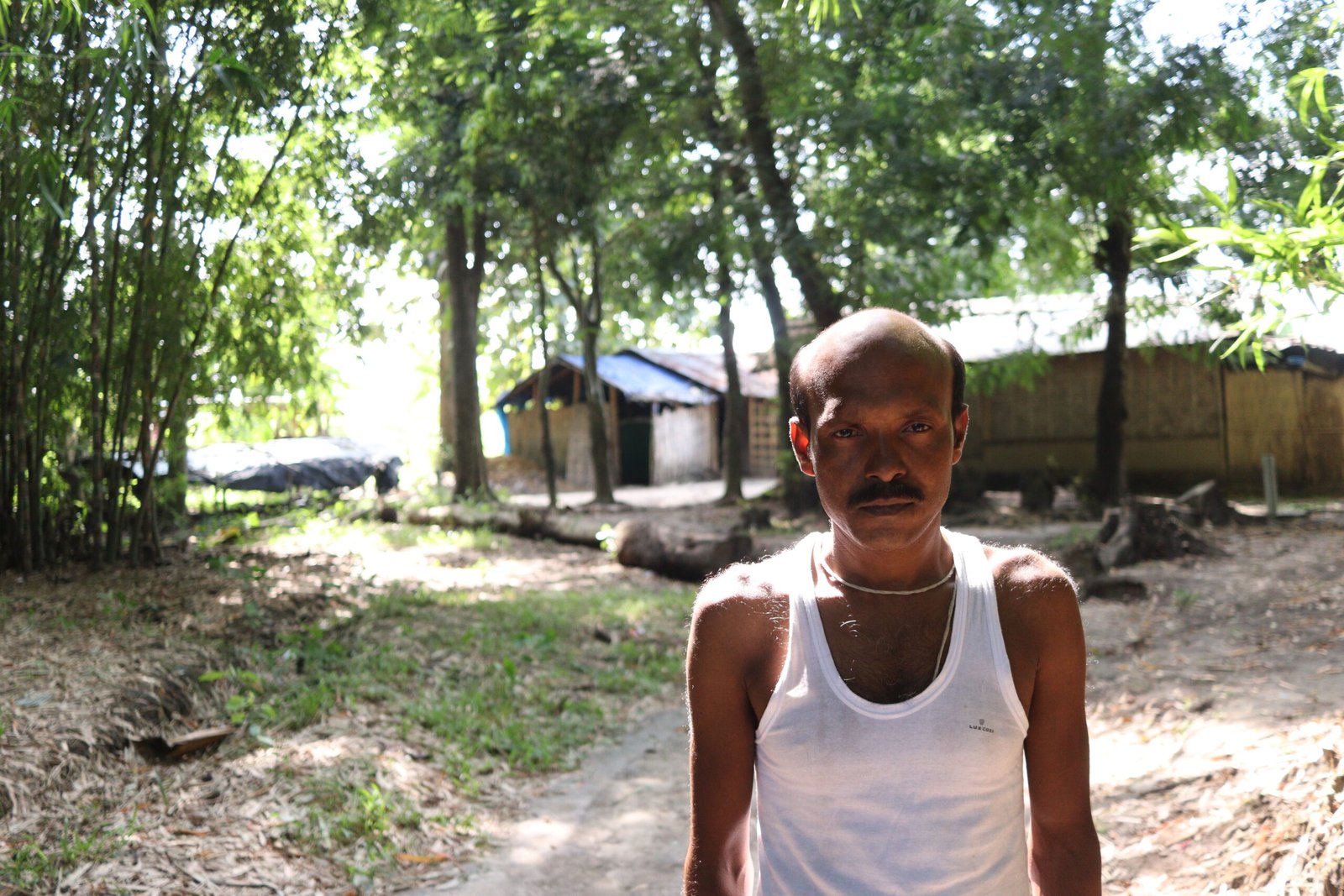
The Migration Story travelled across three districts—West Karbi Anglong, East Karbi Anglong and Hojai—and spoke to the families of those still missing as well as three survivors of the disaster. Among the latter was 36-year-old Soneswar Nazary from East Karbi Anglong’s Daidak village, who was still reeling from the trauma of what he had witnessed on the fateful day.
Soneswar, a welder at the Upper Trishuli 1 hydropower project, was in his workshop, situated around 100 metres from the dam. “It was 9 am,” he recalled. Suddenly, droves of panicky workers emerged from the workshop, screaming: ‘Run… paani (water)…paani!’. I was surprised, as there had been no rain in the area for days. But I fled with the other people to take cover.”
Moments later, a deafening explosion—the kind he had never heard before—shook the ground beneath his feet.
“It was the sound of the dam breaking,” he said. “The flood waters gushed out to a distance spanning 50 feet, tearing through everything. All those who had rushed to the streets were wiped away in seconds. It’s a miracle how I survived.”
Those swept away by the water included two of Soneswar’s family members—Rituparna Brahma and Montri Basumatary, aged 25 and 28—who had been working in Nepal for only 14 days. They are among over 800 hydropower workers still untraceable following the Nepal flood, Biraj Bhakta Shrestha, Nepal’s minister for energy and water resources, told Parliament on September 23. Of the total figure of missing hydropower workers, 439 remain unaccounted for in Upper Trishuli 1, the most in any hydropower project.
Soneswar said that at one point he gave up on his life when he looked back at the gush of water flattening buildings, shops, and even rocks. “I was buried up to my neck in mud and sludge,” he said. “But just as I was about to faint, I gathered the last remaining strength in me to free myself and ran towards the hilltop.” The worker sustained a head injury in his battle for survival but came out alive.
Like Elphison and the rest of the survivors from Assam that The Migration Story spoke to, Soneswar spent two days on the hilltop surviving on food and instant noodles provided by locals till a rescue helicopter airlifted them and took them to Nepal’s capital, Kathmandu. The relief at his providential escape is, however, clouded by sadness. “I am happy to be back home but I feel guilty to celebrate my survival, as Rituparna and Montri are yet to be found,” he said.
THE CALLS THAT NO ONE ANSWERED
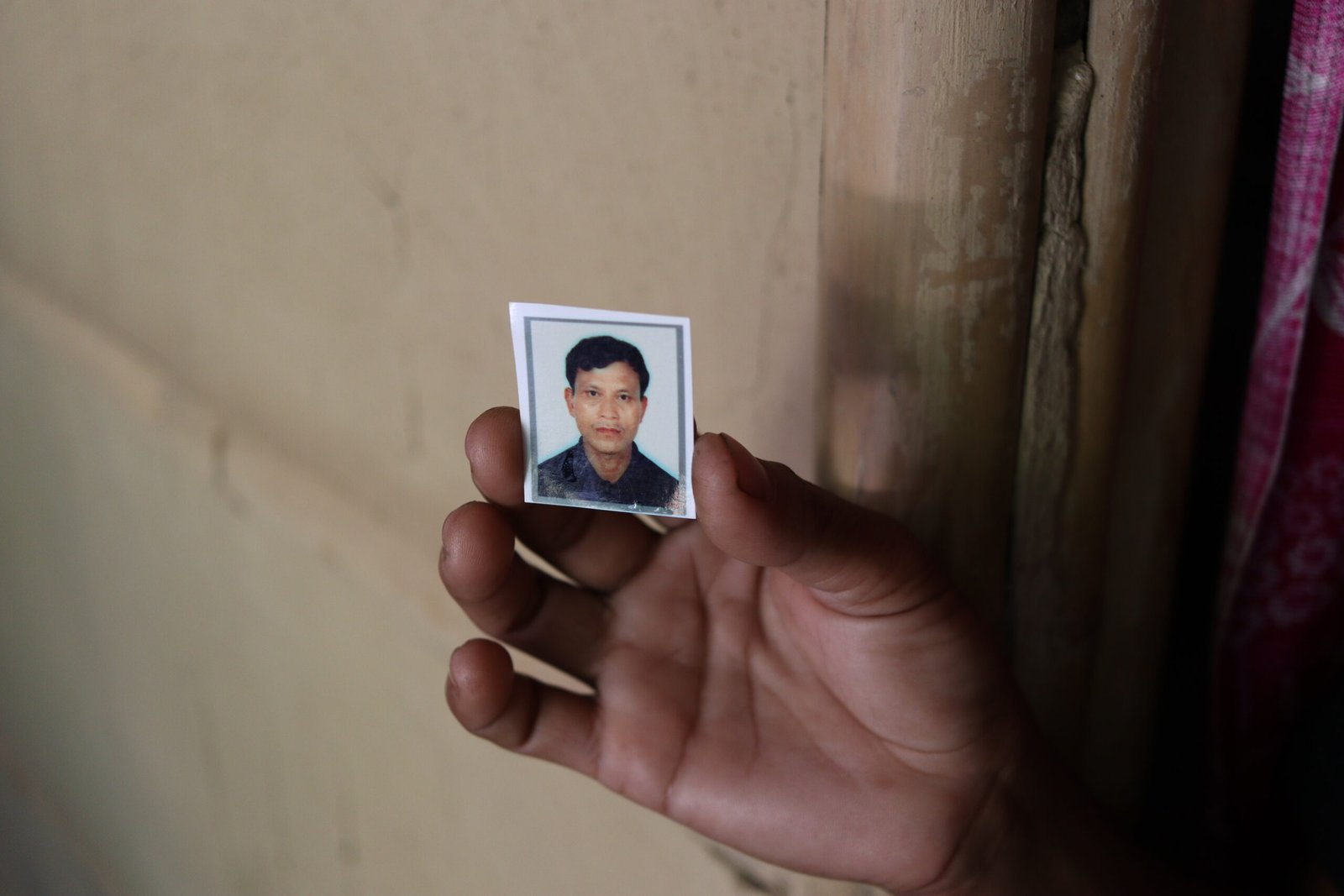
In Daidak village, Rituparna’s father, Kalyan Brahma, 53, calls him on his WhatsApp number every day. “With the calls going unanswered, our faith that he will return is dwindling with every passing day,” he said. “Even if he is no more, we deserve to see his face one last time.”
Rituparna’s ailing mother Illis Brahma, meanwhile, continues to staunchly stick to her belief that her son is unharmed. “He is alive, and I will wait for him till I die,” she shot back after overhearing Kalyan’s conversation with this reporter. Illis last spoke to Rituparna on a video call on the night of August 25. He had promised to call back the next day before his shift began, a call that never happened. “Whenever the phone rings, I think it’s my son,” she said, breaking down. “Sometimes, I pretend to speak to him on the phone.”
Asked whether she followed the news for updates on the Nepal disaster, Illis said she avoided media and social media for fear that news about her son’s death could be out. “And I do not want to believe that,” she said.
In Montri’s household, about 200 metres across the cobbled street from Rituparna’s home, there was similar hope tinged with despair. The 36-year-old worker has left behind his wife, Protima Nazary, and a three-year-old son, Sukbir Basuamatary. But unlike Illis, Protima is always glued to her phone, scanning it every day for any news about her husband.
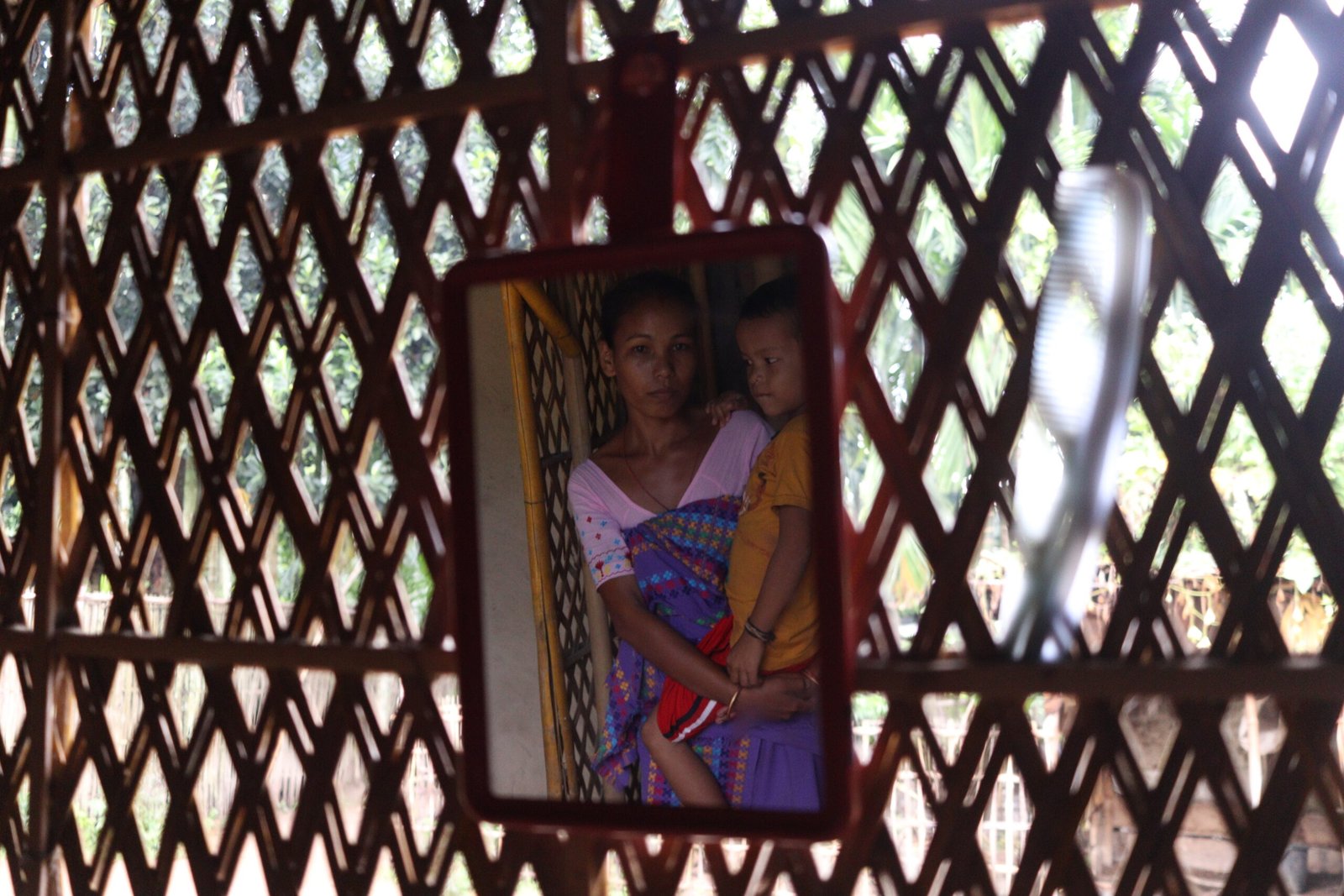
Protima told The Migration Story that her child had been refusing food because he could not speak to his father on a video call. “Somebody needs to tell me what happened to my husband,” she said, her voice suffused with strain. “Where did he go? What should I tell my child?”
A BROTHER’S SEARCH IN KATHMANDU
In Shatodal Nath’s home in Nam Doboka village in Hojai district, the air was thick with grief as neighbours dropped in to console the family. The 35-year-old was also at his job in a hydropower project in Nepal when the floods struck.
Gautam Das, a survivor and Shatodal’s neighbour, told The Migration Story that he saw Shatodal screaming for help as the flood waters swept him away. “I don’t know if he is alive,” he said. “Only God knows what happened to him.”
Amid the panic when the news broke, Shatodal’s elder brother, Sojol Kumar Nath, took it upon himself to locate his brother’s whereabouts to provide answers to their inconsolable mother, Supriti Rani Nath. Soon after the disaster, he set out on a three-day-long journey to Kathmandu.
In Kathmandu, Sojol visited every hospital and morgue, one after another. He scanned all the posters outside the hospitals carrying the names of victims and survivors and decomposed images of bodies recovered from the sludge. He remembers the sobs and the smell of human decay in the morgues as family members sat by the bodies they had come to claim.
Sojol’s details, however, were nowhere to be found.
“I somehow controlled my emotions and did not allow myself to break down as I looked through the names of those declared dead in the hospitals and police stations,” Sojol said, his lips trembling. “I came back empty-handed and without an answer for our mother.”
NEPAL, THE LIVELIHOOD MAGNET
Nepal, home to 29 million people according to the country’s 2021 census data, has seen a hydropower boom in recent years, with almost all the country’s electricity now coming from these projects. It is also the country that attracts immigrants for its lucrative labour industry. Indians account for about 97% of immigrants in the country, facilitated partly by the 1950 treaty between India and Nepal, which made cross-border movement easier for Indian and Nepali workers.
The country has an estimated hydropower potential of around 83,000 MW, of which more than 40,000 MW is considered commercially viable. As of 2025, the country had about 3,435 MW of installed generating capacity, with an additional 4,063 MW under construction and more than 16,000 MW pending construction.
Back in Assam, the immigrant workers that The Migration Story interviewed said that the Himalayan state was the easiest route to earning a livelihood. Most of them were hired by contractors and subcontractors, a network left behind by former workers.
The survivors of the Nepal floods—all school dropouts from marginalised castes—earned a monthly wage of between 26,000 and 40,000 NPR (equivalent to 15,000 to about 25,000 Indian rupees) for working daily 10-hour gruelling shifts.
Elpison and Birison’s brother Amerson, who worked for a decade in such power projects in Nepal before returning to Satgaon, said it was poverty and a lack of income opportunities in his village that forced him to take the route to Nepal. “When you have several people to look after, and hunger to sate, you are left with no choice,” he said. “There is no work for us here.”
Fr Albert Thyrniang, coordinator of the Don Bosco Satgaon Migrant Desk, in 2023 conducted a survey of the migrant exodus from 32 villages in Satgaon. According to the study, seen by The Migration Story, 1,596 migrants, including 664 women, had moved to other parts of India to work as menial or semi-skilled daily wagers. “Satgaon is rural and the locals are heavily dependent on agriculture, which is not a steady source of income,” he said. “The youths thus have no choice other than to migrate for work.”
Assam’s economy is predominantly agrarian. According to a 2019 survey carried out by the National Bank for Agriculture and Rural Development (NABARD), the average monthly income of a household is a mere 8,880 rupees. This dependence on agriculture which affords a subsistence lifestyle at best, is the driving factor for outmigration, noted a 2020 report by the Assam government think-tank ‘State Innovation and Transformation Aayog’, adding that 2.5 million workers from Assam work outside the state in low-end jobs. The Migration Story has seen a copy of the report.
Meanwhile, back in Nam Doboka, Gautam Das, who survived the Nepal flood, said he had lost everything. “All my documents, money, dreams and livelihood are gone with the flood,” he said. He is now back to working as a daily wager, painting people’s homes for 500 rupees a day. “This is too little for me, but I would not dare go to Nepal again,” he said.
However, not everyone is convinced by Gautam’s resolution. “The poor have no choice,” said Elphison. “There’s nothing more dangerous than hunger. We will go again if we do not find work here.”
Edited by Radha Rajadhyaksha
Arshad Ahmed is an independent multimedia journalist based in Assam, and covers North-East India for national and international media.