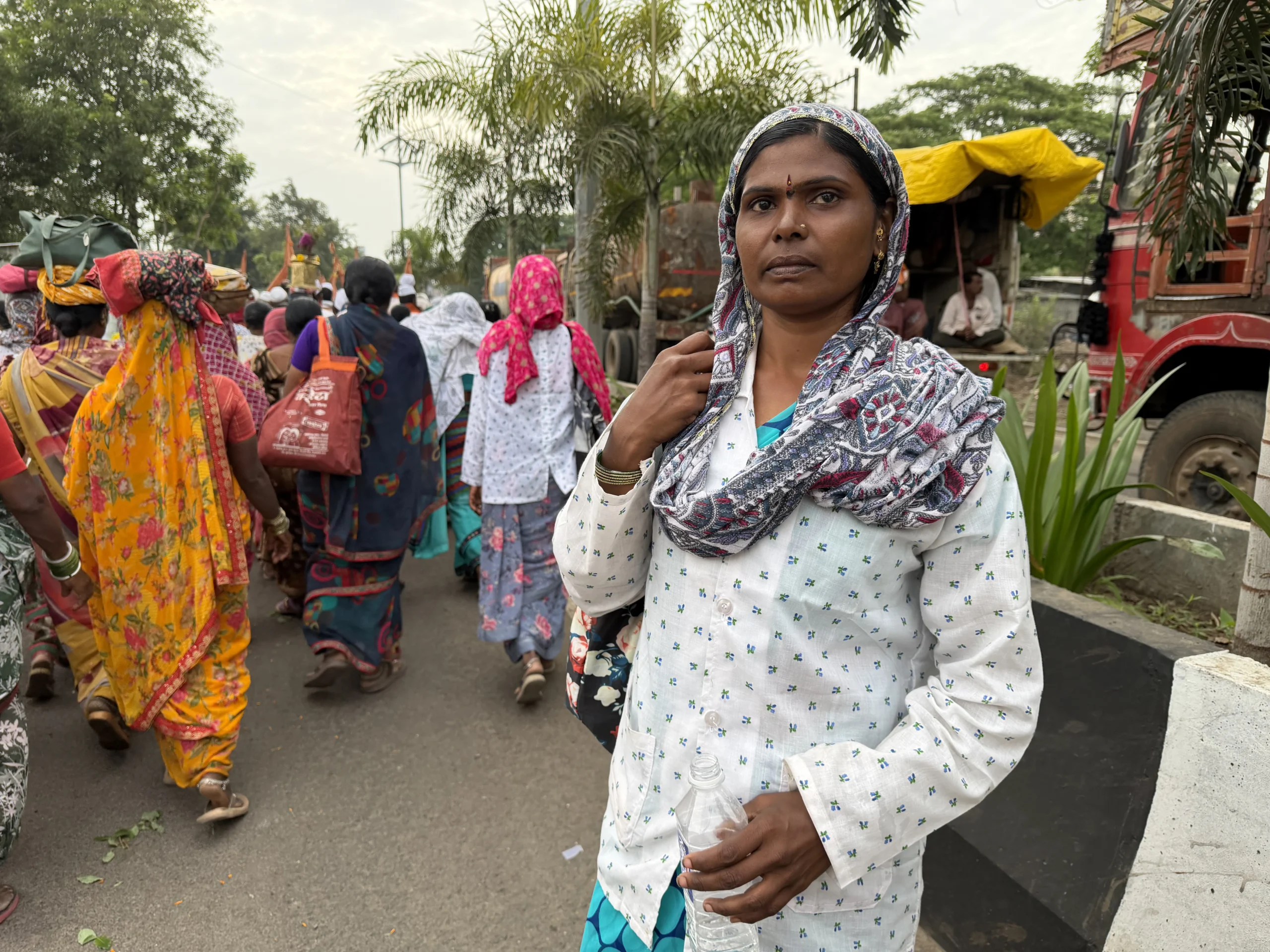
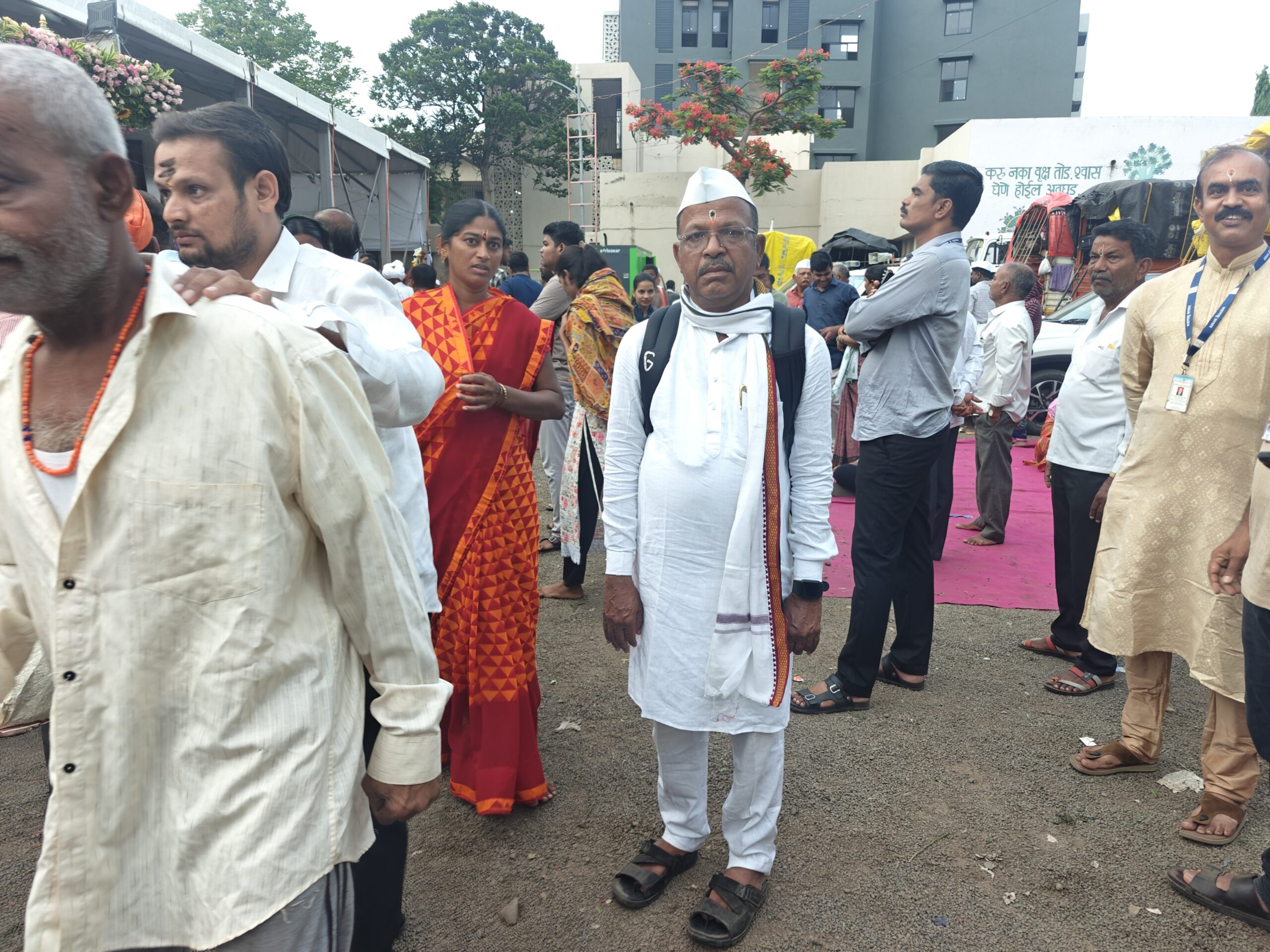
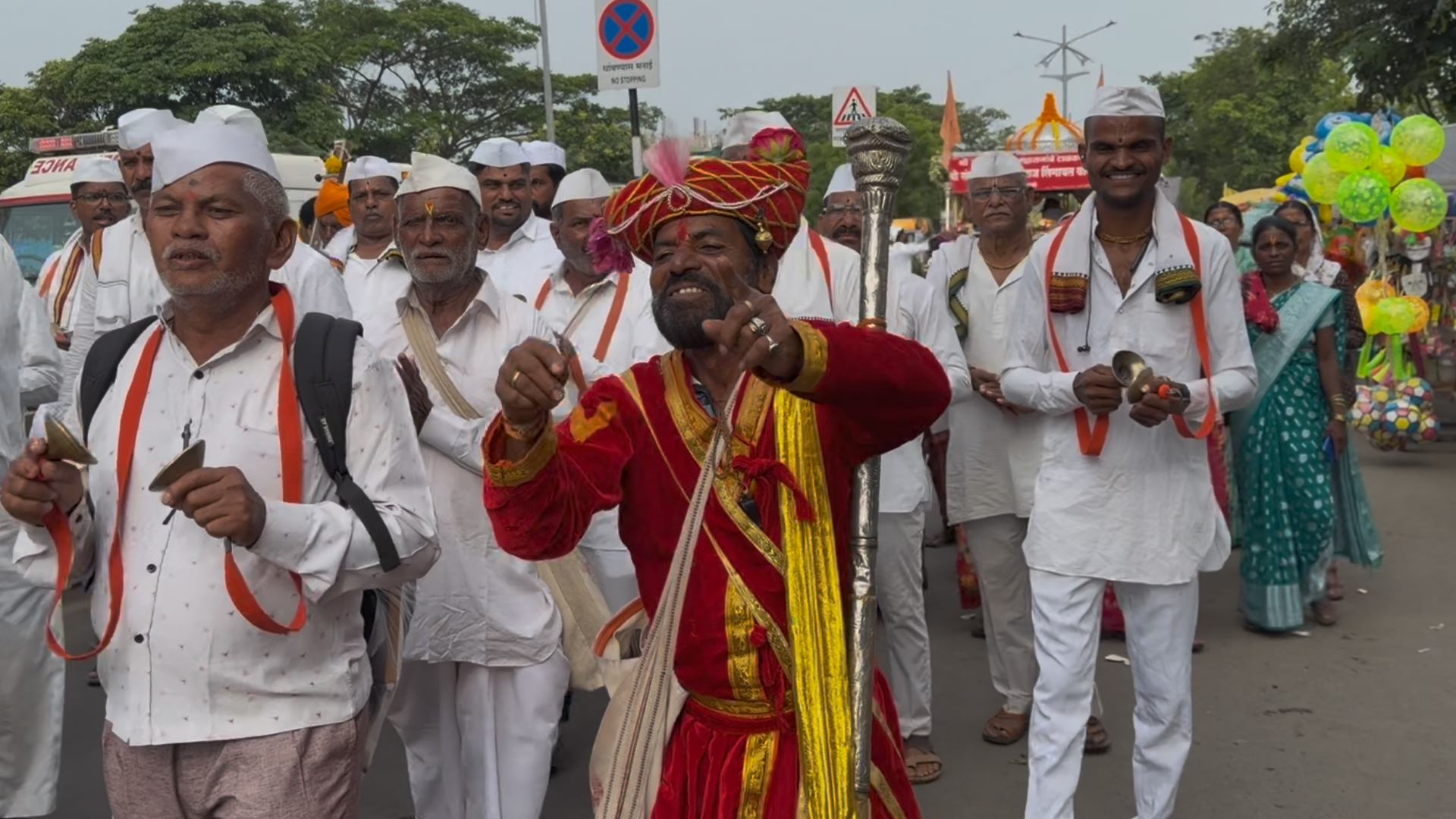
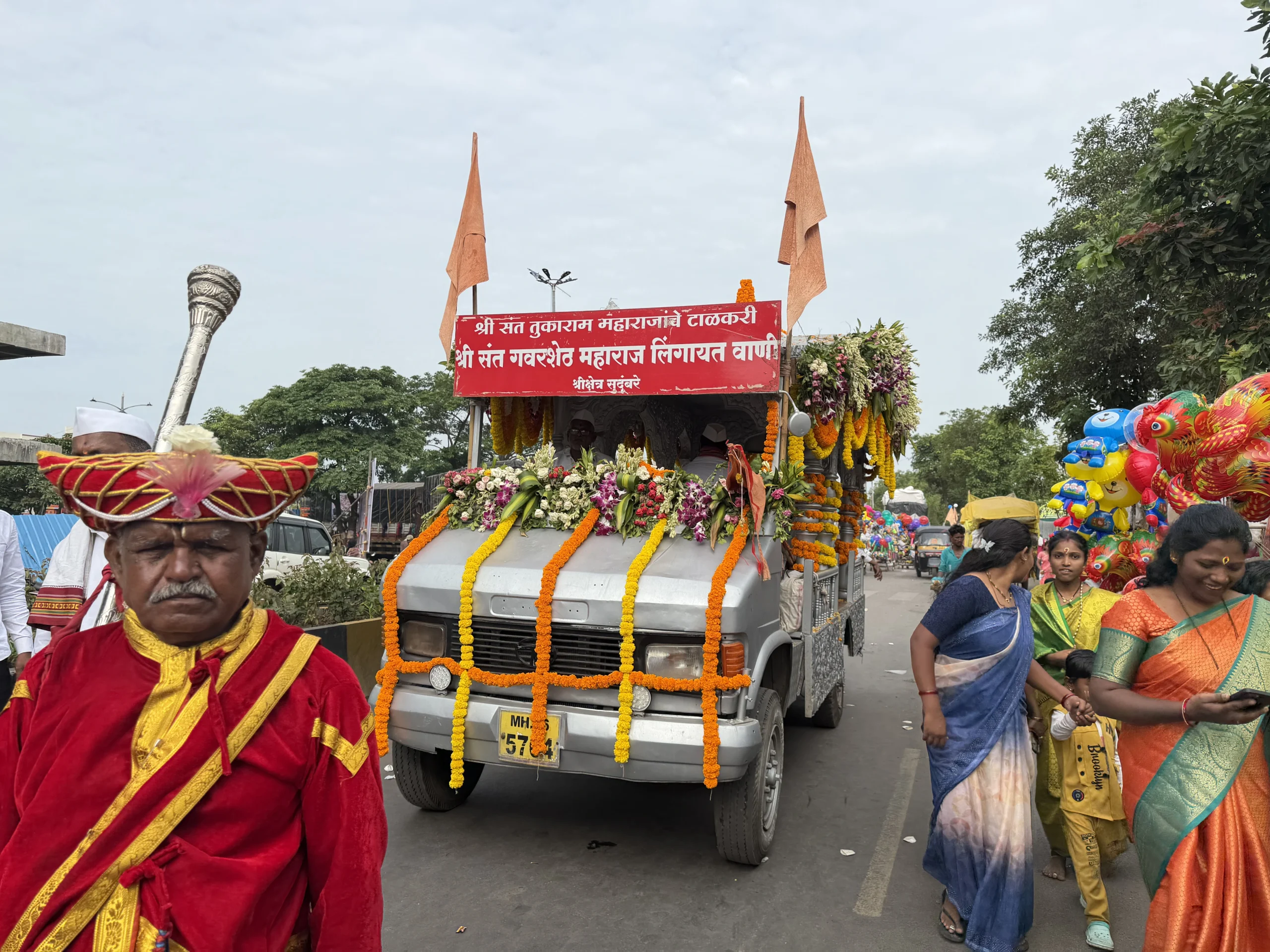
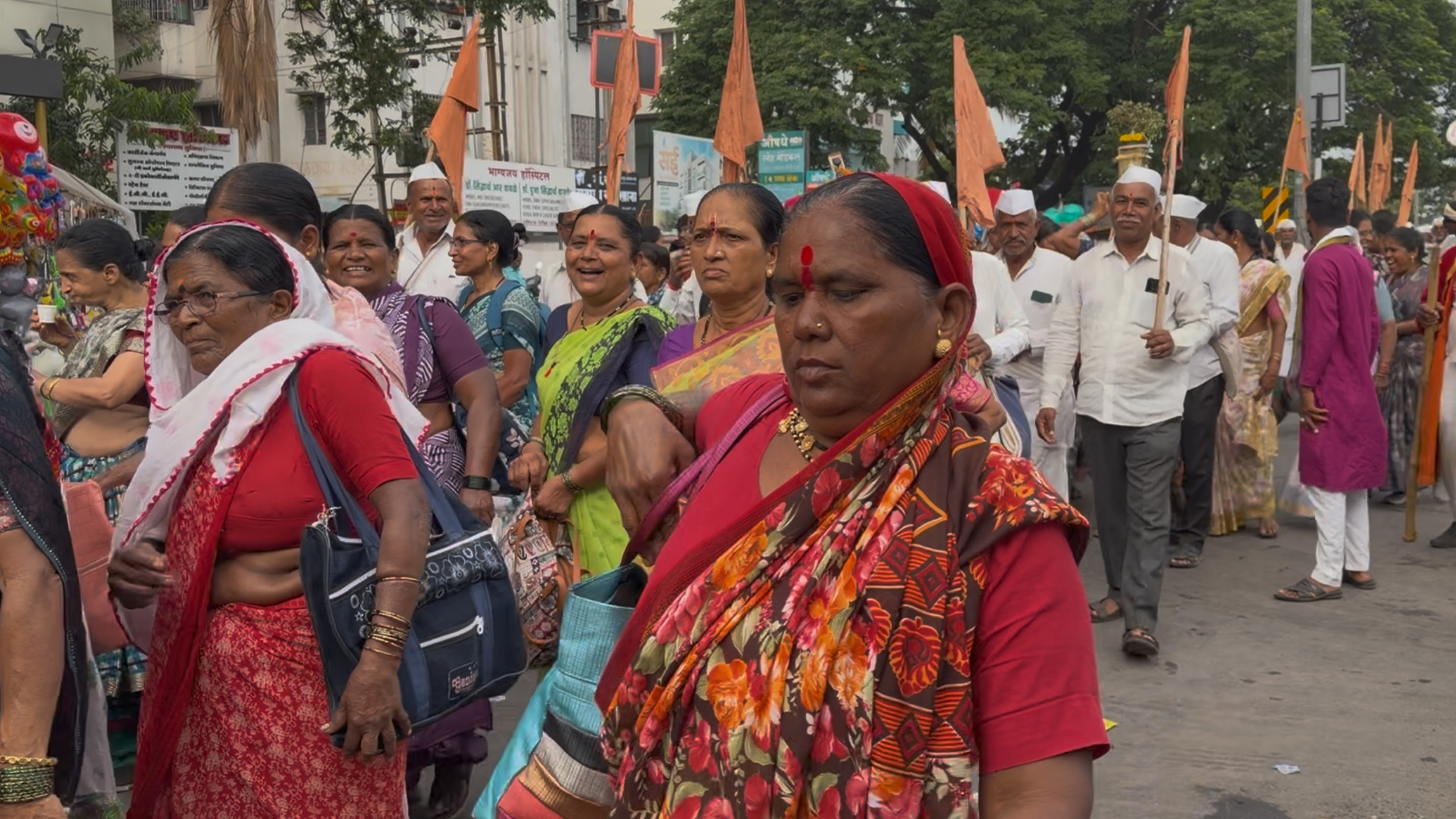
BARAMATI, Maharashtra: Amid the fervent chants of ‘Dnyanba Tukaram’ echoing against the rhythmic beat of dholaks, the twang of ektaari veenas and the musical clash of taals (cymbals), migrant mill worker Tulsa More, 35, walked down a well-trodden path with her fellow female villagers on a humid July morning. Clad in a simple cotton sari, she was one of the tens of thousands of warkaris or pilgrims carrying the palkhi (palanquin) of 17th-century saint Sant Tukaram in the centuries-old spiritual procession or wari taken out annually in Maharashtra.
More, a mother of three, is from Shivanitaka village in Jalna district, and joined the wari from her village about 305 km away, at a pit stop in Baramati. She walks the long journey to the holy town of Pandharpur every single year to ‘spiritually recharge’ for the coming months, her deep devotion serving to anchor her through financial and other hardships until the next pilgrimage.
Employed at a rolling mill factory in a Jalna industrial area, More returns to her native village every year to join her fellow female warkaris. Together, the women take a bus to Dehu, the birthplace of Sant Tukaram, from where the palkhi leaves for Pandharpur, the final resting place of the 3th-century saint Sant Dynaneshwar. Dynaneshwar, who is deeply revered in Maharashtra, is known for the Dnyaneshwari, a translation of, and spiritual commentary on, the holy Hindu book Bhagavad Gita from Sanskrit into Marathi.
Walking in the wari every year is not really a practical option for More—it entails taking leave without pay for almost a month and leaving her school-going son at a relative’s home. “But I don’t consider it a sacrifice,” she said. “It gives me satisfaction and, I believe, the energy to work till the next wari. We warkaris live to serve God, and for us work and family are secondary.”
The 21-day annual pilgrimage, which begins in June, corresponding with the Jyeshtha month of the Hindu calendar, sees around 2,50,000 devotees, mostly from Maharashtra, gather in the towns of Dehu and Alandi, the shrine of Sant Dynaneshwar. From here, the flower-laden and jewel-adorned palkhis of both saints, along with their padukas or footwear, are carried by the warkaris for 240 kilometres to the Vitthal temple in Pandharpur where they are worshipped on Ashadi Ekadashi, the auspicious eleventh day of the month of Ashad in the Hindu calendar. This year, the wari began on July 8, and concluded on July 25.
The saints, belonging to different centuries, spread their teachings through devotional poems for Lord Vitthal, emphasising that God is omnipresent and beyond the man-made barriers of caste, religion and gender. Over the years, palkhis of other saints such as Namdev, Eknath and Muktabai have joined the procession.
At the stop in Baramati, the ambience was suffused with cheer and spiritual ardour. The Migration Story witnessed a group with saffron flags walking briskly past while many rested on the road or on chairs neatly arranged on the footpaths. Most carried backpacks or traditional sling bags with their change of clothes and belongings. A cluster of stalls served warkaris water, hot tea and snacks. At the spot where the flower- and jewel-bedecked Tukaram palkhi was at rest with the saint’s padukas on display on a silver stool, local residents of Baramati thronged to pay obeisance and offer prayers. Soothing chants of Dynanba Tukaram rent the air.
AGRARIAN TRADITION AND MODERN REALITIES
Vitthal Kaloge, a former member of the gram panchayat (or village council) of Dehu when it was a village, and a wari regular for a decade and a half, told The Migration Story that warkaris, who are traditionally farmers and farm labourers, complete the sowing process in their farms after the first few spells of rain and then flock to Dehu or Alandi. “They return in time to tend to their crops, which have grown considerably in the interim,” he said.
Kaloge pointed out that though India’s long-standing agrarian crisis and the shrinking of income through traditional farming had led to farmers migrating to cities, many returned to their villages to follow the wari tradition. “While we can’t really gauge how many are migrant workers or farmers, since there are people from all professions in the wari, it is a fact that the farming community makes up the major part,” he said.
Villagers who have migrated to cities like Mumbai and Pune to earn their bread were once rooted in these very traditions and affirm them by coming back to walk with their fellow warkaris for a month. Among them are engineers, government officials, policemen, labourers and those employed in other professions.
A policeman posted in Mumbai has returned to Dharashiv to participate in the wari with local friends. “This is our family tradition, and I cannot miss it even for my job,” he said. “I just have to walk in the wari for 21 days; it cleanses my system.” The policeman, who was reluctant to share his name, walked on the frontline of the Dharashiv group.
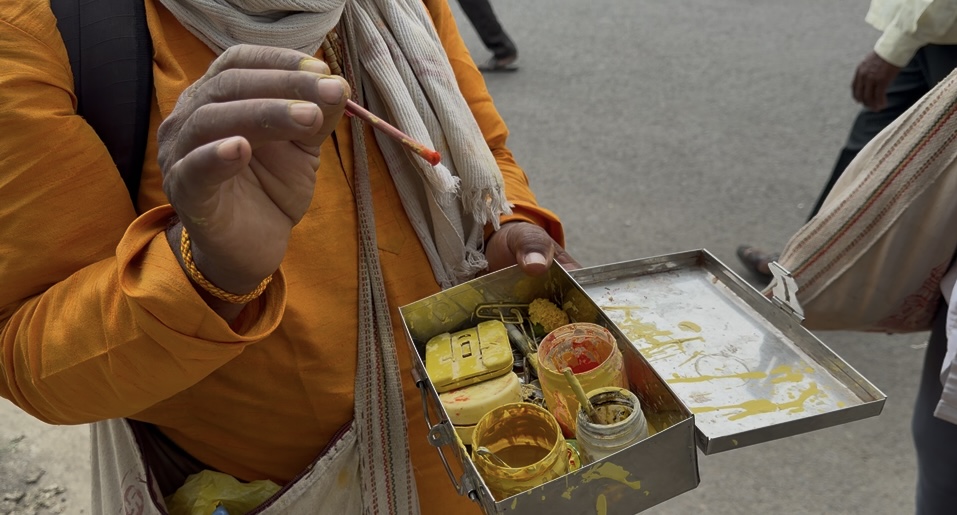
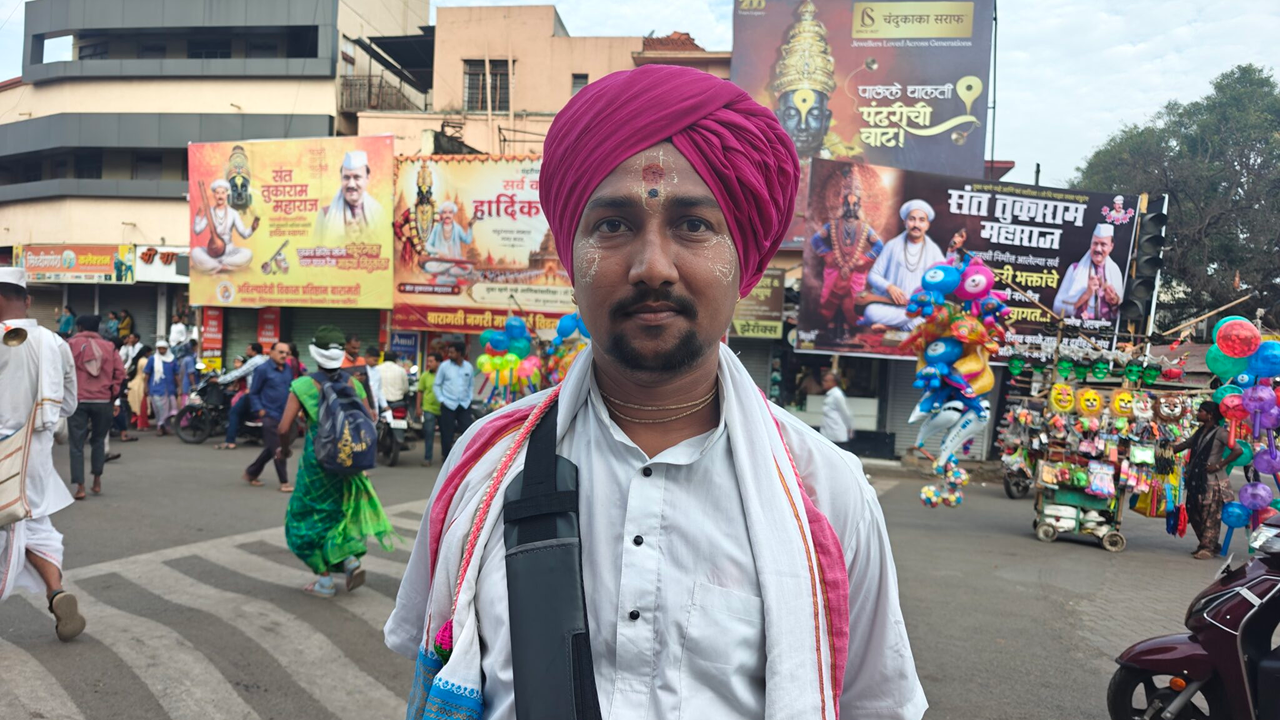
Nikhil Maharaj Yamade, clad in a white kurta and dhoti with a sandalwood mark on his forehead, spoke about saints like Tukaram while walking in the wari. Although an engineer by education, he chose to follow his ancestors and serve as a priest at the Sant Namdev temple in Pandharpur.
“To give up work and worldly responsibilities to walk in the wari is the primary purpose of the lives of warkaris,” he said. “It is about joining fellow villagers and relatives to continue the generational tradition of attaining spiritual bliss for a month. People may migrate for a living but they don’t forget their family traditions. I too could have earned lakhs of rupees by working in Pune or Mumbai as an engineer but I chose to return and be a priest. Our faith says that to serve Sant Tukaram, Dnyaneshawar, Vitthal and other gods and saints in the wari is our mission in life.”
COMMUNITY SUPPORT ON THE ROUTE
Every evening, after walking for 12 to 15 kilometres, the pilgrims break their journey to rest at community halls, temples or under makeshift shades provided by local volunteers. The volunteers also arrange for their food, water and sanitation facilities till they depart in the morning for the next lap of the pilgrimage. The warkaris are well taken care of on the way as well by social and youth organisations which arrange for tea, fruit, water and biscuits for them at regular intervals.
For Tulsa, the first two days of the wari are tiring, as her body aches. “But later, I enjoy walking,” she said. “Five to seven years ago, we had to carry dry rations to cook every morning. But it has become easier now, as villagers arrange for everything, including food.”
Volunteers also serve in other ways. At big towns like Baramati, many NGOs hold awareness camps for the pilgrims on issues such as health, body donation and the environment.
The Migration Story witnessed warkaris getting a foot massage with machines arranged by a local private hospital. Its volunteers, through a street play, explained the importance of organ donation, while on the other side of the road, another group explained the significance of conserving trees and water to another bunch of warkaris.
DESTRUCTION OF TREES AND SHIFTING CLIMATE
The atmosphere of the waari, while being deeply devotional, is also joyful and carnival-like. But amid the cheer, long-term pilgrims rued the stark environmental changes along the traditional route.
Seventy-year-old Gopichand Abankar, a small farmer from a village near Baramati, was one such. With an ektaari veena slung around his frail body, the elderly man, who took a break every hour to recuperate, expressed his sadness at the steadily depleting trees on the religious trail. “Earlier, there used to be huge old trees on both sides of the roads throughout the journey,” he told The Migration Story. “We could sit beneath a tree whenever we were tired. But now there are barely any. This and the lack of rain this year has also sent temperatures soaring. Walking becomes tiring in these circumstances.”
Many warkaris reiterated Abankar’s observation. “Earlier, to walk in the cold rain used to be both fun and a challenge,” said Santosh Pakhale from a village near Baramati. “But this year, we saw rain only in the last week of June. Also, the wari used to walk along farms and we would get water from farmers. But now, with so much farm land acquired for the construction of highways, the government has to make arrangements for water tankers at intervals. Many palkhi groups arrange for their own tankers. Nature has changed considerably in the last 10 to 12 years.”
INCREASING WOMEN’S PARTICIPATION
Women, old and young, comprise a major part of each palkhi, leaving their families and children behind for the spiritual experience. A few carry their toddlers; some are even accompanied by their school-going kids.
“I began participating in the wari with my mother in 1986-87 when I was in school,” said Sandhya Sakhi, who sings bharuds (devotional poems) that centre around issues such as female foeticide, tree-cutting and climate change. “The number of female participants at that time was miniscule.”
Sakhi said that all the palkhis back then were led by men, and male artistes from the folk tradition would sing bhajans and kirtans to the accompaniment of ektari veenas and cymbals. “But slowly, women started to lead a few palkhis and would also sing bhajans, bharuds and kirtans,” she said. “Many women and women’s groups began to join because of the word-of-mouth publicity. Now more than 30% of the participants are women.”
For older women such as Gayabai Harkar and her friend Gangubai Sainath from Arvi taluka of Parbhani, walking is not a problem even at the age of 70 but cold baths and sleeping in places with leaky roofs is a challenge. “When it rains, it gets chilly but volunteers give us umbrellas and tea,” said Harkar. “Also, our Parbhani group, which has brought dry rations along, cooks hot meals twice a day for everyone. The younger people take care of us with medicines and massages whenever needed.”
Both agreed that many more women now walked in the wari as compared to 15 years ago when they had begun. “This is a much-needed break for us, as our children are now busy with their own families,” said Harkar, hinting at loneliness. “We also get to pray to our beloved Lord Vitthal. That in itself is a blessing.”
As the warkaris prepared to walk on from Baramati, nattily dressed local devotees, who had come to pay obeisance to the palkhis, made their way home. Slowly, the wari moved forward, and the rhythmic chants of Dnyanba-Tukaram softly drifted into the distance.
Edited by Radha Rajadhyaksha
Varsha Torgalkar is a freelance reporter from Pune. She covers rural economy and environment.