Homecoming is a beautiful fiction we tell ourselves. It rests in an abundance of hope and nostalgia, and is always driven by the fragmented but also indelible nature of memory. What one remembers, one constantly seeks. What one seeks, one constantly imagines. Home promises belonging, no matter how and when we return to it. It shapes and reshapes our identities, allowing us to go through a process of becoming, over and over again.
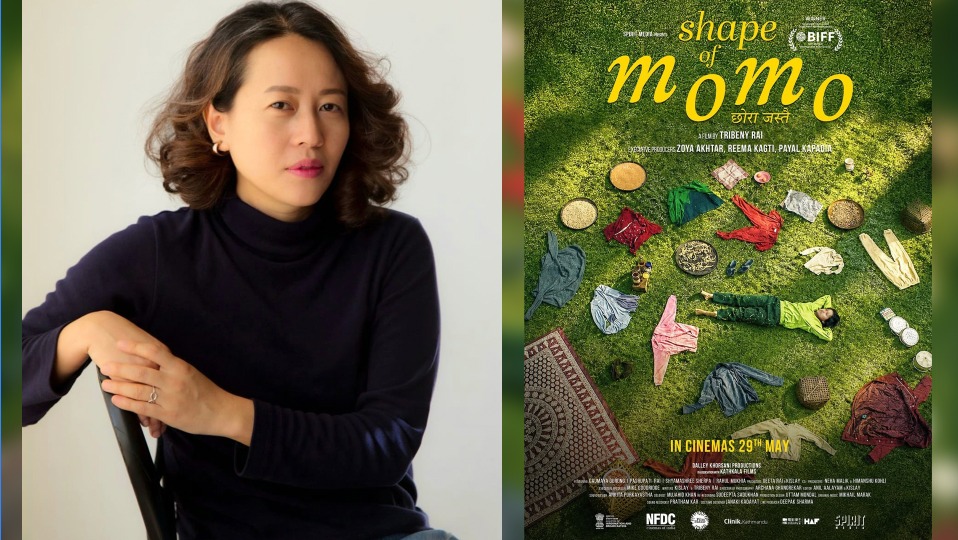
But what happens when the same idea becomes highly precarious in nature? When the hope becomes slippery, when the reality of its imagination harshly mirrors the fractures of the same home? When home becomes a site of suspicion? When returning feels more like defeat, when it makes one feel alien, and when it constantly lets go instead of welcoming? When its embrace feels bitter, and one finds oneself standing on its door, but the same door never even opens? Tribeny Rai’s Shape of Momo (2025) functions on this bitterness, an unrequited relationship with one’s home, which never finds any closure at all.
Rai brings this truth to life with a coming-of-age story set in a small town in Sikkim. Bishnu (a remarkable Gaumaya Gurung), as a daughter of her motherland and a migrant woman in the metropolis, constantly grapples with her identity, beliefs, and politics. As a daughter “raised like a son” in a largely matriarchal family, Bishnu carries her temper on her sleeves and moves in her world with an unapologetic conviction.
When expectations to make the perfect momos are placed on her, it brings a bitter reality to life. No matter how much women like Bishnu evolve through large-scale migration, the tradition remains stagnant. It continues to place a disproportionate burden on its women, who function at the intersection of the public and private, where their personal acts of cooking or eating become deeply political. Bishnu being herself, would find the shape of momo secondary to how they taste, and clearly couldn’t care less about their appearance.
As someone who has just returned to her village after a professional break, Bishnu represents the new-age generation of women who find their feet in cities, owing to the greater ease of rural-urban migration. Naturally, Bishnu becomes a microcosm through which the city functions, where her loudness, wokeism, anger, and temperament distinguish her from the rest of the women in her family. She wants to catalyse progressiveness while holding onto her roots; she desires to liberate her women from decades-long patriarchy, while constantly slipping as a feminist, and sometimes, even a human, herself.
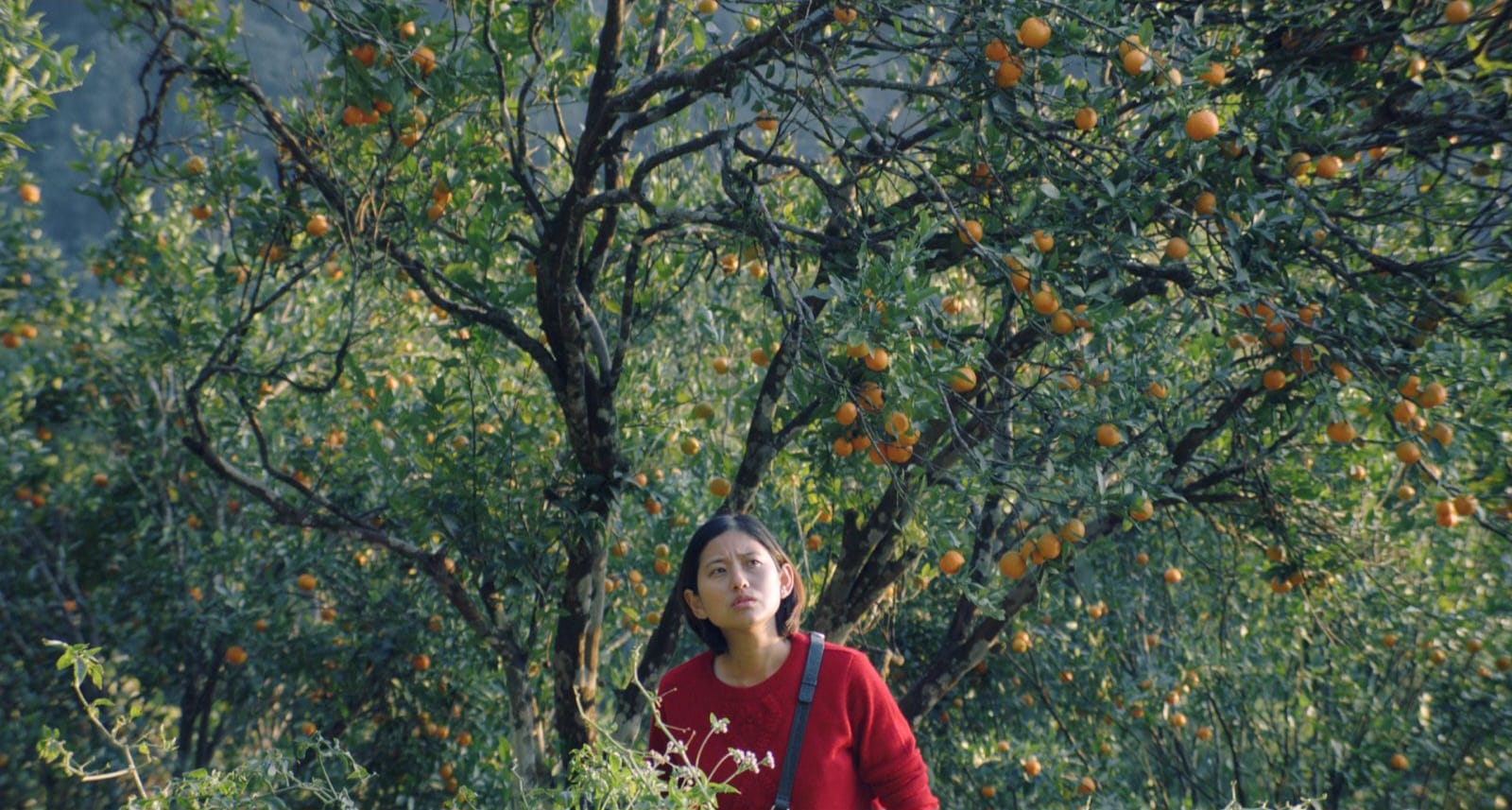
Wearing a red sweater against her mother’s orange orchard, framed spectacularly by Archana Ghangrekar and Rai, Bishnu becomes a misfit in her own village. She returns to her home, which has undergone a major change while she was away, or perhaps all this time, remained the same while she evolved. This realisation makes her question or scoff at everything around her: be it the ingrained sexism she faces from a labour and then from her love affair, Gyan (Rahul Nawach Mukhia), her sister Junu (Shyama Shree Sherpa) being abandoned by her husband for the want of a son, or even her grandmother’s (Bhanu Maya Rai) deferred desire to migrate to Dubai with her uncle, who never even picks up her calls.
These instances contribute to Bishnu’s disillusionment, but she soon tries to fix things around her. Be it Bishnu asking her sister to complete her degree, or responding to Gyan’s patronising statement about women not smoking, or even arguing the reception at the hospital when they ask for the name of Junu’s husband, even when he does not accompany them to the hospital.
In one of the major instances, her mother says to her, “To live in the village, you must endure and tolerate. This is not your Delhi.” Bishnu replies, “I will not endure, I will not tolerate.” The mother breaks out, “Then leave the house and go.” The statement becomes the mirror through which Bishnu searches for her belonging, an inclusion with the land which has raised her. This is where the reality, now much more conspicuous, comes to life, and Bishnu finds herself as a refugee in her own homeland.
Migration becomes a multifaceted concept within the film. Rai does not deal with a simplistic story of movement from the city to the village, but rather opts for an intersectional lens. In the process, she integrates class, gender, and community, focusing on the facades but also the interiority of the process of migration. Bishnu’s migration becomes a catalyst through which other tropes of desire, displacement, and dignity are evoked.
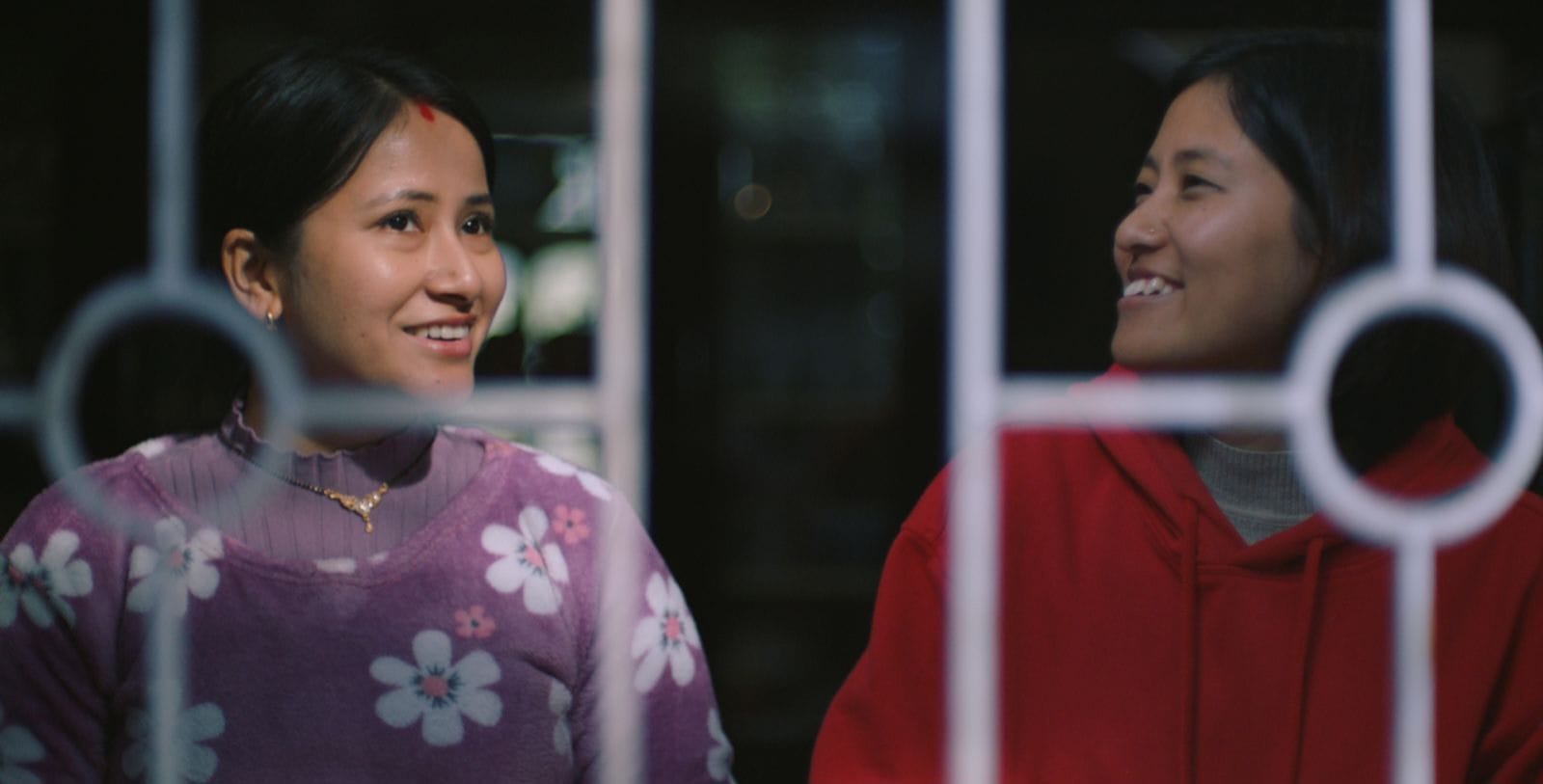
Bishnu’s grandmother constantly seeks her freedom and mobility through advertisements on her iPad, learning the vocabulary, yearning to explore Dubai, desiring to fly in a “big aeroplane”, while seeking the filial support and care from her absent son. Junu, once a passionate footballer in her youth, is now married and heavily pregnant, and constantly pursues acceptance from her husband and in-laws. Bishnu’s mother still hangs the clothes of the absent men of their family outside to ensure security from any kind of external dangers. In each case, the women of her family would go on to organise their emotional worlds around physically absent men.
One must question, then, why does patriarchy linger long after the men of the family have gone? Why must a female household, having accomplished emotional and financial security, continue to find refuge in places which lead nowhere? Why must the grandmother continue to desire to migrate, but also expect? Why must Junu learn to make perfectly shaped momos when the hands that shape them are not even gently held for once? These are all instances where migration functions as something more than a physical journey, as a quest to the self, where the women would search for their identity and belonging, always in association with their male counterparts.
While Rai raises these questions around migration and female agency, she makes the narrative much more profound while integrating migration with class and community. She focuses on the push and pull framework, making the narrative an anti-homecoming for Bishnu, whose return is marked by alienation rather than belonging. Parallely, she focuses on the labour class, who migrate to the region for better livelihood while facing several issues of a lack of dignity, along with housing security.
While the construction workers continue to live in lands owned by the Bishnu’s family, always perceived through the gaze of suspicion, there is another set of tenants who reside on her mother’s orange orchards. The double marginalisation of their class takes place, where an already marginalised household would be prejudiced towards the working class.
Bishnu, having been exposed to the cosmopolitan culture of the capital, would give in to her class privilege. She enters into a conflict with her tenants when her mother agrees to a one-time payment of their rent. Insisting that they record and admit this in a video, Bishnu showcases her entitled behaviour and insensitivity.
We find the teenage boy, one of the tenants, making sexist remarks towards Bishnu, and at other times, resisting silently. In both situations, it is the deep-seated anger and resentment because of his class position within him which takes unpleasant manifestations. Padam, the only male worker working for the family, can be casually asked to leave anytime by Bishnu if he does not perform his tasks to the best of his ability. Such instances in the film showcase the perilous nature of belonging for different sections of society.
In fact, Bishnu’s desire to open her homestay functions more like an irony, where the ones already staying in her homeland are asked to leave the land and relocate, where on their lands, a “scenic” homestay would be constructed to attract tourists. In no seconds, their homes become meaningless, and their lives are rendered disposable. Their actions, practices, and sometimes, the very existence, pose a danger to the local inhabitants like Bishnu, where Bishnu’s desire to belong contrasts with her tendency to deny that very possibility to others.
Bishnu, in multiple ways, reminded me of Ila from Amitav Ghosh’s The Shadow Lines, another postcolonial text dealing with memory, freedom, and migration. Both women would desire freedom and independence for themselves, while being estranged from the lands that have raised them. As non-conformists, both would migrate to metropolitan cities, learning and unlearning their upbringings, but would sit with the bitter realisation of finding their roots deeply fractured back home. Unsurprisingly, they would seek freedom from people who are not free themselves; they will look for independence in spaces which are highly constricting. Their unfortunate fate is such that they will continue to anticipate liberation while bearing the burden of making perfectly pleated momos and the unforgiving shadow lines that will continue to crush their expectations, repeatedly.
The film finds its core in Bishnu’s mature realisation that perhaps some things cannot be fixed, or perhaps, were never hers to fix in the first place. In one of the most poignant scenes of the film, Bishnu lies in her mother’s lap, where her mother tells her, “Your battle will never stop if you stay with people, things, and situations”, showcasing the internal and external turmoil which comes to define Bishnu’s homecoming.
Bishnu says, “Isn’t it strange? It is the things that tangle and exhaust us that make us who we are”. While she describes her relationship with her mother while saying this, it is also true for her bond with her village. Though Bishnu remains where she was always supposed to be, except for the land beneath her feet, everything else has drastically changed irrevocably. Bishnu may eventually find the light at the end of the tunnel, but for now, the tunnel itself is her home.
Zainab is an independent writer, researcher, and filmmaker based in New Delhi. Her work focuses on gender, decolonisation, identity, and cultural criticism.