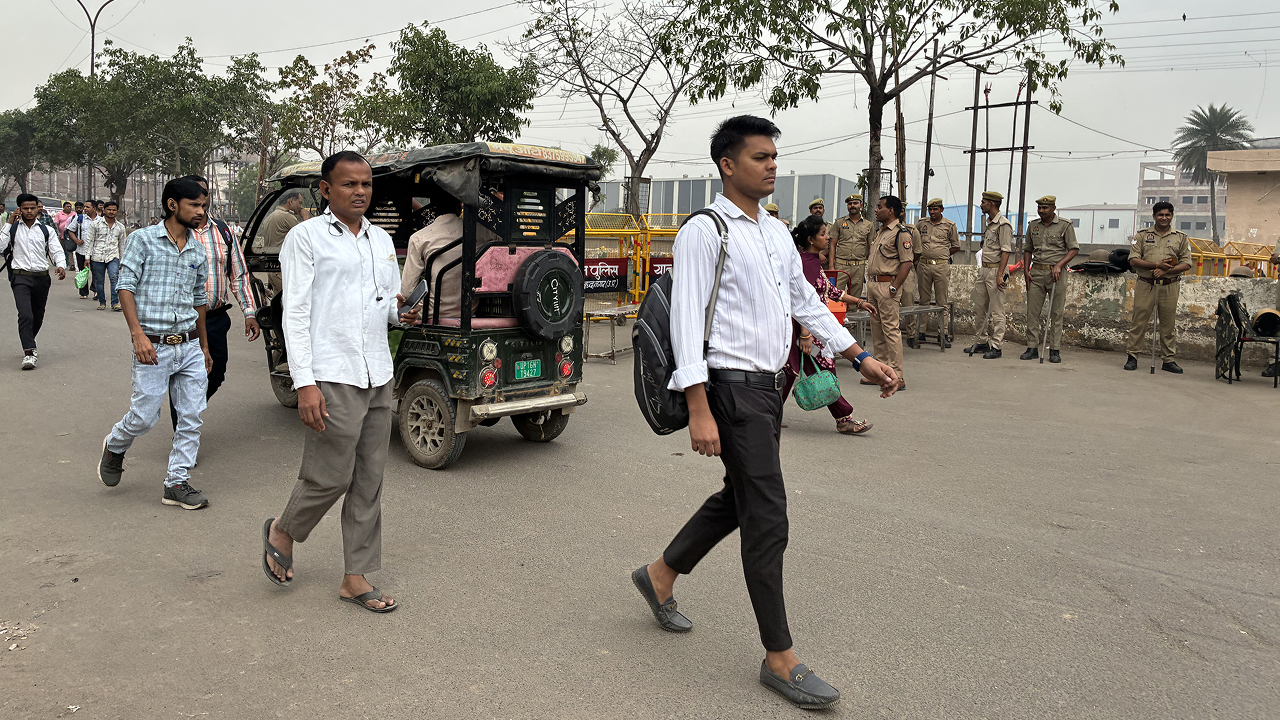
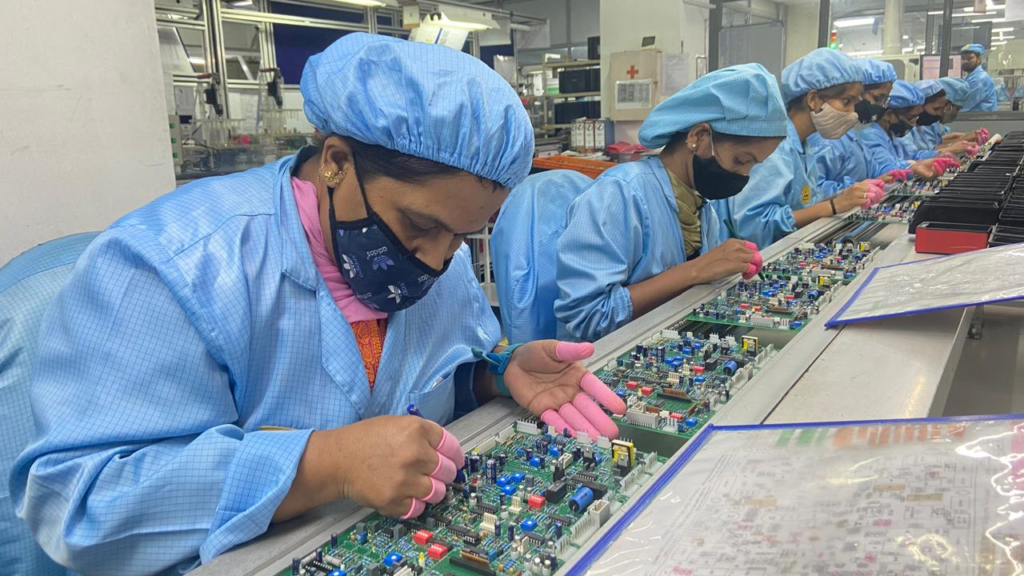
The recent labour protests across Noida and Haryana, now proliferating across several industrial clusters, are not simply isolated episodes. Instead, the protests point to a larger fissure. There is a vast divergence between India’s economic growth model and the harsh daily realities of the workers comprising its foundations.
The flashpoint of these protests is apparent. The ballooning costs of daily living, including rising fuel costs, long queues for LPG cylinders, and rental expenses have rendered the daily lives of low-wage industrial workers unliveable. Yet, worker discontent over unfair working and living conditions has long been festering – and is symptomatic of a deeper, more structural malaise.
The root of the problem is that worker wages are depressed – deeply concerning not just from the perspective of basic human dignity, but also because any economic model premised on depressed wages and low corporate accountability is untenable in the longer term. Instead, a far superior, more future-forward model for India must be premissed on considering our workforce as a sizeable asset as opposed to a disposable input to industry.
It is first necessary to note that the way our current wage model is configured differs vastly from its origins. For us to truly understand the current worker discontent, we need to travel back in time to India’s wage-setting foundations.
Back in 1957, the 15th Indian Labour Conference in Delhi developed a comprehensive framework for minimum wage. It was premised on basic human dignity. Understanding that every worker has a right to basic needs such as food, clothing, housing, fuel, electricity, education, and healthcare, the kernel of this initial wage framework recognised wages not merely as a tool for survival, but one which could help realise dignified living for all.
The minimum wage at the time was hence derived from what we call a combined “basket” of essential goods. Picture a basket containing food, housing, clothing, and all your basic needs: that is how the minimum wage was derived. The minimum wage calculation assumed, for example, that every adult would need at least 2,700 calories of food per day, and every household 72 yards of clothing per year. Housing was computed at 10% of the food and clothing costs, and electricity and fuel at 20 % of that combined basket. An additional 25% of the wage was derived from workers’ needs for education, healthcare, recreation, marriage, old age, and other contingencies.
When the year 1992 came along, we witnessed the reinforcement of these ideals via the Supreme Court judgement in Workmen vs. Reptakos Brett & Co. Ltd. This judgement was another watershed moment in our minimum wage history. It stipulated that minimum wages must include the cost-of-living index, as the same wage loses purchasing power over time due to inflation.
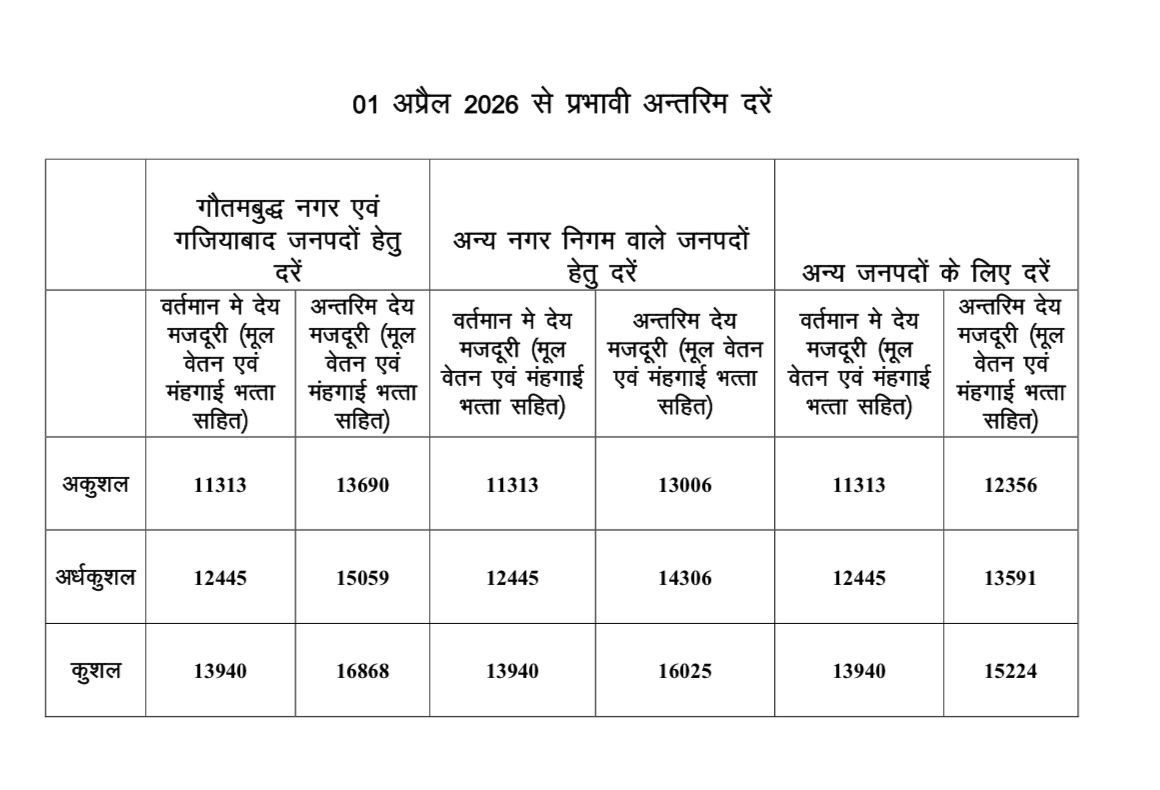
Sadly, our contemporary industrial wage structures have drifted far from their 1957 origins and 1992 reinforcement. Currently, the minimum wages for unskilled workers in Delhi stand at 18,456 rupees; in Gurugram at 15,220 rupees; and in Noida at 11,313 rupees. The minimum wage for Noida was revised upwards to 13,690 rupees on the heels of the recent worker protests. Despite this revision, the disparities between minimum wages and the cost of living remain staggering, apparent from the daily struggles of workers trying to live sustainably.
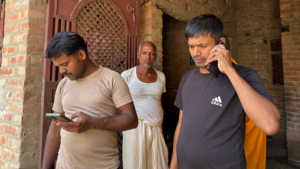
Shweta Mukherjee, who requested to go by a pseudonym, works at a garment export company in Noida’s Phase 2. When speaking with the authors, Shweta stated that she earns about 12,000 rupees a month, of which she pays 5,000 rupees in rent and 1,000 rupees on electricity alone. Her electricity costs double in summer, as does her water.
Aside from ensuring that workers have a living wage, we must also consider the differences in accessibility to public services across geographies. Delhi, Gurugram, and Noida may be spatially proximate, but the worker experience of accessibility to subsidised services, such as electricity, transport, and water, are highly variable. While these services are more subsidised in Delhi, workers in Noida and Gurugram repeatedly find themselves incurring out-of-pocket costs for these expenses.
Meanwhile, if you readers find your escalating city rents worrisome, low-wage workers have it far worse. As per original calculations back in 1957, rent was conceived as roughly 10% of a worker’s food and clothing costs. At present, various media outlets widely report workers paying at least 5,000 rupees a month on rent.
Another axis of the problem is that migrant workers are faced with further precarity – the housing crisis hits them the worst. In the absence of documentation, many migrant workers are unable to access welfare services. While efforts towards housing do exist, such as Noida’s Shramik Kunj, these efforts do not sufficiently cover even 1% of the workforce.
Scholars have long argued that depressed wages are detrimental not just for human dignity but also for longer-term productivity. As per economist Amit Bhaduri’s wage led-growth framework, the suppression of wages may work in the short term but significantly weakens people’s consumption demand in the longer term.
We tend to look at economies from the perspective of firms alone, but the reality is that the workers who are integral to our workforce are consumers too, and it harms the economy when they are unable to afford basic living.
Meanwhile, others, such as economist Ha Joon Chang, have argued that models premised on depressing worker wages can result in firms having fewer incentives to emphasise on technology and innovation. Simply put, any industry which relies on keeping wages low rather than constantly evolving to be at the frontier of different fields tends to innovate less.
All in all, it is imperative that we address these deeper structural issues, of which these worker protests are a bellwether. It is time to reconnect wages with their origins: the idea that they are not simply a survival tool, but that which enables dignified living for all.
It is never too late for us to remember that decent working conditions are not only essential for human dignity but also for healthier economies.
Dharmendra Kumar is Founding Secretary of non-profit Janpahal and works on labour and trade issues.
Namrata Raju is a labour and public policy researcher who advises governments, UN bodies, companies and trade unions on ensuring decent working conditions for all.