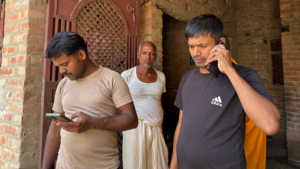
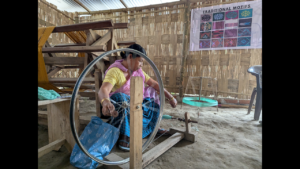
As summer temperatures soared and the monsoon arrived late, migration continued to remain at the centre of several unfolding stories this month.
Extreme heat disrupted agricultural work, altered migration patterns and reduced workers’ incomes, while reports from Singapore, Thailand and across Indian states highlighted the vulnerabilities of migrant workers: from wage theft and bondage to online misinformation and political scrutiny.
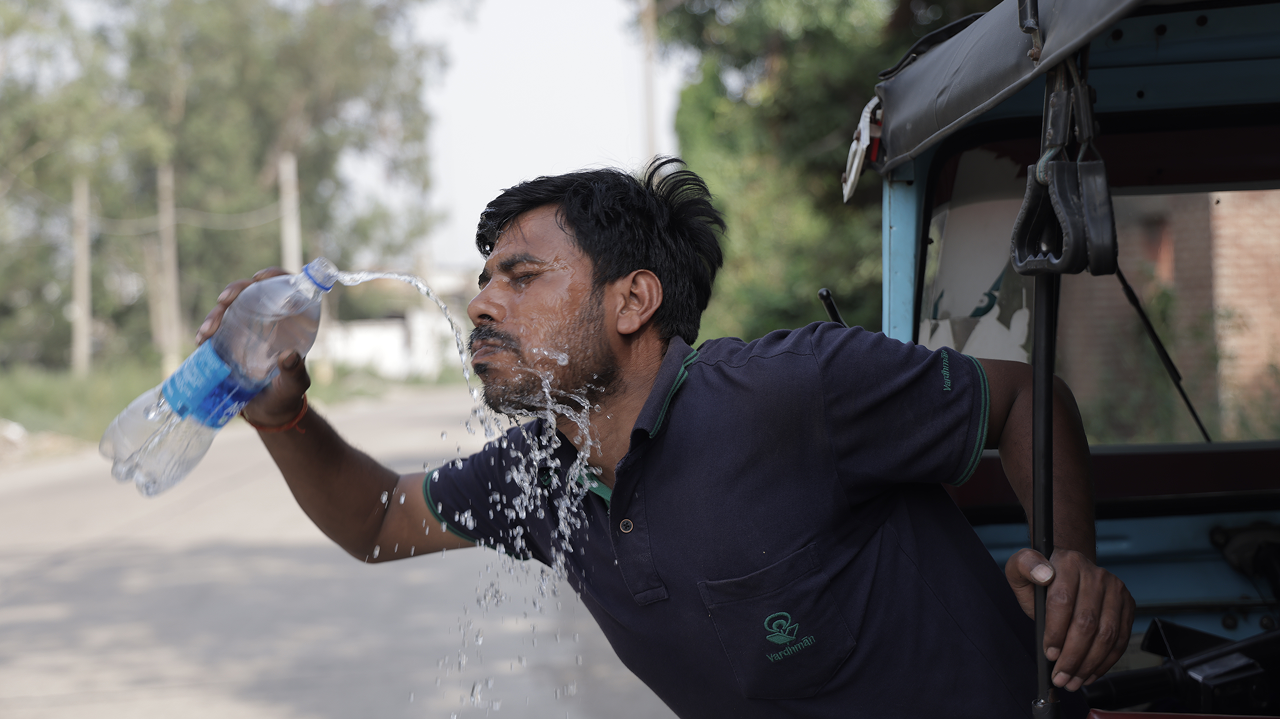
The harsh summer, continued spells of heatwaves and delayed monsoon due to the super El Nino Effect have adversely impacted farming activities.
A report by ETV Bharat from Punjab, highlighted how transplantation of paddy, which usually takes place in the first week of June, has been delayed due to extreme heat and shortage of migrant labourers.
Paddy transplantation in Punjab relies heavily on migrant farm workers.
“Farmers from various villages of Punjab, who have reached Bathinda railway junction to receive migrant labourers, said the arrival of labourers to Punjab has come down,” the report said.
For those who arrived, the labour charges were revised to 5,000 rupees from 4,300 rupees last year, per acre of planting the paddy.
The heat also impacts the working days for these farmers.
In a study by the UK based nonprofit Energy and Climate Intelligence Unit (ECIU), as highlighted in this news report by The New Indian Express, Indian farm workers lose nearly 81 working days a year due to heat stress, the highest number of work hours lost among the countries studied.
It stated that this sustained heat pushes migrant labourers from eastern states of Bihar, Bihar, Jharkhand, West Bengal and Odisha to travel to northern cities like Delhi and Gurugram to look for work and earn additional income during the lean agricultural season.
Jagannath, from Odisha, who was contracted to clean the sewage system in a posh Gurugram locality ahead of monsoon, was quoted as saying in the report : “What five of us could finish in a week now takes us 12 days because the extreme heat is affecting our work schedule. We generally work during the early hours, but fewer working hours are impacting our income, which we need to support our farming back in the village.”
Another story in the Associated Press – ‘How one Indian textile worker copes with extreme heat in factory work and cramped living quarters’ – looked at the life of migrant workers working in Surat textile units, during persistent periods of heat spells.
An excerpt from the report : Over 200 workers live on two floors that are essentially huge halls divided into plywood cubicles that each house up to 10 people. There is little ventilation apart from a few ceiling fans. Temperatures have already reached 38 degrees Celsius (100 degrees Fahrenheit) this summer, making both the factories and the workers’ housing feel stifling.”
The Singapore government has found itself responding to two separate developments concerning its Indian migrant population in recent days: one involving online misinformation targeting Indians and another addressing the plight of hundreds of Indian and Bangladeshi workers left without wages by their employers.
Strait Times reported that Singaporean authorities had ordered social media platforms to block access to 14 online posts targeting the Indian community by suggesting that Singapore was being overrun by Indians.
The report further added that Investigations showed that the content most likely originated from a platform based in China and was subsequently carried on other platforms and websites, the Ministry of Home Affairs (MHA) said in a statement on June 6.
The Strait Times report quoted the MHA as saying : “Singapore firmly opposes nativism and xenophobia. Any attempt to pit one community against another here must be firmly rejected. These attacks coming from a foreign source are doubly unacceptable.”
The report further stated that the MHA called these posts malicious efforts to sow discord by inciting ill-will against the Indian community in Singapore.
“This includes Indian migrant workers in sectors such as construction who are here to make an honest living. They contribute to Singapore’s growth and development, and are valued members of our society,” the MHA was quoted as saying in the Strait Times report.
Separately, Singapore announced emergency financial assistance for around 400 migrant workers from India and Bangladesh who have been stranded in the country after allegedly going unpaid for up to four months by their employers.
The workers, employed by KPA Engineering and its related firm SK Industries, had approached the Ministry of Manpower earlier this week seeking intervention after months without salaries.
The National Trade Union Congress (NTUC) and the Migrant Workers’ Centre (MWC) announced that each affected worker would receive SGD 100 in cash and SGD 100 in FairPrice supermarket vouchers to help meet their immediate needs. In addition, NTUC has identified around 150 construction job vacancies across 40 employers over the past two days to facilitate alternative employment opportunities for the workers.
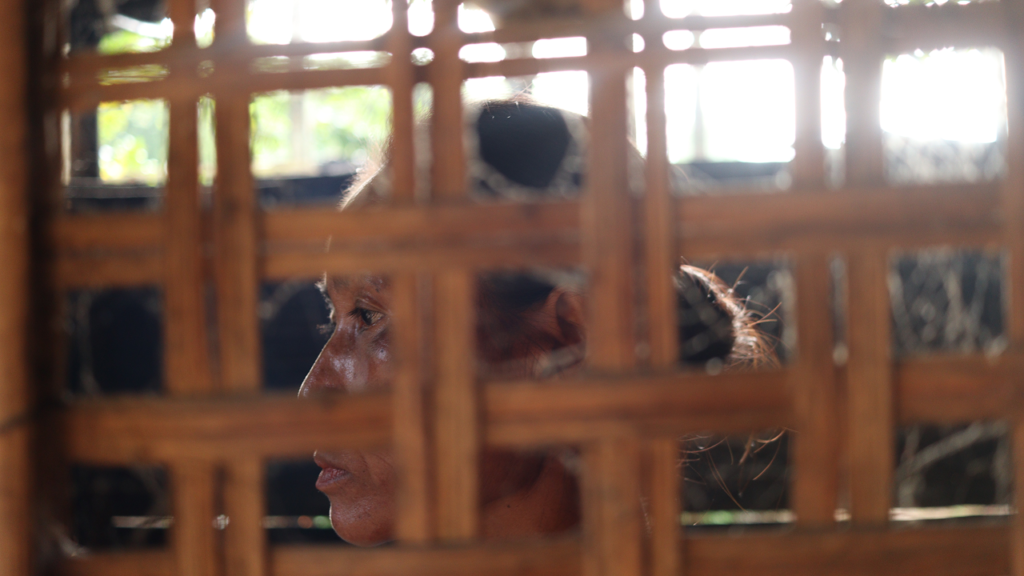
In separate incidents reported from Tamil Nadu, Kerala and Thailand, migrant labourers were rescued from captivity.
In Tamil Nadu, 41 migrant workers from Chhattisgarh, including 22 men and 19 women were rescued from a goshala in Tiruvallur after alleging unpaid wages, physical assault and intimidation by the owner, according to a news report in DT Next.
Recruited at Sri Gokula Krishna Goshala in Devandavakkam village near Uthukottai, they were promised 500 rupees for men and 300 rupees for women as a daily wage.
The women alleged that they were beaten and when they asked for their wages to return home, they were not allowed to leave. They were rescued after the district labour department initiated an inspection.
In yet another incident from Kerala, as reported in The Hindu, seven migrant workers were rescued in Kochi. They were allegedly held captive by a gang that promised them jobs in Canada. The victims studied up to class 8th and hailed from Haryana, Punjab, Madhya Pradesh and Karnataka.
Each victim had reportedly also paid a sum of 30 lakh rupees for the job.
As reported by The Hindu and The New Indian Express, the police said that the accused had set up boards displaying images of Canadian locations inside the house and the victims were filmed standing in front of them.
The videos were then sent to their families to convince them that the victims had reached Canada, convincing them that the migration process had been completed and helping them extract money from the victims.
The Odisha government also sprung into action after five men from Kendrapara district took to social media to share that they were stranded in Thailand, alleging they are being held against their will, denied wages, and subjected to mental and physical harassment, a report by ETV Bharat said.
A report in Pragativadi stated : Through video messages, the group described threats of violence and police action if they demanded payment or attempted to leave. One worker alleged that the company demanded ₹3 lakh for returning his passport. Another said he was denied permission to attend his mother’s funeral in India.
They had gone to the SouthEast Asian nation on a tourist visa but ended up working at a plywood manufacturing unit.
‘Less Educated Travel The Farthest’: Study
Based on the recently released State of Working India report 2026, IndiaSpend, spoke with Tamoghna Halder, co-author of the report to understand migration and its correlated patterns based on the report. The Q&A highlighted that currently in India, there are no official surveys that can present an accurate picture of migration at either intra or inter state level.
Shedding light on the education profile of migrants, Halder stated that the report found that “the informal migrant, is not the lower educated older worker but increasingly, they are young and have relatively higher levels of education, reflecting a direct consequence of two decades of expanding educational enrolment across India.”
Analysing data from India’s eShram portal, Halder stated that among the unorganised sector migrants, it is the less educated who travel the farthest. The more educated tend to stay closer to home.
Migrant worker monitoring
Tamil Nadu BJP president K. Annamalai called for a formal mechanism to monitor workers entering the state, according to a report in The South First.
His remarks followed a series of recent crimes allegedly involving migrant workers, including the death of a three-year-old girl in Gummidipoondi, who was allegedly sexually assaulted by a migrant worker from Bihar, and another case in Adhanur involving the alleged sexual harassment of a 10-year-old girl.
As per the report by South First, referring to these and other recent incidents, Annamalai claimed that there had been a noticeable increase in crimes allegedly involving migrants from northern states. He cited cases of chain-snatching, sexual harassment, assault and rape reported in Chennai and neighbouring districts, and questioned whether the state government was doing enough to prevent such crimes before they occurred.
While acknowledging that interstate migration for employment is a natural phenomenon, Annamalai argued that Tamil Nadu should introduce a system to document and monitor migrant workers. He urged the government to require employers and contractors to furnish details such as workers’ native place, workplace, residence and the number of migrant workers they employ. “I urge the Tamil Nadu government to take immediate action on this matter… Owners employing labourers from North Indian states must furnish the government with comprehensive details… I strongly emphasize that the Tamil Nadu government must systematically monitor this,” he was quoted as saying.
A report by India Today stated that the remarks have reignited a politically sensitive debate around migration, public safety and labour mobility in Tamil Nadu. Supporters have described the proposal as an administrative measure aimed at improving worker registration and law enforcement, while critics have argued that linking crime to interstate migrants risks stigmatising millions of workers who contribute to the state’s economy and could deepen regional divisions.
Edited by Aishwarya Mohanty
Jasmeh Kaur is a media communications graduate from Symbiosis Centre for Media and Communications, Pune