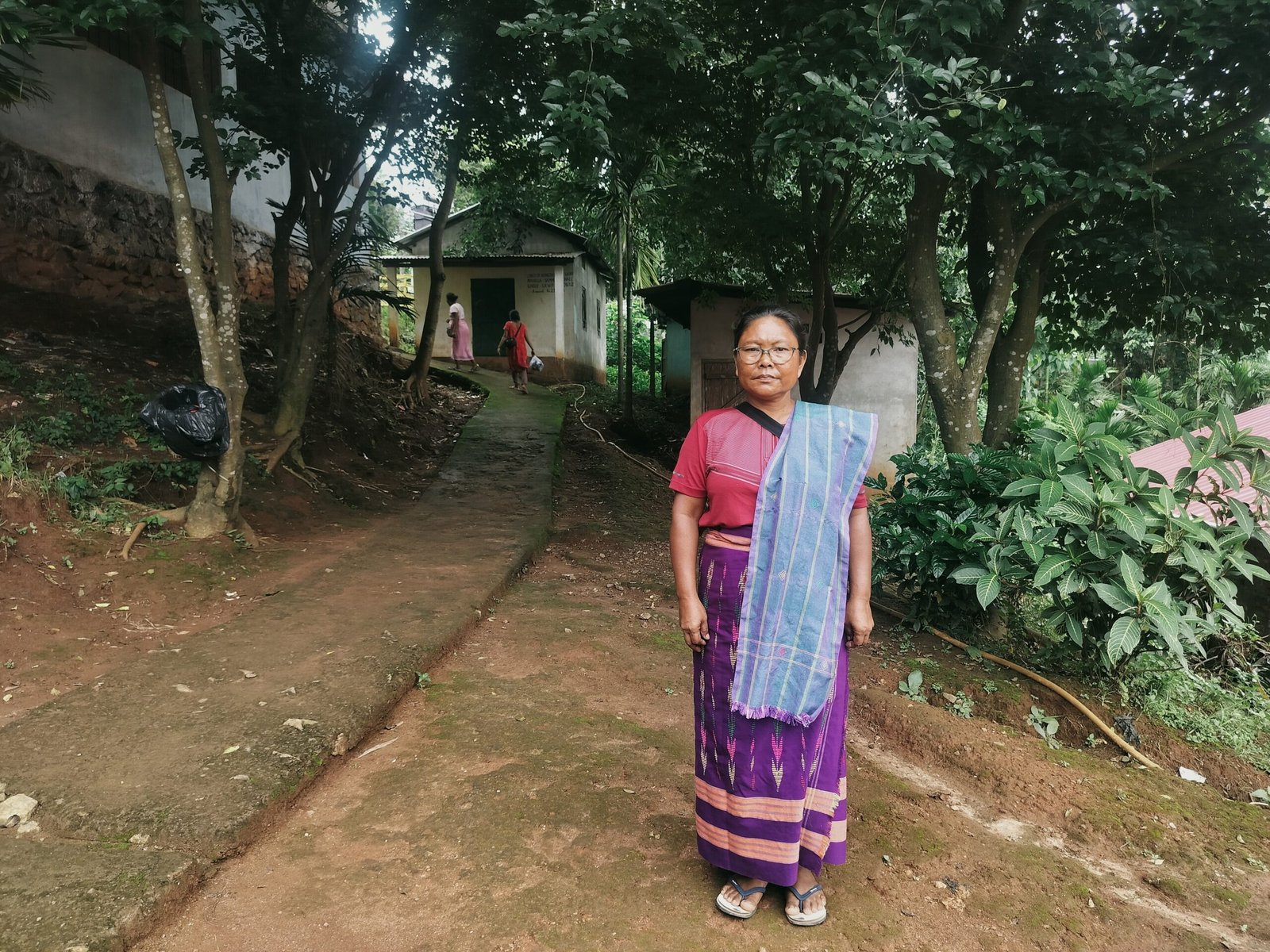
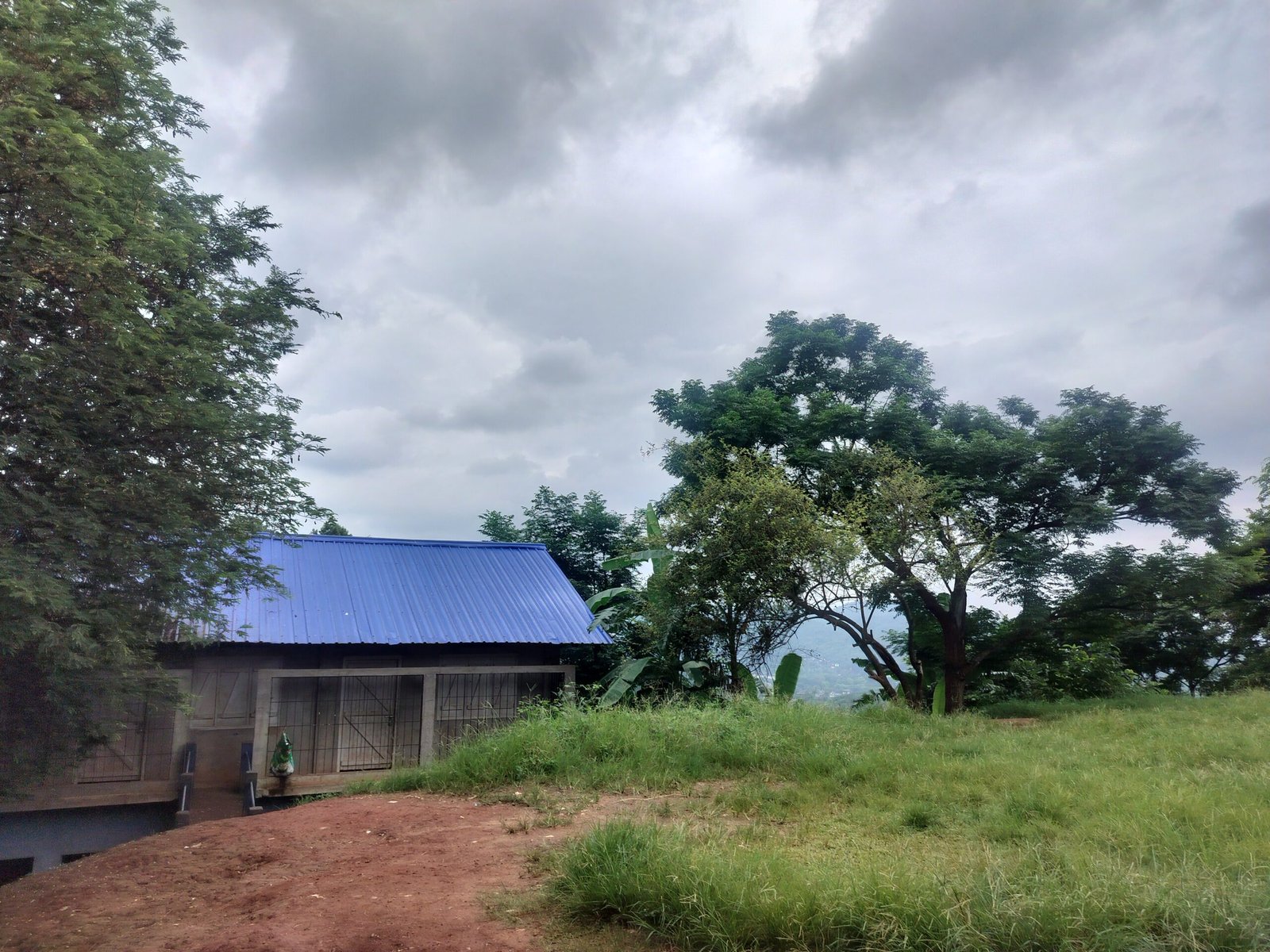
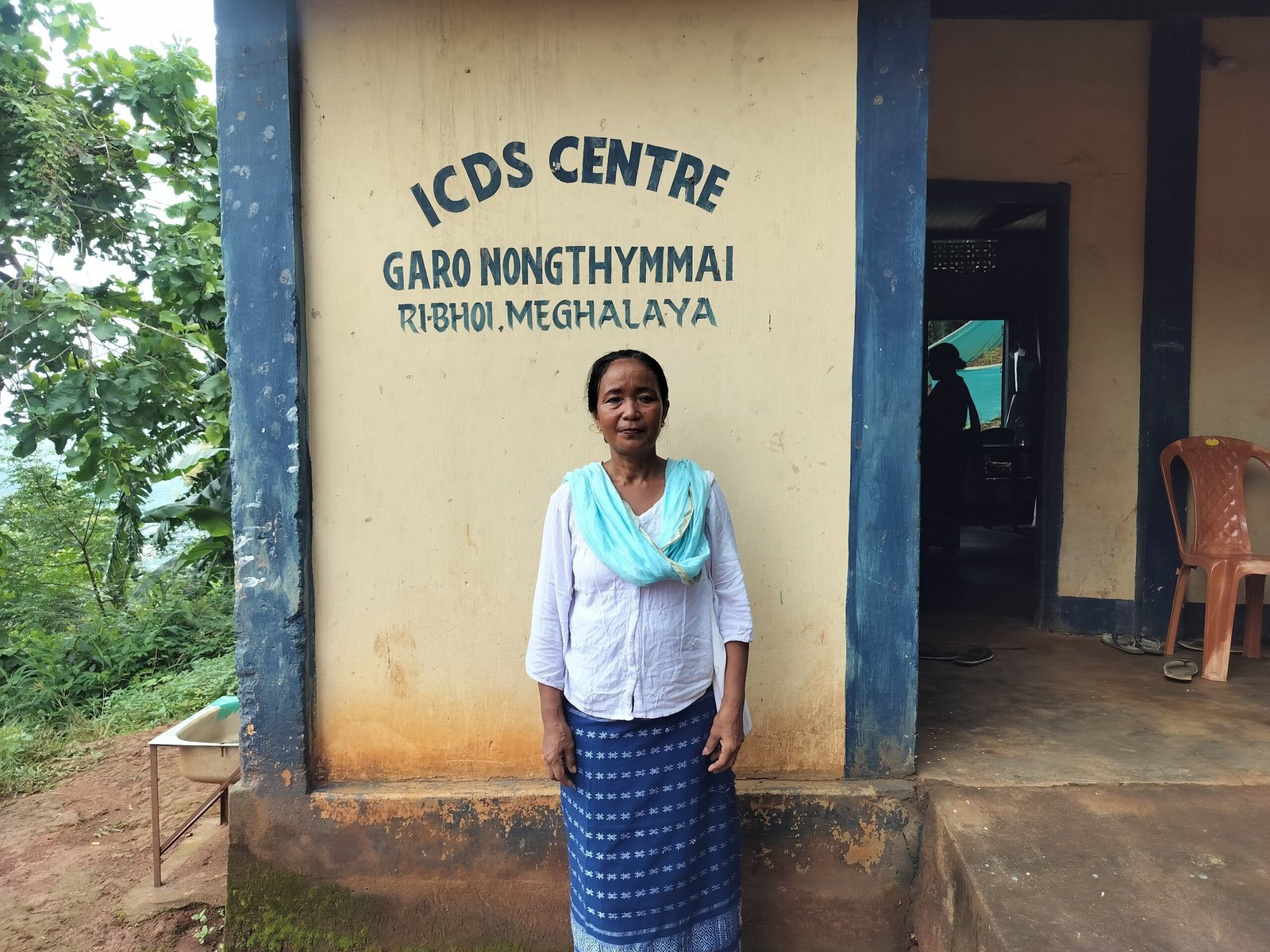
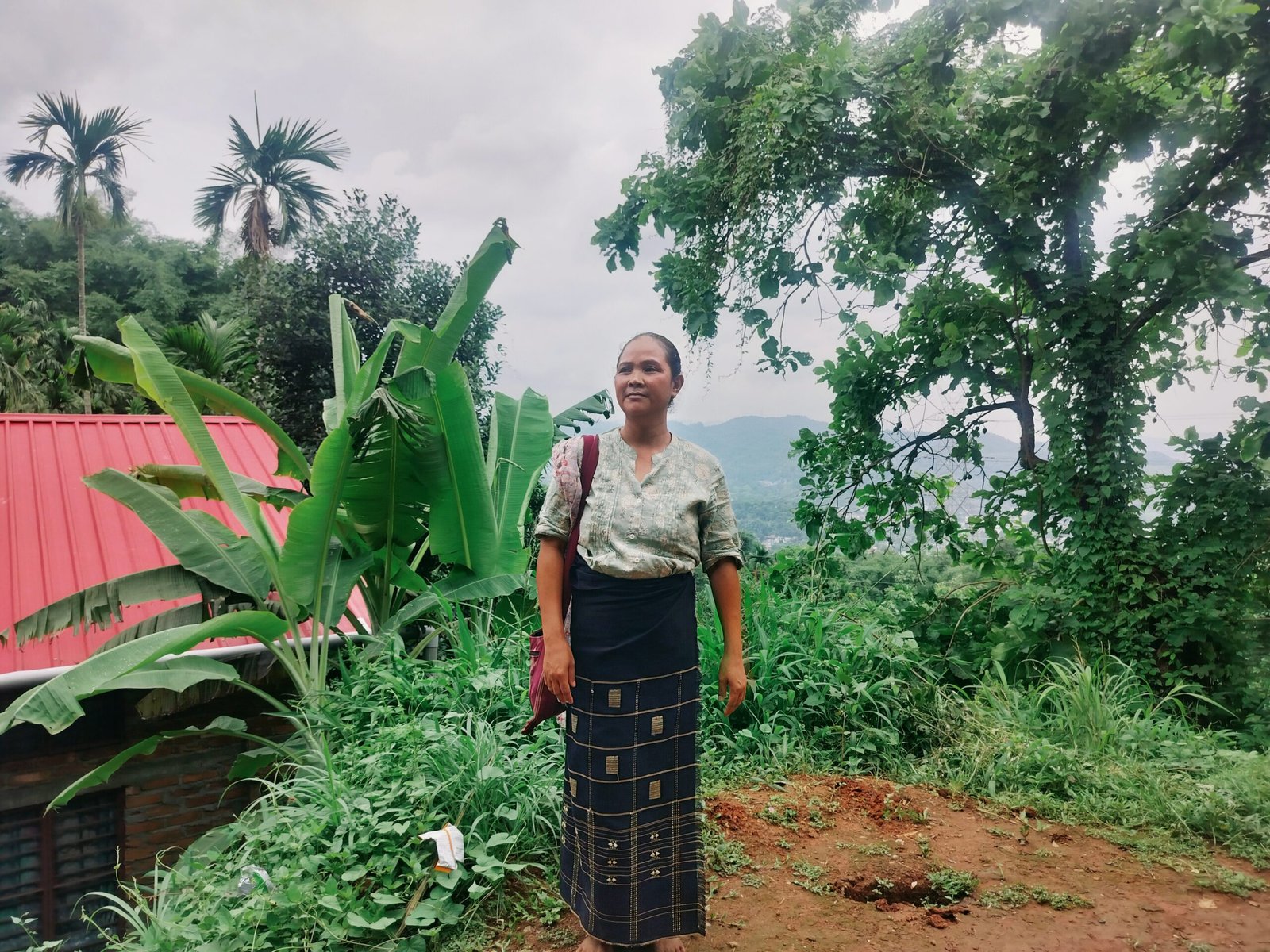
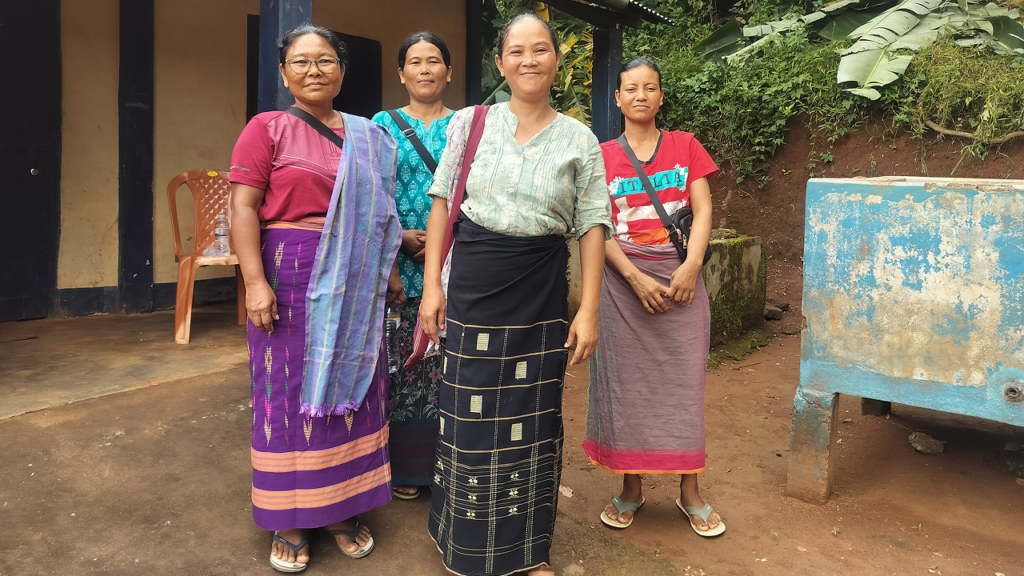
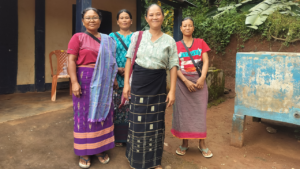
RI-BHOI, Meghalaya: On a humid morning in July, women begin trickling into the anganwadi centre in Nongthymmai, a green, hilly village in Meghalaya’s Ri-Bhoi district, lined with betel nut trees and small farms.
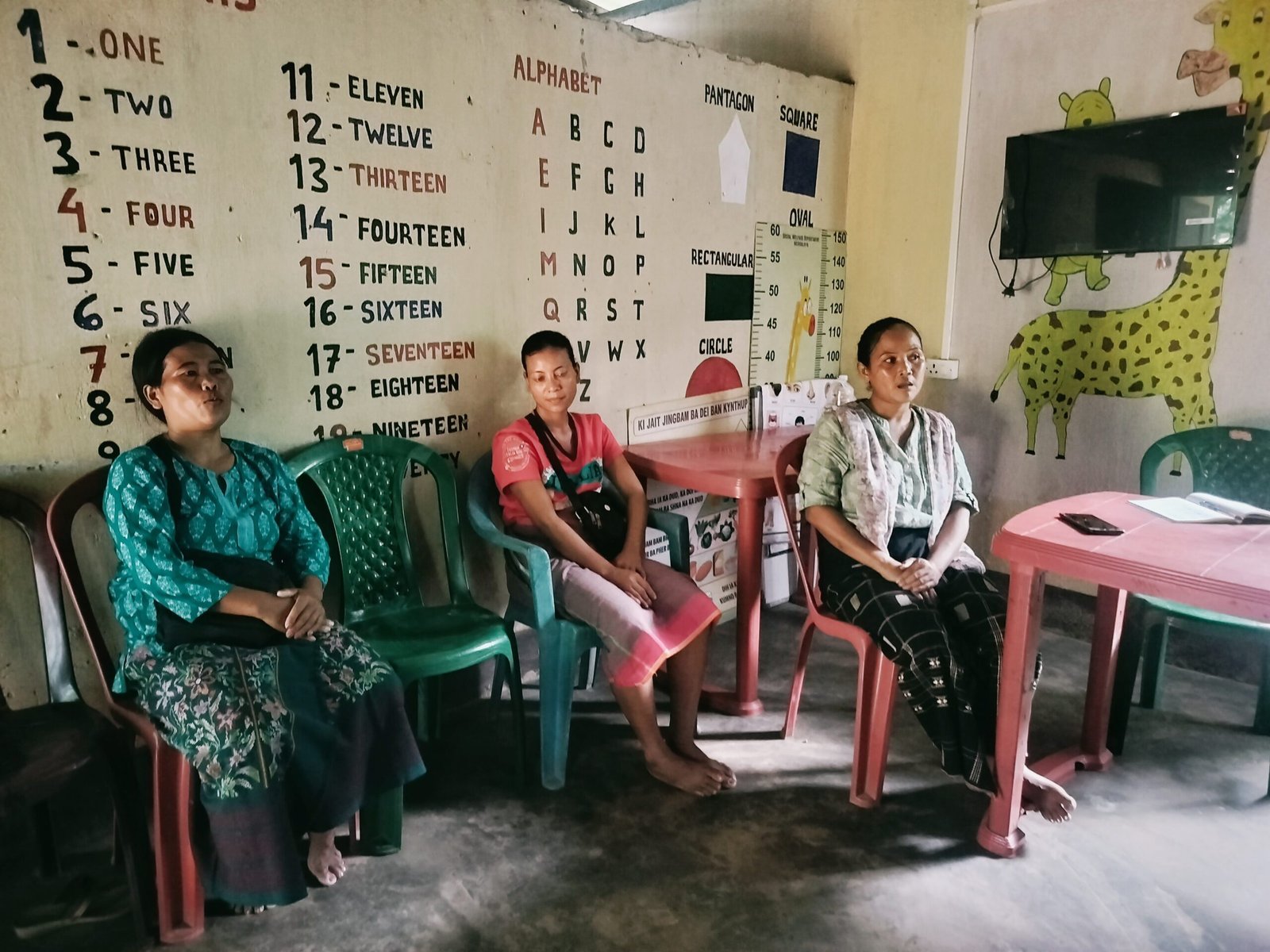
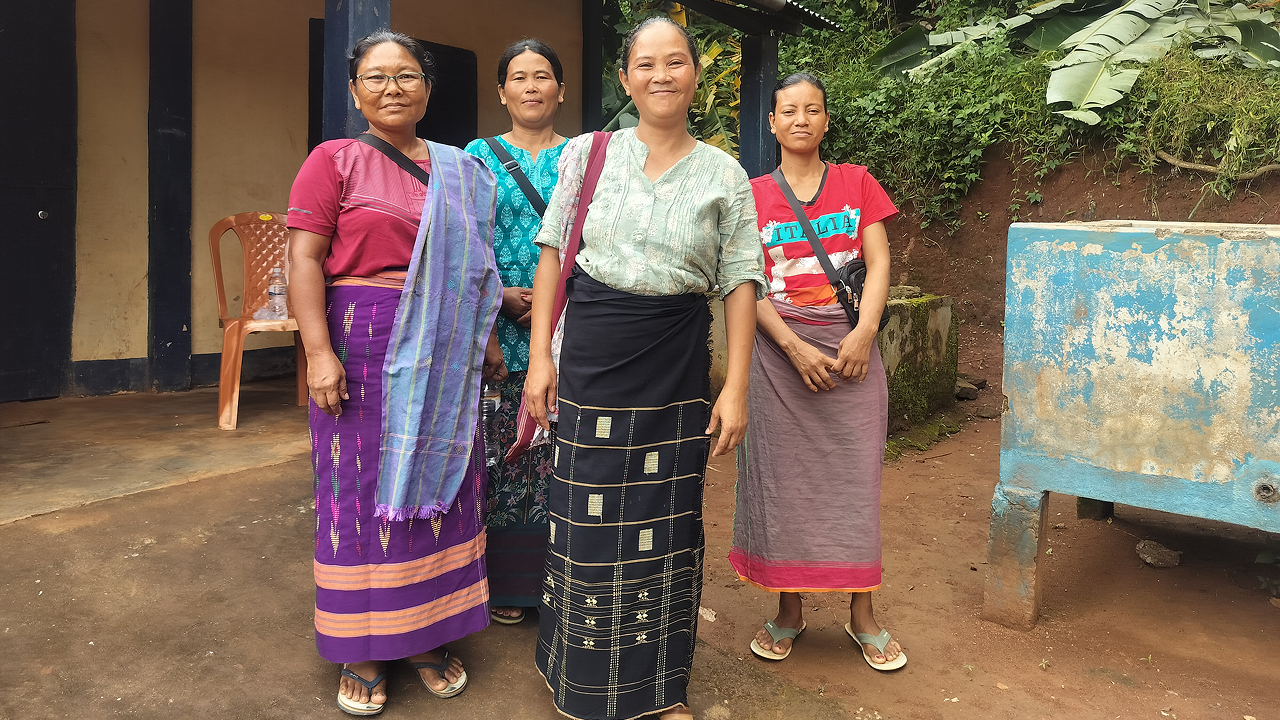
They are a part of a self-help group (SHG) called Sengwat. Inside, the women sit on plastic chairs, passing around thick ledgers recording loans, repayments and savings. Conversations float between children’s immunisation drives and upcoming meetings.
Among them is Brijita M. Sangma, 46, who up until seven years ago worked as a daily wage labourer on farms, MGNREGA sites, and in other people’s homes, never earning more than 200-300 rupees a day. On that meagre income, she found it very hard to send three children — two daughters and one son — to school, and meet daily expenses.
Cut to the present: Sangma runs a clothing shop and a ration store selling groceries. She even supplements her income by baking and selling cakes for weddings, festivals and other events in the village. From all this, she can make anywhere between 500-3000 rupees a day, she said.
This change came about in 2019 when women in Nongthymmai formed their first self-help group, Sengwat, under the National Rural Livelihoods Mission (NRLM). The aim was to provide easier access to credit and build small businesses.
And that’s exactly what Brijita did: she borrowed 5,000 rupees from Sengwat and used it to buy and sell clothes locally. She made enough money to repay the loan in a month. Later that year, she borrowed another 10,000 rupees and expanded the business by buying more clothes and even setting up a small shop to sell them.
“Before [Sengwat], there were a lot of problems,” she said. “Now because of the shops, I have a regular income and I am slightly relaxed.”
Today, Brijita helps her eldest daughter by caring for her grandson, who lives with her and studies at a school in Nine Mile, a prominent locality situated on the border of Meghalaya and Assam. She wants her youngest daughter, who is in Class 12, to continue studying. Her son, meanwhile, has taken on daily wage work to help support the family.
Self-help groups start small. Around ten or twenty women meet every week or month, and each woman puts in what she can afford to, sometimes just a few hundred rupees. That pooled money becomes a lifeline members can borrow against, for a hospital bill, a bad harvest, or a child’s school fees. After this process of lending, borrowing, and repaying on time exists for a while, the group then becomes eligible for a bank loan under the government’s rural livelihoods mission.
Put many of these groups together and you get a Village Organisation (VO), a kind of federation that brings training, market links, and access to government schemes.
Something much needed for women like Brijita, who comes from the Garo community, one of Meghalaya’s three major Indigenous groups, along with the Khasis and Jaintias. Like much of rural Garo Hills, Nongthymmai’s nearly 120 households remain closely tied to agriculture; census data from the district show large rural populations working as cultivators and agricultural labourers.
Due to the precarious nature of income from such work, Sangma, like many others here, considered leaving Nongthymmai before Sengwat started. “I thought of going outside the village to work,” she said. According to Sangma, women from Nongthymmai commonly migrate to Guwahati in Assam and Shillong in Meghalaya to work in hotels and homes. Some remain away for months or even years, she said, sending money home to support their families.
“Going out can provide an income that is difficult to find locally.” Had it not been for the SHG, Sangma said she would have left too. “Thanks to Sengwat, I could stay here and build something of my own.”
Ringbila Pungding, co-founder of the non-profit MOSONiE, which works with communities on livelihoods and access to resources, told The Migration Story that Nongthymmai’s relative proximity to Guwahati makes working outside the village an attractive option. Pungding estimates some women earn around 10,000–15,000 rupees a month, though she didn’t have precise figures.
People have been leaving Meghalaya for work for decades now, not for lack of trying at home, but for lack of options that pay. It’s a strange contradiction: the state has one of the highest female labour-force participation rates in India, with 60.9% of women and 66% of rural women working as of 2022-23, according to the Periodic Labour Force Survey. The problem is women here work in jobs that do not offer much security: farming, casual labour, and other informal jobs where the pay is thin and the income unpredictable.
That precarity shows up in the migration numbers too. A 2024 study using NSSO data found that among northeastern states, Meghalaya had the highest share of women migrating out for work, accounting for 39.2% of all female outmigration from the state.
Brijita’s decision to stay is significant in a village where women continue to leave in search of work. Today other women can consider staying back with their families. Nongthymmai, with a total population of around 620 people, has nine self-help groups with a total of 87 women that function under a central developing VO, and Pungding said she has seen the institution grow in recent years as women take up activities such as home-based baking, poultry and piggery.
Sangma is hoping that she can expand her baking business with the help of Sengwat.
“I want to bake more cakes,” she said. “I want to make my shop bigger.”
For Julie M. Sangma, 56, also from Nongthymmai of the Chesrang SHG, joining an SHG meant breaking away from the high-interest loans she once depended on. Before the SHG was formed, she often borrowed money from the village association, where interest rates could go as high as 10%. Through her SHG, she now accesses loans at 1–2% interest, which allows her to rear pigs and poultry along with her work as an Accredited Social Health Activist (ASHA).
Julie buys chicks from Umsing town in Ri-Bhoi district and raises them in the village, selling the fully grown birds locally. “I buy one for Rs 100 and when it grows old we sell it. Then one chicken becomes around 5 kg and we sell it for Rs 1,500 in the village itself,” she said. The income supplements her ASHA honorarium, which she said often arrives after two to three months. “My income has become better,” said this single mother of three.
For Jilmil N. Sangma, 40, of the Nikrimchi SHG, the SHG has grown into something larger than a source of affordable credit. After the SHGs were formed, the women established a Village Organisation. The organisation has since purchased a small piece of land where the women have begun cultivating pineapple, bananas, black pepper, jujube, betel nut and vegetables. “We have also started a kitchen garden at the VO and a nursery,” Jilmil told The Migration Story.
WHAT CREDIT ALONE CANNOT FIX
However, Shillong-based journalist and writer Patricia Mukhim cautions the success SHGs can yield, as that depends on the continuous support and training available to the women. She points to financial literacy, bookkeeping and business skills as crucial to keeping these groups viable.
The challenges go beyond access to finance and markets, Mukhim argues. “Matriliny is often misconceived as naturally empowering for women but it isn’t,” she said. Many women are not accustomed to making decisions outside the home, she argues, and may remain largely silent during SHG meetings rather than raising problems or seeking solutions.
In the Cambridge Journal of Economics, economist Jayati Ghosh cited a 2005 study by K. Kalpana from the Economic and Political Weekly, who says that when women’s groups seek bank credit, they end up dependent on the very institutions such as banks that are often shaped by red tape and other internal pressures. This has real consequences: pressure to repay loans quickly is one more reason poor women drop out of microcredit programmes altogether, on top of other burdens like medical costs or family migration. That same pressure also creates tension within SHGs themselves, weakening the trust and solidarity the model depends on. And because groups are often reluctant to admit women who seem financially unstable, it’s usually the most vulnerable women — the ones the programme is meant to help most — who get shut out.
“SHGs work on certain principles and the basic one is mutual trust where loans taken from the general corpus are repaid in a timely manner. The moment members default in repaying what they have borrowed the group collapses,” Mukhim said.
Sengwat is doing fine on this count, according to Brijita. Members are given 10 months to repay their loans, she said and if someone delays repayment, the SHG president and general secretary visit their home and request them to pay. So far, she said, members have responded to these reminders and repaid their loans.
“SHGs have brought banking services to their doorstep,” Dr Rajib Sutradhar, an assistant professor of economics at North-Eastern Hill University in Shillong, said,”While it serves as an opportunity for some to start their own business, releasing the constraints of capital, it also brings new forms of vulnerabilities and risks of indebtedness as many women are not used to taking loans and that financial literacy remains lower among tribal women in Meghalaya.” According to Sutradhar, when businesses fail to generate sufficient returns, women can also find themselves taking multiple loans to meet household and business needs, he adds.
Then there is the lack of exposure to different ways of working, which can end up in women replicating businesses that already exist rather than identifying new opportunities. Mukhim cites the example of women setting up similar vegetable stalls along the same stretch of highway, leaving both businesses struggling to make a profit.
“Training of SHGs must involve making them think out of the box,” she said, suggesting that they need to be taken out of the district and even out of the state for exposure visits to see how other SHGs manage.
It’s this gap between access to credit and the skills to use it well that the state has tried to bridge through a structured push into rural livelihoods.
The National Rural Livelihoods Mission (NRLM) arrived in Meghalaya through the Meghalaya State Rural Livelihoods Society (MSRLS), with the programme aimed at organising rural women into SHGs and building their capacity for income-generating activities.
The scale is considerable: MSRLS’s published progress figures show 43,159 SHGs and 4,407 Village Organisations, with more than 4.2 lakh households mobilised into SHGs, 3,928 SHGs received revolving funds and 2,425 were provided community investment funds.
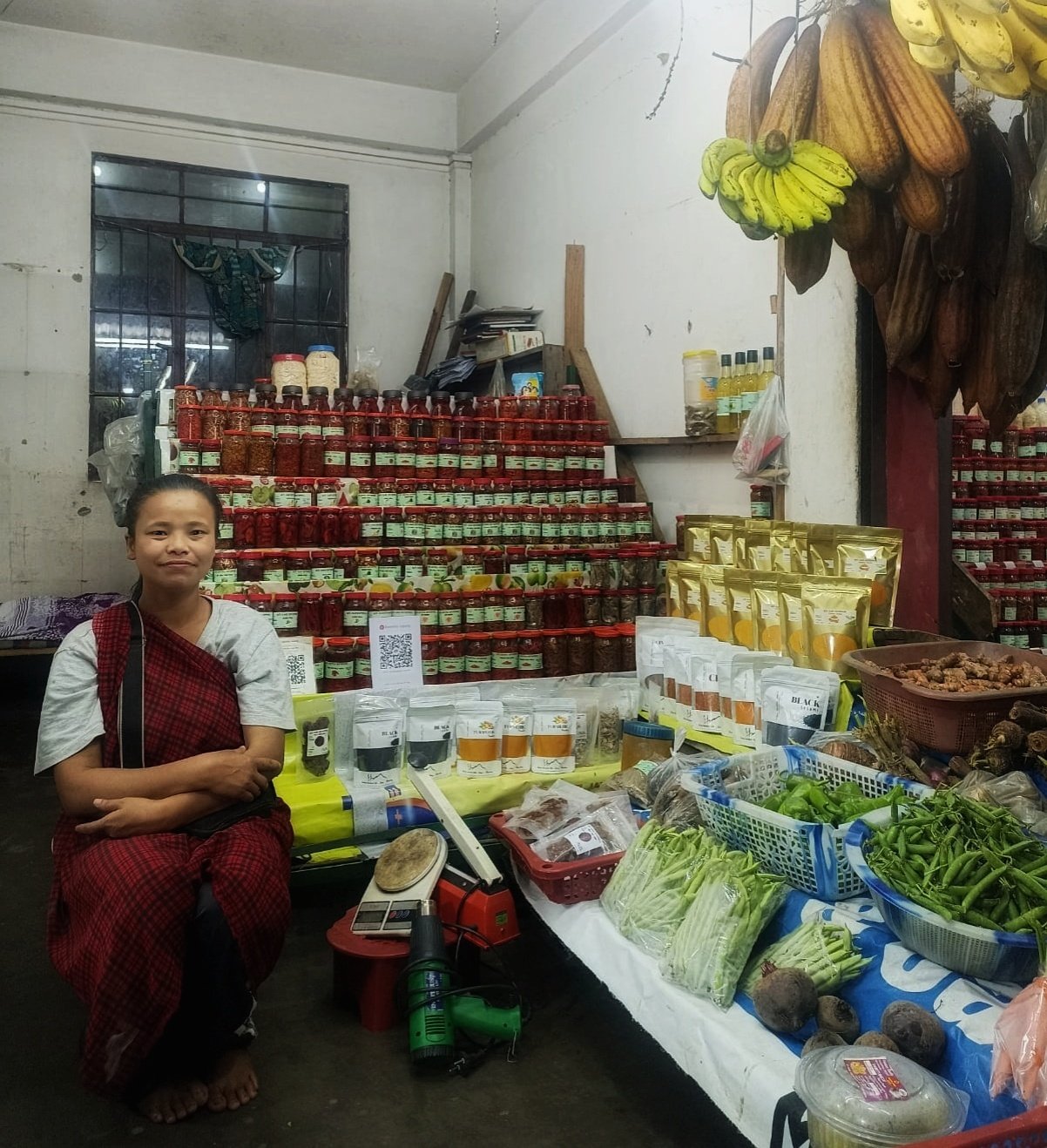
In Dulongnar near Nongpoh, Daio Kika, 35, runs a small shop along the busy Guwahati-Shillong highway, selling homemade pickles made from carrots, olives, jackfruit, radish, mangoes, jujubes, fish, pork, chicken and shrimp. The shelves are also lined with locally sourced spices, Lakadong turmeric, cinnamon, black pepper, honey and fresh fruits and vegetables.
Daio first opened the shop in 2019, but the Covid-19 pandemic forced her to shut it down within months. When she reopened in 2021, shortly after joining the 12-member Jingtylli Self-Help Group, she turned to the group for her first loan of 10,000 rupees. A second loan of 30,000 rupees allowed her to expand the shop and stock a wider variety of products.
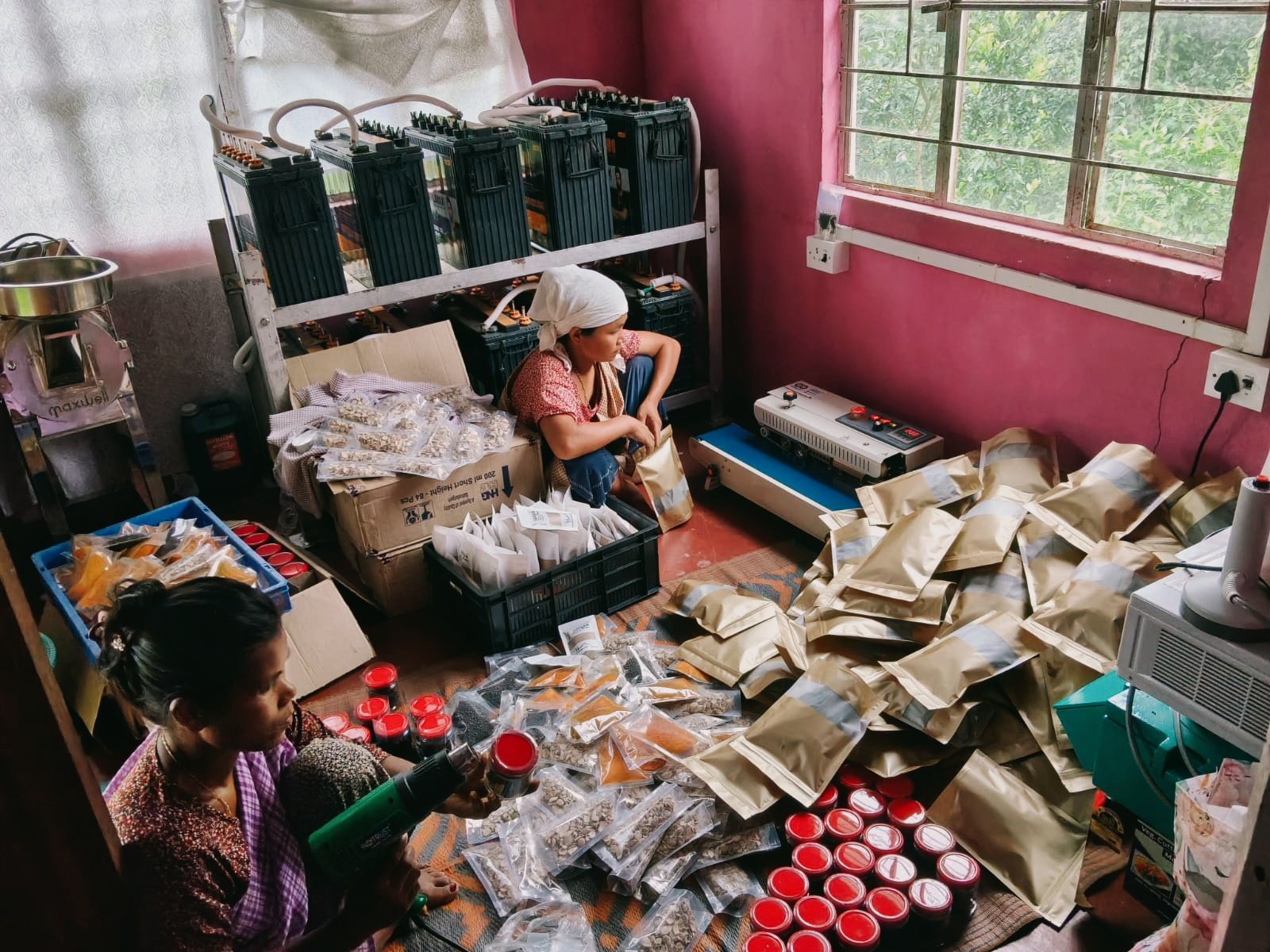
“When I first opened, I didn’t have much variety,” she said. “After joining the SHG, I could make the shop bigger.” Beyond credit, Daio said the SHG has helped members access exhibitions, improve product packaging and connect with buyers.
Today, she earns around 20,000 rupees a month. Her husband works as a daily wage labourer and driver, and together they support their three children.
Unlike Brijita, Daio never considered migrating herself. But she said many young women around her still leave in search of better-paying jobs.
Sutradhar said SHGs have the potential to reduce distress migration, but only if the skills and enterprises they support are connected to viable markets.
“These products need to find the market too to make the membership economically sustainable. This is where the state needs to step in big time,” he said.
Brijita agrees, and said the SHGs or the VO have not helped her access wider markets. She sells her clothes and baked goods entirely within the village and has not been connected to buyers outside the local market.
Not every SHG member’s experience matches hers, according to Arkinshngain Sohshangrit, a block project manager under the Meghalaya State Rural Livelihoods Society (MSRLS) in Umling village of Ri-Bhoi district. “There are SHG members who have supplied their products not only within Meghalaya but also to Assam,” he said.
While fruits are sourced directly from farmers, Daio still has to rely on middlemen to procure many vegetables and spices, increasing costs and reducing her profits.
“We want to buy directly from producers,” Daio said. “If we could get raw materials at lower prices, our businesses would grow even more.”
In Nongthymmai, although the VO has purchased a small plot of land, it still does not have a permanent office. Meetings continue to be held at the village anganwadi centre, where registers, account books and other documents are moved around because they lack a dedicated space.
“We want to make the SHG stronger,” Brijita said. “We want to improve the nursery, have our own office for the VO and build a toilet.”
The MSRLS was contacted for details on the operational status of SHGs, market-linkage and financial-literacy support for women, and safeguards against over-indebtedness. Its response will be incorporated if received.
For women like Brijita, Daio, Jilmil and Julie, the limitations do not erase what the groups have made possible.
“Without the SHG, I couldn’t have done what I am doing now,” Daio said. “When women know they can get financial help, even in an emergency, they don’t feel they have to leave their villages. They want to stay here and support each other.”
Sanskrita Bharadwaj is an independent journalist from Assam
This story was done as part of the Groundswell grant launched by The Migration Story in June 2026