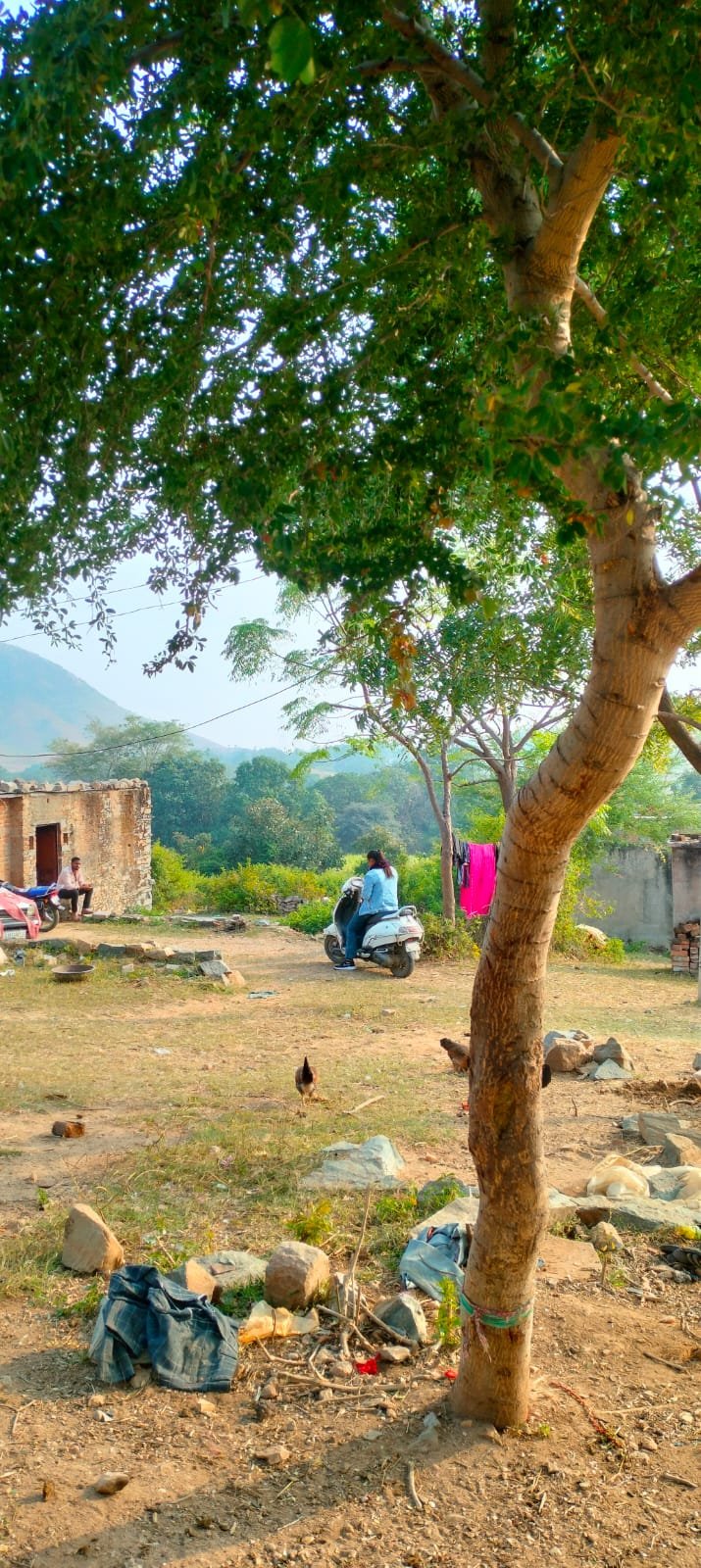
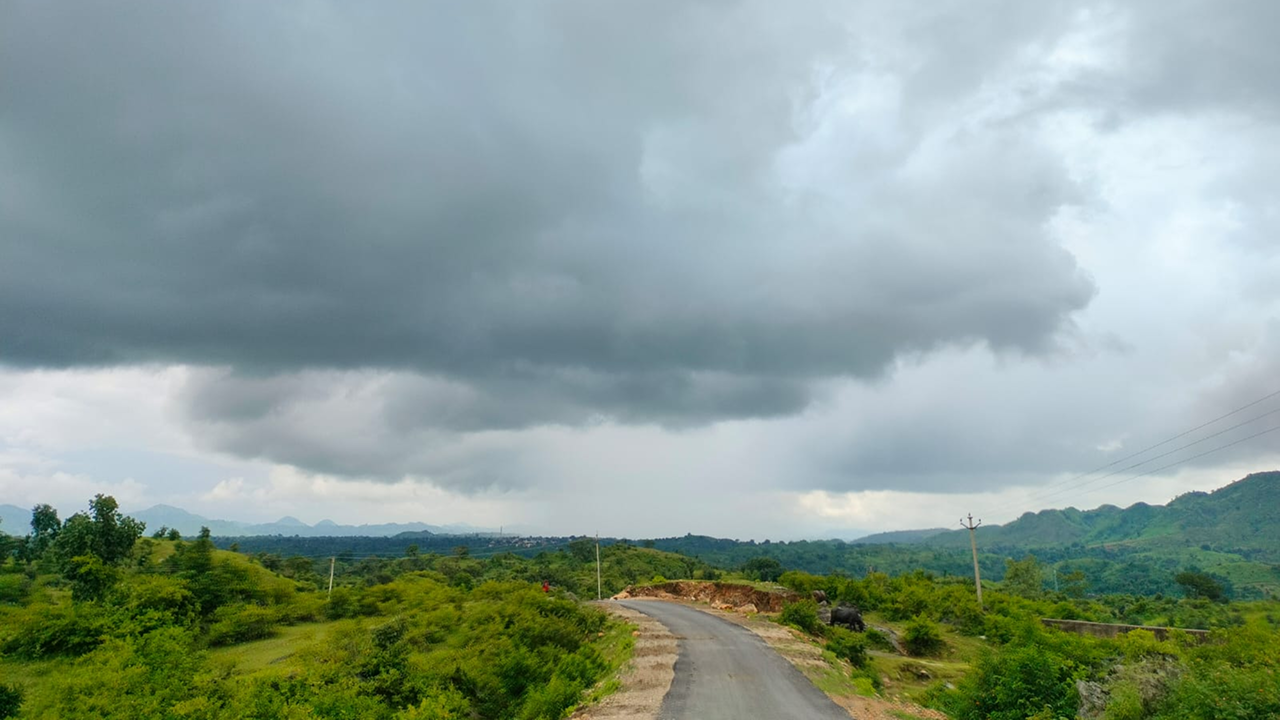
Mohan Lal Gameti, in his 40s, was a commuter migrant worker who travelled 155 kilometers every day from his village, Padrada in Udaipur district to Udaipur city, where he worked on a construction site. He never stayed in Udaipur, but travelled back to Padrada after a day’s work. For about 20 days in a month, he did this and earned 14,000 rupees. His death also meant a substantial loss of income for his family, who come from the Gameti community, a subgroup of the Bhil tribal group
Now, his older son, Rahul, 18, is in charge, and is the caregiver to his injured mother and brother. Gameti’s sudden death has not only left Rahul and his family grief-stricken, but also put them under significant financial stress.
Besides the medical expenses they had to incur, last rites tend to be expensive in the Gameti community. These rituals are conducted over days, sometimes even months, so the dead are not left as restless wanderers, but rather welcomed into the community of their ancestors. The whole village comes together for a shared meal, often a considerable expense for a single family.
Kishan Gurjar, district manager for Udaipur and Rajsamand at Shram Sarathi, points out that daily wage workers often struggle to cover last rites costs, pushing many families into loans and debt that become difficult to repay even as they are struggling to survive. According to Gurjar, the situation grows more complicated when the deceased was an earning member and a migrant worker. What should be a straightforward insurance claim, he notes, can turn into a bureaucratic obstacle course. Relatives are required to prove identities, track down signatures, or correct discrepancies in names, often in a location far from home. He observes that this burden falls on families precisely when they have the least resources or bandwidth to manage it. For a migrant household, he adds, losing an earning member often means losing the one person who understood how to navigate the paperwork in the first place.
RAHUL’S SEARCH FOR HIS GRANDPARENTS’ DEATH CERTIFICATES
In Rahul’s case, a community Common Service Centre (CSC) member informed him about the social security benefits his mother was eligible for, which he would have to follow up on. Rahul’s father was enrolled in governmental insurance schemes Pradhan Mantri Jeevan Jyoti Yojna(PMJJBY) and Pradhan Mantri Suraksha Bima Yojna (PMSBY). At an annual premium of 436 rupees, the Pradhan Mantri Jeevan Jyoti Bima Yojana(PMJJBY) is a renewable term life insurance scheme that gives the family a cover of two lakh rupees for death due to any cause, while the Pradhan Mantri Suraksha Bima Yojana is an accident insurance scheme, with a cover of two lakhs as well, available at a premium of 20 rupees. Since Mohan Lal’s death was accidental, the nominee could receive the settlement from both policies as per insurance scheme guidelines regarding the occurence of death and its subsequent claim eligibility.
However, in between the two schemes, PMSBY, the accidental insurance scheme is harder to settle, given its requirements of post-mortem report, police FIR signing off the accident and the death. According to Shram Sarathi’s data base of insurnace availibity and settling, it is PMJJBY claims that get’s settled faster than PMSBY claims. And on top of that, document name issues persists.
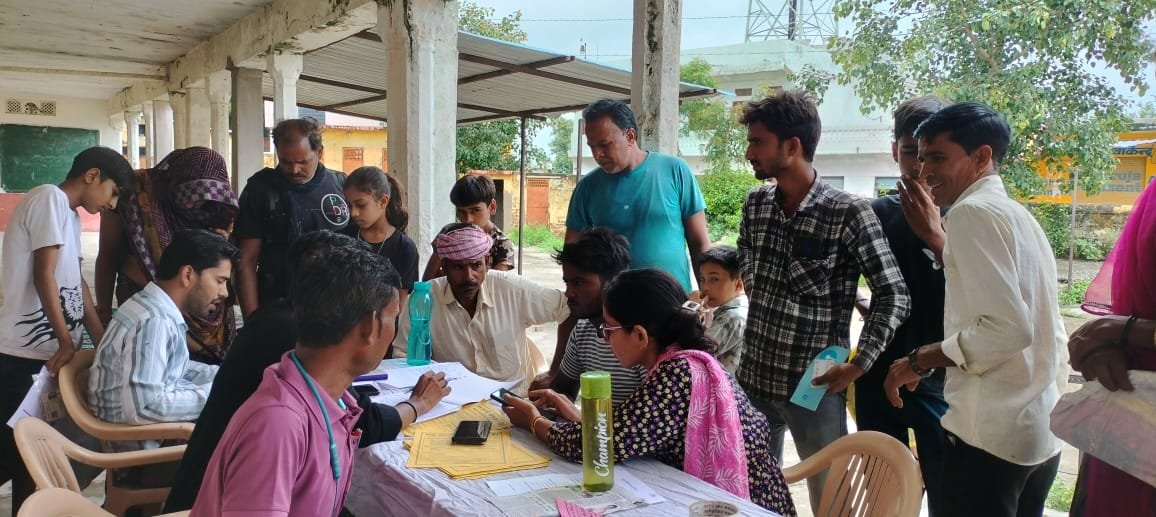
For Rahul, the claim settlement would have been easier if the nominee had been his mother. but it wasn’t. It was Rahul’s grandfather, Prabhu Lal Gameti, who died long before the accident. On enquiry, the bank told Rahul he would have to change the nominee to his mother, a living adult relative. He would also need to provide his late grandfather’s death certificate, as well as his grandmother’s (who had also passed long ago). Rahul remains confused why a non-named nominee’s proof is required. Daily wage families like Rahul’s often lack identity records, let alone certificates for relatives who died decades earlier. Despite the delay however, Rahul stayed calm and resourceful — a phone call to a community contact was often enough to procure a needed document, including his grandmother’s death certificate.
To make these changes, Rahul had to leave school almost every day and travel from Padrada to Gogunda tehsil, where the bank and other officials were, and back. The trip alone cost him 100 rupees. At Gogunda, he had to visit the required offices, wait for hours , and pay between 1500-2000 rupees for each name change, affidavit, and lawyer stamp. He spent nearly 7000 rupees after a week of running around, getting some financial help from his community members.
Once the document was submitted to the bank, it took another three months for the four lakh rupees from both schemes to be credited to his mother’s account. The delay was in part aided by bank managers who sometimes did not fully understand insurance companies’ regulations. When Rahul asked for clarifications from the bank manager, they said, “Hamare haath main kuch nahi hain, company waale badlte rehtae hain niyam, hum kar rahe hain jo bola jaa raha hain [Nothing is in our hands, the insurance company keeps changing the rules, we’re simply doing what we are told to].
SEVEN MONTHS, NO ERRORS: BHULA BAI’S WAIT
Two hours away from Padrada, Bhula Bai, 28, was navigating a similar tragedy in Patiya village, Udaipur. She lost her husband, Naresh to a heart attack and now has to look after their three young children on her own, aged 10, 7, and three months. At the time of his death, all Bhula Bai was left with were his final wages, barely enough to cover funeral costs for a few days.
After his passing, Bhula Bai traveled 100 kilometers from her village, Patiya to Gogunda. With a tight budget, she had to complete the required documentation and signatures to claim two lakh rupees under PMJJBY, which covers sudden, non-accidental deaths.
In her case, there were no errors in the nominee’s name, and yet the delay was agonizing. It took Bhula Bai seven months for the amount to reach her bank account, when it should have taken only one-two months. Those seven months were filled with uncertainty, a lack of information, and visits to the bank twice a week. Soft-spoken and reserved, Bhula Bai said, “Hum hamare bacho ko ghar chodh ate hain, bada wala choto ka dhyan rakhti hain, aur paros waale toh dhyaan toh de hi denge jab main MNREGA main kaam karne jati hoon” [I leave my older children to care for the younger ones, believing that neighboring women will help while I work at the MNREGA site].
Her MNREGA work was on a road construction site, where she had to transport cement. As a widow, she was entitled to a pension from the state government as part of welfare schemes for women as well as this insurance claim, both of which took so long to arrive that she was forced to find other work immediately.
DELAYS STRETCHING UP TO TWO YEARS
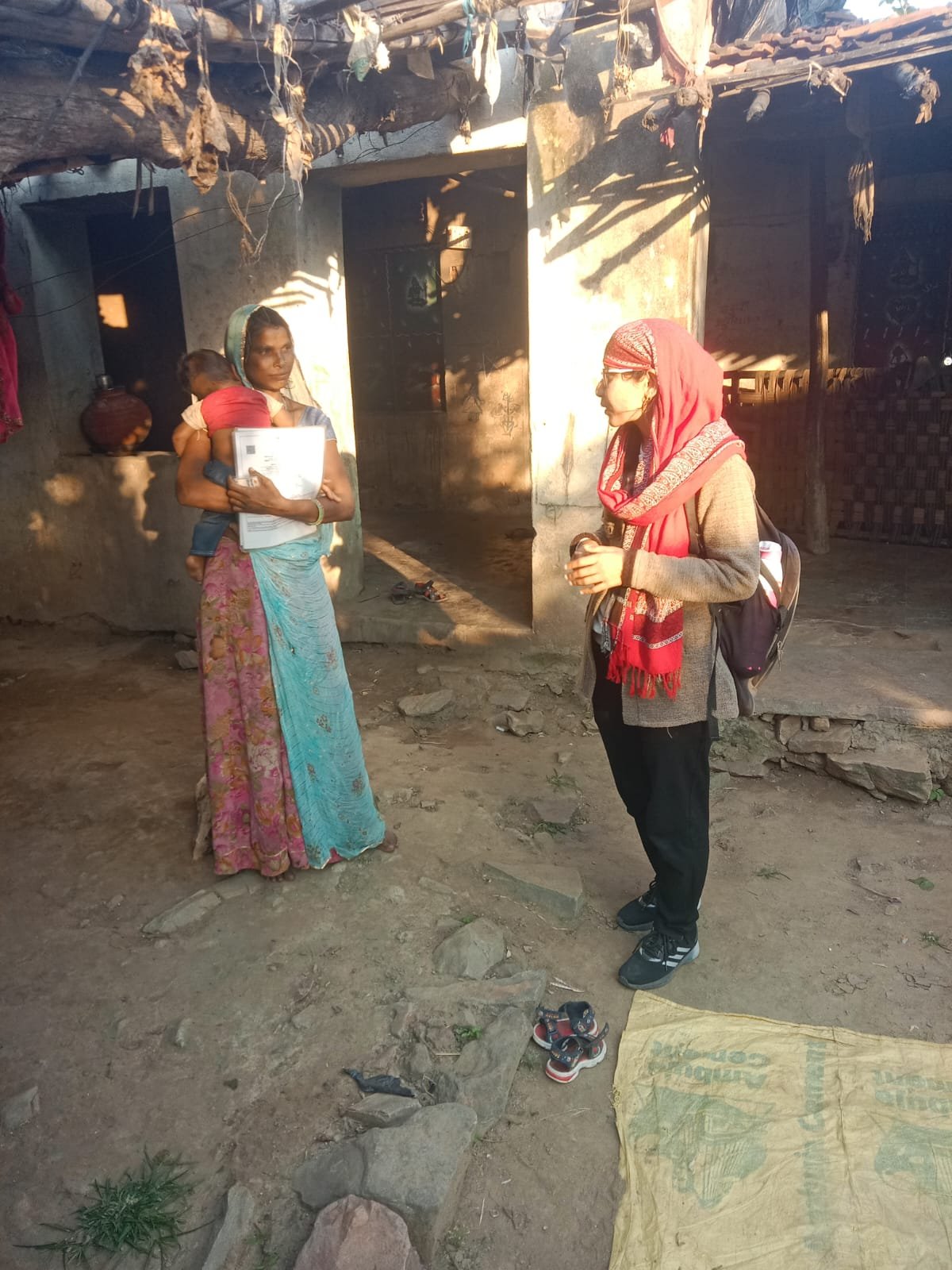
Rahul and Bhula Bai’s experiences aren’t isolated. Shram Sarathi, a non-governmental organisation that works on financial access and inclusion for tribal migrant communities, has documented 68 death claims among the families it works with across Rajasthan, compiled through community WhatsApp groups, referrals, and its own field officers. Of those, only 32 families had enrolled in PMJJBY, the life insurance scheme that pays out regardless of cause of death; 13 had only PMSBY, the accident-only scheme, but lost a family member to illness , and leaving them ineligible for a payout despite paying premiums; and 24 had no insurance at all. Most of the deceased were between 30 and 40, and seven in ten died of long-term illness rather than accidents, nearly all from Scheduled Tribe and Scheduled Caste migrant or daily-wage households. Of a smaller set of 30 claims the organisation has tracked closely, six remain pending, with delays stretching up to two years in one case.
A social security scheme is only effective when it provides timely support because a delayed benefit forces people to bridge the gap through debt, distress sales, or exploitative work. “When opening new bank accounts, the bank and bank correspondents often enroll individuals in the scheme without their knowledge. So many people aren’t even aware of the benefits available to them. Even those who do know are often enrolled with name errors on their forms, since their information wasn’t properly verified with them when the forms were filled out.” said Gurjar.
While going to school, Rahul also continues to care for his mother who is likely to be bed-ridden for the next six months according to doctors. For now, the family gets by with some financial support from their community.
Oishee Dasgupta is a Sociology graduate and India Fellowship alum who worked on financial inclusion with Shram Sarathi in Rajasthan, driving outreach through community engagement and advocacy.