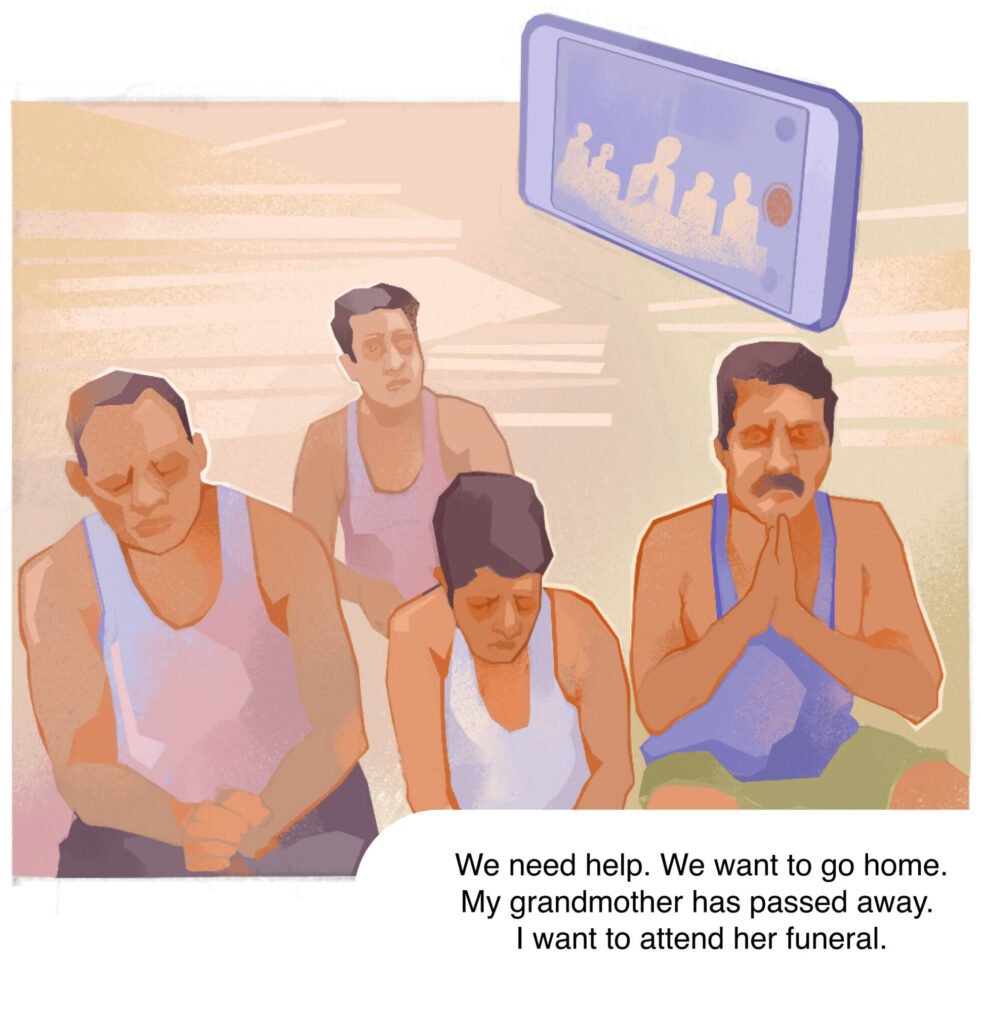
KENDRAPARA, Odisha: A video of four Indian migrant workers outside a factory in Thailand, begging for help to return to their home in Kendrapara district along the coastal border of Odisha, spurred the state government to facilitate their repatriation when it went viral.

In the video shot in June, the four workers clad in shorts and undershirts sat together on a heap of cut ply, speaking into a phone camera, their hands folded.

The workers had gone to Thailand to work at the plywood factory in Bangkok a year ago. Now they were desperately trying to get out.

Making the video was risky. The workers feared they were under surveillance by their overseers at the factory, who had threatened to hand them over to the police if they tried to leave.

This did not seem to be an idle threat, as their employers had seized their passports. Making matters worse, the workers were not registered as bonafide foreign labourers, as the company had falsely facilitated their stay through a mix of student and tourist visas.

The workers’ primary grievance was that pay was lower than what was agreed upon, and often paid late. What’s more, work hours were longer than they were initially told.

Their antagonists had already demonstrated that they were capable of making a difficult situation even worse for the complaining workers.

“In one instance, we were locked out of our rooms and had to spend a few hours behind the factory in the jungle. We were scared, but had nowhere to go. Another fellow worker who sympathised with us brought us back and gave us food,” said Banoj Malik (41), a native of Siko village, who recorded the video appeal for help.

When the video reached Odisha, families in the Siko and Gobango villages of Kendrapara district widely watched it. The footage was also shared with a local journalist and began circulating. Concerned officials sprung into action, tapped local media and village level officials to identify the workers in the video, contacted the Indian embassy in Thailand, and reached out to the employers.

Almost a month later, the employer returned the workers’ passports and booked them tickets to return home.

This was not the first such case from the district in the recent past. In February, six Odia workers were rescued from Thailand. 

Better pay and a foreign destination 

Malik had been criss-crossing India in search of work for almost two decades before he finally decided to migrate to Thailand. From Andhra Pradesh to Keralam, West Bengal and Uttar Pradesh, the occupation, however, remained largely the same – plywood fabrication. 

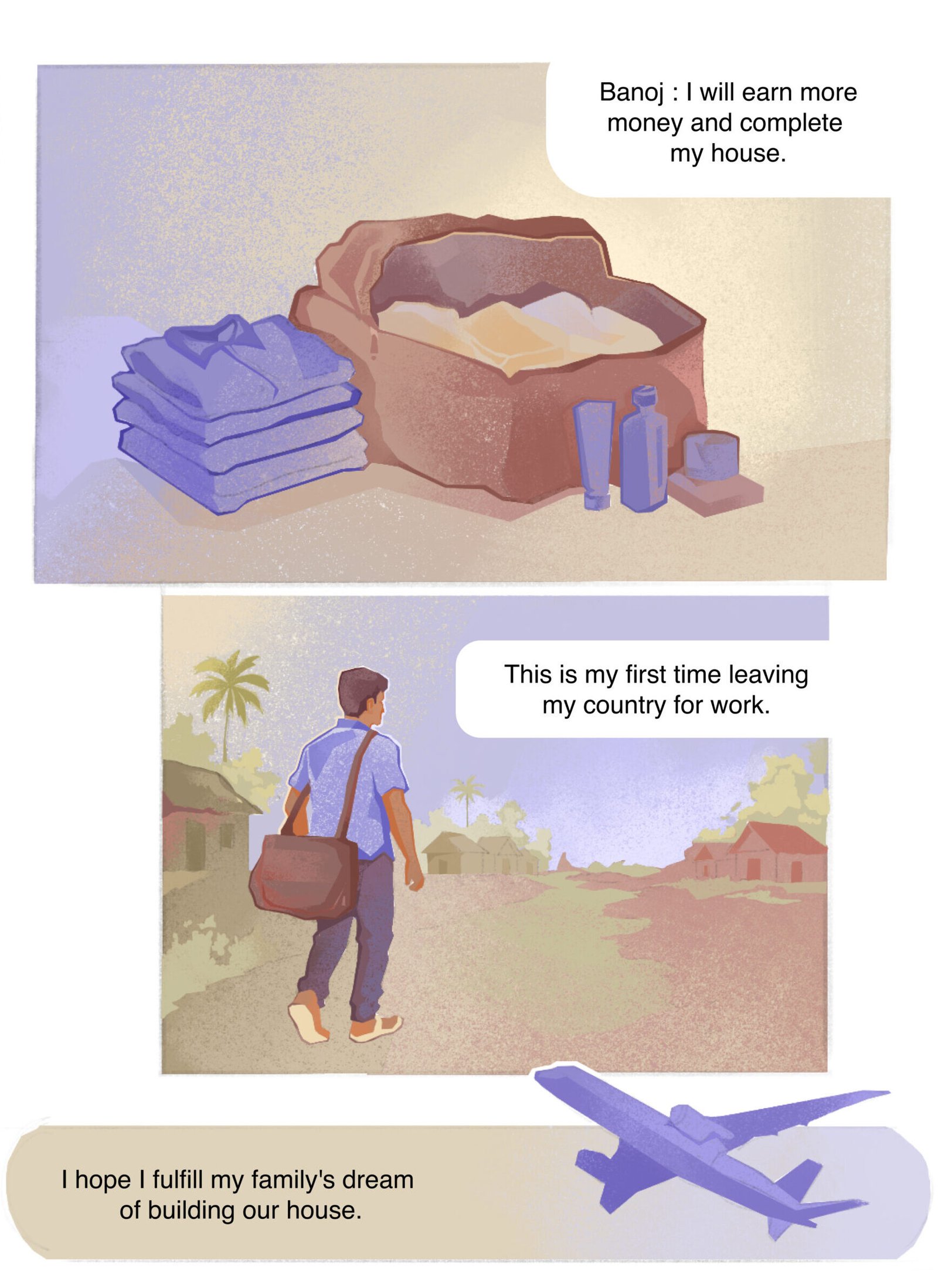
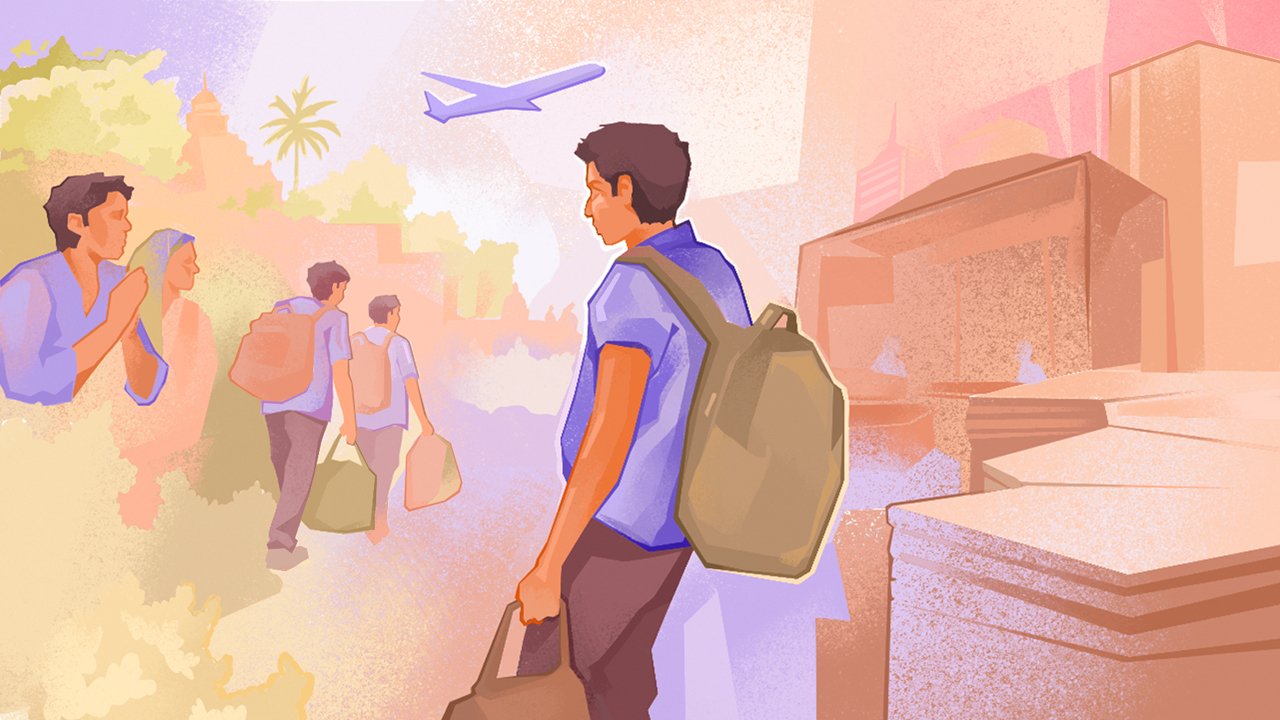
When he left for Thailand in July 2025, it was the first time he migrated overseas for work. He is the first person from his village to have migrated to Thailand for employment.

Malik was 14 when the super cyclone of 1999 hit Odisha, ravaging his village and others.

Everything changed after that, he said. The cyclone that made landfall in Paradip in October 1999, with wind speeds of up to 250km, killed over 10,000 people and caused severe damage across coastal districts of Odisha.

“Farming was never the same for us after the super cyclone. The water became more saline, and farm produce declined over the years,” he told The Migration Story, sitting cross-legged on a cot inside the partially constructed house he lives in with his parents, wife and two children.

People who could still earn in the village started leaving for work elsewhere, he said. “In a few years, I left too,” he added. 

The houses in Poijharia hamlet of the village, where the majority of families from the dalit community reside, do not look alike. Some stand freshly painted, while others remain unfinished, their red bricks exposed as they wait for plaster and another season of earnings.

Residents often explain the difference with a single sentence: ”That house (a concrete, well-painted house) has someone in Dubai.”

Remittances have paid for concrete roofs, additional rooms and the gradual replacement of fragile kutcha homes with pucca ones in this village.

“When you have a kutcha house, one heavy wind and the roof is damaged or part of the wall is damaged. The intensity and frequency of such strong winds have also increased. Do we just keep repairing our house?” Malik asked.

Pritish Panda, Officer on Special Duty, Directorate of Odisha Paribar, a state government initiative under the Odia Language, Literature and Culture Department designed to support Non-Resident Odias (NROs), said several factors make Thailand an increasingly attractive destination for workers from Odisha.

These include higher wages in baht, geographical proximity, relatively easier travel routes, lifestyle and climate.

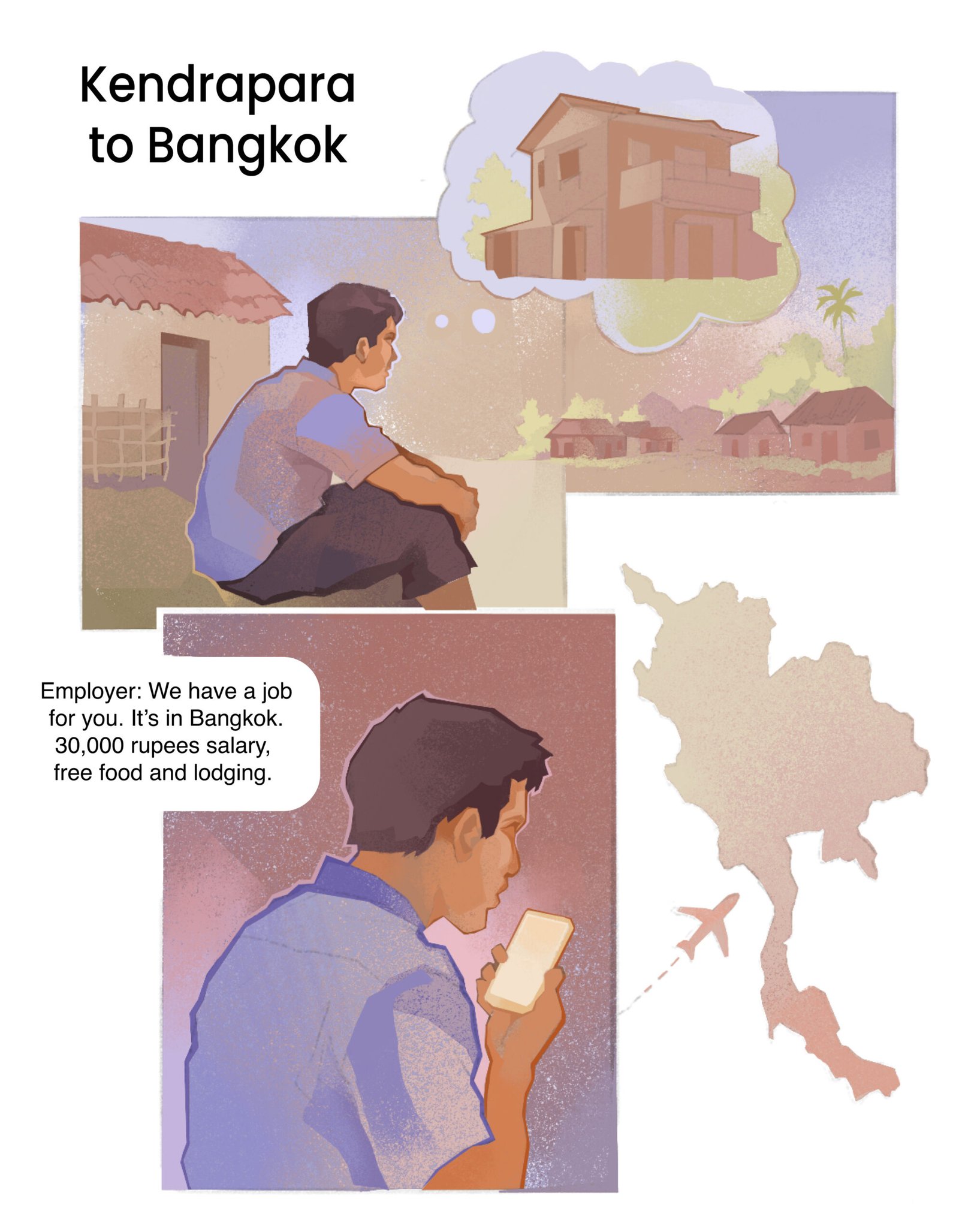
It was the dream of making a pucca house for his family through better wages that took Malik to Thailand.

In June 2025, Malik recollects, he received a call directly from a plywood factory owner. The owner was from Gorakhpur, in Uttar Pradesh, but had set up his business in Thailand.

“The owner had got my contact information from a known person from another village. The person I knew said that the work was fine. The owner also assured me that I would get paid 30,000 rupees a month with free lodging and food and they would pay for my tickets to and from India, as well as an additional 1,000 baht (roughly 3,000 rupees) as a monthly additional stipend,” Malik said.

He agreed to the job as the promised wage was higher than the 20,000 rupees a month he was making in India. During the monsoon, he also worked as a contractual farm labourer in his village, earning 450 rupees a day when work was available.

“I already had a passport and I wanted to explore working in a foreign country as well,” he said. 

However, there was no written employment contract. Everything was verbal.

Malik learned that there were a few other plywood workers from nearby villages who were approached by the same company. The workers agreed to travel together since they would be working at the same factory.

Soon afterwards, he was issued a tourist visa and tickets to travel from Bhubaneswar to Bangkok. He and four others from Kendrapara left Odisha on July 12.

“The day that we arrived, we were taken around the city. It was really nice,” Malik recollected.

Their accommodation appeared comfortable too. Three people shared a room of roughly 12 by 12 feet. There were new beds and mattresses. He called home and showed his family where he would be living.

Inside the factory, he met workers mostly from India and Myanmar. Work began the following day.

“The work was fine. It was what we kind of expected. But though they promised us an eight-hour shift, we worked for 12 hours. Initially we thought it was fine, maybe we will catch up to speed and then our work hours will be reduced,” he said.

“But that did not happen,” he added.

From there, everything went downhill.

Long hours, delayed wages

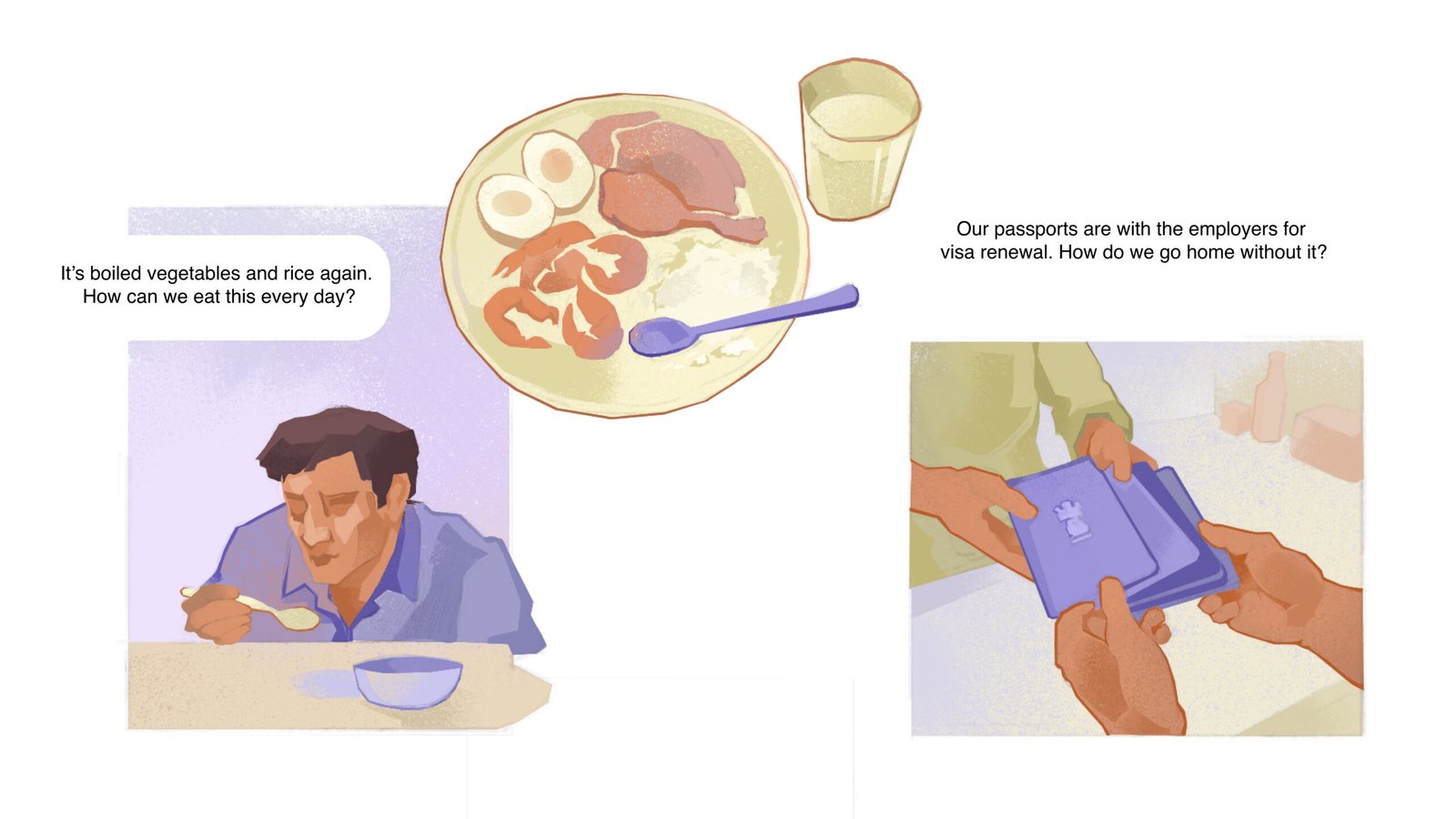
During the first week of work, the workers said meals included eggs, chicken and seafood. But within two months, their meals had largely become boiled cauliflower and potatoes, much to their dismay. 

“If the food is good, we can deliver work. But within a week, the food quality deteriorated. We could hardly eat it. When we resisted, we were provided with proper food but it again went back to just boiled vegetables,” said Nalin Das (37), a native of Gobango village, 20 km from Siko. 

When The Migration Story visited Das’ village in early August, excessive rains had flooded the road connecting this house to the rest of the village.

Das had also migrated to Thailand with a dream of better wages that would enable him to build a new pucca house and support his family.

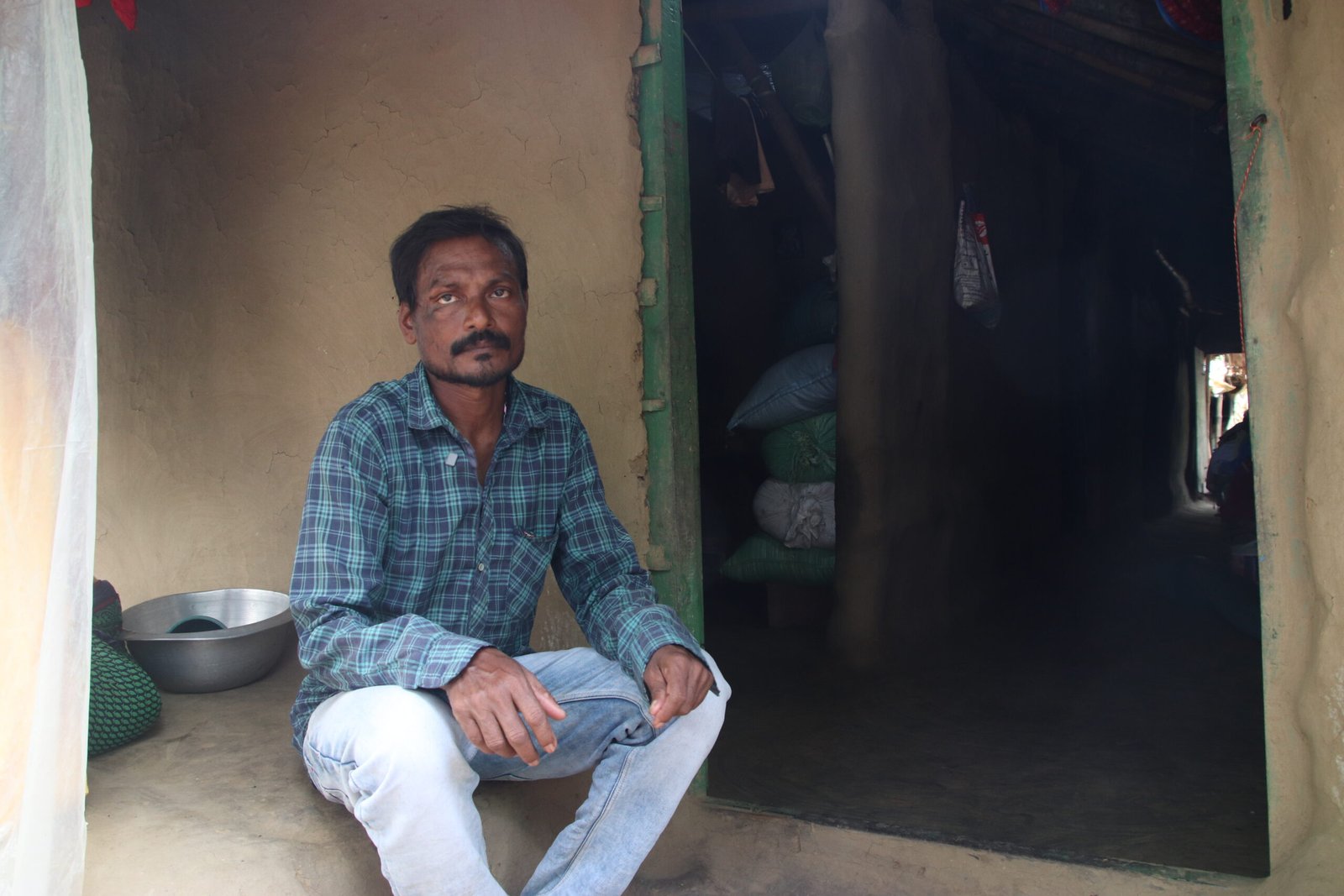
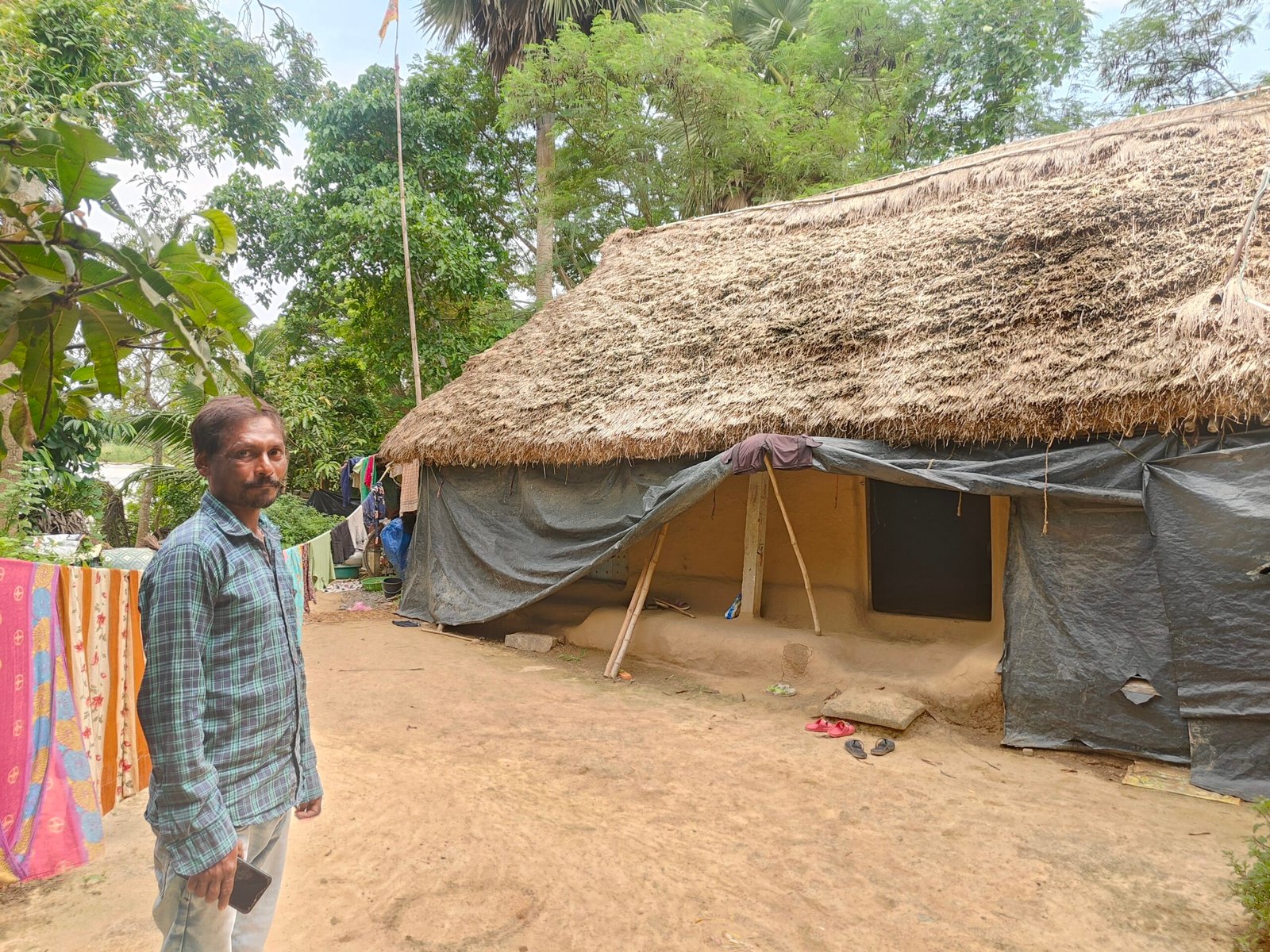
Now back home, he lamented that he still lived in a kutcha house as he sat on the mud-plastered stair outside his house.

At the factory, his work was mostly to cut a big log of ply and then filter the damaged pieces of wood.

“The logs were huge,” said Das, with a circumference so large that three workers could hug them simultaneously.

“The work was exhausting and tiring. But we continued to do it for the pay,” added Das.

Cuts, injuries, fever and fatigue were routine. But they got little help during medical emergencies.

For the workers who started work on July 13, their first salary was due on August 12, but the wages were paid 15 days later after repeated reminders, the workers said.

“Instead of 30,000 rupees, as promised to me earlier, I received only 24,000 rupees. When I objected, they told me this is the standard rate that everyone is paid,” Malik said.

The promised 1,000-baht additional stipend that was roughly equal to 3,000 rupees did not materialise either, the workers said.

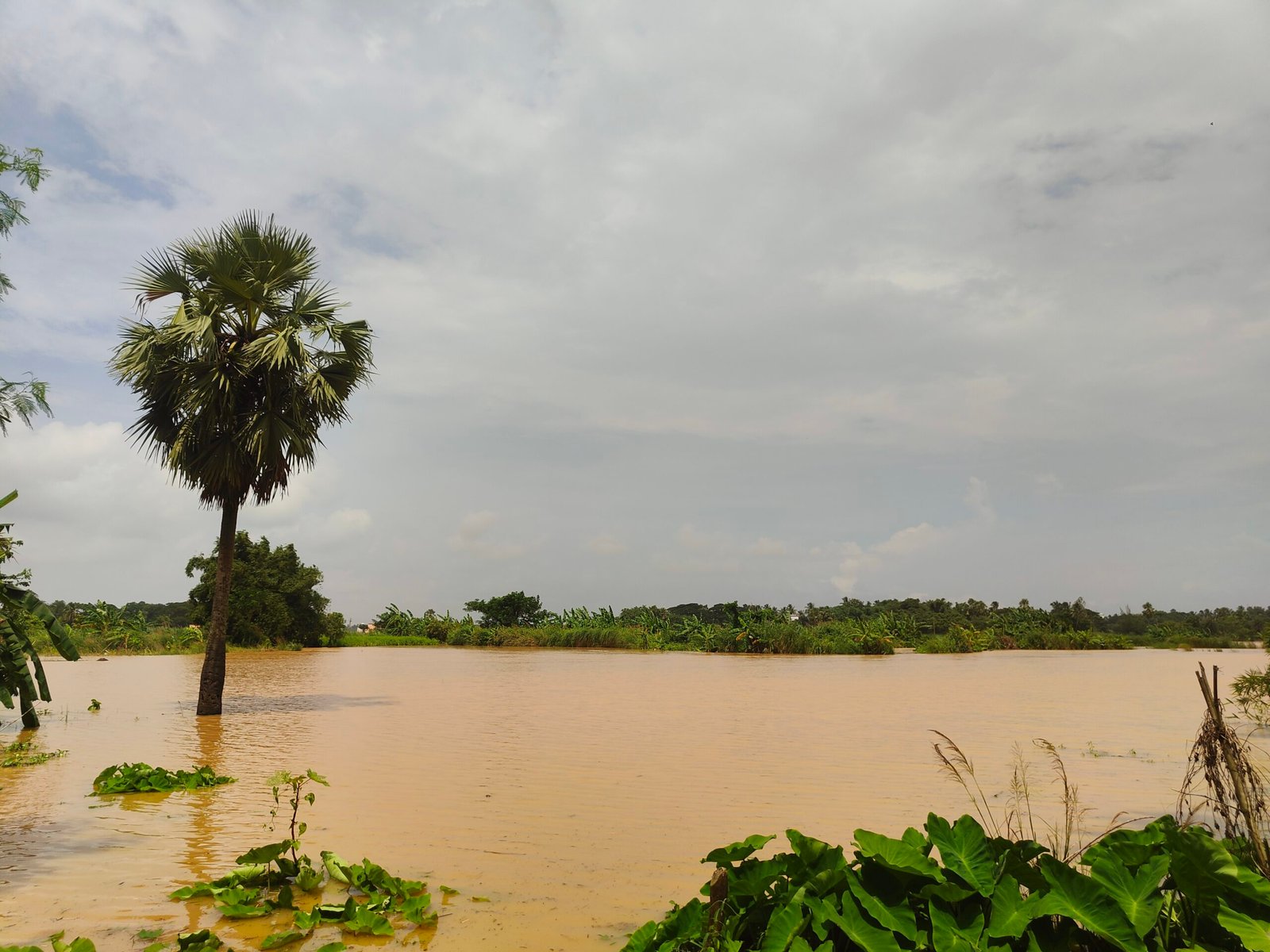
A flooded paddy field in Gobango village just outside Nalin Das’ house
Aishwarya Mohanty/The Migration Story
By October, frustration led to a strike. After being promised that their pay would be revised and paid on time, as well as well-defined work hours and medical assistance when required,  they resumed work.

However, around the same period, workers were asked to hand over their passports for visa processing. They did not receive them back.

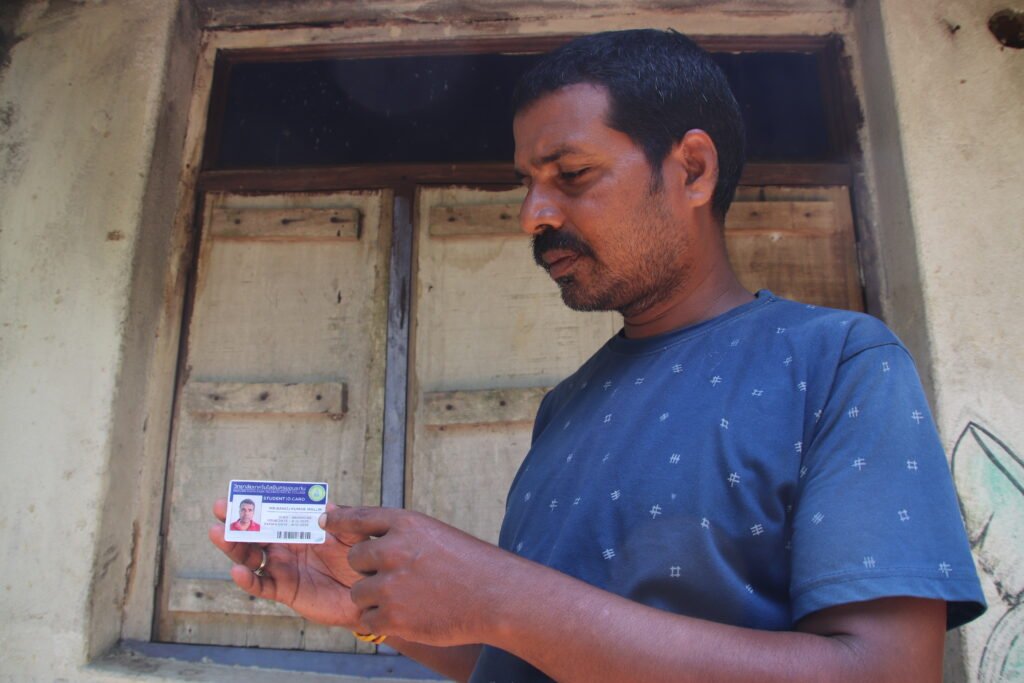
Banoj Malik, 41, shows the student card he was issued in Thailand instead of a work visa by his employer. Aishwarya Mohanty/The Migration Story
“Our visas were renewed, but at times as tourist visas and at times as student visas. We never got the work permit,” Das told The Migration Story, explaining that he did not think of this as an issue at the time.

Things came to a breaking point when Malik’s grandmother passed away in late May 2026 and the employer refused to send him home.

“I wanted to come home for her funeral. But my passport was still with the employer. When I asked him for it, he refused. He said if I wanted to go, I should book my own ticket. But I did not have the money,” Malik recalled.

That’s when the four workers decided to record a video and send it to their families and a local journalist in Odisha, based on advice from another worker. 

The rescue

Within a week, the video went viral. At this point, the workers’ plight was taken up by the Chief Minister’s office in Odisha and state machinery was galvanised to ensure their repatriation. The local MP’s office, local activists and NGOs like Aide Et Action also facilitated the process.

Panda said the first step was to establish where the workers were, using video evidence shared by families or others.

“We undertook a field enquiry through different media channels, tehsildars, people we knew were working in that country and others to narrow down on their native village,” he said.

The process to identify the workers’ families and for officials to establish contact with the workers themselves can take two to three days, said Panda.

Once this was done, the authorities made contact with the migrants to determine their situation and solicit the relevant documents. But documents were often missing, making the process difficult.

“Once the documents were in place, the Indian Embassy visited the company and held a meeting. We also did virtual consultations with the employers. In this case, the workers were unaware that they had signed a two-year bond, under which deductions were being made from their salaries,” he said.

The workers who had sought to be repatriated were finally allowed to leave in batches of two.

Even though he is back in India, Malik still regrets not being at home when his family needed him.

“I couldn’t be with my family in such a hard time,” he said. “I couldn’t bid farewell to my grandmother.”

Reaching home

The workers’ difficulties did not end upon their release. Das was informed that he could return to Bhubaneswar on June 15. He said four months of his wages had been withheld, but he just wanted to go home. He was accompanied by another worker from Bihar.

The employer booked a Bangkok-to-Chennai ticket for Das and told him that the onward ticket to Bhubaneswar would be sent later.

It was not.

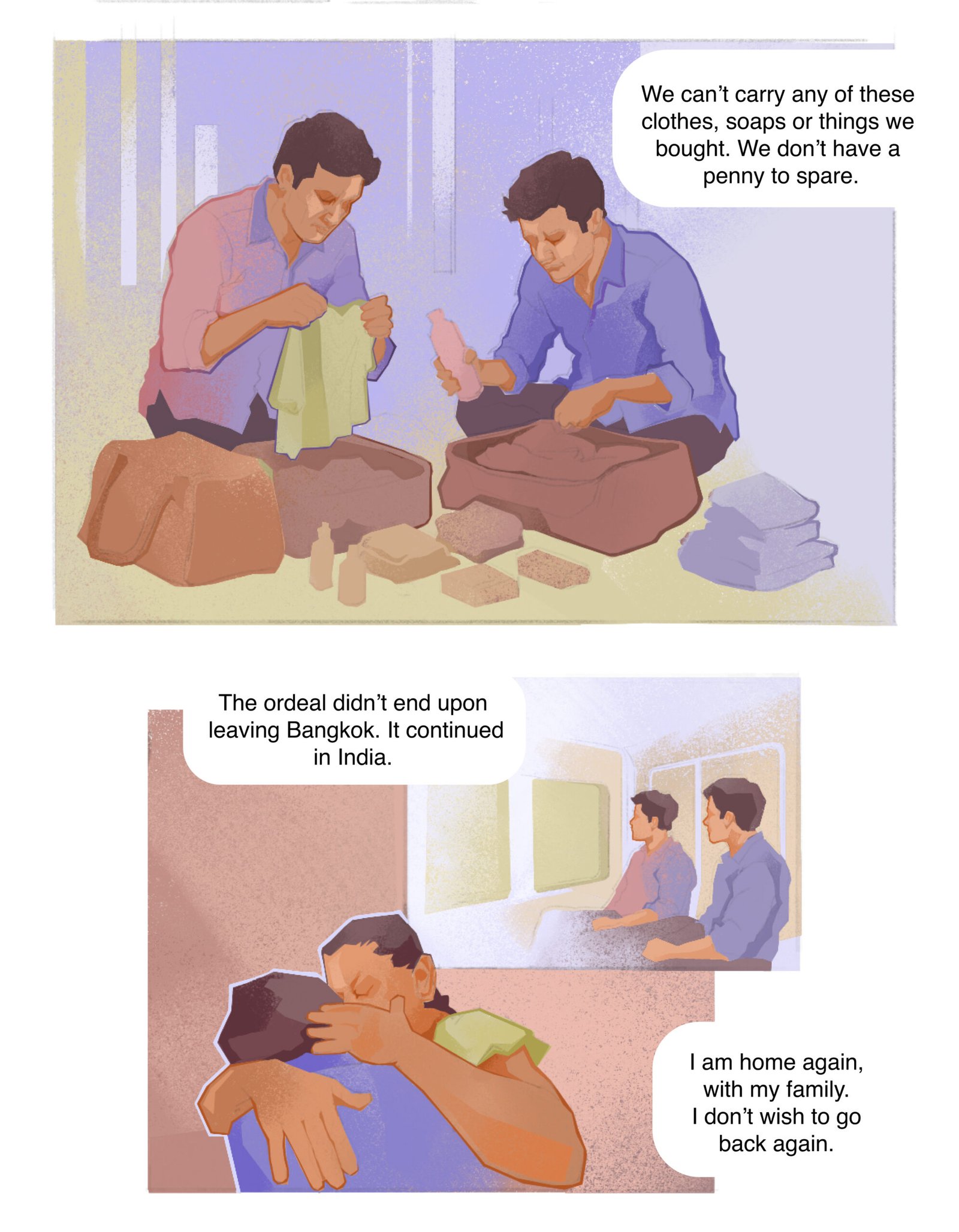
“At the Bangkok airport, we realised that the tickets booked for us allowed us to carry just seven kg of baggage. They were asking for more money if we had to carry more luggage,” Das recollected.

This forced him to empty out more than half of what was in his trolley bag – clothes, soap, perfumes and packets of biscuits, among other things.

When Das finally landed in Chennai at around 4am in the morning after a three-hour flight, he remembers feeling completely clueless.

“I did not have a ticket. I had no recharge. I had no money. And I was not used to being at airports. I was unsure of what to do. People were talking in English, I did not know who to approach and what to say,” he said.

After spending a few hours at the airport itself, he mustered up the courage to approach one of the airport staff and make a call home.

“I asked my brother to first recharge my phone and transfer me some money. I then went straight to the railway station and booked a general ticket to reach home,” he said.

He then boarded the Coromandel Express to Cuttack enduring another 24 hours of rail travel before he finally reached home.

An emerging unorganised corridor

There is little publicly available data on the number of workers from India, or Kendrapara district in particular, in Thailand. There is also no formal, comprehensive bilateral labour or employment cooperation agreement between India and Thailand.

The third-largest economy in South-east Asia, Thailand has a large migrant population.

The Thailand Migration Report 2024 estimates that at least 5.3 million non-Thai nationals were living in the country in 2024, up from an earlier estimate of around 4.9 million.

Most migrants come from neighbouring Myanmar, Cambodia and Laos, and most are engaged in manufacturing and other sectors.

Jyoti Brahma of Aide et Action said the labour market abroad is opening up to workers from Odisha across a range of sectors, including wire binding and fruit packaging, rather than just the traditional work like plumbing that Kendrapara migrants are known for.

Nalin Das dreamt of building a pucca house for his family through the remittances he sent from Thailand. His wages were withheld before he returned home with not even a single penny in his pockets. Aishwarya Mohanty/The Migration Story
One of the biggest problems, Brahma said, is the way workers are being presented as skilled labourers even when they have little or no experience in the jobs for which they are recruited.

“When the company realises that they are not as skilled as promised, the money goes down and the work provided is exhausting manual work with little pay,” he said.

Sunil Saha, Protector of Emigrants, Odisha, said that biggest challenge in ensuring the wellbeing of migrants is the growing use of unregistered recruiters. There are around 2,200 recruiting agents registered with the Ministry of External Affairs who are authorised to undertake legal recruitment, he said.

“But in a lot of cases, whenever there is an opportunity, people go through unregistered agents. These agents could be anywhere, so it becomes difficult to track these recruiters,” Saha said.

Saha said the department has been conducting awareness campaigns and workshops including programmes for the police alongside surprise checks and outreach efforts aimed at prospective migrants. The objective is to sensitise workers about safe and legal migration routes.

“If they go through registered agents, the agent is held accountable in such cases and the matters are resolved quickly. If they go through a tourist visa, it becomes very difficult for us and it takes longer to rescue them,” Saha said.

In August 2025, the state launched its first mobile migrant resource centre, supported by the International Organisation for Migration (IOM) and Aide Et Action, covering the migration-prone Ganjam and Kendrapara districts. It also launched a toll-free helpline for workers migrating within India or overseas.

The Thailand cases, however, show that workers continue to travel using routes that can be difficult to track.

“I acknowledge that there is a gap in our efforts and in the number of people who are actually going out,” Saha said.

One of the reasons, he said, is that for an unskilled worker considering migration, a familiar person from the village has far more credibility than a representative from Bhubaneswar.

Back in Gobango and Siko, Das and Malik continue to stare at uncertainty.

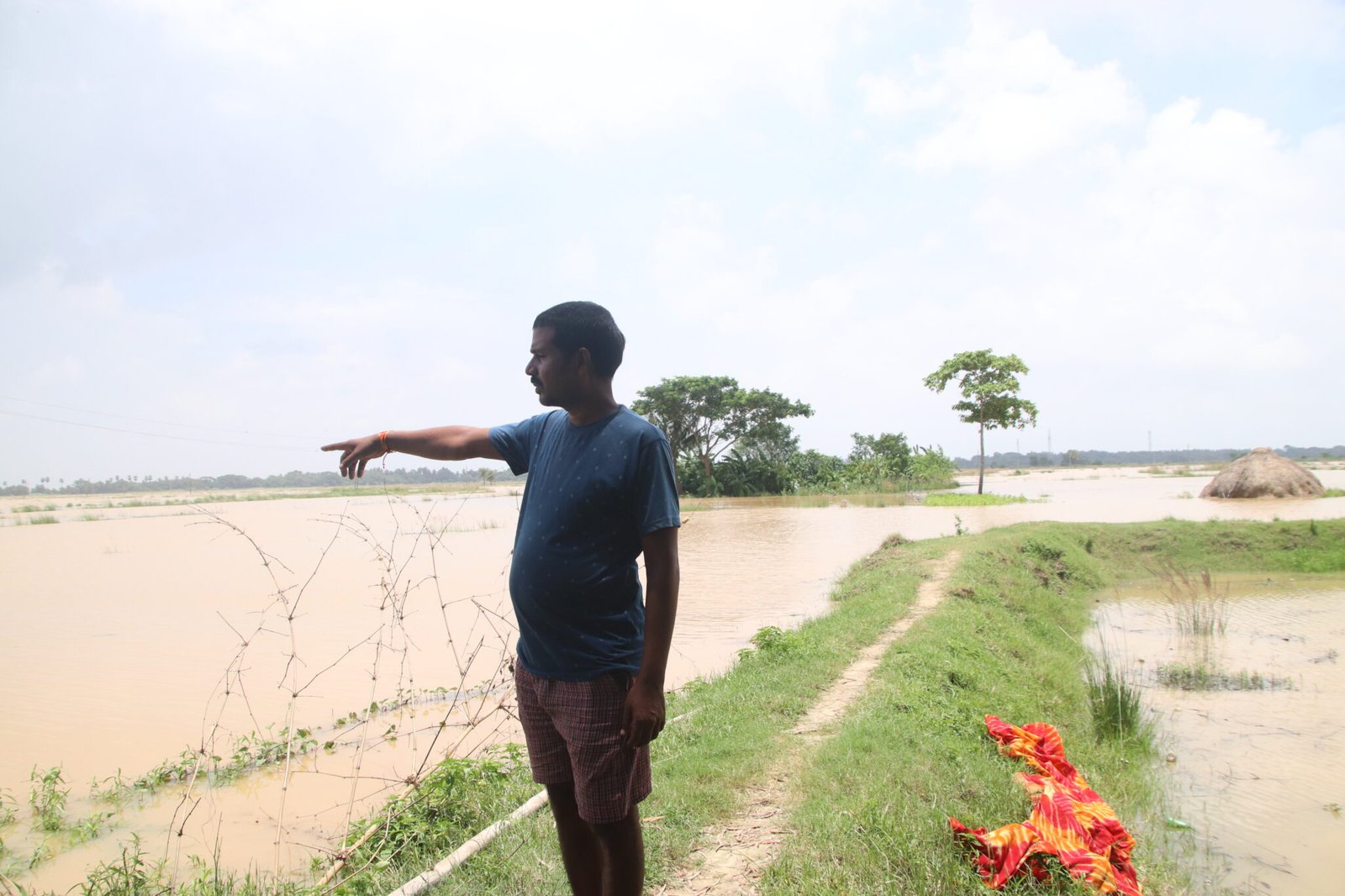
Banoj Malik points to inundated paddy fields just behind his house in his village, Siko, in Kendrapara district. Aishwarya Mohanty/The Migration Story
“When I was heading back, I thought I would work on the farm and manage with the earnings there. But look around, all the farmland is under water. The crop is damaged. On leased land, we often get no compensation. The owner takes all,” said Das, as he waded through the knee-deep water covering the farm.

“Now I can only wait and start looking for work elsewhere.” 

Edited by Arvind Jayaram

Aishwarya Mohanty is Special Correspondent with The Migration Story.

KENDRAPARA, Odisha: A video of four Indian migrant workers outside a factory in Thailand, begging for help to return to their home in Kendrapara district along the coastal border of Odisha, spurred the state government to facilitate their repatriation when it went viral.

In the video shot in June, the four workers clad in shorts and undershirts sat together on a heap of cut ply, speaking into a phone camera, their hands folded.

The workers had gone to Thailand to work at the plywood factory in Bangkok a year ago. Now they were desperately trying to get out.

Making the video was risky. The workers feared they were under surveillance by their overseers at the factory, who had threatened to hand them over to the police if they tried to leave.

This did not seem to be an idle threat, as their employers had seized their passports. Making matters worse, the workers were not registered as bonafide foreign labourers, as the company had falsely facilitated their stay through a mix of student and tourist visas.

The workers’ primary grievance was that pay was lower than what was agreed upon, and often paid late. What’s more, work hours were longer than they were initially told.

Their antagonists had already demonstrated that they were capable of making a difficult situation even worse for the complaining workers.

“In one instance, we were locked out of our rooms and had to spend a few hours behind the factory in the jungle. We were scared, but had nowhere to go. Another fellow worker who sympathised with us brought us back and gave us food,” said Banoj Malik (41), a native of Siko village, who recorded the video appeal for help.

When the video reached Odisha, families in the Siko and Gobango villages of Kendrapara district widely watched it. The footage was also shared with a local journalist and began circulating. Concerned officials sprung into action, tapped local media and village level officials to identify the workers in the video, contacted the Indian embassy in Thailand, and reached out to the employers.

Almost a month later, the employer returned the workers’ passports and booked them tickets to return home.

This was not the first such case from the district in the recent past. In February, six Odia workers were rescued from Thailand. 

Better pay and a foreign destination 

Malik had been criss-crossing India in search of work for almost two decades before he finally decided to migrate to Thailand. From Andhra Pradesh to Keralam, West Bengal and Uttar Pradesh, the occupation, however, remained largely the same – plywood fabrication. 

When he left for Thailand in July 2025, it was the first time he migrated overseas for work. He is the first person from his village to have migrated to Thailand for employment.

Malik was 14 when the super cyclone of 1999 hit Odisha, ravaging his village and others.

Everything changed after that, he said. The cyclone that made landfall in Paradip in October 1999, with wind speeds of up to 250km, killed over 10,000 people and caused severe damage across coastal districts of Odisha.

“Farming was never the same for us after the super cyclone. The water became more saline, and farm produce declined over the years,” he told The Migration Story, sitting cross-legged on a cot inside the partially constructed house he lives in with his parents, wife and two children.

People who could still earn in the village started leaving for work elsewhere, he said. “In a few years, I left too,” he added. 

The houses in Poijharia hamlet of the village, where the majority of families from the dalit community reside, do not look alike. Some stand freshly painted, while others remain unfinished, their red bricks exposed as they wait for plaster and another season of earnings.

Residents often explain the difference with a single sentence: ”That house (a concrete, well-painted house) has someone in Dubai.”

Remittances have paid for concrete roofs, additional rooms and the gradual replacement of fragile kutcha homes with pucca ones in this village.

“When you have a kutcha house, one heavy wind and the roof is damaged or part of the wall is damaged. The intensity and frequency of such strong winds have also increased. Do we just keep repairing our house?” Malik asked.

Pritish Panda, Officer on Special Duty, Directorate of Odisha Paribar, a state government initiative under the Odia Language, Literature and Culture Department designed to support Non-Resident Odias (NROs), said several factors make Thailand an increasingly attractive destination for workers from Odisha.

These include higher wages in baht, geographical proximity, relatively easier travel routes, lifestyle and climate.

It was the dream of making a pucca house for his family through better wages that took Malik to Thailand.

In June 2025, Malik recollects, he received a call directly from a plywood factory owner. The owner was from Gorakhpur, in Uttar Pradesh, but had set up his business in Thailand.

“The owner had got my contact information from a known person from another village. The person I knew said that the work was fine. The owner also assured me that I would get paid 30,000 rupees a month with free lodging and food and they would pay for my tickets to and from India, as well as an additional 1,000 baht (roughly 3,000 rupees) as a monthly additional stipend,” Malik said.

He agreed to the job as the promised wage was higher than the 20,000 rupees a month he was making in India. During the monsoon, he also worked as a contractual farm labourer in his village, earning 450 rupees a day when work was available.

“I already had a passport and I wanted to explore working in a foreign country as well,” he said. 

However, there was no written employment contract. Everything was verbal.

Malik learned that there were a few other plywood workers from nearby villages who were approached by the same company. The workers agreed to travel together since they would be working at the same factory.

Soon afterwards, he was issued a tourist visa and tickets to travel from Bhubaneswar to Bangkok. He and four others from Kendrapara left Odisha on July 12.

“The day that we arrived, we were taken around the city. It was really nice,” Malik recollected.

Their accommodation appeared comfortable too. Three people shared a room of roughly 12 by 12 feet. There were new beds and mattresses. He called home and showed his family where he would be living.

Inside the factory, he met workers mostly from India and Myanmar. Work began the following day.

“The work was fine. It was what we kind of expected. But though they promised us an eight-hour shift, we worked for 12 hours. Initially we thought it was fine, maybe we will catch up to speed and then our work hours will be reduced,” he said.

“But that did not happen,” he added.

From there, everything went downhill.

Long hours, delayed wages

During the first week of work, the workers said meals included eggs, chicken and seafood. But within two months, their meals had largely become boiled cauliflower and potatoes, much to their dismay. 

“If the food is good, we can deliver work. But within a week, the food quality deteriorated. We could hardly eat it. When we resisted, we were provided with proper food but it again went back to just boiled vegetables,” said Nalin Das (37), a native of Gobango village, 20 km from Siko. 

When The Migration Story visited Das’ village in early August, excessive rains had flooded the road connecting this house to the rest of the village.

Das had also migrated to Thailand with a dream of better wages that would enable him to build a new pucca house and support his family.

Now back home, he lamented that he still lived in a kutcha house as he sat on the mud-plastered stair outside his house.

At the factory, his work was mostly to cut a big log of ply and then filter the damaged pieces of wood.

“The logs were huge,” said Das, with a circumference so large that three workers could hug them simultaneously.

“The work was exhausting and tiring. But we continued to do it for the pay,” added Das.

Cuts, injuries, fever and fatigue were routine. But they got little help during medical emergencies.

For the workers who started work on July 13, their first salary was due on August 12, but the wages were paid 15 days later after repeated reminders, the workers said.

“Instead of 30,000 rupees, as promised to me earlier, I received only 24,000 rupees. When I objected, they told me this is the standard rate that everyone is paid,” Malik said.

The promised 1,000-baht additional stipend that was roughly equal to 3,000 rupees did not materialise either, the workers said.

A flooded paddy field in Gobango village just outside Nalin Das’ house
Aishwarya Mohanty/The Migration Story
By October, frustration led to a strike. After being promised that their pay would be revised and paid on time, as well as well-defined work hours and medical assistance when required,  they resumed work.

However, around the same period, workers were asked to hand over their passports for visa processing. They did not receive them back.

Banoj Malik, 41, shows the student card he was issued in Thailand instead of a work visa by his employer. Aishwarya Mohanty/The Migration Story

“Our visas were renewed, but at times as tourist visas and at times as student visas. We never got the work permit,” Das told The Migration Story, explaining that he did not think of this as an issue at the time.

Things came to a breaking point when Malik’s grandmother passed away in late May 2026 and the employer refused to send him home.

“I wanted to come home for her funeral. But my passport was still with the employer. When I asked him for it, he refused. He said if I wanted to go, I should book my own ticket. But I did not have the money,” Malik recalled.

That’s when the four workers decided to record a video and send it to their families and a local journalist in Odisha, based on advice from another worker. 

The rescue

Within a week, the video went viral. At this point, the workers’ plight was taken up by the Chief Minister’s office in Odisha and state machinery was galvanised to ensure their repatriation. The local MP’s office, local activists and NGOs like Aide Et Action also facilitated the process.

Panda said the first step was to establish where the workers were, using video evidence shared by families or others.

“We undertook a field enquiry through different media channels, tehsildars, people we knew were working in that country and others to narrow down on their native village,” he said.

The process to identify the workers’ families and for officials to establish contact with the workers themselves can take two to three days, said Panda.

Once this was done, the authorities made contact with the migrants to determine their situation and solicit the relevant documents. But documents were often missing, making the process difficult.

“Once the documents were in place, the Indian Embassy visited the company and held a meeting. We also did virtual consultations with the employers. In this case, the workers were unaware that they had signed a two-year bond, under which deductions were being made from their salaries,” he said.

The workers who had sought to be repatriated were finally allowed to leave in batches of two.

Even though he is back in India, Malik still regrets not being at home when his family needed him.

“I couldn’t be with my family in such a hard time,” he said. “I couldn’t bid farewell to my grandmother.”

Reaching home

The workers’ difficulties did not end upon their release. Das was informed that he could return to Bhubaneswar on June 15. He said four months of his wages had been withheld, but he just wanted to go home. He was accompanied by another worker from Bihar.

The employer booked a Bangkok-to-Chennai ticket for Das and told him that the onward ticket to Bhubaneswar would be sent later.

It was not.

“At the Bangkok airport, we realised that the tickets booked for us allowed us to carry just seven kg of baggage. They were asking for more money if we had to carry more luggage,” Das recollected.

This forced him to empty out more than half of what was in his trolley bag – clothes, soap, perfumes and packets of biscuits, among other things.

When Das finally landed in Chennai at around 4am in the morning after a three-hour flight, he remembers feeling completely clueless.

“I did not have a ticket. I had no recharge. I had no money. And I was not used to being at airports. I was unsure of what to do. People were talking in English, I did not know who to approach and what to say,” he said.

After spending a few hours at the airport itself, he mustered up the courage to approach one of the airport staff and make a call home.

“I asked my brother to first recharge my phone and transfer me some money. I then went straight to the railway station and booked a general ticket to reach home,” he said.

He then boarded the Coromandel Express to Cuttack enduring another 24 hours of rail travel before he finally reached home.

An emerging unorganised corridor

There is little publicly available data on the number of workers from India, or Kendrapara district in particular, in Thailand. There is also no formal, comprehensive bilateral labour or employment cooperation agreement between India and Thailand.

The third-largest economy in South-east Asia, Thailand has a large migrant population.

The Thailand Migration Report 2024 estimates that at least 5.3 million non-Thai nationals were living in the country in 2024, up from an earlier estimate of around 4.9 million.

Most migrants come from neighbouring Myanmar, Cambodia and Laos, and most are engaged in manufacturing and other sectors.

Jyoti Brahma of Aide et Action said the labour market abroad is opening up to workers from Odisha across a range of sectors, including wire binding and fruit packaging, rather than just the traditional work like plumbing that Kendrapara migrants are known for.

Nalin Das dreamt of building a pucca house for his family through the remittances he sent from Thailand. His wages were withheld before he returned home with not even a single penny in his pockets. Aishwarya Mohanty/The Migration Story

One of the biggest problems, Brahma said, is the way workers are being presented as skilled labourers even when they have little or no experience in the jobs for which they are recruited.

“When the company realises that they are not as skilled as promised, the money goes down and the work provided is exhausting manual work with little pay,” he said.

Sunil Saha, Protector of Emigrants, Odisha, said that biggest challenge in ensuring the wellbeing of migrants is the growing use of unregistered recruiters. There are around 2,200 recruiting agents registered with the Ministry of External Affairs who are authorised to undertake legal recruitment, he said.

“But in a lot of cases, whenever there is an opportunity, people go through unregistered agents. These agents could be anywhere, so it becomes difficult to track these recruiters,” Saha said.

Saha said the department has been conducting awareness campaigns and workshops including programmes for the police alongside surprise checks and outreach efforts aimed at prospective migrants. The objective is to sensitise workers about safe and legal migration routes.

“If they go through registered agents, the agent is held accountable in such cases and the matters are resolved quickly. If they go through a tourist visa, it becomes very difficult for us and it takes longer to rescue them,” Saha said.

In August 2025, the state launched its first mobile migrant resource centre, supported by the International Organisation for Migration (IOM) and Aide Et Action, covering the migration-prone Ganjam and Kendrapara districts. It also launched a toll-free helpline for workers migrating within India or overseas.

The Thailand cases, however, show that workers continue to travel using routes that can be difficult to track.

“I acknowledge that there is a gap in our efforts and in the number of people who are actually going out,” Saha said.

One of the reasons, he said, is that for an unskilled worker considering migration, a familiar person from the village has far more credibility than a representative from Bhubaneswar.

Back in Gobango and Siko, Das and Malik continue to stare at uncertainty.

Banoj Malik points to inundated paddy fields just behind his house in his village, Siko, in Kendrapara district. Aishwarya Mohanty/The Migration Story

“When I was heading back, I thought I would work on the farm and manage with the earnings there. But look around, all the farmland is under water. The crop is damaged. On leased land, we often get no compensation. The owner takes all,” said Das, as he waded through the knee-deep water covering the farm.

“Now I can only wait and start looking for work elsewhere.” 

Edited by Arvind Jayaram

Aishwarya Mohanty is Special Correspondent with The Migration Story.

Author

  • Aishwarya Mohanty is a Special Correspondent with The Migration Story and her work amplifies voices from India’s heartlands. Her reporting spans gender, rural issues, social justice, environment, and climate vulnerabilities. Formerly with The Indian Express, her work has appeared in Mongabay, The Migration Story, Behan Box, Article-14, Frontline, Al Jazeera, The Guardian, and others. She is also the recipient of the ICRC-PII Award for climate change reporting (2021), the Laadli Media Award for gender-sensitive reporting (2023 & 2025), the Sanjay Ghose Media Award for grassroots journalism (2023), and the Odisha Women in Media Award (2024). Along with this, she co-owns a permaculture farm, Routes to Roots Natural Farms, with her partner in Nimach, Madhya Pradesh.

    View all posts

Scroll to Top