JAMUI, Bihar: “No bride should ever have to wade through a river in her wedding saree,” said Pushpa Khairwar.
Thirty years ago, when Pushpa was 20, she left her home in Sukho Pahadi Tola to get married in Jathar, a village across the Kiul river in Bihar’s Jamui district. There was one large hurdle though: no bridge connected the two villages. Unable to swim in her bridal clothes, she sat on her uncle’s shoulders as he made his way through the water.
For decades, the Kiul, a tributary of the Ganga, shaped life on both banks. It made it hard for people to reach work, children to reach school, and families to access healthcare facilities. The monsoon made the crossing even more dangerous.
What does home mean when you live 1,500 km from it?
Follow The Migration Story’s nuanced coverage of India’s massive informal workforce.
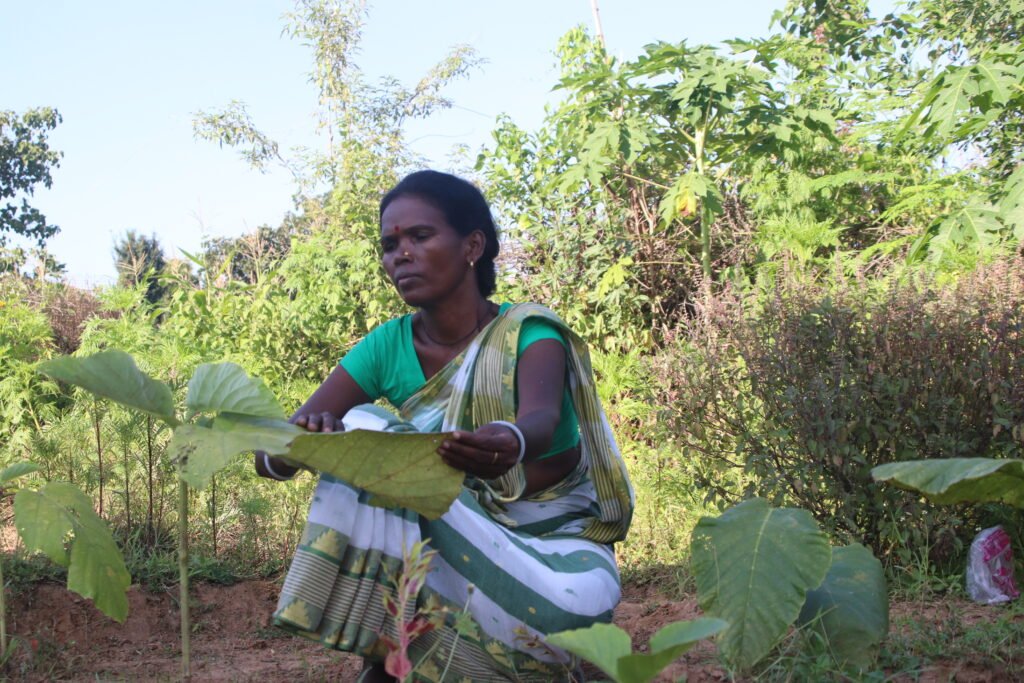
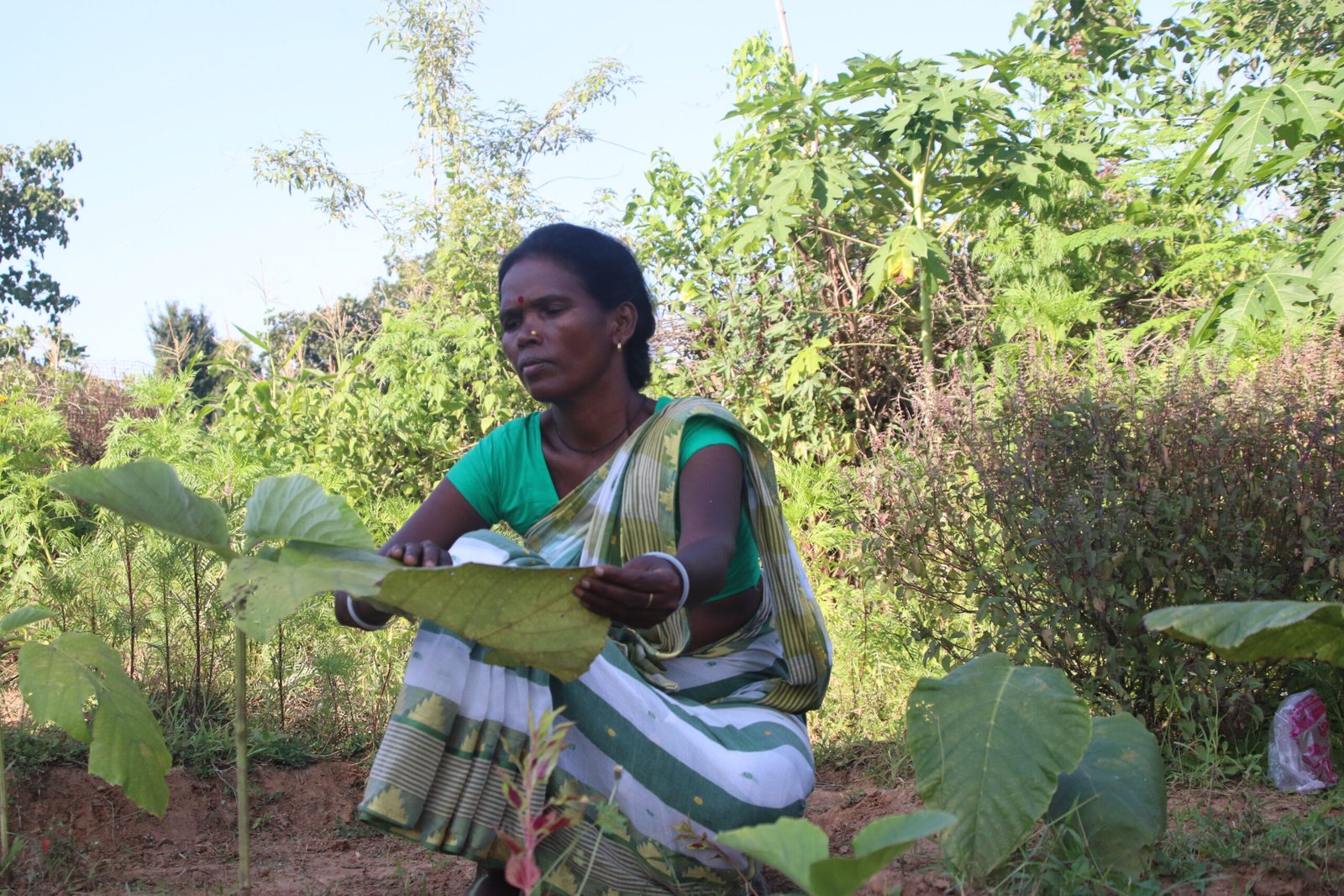
Pushpa Khairwar tends to plants and seasonal vegetables in her backyard kitchen garden in Jathar village, Jamui district. After years of advocating for a bridge across the Kiul river, she helped mobilise residents of Jathar and Sukho Pahadi Tola to pool their resources and build one themselves. Aishwarya Mohanty/The Migration Story
Pushpa Khairwar tends to plants and seasonal vegetables in her backyard kitchen garden in Jathar village, Jamui district. After years of advocating for a bridge across the Kiul river, she helped mobilise residents of Jathar and Sukho Pahadi Tola to pool their resources and build one themselves. Aishwarya Mohanty/The Migration Story
Around 250 people live in Sukho Pahadi Tola and about 300 in Jathar, by residents’ count. Most are Khairwars and Santhals, Adivasi communities recognised as Scheduled Tribes. The river cut each village off differently. For Sukho Pahadi Tola, it meant losing access to the forest. For Jathar, it meant losing access to the nearest road, towns and markets where produce could be sold.
“During the monsoons, the river swells. If the water reaches our necks, we have to swim across. Imagine carrying a load of forest produce in a strong current,” said Anita Khairwar, a resident of Sukho Pahadi Tola.
The forest across the river, Mahuakol Pahad, was long the only source of income for Sukho Pahadi Tola. Residents of both villages relied on it for mahua, fruits, tubers, medicinal herbs and firewood.
The crossing was most punishing from July to September, when women collected chirata (Swertia chirata), a bitter herb used in traditional medicine. After collection, it is dried and sold in the local market.
“We would tie our chappals around our waist on one side and our small tiffin on the other. Whatever we collected, we would make into a bundle, place on our heads and tie properly so it wouldn’t fall,” Anita said.
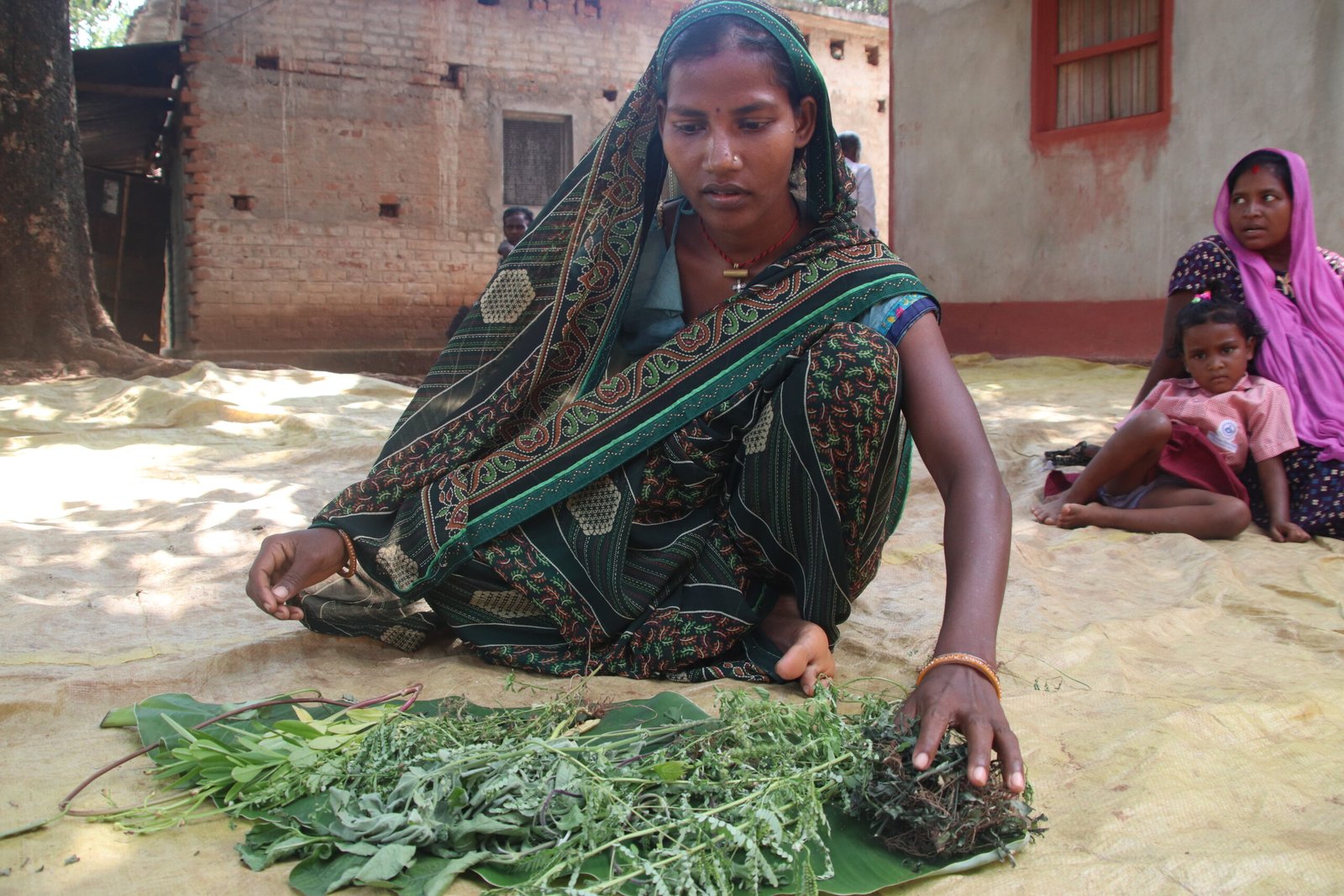
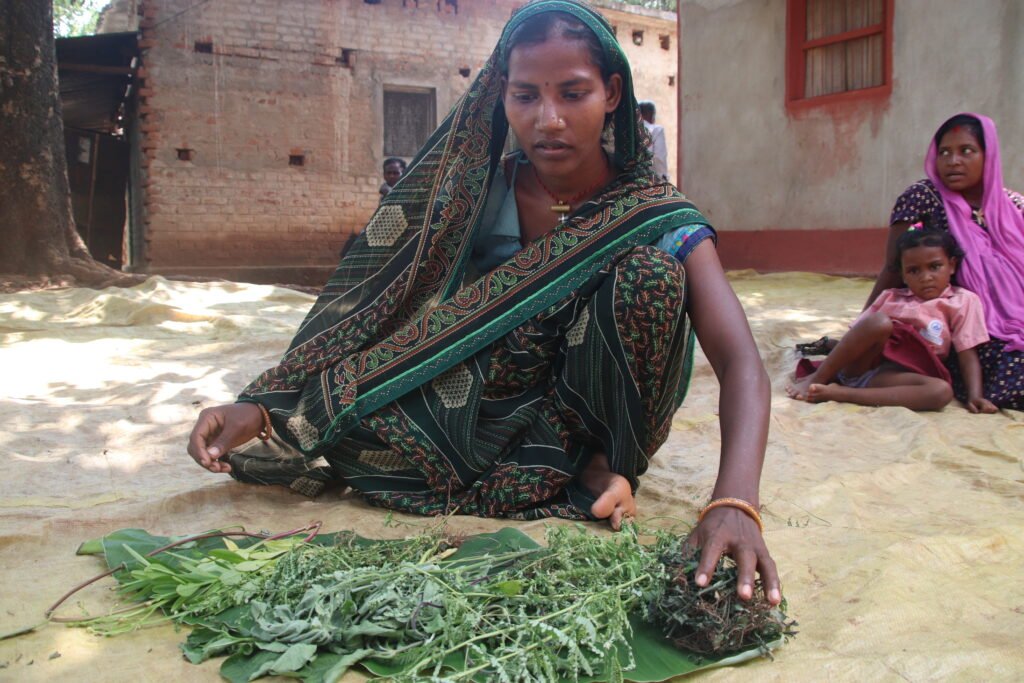
Anita Khairwar displays medicinal herbs and edible greens collected from the Mahuakol Pahad forest by residents of Sukho Pahadi Tola. The forest remains an important source of food and livelihood for families in the village. Aishwarya Mohanty / The Migration Story
Anita Khairwar displays medicinal herbs and edible greens collected from the Mahuakol Pahad forest by residents of Sukho Pahadi Tola. The forest remains an important source of food and livelihood for families in the village. Aishwarya Mohanty / The Migration Story
Around four in the morning, the women would set out with stale chapatis and dry potato sabzi packed the night before. The walk took over two hours. They crossed the river, spent the day collecting produce and returned only in the evening.
“If the current was strong, we would hold hands and form a human chain,” she said. Every morning they had to gauge the water level. If it rose during the day, the evening crossing home became impossible. “So on most monsoon days, we avoided crossing and lost our earnings.”
Over the last 20 years, the demand for medicinal forest produce has increased from nearby towns and nearby markets. “Ten years ago, I decided to stop migrating and support my family by collecting and selling medicinal produce,” said Mathews Khairwar, 60, who previously worked in Patna and Delhi as a vendor, selling biscuits and soaps from a cycle-mounted cart.
When he returned, he gathered firewood and carried it on foot to nearby villages. A bundle of firewood that weighs roughly 30 kilograms sells for about 250 rupees, he said.
During the monsoon, however, the swollen river would cut off the forest for months at a time. “Even when markets opened up, our access to the forests remained restricted. I had no option but to migrate again,” he said.
That uncertainty pushed many men and women out of their homes in search of safer, more reliable work in faraway towns and cities across the country.
Building a bridge after years of waiting
When Anita Khairwar and her husband moved to Bengaluru to work on a construction site, they made around 1000 rupees a day, and yet their income was barely enough to cover their family’s expenses in the city.
“To manage the living conditions for a family of six, including four children, we ended up spending more than we were earning, despite the two of us earning. Our rent, children’s education, food, everything was expensive,” she said. The unmanageable expenses forced Anita to return to Sukho Pahadi Tola a year ago. Back home, she believed a bridge could ease some of the difficulties residents faced.
The discussions to build the bridge came up during every festival or gathering. “We decided that it can no longer be the way we live,” Pushpa said as she sat outside her two room kutcha house on a cot, anticipating whether or not it would rain that day.
With no income at home, Pushpa migrated to Delhi in the early 2000s and worked as a domestic help in a professor’s house, caring for the children and their pet dog. The family treated her well and paid her fairly, but she felt out of place. “I felt like I was bought. Despite everything, I was still the naukar [servant]. I did not own anything in that distant city except my clothes.
Back in her village, the feeling is different. “I own my house, my plants, my crops, my forest, my air and my river,” she said, walking this reporter through her small backyard farm of flowers and seasonal vegetables.
Back in the village, Pushpa found she could not unsee what the river did to people. Every monsoon, she watched neighbours hold hands to cross it, and she remembered her own crossing as a bride, perched on her uncle’s shoulders. Nothing about the river had changed in the years since. Women still tied their chappals around their waists and crossed in human chains. This time, she decided she would do something about it, and started talking to people, urging them to push for a bridge.
They approached block and district-level officials and local politicians. “They would always tell us that they would look into it and we would trust them, but nothing happened,” said Pushpa. “Sometimes there are budgetary issues, sometimes officials change and we have to restart again. It was never ending.”
In 2026, the monsoon in Jamui was relatively weak, and the river was not as turbulent as usual. Residents took this as a chance to build a temporary structure before the water rose again.
Households voluntarily contributed 500 rupees each, or one person’s weekly income from collecting and selling forest produce. Sukho Pahadi Tola raised 10,000 rupees while Jathar contributed 16,000 rupees. The total cost of construction was 55,000 rupees, residents of the village claimed.
A content creator who asked not to be named, shared the plight of the villages through social media platforms, and also offered to crowdfund the remaining amount, residents said.
Residents bought bamboo from a nearby market to make the bridge, rather than cut it in the forest. “The forest has plenty, but we did not want to disturb it,” Pushpa said.
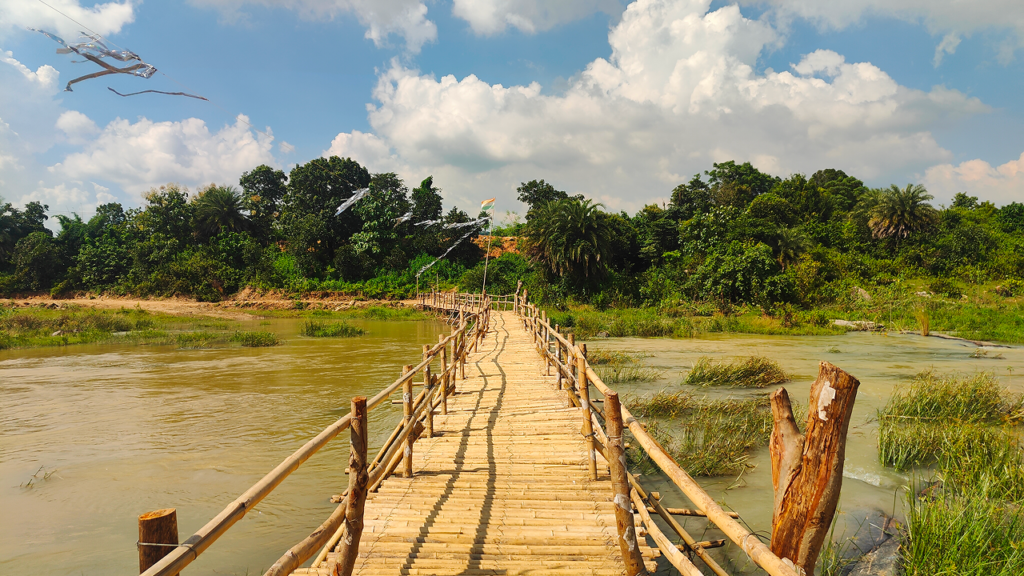
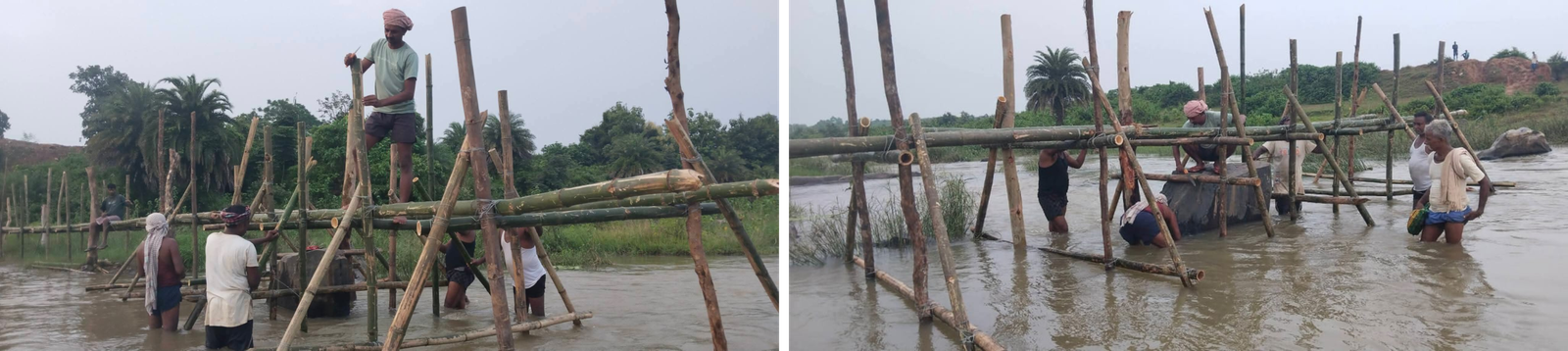
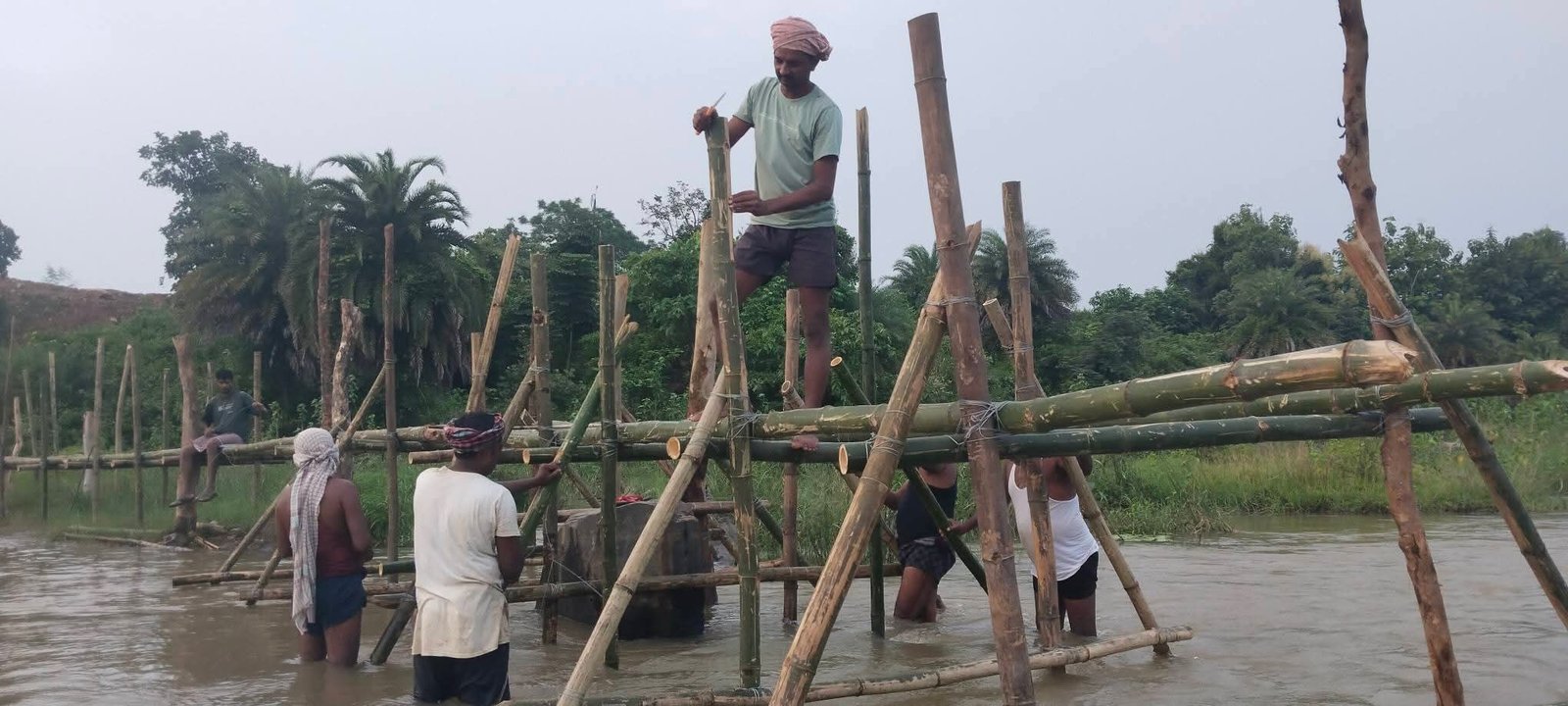
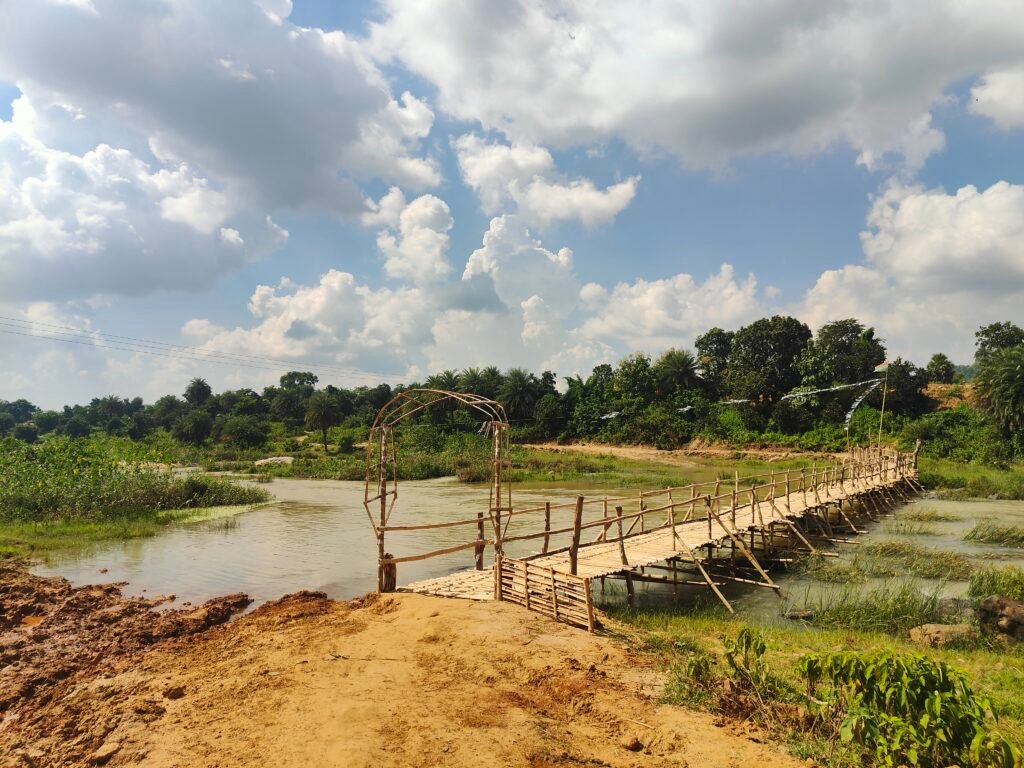
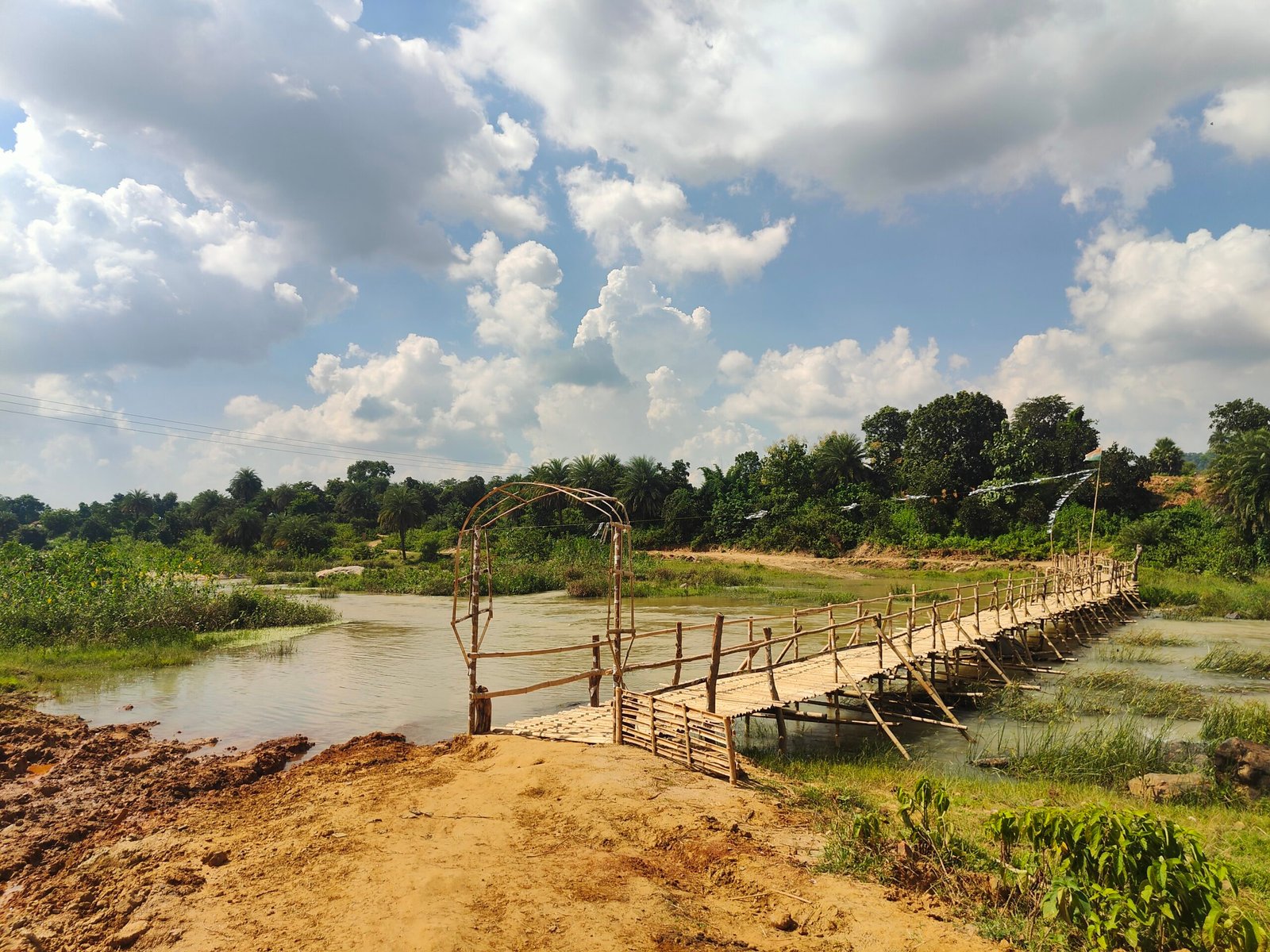
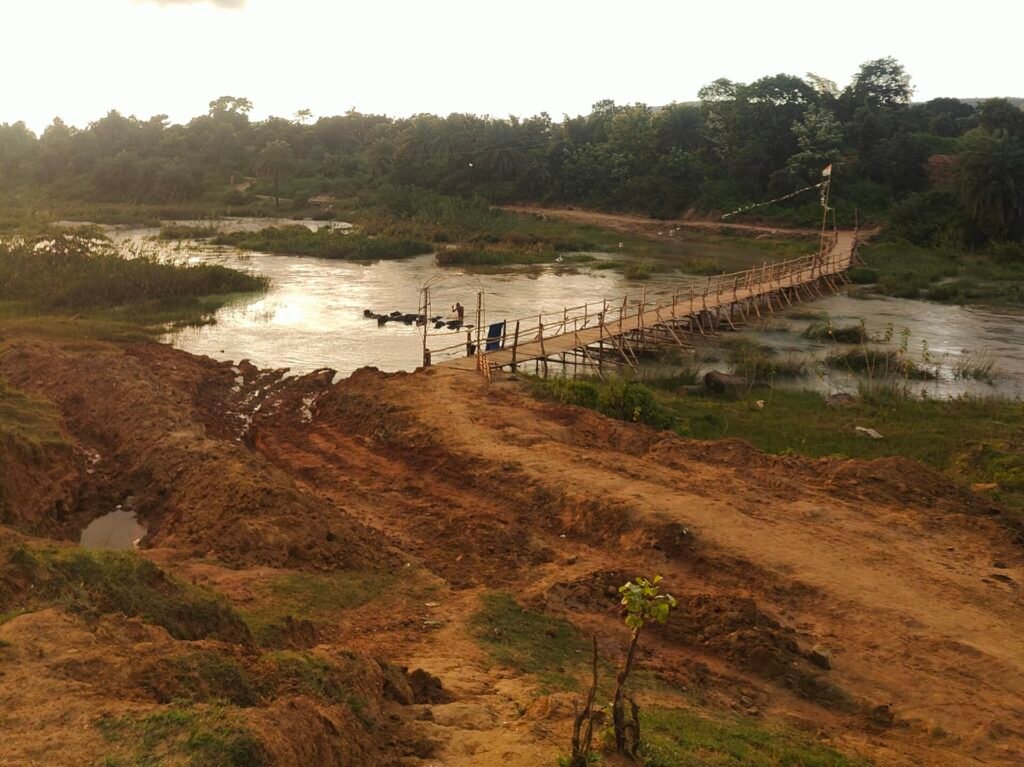
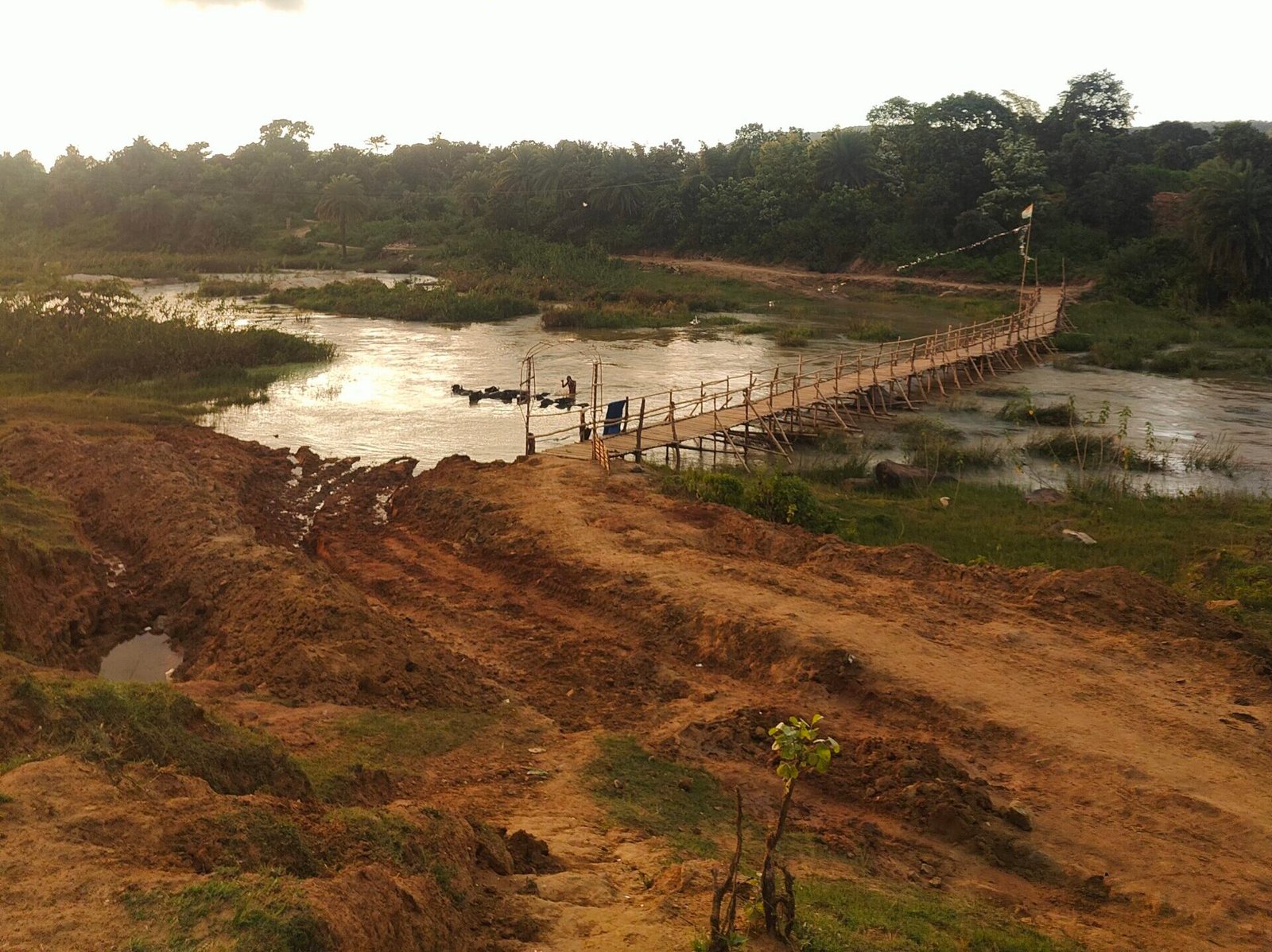
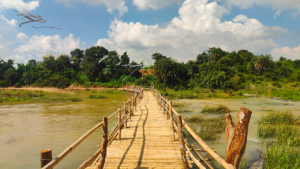
The bamboo bridge across the Kiul river connects Sukho Pahadi Tola and Jathar in Bihar’s Jamui district, making it easier for residents to access forest produce, reach nearby towns for daily-wage work and commute between the two villages without wading through the river. Aishwarya Mohanty / The Migration Story
The bamboo bridge across the Kiul river connects Sukho Pahadi Tola and Jathar in Bihar’s Jamui district, making it easier for residents to access forest produce, reach nearby towns for daily-wage work and commute between the two villages without wading through the river. Aishwarya Mohanty / The Migration Story
Pradeep Kisku, 35, from Jathar, who had worked at construction sites in Delhi and Bengaluru and was part of the bridge construction team, said the residents pooled their experience to build it. They did not hire an engineer.
“We all have made bamboo structures at some point of time – like machans (watchtowers) to guard our crops or even shades for our cattle. We picked up a few ideas even while working at construction sites. So we pooled in all our expertise together too to make the bridge,” he said as he sat down for a glass of water, after a nearly 30-km commute from Jamui, where he works as a daily-wage labourer now.
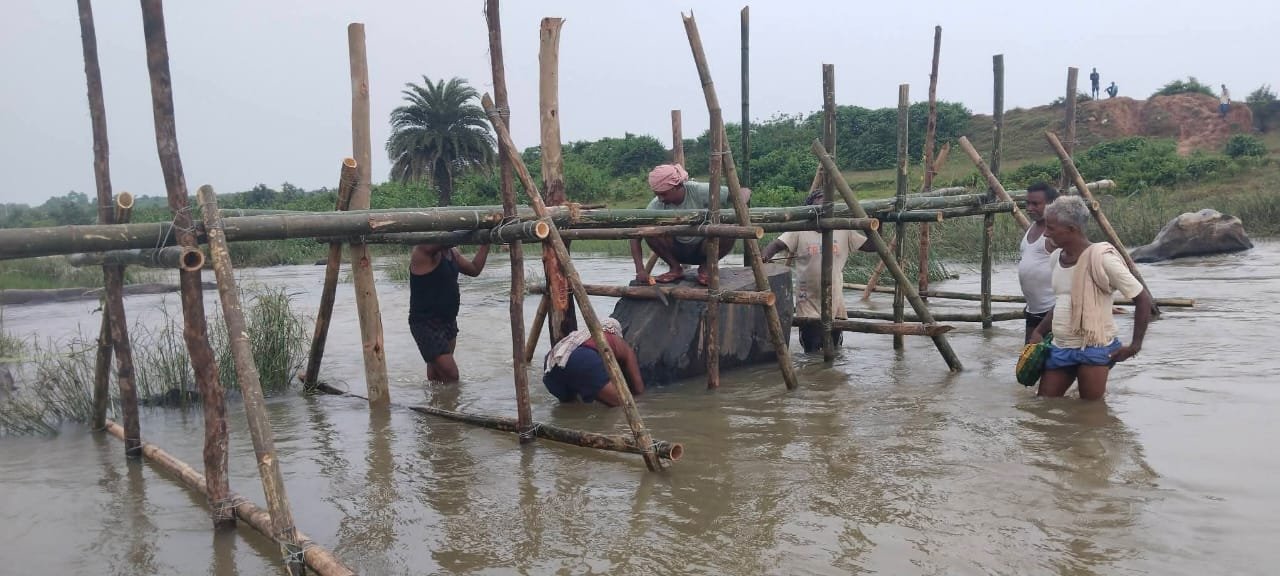
For two weeks in September, men from both villages worked for eight hours a day to put the bamboo bridge together.
“On the day the bridge was inaugurated, every person who volunteered with their labour was felicitated with applause and garlands by both villages. We had no money to give them, it was just about recognising their work and contribution in front of everyone,” Kisku said standing on one edge of the bridge, overlooking the Kiul.
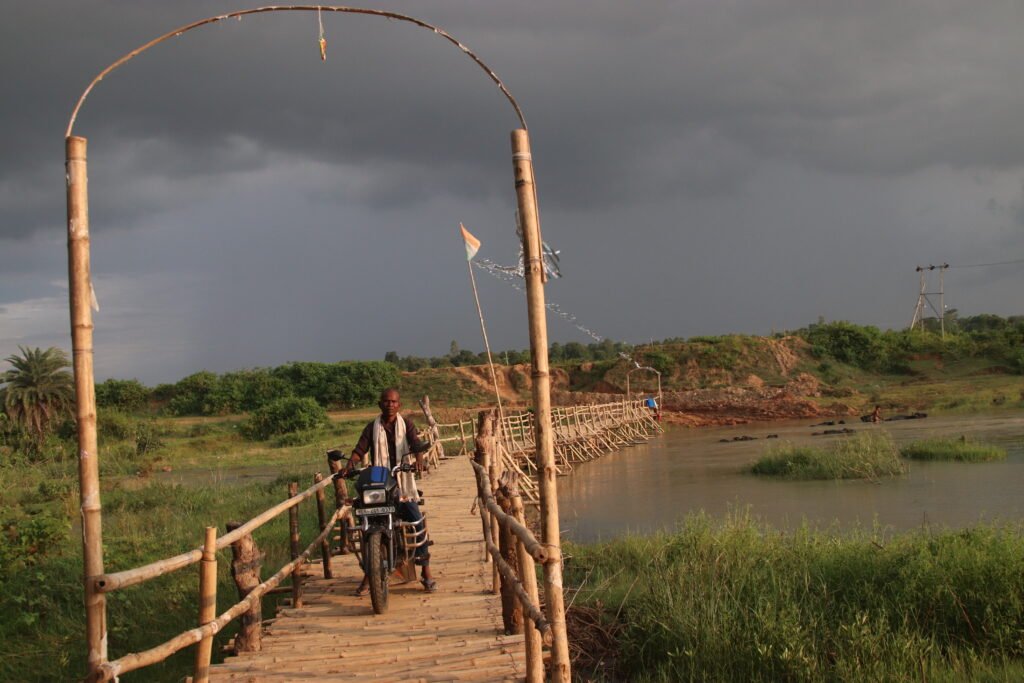
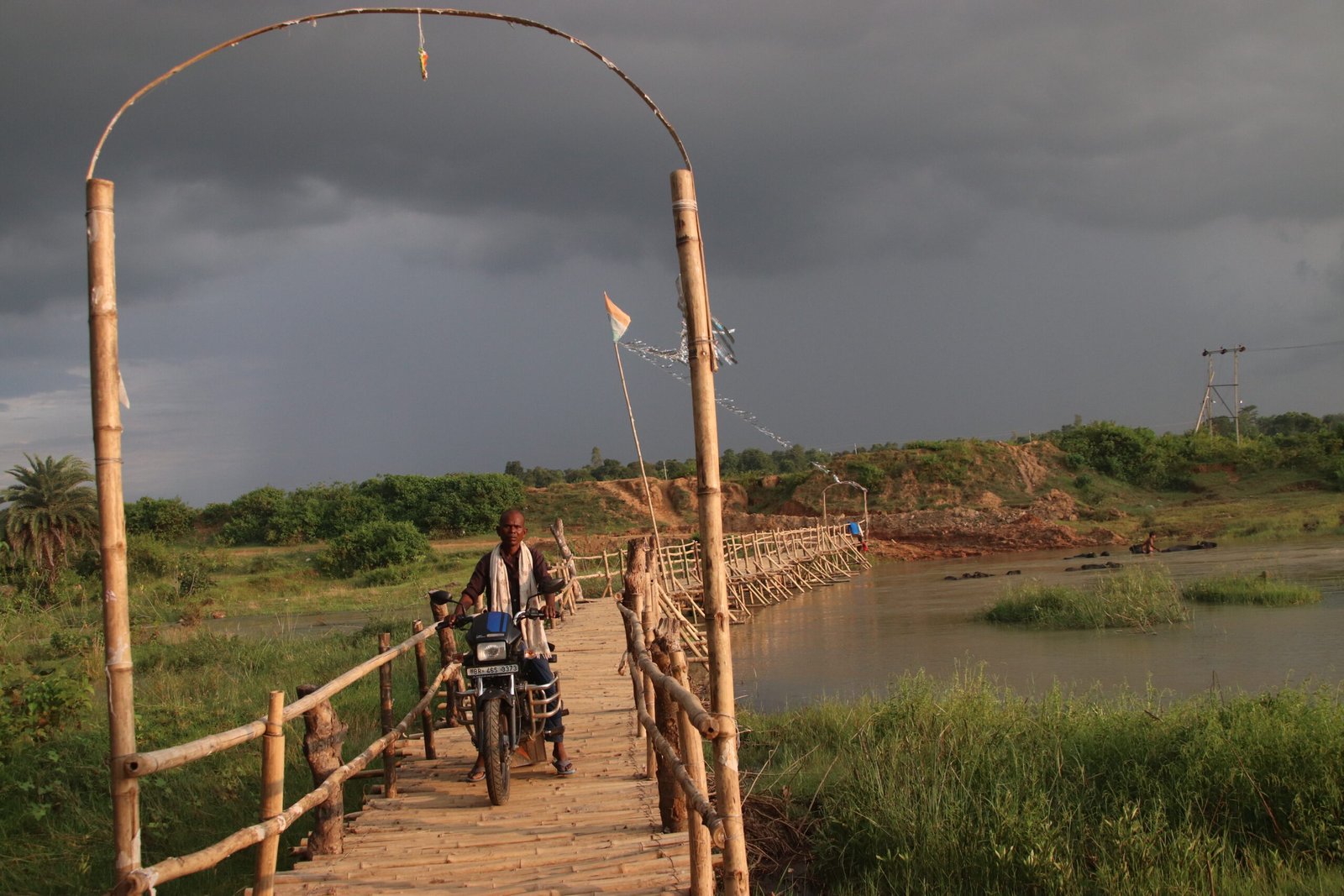
People can now walk across or wheel a two-wheeler over it. Since September, the bamboo bridge, still strung with glittery tassels from its inauguration, has changed how villagers from both settlements reach the forest, the market and work.
Access eased, but for how long?
Anita can now return to collecting chirata, without fearing the river.
She collects around two kilograms in a day, earning approximately 100 rupees, and can sell roughly 10 kilograms in a week each, making 500 rupees.
Pradeep Kisku rides his motorcycle to work from Jathar village, a commute made easier by the newly constructed bamboo bridge across the Kiul river. Earlier, reaching nearby towns for daily-wage work involved crossing the river on foot and relying on public transport, often adding several hours to his daily commute. Aishwarya Mohanty / The Migration Story
Pradeep Kisku rides his motorcycle to work from Jathar village, a commute made easier by the newly constructed bamboo bridge across the Kiul river. Earlier, reaching nearby towns for daily-wage work involved crossing the river on foot and relying on public transport, often adding several hours to his daily commute. Aishwarya Mohanty / The Migration Story
“The 400 rupees I earned (her share of the total income) in a day in Bengaluru was spent every day just to survive. The 500 rupees I make a week here is mostly saved,” she said.
Her family has a small plot of farmland where they grow rice and vegetables for their own consumption. They do not sell the produce. Being home allows Anita to tend to her fields too.
“There is no house rent, my children study in a government-run school and we manage food, our farms and forest,” Anita said as she displayed a variety of wild greens she had collected from the forest for the day.
For residents of Jathar, reaching the nearest town for daily wage work also involved considerable time and money before the bridge was built. “Taking a motorcycle across the river was difficult when the water rose. People often crossed the river on foot and looked for a toto, or electric three-wheeler, to continue their journey. The daily commuting expense could reach around 160 rupees,” Kisku said, adding that it took them three hours just to reach their work destination. This pushed him to migrate.
“Bhook ke karan bahar kaam pe jana hi padta tha (I migrated due to hunger),” Kisku said, as he sat outside his two-room house in Jathar after returning from his daily wage work.
Three years ago, when his son fell ill, Kisku decided to return to the village. But finding a way to sustain his family at home proved difficult without a bridge. He then worked in the nearest town and returned home only over the weekend.
The forest was close enough to Jathar that collecting produce was easy, Kisku said, but selling it meant crossing the river to the nearest market. “Many of us migrated to different cities and earned between 15,000 and 20,000 rupees a month.”
In Jamui town, Kisku rented a single room for 1,500 rupees a month and ate out for around 100 rupees a day. On a daily wage of 400 rupees, with about 25 days of work a month, most of what he earned went back into simply staying there. He went home only on weekends.
“This was expensive too. Living so close to home was also not doing any good for us. But we had no choice,” he said.
The temporary bridge over Kiul river connects Sukho Pahadi Tola and Jathar on either side of the river. It provides a crossing that was long missing, particularly during the monsoon when the river often cut off access between the settlements. Aishwarya Mohanty / The Migration Story
The temporary bridge over Kiul river connects Sukho Pahadi Tola and Jathar on either side of the river. It provides a crossing that was long missing, particularly during the monsoon when the river often cut off access between the settlements. Aishwarya Mohanty / The Migration Story
After the construction of the bridge, he started commuting for work daily from his village on his own bike. “I have a bike. Two or three of us share and commute, so the travel expense is also divided. Every evening I return home and eat home-cooked meals. I can look after my children and also support my wife at home,” he said.
But the residents in the villages know that the bamboo bridge is not a lasting solution. “If the river rises sharply next year, the current could wash the bridge away. It is a temporary structure, and we are scared the water will rot the bamboo and make it fragile. We need a definitive solution,” said Pushpa.
Praphull Kumar Manjhi, Member of the Legislative Assembly (MLA) for the Sikandra (SC) reserved constituency in Jamui district, Bihar, said discussions were underway to construct a bridge.
“We have prepared a detailed project report (DPR) already. I don’t know when the bridge will be constructed, but it will be constructed for sure,” he told The Migration Story.
Asked why the bridge was delayed despite repeated requests from villagers, he said, “The population is small, so it is difficult to sanction projects of this scale.”
Aishwarya Mohanty is Special Correspondent with The Migration Story.