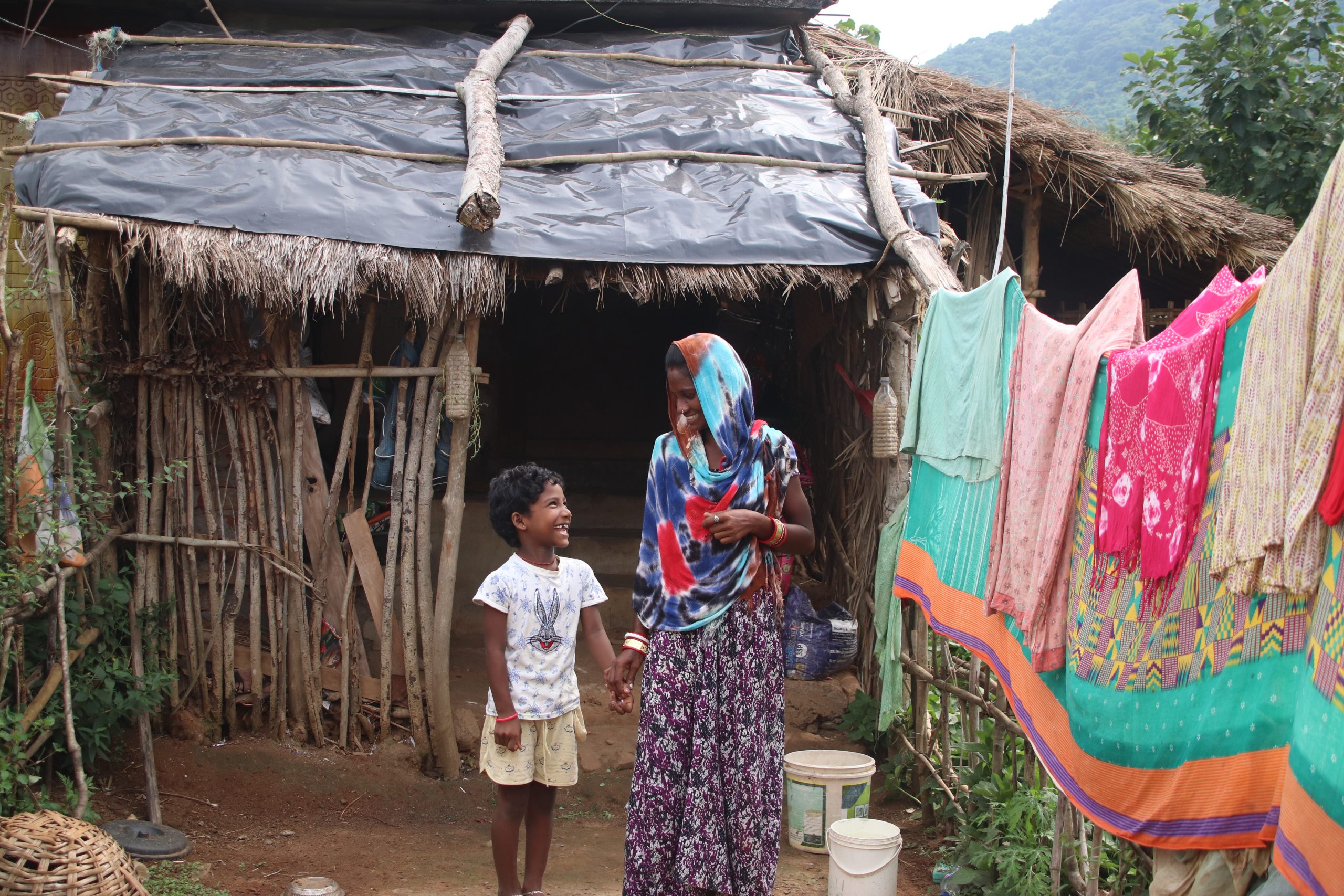
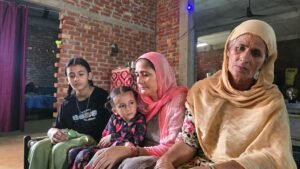
Ganjam, Odisha: Kuni Nayak, 30, from Gundibira village in Surada block of Odisha’s Ganjam district, proudly shows the modest home she and her husband, Jayant, have slowly built over the years. “We first built a wall, then another, and then the rest. What remains is just the roof,” Kuni said, pointing to the tin shade that currently serves as the house’s ceiling.
This tin roof is a temporary solution, a work-in-progress that represents the journey of many migrant families in Ganjam—gradual progress through hard-earned money from distant places, most recent Kerala.
Ganjam, for years recognised as the source district feeding workers to the textile power looms to Surat, is now seeing record numbers migrate to Kerala, a preferred destination by the district’s poorest, the new migration corridor shaped by poverty of jobseekers, mostly those from the bottom of the caste hierarchy trying to navigate oppressive caste dynamics.
NEW SENSE OF RECOGNITION
Mithun Nayak, 26 did not have access to certain areas of his village Bada Badangi village in Ganjam.
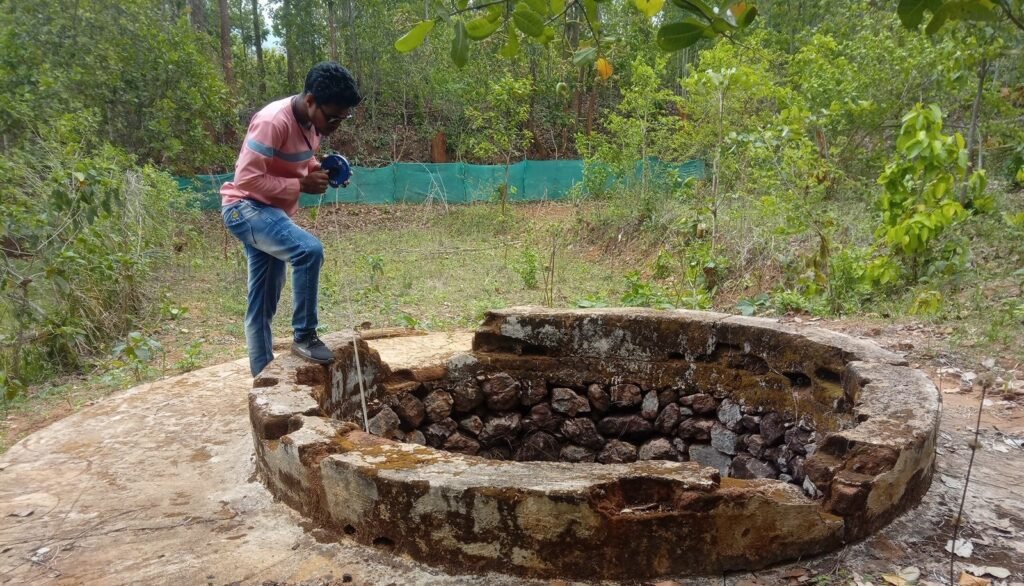
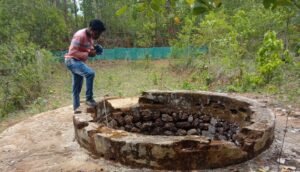
“We weren’t even allowed to use the same water as they (upper caste residents) do. “But here at work, we even share meals,” he told The Migration Story, as he showed around the village pond and the share that Dalit communities from the village could use.
Mitika Nayak (40), a native of Bada Badangi village, worked in Surat for two years before he joined others from his village in Kerala.
Kerala, once not even on the radar of Ganjam’s locals, is now a favored destination, especially for those belonging to the Scheduled Castes. The pull factors include higher wages and a more inclusive social environment.
Gradually, those from other, even upper castes, have begun migrating to Kerala, giving the original migrants who are by now familiar with the state, a rare edge over those who have socially acted superior for generations.
“For generations, we have faced discrimination and ostracisation. They wouldn’t talk to us but they are now willing to learn from us,” said Kumar Nayak (56).
“They ask about the kind of work we do, the money we earn. They come to us to learn the skills and techniques of masonry and we are more than happy to help always,” he said
It wasn’t the experience that the scheduled caste community members had in Surat, dominated by OBCs, villagers said.
The Migration Story reported in a two-part series last month about the caste dynamics playing a key role in the decision to migrate to Surat, with those from the lower caste unwelcome in the city of opportunities.
The series explored the discrimination and exclusion by fellow Odia migrants from OBC groups of marginalized SC workers, leading them to slowly withdraw from Surat.
A recent study, co-authored by Madhusudan Nag, a Doctoral Scholar at the Centre for Development Studies in Thiruvananthapuram; Benoy Peter from the Centre for Migration and Inclusive Development, Perumbavoor; and Divya Varma from Aajeevika Bureau, Udaipur, and published in the Odisha Economic Journal highlights this shift in migration patterns from Ganjam.
The study examines how evolving migration routes and caste dynamics influence the types of jobs migrants pursue and the destinations they choose. It notes that the Ganjam-Surat migration corridor became dominated by OBC and other castes, with few SC migrants remaining.
Lead author of the study, Madhusudan Nag, explained, “There could be multiple reasons for why people started choosing Kerela over Surat, but the caste dynamics emerged as a leading factor during our study. By the late 1990s, Dalits began to experience marginalization in Surat due to discrimination and lack of cooperation from higher-caste Odia migrants. Through our interviews we saw that migrants in the Ganjam-Kerala corridor reported a safer environment and less discrimination compared to their experiences in Surat.”
In Kerala, migrants from the most marginalized communities gained a newfound sense of recognition, but it is significantly higher wages in Kerala that are drawing migrants, not just from Ganjam but other states as well, according to researchers.
Notably, the remittances from Kerala are also higher as Mitika puts it, “I will earn Rs 500 a day here and eat Rs 40/kg potatoes. I will earn Rs 1000 a day there and eat Rs 40/kg potatoes. Which is a better bargain?”
Similarly, Mithun who started migrating for work 10 years ago has seen his daily wage increase from Rs 160 per day to Rs 1000 per day. This increase for Mithun means, a better house and assured education for his child.
“I studied till the fourth grade. I had to drop out because my family couldn’t afford sending me to school and I had to start working at a very early age. I don’t want my son to follow my footsteps,” Mithun said.
“Mu chanhi bi ki siye patha padhu, bada manisa hau, officer banu (I would want him to study hard and become an officer someday),” he added.
Experts point out that remittances are crucial for the community to foster both financial and personal growth. “In most cases, with these remittances, they first repay their debts, make small improvements on their land if they own any, build their houses and start small businesses like setting up a grocery store in their village,” said Liby Johnson, Executive Director of nonprofit Gram Vikas. But the changes happen over several years, he said.
“Since this income is relatively new, it’s often the younger generation, rather than the elders, who decide how it’s spent,” he explained. “As economic conditions improve, we observe a notable boost in self-confidence, particularly among women, who develop a stronger sense of self-worth and are in a much better position to assert it,” he added.
The remittances are higher than what one earns in Surat. In Kalamba village of Polasara block of the district, where nearly 90% of the households have been traditionally migrating to Surat for work, there is a shift.
“The wages in Surat feel like they are stuck at the same rate. The working conditions have declined, but the wages remain the same. But now the newer generation wants to earn more and so the southern states seem more promising. Most of them are migrating to Kerala and Karnataka to work as delivery agents,” said Akshay Pradhan, a native of Kalamba and a social activist.
UNCHANGED REALITY
Jayant Nayak was just 15 when he left home to work as a mason in Kerala. In his village, he had watched his father work tirelessly over the years as a farm labourer on farms of other people, as the family did not own any land of their own.
Author
-
Aishwarya Mohanty is a Special Correspondent with The Migration Story and her work amplifies voices from India’s heartlands. Her reporting spans gender, rural issues, social justice, environment, and climate vulnerabilities. Formerly with The Indian Express, her work has appeared in Mongabay, The Migration Story, Behan Box, Article-14, Frontline, Al Jazeera, The Guardian, and others. She is also the recipient of the ICRC-PII Award for climate change reporting (2021), the Laadli Media Award for gender-sensitive reporting (2023 & 2025), the Sanjay Ghose Media Award for grassroots journalism (2023), and the Odisha Women in Media Award (2024). Along with this, she co-owns a permaculture farm, Routes to Roots Natural Farms, with her partner in Nimach, Madhya Pradesh.
View all posts