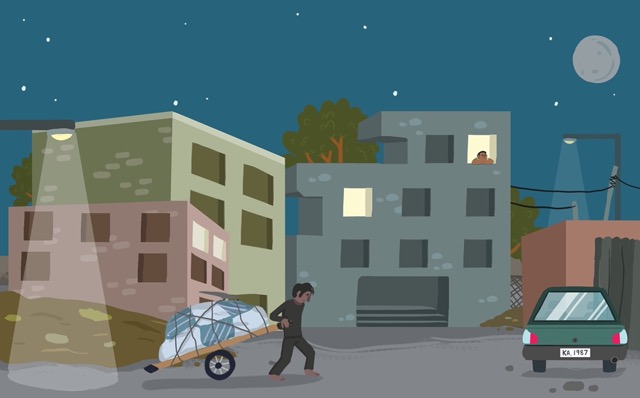
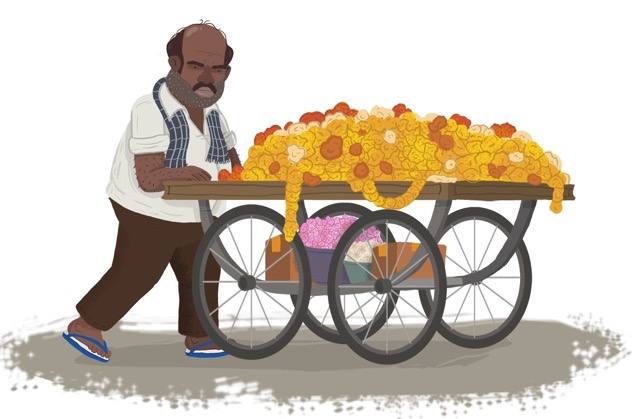
BENGALURU, Karnataka: Venkatachala, 38, starts his day early, neatly arranging chrysanthemums, jasmines, crossandras and roses on his pushcart. He then heads out into the streets of Bengaluru, calling out to customers who use fresh flowers for religious ceremonies and daily prayers at home. His goal this summer has been to try and sell most of his stock before 10 am.
In India’s Silicon City, which has been reeling under one of its harshest summers, Venkatachala knows that with each passing hour beyond 10, his flowers will wilt and droop, the odds of earning income from them significantly falling.
“I try to sell as much as possible before 10 am, after which it’s too hot and that affects my business,” Venkatachala, who uses one name, said.
Recent rain showers have brought much-needed relief from the heat for Bengalureans. As summers wind down in cities like Bengaluru in Southern India, the Northern plains of the country are preparing for a brutal summer. The India Meteorological Department (IMD) forecasts heatwave conditions in multiple states in the north in the following weeks.
INDIA’S LABOURERS EXPOSED TO LIFE-THREATENING HEAT STRESS
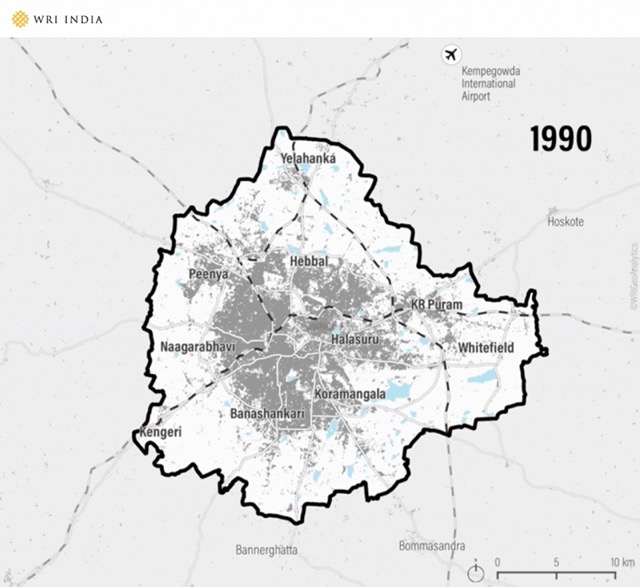
Known for its colonial buildings, leafy roads and pleasant weather, Bengaluru, or the garden city as it is also known, is the capital city of the southern Indian state of Karnataka and home to approximately 14 million people.
Among them are a large population of migrant and informal workers who build the city and keep it moving.
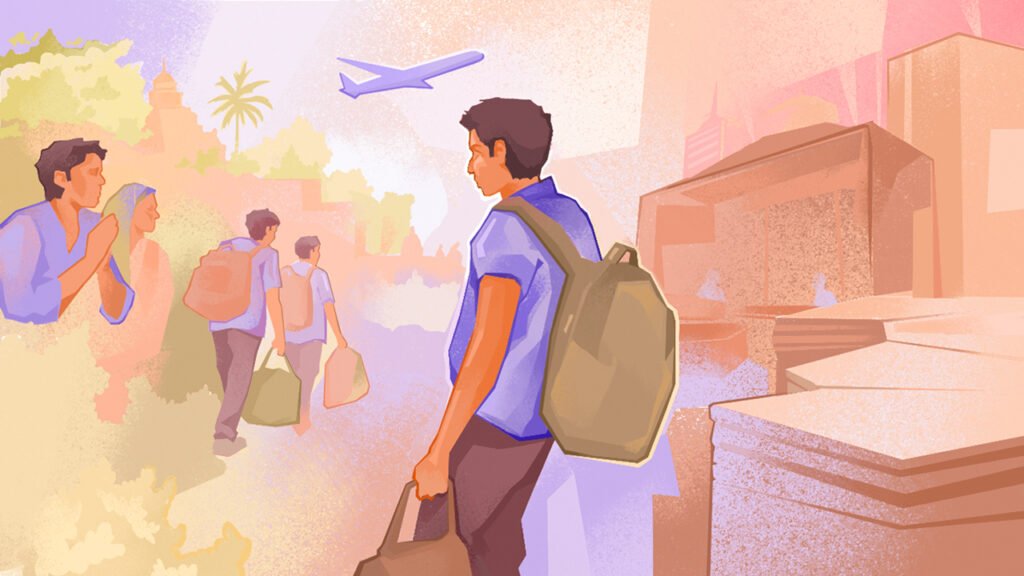
Most, like Venkatachala, moved here from their villages due to a lack of opportunities and poor paying jobs back home.
“It feels like Bengaluru is our America, where we’ve relocated to make a living, uprooting ourselves from the serene life of the village,” said the 38-year-old flower seller, whose parents toiled in a quarry, carrying and breaking heavy stones.
A World Bank report states that up to 75 per cent of India’s workforce depends on heat-exposed labour, at times working in potentially life-threatening temperatures.
This informal workforce, which contributes to nearly half of India’s GDP, bears the brunt of the rising temperatures, with long-term implications for their health and earning capacity.
From the daily wage workers, construction workers, street vendors and domestic helpers to workers in small-scale industrial units, delivery staff zipping through the roads and security guards, the rising heat and drinking water crisis in Bengaluru, has been a double whammy.
“The current construction work, infrastructural and road widening projects are creating cities without adequate shade or accessible public spaces,” said Dr. Ratoola Kundu, assistant professor at the Centre for Urban Policy and Governance, Tata Institute of Social Sciences, Mumbai.
Informal settlements sizzle in India’s urban heat islands
A United Nations report said in May 2018 that by 2050, India will have added 416 million people to its urban areas. Most of them will be informal workers who will migrate in search of a livelihood. When Venkatachala left his village near Mysuru in the year 2000 to earn a better income in Bengaluru, the city was known for its ample green cover and characteristic pleasant weather. It was also a year of a notably chilly winter, with December temperatures dipping to a record low of 11.5°C.
But in 2023, Bengalureans experienced the warmest December in a decade. The average temperature at night was recorded at 18.6°C, 2.7°C higher than night-time temperatures 10 years earlier, in 2013.
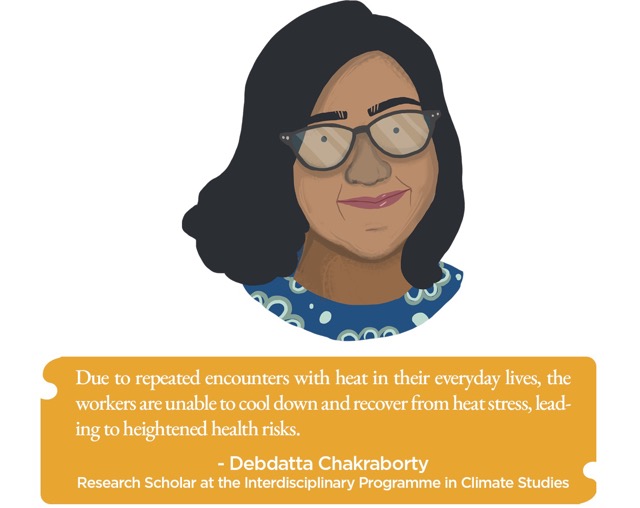
“The rise in the night-time temperatures is due to the urban heat island effect,” explained Debdatta Chakraborty, a research scholar at the interdisciplinary programme in climate studies, Indian Institute of Technology, Mumbai.
Chakraborty is studying the effects of heat on informal workers in Indian cities.
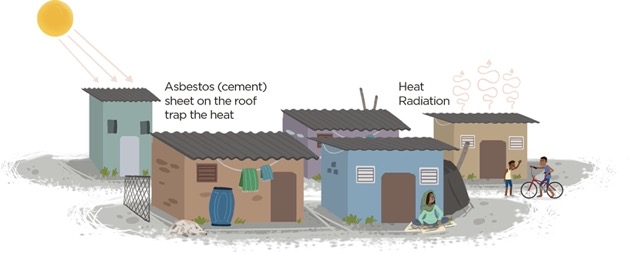
The current urban landscape is built with concrete, metal and asphalt. These materials absorb heat during the day and radiate it at night, creating the urban heat island effect. As a result, the nights in cities like Bengaluru have become warmer than they were.
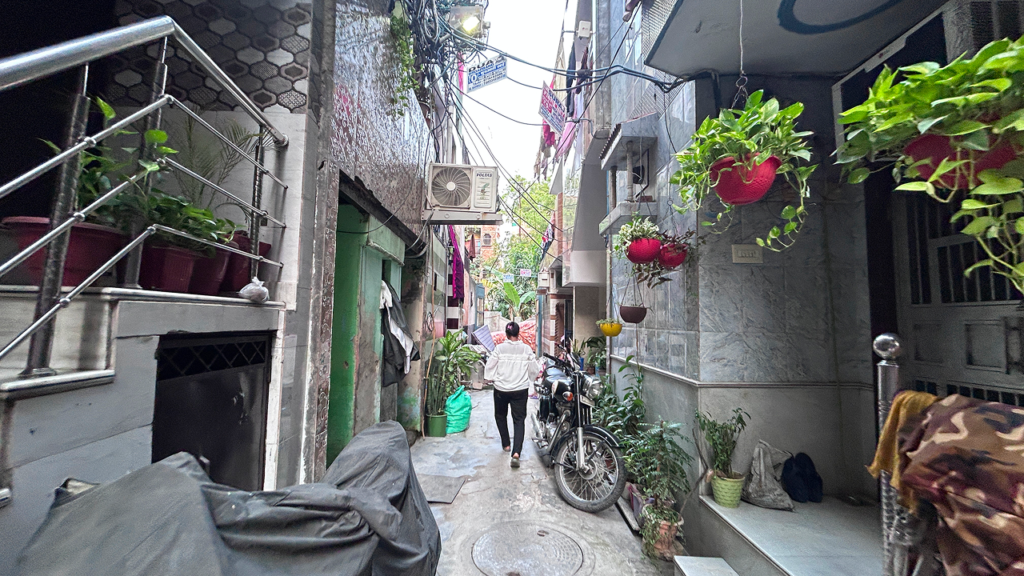
Venkatachala’s family, including his wife and two school-going children, lives in one such informal settlement.
“Our house in Bengaluru, no matter how much we cool it, tends to remain hot. The ground floor is bearable, but we live on the first floor, which has sheet roofing, making life unbearable in the heat,” Venkatachala said about his residence in Priyanka Nagar, an informal settlement in east Bengaluru.
“Workers encounter heat in their workplace during the day and at home at night. They might be exposed to heat when they commute to work on foot or in highly crowded public transport,” explained Chakraborty.
Prolonged and continuous exposure to heat in their everyday lives heightens workers’ health risks as they are unable to cool down and recover from heat stress, she added.
To Venkatachala, hot days mean low productivity, slow business, loss of stock, and added cost of amenities like water, electricity, and healthcare.
A 2019 report by the International Labour Organisation states that excessive heat during work creates occupational health risks; it restricts a worker’s physical functions and capabilities, work capacity and productivity.
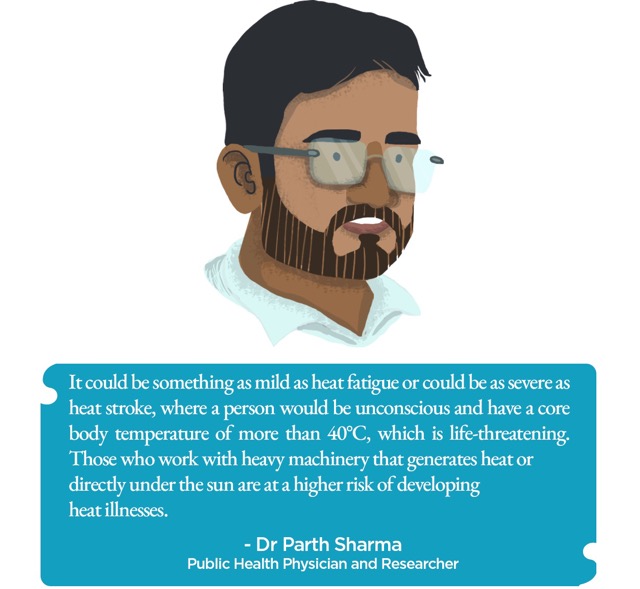
“It could be something as mild as heat fatigue or could be as severe as heat stroke, where a person would be unconscious and have a core body temperature of more than 40°C, which is life-threatening,” said Dr Parth Sharma, a public health physician and researcher. “Those who work with heavy machinery that generates heat or directly under the sun are at a higher risk of developing heat illnesses.”
In the first week of March, Karnataka’s Health and Family Welfare Department had to issue a heat wave advisory. It asked residents to stay hydrated, use oral rehydration solutions, consume lemon water, buttermilk or lassi (yoghurt–based beverage), and fruit juices with added salt. In addition, it recommended eating seasonal fruits and vegetables with a high-water content, staying indoors in well-ventilated, cool places as much as possible by blocking direct sunlight, and limiting daytime outdoor activities.
Most of what the advisory recommended are luxuries that millions of informal workers cannot afford. In fact, an adequate supply of potable water is a struggle for the majority living in the city.
Like Venkatachala, 60 percent of Bengaluru survives on water purchased from tankers. A 12,000-litre water tanker costs Rs 1,200.
This year, as the city grew hotter and thirstier, the drinking water crisis has been severe, hitting even the city’s affluent housing colonies, malls, and information technology parks.
In the competition for vital resources such as water, the privileged have an unfair advantage over the informal workforce. Some of these ‘advantages’ are as basic as access to safe drinking water and toilets.
“Due to our water issues, we can only afford to take a bath once every two or three days. Unfortunately, this scarcity leads to problems such as rashes, dandruff, and other skin issues during the summer,” said Venkatachala.
Unable to access clean toilets, women abstain from drinking water for long hours. Consequently, they suffer serious infections; dehydration further exacerbates the impacts of heat, doctors say.
Severe dehydration can cause damage to kidneys, result in a drop in blood pressure and muscle breakdown, said Sharma.
“Often, women working as manual labourers are nursing mothers and their poor health due to dehydration can impact their children as well,” he added.
CITY HEAT MITIGATION PLANS MUST HEED INFORMAL WORKERS
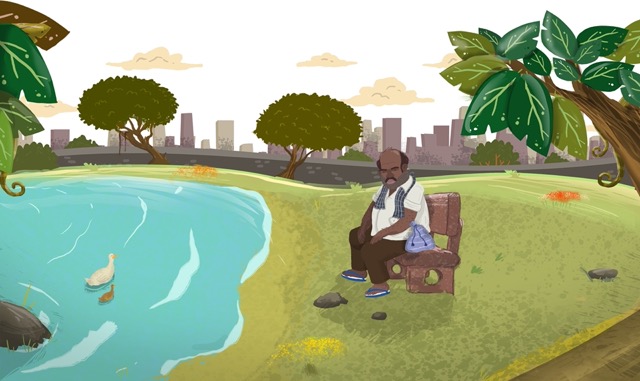
“People have already sacrificed all the trees to build houses everywhere—here, within the city, and everywhere else. We used to have many lakes and tanks as well. Already, we have emptied most to construct apartments,” the flower seller said ruefully, adding that “perhaps there will be no trees in 20 years; it’s hard to say. Already, I feel like I barely see a tree.”
He insists that there should be an increased effort to plant trees, revive lakes, and develop villages.
“The government needs to help villages and small towns become more self- sustainable. We need to prevent more migration and support those in villages to farm better and live better,” he said.
“If the government supports this, we can prevent excess population in the cities and everything that comes with it.”
Urban planners and labour rights experts say that the lived experiences of a city’s residents, including those of informal workers, should be central while planning heat mitigation solutions.
“Building cities that prioritise people means including the voices, experiences, needs, and well-being of informal workers like Venkatachala in city-level policymaking,” said Tanisha Arora, Mumbai-based creative strategist at Purpose, a strategic consultancy and creative agency working on issues like climate action.
But in the absence of such mechanisms at present, informal workers have little or no respite from the harsh summer.
“I should install an umbrella for my pushcart, for myself and to protect the flowers, but such things cost money, and I cannot spare the money for such luxuries right now, so I let it go.”
Edited by Lesley A. Esteves
This article is being co-published with Alli Serona, a collective of civil society organisations, think tanks, artists, and informal workforce members, dedicated to ensuring the voices of residents living on the margins are central to Bengaluru’s design, planning, and development.