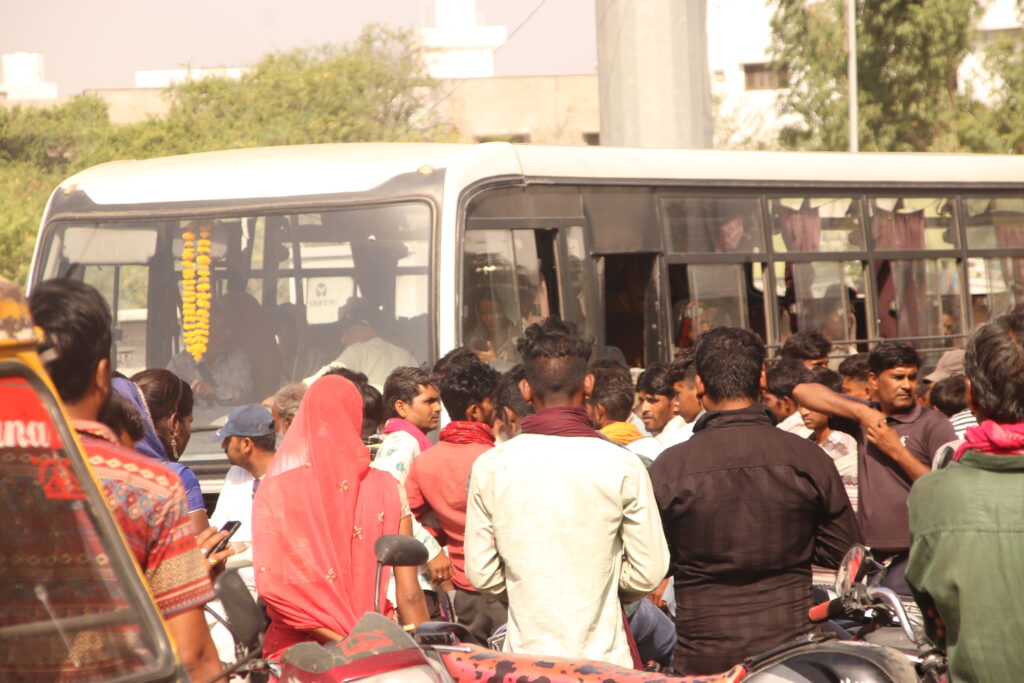
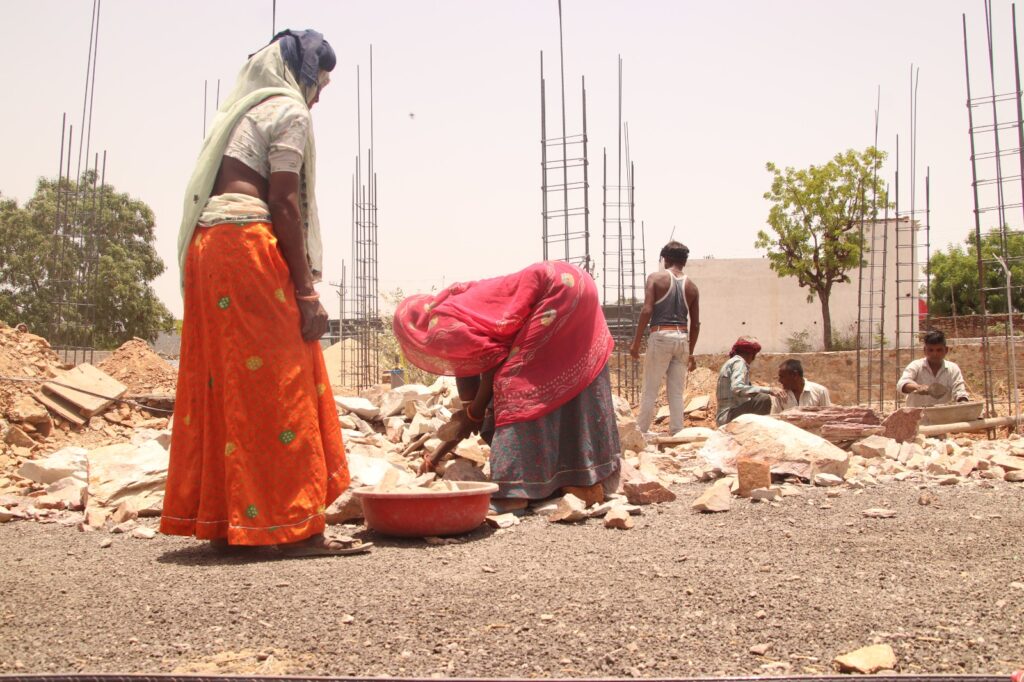
AHMEDABAD/GANDHINAGAR, Gujarat: A typical workday for Jignaben Vaghela,* 45, who lives in Umiya Hall basti, starts before dawn. She collects water for her family, then cooks and packs lunches, all before 8:00 am when she walks to the labour naka (square/intersection). “Women have to do everything, and the hardest thing is to return from work and sit at the chulha to cook,” she said. Vaghela is just one among the many migrant women workers in the Ahmedabad-Gandhinagar area who are exposed to dry air temperatures as high as 48 degrees, not just at work, but also while completing household chores before and after work.
While the deleterious impacts of occupational heat stress on worker health, productivity, well-being, and increased mortality and morbidity are widely established, less is known about heat stress outside of occupational settings, especially among informal migrant workers. In September 2025, we conducted surveys in six bastis (informal settlements) in Ahmedabad and Gandhinagar, through focus group discussions, interviews, and commute mapping, to understand heat stress among migrant workers. Of those we surveyed, 74% belonged to Scheduled Tribes (STs) and the remaining 26% to communities classified as Other Backward Classes (OBCs). Occupationally, they were primarily engaged in construction work, followed by street hawking, sifting and selling used hair on a piece rate basis.
In addition to reconfirming findings from other studies about occupational heat exposure, we found that women carried a double heat burden due to thermal labour. The term ‘thermal labour’ was coined by Srilatha Batliwala, a social activist and scholar, to denote the time cost and physical strain on health which a person has to bear when undertaking domestic labour in elevated temperatures.
DECODING ‘THERMAL LABOUR’ AMONG FEMALE INFORMAL MIGRANT WORKERS
Migrant workers in the city of Ahmedabad make a living by building multi-story homes for the privileged, but as one respondent said, “they have four ACs, and we don’t have a single fan.” Most informal bastis lack any electricity connection, especially those housing construction workers who spend limited periods of time in the city and don’t wish to, or cannot afford to, make such long-term investments.
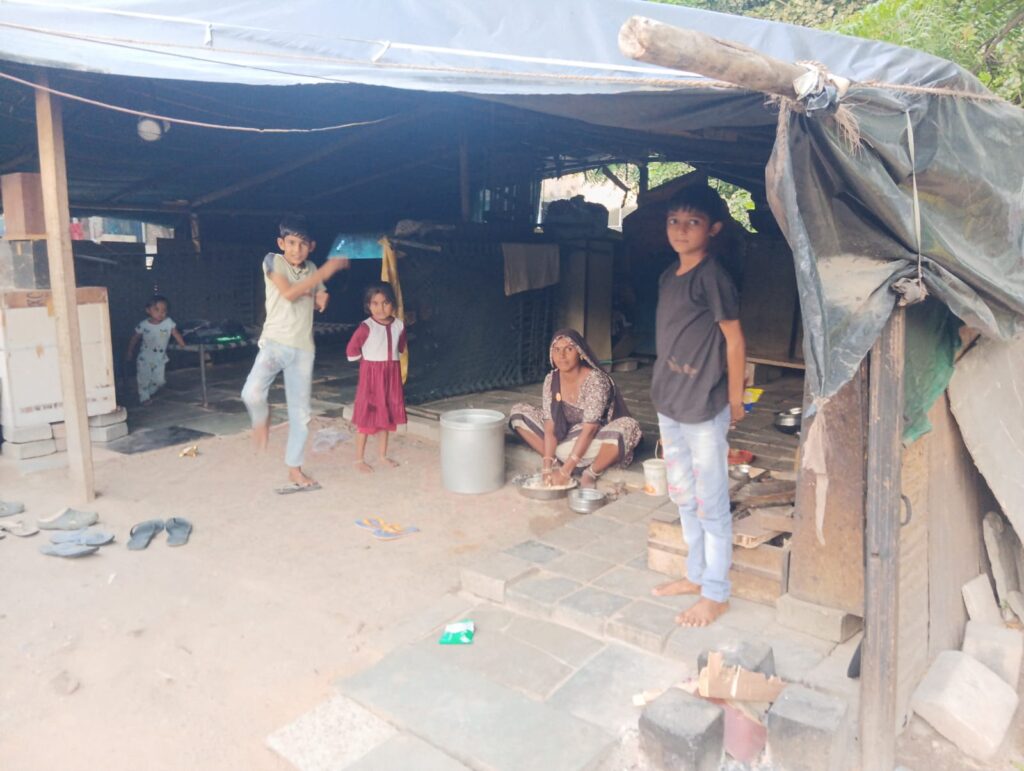
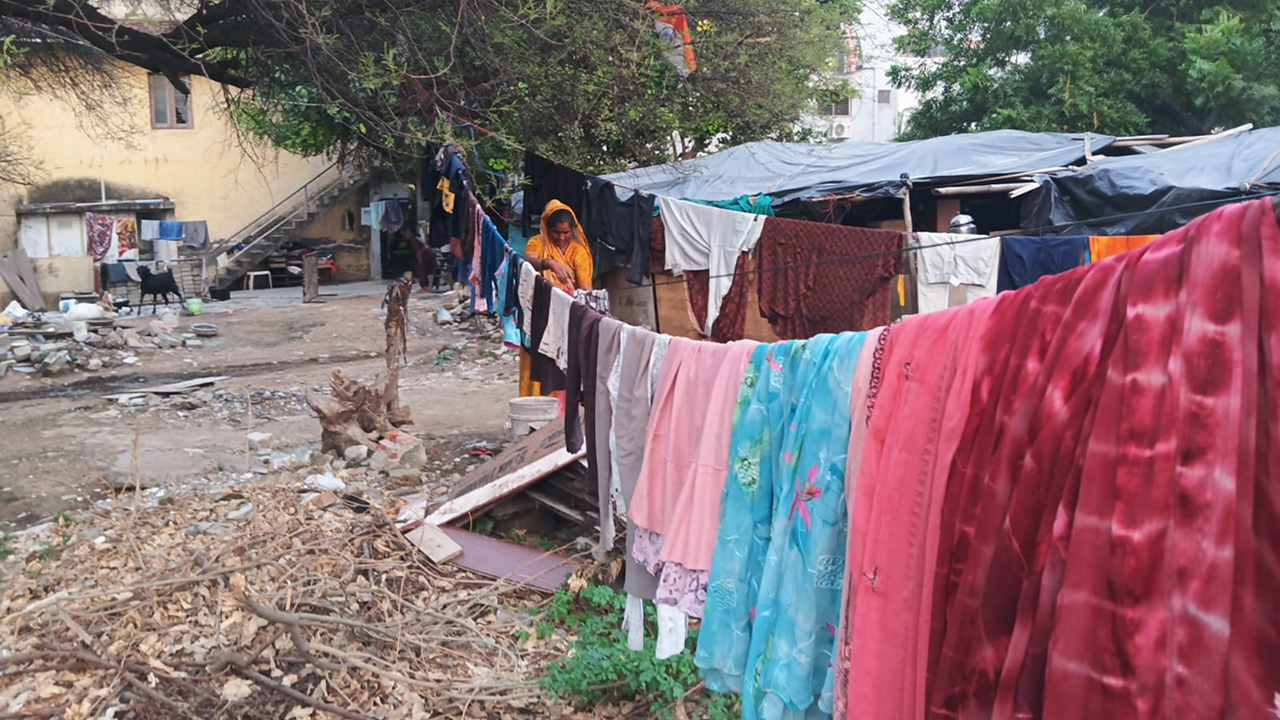
Informal migrant workers’ homes in non-notified bastis, where the entire family resides in a single room shelter with no windows. Ashwinbhai Vaghela/CLRA
A few people in Umiya Hall basti—the most impoverished of the bastis—reported renting batteries during the summer for a couple of hours in the evening to be able to run a table fan. However, they could rarely afford it for the entire summer, and kept the usage limited to extremely hot nights.
While all workers were affected by occupational heat stressors and the inability to cool their bodies due to a lack of electricity and an inadequate water supply, women were unequally impacted by poor housing conditions.
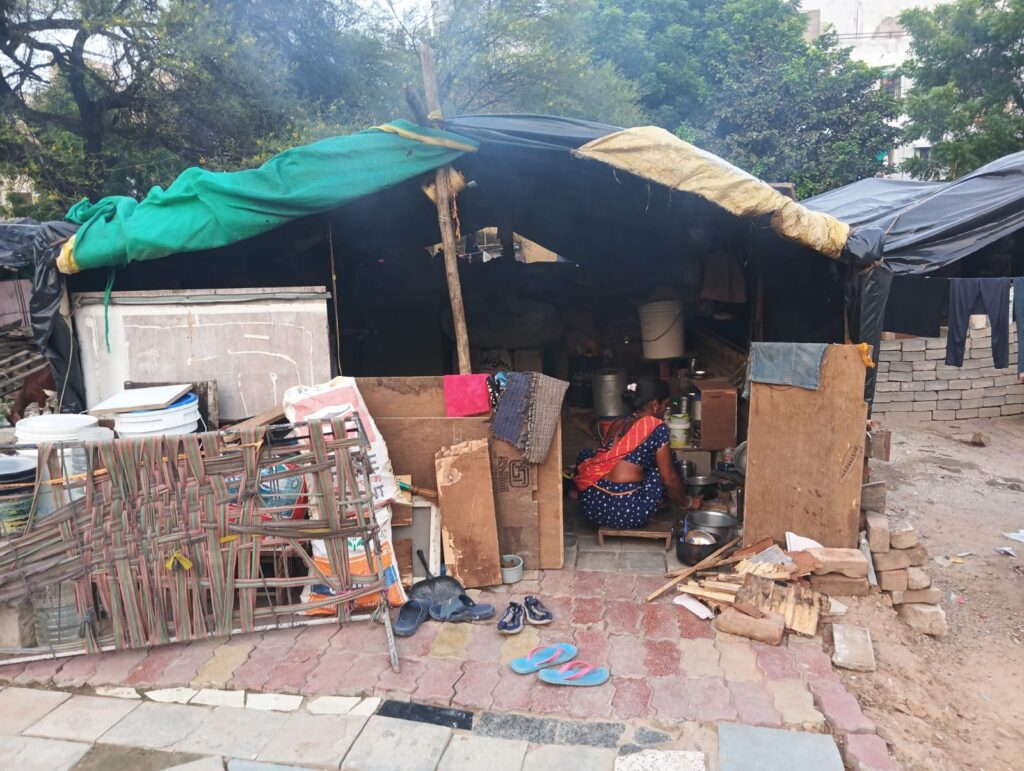
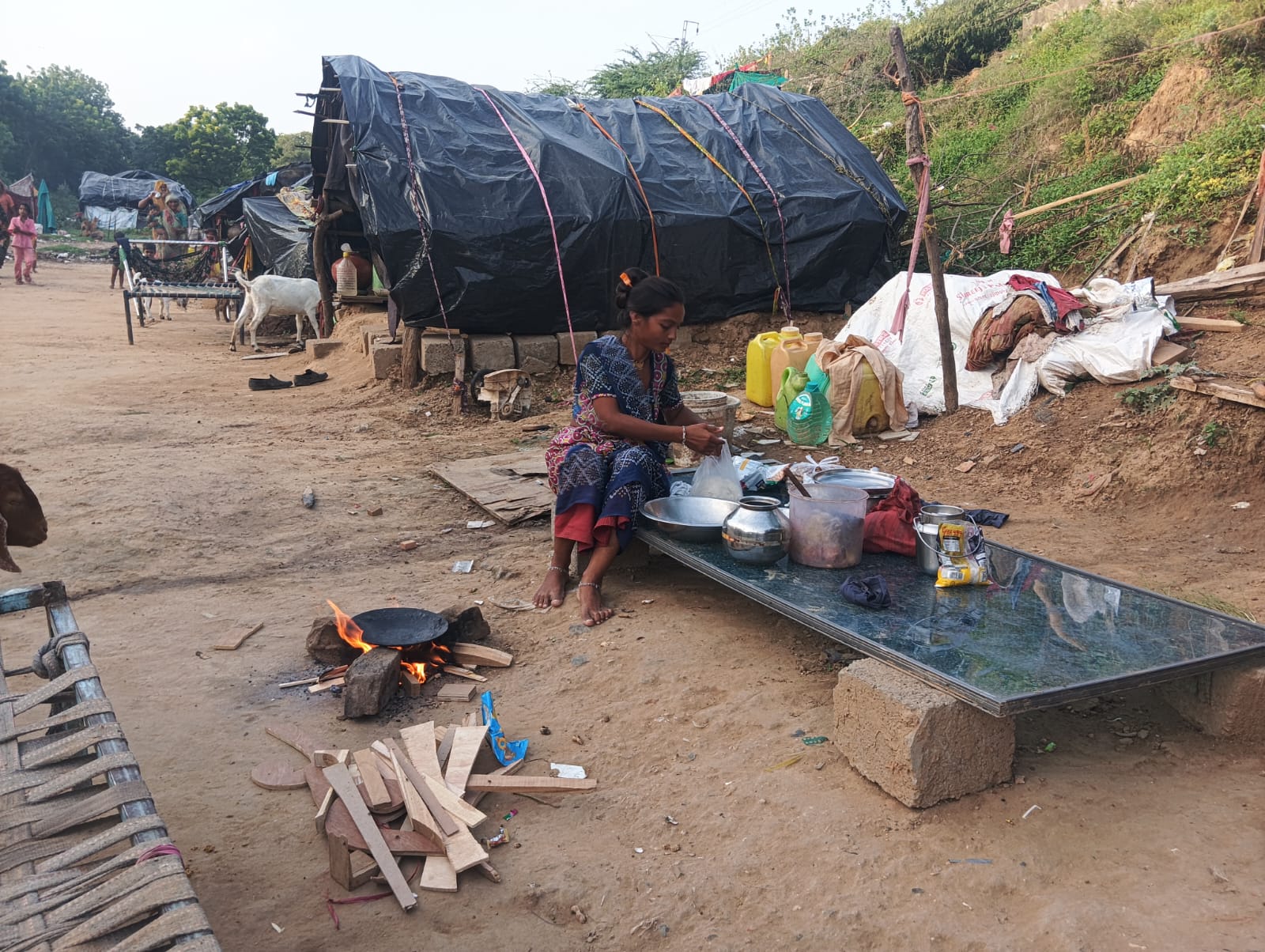
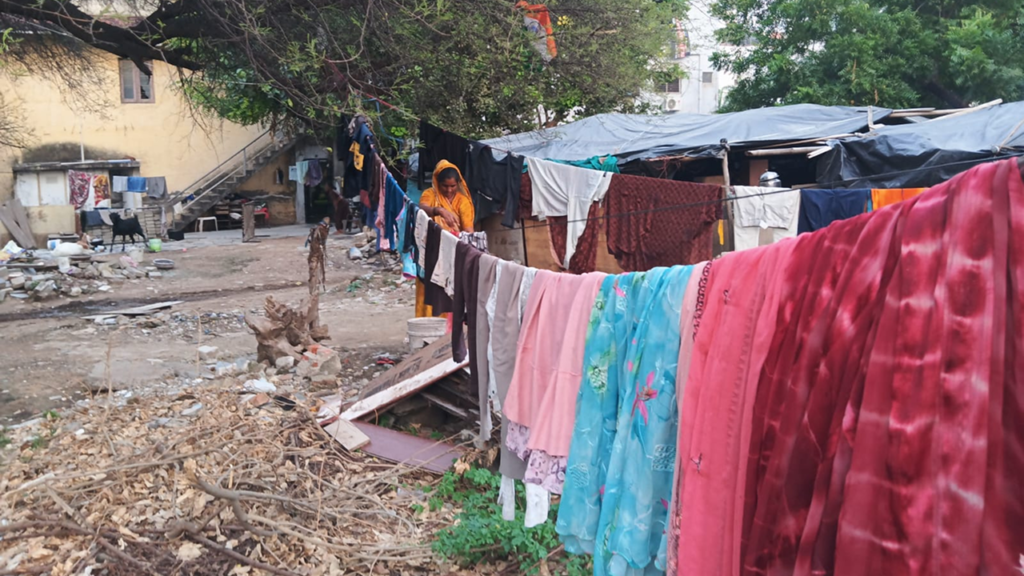
Female residents reported increased heat in the houses due to the materials with which they built their houses. In all the bastis, we observed that the majority of homes were built of plastic tarp sheets and held together with bamboo sticks. They were largely kachcha homes with no electricity, water, or sewer connections. Typically, homes had no windows and had a single room used for both cooking and sleeping. The tarps and lack of windows trap heat, making it unbearable to be inside the house during peak summers.
While men could choose to sleep outside to escape the gruelling heat indoors, the choice wasn’t so easy for women. “We stay up the entire night because of the heat; it is hard to sleep. It is my daughter-in-law’s eighth month of pregnancy. She just sits and doesn’t sleep. The kids can’t sleep [due to the heat]. There are also a lot of mosquitoes during the heat, and we fear the kids getting malaria, so we have to fan them [the entire night],” said one resident in Umiya Hall basti, aged 60, who at the time of the study was not employed and was forced to beg on the streets.
In the Sewage basti, as it is commonly referred to due to its proximity to a sewage treatment plant, families tied mosquito nets on the wooden poles outside their homes to sleep in every night. While this addressed the issue of mosquitoes, it still left the women more susceptible to harassment than if they could sleep inside.
Women in Umiya Hall spoke about the death of numerous children across the summer months, either due to mosquitoes or simply high temperatures, and the lack of affordable health care, which could have saved the children. Residents also noted how often government hospitals don’t treat common conditions, in spite of multiple visits. “When we go back, we are told to go elsewhere. We end up spending 200 to 5000 rupees at the private hospital,” said a respondent.
ONE TAP, LONG LINES AND HOURS SPENT COLLECTING WATER
While men can rest from the occupational heat stress after and before work, women rarely get that recovery time, as they have the additional responsibility of all household chores. Across the six bastis, research with women was harder as the burden of housework limited the time they were free.
There were three levels of water insecurity in the labour bastis. The best equipped were bastis with hand pumps, which offered a constant water supply. However, most of the bastis relied on a single tap, which would take the women hours to fill their buckets. But in some bastis, even this was lacking, and the residents had to go to neighbouring shops to ask for water for their homes, where the shopkeepers are often rude and deny their request.
Women wake up as early as 4:00 am for their first task of the day: collecting water, another task that rests primarily on their shoulders. Water is crucial to hydrate, bathe, and cool off after work. However, since access to water is limited in the bastis, women have to go to nearby neighbourhoods or public water taps to get water to drink and cook, a responsibility not shared by the men.
“Most days, there is a long queue for water collection, and I can only fill two 20-litre jars, which is barely enough to cook and drink. Nothing is left to bathe in the evening. A quick cool water bath after work is essential to cool the body before getting back to the chulha,” said Maniben, a construction worker living in a basti in Gandhinagar.
Women also have to account for privacy, which is often not available due to a lack of separate bathing spaces in the settlements. “We have to wake up very early to bathe, otherwise people will see us,” said Bharatiben Dantani, 50, who lives in the same settlement.
A SEAT NEXT TO THE CHULHA
The most time-consuming household task was cooking. The threat of evictions, as well as cultural norms, means that most families don’t buy gas cylinders, so women have to cook on chulhas, which generate more heat. In addition, since most settlements don’t have any security for their belongings, women constantly fear the gas cylinders being stolen, further discouraging them from making the investment.
Women reported feeling dizzy and overheated, having headaches and being dehydrated due to cooking. When we entered some homes where the women were cooking, it was difficult for us to stay for more than a minute due to the toxic fumes. While most women preferred cooking outside due to the lack of windows in their homes, as the temperatures rarely dropped in the mornings, it didn’t change the level of heat that they had to contend with.
The burden of heat stress also magnifies amongst Dalit, OBC and tribal women. The fact that almost all the women in our study belonged to ST and NT-DNT communities (now re-classified as OBCs), and have to cook under such harsh conditions also points to their vulnerability in comparison to women of other communities.
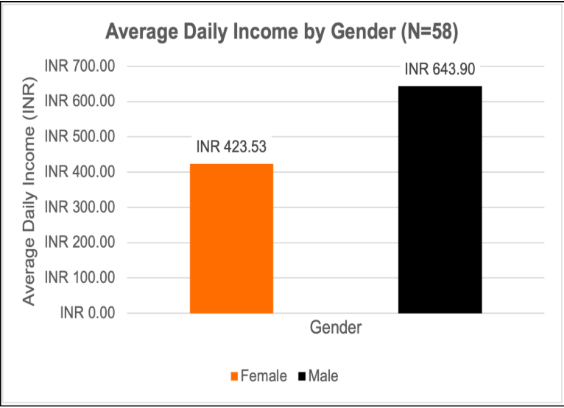
Figure 1: Bar-chart showing daily average income by gender among 58 migrant workers in Ahmedabad and Gandhinagar urban areas.
Despite this higher share of work, women are paid less than men. On average, female respondents were paid 65% of men’s wages (Fig.1). This impacted their bargaining power in the household and consequently access to crucial resources, such as a greater share of water at home during menstruation.
Despite this higher share of work, women are paid less than men. On average, female respondents were paid 65% of men’s wages (Fig.1). This impacted their bargaining power in the household and consequently access to crucial resources, such as a greater share of water at home during menstruation.
The lower pay also made it harder to afford paid toilets. “I have to hide an extra water bottle at night in case I have to use the bathroom. But sometimes if the children or my husband needs water, I have to give that up,” said one respondent, adding that the situation was dire during menstruation as the nearby toilets were either closed or lacked water.
MIGRATORY STATUS, URBAN HOUSING POLICIES, HEAT STRESS
Workers’ ability to protect themselves from household heat stress is highly impacted by their migratory status. A 2023 report by Centre for Labour Research and Action (CLRA), a non-profit working towards organising informal migrant workers, found that Ahmedabad is one of the top sites in the Central Gujarat region receiving migrant workers from neighbouring tribal regions. Although they, and their labour, are clearly critical to the city, it still doesn’t have space for them. Due to a variety of administrative and policy barriers, they are excluded from state efforts that could alleviate some of the issues highlighted above.
For example, the Gujarat Rehabilitation Policy 2013 provides rehabilitation to those living in notified bastis, i.e. those that have been counted in official government surveys, before 2010. But none of the bastis that CLRA works with are notified, excluding the inhabitants from accessing any rehabilitation policy.
The policy also states that the residents need to have at least two documents with their current address, but most have none or only one updated document. This is true even for those who migrated to the state where they currently reside over a decade ago. We saw this exclusion from housing programs first-hand in all six bastis we went to: migrant workers are not only excluded from housing policies but also from city-level heat alleviation efforts such as cool roof programs under Heat Action Plans (HAPs), as their bastis are not notified.
Government support is critical to alleviate these issues. Better housing conditions are also necessary for civil society groups and unions to engage with workers on issues such as climate change and increasing heat. While poor housing conditions are a major rallying point for NGOs such as CLRA to engage workers, without addressing the urgent need for basic housing, it is difficult for workers to engage with other issues. Lack of say in the household, low bargaining power, lower incomes, and the burden of unpaid household and care work exacerbate all these conditions for women. In addition, low education levels and lack of material assets, such as a phone, make it harder for early-warning systems like heat alert messages to reach women.
Until the material conditions of the workers are improved through better housing conditions, female workers such as Vaghela and Dantani will continue to suffer the disproportionate burden of heat stress.
*Names have been changed to protect the identity of the workers.