MAJULI & KAZIRANGA NATIONAL PARK, Assam: On a morning in March this year, Nitu Moni Das finished her household chores, had an early lunch, and left for the Silakola Weaving Centre on Majuli island. Located in the floodplains of the Brahmaputra and its tributaries, Majuli is the world’s largest inhabited river island, which has seen decades of floods and land erosion that have fuelled the migration of hundreds.
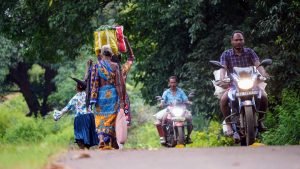
Das is among the many ‘left-behind’ wives who are now weaving a financial security net for their families. When The Migration Story met Das in earlier this year, she had walked through bamboo groves and past fences lining the quiet streets on her way to the weaving centre, her toddler tottering just behind her.
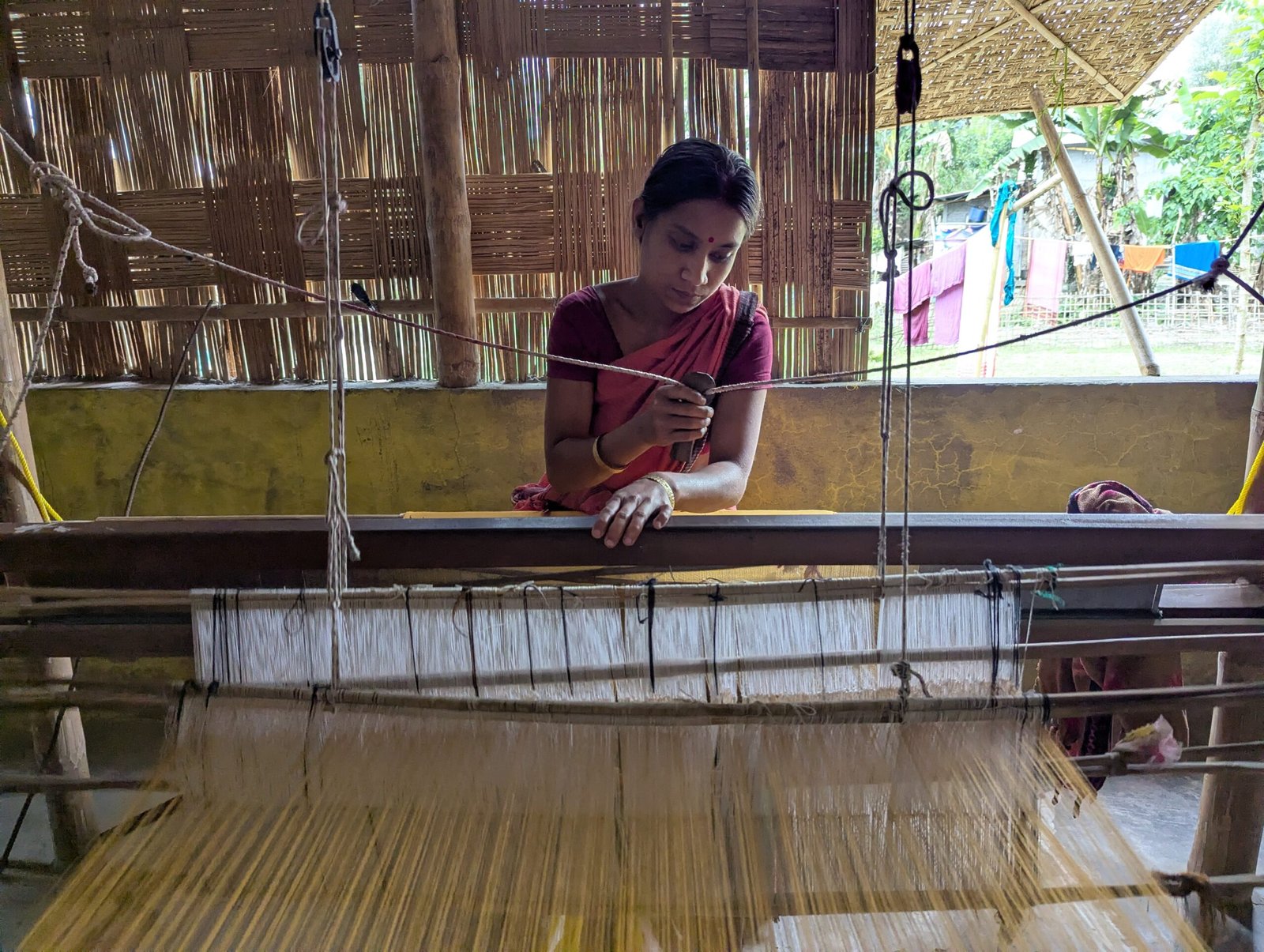
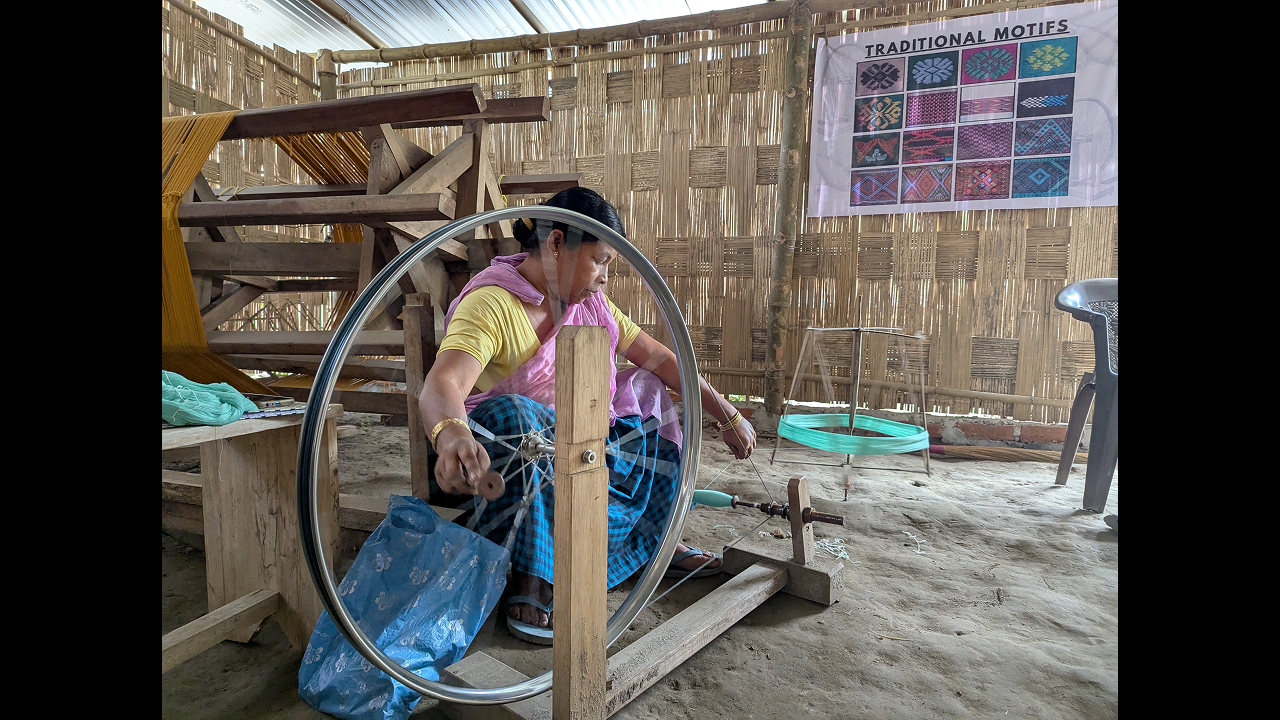
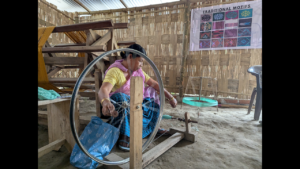
At the weaving centre, the rhythmic clanging of a dozen or so looms filled the space. Nitu sat down at one, where she had been weaving a two-metre-long scarf for the past several days. “I grew up weaving, but my in-laws don’t have a loom, so I come here,” Nitu said, her hands and feet moving swiftly.
More than a dozen women gather at the centre on any given day—it is always open and its hours flexible so the women can balance their family commitments with weaving.
Supported by Ayang Trust, a nonprofit working on education, livelihoods and climate resilience in Assam and Arunachal Pradesh, the weaving centre supplies its finished products to Lékopé, a farmer-producer company also started by the Ayang.
Nitu joined Lékopé (meaning together in the Mising language) to earn an additional income for her family. Her husband used to work as a daily-wager in Majuli, but in 2024, he moved to Bengaluru, where he now works as a security guard. Nitu stayed behind in Silakola village, with her in-laws and child.
The income she makes from weaving is a huge help to her family—and a sustainable form of income generation. Most people in Majuli earn from either farming or fishing, but floods and land erosion have made these occupations more and more precarious over time. Experts The Migration Story spoke to said that this and a paucity of other livelihood opportunities have pushed people to migrate to other districts and states.
DISPLACED BY FLOODS AND LAND EROSION
Since Majuli is located in the floodplains of the Brahmaputra and its tributaries, it experiences floods regularly, particularly during the monsoon. In 1950, an earthquake measuring 8.6 on the Richter Scale rocked the Brahmaputra Valley, which radically changed the courses of the rivers, raised the Brahmaputra’s riverbed, caused major floods and dried up some of the island’s wetlands.
Thus, flooding and riverbank erosion have not only shaped Majuli, but also the lives and livelihoods of its inhabitants. Majuli has no factories or industries that generate employment, and a 2024 study shows that nearly 30% of its population has migrated elsewhere in the last few decades due to flooding and erosion. Assam is also a net out-migration state, that is, the number of people who leave the state is greater than that of those who move in.
“You will not find young people in their 20s or 30s [in many of Assam’s] villages. They have left for work or studies,” said M. Firoz Ahmed, Executive Committee Member of Aaranyak, a Guwahati-based non-profit that works across the North East on biodiversity conservation and capacity-building, among other things.
But for those who stay behind, income diversification through grassroots initiatives, self-help groups (SHGs) and farmer-producer organisations, play an important role. And for women like Nitu, whose husbands have left Majuli in search of work, being part of Lékopé provides access to credit and learning new skills.
Many of these women have been able to contribute to their family incomes by weaving or tailoring. Nitu weaves approximately 10 two-metre-long scarves in a month and earns between 3,000 and 5,000 rupees.
The women, who are part of the farmer-producer company Lékopé, make and sell handlooms, handicrafts, mustard oil, joha rice and pickles, Lékopé is governed and owned by over 4,000 women, and a majority are from the indigenous Mising tribe, one of the four in Majuli, who live alongside non-tribal communities.
“Many of our members’ husbands have gone out [of Majuli] for work,” said Niruprabha Doley, a master weaver with Lékopé, who worked as a farmer and homemaker before she joined Ayang Trust. “The income from Lékopé helps these women pay for small [household] expenses and their children’s education.”
MIGRATION DUE TO A LACK OF LOCAL WORK
A 2020 UNFPA report stated that rural-to-urban migration in Assam accounted for a 26.2 percent increase in the state’s urban population between 2001 and 2011. Considered one of India’s most agriculture-dependent states, Assam experiences floods every monsoon. With more than 75% of the state’s population directly or indirectly dependent on agriculture, this constant disruption of agricultural cycles and erosion of assets affects many households. According to the 2011 Census, an estimated 5.72 lakh people migrated out of Assam in search of a livelihood.
Brojen Pegu, a resident of Majuli’s Karatipar village and Project Manager at the North-East Affected Area Development Society (NEADS), a Jorhat-based nonprofit working on poverty alleviation and disaster risk reduction, said that he has seen people migrate out of Majuli for decades. “Whoever has some money or financial means migrates with the whole family. Others stay behind,” he explained. Families without financial means first send the men to work in other places; the women and children stay back in the villages.
For women in rural areas, particularly in the North-East, handlooms help with livelihood diversification, states a 2022 academic paper. It goes on to say that of the 25.4 lakh handlooms in India, about 15 lakh are in Assam, Arunachal Pradesh, Manipur, Nagaland and Tripura.
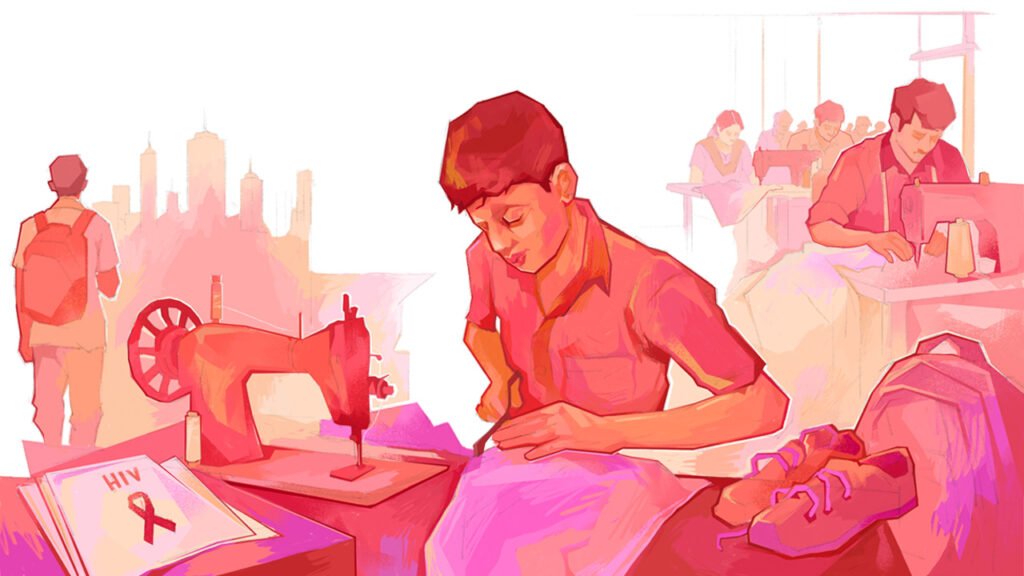
Tailoring is one of the most scalable, viable and resilient non-farm sector enterprises for rural women, said Liby Johnson, executive director of the Bhubaneswar-based nonprofit Gram Vikas, which works with rural communities on livelihoods and disaster management in Odisha and Jharkhand.
“Most women-run, non-farm micro-enterprises in rural India often fall under the three Ps: papad, pickle and petticoat,” he said. The Ps—a term policymakers used in the 1980s and 1990s—cover various sectors in agro-processing (papad- and pickle-making) and garment services (tailoring, small clothing shops, etc.).
In Odisha, women bring sewing machines with them to their marital homes as dowry and sew during their free time, Johnson said. And Pegu of NEADS noted that it was similar in Assam: “Many women know weaving in Assam, and most families have a loom. The women weave for their families, and nowadays, many weave [products] for sale too.”
NON-FARM INCOME SOURCES FOR RURAL WOMEN
When The Migration Story met 53-year-old Rupjyoti Saikia Gogoi in March, she welcomed tourists to Kaziranga Haat, a handloom store just outside her house in Golaghat district’s Bocha Gaon, a village on the periphery of the Kaziranga National Park. The store was stocked with various products made by local women. The two looms in Gogoi’s front yard were covered, and the porch doubled up as a dining area for tourists keen to sample Assamese cuisine.
Gogoi wears many hats—weaver, master trainer, chef and guide—and works with several SHGs. “Kaziranga floods every year,” Gogoi said. “Tourists come for some time, but we have to live with the [threat of] wildlife or water. Most of my fields get flooded.”
Gogoi’s farm borders the Kaziranga National Park, which is spread across four districts in the floodplains of the Brahmaputra. The region witnesses seasonal flooding during which animals often stray into nearby villages and farms.
Kaziranga Haat opened in 2024 with the support of the North Eastern Development Finance Corporation Ltd. (NEDFI), a public financial institution that provides artisans in the North-East with market linkages. The store sources products from almost 50 women who are part of local groups working on handlooms. Similarly, for Gogoi’s farm-to-fork enterprise, which serves Assamese meals to tourists, she works with members of local SHGs who pitch in with the cooking.
Anima Duwara, a widow in her early 50s, is one person Gogoi calls on. She is among the women in Bocha Gaon who stayed behind; her son works in Dibrugarh town. “I have been cooking for tourists and weaving for the Lakshya Hira Self-Help Group since 2005,” she said. It helps her make a modest income, something she didn’t have before.
But enlisting women in nano-enterprises or SHGs isn’t easy, Gogoi said, adding that even though their husbands may have migrated to other places for work, their in-laws still exert control over their lives and sometimes, restrict their movement.
SHGs are central to the central government’s poverty-alleviation and livelihood diversification programmes, such as the Deendayal Antyodaya Yojana – National Rural Livelihoods Mission (DAY-NRLM). It has a special focus on women’s SHGs, and aims to provide them with long-term support to diversify their livelihoods, enhance their incomes, and improve their quality of life.
Arun Jyothi Thakur, Majuli’s District Officer for the Ministry of Skill and Development and Entrepreneurship, has led several training programmes for women, ranging from soap-making to handlooms. The programmes provide them with training and certification, and help to diversify their incomes, he told The Migration Story.
“The community likes these training sessions, and hundreds of women, mostly from SHGs, participate,” he said. Once the women are certified, they get access to financial support through the DAY-NRLM, which then helps them make various kinds of products and travel to fairs across the country to sell them, he added.
CHALLENGES FOR WOMEN’S SELF-HELP GROUPS
A 2026 academic paper assessing the implementation efficiency of DAY-NRLM reports that 71% of SHGs and 67% of VOs (village organisations, a group of SHGs) in the North-East are in Assam alone.
But SHG-led enterprises by women often face challenges of scaling and disintegrate when members leave, said Ahmed of Aranyak. This can happen due to pressures exerted by marriage, migration, family commitments or care-taking, he explained. “Even when groups disintegrate, some skilled members may end up creating successful individual micro-enterprises, with members continuing to collaborate informally,” he added.
Still, many non-farm SHG enterprises remain viable at a nano scale, but with low margins. “These women typically begin with modest goals, such as wanting to earn 2,000 rupees a month as personal income,” Johnson of Gram Vikas observed. Small rural retail is the holy grail for very small women entrepreneurs, he said, but women’s SHGs are sometimes dismissed as not being “worth the time” by government agencies.
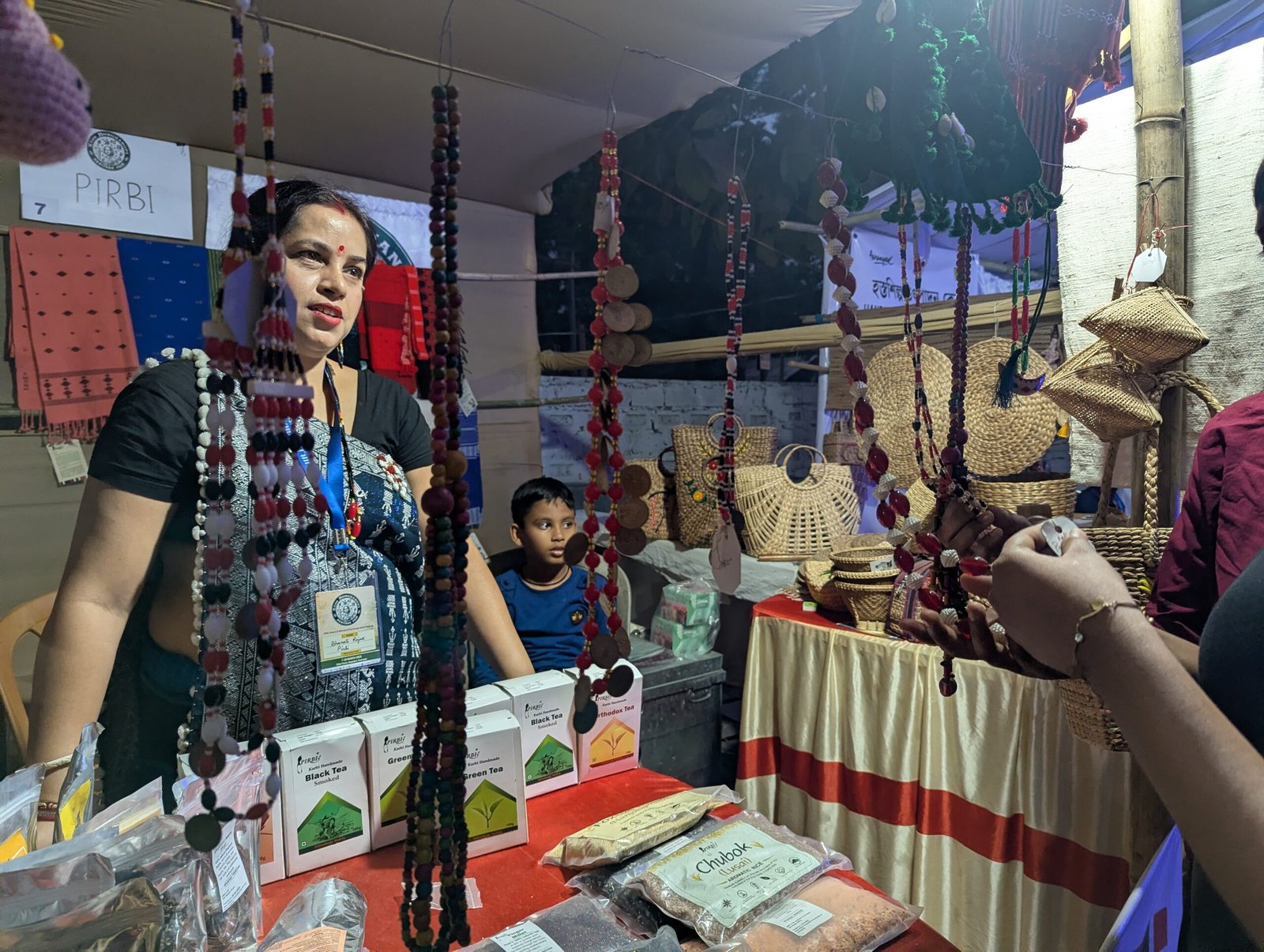
Pirbi, a community-led enterprise selling food products, handlooms and handicrafts. Located in Golaghat town,
Apart from this, financial institutions often treat SHG loans identically, he added, whether they’re for household expenses, farming or non-farm enterprises. These loans are required to be paid back in the EMI or equated monthly installment mode.
“This is terrible for those in seasonal economic activities, such as farming, or for enterprises like tailoring, where most of the business happens during festivals,” he said. “The rigid EMI system forces women to borrow from elsewhere to repay bank loans, locking them in a debt trap.”
There are other vagaries too. In Majuli, handlooms, often kept on the ground, below homes built on stilts, are damaged during seasonal floods, and for several months after, women can’t weave, Pegu of NEADS said.
There are challenges with collectivisation as well. “It is possible to bring 50 farmers together into a collective, but it is not easy to bring together weavers doing the same type of business [in tailoring or pickle-making, for example] into a collective, as they will be scattered, geographically, and are likely to compete with each other,” Johnson noted.
SELF-HELP GROUPS HELP RURAL ARTISANS FIND SUCCESS
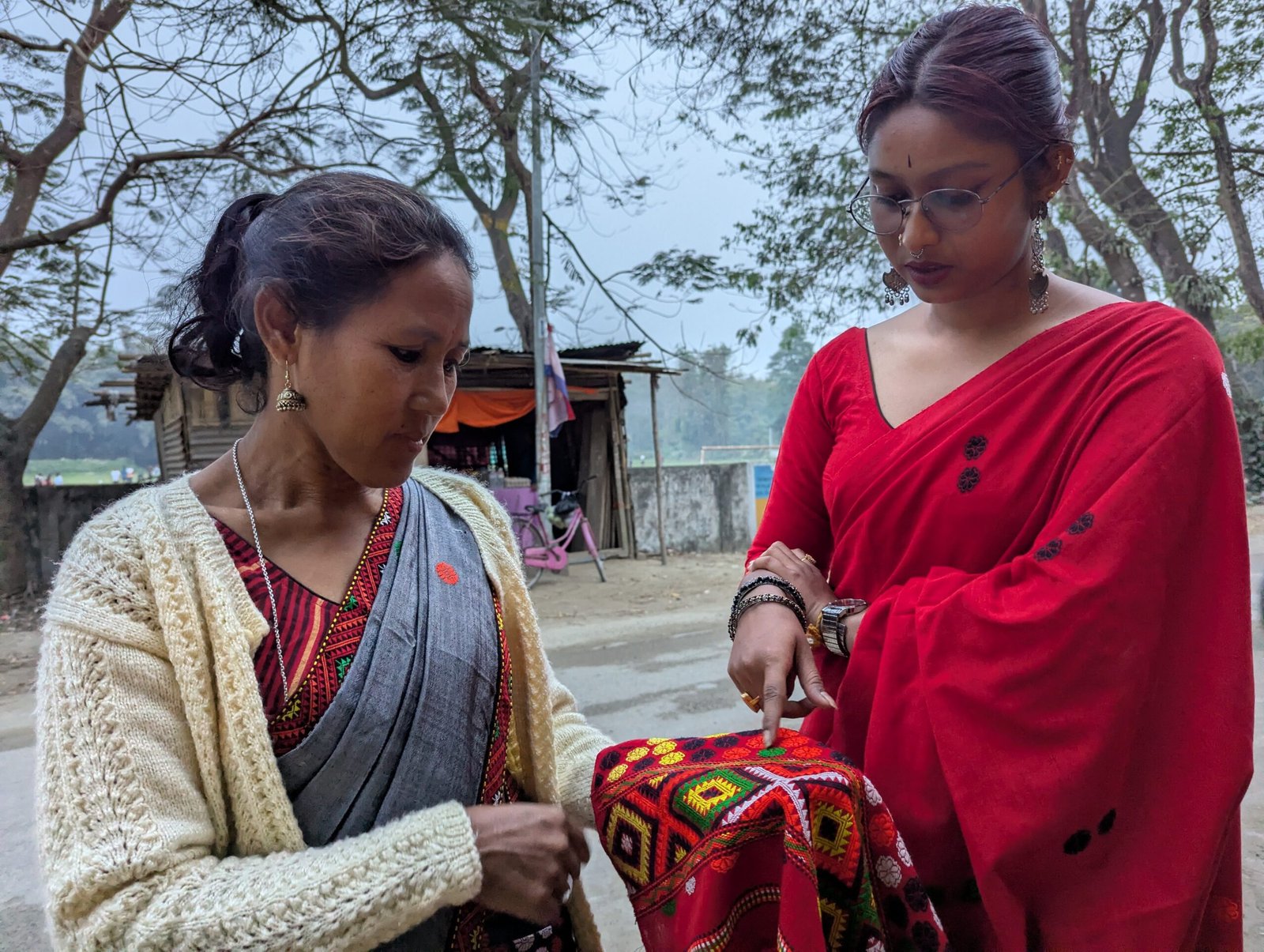
Just off National Highway 37, near the entrance of the Kaziranga National Park’s central range, is Pirbi, a community-led enterprise selling food products, handlooms and handicrafts. Located in Golaghat town, Pirbi works with around 500 women from the Karbi Anglong tribe. Farmers, processors, weavers and artisans market their goods—produce (tea, turmeric and ginger, for instance), handlooms and handicrafts—through Pirbi to regional and national markets.
Ahmed of the nonprofit Aranyak, which helped start Pirbi, said its intent was to overcome the challenge of linking remote artisans to broader regional and national markets. Pirbi had a turnover of approximately 40 lakhs over the last couple of years and even made a profit last year, which was shared with the farmers, processors, weavers and artisans affiliated with the enterprise.
Another handlooms initiative not far from Pirbi is Mohpara, a crafts village near Kohora town outside Kaziranga National Park. In 2021-22, Mohpara was one of 11 villages that would be connected to tourist circuits under the National Handloom Development Programme. The programme supported 50 women weavers with funds, infrastructure and market linkages for their products.
Latha Boruah, 44, is one such weaver. The government provided her financial assistance to set up a weaving centre in Mohpara as well as a community hub, and to build a room for her upgraded loom. “Self-help groups come to us to get training. We teach them different techniques, such as dyeing, and different ways of making handlooms,” she said.
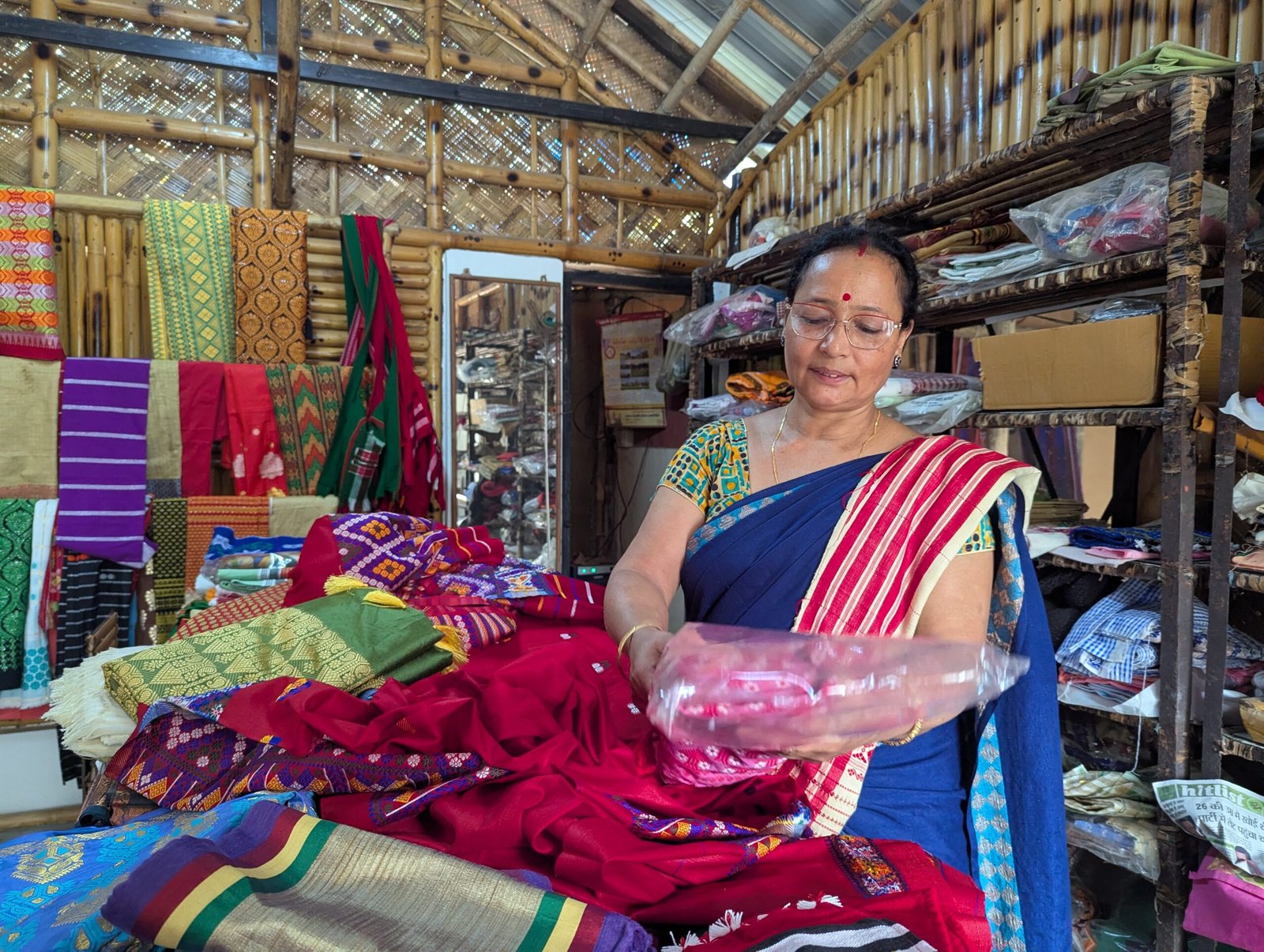
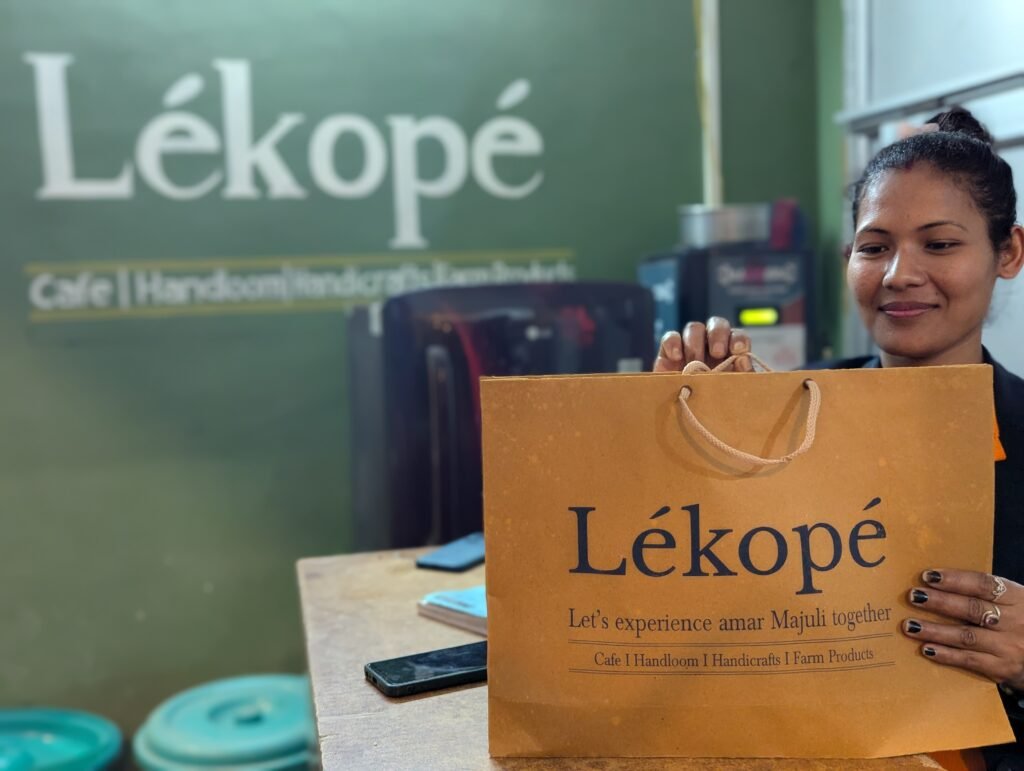
Lékopé, a farmer-producer company, has a café-cum-store in Garmur town on Majuli island that sells textiles and other products made by Mising women. Mahima Jain/The Migration Story
A 2025 study on the 50 weavers from Mohpara showed that the income of over 40% of households participating in the study increased to between 10,000 and 25,000 rupees, and that another 20% went up to between 25, 000 and 50,000 rupees. And Boruah said that most women in Mohpara have been able to sell their products to tourists directly and are able to make ends meet.
For the four years she received the grants and training from the government, Boruah was able to earn 10,000-15,000 rupees a month, her children could continue their studies, and she could become a trainer. “We were facing economic problems. Our village is affected by floods and is close to the Kaziranga National Park [where there is a danger of animal attacks],” she told The Migration Story.
STUMBLING BLOCKS DESPITE SUPPORT
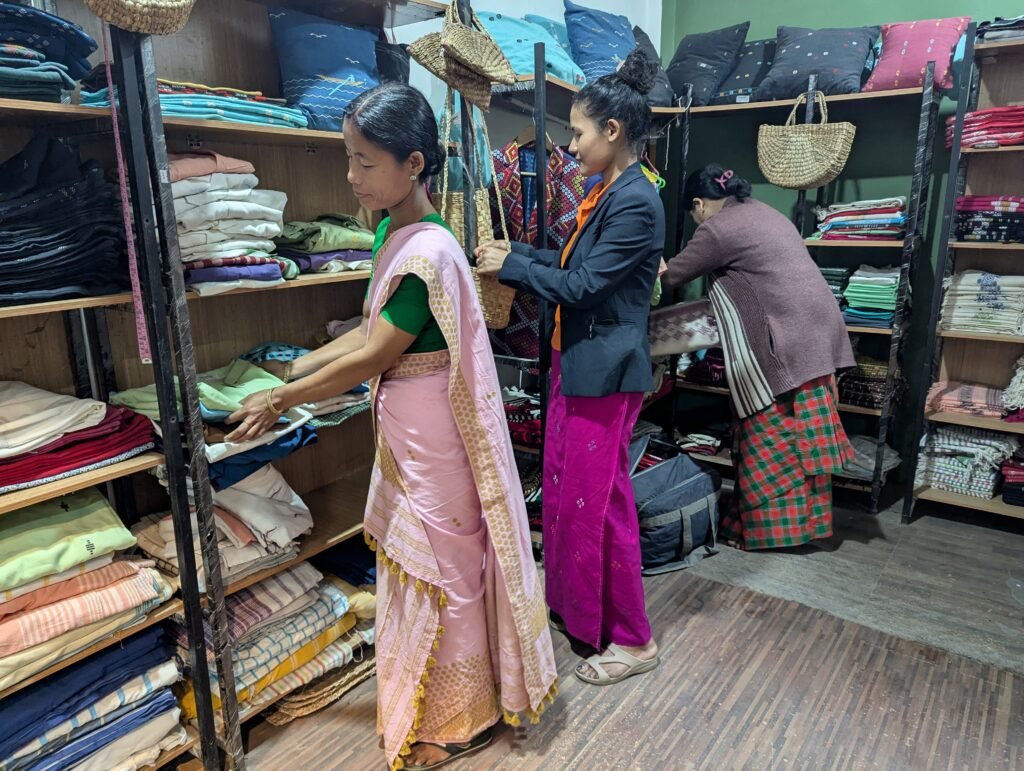
In Majuli, Doley from Lékopé has trained 300-400 women. Lékopé has a café-cum-store in Garmur town on Majuli island that sells textiles and other products made by Mising women. They have learned to adapt traditional designs to modern needs and now weave shirts and table cloths as well.
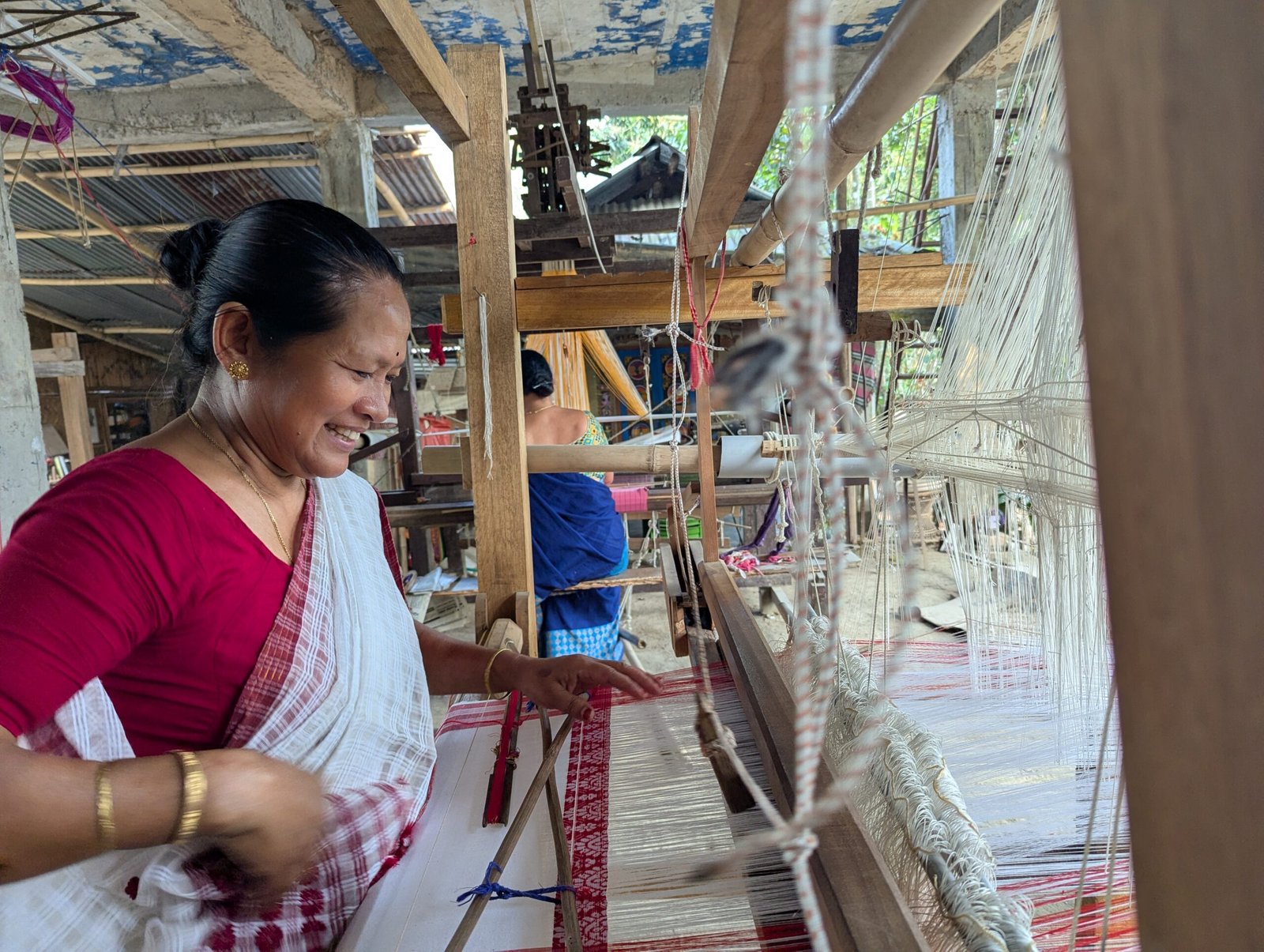
With the help of the Ayang Trust, four weaving centres have come up in different villages of Majuli and weavers have received support to set up looms at home too. Each centre has between six and 12 looms, and around 200 weavers received support to set up looms at home too. Typically, around five women visit a centre every day and the remaining come depending on their availability. But handlooms account for only a small percentage of Lékopé’s revenue; the bulk of it comes from mustard oil, said Doley.
But for most other women, financial or organisational support–similar to the kind Lékopé and Pirbi provide–isn’t always available. Gogoi, who has trained over 2,300 women weavers, said, “I have devoted myself to this work, this culture and weaving, but I feel sad that many women do not got [sustained support and] grants from the government, either for our looms or to grow their enterprise.” Securing basic financing for their enterprises, upgrading to new technology, and forming market linkages was a major challenge, she added.
Even with financial and technical grants from the government, the women in Mohpara have not been able to tap into markets. Experts like Johnson feel that women running rural enterprises would benefit from learning how to manage cash flows, keep accounts, understand product quality and read customer demands better. “If a woman lacks skills [to make products] but has the business capabilities and capital, she can simply supervise and hire others to do the actual work,” he said.
For many women, though, the opportunity to work and earn an income is a giant leap forward. “We got a platform to come out and work, and we are grateful for that,” said Ranjita Dehingia, who manages sales at Lékopé’s café-cum-store in Garmur town, Majuli. “Those who make these products in the villages don’t have an avenue to sell, so we sell them here.” The store is frequented by tourists and locals, and Dehingia and other women associated with Lékopé visit markets and fairs to sell the products.
But Dehingia’s house and fields aren’t spared when Garmur gets flooded and her family must incur losses. “But our income is better now,” she said, referring to the non-farm income she makes through Lékopé. “The weavers are also happy, and some run their households with this income. There are so many benefits [to being part of Lékopé’!”
Rita Das, 35, had attended a training course by Lékopé in Silakola a few years ago. She didn’t make much of it at the time. Her son worked in Bengaluru then, and she didn’t see the need to have an additional income. The remittances he sent home were enough.
But when her son fell critically ill and returned to Majuli, Rita started coming to the weaving centre. With a monthly income of 9,000-10,000 rupees, she was able to build her house and look after her son.
“I like coming here. There are other women and we can talk [to each other]. At home, we are alone but here we can all work together,” Rita ended, with a smile.
Mahima Jain is an award-winning independent journalist based in Bengaluru, focusing on gender, health and the environment. This story was produced while she was a fellow (2025-26) with the Climate Change Media Hub at the Asian College of Journalism, Chennai.