6 min read

Migration Bulletin: New reforms, old prejudices

This month witnessed varied stories ranging from anti-immigration rhetoric in Taiwan to labour reform debates, even as industries struggled with shortages as migrants returned home due to elections and LPG shortages.

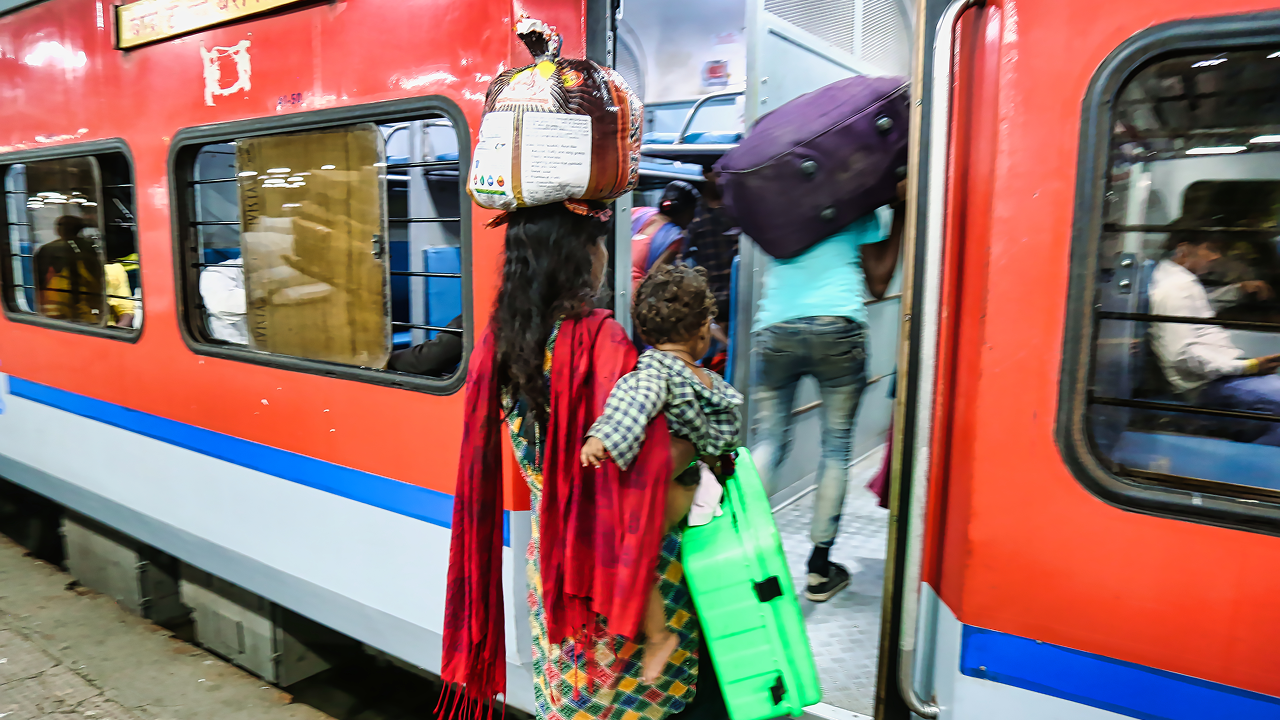
Migrant workers, most of them from Uttar Pradesh, board 19037 Avadh Express at Bandra Terminus (File Photo) Prashant Nawke/The Migration Story

From the notification of new labour codes and debates around migrant worker protections, to violence shaped by a gig worker’s migrant identity and evolving labour dynamics between India and Taiwan, this month’s developments shed light on the many different ways in which migration continues to shape economies, politics and personal identities.

The stories also carried forward the ripple effects of events from recent months, including labour shortages linked to post-election reverse migration and disruptions caused by the ongoing West Asia crisis and LPG shortages.

LABOUR CODES

On May 8, the Government of India notified the Labour Codes, with a mixed response from the ground. An Economic Times column hailed the new labour codes as “written with migrant workers in mind”. It emphasised that the reforms officially recognise self-migrated workers and mandate written appointment letters for all employees apart from focus on portable ration cards and a toll-free helpline.

But at the same time, reports of protests also emerged from different parts of the country. A report in Deccan Herald stated that there were protests in Noida, Punjab and Hyderabad, especially by opposition linked trade unions. Their main contention was the omission of criteria for calculating minimum wages, which was included in the draft.

Congress president Mallikarjun Kharge, a former Labour Minister in the UPA government, was among those who highlighted the dropping of the “specific criteria” for calculating minimum wages using calorie intake, clothing needs, rent and fuel costs, among others, the report said.

TAIWAN X INDIA LABOUR (DIS)AGREEMENT

A local election campaign in Taiwan sparked criticism after Kaohsiung City Council candidate Lee Hung-yi displayed a billboard featuring an inverted Indian flag and a turbaned man while promising to ban Indian immigration into the country.

Multiple news reports suggest that currently only around 3,500–4,000 Indians work in Taiwan, but the country has been exploring recruitment from India under a labour mobility agreement signed in February 2024.

The proposed pilot programme would initially bring in 1,000 Indian workers for manufacturing and construction jobs, with an intention to diversify Taiwan’s migrant labour pool, which currently relies heavily on Indonesia, Vietnam, the Philippines and Thailand.

However, opposition has intensified in recent months, with over 40,000 people reportedly signing an online petition demanding the plan be halted, citing concerns over public safety.

“Globally, Indians do not have a good reputation,” Chang, a Taiwanese architect, told DW News. “This may sound like discrimination, but there can’t be smoke without fire.” Others, like Tsai, a teacher, told the publication that relentless news about sexual violence in India had shaped their views.

TECHNICIAN STRIKE DISRUPTS AVIATION OPERATIONS

Labour unrest had been brewing for weeks at Air India Engineering Services Limited (AISEL), the government-owned and country’s largest aircraft maintenance company, after a section of employees began a symbolic protest in April by wearing black ribbons to work over issues related to promotions and alleged discrimination against contractual staff.

As reported by TOI on May 16, 2026, labour unrest intensified at AIESL’s Maintenance, Repair and Overhaul (MRO) facilities across India, including Nagpur, Hyderabad, Delhi, Mumbai, Kolkata, and Thiruvananthapuram.

Around 180 aircraft technicians reportedly resigned, while several others stopped work in protest over delays in resignation approvals and the alleged denial of relieving and experience certificates.

The protests began after employees accused the management of introducing restrictive exit procedures that required resignation formalities to be cleared only through the company’s Delhi headquarters. Workers claimed the policies prevented them from moving to private aviation companies despite completing their notice periods.

ABUSE, HARASSMENT AND UNDERPAYMENT IN TN TEXTILE FACTORY

More than a hundred Adivasi migrant workers from Jharkhand recently returned from a textile factory in Namakkal, Tamil Nadu, alleging physical abuse, harassment, underpayment and poor working conditions. According to a report by Outlook India, the workers, mostly from West Singhbhum district, left the company after an alleged assault on 23-year-old Manki Hessa triggered a mass exit of roughly 200 workers on April 22.

Hessa alleged that he was beaten by the company’s HR staff after reporting late to work. “We said, at most you could cut a day’s salary, why beat me?”, he told the magazine.

Workers also complained about wage deductions, the lack of weekly leave, and poor food quality, including allegations that worms were found in meals provided by the company. Many alleged they were being paid 300 rupees to 350 rupees per day, significantly below Tamil Nadu’s minimum wage.

The report also highlighted the larger pattern of migrant worker exploitation involving labour contractors and informal recruitment networks. According to Jharkhand’s Migrant Labour Control Room, over 4,000 workers have been rescued from exploitative conditions across India between 2021 and 2025 in cases involving bonded labour, withheld wages, poor accommodation and restrictions on movement.

LABOUR SHORTAGES IMPACT DESTINATION STATES

Southern states, particularly Kerala, Tamil Nadu and Karnataka, continue to witness labour shortage as thousands of migrant workers from poll-bound states left to cast their votes in the 2026 Assembly Elections and have not returned.

These migrants, mostly from West Bengal and Assam are majorly employed in construction, infrastructure, hospitality sectors and form a significant workforce. Employers attribute the current scenario to multiple factors including LPG shortages due to the ongoing West Asia crisis, approaching monsoon and rising food prices.  

In Kozhikode, widening works on the Mananchira–Vellimadukunnu road reportedly slowed down due to the shortage of migrant labourers and acute shortage of bitumen.

A report in Business Standard also highlighted that employers across South India’s construction, manufacturing and service sectors are offering a wide range of incentives for the workers like – air tickets, wage increment, luxury bus tickets, hoping for them to return.

IDENTITY AND DEATH

Zomato delivery worker Pandav Kumar, 21, who was the sole breadwinner of his family was shot dead by a Delhi police constable. His family alleged that he was targeted for his identity of a migrant worker from Bihar.

Kumar’s cousin who lived with him in Delhi, was quoted in this Newslaundry report saying the police official who attacked Kumar was in an inebriated state. “He was completely drunk. He asked, ‘What are you Biharis doing here?’ When a friend pointed out that Rupesh lived in the very same lane, it only enraged the constable further. ‘You people have run roughshod over this place! You’ve even managed to build yourselves a house here – and I don’t even own a home!’ he yelled.”

The family also staged a protest against the incident and demanded strict punishment for the accused.

An opinion piece published in The Wire, following this incident, argued that workers’ safety in Indian cities is never a policy priority and gig workers are at the end of this list. It also highlighted how the word Bihari is used as a slur, signalling a composite identity including class, caste and geographic illegitimacy.

Edited by Aishwarya Mohanty

Aadhya Angirish and Nihira Pillai are second year students pursuing Bachelor’s in Media Communications at Symbiosis Centre for Media and Communications, Pune.

Jasmeh Kaur is Bachelor degree holder in Media Communications at Symbiosis Centre for Media and Communications, Pune.

Authors


Recent Post

Comments

Leave a Comment

26th julyair pollutionAll We Imagine As LightanalysisBagapatia resettlementBengaluru heat wavebrick kiln decarbonisationbrick kilnscashew plantationsCensus 2011challenges in measuring migrationCinemaclimate adaptationclimate adaptation storiesclimate changeclimate change adaptationclimate change displacementclimate cocktailclimate justiceclimate migration Indiaclimate refugeesclimate relocation Indiaclimate resilienceclimate social impactclimate-clean-upcoastal erosion Indiacommunity actioncommunity resiliencecommunity-led conservationcyclone impactcyclone Phailin impactCyclone Titlidebt bondagedebt trapdisaster management in Odishadisaster recovery housingdroughtEastern Ghatsecological restorationeconomic survey migration estimateselectionsenvironmental restorationerosionfishing livelihoods Odishafloodsforest livelihoodsforest rights in IndiaGajapati districtgender and climate changegender politicsgirl powerGLOFsGram Vikasheatheatwaveheatwave delhiice creamIndia elections 2024India jobsIndia rural jobsindigenous knowledgeinformal workersinternal migration datajobsjobs guaranteejuly 19just transitionKerala educationlabour migration in Indialandslidelandslides in Odishalatestlivelihoodlivelihood resiliencemanaged retreatMGNREGAmigrant workersmigrationmigration and agriculturemigration and climate changemigration in Indiamigration policy in India Readings on data on Migration in IndiaMo Jungle Jami YojanaNational Sample Survey migrationNICEocean warmingOdisha coastOdisha cyclonesOdisha Disaster Recovery ProjectOdisha pollOdisha relocationOdisha reverse migration & tourismODRPolive ridley sea turtlespandemic epilogue'sPayal Kapadia Cannes Film Festivalphoto essayPLFS migration dataPodampettapost-disaster recoverypublic datasets on migrationPVTG communitiesRamayapatna climate adaptationRayagada blockremittances and migrationresilience buildingrising heatriver erosionrural developmentrural to urban migrationSatabhaya displacementSaura tribesea level rise Odishaseasonal migration patternssericultureshifting cultivationshowcasesoil erosionsolar solutionsolutions journalismsustainable agriculturesustainable livelihoodstranslocality adaptationtribal rightsUttarakhand cloudburstuttarakhand crisiswater conservationwater crisiswater scarcitywavewomen and migration in Indiawomen empowermentwomen trek for water

Support The Migration Story- become a member!

Scroll to Top