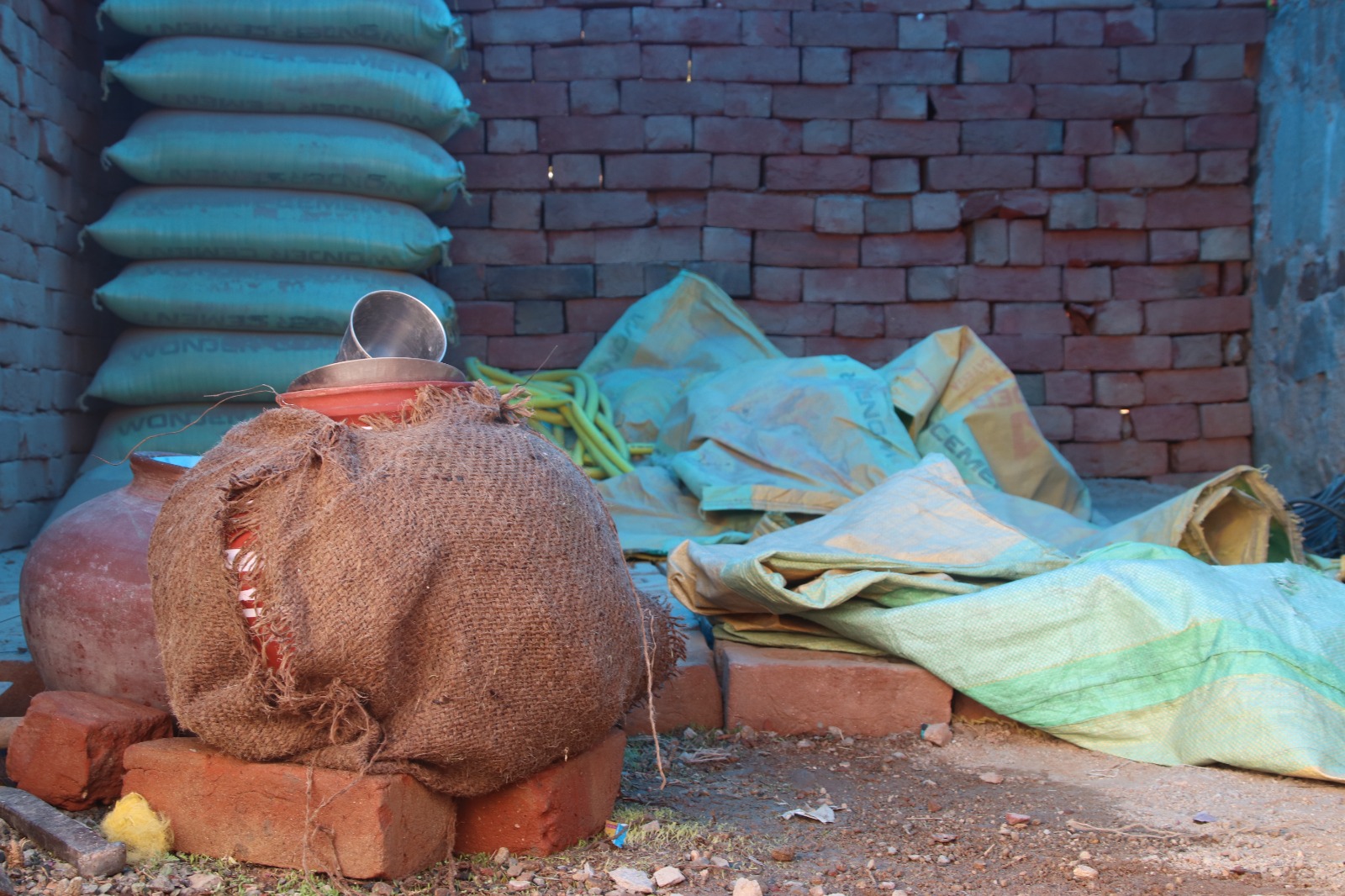
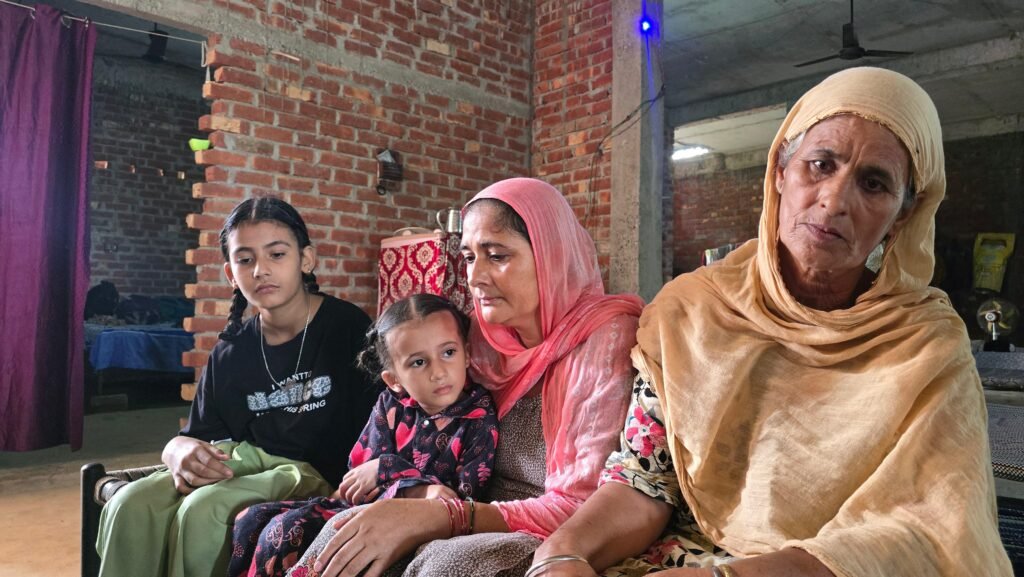
NEEMUCH, Madhya Pradesh: Sheltered under a blue tarpaulin sheet in an open ground in Neemuch district of Madhya Pradesh, where she has spent the past two months, Anita Ninama, from Madhya Pradesh’s Jhabua district finds that the summer sun offers no room for negotiation
“My skin burns, eyes turn red when it gets very hot during the day,” she said, as she stirred a pot of dal over a clay stove, preparing her day’s meal before she steps out looking for work. “The air itself is hot. It feels exactly like sitting on a hot frying pan,” she added.
The Madhya Pradesh government this week announced a heatwave alert for districts across the state and put Neemuch under a yellow alert. Currently, India is witnessing severe heatwave conditions, with many parts of the country including central and northwest regions witnessing soaring temperatures since mid April.
With farms wilting under the sun, for many migrating is the only option – even if it means moving to hotter towns and cities.
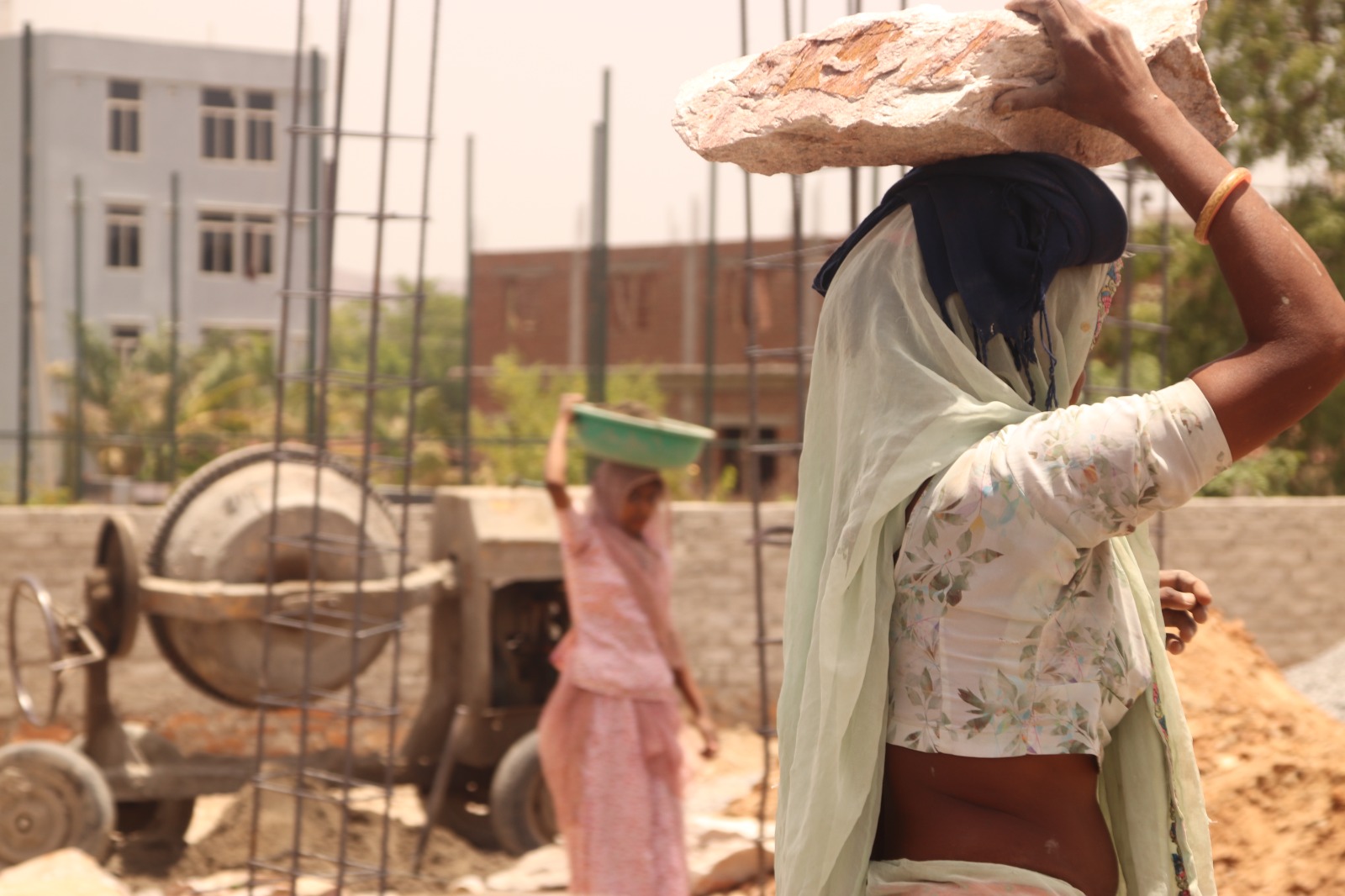
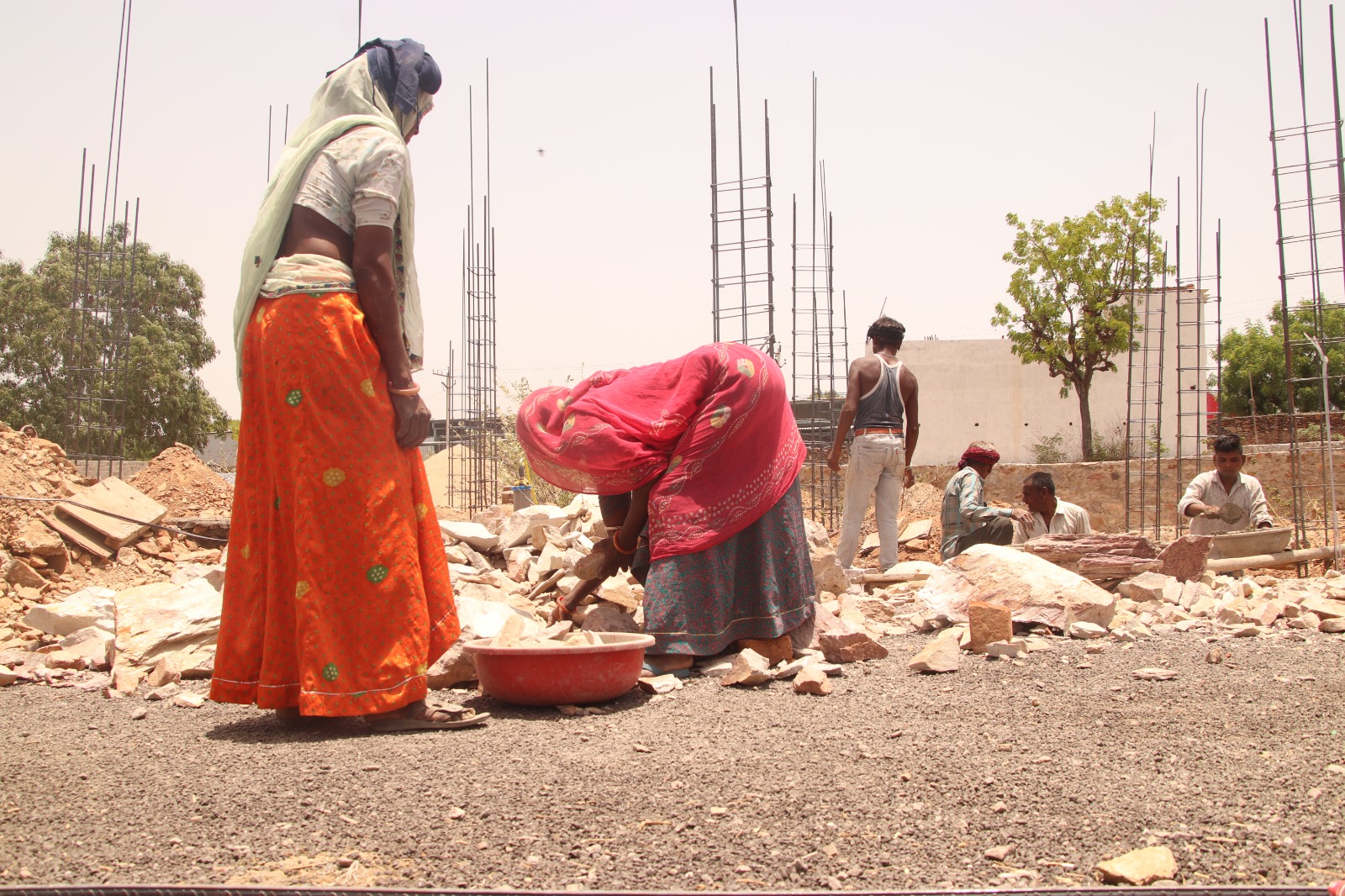
Every year as summer approaches, and farms run dry, Ninama and her husband, along with many others from their village migrate to nearby cities and towns within a 300 kms radius, to work as daily wage labourers. She often finds work at different construction sites, she said.
“There is no water to irrigate our farm, so we have to migrate and work as daily wage labourers. The heat just feels more with every passing year. But there isn’t much that we can do,” she said.
Ninama is a part of a larger workforce – ubiquitous, yet invisible across urban India – who live rough in the places they migrate to with no cool roofs or insulated ceilings to protect them from heat, and no employment guarantees that account for a changing climate.
Globally, informal workers are considered more susceptible to impacts of the increasing heat stress affecting their health, productivity and wages. The impact is more visible in countries like India where a vast majority of the workforce is informal.
India has state wise and district wise Heat Action Plans (HAP) – a framework of preparedness, response, and mitigation measures designed to protect public health during extreme heat events – but they have for years been critiqued by labour campaigners for not being mindful of workers’ vulnerabilities.
Directives asking people to stay indoors and hydrated, and stop work during the afternoon when temperatures spoke often ignore the dependence of countless workers on daily wages that they earn by working outdoors.
But campaigners said they are observing a gradual shift now.
Nearly 400kms from Neemuch, in neighbouring Rajasthan’s Jodhpur district, the municipal corporation this year constructed two dedicated cooling shelters designed to remain nearly 8°C cooler than the ambient external environment without relying on mechanical air conditioning.
The shelter uses solar-powered ventilation, traditional khus fiber wetting curtains, mist-cooling injectors, oral rehydration salt (ORS) distribution hubs, and dedicated emergency first-aid beds to support delivery riders, street vendors, and senior citizens.
“We have constructed these cooling shelters, on the main roads, close to the labour area so labourers keep coming in, also gig workers and people who commute daily. One has a capacity of 40 and the other nearly 50. People come in, spend 10-15 minutes and then step out again. They get a short relief from the heat,” said Ankit Purohit, Assistant Engineer, Jodhpur Municipal Council (North), who also said that they plan on scaling it up for more people, depending on budgetary allocations.
The heat action plans in other cities as well such as Ayodhya and Varanasi in Uttar Pradesh and Churu in Rajasthan are more aligned to local businesses that employ migrant workers, said Abhiyant Tiwari, Lead, Health & Climate Resilience, NRDC India, a private firm that advises and provides solutions to organisations advancing climate goals.
For example, Ayodhya released its HAP for the first time in May this year and focussed on tourism related business in the city making shaded centres close to shops and stalls near pilgrim sites mandatory.
He further emphasised how HAPs are becoming more regulatory than advisory in nature, with states notifying heatwaves as local disasters, unlocking the legal and financial (SDRF) backing for HAP activities. States like Tamil Nadu, Maharashtra, Uttar Pradesh, Telangana, Rajasthan and Kerala have notified heat as a state specific disaster, which allows the state to dedicate funds for heat mitigation, issue formal advisories and provide financial compensation for heat related casualties.
“States like Telangana and cities like Amravati Municipal Corporation in Maharashtra has introduced mandatory cool roof bylaws for new, large buildings to help combat the Urban Heat Island (UHI) effect,” Tiwari said, adding that interventions are getting more specific for specific groups like construction workers.
“But the challenge remains at the monitoring level, which is happening in some cases, but lacking in others,” he added.
In a recent report titled Extreme Heat in India 2026, NRDC highlighted several municipalities that are piloting innovative localized resilience interventions from cooling shelters to making high reflectance cooling roof mandatory.
Dharmendra Kumar, founding secretary of Janpahal, a non profit working for the welfare and rights of informal and gig workers, also emphasised that labour related concerns are showing up in advisories.
“Over the last two years, we have consistently engaged with the National Disaster Management Authority (NDMA), asking for dedicated advisories for informal workers and gig workers. Those advisories have now been released. Earlier, labour-related concerns were barely factored into heat planning, but now at least that perspective is beginning to emerge,” he said.
The advisory issued by NDMA in 2025 advises shift restructuring for peak heat hours like asking all platforms / aggregators to suspend mandatory work for platform and gig workers between 11 AM and 4 PM during IMD-declared Orange and Red Alerts in their respective cities or regions and also introducing shorter shift options (max 2 hours) with sufficient cooling breaks. The advisory also proposes mandatory safety kits for platform workers and hydration protocols, among others.
However, Kumar also pointed out that most heat advisories continue to place the burden of adaptation on workers themselves as there are limitations to what the workers can follow.
“Our cities are not planned in a way that supports workers during extreme heat. In almost every city, there is a lack of social infrastructure — shade, rest areas, access to drinking water and water in general. So there are limits to what precautions they can actually implement,” he said.
Rajesh Kumar, a migrant worker from Samastipur in Bihar, has been running a small juice stall with his wife near Sir Ganga Ram Hospital in Old Rajendra Nagar, Delhi for the past 12 years. The couple lives in Uttam Nagar, around 18 kilometres away from the stall, and travels daily for work.
Running the stall has become increasingly difficult over the years, he said.
“We know about the advisories issued every summer, but there is little that changes for us. We have a fan but it only circulates hot air. There is a tree nearby where we can go and lie down for a while and get rest, but there is no proper mechanism to deal with this heat,” Rajesh said.
Basic facilities remain a major challenge. There are no public toilets or water facilities nearby. The couple depends largely on the hospital, around 150 metres away, for access to washrooms and drinking water, though they are often denied entry.
“We have around eight different stalls here and all of us depend on the hospital for water and washroom facilities. Drinking water is a big issue,” Rajesh said.
The extreme heat has also affected their earnings. According to Rajesh, public footfall has reduced significantly during summers. “One would think that during summers, more people will flock to a juice stall, but that’s not the case anymore,” he said.
“People don’t step out of their homes during such peak summer time. There is hardly any public on the roads. We set up the stall every morning hoping it will be better today. But there are days when there is hardly any sale. The footfall increases towards the evening,” he said, adding that fruits like pineapple and Mosambi spoil quickly in the heat, leading to losses.
According to an estimate by the International Labour Organisation (ILO), India is projected to lose about 5.8 percent of its working hours by 2030, due to increasing heat. The estimate suggests that India can lose 34 million jobs as a result of heat stress, with sectors such as agriculture and construction that employ the highest proportion of workers, to be the most affected.
Currently, over 250 cities and districts across 23 heat prone states have operational HAP, since India’s first HAP was published in 2013.
Heatwaves are not currently classified as a notified disaster under India’s Disaster Management Act, 2005 but states, cities and urban local bodies are increasingly emphasising on recognising heat as a disaster. They are moving towards more institutionalized and implementation-oriented approaches.
“There is a financial implication that comes with notifying heat as a disaster to compensate for the loss of life and wages. The 16th Finance Commission recommendation (to notify heat as a disaster) is yet to be approved. But these dedicated budgets are important to strictly implement the mitigation measures and also account for the impacts,” said Avinash Chanchal, Deputy Program Director (Campaigns), Greenpeace South Asia, an independent international environmental campaigning network.
Sustainable Futures Collaborative (SFC), an independent research organisation analysing frontier issues in climate change, energy and environment, recently analysed the implementation of HAPs across nine cities in nine Indian states.
Through their analysis, they found that while cities are better prepared with short-term emergency responses such as ensuring access to drinking water, altering work schedules, and increasing hospital capacity during heatwaves, the integration of long-term measures to reduce growing heat risks remains inadequate, with the primary focus continuing to remain on health systems alone.
“Actions like making household or occupational cooling available to the most heat-exposed, developing insurance cover for lost work, expanding fire management services for heat waves, and electricity grid retrofits to improve transmission reliability and distribution safety are missing from all cities,” the analysis said.
It further noted that expansion of local weather stations for more granular data on heat variation within a city, mapping urban heat islands, and training heat plan implementers were only seen in some cities.
“Other actions like expansion of urban shade and green cover, the creation of open spaces that dissipate heat, and the deployment of rooftop solar that could help with active cooling, among others, were implemented without adequate attention to populations and areas that experience the greatest heat risk,” the analysis said.
Seconding this, Chanchal said that HAPs are a “good guiding document but there is no accountable agency yet.
“It is not legally binding and there is no funding mechanism,” he said.
Highlighting the need for long term plans, Chanchal said that the HAPs should focus on long term plans, especially for workers who work in extreme heat conditions throughout the day.
“Their bodies take a long time to cool down and currently we are witnessing an increase in night temperatures as well. These factors are not acknowledged and there is mapping of vulnerable communities or occupational hazards due to heat stress,” he said.
He added, “One solution can not be fit for everyone, as the HAPs should take into account all the vulnerable groups and their specific requirements.”
Aishwarya Mohanty is special correspondent with The Migration Story