SRINAGAR, Jammu and Kashmir: Shabnum Hossain looks up as the curtain at her door shifts and two young women step in.
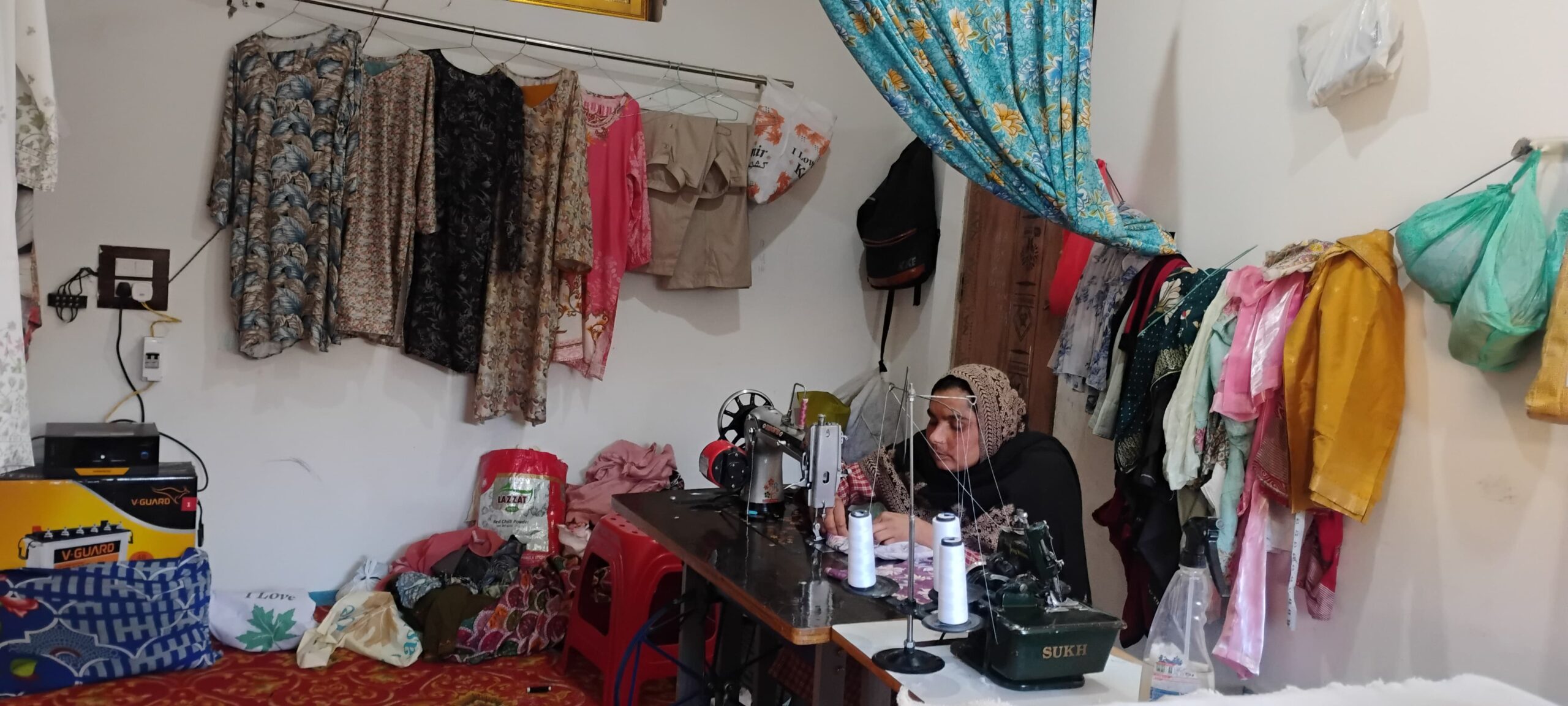
Nazia and her cousin, Sehrish, remove their sandals and walk towards the fabrics stacked across this 10 by 12 foot shop. Their hands hover, settle, and then pull out maroon and pink materials. “This one for the engagement,” said Nazia, draping the maroon cloth over her shoulder. Around them, bright running fabric and half-stitched outfits, marked with chalk and loose threads, wait on hangers.
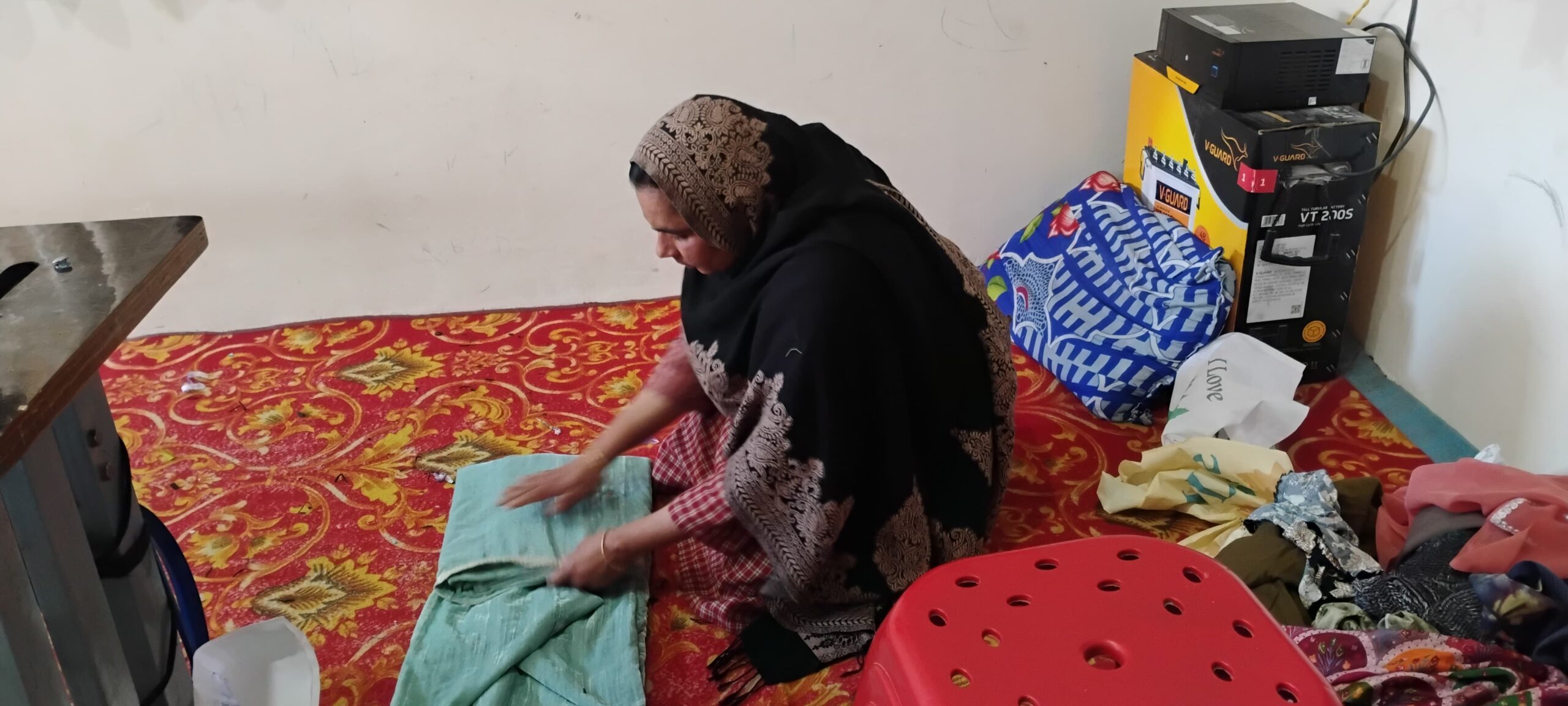
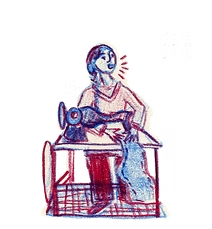
Both women, in their twenties, start talking about the designs they envision for these materials. It’s at this point where Shabnum quietly steps in and starts pinning the fabric where their fingers pause. The three of them work together, manoeuvring the cloth until it starts to take some shape.
This seemingly ordinary scenario — a woman tailoring and designing clothes for keen customers — is quite a novel experience for women in Nadihal, a village in north Kashmir’s Bandipora district. Traditionally, tailoring here was male-dominated with “only one out of a hundred being a woman,” said Nazia to The Migration Story. While male tailors catered to most customers, many women felt uncomfortable explaining detailed measurements or newer preferences.
“Getting clothes stitched often meant adjusting our expectations,” said Nazia, “You explain a design, but in the end you accept whatever is made. “
This started to change in 2015, when Shabnum arrived in Nadihal, a prominent village in Bandipura district. She, along with her husband, Hamid Hussain, left Bilari, their village in Uttar Pradesh’s (UP) Moradabad district to establish a tailoring enterprise somewhere they wouldn’t face intense competition and earn a stable income.
Moving to Kashmir, however, was not easy for Shabnum and Hamid. Everything they knew about the region such as cross border tensions, militancy, and the occasional flare up, came from news bulletins and anxious conversations at home, and none of it was reassuring. “People in our village used to say Kashmir is dangerous because of the violence they saw on TV,” said Shabnum.
But back home, the couple faced a different kind of uncertainty. “In UP, earnings were uncertain and competition was very high,” said Hamid, who had been a practising tailor before he and Shabnum married.
Shabnum also spoke of feeling unsafe, citing both a rise in communal tensions and what she described as a high rate of crime against women in the region as reasons for leaving, though she did not elaborate further.
In 2014, the year before Shabnum left Uttar Pradesh, the state recorded 36,439 reported cases of crimes against women, the highest in India and accounting for 11.4% of the national total, according to the National Crime Records Bureau (NCRB).
Friends already working in Bandipora assured him the region offered something harder to find at home. “They told me that Kashmir offered them stable work and social respect,” said Hamid. That was enough to tip the decision.
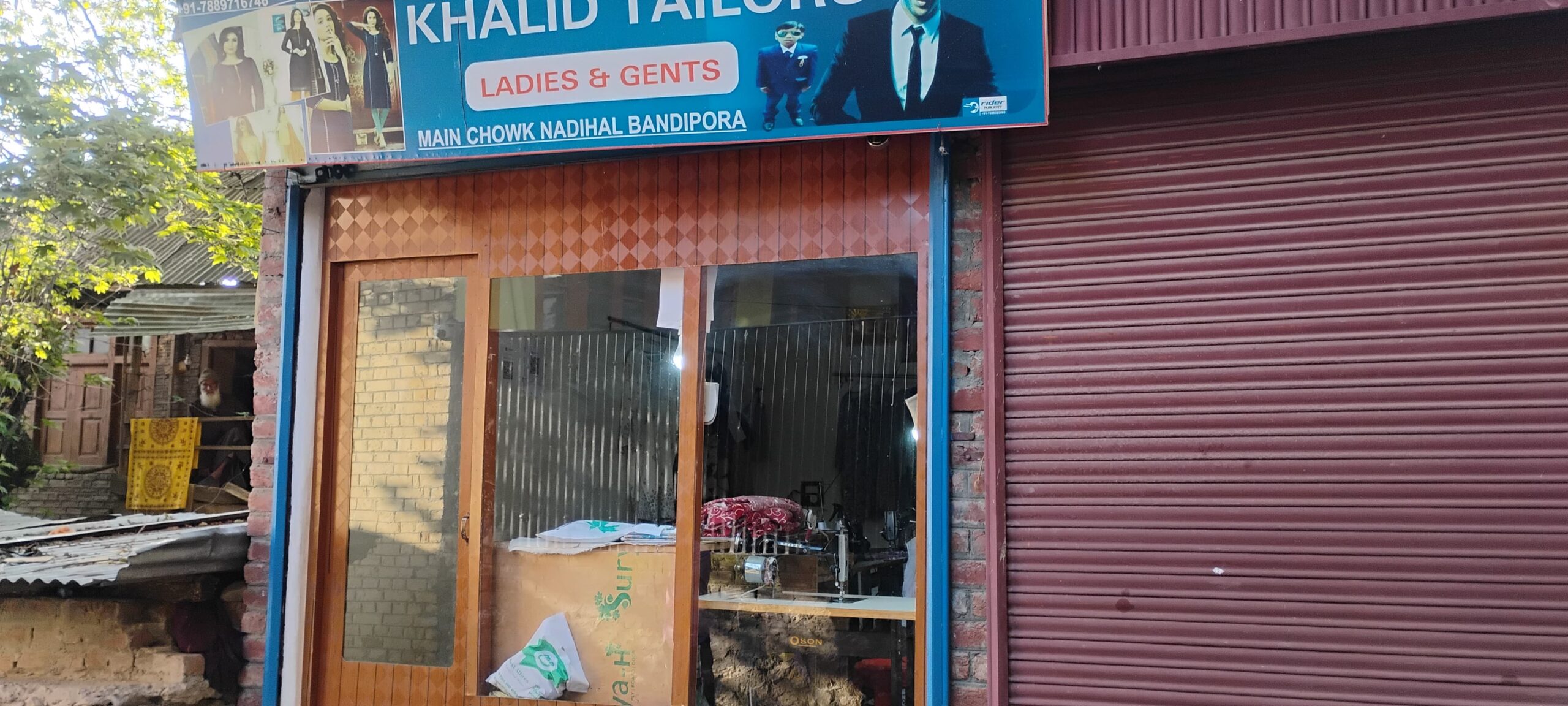
Despite the broader political weight the region carries, for Shabnum and Hamid in Bandipora, life moves forward. The parents of three children enrolled their young kids (aged 2-8) in a local school near their shop, Khalid Tailoring. This would’ve been unimaginable in Bilari, where there was no school within a 30 kilometer radius.
“I want to stay here till our children finish their education,” said Shabnum in the middle of last minute alterations for the Eid rush. And their small business is one way to ensure they can see through their kid’s education. Khalid Tailoring, where young women come to share ideas and designs found on social media, is what makes that possible; a space where they no longer have to explain themselves to a male tailor.
‘KASHMIR IS LIKE A SECOND HOME’
While men have historically dominated labour migration into Kashmir, a small number of women migrants have also begun finding work in tailoring, beauty services and wedding-related businesses.
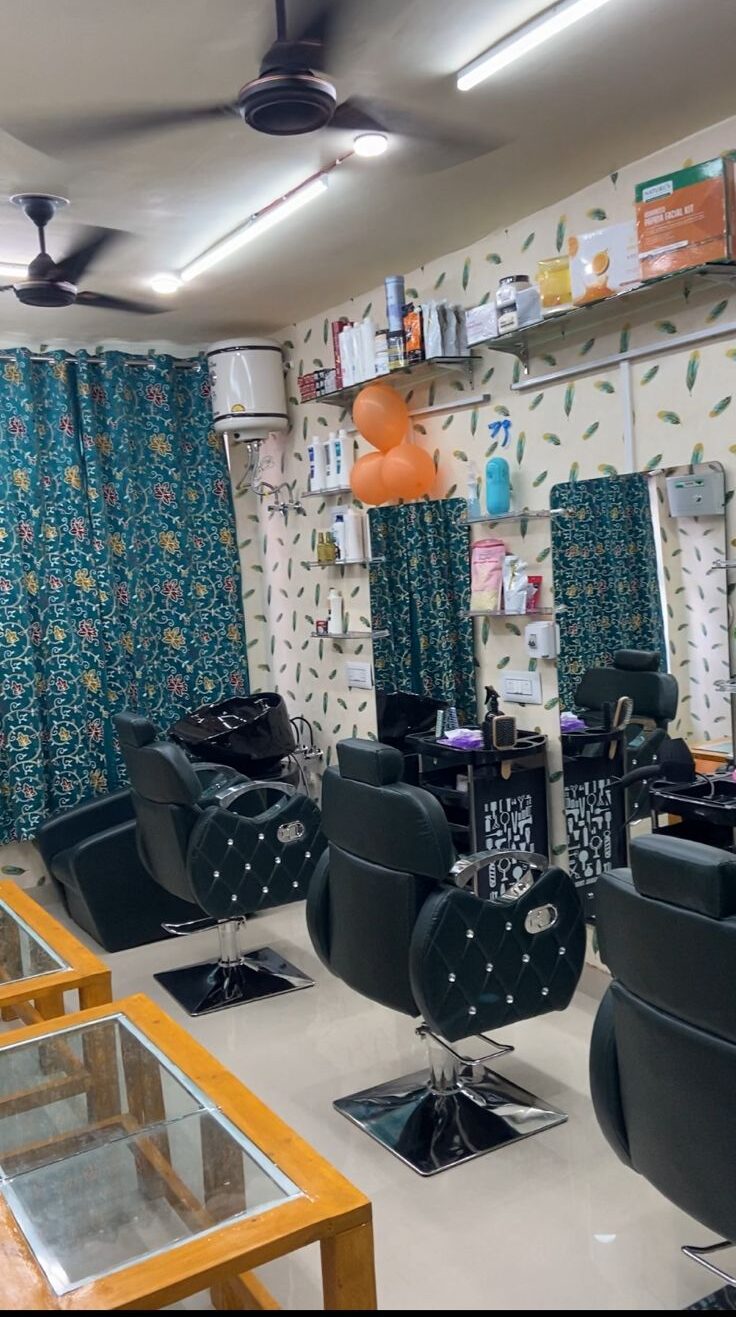
About 100 kilometers from Shabnum’s shop, her cousin Ramiya runs Ruma Makeover, a small beauty parlour in Kangan, a village in Ganderbal district.
Here, young women sit shoulder to shoulder along the wall, dupattas folded neatly in their laps. Bangles clink, while the faint scent of henna and hair spray lingers in the air. In the corner, a bride-to-be waits, fingers tightly knotted, gaze fixed on her reflection. Ramiya begins threading the hair off her face with quick, practiced hands. The bride flinches, then steadies, her shoulders easing. Slowly, her grip loosens, and she looks more calm.
“Many of my regular customers have never visited parlours before,” said Ramiya. That’s because Ruma Makeover is the first of its kind in Kangan, a small commercial hub for nearby villages where agriculture, tourism, and local businesses support much of the economy.
The demand for her services has kept Ramiya here and the earnings have changed her life. She now makes nearly 30,000 rupees a month, nearly three times what she earned back home in Jaspur, a village in UP’s Bijnor district. Her story has also inspired other women from her Jaspur, who have moved to Kashmir and now work as mehndi artists, domestic workers, and tailors, said Ramiya.
“I was earning three hundred rupees a day in my village,” she said. “Here I earn more than 30,000 rupees every month.” That income has meant more than just personal comfort because she now supports her ailing parents back home. “I am earning enough to take care of them.”
But two years ago, Remiya’s family asked her to drop everything and come back home. On October 20, 2024 after a doctor and six migrant workers were killed by terrorists nearly 15 kilometres from her shop. Terrorists opened fire at a construction site at Gagangir in Jammu and Kashmir’s Ganderbal district.
“My family called me and asked me to come back after the incident,” Ramiya said. “I did not open my shop for days. Many migrant workers left Kashmir, but I decided to stay. ”
Local families and friends supported her during that period, offering her shelter until the situation stabilised. She reopened her salon eventually, and has not looked back since. “Kashmir is like a second home,” Ramiya said.
“I still remember when there was no concept of beauty parlours in our village,” said Samiya Shabir, 28. She’s one of Rehana Khatun’s loyal patrons.
In 2023, Khatun left Raninagar, a village in UP’s Moradabad district for Kangan, where she now runs her own beauty parlour. Back home, she earned 7,000 rupees a month at small salons. Here, she makes over four times that amount, and her client base includes college students, working women, and brides.
“The work here is different because customers prefer natural looks,” Rehana said. “In my home state, people sometimes prefer bold makeup, but here soft and elegant styles are more popular.” She dreams of opening a bigger parlour in Kangan one day.
For Samiya, the change has been visible. Before parlours like Rehana’s arrived, women getting ready for weddings relied on whoever at home could manage something basic. “Now we have parlours here, where you can show pictures from your phone and ask for exactly what you want, without any judgement,” said Samiya to the Migration Story.
The move for Rehana, like all the other interviewees, was not without hesitation. “My family asked why I wanted to go so far away to a place always shown in the news,”she said. “But women from our village who were already here told us they felt safe and earned well.”
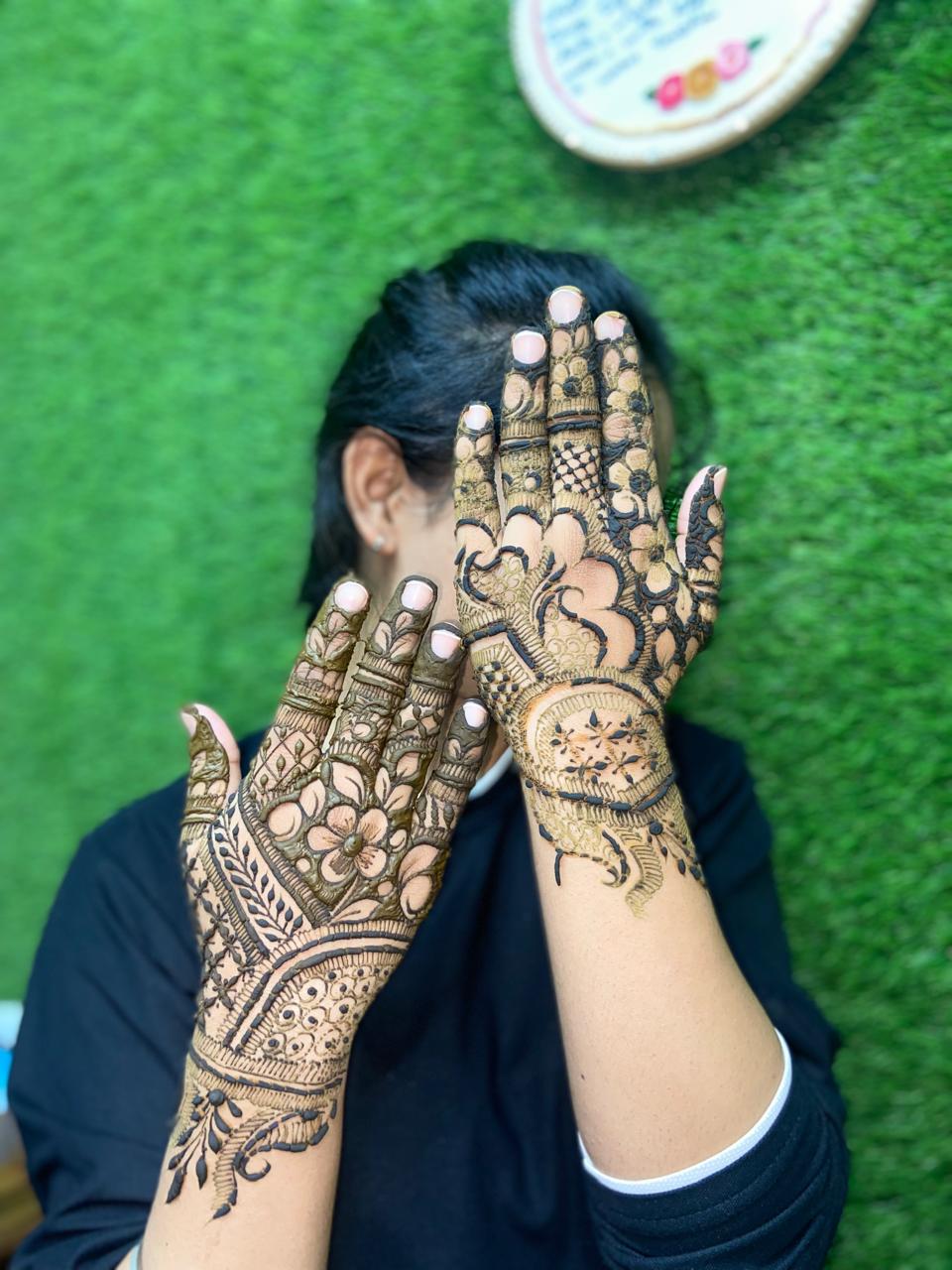
Nazma Bano, 26, came to Srinagar, Kashmir, through a similar network: women from her village who were already here. Originally from Malda in West Bengal, Nazma has spent the last two years travelling between Srinagar’s neighbourhoods during wedding seasons, applying intricate henna designs for brides and their families. She’s happy with her decision. “Many women from my village are now in Kashmir, working and earning with pride,” she said.
For most of them, the move was never meant to be permanent. But somewhere along the way, the plan changed.
“People outside think Kashmir is only a conflict,” Shabnum said, adjusting a half-stitched dress on her worktable. “But for us, this place gave our children education, gave us respect, and gave us work.”
Seerat-un-Nisa is a freelance journalist based in Kashmir, India. She covers the environment, climate change, women’s empowerment, and education.