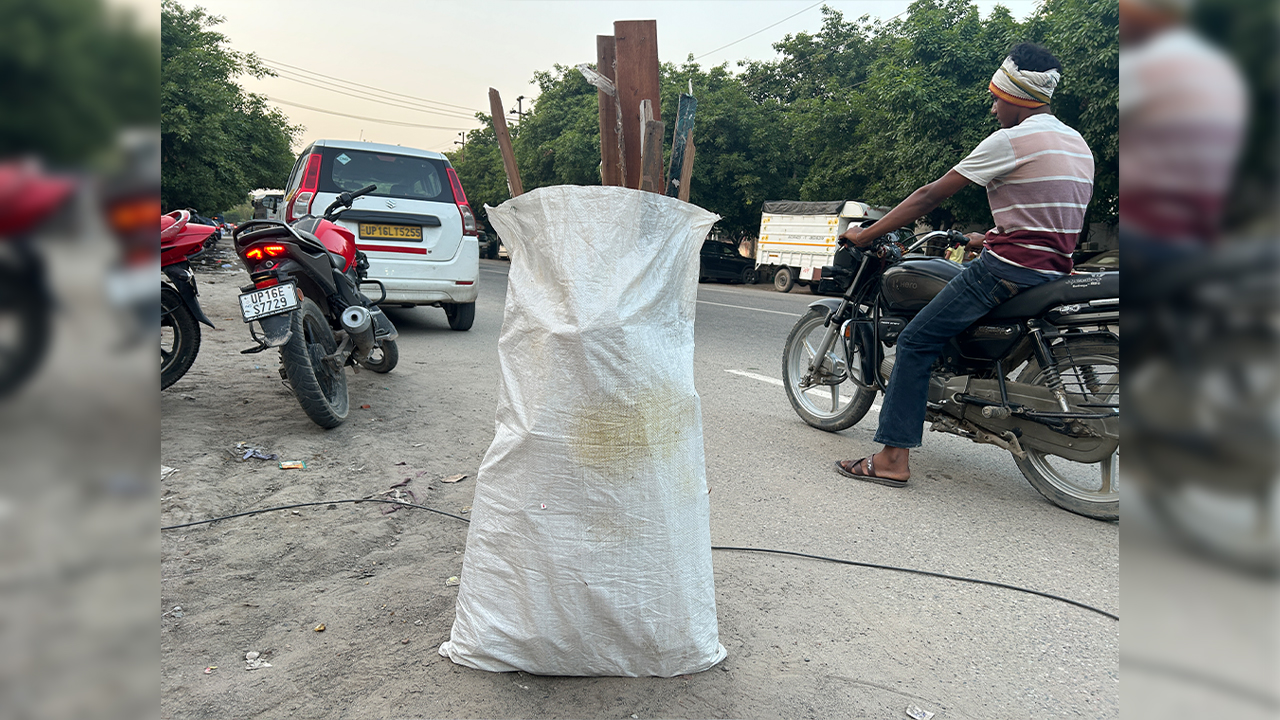
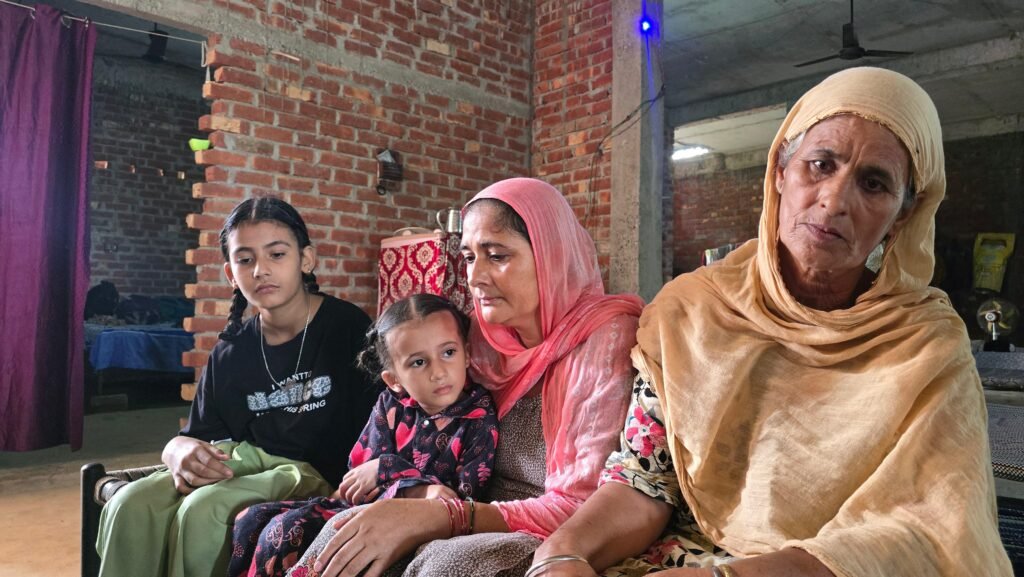
NOIDA, Uttar Pradesh/MANESAR, Haryana: One evening in early May, Rani finished her shift at a garment factory in Noida’s Phase II Hosiery Complex and walked out with a gunny sack of discarded wood.
The wood fuelled her recently built chulha (mud stove) on the roof of her home – a room she shares with her husband and four children in Surajpur village, nine kilometres from the factory.
A week after the Noida worker protests in early April, the state government announced a revision of wage rates — and Rani’s wages increased by 2,377 rupees. But it was around the same time that the LPG cylinder became unaffordable for her and scavenging for wood became a necessity.
“These are scraps from newly made furniture at the factory,” she said, pointing to the gunny sack and climbing onto her son’s motorcycle to return home. “On Sundays, when I have my [weekly] day off, I collect wood from nearby or buy it for 20 rupees a kilo,” she added.
Her family had to give up its cooking gas cylinder as LPG prices rose due to the West Asia conflict. “We still cannot afford a domestic gas cylinder,” said Rani, 40, whose family moved to Noida from Gulaothi village in Uttar Pradesh’s Bulandshahr district. “In the black market, it costs us 4,000 rupees.”
But that’s not all – the monthly rent for the family’s room rose too. “My landlord raised the rent by 500 rupees after hearing that our salaries would increase soon after the protest,” she told The Migration Story. She now pays 4,000 rupees for rent and 1,000 for electricity.
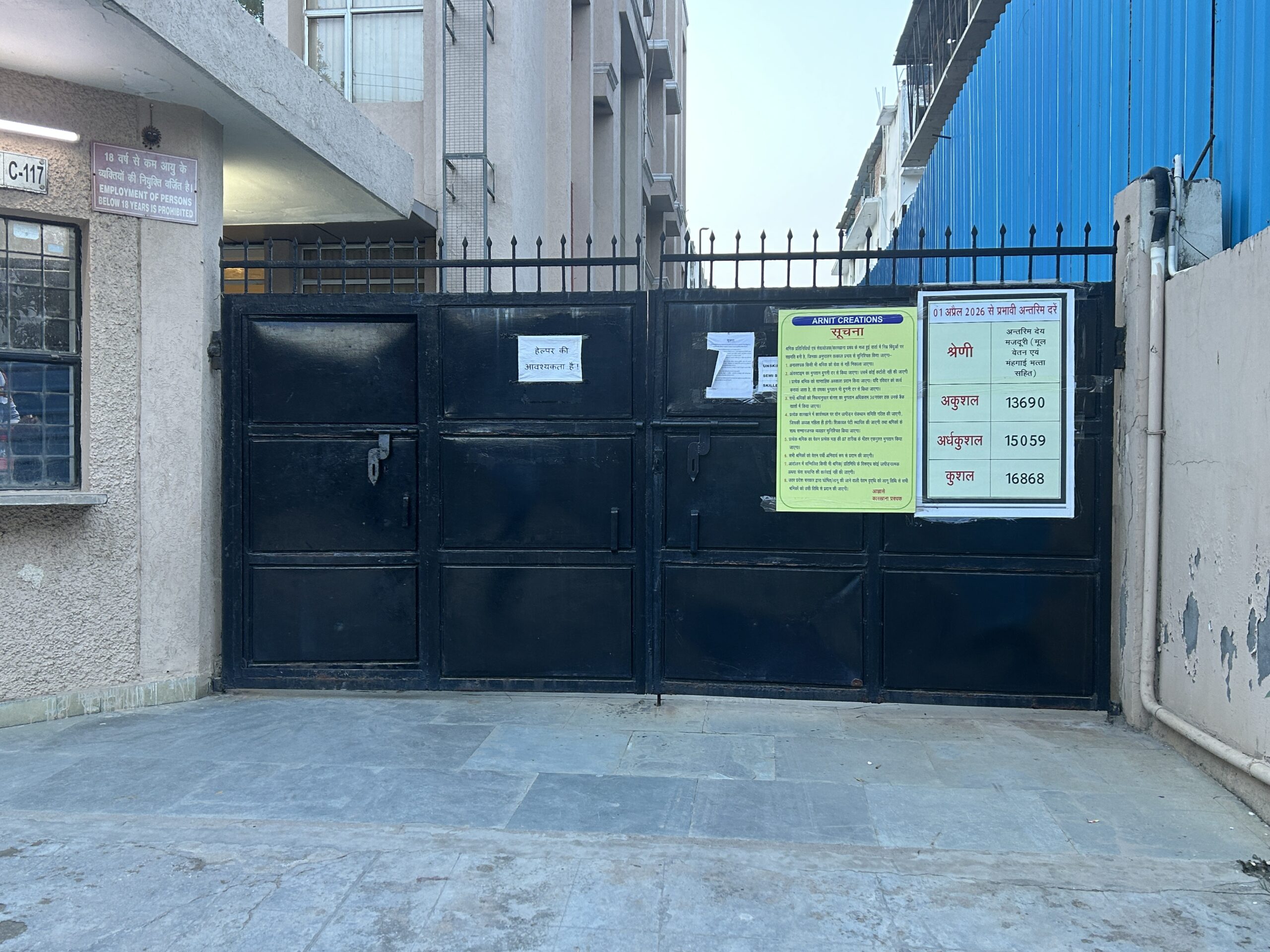
Classified as an “unskilled” worker by the government, Rani has worked as a helper at the factory for seven months, cleaning its machines for eight hours a day. After the wage revision, her monthly salary was raised to 13,690 rupees, whereas earlier she made 11,313 rupees.
The additional income she makes offers some relief, she said, but not enough to raise the family’s standard of living. She is its sole breadwinner and her income simply isn’t enough to move into a larger room, buy new clothes or switch back to an LPG cylinder.
REVISED WAGES DON’T REACH WORKERS
The wage revision in U.P., announced on April 17, followed labour protests in Noida’s industrial hubs that demanded wage parity with neighbouring Haryana, among other things. The minimum wage rates in the state had not increased in nearly a decade.
However, the latest revision saw minimum wages raised by only 21 per cent in U.P., compared to an increase of nearly 35 per cent in Haryana. And despite these wage revisions, workers The Migration Story interviewed in Noida and Manesar, a major industrial hub in Haryana, said that their costs of living had increased dramatically – and not of their own accord.
“My rent has risen from this month. My landlord raised it by 1,000 rupees now that my salary is going to increase,” said Mahadev Rajput, 26, an auto-sector worker in Manesar’s Sector IV.
He shares a 10-by-10-feet room with two others in Kasan village, three kilometres from Manesar, and together, they used to pay 2,500 rupees as rent. Now, their rent has gone up to 3,500 rupees.
Even in the third week of May though, Rajput had not received his salary from the factory. So, he decided to start looking for work at another unit.
Originally from Daniyapur village in U.P.’s Farrukhabad district, Rajput had moved to Manesar in 2017 and found work at auto-parts units here through contractors. But his current contractor recently told him that his revised April salary would be that of an “unskilled” worker – even though he is a “skilled” worker.
This means that Rajput will end up making only 15,221 rupees a month – 3,280 rupees less than what he should earn by law. “The contractor told me that if I wanted to continue working with him, I should accept this wage. Otherwise, I could look [for work] elsewhere,” Rajput said with a shrug.
RENTS RISE AFTER INCOMES INCREASE
Many migrants working in industrial hubs in the National Capital Region (NCR), where both Noida and Manesar are located, often live in cramped, 10-by-10-feet rooms in densely packed settlements. “Families like ours live here like bhed-bakria (a herd of sheep and goats),” Rani said matter-of-factly.
Though landlords usually increase their rent by a few hundred rupees every year, this time, after the wage revisions, rents rose significantly, they said.
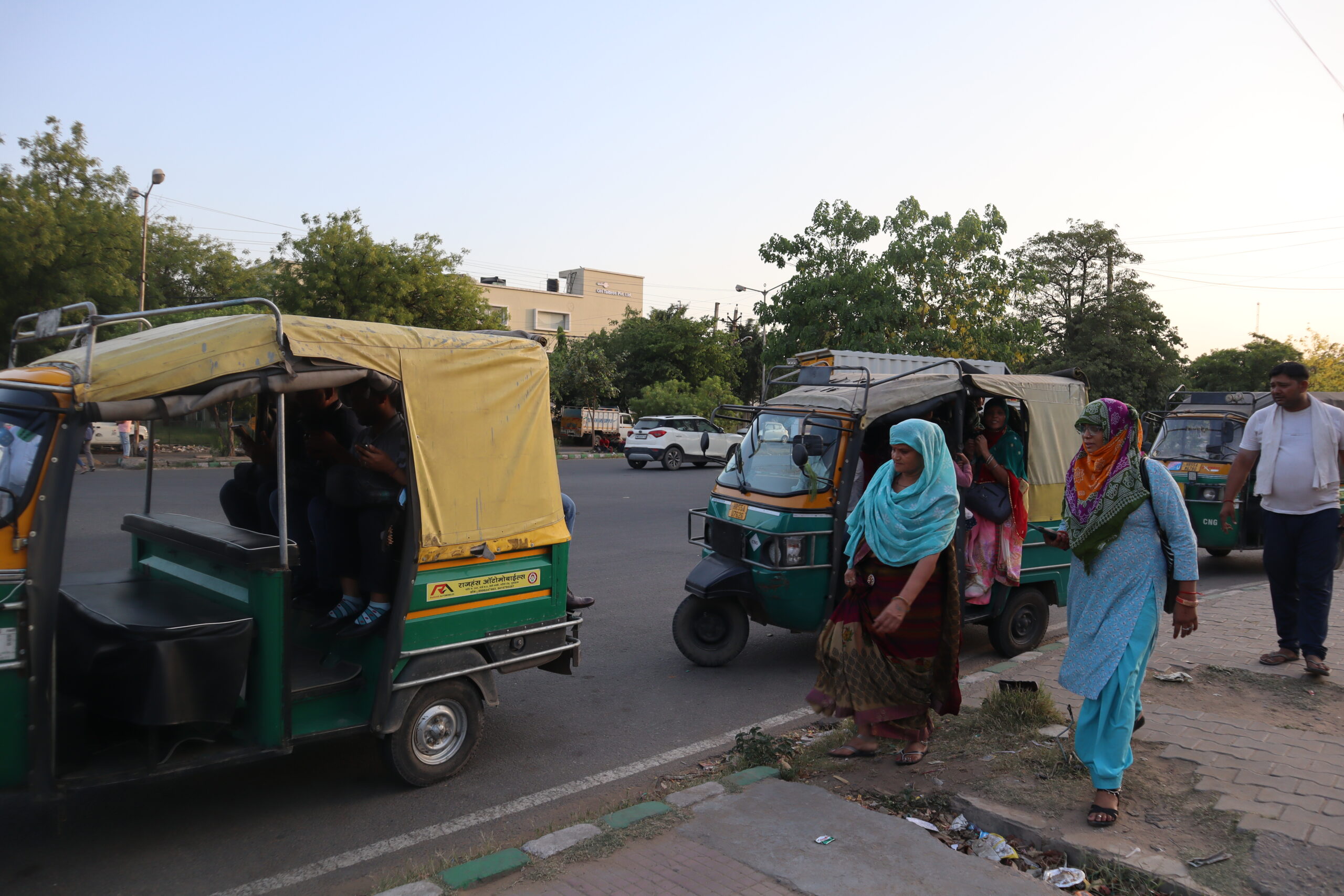
“Even before we received the revised wages, my landlord told me he would increase the rent by 500 rupees,” said Vijay Pal, a garment factory worker in Noida’s Phase II industrial hub, on his way to a shared rickshaw stand after his shift. “This is solely because our wages have increased.”
“Yahan system bohot galat hai. Mauka dekh kar sab chauka maar rahe hai [The system here is deeply unfair. Everyone is trying to cash in on this opportunity],” added Vikrant, Pal’s co-worker, who was also walking to the rickshaw stand. Vikrant pays a monthly rent of 3,500 rupees with his roommate in Kulesara village nearby.
Pal does not live with his family in Noida either. Three years ago, when he started working as a kaarigar or “skilled” worker, he decided that it would be more economical if his wife and children stayed in Uttar Pradesh’s Hardoi district.
Before the wage revision, Pal earned 13,940 rupees a month, of which he sent 5,000 rupees to his family. After his wages increased to 16,868 rupees, he sent 7,000 rupees home and keep just enough with him to manage expenses in Noida. “It is impossible to raise a family here on a single person’s salary,” Pal added.
Vikrant, too, piped in about how expensive it is to move to Noida with family. “Expenses here cross 10,000 rupees a month, even if you have a small family with one or two children. It becomes even harder if the children are studying here,” he said.
WAGE REVISIONS NOT YET ADEQUATE
Several workers interviewed for this story were reluctant to share personal details, citing fear of blowback from the authorities. After workers’ demonstrations in Noida, the U.P. government reportedly detained 1,000–2,000 people, including protesters and bystanders, adults and children.
“What’s the benefit of this raise?” Sangeeta asked this reporter at the end of her shift in the Noida Phase II Hosiery Complex. “They haven’t raised it to what is needed and still make us work like donkeys.”
Sangeeta, a “skilled” garment factory worker in her thirties from Bihar’s Patna district, had taken part in the April protests, demanding a minimum wage of at least 20,000 rupees a month for a worker doing eight-hour shifts.
She said that workers are expected to finish work on 400–500 garments a day, roughly 70–80 an hour. To earn 20,000 rupees a month at the earlier wage rates, she would have to put in at least two hours of overtime every day.
“Still, there is nothing left for me to save. Everything gets absorbed into household expenses here,” Sangeeta added, who lives with her husband and school-going daughter close to Noida.
She calculated that around 5,000 rupees is spent on rent and electricity, another 2,000 rupees on her daughter’s school fees, 1,000 on her tuition, and 1,000 on commuting to work.
“Dudh, sabzi, bimari, duniya-daari — sab kuch usi mein adjust karna hai [Milk, vegetables, illness, everyday social obligations — everything has to be managed within that income],” she said.
HIGH LIVING COSTS DUE TO INFLATION
“In our villages, we have wheat from our own fields, but here [in Noida], we have to buy everything, and it costs more than it does in the village,” said Vikrant, reminiscing about the more affordable life back home in village, despite the wage revisions in U.P.
While both Haryana and U.P. raised their minimum wage rates this April, these are not the same as a living wage, observed Arun Kumar, a retired professor of economics from the Jawaharlal Lal Nehru University, who has written extensively on the informal sector.
“A minimum wage only allows for bare existence, with no savings to fall back on. Workers today spend [their income] almost entirely on essentials, so any rise in the cost of food, rent, cooking gas or transport directly eats into their basic needs,” he said over the phone.
Kumar added that official inflation rates used to revise wages do not reflect the sharp rise in workers’ actual expenses. “Whatever wage adjustment is being done is therefore inadequate.”
The Centre of Indian Trade Unions (CITU) had also criticised the wage revisions as insufficient, calling them “far below survival levels” and demanding a minimum monthly wage of 26,000 rupees.
Gangeshwar Dutt Sharma, CITU’s general secretary in U.P.’s Gautam Buddha Nagar district, told The Migration Story that if wages were calculated using formulas recommended by the Indian Labour Conference — a national committee made up of government officials, employers and trade unions — and Supreme Court directions, they would now be closer to 30,000 rupees a month, given the country’s current inflation.
“Workers are not really seeing the benefit of the wage revision because whatever little has been increased has already been absorbed by inflation,” Sharma said.
The Migration Story reached out to the Haryana Labour Commissioner in Chandigarh and the office of the Regional Labour Commissioner (Central) in Noida, seeking their responses to the wage revisions and rising living costs. They have yet to respond to requests for an interview.
WORKERS STILL AWAIT THEIR SALARIES
Like other workers, Manju Das, who works in housekeeping at a glass mosaic factory in Manesar, was also waiting to get paid. She had worked for 15 days in April and returned to her home state of West Bengal to vote but was back at work by May.
Originally from Gangarampur in Dakshin Dinajpur district, Das’s monthly salary as an “unskilled” worker was 11,271 rupees before the revision and 15,220 rupees after.
A widow in her forties, she lives in a small room in a village near Manesar with her daughter, son-in-law and newborn grandson. Together, they spend around 5,000 rupees a month on rent and electricity.
“It is still cheaper than renting a separate room. If I move out, another room will cost at least 3,000 rupees,” she said, insisting that she would rather keep the money aside for her daughter and her grandchild.
To save on daily commuting costs, Das walks 45 minutes one way to the factory. “If I spend 10 rupees one way every day, nearly 600 rupees will be spent just on travel in a month. Roz roz kiraya denge toh bachega kya? [If we keep paying travel fare every day, what will remain with us?]” Das said just as she was heading home after her shift.
MIGRANTS BEAR THE BRUNT OF RISING COSTS
Unlike Rani, some migrant workers got access to LPG cylinders through initiatives by oil marketing companies that made 5-kg Free Trade LPG (FTL) cylinders available to migrants via their distributors. In late March, the central government had asked these companies to double the allocation of these cylinders for migrants.
However, many migrants were not aware of this initiative. For instance, Vikrant brought a 14.2-kg LPG cylinder back to Noida from his hometown in Bulandshahr district because he couldn’t afford to buy it from the black market.
In Manesar, Rajput bought a 5-kg FTL cylinder with cooking gas for 2,100 rupees in April, but the LPG refill he got in May cost him all of 850 rupees. He works 12-hour shifts daily, with no holidays, and earns around 18,000 rupees, which is just enough to support himself and his family of four in U.P.’s Farrukhabad district, he said.
“I have no personal desires left. Everything I do is for my family back home. I buy one pair of clothes every few months and keep wearing them until they tear,” Rajput told this reporter.
Earlier, he would eat at roadside food stalls because he was often exhausted and in a hurry. But with vendors raising food prices after the spike in LPG prices, he now prefers to eat at home. But refilling a cylinder cuts into his earnings even further.
“Four kachoris [a fried snack] would cost 20 rupees. Now they cost 40 rupees,” he said. “We have to keep cutting our own expenses and sometimes, we even sleep hungry.”
Sangeeta explained this rise in living costs simply. “This is a pardes [a place away from home],” she said. “Something worth 10 rupees is sold for 15 rupees, and what costs 15 rupees is sold for 20 rupees.”
And Das echoed what experts like Kumar have said about how workers are not making a living wage. “Idhar mein salary badi, udhar mein mehengai. Maar workers ko hi pad rahi hai [Wages may have increased, but so has inflation. In the end, workers bear the brunt],” she said.
Sangeeta also recalled how she had confronted factory owners during the labour protests in Noida and asked them to run their own households for a month on a worker’s salary. “Then you will understand how we manage [to support] a family,” she had said.
“People at the top take home salaries of 2-3 lakh rupees a month, but when it comes to increasing our wages by 500 or 1,000 rupees, inka kaleja nikal jata hai [they act as if it pains them deeply],” she added. “We work here with our blood and sweat, and it is from our labour that they profit.”
Sanskriti Talwar is an independent journalist based in New Delhi. Her work centres on in-depth storytelling about rural India and migration, with a focus on gender, labour, agriculture and social justice.