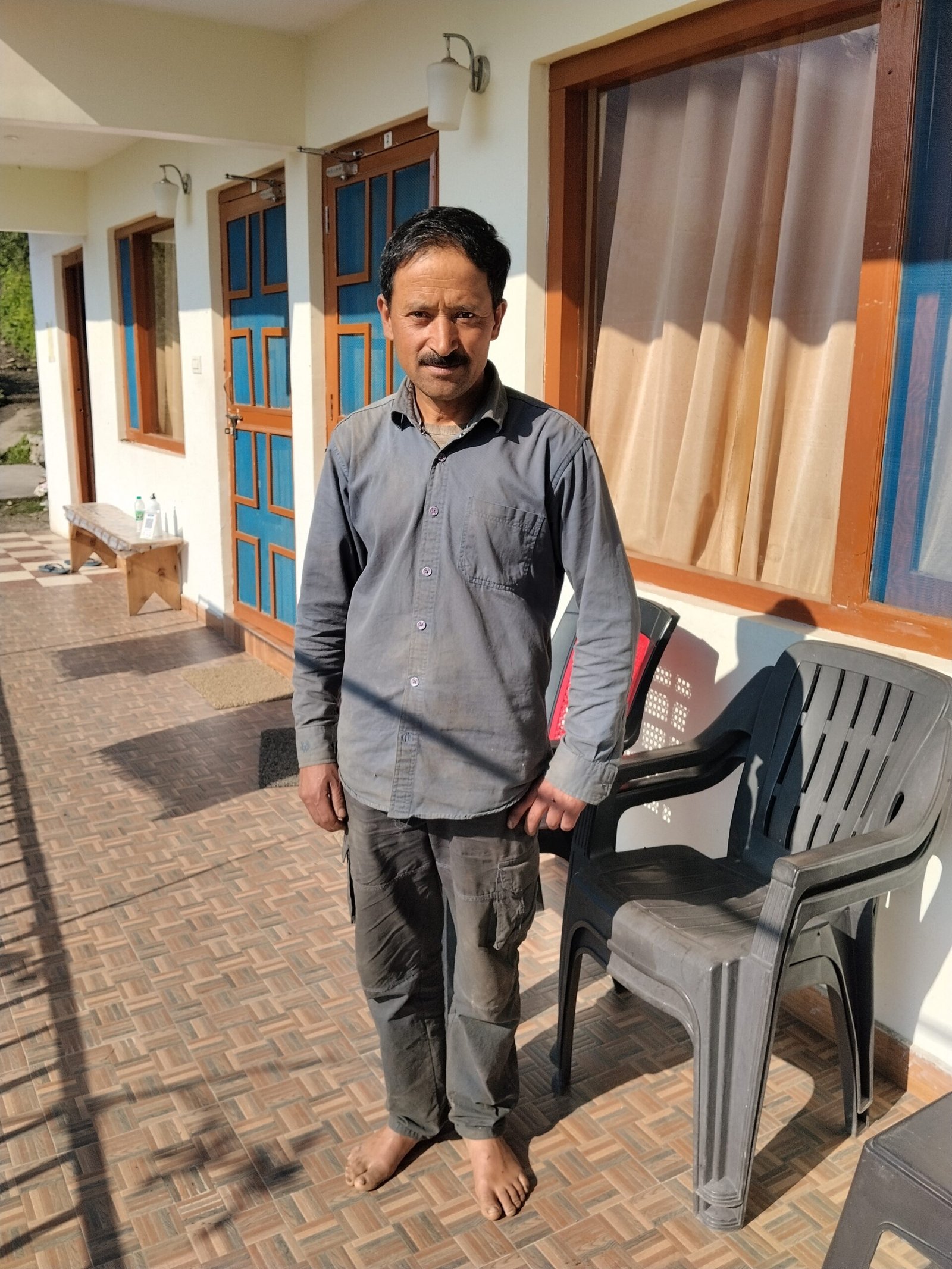
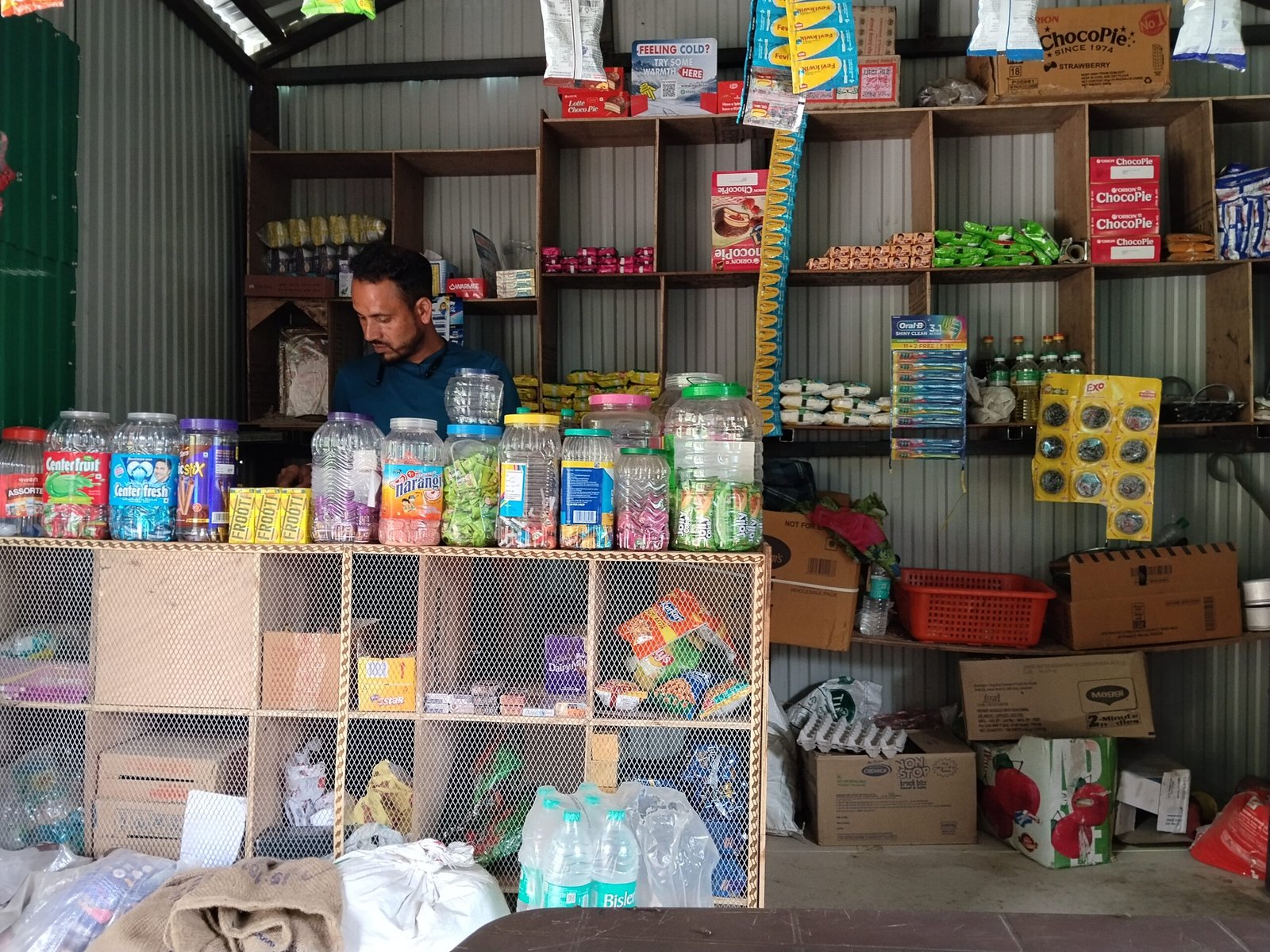
TUGASI, Uttarakhand: Ashish Farswan does a bit of everything to keep his household running. The 33-year-old has been running a small shop catering to tourists for the last nine months, while also working as a trekking guide charging 6,000 rupees per person. The shop brings in about 1,000 to 1,200 rupees a day, which his wife and brother look after when he is away on the trails, while his young children go to the local Anganwadi. His family, he said, also farms traditional crops like potatoes, rajma, ramdana, and barley. But wild animals come down and destroy their crops, leading to an overall decline in the farm output and income compared to earlier years. “We have become dependent on tourism,” Ashish told The Migration Story.
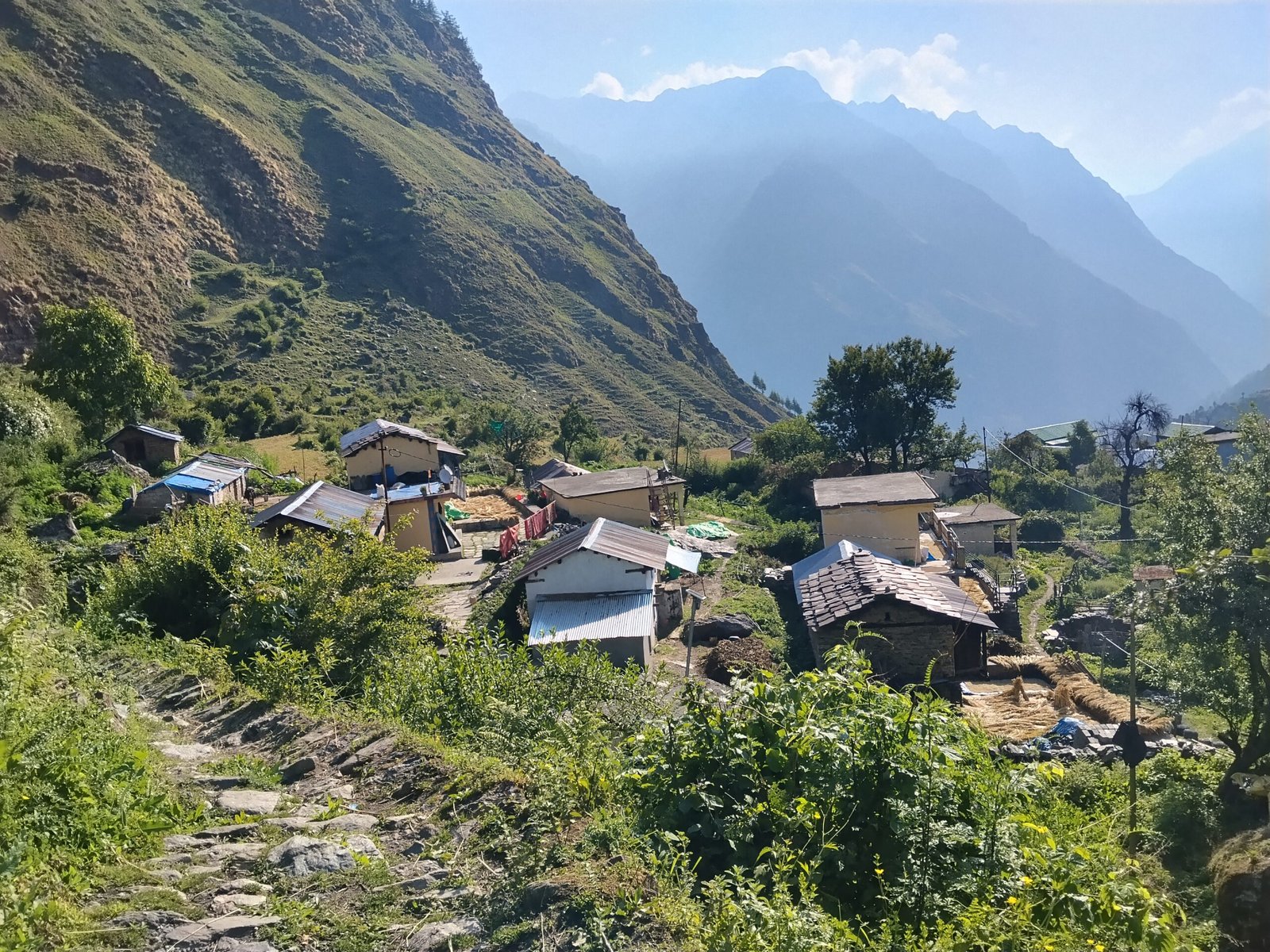
Ashish is a resident of Tugasi, a remote village in the Chamoli district of Uttarakhand. The quaint, picturesque Garhwali hamlet is cradled high in the Chamoli hills, at an altitude of approximately 2,450 meters (8,000 feet). Around 45 families live in traditional slate-roofed houses, which stand seamlessly against a dramatic mountain backdrop. Life here moves to the peaceful rhythm of mountain traditions. The nearest town, Joshimath – called the gateway to Badrinath Dham, one of the four Hindu pilgrimage sites – is located 58 km from the hamlet.
Until a few years ago, the families of Tugasi were mostly dependent on farming with a few men also finding work in Joshimath or nearby villages.
But since 2020, the village has recorded a boom in tourist arrivals on the back of dropping crop yields, city dwellers fleeing to the mountains as the pandemic crerated a work-from-home opportunity, and also a massive push by the Uttarakhand government to promote tourism in the state with a larger aim to arrest migration by creating livelihood opportunities within the state.
“Earlier, foreigners used to come to the village mostly and proceed to trek but no one stayed in the village. But since 2020, tourists coming to the village have increased and they look for accommodation,” said Birendra Farswan, a homestay owner in Tugasi.
Tugasi is now recording a boom in homestays even as its proximity to major pilgrim centres has led to the creation of a homegrown tourism industry, creating livelihoods for its residents, becoming a rare example of resilience in Uttarakhand, dotted by what are commonly known as ‘ghost villages’ as people migrate to near and distant towns and states to find work.
Tugasi serves as a key base village for high-altitude treks such as Kuari Pass and Pangarchulla Peak, and its neighbouring routes also draw trekkers to other tourist attractions of Hemkund Sahib and Valley of Flowers. Ashish said that he had been working as a trekking guide for nearly six years and opened his shop around ten months ago.
“As more tourists started visiting our village, I decided to open a shop,” said Ashish, who earlier depended only on farming.
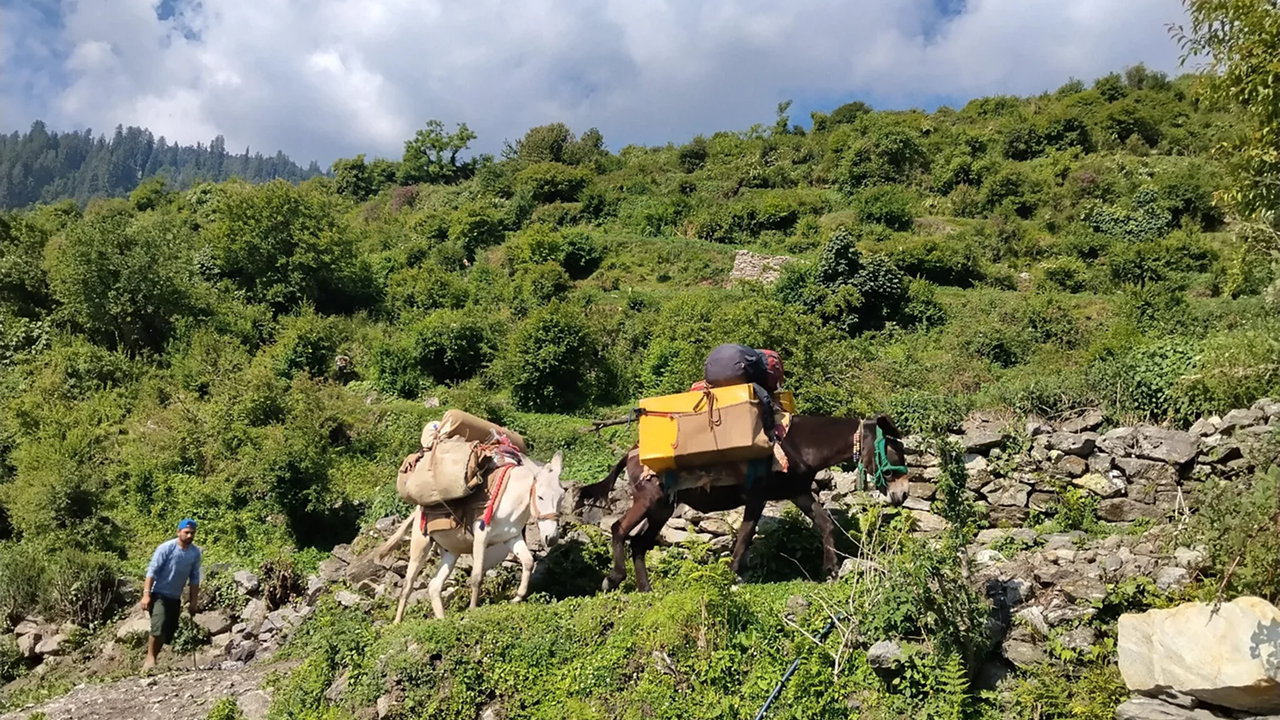
Young local men in Tugasi are building careers as trek guides, porters, and cooks, local villagers said. Mules, once used for agrarian chores, are now hired out for trekking expeditions. Local shops catering to tourists provide steady cash flow, villagers said, adding that tourism has become necessary for them for survival even if rising tourist numbers is now bringing in new problems of garbage and destruction of the fragile terrain.
Tugasi villagers said the trekking season runs from September to June. But even in the monsoon months of July and August, there are treks from Joshimath, for which some villagers send their mules and horses and while also themselves working as guides and cooks. Saroj Devi is the president of Tugasi’s Mahila Mangal Dal. She said that her family’s income is intrinsically linked to the tourism in her area— her husband is a driver on the Joshimath-Badrinath route, and her son works as a trek guide, earning 800 rupees a day. She owns mules, which fetch her 600 rupees per day during the trekking season when hired out.
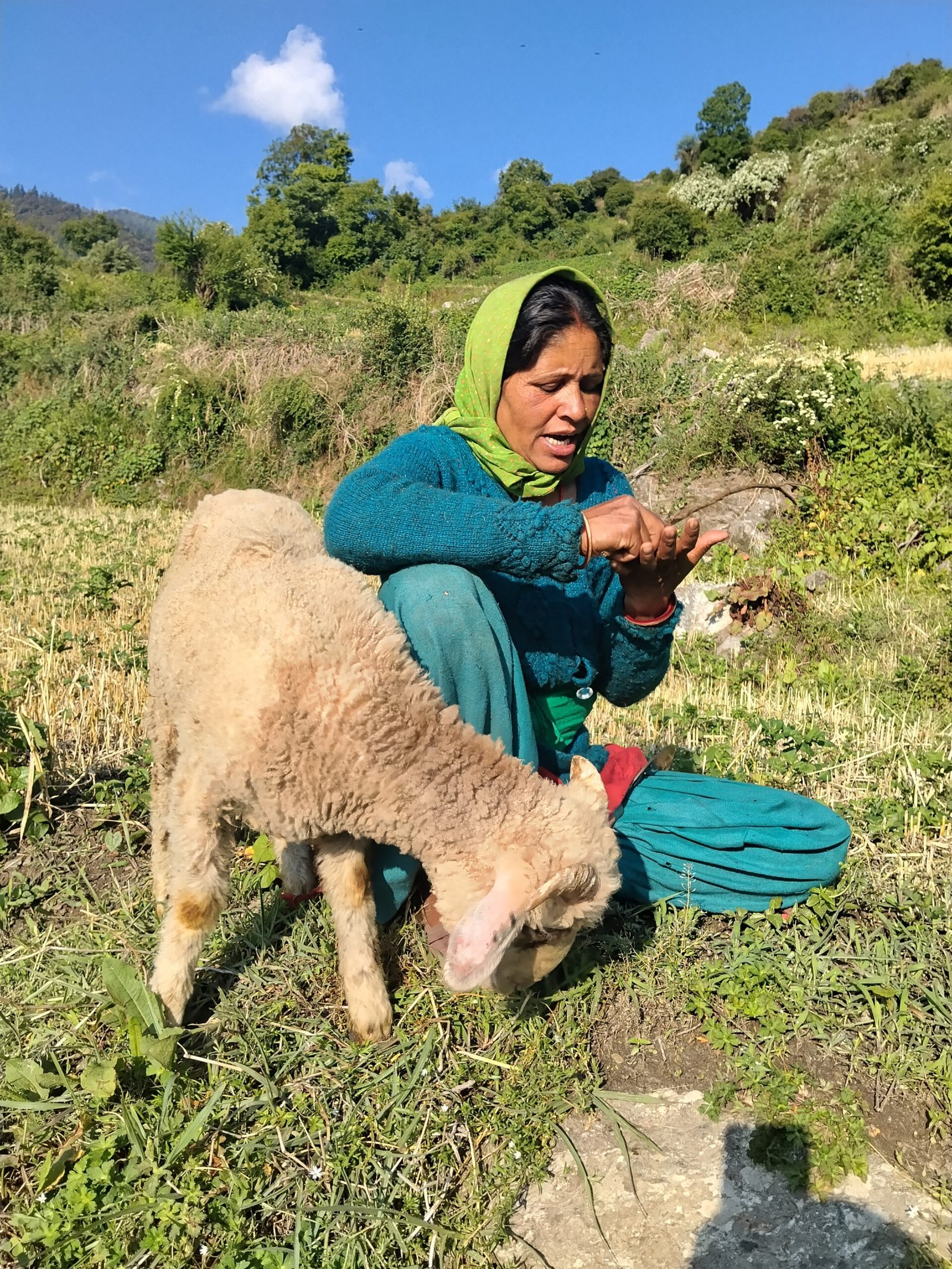
The region’s booming trekking industry relies heavily on mules to transport essential supplies up the trails. Keeping these animals working requires immense amounts of fodder and daily care, which is done mostly by women in the village. Their day involves cleaning cattle sheds, herding animals uphill to graze, hauling heavy bundles of harvested fodder back down steep slopes, and spending hours preparing animal feed. Their unpaid, backbreaking labour, which they do over and above their daily household work, underpins the mountain tourism supply chain.
Laxmi Devi Farswan has been cooking mid-day meals at the village primary school for nearly two decades. Though her official shift is just three hours, she ends up working the whole day at the school and earns 3,000 rupees every month. “I joined back in 2005 for just 335 rupees a month,” she told The Migration Story and added that even her current wage was a result of sustained protests in Dehradun and Delhi. She supplements her income by sending her mules on the trekking routes. “If the trekking stops, our income suffers,” she said.
The downside of this dependence, she adds, is that they need to continue even if the tourists are rambunctious.
Homestay boom brings migrants to Uttarakhand
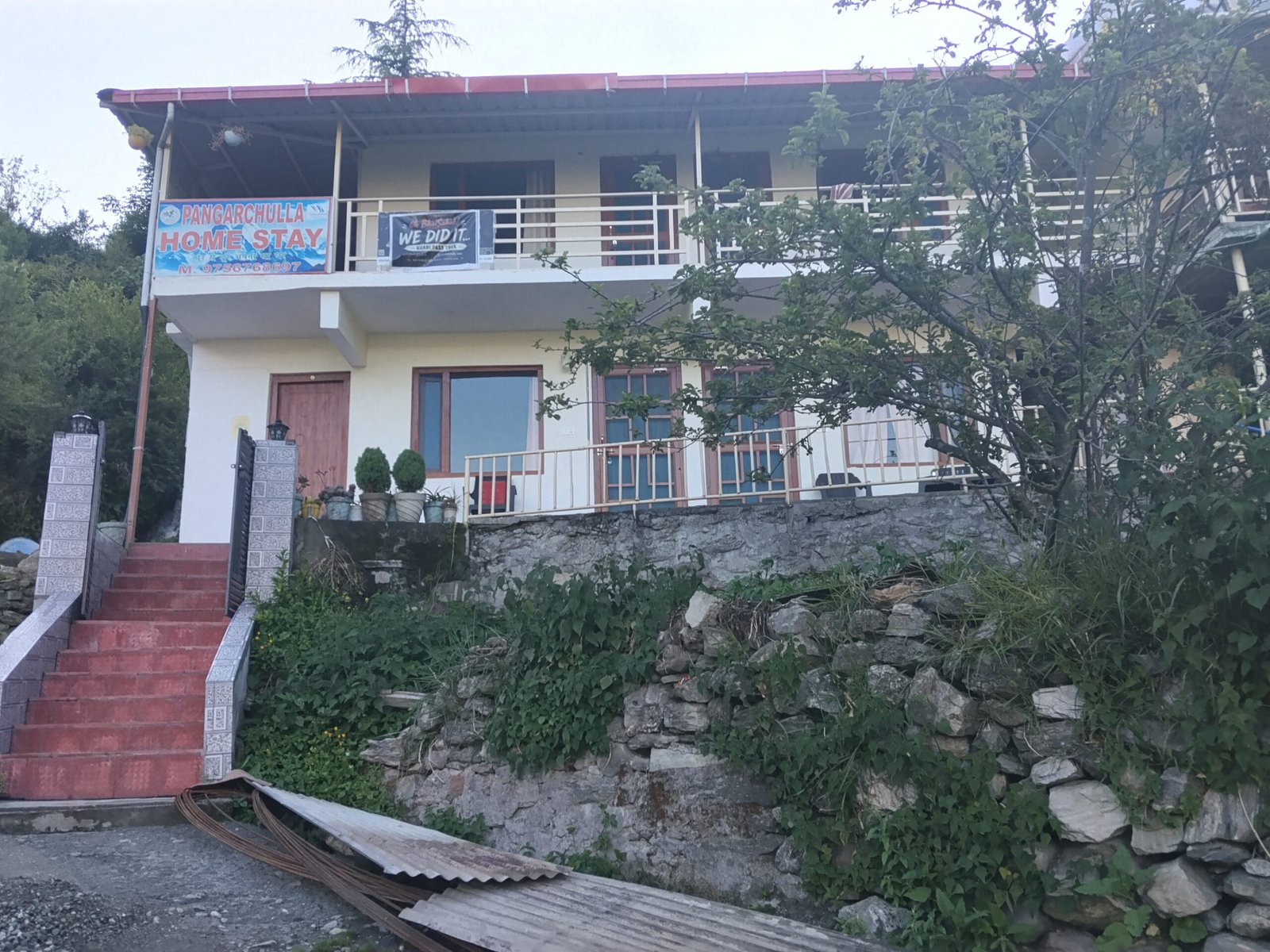
When Birendra Farswan (not related to Laxmi Devi Farswan), 50, turned his home into a homestay in 2020, adding a storey with more rooms, bathrooms and a new kitchen, in 2020, he ended up spending 500,000 rupees. He uses one room to only stock trekking gear essentials. Many tourists, he said, just book his homestay to enjoy the mountains, and not necessarily to undertake treks.
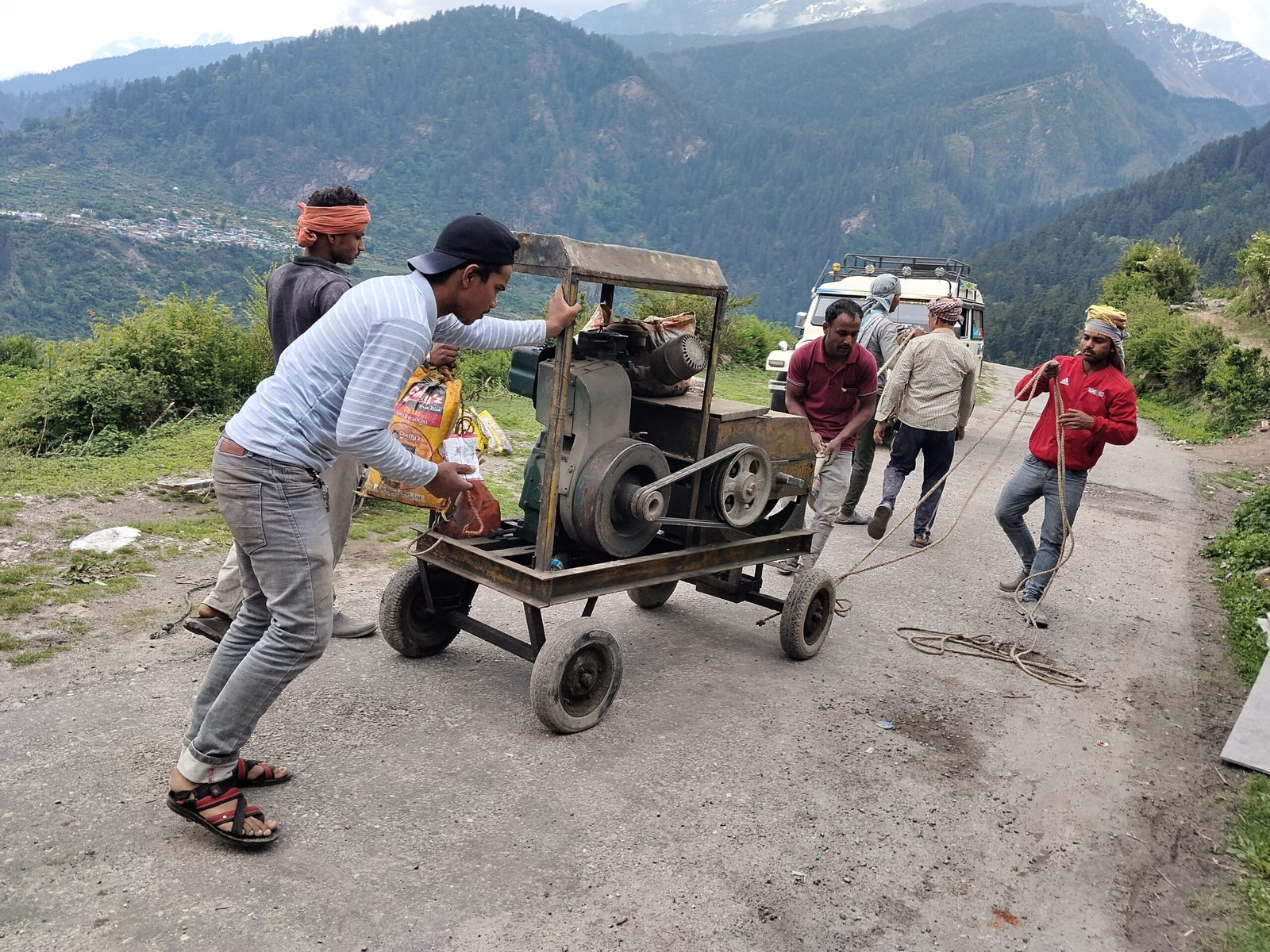
But as construction on homestays picked up, Tugasi was soon receiving migrant workers from other states – mainly from Bihar and Uttar Pradesh and also from neighbouring Nepal.
Birendra said he worked as an electrician in a company in Joshimath until last year even as his business back home in Tugasi had picked up, with his family managing it. In 2007, he had spent a year in the neighbouring state of Himachal Pradesh for work. This year, however, he decided to join the homestay business fulltime since he said “it was running well since the last two years”.
He added that he also did small scale farming to supplement the income generated by the homestay.
Laxmi Devi said that traditional village labour—small-scale construction such as building or repairing village roads—holds little appeal. “Nobody wants to do the 100 days of MGNREGA work anymore,” she said, referring to the erstwhile government employment rural employment scheme, which was recently replaced by the Viksit Bharat Guarantee for Rozgar and Ajeevika Mission (Gramin). She said that contractors prefer to hire migrant labourers who complete the work on time.
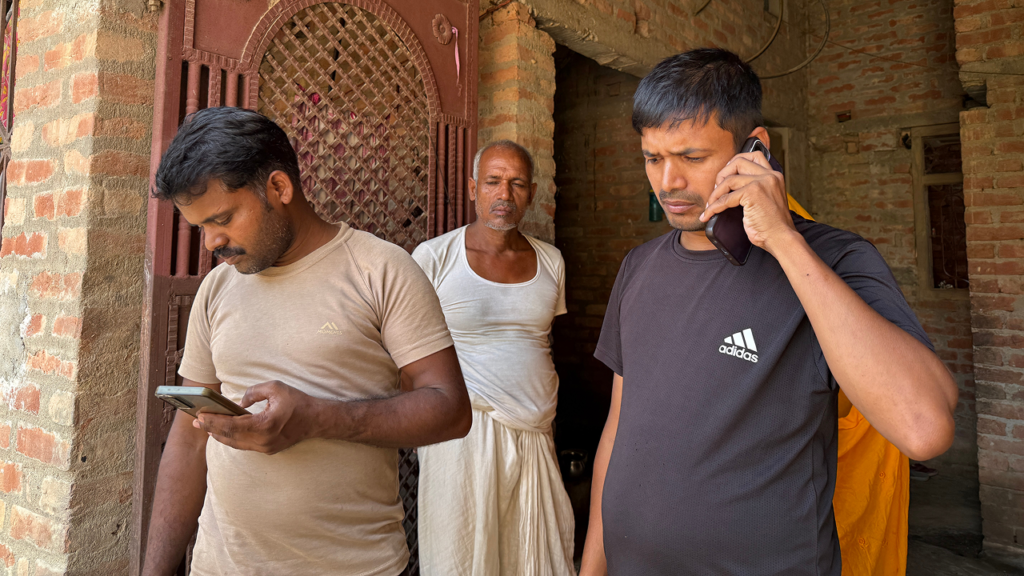
Mohammad Mohin Alam is one such worker. The 34-year-old has been migrating to Tugasi annually since 2007, arriving in March and returning to his home village of Kesarra in Bihar’s Araria district between December and February, when it snows in Tugasi. He said that he had previously worked in Delhi and Hyderabad, where wages were comparatively lower, and that he earns 600 rupees per square foot of construction, which he said translated to roughly 1,300 rupees a day, as compared to 700 rupees in the cities. Alam said that the wages are higher as rations cost more in the mountains. “I send 15,000 rupees back home every month,” he said, which is more than what he could send when he used to work in Delhi or Hyderabad. Meanwhile, back in his home village, his extended family—including his parents, brothers, wife, children, and grandparents—manages the local agriculture and livestock.
Laxmi Devi hopes to build a homestay someday. “But where is the money? A two-room homestay needs five to ten lakh rupees.”
The pivot to a tourism-based economy has been led largely by people in Tugasi.
While the Uttarakhand state government in 2020 launched the Mukhyamantri Swarojgar Yojana to combat severe rural outmigration and systemic unemployment by providing subsidised bank loans to enable local youth, women, artisans, and returning migrants to establish their own enterprises in manufacturing, service, or retail trade, the state policy has seemingly not reached Tugasi.
Ashish said that he did not know anything about the scheme.
“I didn’t get any help. I opened this shop with my own savings,” he said.
Birendra too said he built his homestay without applying for or receiving state benefits, though he knew about the scheme of the state government to promote tourism and homestays, which was launched in 2018. He said that the homestay boom happened in Uttarakhand after the scheme. “I didn’t apply for the scheme because it involves a lot of formality and I didn’t have time to fulfil the formalities,” he said.
His homestay had been running well over the last couple of years, Birendra said, though he had not yet recovered the money he had spent on it. “For five to six months, the homestay runs very well,” he said and added that mules and horses are sent on nearby treks during the lean period. He said that some tourists even come only to experience a mountain village and stay for longer periods “up to like 2-3 weeks” and cook their own food in the homestay’s kitchen. “Tourism is very important for us,” he said, and added that many villagers had bought horses and mules for tourism. “People have set up shops for tourists. If tourism stops, what will happen to them?” he said.
Effects on climate change on local agriculture
Beyond the everyday struggle, Ashish said it was impossible not to notice how much the mountains have changed since he was young. “The mountains are just getting dirty, and trees and hills are being cut to widen the roads,” he said.
Ashish said that he and his family would survive on farming over six years ago and would grow around two to three quintals of wheat. “I have not been sowing wheat because bears come during harvesting months of April and May and eat the crop,” he said.
The increased presence of wild animals has dealt a debilitating blow to an already stressed agrarian ecosystem. “Wild boars and bears have been coming down much more for the last two to three years,” Smita Devi, who works as the treasurer of the local panchayat in Tugasi, told The Migration Story. She added that around ten years ago, their farm could yield up to three quintals of ramdana. “Nowadays, even getting 40 kg is difficult—the wild boars and bears eat it all,” she said.
In addition to the loss of forest cover, rising heat is increasing animal interference in villages like Tugasi. A study conducted by the Germany-based Potsdam Institute for Climate Research and The Energy and Resources Institute has suggested that Uttarakhand’s annual average maximum temperature may increase by 1.6-1.9 degrees Celsius between 2021 and 2050. Locals already see the effects. “In my childhood, I used to see six to ten feet of snow. Now? We barely get two feet,” Ashish said.
This sentiment was reiterated by Saroj Devi, who said that when she got married and moved to Tugasi in 2002, they had 10 feet of snow. “From September to November, potato, rajma, chaulai, and ramdana are grown, while in November and December, we sow wheat and barley,” Saroj explained. She added that wheat and barley are harvested between May and June. “The production of wheat and barley is affected by less snowfall. If there is more snow, the production is more,” she said.
“When wheat, barley and peas saplings remain covered under snow, they grow well. Snow also retains the moisture of soil,” Birendra said. He said that because of less snowfall even apples and potatoes have not been growing as well. Potatoes, he said, had been the main source of income around ten years ago for all families in Tugasi and added that wheat production was one to two quintals, but now wheat is no longer grown. “As heat is increasing, insects, mosquitoes are also increasing. Earlier there were no mosquitoes in the village,” he said.
An immediate impact of decline in local agriculture is that families in Tugasi need to go to the market in Joshimath for their essentials. The village has organised a vehicle which ferries villagers to the market every morning and brings them back home before dark.
Irregular thermal patterns and delayed winters have also disrupted the natural hibernation cycles of animals like the Himalayan black bear. Deprived of deep sleep and driven by severe hunger, these bears enter lower-altitude human settlements earlier and far more aggressively in search of food. Rakesh Farswan, Smita Devi’s husband, was born in Tugasi and has witnessed change throughout his life. “The snow at higher altitude has decreased significantly, and it rains more,” he told The Migration Story and added that forests were also being cut down to build wider roads. “Wild boars and bears do not get food in the upper forests, so they come down to the village,” he said. Birendra said that bears had eaten away all the rajma crops he had sown. “Bears come down to Joshimath and hide in the mountain crevices. People reach home early in the evening to avoid attacks from them,” he said.
The economic pivot toward mountain tourism carries high ecological costs, generating massive amounts of plastic waste and requiring mountain carving for road-widening. To reach Tugasi, travellers must pass through Joshimath—a crucial transit hub on the route to Badrinath Dham—which has become a gateway for hundreds of thousands of pilgrims, trekkers, and skiers. This has led to the proliferation of hotels, commercial eateries, hydroelectric projects, and tunnelling work. According to the state government’s estimates, waste generation surges past 1,500 tonnes per day during peak tourist season.
The cumulative effect of these developments has been that tourism has become the main source of sustenance for most in this village.
“Except for a couple of houses, almost every household in the village is connected to trekking,” Rakesh said. He added that around a decade ago, when tourism was not yet at the frenetic pace it has now, his family used to keep sheep and goats.
“Farming was also good back then,” he said. Today he takes people on treks nearly year-round. “Trekking stays closed for around three months, but the Valley of Flowers trek runs during the monsoon months, so I go there,” he said. When asked about the waste generated by tourism, Rakesh said that they do their best and tell tourists they will be fined if they throw trash, but they are also unable to push back beyond a certain point.
“If trekking stops, people might have to go out of the village to work, maybe in shops or construction,” he said.
Rosey Mukherjee is a Bengaluru-based lawyer with a focus on labor, environment, and gender issues.
This story was done as part of the Groundswell grant launched by The Migration Story in June 2026