HARDOI, Uttar Pradesh: About 150 kilometres from Lucknow, the capital of Uttar Pradesh, a lone concrete, unpainted house by the roadside has been swarmed with visitors.
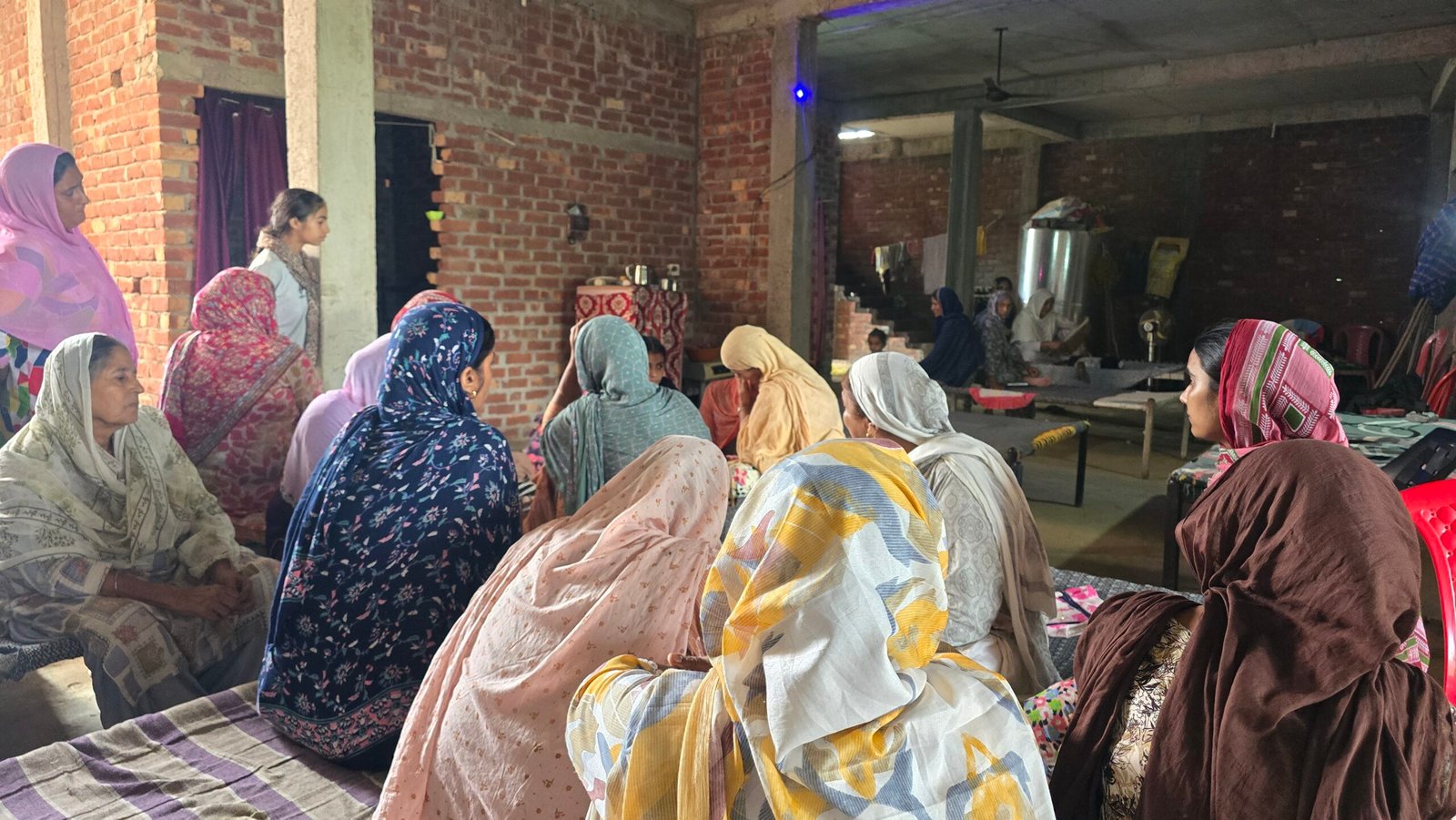
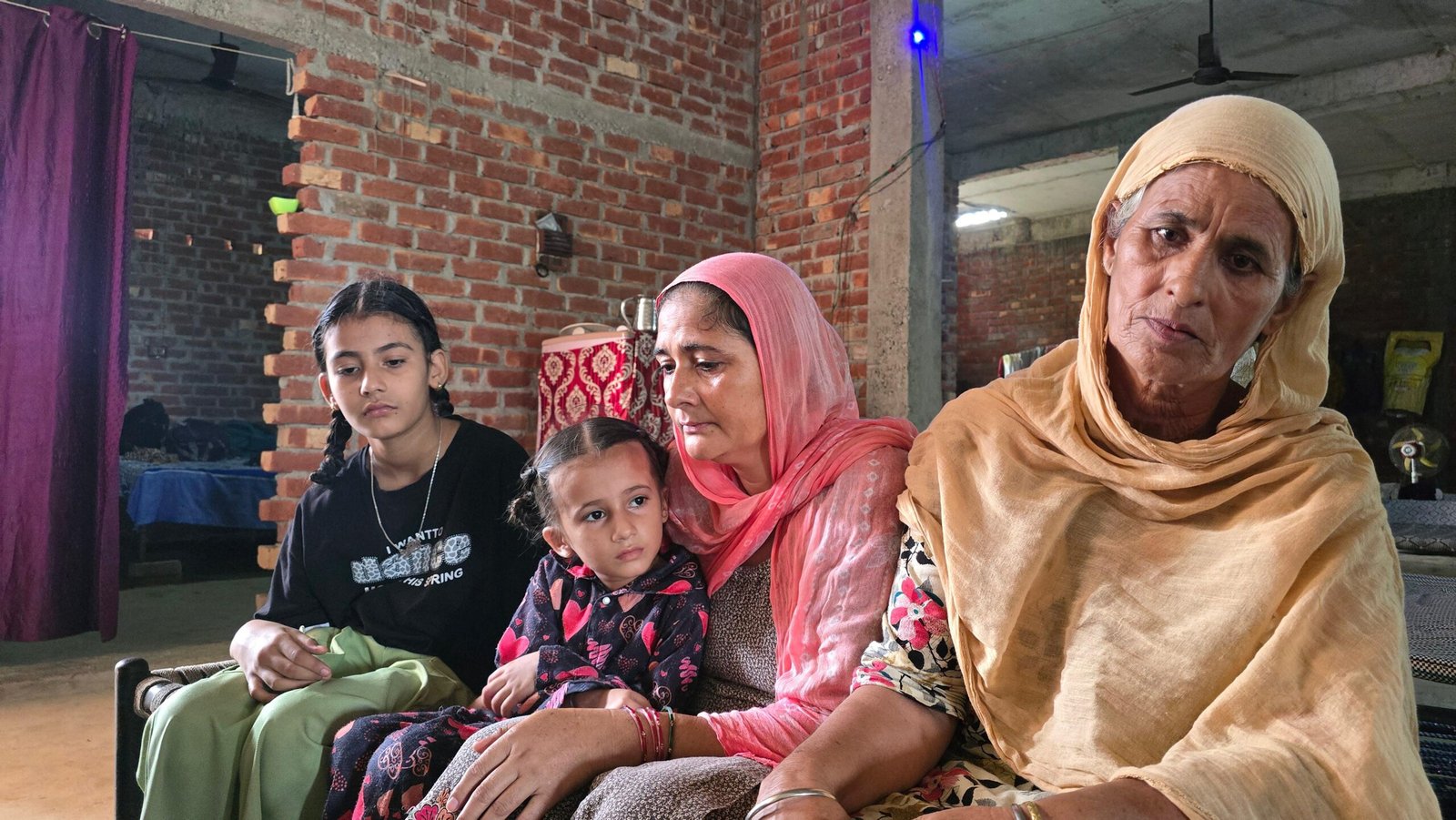
Located along the Hardoi-Pihani-Shahabad road, the house is a little distant from the village settlement. On this September morning, more than a week after the deadly flash floods in Nepal, the house is enveloped in a heavy silence, broken by the sobs of Ravinder Kaur, and the cries of her two young children.
Ravinder is the wife of Papinder Singh, one of the trapped Indian workers at a hydropower project in Nepal. He has been missing since the devastating floods of August 26.
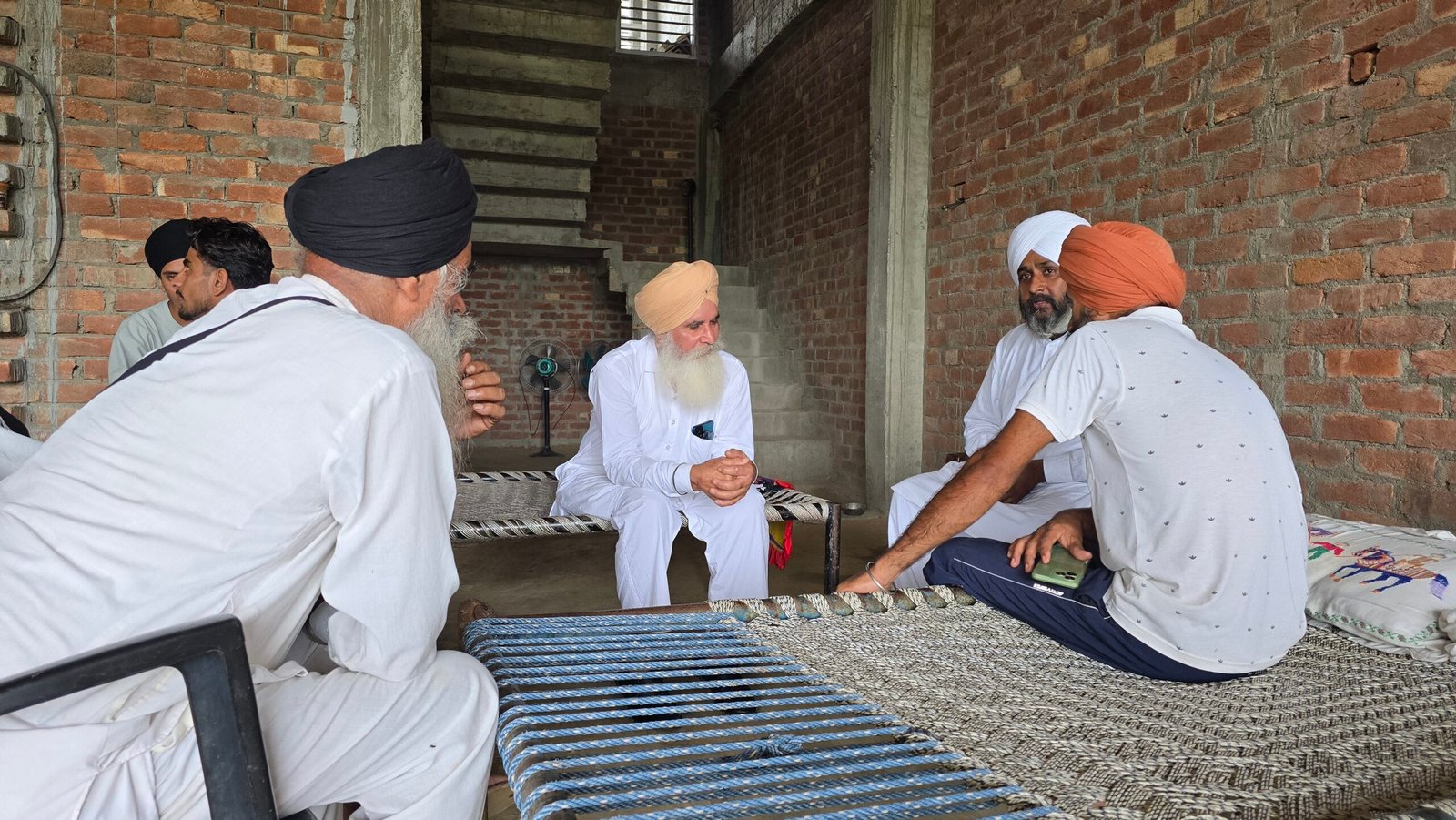
Relatives and villagers come and go reassuring Papinder’s elderly father, Darbara Singh. But there is no update on his whereabouts still.
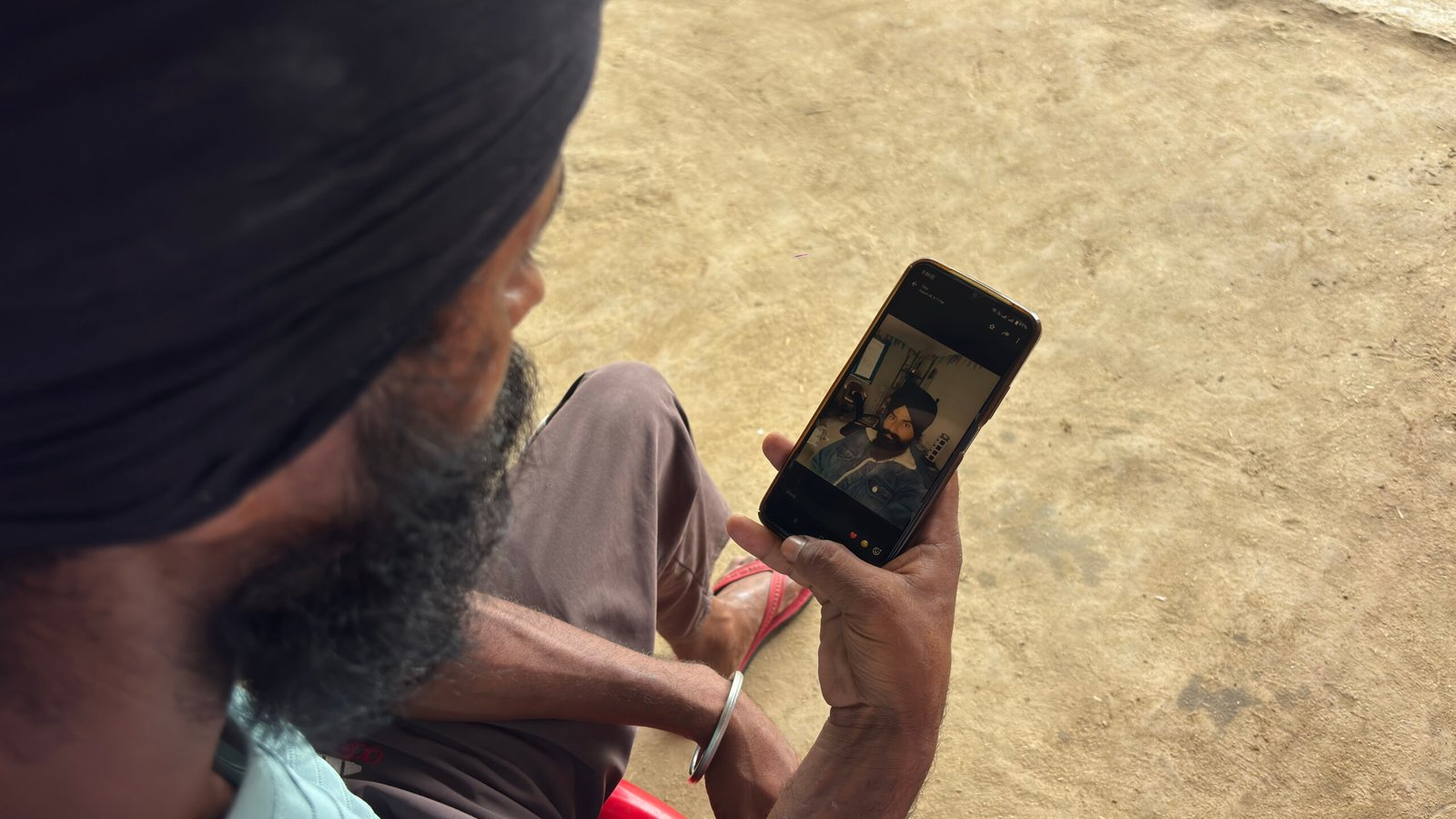
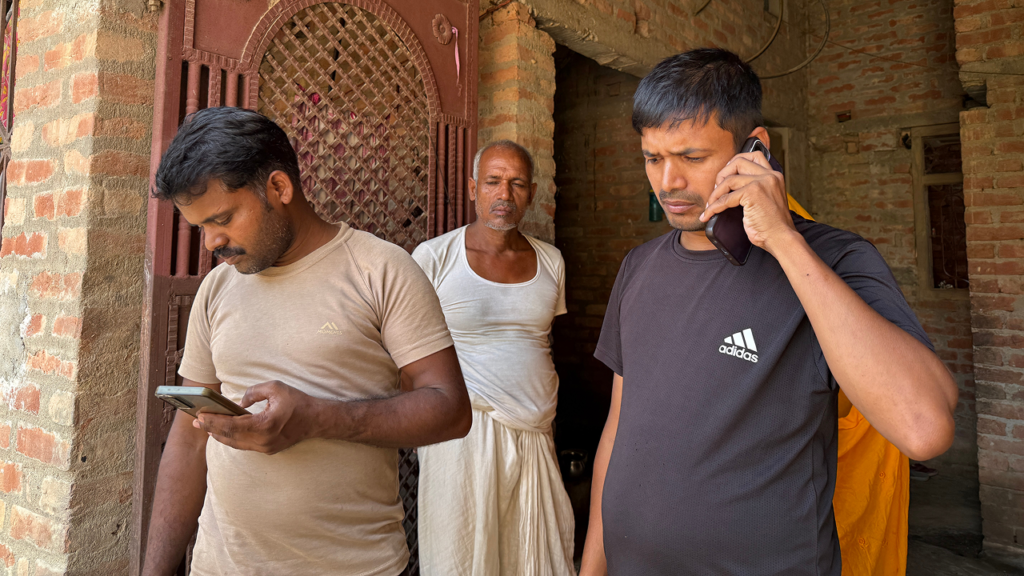
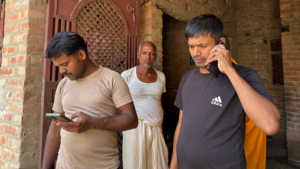
Darbara, is closely following the developments in Nepal, his fingers scrolling through the phone, eyes glued to the screen. He scrolls through videos of Nepal’s muddy, raging floodwaters and terrifying images of the valley torn apart.
“Each time a new video appears, I look closely. Maybe somewhere I will see my son,” he says, looking intently at his phone.
The floods, which struck after a massive surge of water, ice and debris swept through Nepal’s northern and central regions, killed more than 1200 people and left nearly 4,000 missing.
Among those caught in the disaster were Indian workers who had travelled to Nepal for jobs including at hydropower projects sites.
The disaster tore through the country’s hydropower belt, damaging at least 11 power project sites in the Rasuwa and Nuwakot districts of Nepal.
THE NEPAL CALL: PROXIMITY AND NETWORKS
Papinder, a crane operator, had spent the last five years working in Nepal, his family said.
He is amongst the many who chose Nepal as their work destination.
India and Nepal share a relationship in which movement across the border has historically been easy. The 1950 Treaty of Peace and Friendship forms part of the framework, while an open border arrangement makes the movement between the countries for work, family and other purposes seamless.
Nepal’s 2021 census recorded 132,781 Indian citizens living in the country, accounting for 97% of all recorded foreign citizens.
The rate of Indian immigration has also dramatically increased in the census decades of 1991 (7.9%), 2001 (2.5%) and 2021 (7.3%), according to a research study Immigration of Foreign Nationals in Nepal: A Study on International Migration from India to Nepal, by researchers at Department of Migration and Urban Studies, International Institute for Population Sciences, Mumbai.
Three years ago, Papinder’s father sold their ancestral land in Ghumni village of Sitapur district, 60 kms away, to build the concrete house where the family now waits.
“As against a salary of 25,000 rupees in India, 40,000 rupees monthly income in Nepal meant we could expedite the completion of our home. The money could help, so he had readily agreed to go,” Darbar said.
Around a month and a half before the floods, Papinder had returned home on leave. In conversations with his family, he had said he would work in Nepal for another couple of months before returning permanently to the village and starting something of his own.
Papinder’s distant cousin Rishipal (28), is also reportedly missing. He was working at the same project site for the past one year. His family said he earned around 30,000–35,000 rupees a month, with food provided by the company and travel expenses and allowances covered. His income helped his family of four including parents and elder brother, sustain back in their village where the family depended on an income of less than 1 lakh rupees from farming.
The families that The Migration Story spoke to suggested that it was mostly through networks that they landed work in Nepal. Papinder first got his job through an older family member who was already working there. And then Rishipal followed, along with others from his distant family.
Rishipal last spoke to his father on August 25 and told his father that he would come home during Diwali. He had wanted to work outside the village rather than remain dependent on farming, his family said.
“He used to say that he will work, he will not do farming; later he will start some business of his own. That was his plan,” his uncle Gurinder said. He had earlier explored opportunities in Mauritius and Italy, but neither worked out.
“He wanted to go abroad and apply for visas but to pay for that too, we needed money. He felt the slightly better wage in Nepal could help him save money to go abroad,” Gurinder said, adding that Nepal had another advantage for him: it was closer home.
“He wanted to stay closer to home as much as he could, before his dreams of flying abroad would take flight. So Nepal he felt was the best option available,” Gurinder added.
Almost 800 kms away from Hardoi, the family of 41-year-old Ram Prasad Ghosh in Ranchi has also been waiting to hear about him. Ghosh, who was working at the Upper Trishuli-1 hydropower project in Nepal’s Rasuwa district, has been untraceable since the floods.
“This was the first time he had travelled so far to work in a different country. All his life he worked closer to home, in Ranchi and nearby towns,” Ghosh’s sister-in-law, Ditya Ghosh told The Migration Story over phone as they prepared to leave for Kathmandu to look for him.
The family says that earlier this year, an opportunity came through his contacts to work at the hydropower project. The pay was better, but there was another attraction: Ghosh loved the Himalayas and the mountains, and the prospect of working away from the city appealed to him.
“Vo Himalaya ke god me jana chahte the (He wanted to be in the lap of the Himalayas)”,Ditya said.
“He loved the Himalayas and the idea of working away from the city appealed to him. Whenever he spoke, he spoke very fondly of the place and the mountains,” she added.
The family had last met him in May this year when he had come home for a short 10 day break.
On the night of August 25, he spoke to his family over a video call. The next morning, he sent a routine message on WhatsApp. It was the last communication his family received from him.
While Indian workers have long been part of Nepal’s labour market, experts assert that their presence in the hydropower sector is particularly linked to the country’s shortage of workers.
“With the proliferation of technical skills and education in India, outmigration of skilled Nepali workforce, as well as established and years of experience, they are the ones that are better placed to work in technical professions, as supervisors, or operator,” said Chitra Rawat, an independent researcher on India-Nepal migration, adding that hydropower particularly has become a major point of convergence for both India and Nepal.
“Many Indian companies are working on these projects, and because of the relatively higher level of technical skills, Indian workers are preferred. These are usually contract workers, hired by the contractors/companies,” she said.
“Indian companies are working on these projects, and because of their relatively higher level of technical skills, Indian workers are preferred, and hired accordingly,” she said.
A JOURNEY TO KATHMANDU, BUT NO WAY TO THE SITE
Nepal has an estimated technical hydropower potential of around 83,000 MW, of which more than 40,000 MW is considered commercially viable. As of 2025, the country had around 3,435 MW of installed generating capacity, with another 4,063 MW under construction and more than 16,000 MW awaiting construction.
The Nepal Electricity Authority’s latest annual report records 142 projects, with a combined capacity of 4,303 MW, under construction after financial closure. Another 148 projects, totalling more than 4,200 MW, were at different stages of development and awaiting financial closure.
The Trishuli-Bhotekoshi corridor, near the Tibet border, has consequently become a dense cluster of hydropower infrastructure. When the August 26 flood struck, that infrastructure became part of the disaster zone, damaging at least 11 hydropower projects, while vast amounts of debris blocked tunnels and access routes.
“This construction boom has created a demand for engineers, supervisors, machine operators, technicians and other specialised workers. This demand is met by Indian and other foreign workers,” Rameshwar said.
Rescue efforts from these areas have been particularly difficult because of their hilly terrain, rain and accumulation of mud and debris blocking entrances to the tunnel. Mud and debris have blocked entrances and sections of tunnels. Roads to remote project sites have been destroyed, heavy machinery has had to be brought in, and rescuers face continuing risks from unstable slopes and further flooding.
However, family members of those missing, still undertook long journeys to look for their loved ones. On the morning of August 26, Papinder spoke to his family at around 6:50 am. It was an ordinary conversation, lasting about 10 to 15 minutes, the family recalls.
“He asked about the children and spoke about the weather. India was still hot while Nepal was pleasant. He said he would return home soon,” Darbar said.
When news of the floods reached Hardoi on the evening of August 26, Papinder’s relatives began trying to establish contact with him and the other workers.
Rishipal’s uncle called the company’s representative. They were told that there had been contact around 9 am, after which communication was lost.
In the days that followed, the family contacted the embassy, engineers and the company’s administrative officials.
On August 27, five family members left for Kathmandu to look for Papinder and Rishipal. They drove for nearly 21 hours to reach Kathmandu and stayed there for three days. But reaching the site itself proved impossible.
There, they registered the names of Rishipal, Papinder and another worker, Shamsher Singh, with the Indian Embassy.
“The roads leading towards the affected hydropower projects had been severely damaged, while access to several of the remote mountainous sites was restricted. We could only go till the company’s Kathmandu office,” his cousin Gurvel Singh said, adding that there they met a few workers who had been rescued from the near the project sites.
“We asked them what had happened and they told us that the floodwaters had arrived with little warning. It was sudden, they did not have time to think. Some of them who were closer to the exit managed to run to safety,” he added.
By September 2, rescue operations were still focused on hydropower tunnels. Reuters reported that around 900 workers had been reported missing from affected projects. Rescue teams had managed to bring out hundreds, but 639 workers were still unaccounted for.
The family also approached local officials and their MLA. They were told that communication had been sent to the Indian Embassy in Nepal through the chief minister’s office.
Still, there was no answer.
In Ranchi, Ghosh’s family first realised something was seriously wrong when television channels began showing images of the flooding and a hydropower project being inundated. Ditya, recognised the location as the place where he was posted. The family began calling him repeatedly, but his phone was unreachable.
His brother and sister-in-law left for Kathmandu on August 28 to look for him. But they too returned after three days of a futile wait.
“The situation was grim across. We couldn’t go to the site but just kept waiting in Kathmandu. There was not a lot that we could do anyway. But we are still praying and still hopeful that we will hear from him,” Ditya said.
As families continue to wait, experts weigh in that the recruitment of such workers is not always systematic.
“Much of the hiring takes place through contractors and subcontractors, creating multiple layers between the project developer and the workers actually employed at the site. This can make it difficult to establish a clear picture of how many foreign workers are present at any given time,” said Rameshwar, Head of Investigations and South Asia Director, at Equidem, a global human rights and labor rights organization.
In the case of hydropower projects, however, he said that the situation is somewhat different. “Because of safety requirements, workers are generally expected to undergo training and project operators usually maintain records or databases of workers entering the site,” he said, while also cautioning that particularly in the aftermath of a disaster, the question remains whether those records were maintained digitally or only in physical form.
“If worker details existed only as manual records at a project site that was subsequently destroyed or buried under mud and debris, there is a possibility that those records may no longer be accessible,” he added.
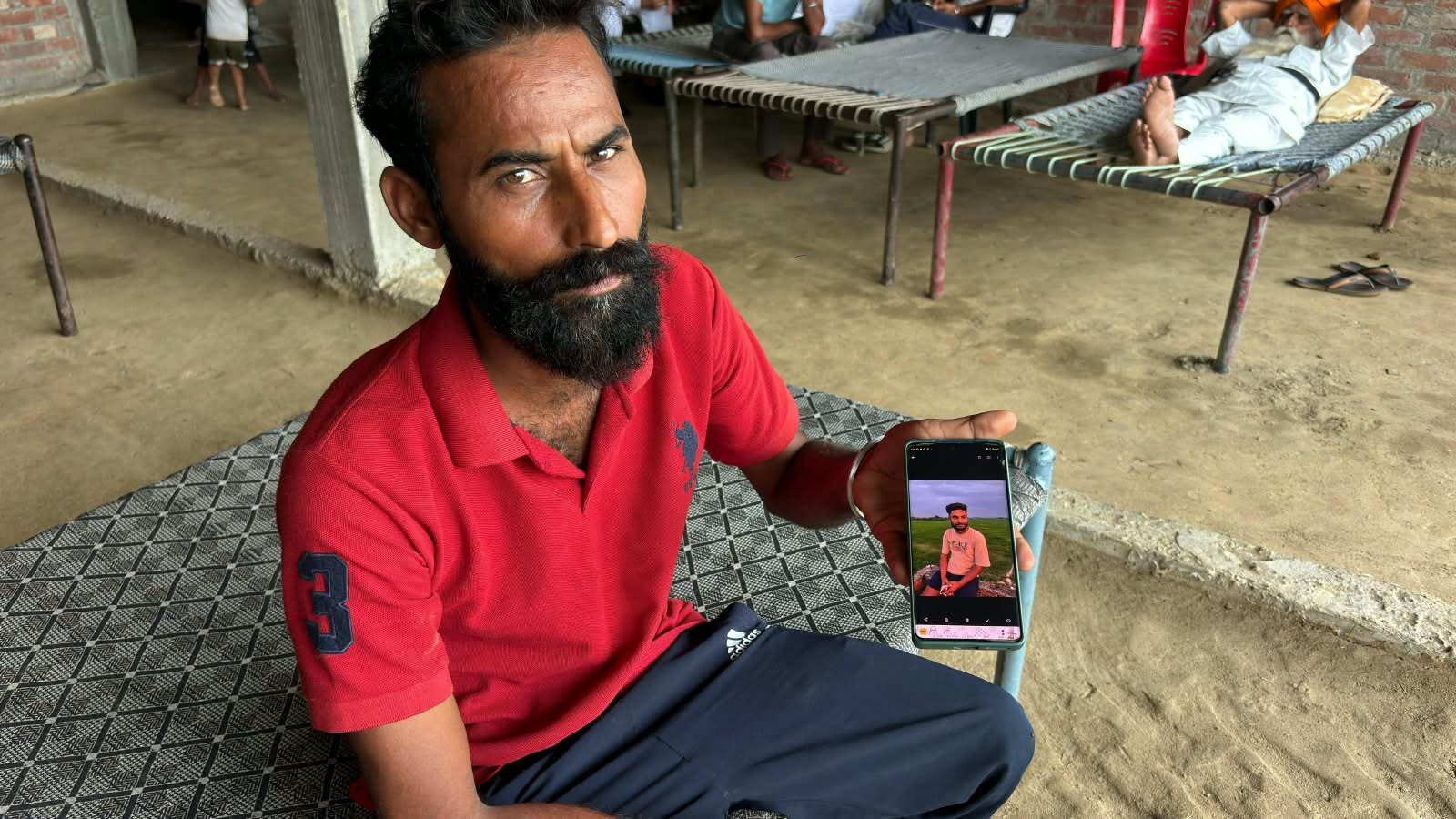
Back in Hardoi, near the doorway, Papinder’s younger brother Mandeep stands leaning against the wall, his eyes fixed on the phone screen.
With the phone pressed to his ear, he alternates between calling the number of the company office in Kathmandu and waiting for the Indian Embassy’s helpline to ring.
“Sir, have you received any news? Please tell us something…,” he keeps making these repeated calls.
Ten days on, for the family, the wait has become a daily ritual: call the company, call the embassy, check the latest videos from Nepal, speak to relatives and then wait again.
Dharmendra Rajpoot is an independent journalist who reports on human rights, energy transition and climate change. He is based out of Lakhimpur Kheri in Uttar Pradesh
Aishwarya Mohanty is Special Correspondent at The Migration Story