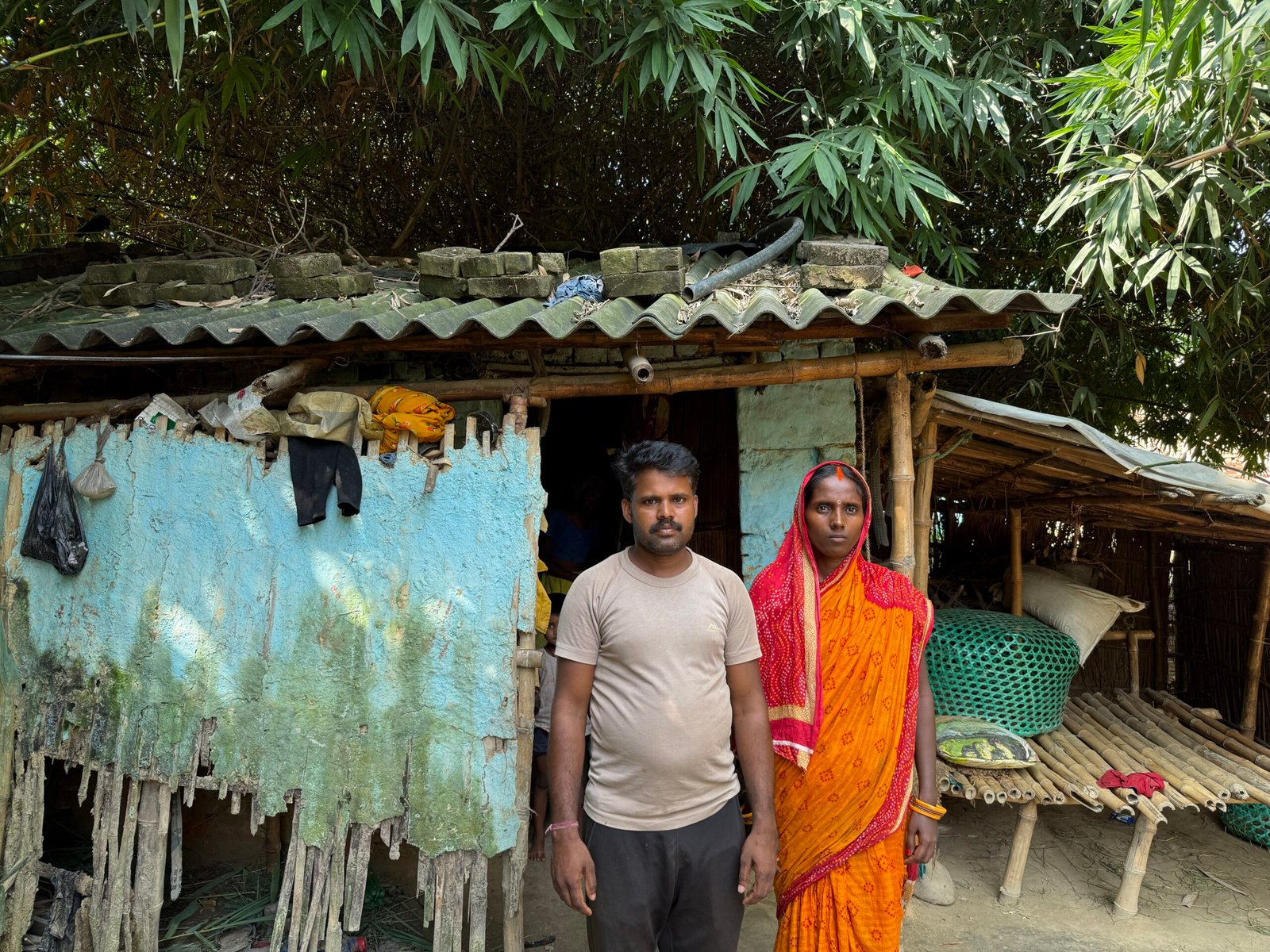
BELWA, Bihar: Barely a month after the devastating Nepal floods wiped out his salon in a mountain village north of Kathmandu, barber Bhushan Thakur was back in Kathmandu, migrating once again from his home district in Bihar, unable to make ends meet there.
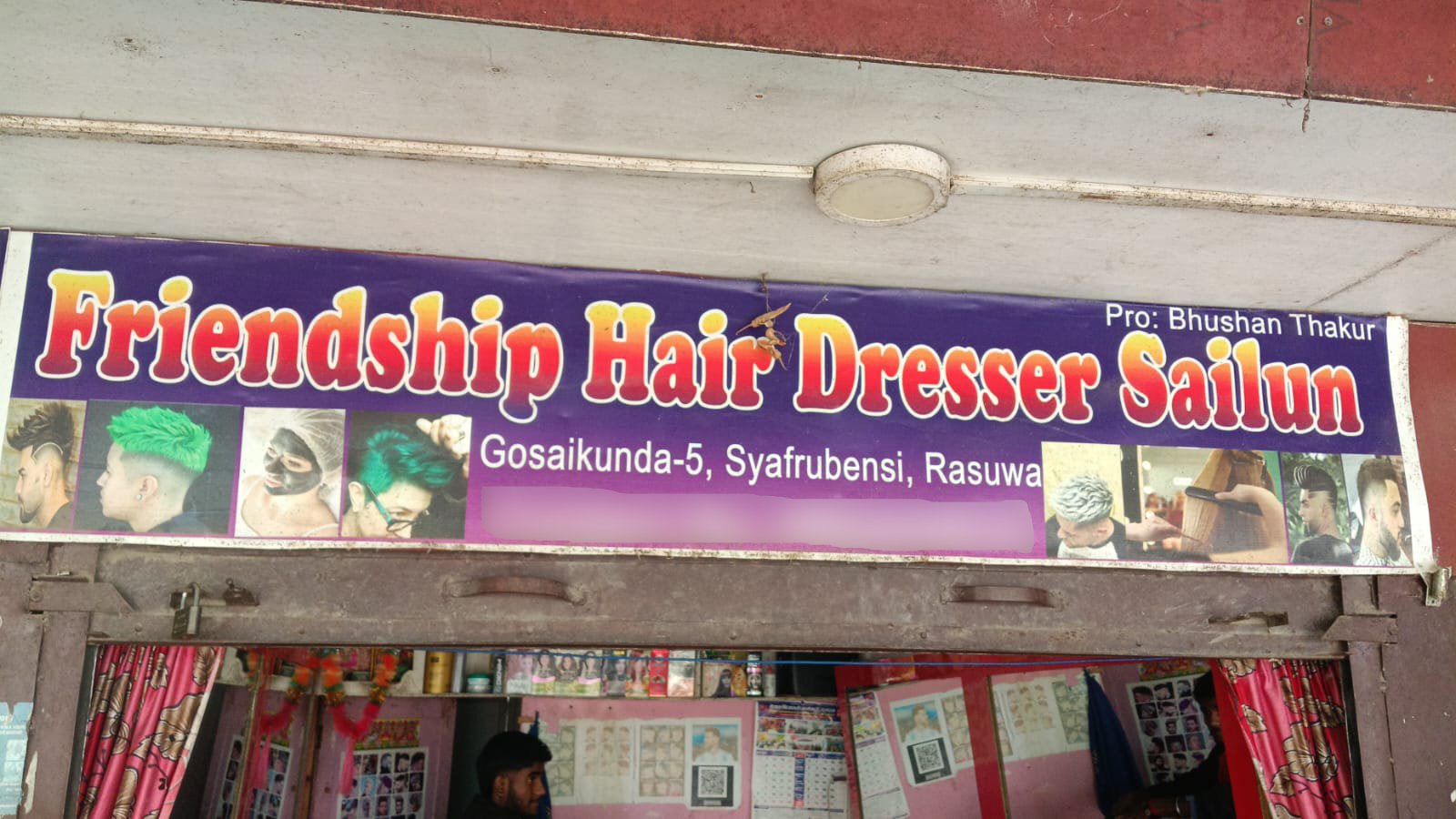
The 38-year-old who hails from Bihar’s East Champaran district reached Kathmandu in October, to the very lanes where he had first migrated for work, and found work as an assistant at a hair salon. Over a decade, he had managed to turn entrepreneur, opening his own salon in Syabrubesi, “the town’s first”, as he described it, 122 kms north from Kathmandu.
But the August 26 devastating floods abruptly ended his entrepreneurial journey, playing a snake-and-ladder move on Bhushan’s growth trajectory. Now back in Nepal, Bhushan has again started work as an assistant at a hair salon in Kathmandu.
“Jo bhi kamaya, sab bah gaya. Sarkar ko hum log ki rozi-roti ke baare mein sochna chahiye (Whatever I earned was swept away. The [Indian] government should think about migrants like us),” Bhushan told The Migration Story in September, when he was back in his village home in Belwa East Champaran district.
Bhushan’s stay in his native village was short. He couldn’t find work in Belwa and when he did, it paid poorly.
Bhushan had taken up a temporary job as a kaarigar (assistant) at a salon in the Chauradano market near his village. He was making 100 to 200 rupees a day, a sharp drop from the 1,200 rupees he made in a day as a businessman in Syabrubesi.
Back in Kathmandu as an assistant, and making up to 7000 Indian rupees, he is unsure if disaster-hit victims like him have any hope for compensation.
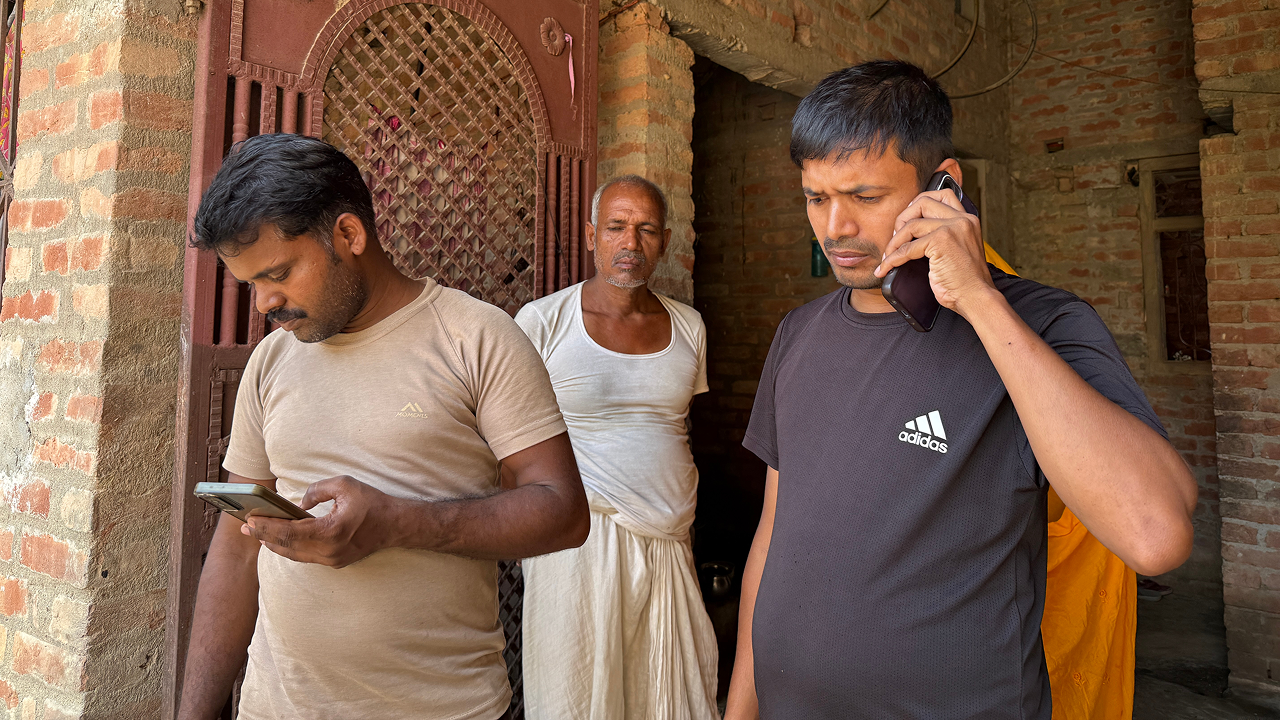
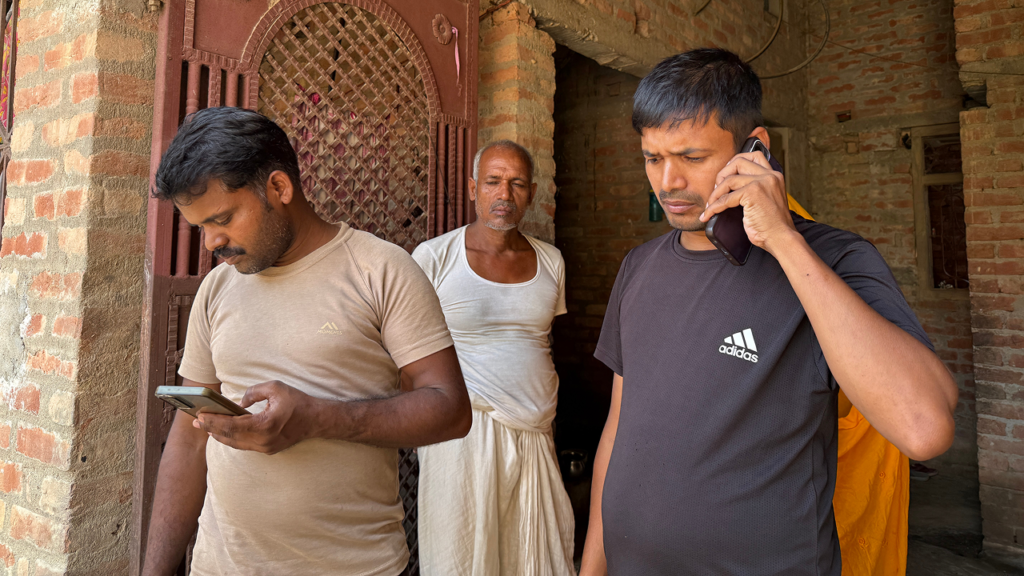
“Jab Nepal ka aadmi ko daal-chawal mil raha hai, toh hum logon ka sochne wala kaun hai? (If Nepalis are getting only rice and dal, then what is to become of us, migrants?),” he told The Migration Story over the phone from the Nepali capital.
On August 26, 2026, flash floods caused by a glacial collapse in the Himalayas, near the Nepal-Tibet border, burst through the Bhotekoshi river and swept away Bhushan’s salon as well as settlements, markets, roads and bridges.
Hundreds of migrants like Bhushan returned to their towns and villages in India. But their losses remain largely invisible, uncounted, climate and migration experts said.
When he returned home, flood-hit people of his home state Bihar, were being given flood relief by the state government. But migrant workers like Bhushan are not eligible for it, since his losses occurred across the border, in another country. He is not hopeful of any help from Nepal either with the Nepalis impacted by the disaster in Syabrubesi living in relief camps and only getting food as aid, he said.
“Even within a country, it is often difficult for migrant workers to access disaster relief, and when the situation is international, it becomes even more complicated,” said Benoy Peter, Executive Director of the Centre for Migration and Inclusive Development (CMID), a nonprofit in Keralam’s Perumbavoor town.
“This is a matter between the governments of two countries. Nepal is already overwhelmed by the gravity of this disaster, and its immediate concerns are providing shelter, supporting its own citizens, and caring for orphaned children and widows. The Indian government or the Bihar government should take responsibility for addressing the needs of affected migrant workers,” Peter said.
What was destroyed in “40 seconds”, Bhushan said, will take at least three years to rebuild, but not without debt.
In his speech at the UN General Assembly in late September this year, Nepal’s Prime Minister, Balendra Shah, spoke of the “death and destruction of epic proportions” that his country had faced because of the glacial collapse-triggered flash floods. He said the disaster mattered beyond the boundaries of Nepal.
“Nepal contributes less than 0.1 percent of global greenhouse gas emissions. We did not create this crisis. Yet, we are paying a colossal price for it,” he said and went on to describe the loss and damage funds to help poor nations tide over losses linked to climate disasters as grossly inadequate.
But do countries account for all survivors of the calamity, including migrants, to help them rebuild their lives, irrespective of their nationality?
For now, migrants are slipping through the cracks of aid distribution.
A vast network of migrants from Indian villages who work in Nepal have long sustained economies in both countries—as masons, carpenters, quilt makers, scrap collectors, garment sellers and daily-wage labourers. They have lived and worked in Nepal’s hill towns and sent remittances back home, which fuels local economies in both countries.
Officials of the Bihar Disaster Management Department told The Migration Story that assistance to migrant workers could be provided through Chief Minister’s Relief Fund or the Prime Minister’s Relief Fund, but no official announcement has yet been made.
The officials said there was no provision under the norms of the State Disaster Response Force to provide rehabilitation assistance to migrants who had suffered losses across the border and returned home to their villages in Bihar.
Neither the disaster management department or the Labour Resources departments of the Bihar government have released figures for the number of Bihari migrants impacted by the Nepal floods.
At the time of reporting, Bihar’s Labour Resources and Migrant Workers Welfare Department did not have statistics for the number of Bihari migrants currently working in Nepal.
A ROARING WALL OF WATER AND MUD
When Bhushan moved to Syabrubesi, it was still recovering from the devastating earthquake of 2015, with Rasuwa district where the village is located among the worst affected districts.
“I remember conversations about the earthquake and people repairing whatever had fallen off the walls,” Bhushan recalled. It was amid this rebuilding that he opened his salon. On the first floor of a two-storey building, it stood 150 feet above the Bhotekoshi River, along with a grocery store, a dairy goods store and a fruits shop.
When Bhushan spoke to The Migration Story in September, at his half-finished brick house in Belwa village, only 15 kilometers from the Indo-Nepal border, he recalled the scent of deodar trees drifting through the air in Syabrubesi and its cool weather.
After he moved there, he recalled wearing a jacket throughout the year, even at the height of summer. But that changed in a decade as the summers grew warmer and eventually, he only wore a ganji (vest) – the signs of a warming planet that would turn his life upside down a decade later.
At 6:30 am on August 26, Bhushan opened his salon on the Pasang Lhamu Highway, just as he had done for nearly a decade. The Hindu festival of Raksha Bandhan, only two days away, meant good business because people would come in for haircuts.
“No one said anything about what was coming,” Bhushan recalled. “There were no sirens and no SOS messages either.”
Around 9 am, just as he had just finished cutting a client’s hair, “dahaad aaya (there was a roar),” Bhushan added.
At first, he thought rocks were coming down the mountainside. He and his clients ran outside, towels still wrapped around their necks, when they saw it.
It was a wall of water and mud—“the colour of cement mixed with sand”, Bhushan said—roaring towards them. He remembered thinking that it was more than 200 feet tall.
He and the others started running uphill to find safety, and Bhushan looked back only once and witnessed the flood swallow five-storey hotel buildings, a sight etched in his memory.
They climbed uphill for nearly three to four kilometres before reaching Komin Syamewangphel Basic School, a government school in another village. There were 250–300 people sheltering there, Bhushan estimated, all of whom had narrowly escaped the flood.
India and Nepal share an open border of approximately 1,751 kilometres across five Indian states, with Bihar occupying the longest stretch.
Almost half the men of Belwa (also spelt as Bhelwa) village migrated to Nepal to earn a living. Nepal, just across the border, was an overnight bus journey from the village—and a popular destination for work for Belwa’s men, villagers said.
Syabrubesi once promised good business to hundreds of them.
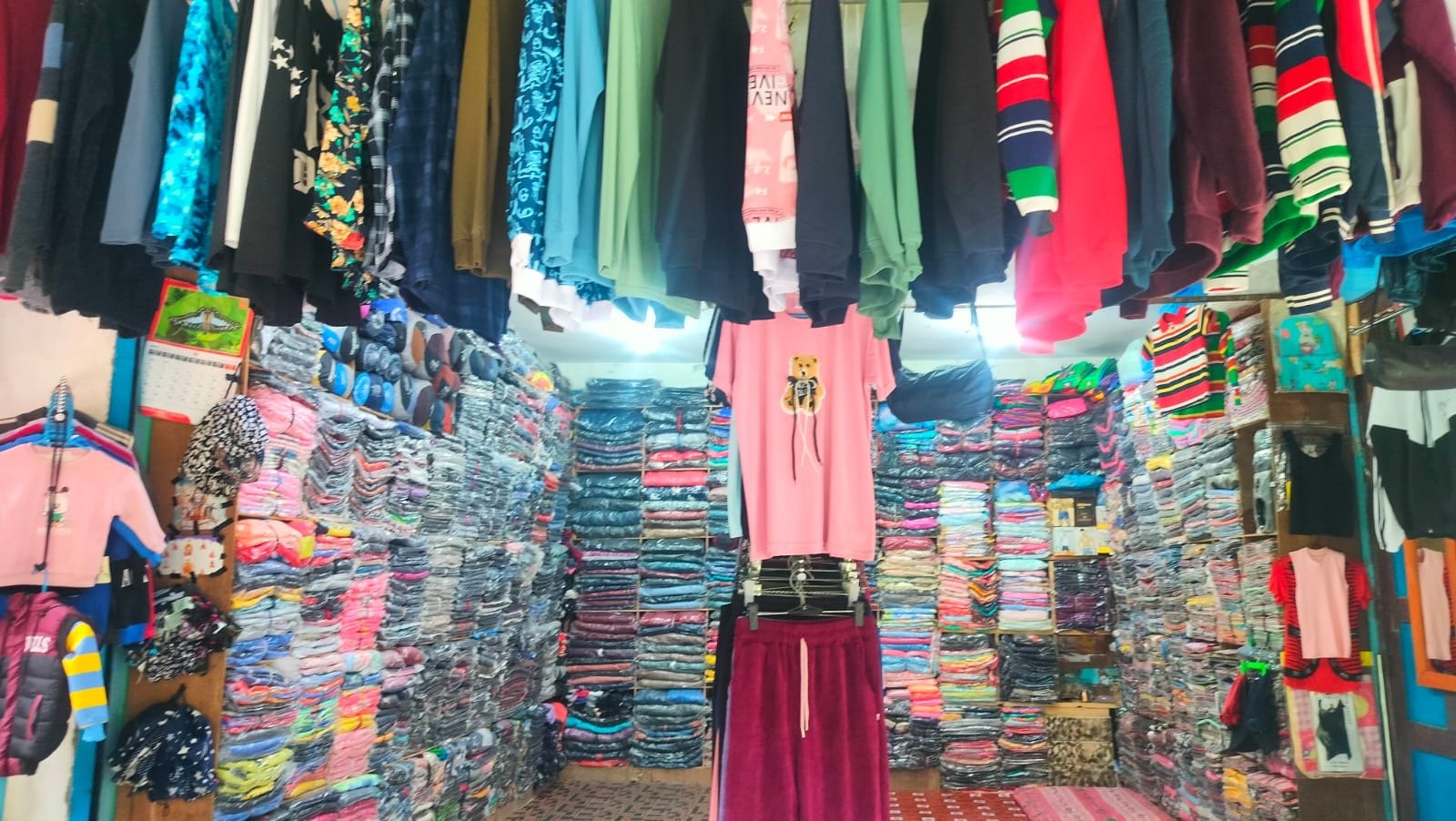
Umesh Sah, now 64, came here 35 years ago and was one of the first migrants from Latihanwa, a village near Bhushan’s. Initially, he sold clothes on foot, but over time, he saved enough to rent a store of his own, the Bajrang Fancy Store, which was in the same lane as Bhushan’s salon.
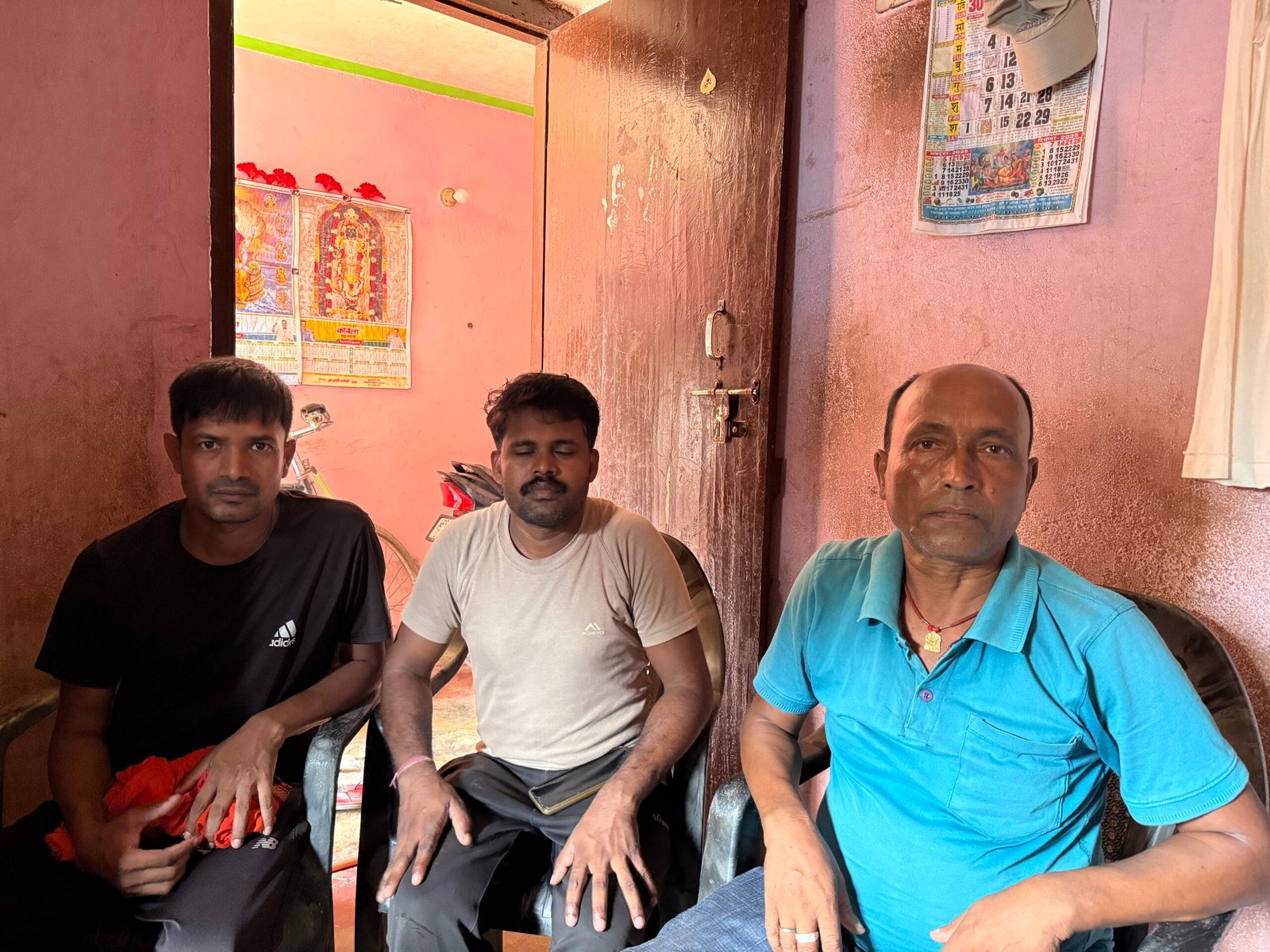
There was also Ranjit Ram, now 34, from Belwa, worked at his salon in Syabrubesi, and then, started his own in the village, the New Lakshmi Salon. The two salons were 100 metres apart, and though Bhushan and Ram were neighbours in Belwa, they became competitors in Syabrubesi.
The migrants from Bihar – Bhushan, Ram and Umesh – brought others from their villages to assist them in their shops. All of them are now survivors of the devastation, their livelihoods wiped out.
Bhushan has been counting his losses: 4 lakh Indian rupees from the destruction of his salon and 2 lakhs of savings in cash (in Nepali rupees).
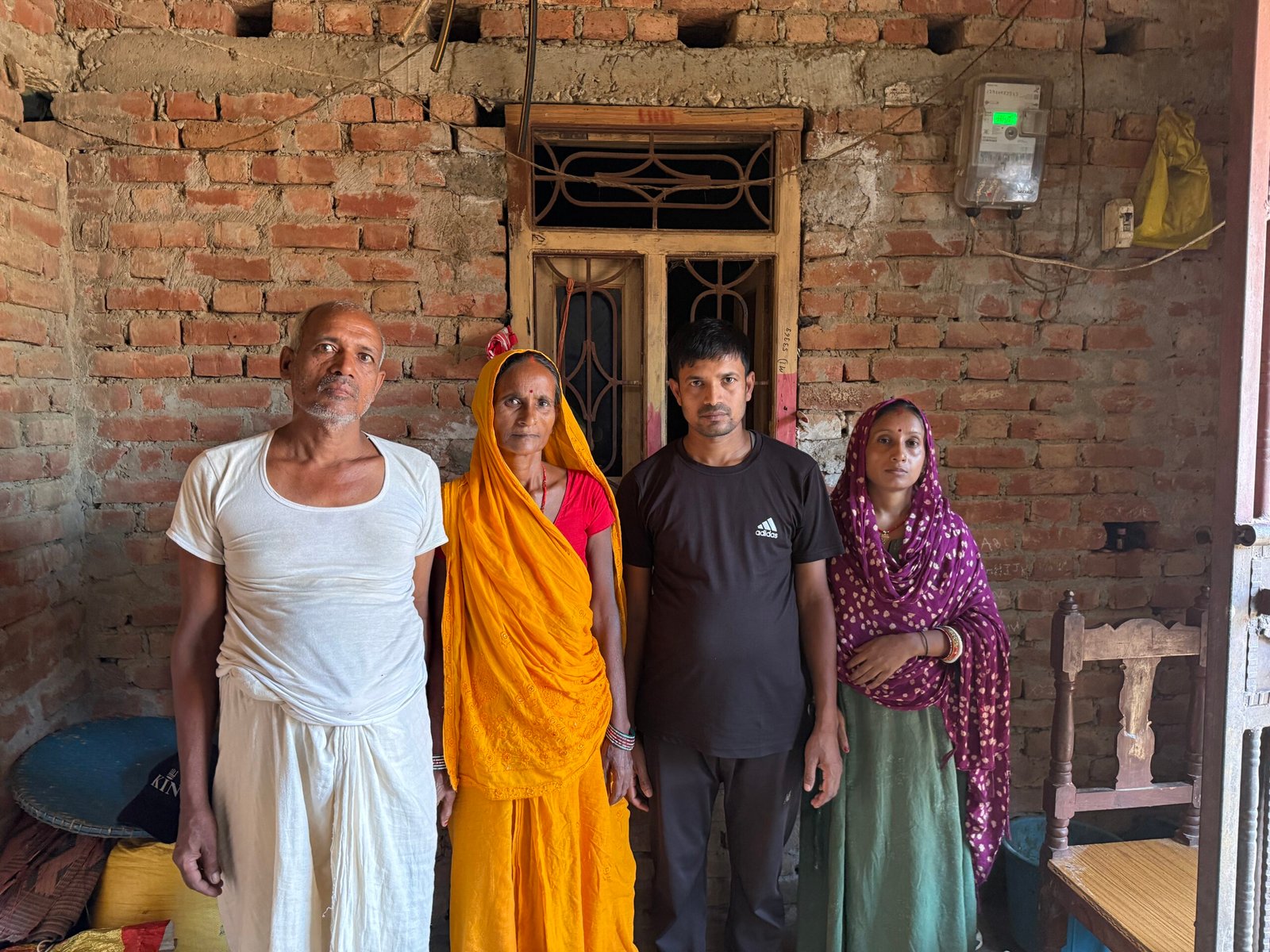
He recalled his decision to move to Nepal as an outcome of poor earnings back home from agricultural yields. He was sustaining his family of seven, consisting of his parents, wife and three children from his earnings from the salon in Nepal but within days of returning to Bihar, he had already borrowed 6,000 rupees to pay the school fees of his daughters in class 5 and class 7 and for other expenses.
Bhushan’s father, Rameshwar Thakur, a barber in their village, had inherited six katthas of land (over a quarter of an acre), which was shared by his three sons.
“The crop could only sustain us for six months,” Bhushan said, explaining why he was forced to migrate.
Therefore, Bhushan’s return to Nepal was inevitable. The wages he made from his temporary job as a kaarigar in the village would not sustain him and his family for long.
Bhushan and other Indian migrants were rescued by the Nepal government and brought to army camps where their names were recorded. But after that, they were on their own.
They booked vehicles to travel to Kathmandu and took shelter at fellow migrant workers’ rented homes until they could cross the Indo-Nepal border and travel back to their villages.
Umi Daniel, a senior advisor on migration, human trafficking and climate change, told The Migration Story that a forward-looking response to disasters like the Nepal floods which took into consideration invisible workforces like migrant workers would require “maintaining proper data on migration and establishing registration systems for both international and internal migrants”.
He added that “technology such as GPS can then help the state to determine if a migrant was at the disaster site [and] to help them [migrants] access support and relief.” However, this can only work if a migrant has a device like a mobile phone that tracks his/her location using GPS.
As of August 29, three days after the flash floods, India sent 57.5 tonnes of relief supplies to Nepal, including temporary shelters, food items, blankets, hygiene kits, solar lamps, medicines, dewatering pumps, kitchen sets, gensets and so on.
While the Ministry of External Affairs (MEA) had set up the Indian Community Welfare Fund (ICWF) in 2009 in order to assist Indian nationals living overseas in times of distress and emergency, Bihari migrant workers this reporter spoke to said they did not receive any assistance from the government.
The MEA’s website states that the ICWF “has been a critical support in emergency evacuation of Indian nationals from conflict zones, countries affected by natural disasters and other challenging situations”.
Compensation for migrant workers is hard to come by, CMID’s Benoy Peter added. “The lack of documentation makes it difficult to prove their loss and damage. Because of their invisibility, the question becomes: on what basis will compensation be provided?”
For now, Bhushan must live with the traumatic memory of the day his life turned upside down.
Back in Kathmandu and working as an assistant, Bhushan said he wasn’t dreaming of building what he had lost.
“Dukaan ka vichar nahin hai. Jab paisa-kaudi hoga tab hi kar paayenge. Voh bhi hoga ki nahin, koi fix nahin hai (I am not thinking about starting a salon. I can do it only when I have money. I am not even sure if I will ever earn that much),” he said.
Edit and additional inputs by Subuhi Jiwani
Jyoti Yadav is a New Delhi-based, award-winning journalist, who has reported extensively on rural India, transformative policies and systemic injustices. She is the author of the book Faith and Fury: Covid Dispatches from India’s Hinterlands.