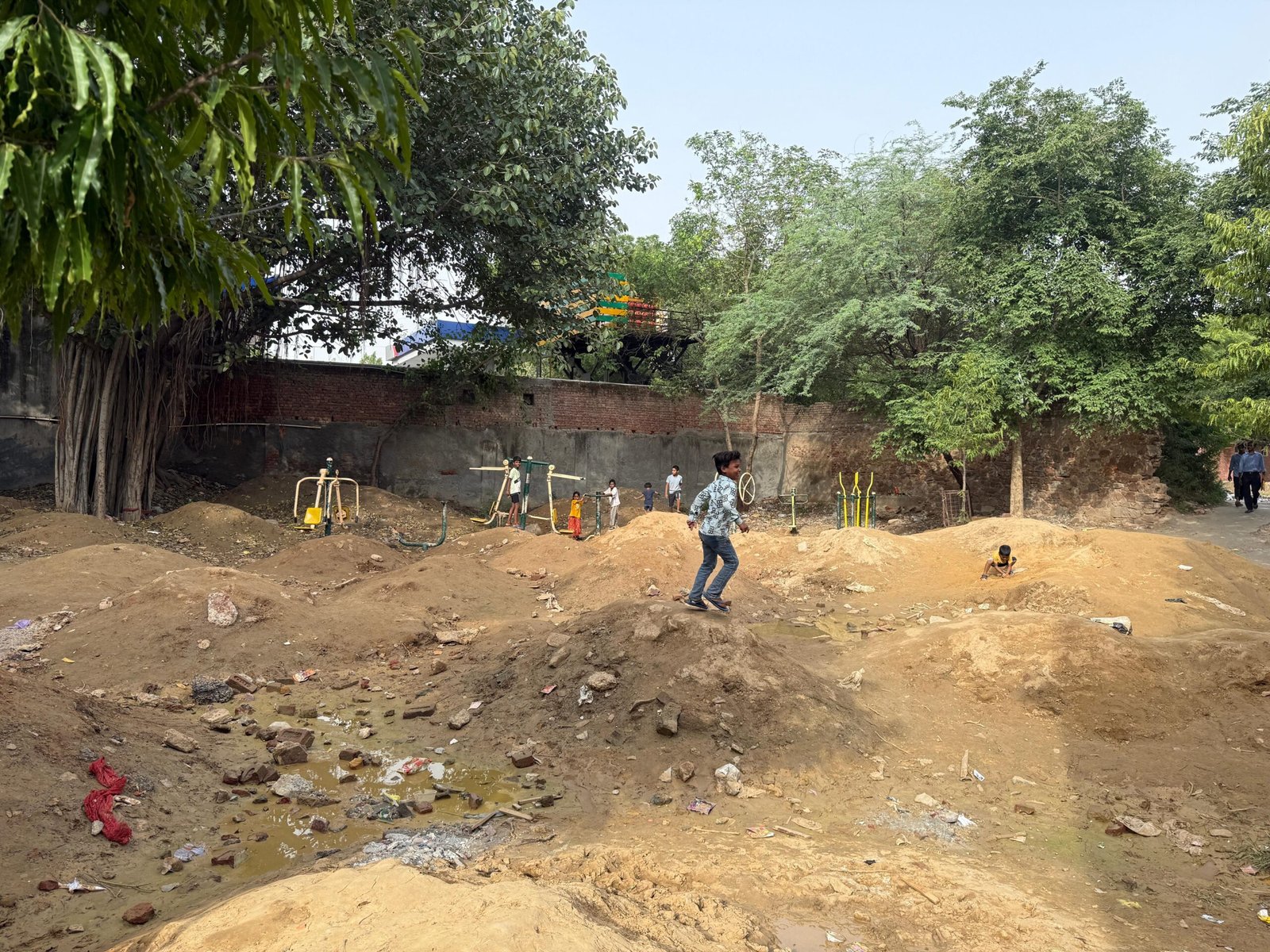
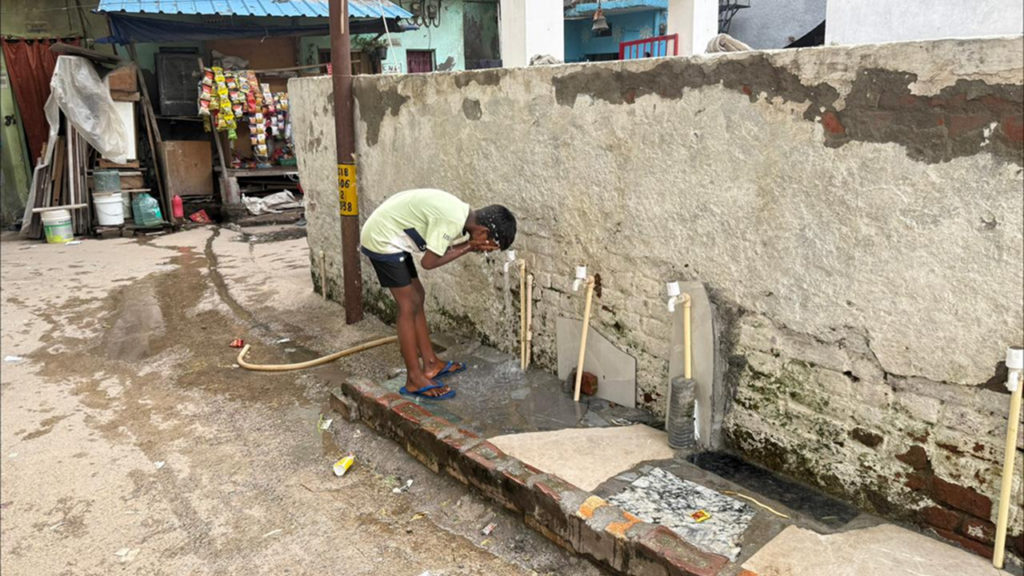
NEW DELHI: Dayal Singh Colony, a slum pocket in Delhi has a park, but it’s barely green. Mounds of excavated sand lie across parts of the ground.
The park with some green cover could have offered much-needed respite to children living in this settlement from the relentless heat that has turned their homes into ovens. But the heat outdoors and the park’s poor upkeep have made this park almost unusable.
A few children still play in the rubble to spend their afternoons, hoping for respite from their stuffy rooms.
Who keeps cities running and homes sparkling?
Follow The Migration Story’s nuanced coverage of India’s massive informal workforce.
But the missing playtime from the lives of children in India’s informal settlements, most of them cramped and poorly ventilated, is a seemingly small loss given the massive struggle for a few hours of sleep that families are waging, as we found during our research in the settlement.
For 10-year-old Faizan and his siblings, a peaceful night of sleep appears elusive for most part of the year.
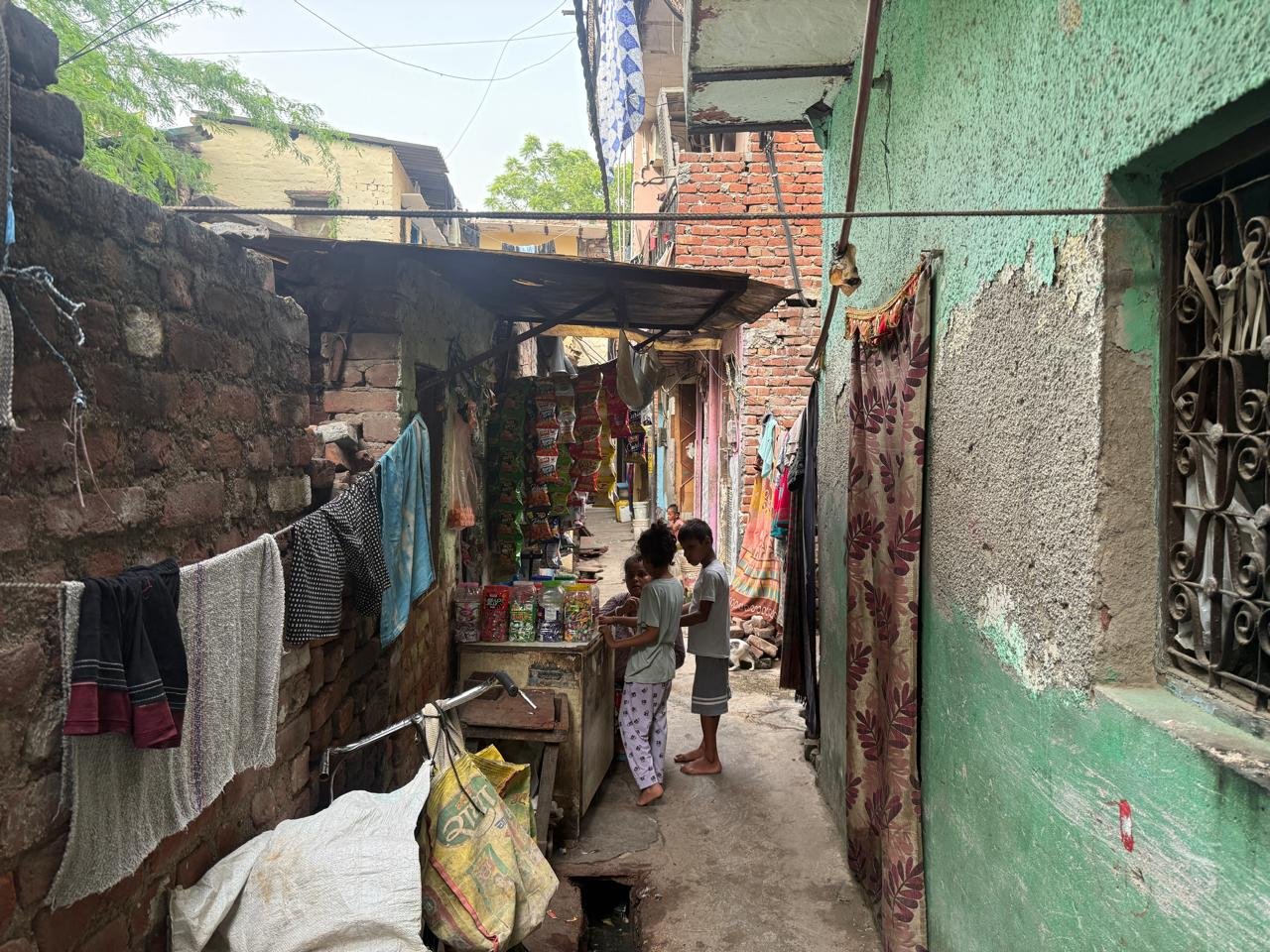
Living in the national capital’s slum pocket of Dayal Singh Colony, in a 10 x 10 room, located on a narrow lane flanked by equally small houses, all sharing their boundary walls, and no ventilation, Faizan’s family relies on a single fan to cool down. As humidity soars, Faizan’s mother Shamshad Begum said that the air feels sticky and even the fan brings little relief. Power cuts often make it worse.
“When it gets very humid, the children cannot sleep and become very restless,” she said.
On such nights, she sits beside them and fans them by hand. Sometimes, she wets a piece of cloth and places it over them, to help them cool down and fall asleep.
Faizan’s father works in a leather-bag factory and his mother as a domestic worker. Their family is among the many migrant worker households that migrated to Delhi to earn a living and have no choice but to live informally in cramped settlements.
On May 25, 2026, the city recorded a minimum temperature of 32.4°C – its warmest May night in 14 years, according to a Centre for Science and Environment analysis based on India Meteorological Department data.
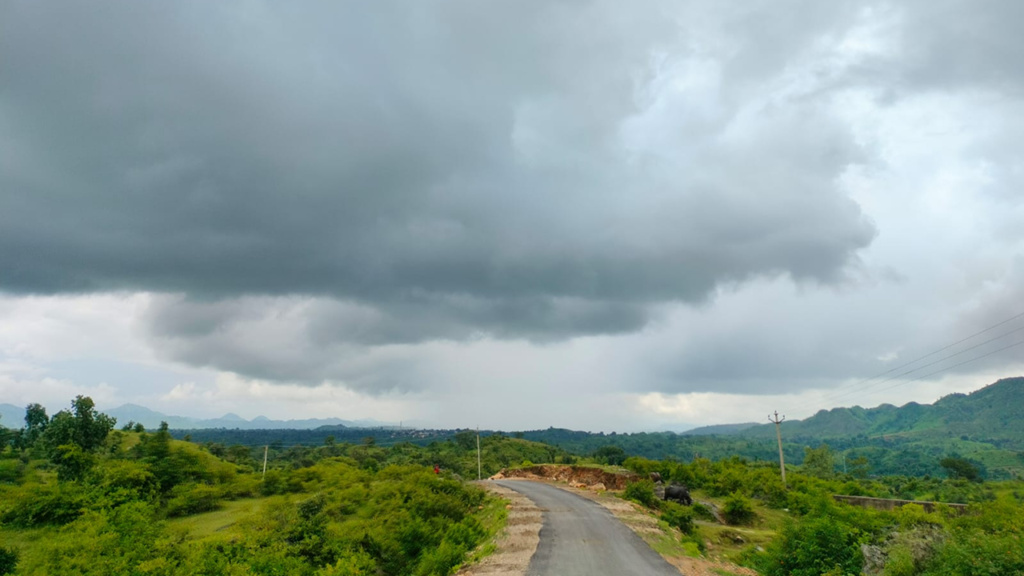
Even the monsoon in 2026 was stifling for families living in Dayal Singh Colony.
In early October, the city recorded a maximum of 37 degree celsius and respite came later in the month when the temperature plunged to a record low of 20.7 degree celsius – the lowest maximum temperature recorded since 1951.
For a good part of the year though, the endless heat months have eaten away children’s playtime, with no part of the day cool enough for any activity.
Jannat, a community volunteer associated with Anand Organisation for Social Development (AOSD), a nonprofit working on education of underprivileged children, said that children often step outside early in the morning or later in the evening, when conditions become more bearable.
A CRY — Child Rights and You – survey this year covering more than 3,000 children aged 10 to 17 across the country, found that rising temperatures are affecting school attendance, learning, health and well-being across much of the country, Down to Earth reported. The survey pointed at the disproportionate impact of the heat on children from poor socio-economic backgrounds.
A 2023 Australian study, published in Science of the Total Environment, involving more than 1,100 children aged 12–13 and their parents, found that unfavourable weather conditions, including high temperatures, reduced the time children spent on moderate-to-vigorous physical activity and increased sedentary time.
Then there is the additional factor of working parents, all of them migrants from other states working informally in the capital, often for long hours.
With parents away at work, children may spend long hours at home, where cooling options are limited, said Jyoti Anand, founder of AOSD.
A 2026 study published in the Journal of Urban Health, monitored 25 children aged nine to ten in Austin, Texas, and found that higher summer temperatures were associated with reduced physical activity both outdoors and indoors.
Delhi’s heat planning recognises that exposure to heat is not uniform for all its citizens. The city’s Heat Action Plan identifies children and low-income communities among groups requiring particular attention and sets out measures around drinking water, cooling and shaded spaces.
Yet the experiences of families in Dayal Singh Colony raise a question about how such protections translate at the neighbourhood level.
Municipal councillor Rajpal Singh said that the conditions families face cannot be separated from Delhi’s larger housing challenge. He said improving the physical conditions in which families live is an important part of the response.
Singh also pointed to the government’s Jahan Jhuggi Wahin Makaan approach and rehabilitation flats provided to some families living in jhuggi settlements.
“Today they have privacy,” he said.
But many families continue to live in settlements where improvements to housing and neighbourhood infrastructure remain limited.
Long-term housing changes need to be accompanied by measures that can help families now, said Anshul Rai, a Delhi-based climate expert associated with the Centre for Advocacy and Research (CFAR), a non-profit working with marginalised urban communities on social protection and access to essential services.
He called for stronger warning systems that reach vulnerable communities, greater awareness of heat risks, accessible water, more greenery and shaded public spaces, and housing and rehabilitation projects that take ventilation needs and rising temperatures into consideration.
Also, heat action plans of cities need to be mindful of the many dimensions of heat impact.
Savita Bhargava, the local Anganwadi worker in Dayal Singh Colony, said around 15 children aged three to six are enrolled. During particularly difficult summer days, attendance can fall to just four or five.
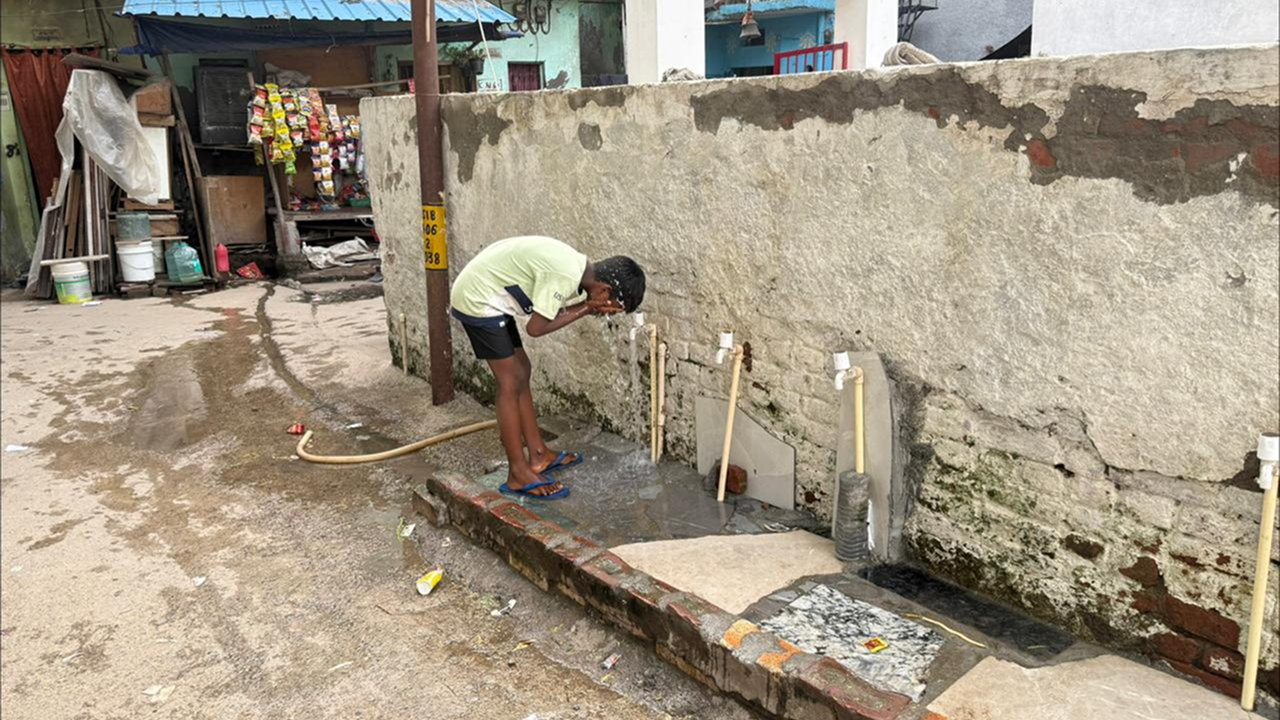
The Anganwadi centre operates from a single room with a fan and no cooler. Its small window offers little respite, while drinking water for the children has to be fetched from a nearby tap.
“We cannot really use the window for ventilation because the air coming in is hot,” Bhargava said.
When electricity goes out, the room becomes even more difficult for children to sit in, she said, and some avoid coming during such periods.
Bhargava told The Migration Story that the centre has not received specific instructions on managing these conditions. So far, she said, the only advice from the government has been to keep the surroundings clean.
With inputs from Rishabh Shrivastava.
Nidhi Sakre is a ChildFund Asia Cities on Fire Fellow and Research Associate at The Analysis, a climate research group based in Bhopal. Her work focuses on climate change, development communication and human-centred storytelling.
This feature story was researched as part of the Art & Media Fellowship under the Cities on Fire Initiative of ChildFund International.