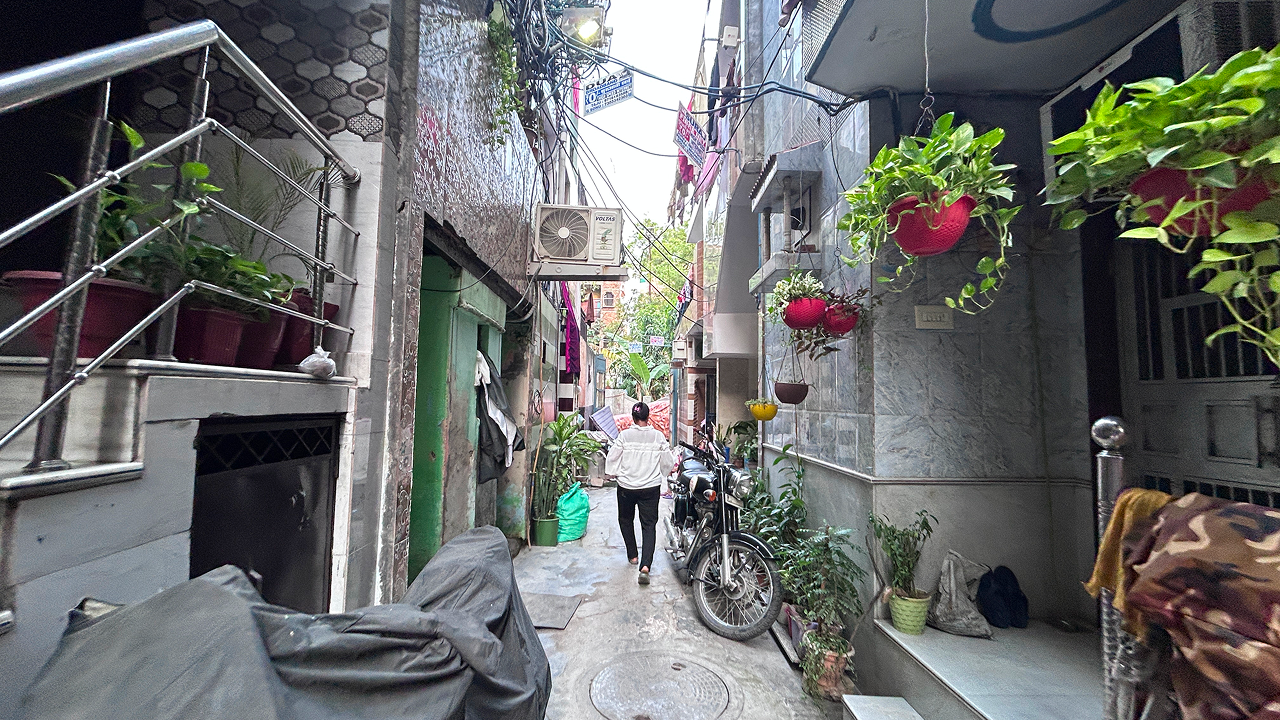
MANGOLPURI, Delhi: Mangolpuri, a resettlement colony in northwest Delhi, is a maze of narrow lanes and closely packed houses. Most were built on 25-square-yard plots allotted to poor families as Delhi expanded in the 1970s. As families grew, many houses added floors, with the upper ones often rented out to families who came to the city looking for work.
For many tenants, home is not one fixed address. Families move between rented houses when landlords ask them to leave or when they find a cheaper room, often within the same block. Their Aadhaar cards, voter IDs and other documents may still carry the address of an older rented home or a family member’s house.
This difference has acquired a new significance during the Special Intensive Revision of electoral rolls in Delhi. In Y-Block of Mangolpuri, more than 80 per cent of the voters on the Absent, Shifted, Dead or Duplicate (ASDD) list have been marked “permanently shifted”, according to data available on the Chief Electoral Officer, Delhi, website.
This is part of the larger pattern. Nearly one in every three voters, 47.6 lakh in all, on that electoral roll was flagged as ASDD. Of these, 31.6 lakh, or 66.4 per cent, have been marked as “permanently shifted”.
Some of those residents are still living in Mangolpuri. Among them are Tabassum, who came to Delhi from Mumbai after marriage; Haseena Khatoon, who moved between Bihar and Delhi before returning to Delhi after marriage; and Noorjannat, whose family migrated from Bihar to Delhi. All three got their voter cards made in Mangolpuri, where they have lived and built their lives.
By September, all three women were gathering documents to submit with Form 6 to restore their names to the electoral roll. Form 6 is ordinarily used to enroll new voters, while existing voters who move are generally required to use Form 8 to update their address.
They have until October 30 to submit Form 6 along with a newly mandated declaration form. The requirement itself had triggered internal friction within the Election Commission. Two commissioners formally objected to the change, saying that adding the new declaration to Form 6 could not be done without amending the statutory Registration of Electors Rules, 1960.
The Migration Story made multiple calls to reach the booth level officer (BLO) for Y-Block, Mangolpuri, to understand why such a large proportion of voters had been marked “permanently shifted”, but received no response.
“SIR, by design, is an opaque and arbitrary process that is blind and insensitive to people’s lived realities,” said Carina Singh of Voter Adhikar Manch, a citizen collective. “It places the burden of establishing one’s identity on people whose lives may not fit neatly into fixed addresses and administrative records – be it migrant workers who move for work, women who move after marriage, or the poor driven by the precarity of life in Indian cities,” Singh added.
‘HOW MANY TIMES CAN WE CHANGE ADDRESS ON OUR DOCUMENTS’
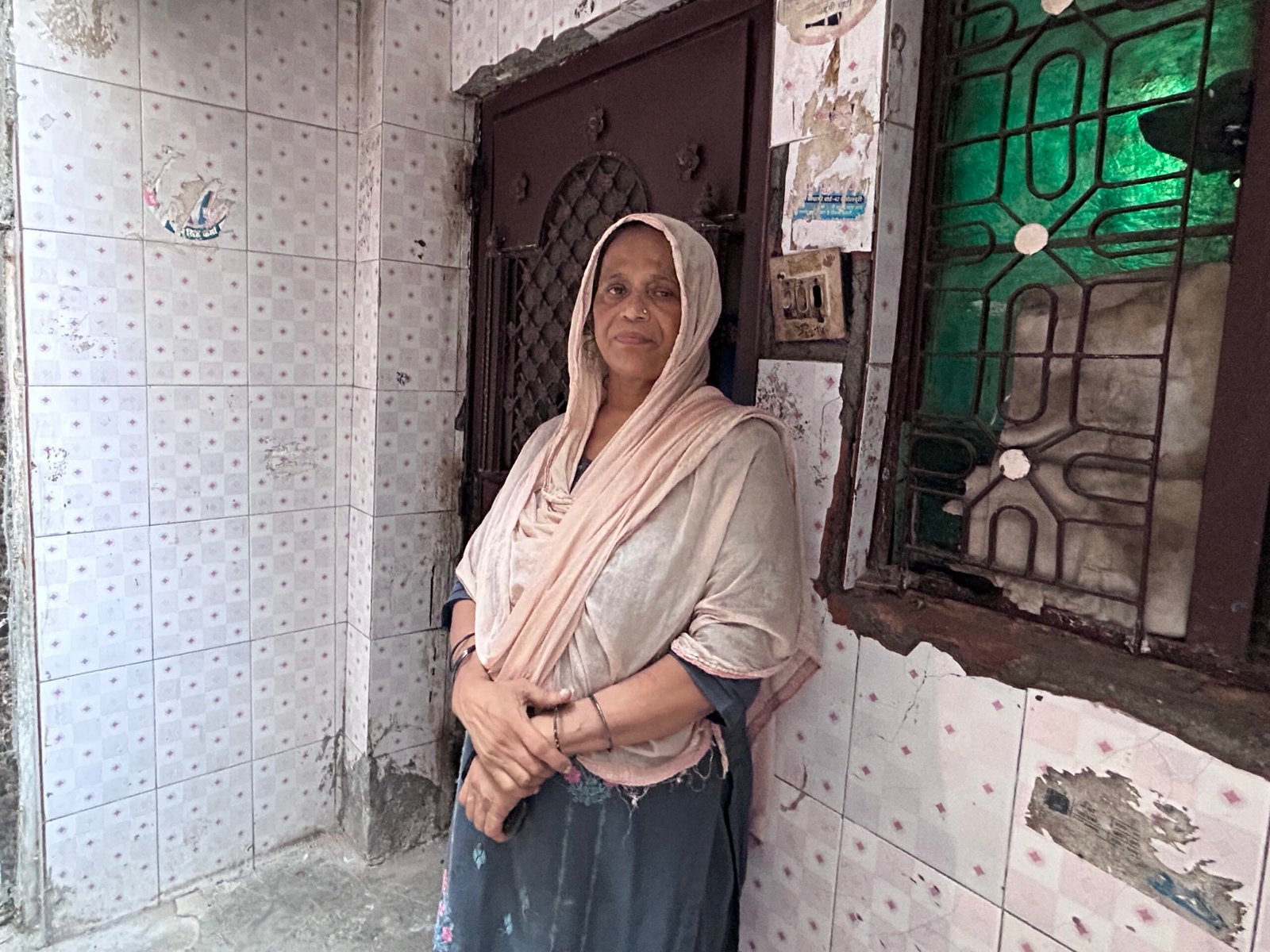
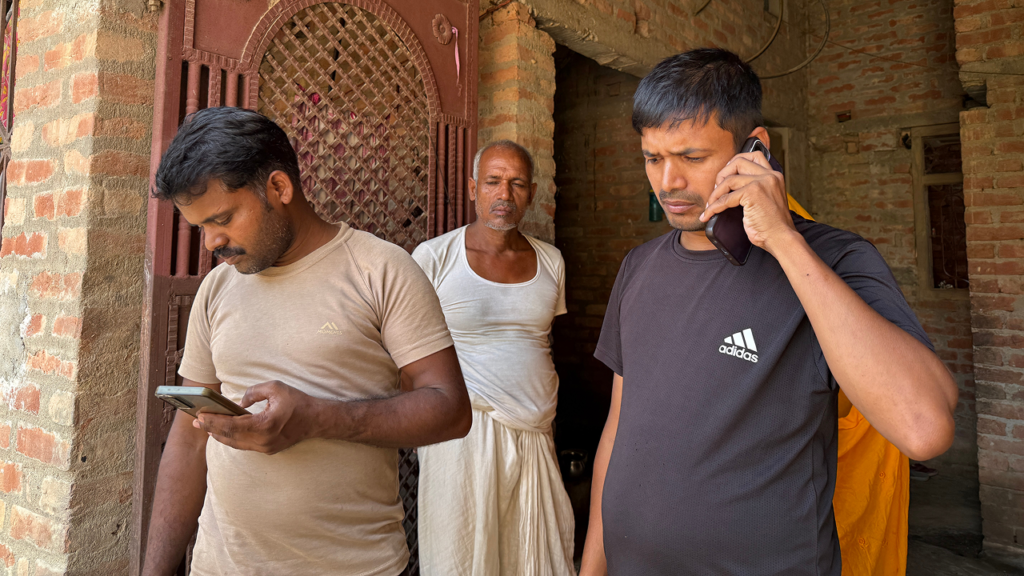
“I submitted the enumeration form. Still, I was marked shifted,” Tabassum said, standing at the entrance of house no. 1168, the rented home where her family has been living for over three years. “I submitted it two to three days after the deadline was extended,” she said.
The reporter had reached her there with the help of Tabassum’s sister-in-law, who lives in the next lane, at house no. 1017. The house stands on a 25-square-yard plot allotted to Tabassum’s mother-in-law.
The enumeration forms for all seven members of Tabassum’s family, herself, her husband and their five children, carried the address of house no. 1017. Tabassum collected the forms directly from the booth level officer (BLO) when the officer came to the lane where she currently rents a house.
“Whenever something like this happens, we all gather in the lane,” Tabassum said.
But when the list came, four of the seven members of Tabassum’s family were marked “permanently shifted” on the ASDD list of Mangolpuri’s Y-block. One of her sons was marked “untraceable/absent”.
The family moved out of 1017 after a dispute some 15 years ago. “We have changed homes four times. Though we always stayed close to house no. 1017 because all our documents carry that address,” Tabassum said.
“How many times can we keep changing our address on our documents?” Tabassum said. “Sometimes we stay somewhere for three months, sometimes six, sometimes four. House no. 1017 is our permanent address. We keep moving around, but we don’t change the address.”
Tabassum, 57, has lived in Mangolpuri for more than three decades. She came here from Mumbai after her marriage when she was 18; her family and her husband’s family knew each other through family connections. It was in Mangolpuri that she registered herself as a voter for the first time.
Her husband, Ansar Sabri, 60, once earned a living as a music teacher, giving private lessons in ghazals. The work dried up, Tabassum said, after “the DJ culture took over”. The family now depends largely on one of their sons, who works as a driver and earns 15,000 rupees a month. About 5,000 rupees goes towards the rent of their current two-room house, where they live on the ground floor.
In late September, Tabassum’s daughter was gathering the documents needed to fill Form 6, including her Aadhaar card, PAN card, proof of her name in the 2002 voter list and a gas connection receipt. “In the next two days we will submit them to the booth level officer,” Tabassum said.
Even while filling Form 6, Tabassum kept 1017 as the permanent address for her family members. “The address will remain the same. We live here and there on rent. Besides, no landlord will let us use their home address.”
Haseena Khatoon, who had been listening to the conversation, jumped in.
‘THERE ARE MORE TENANTS HERE THAN HOUSE OWNERS’
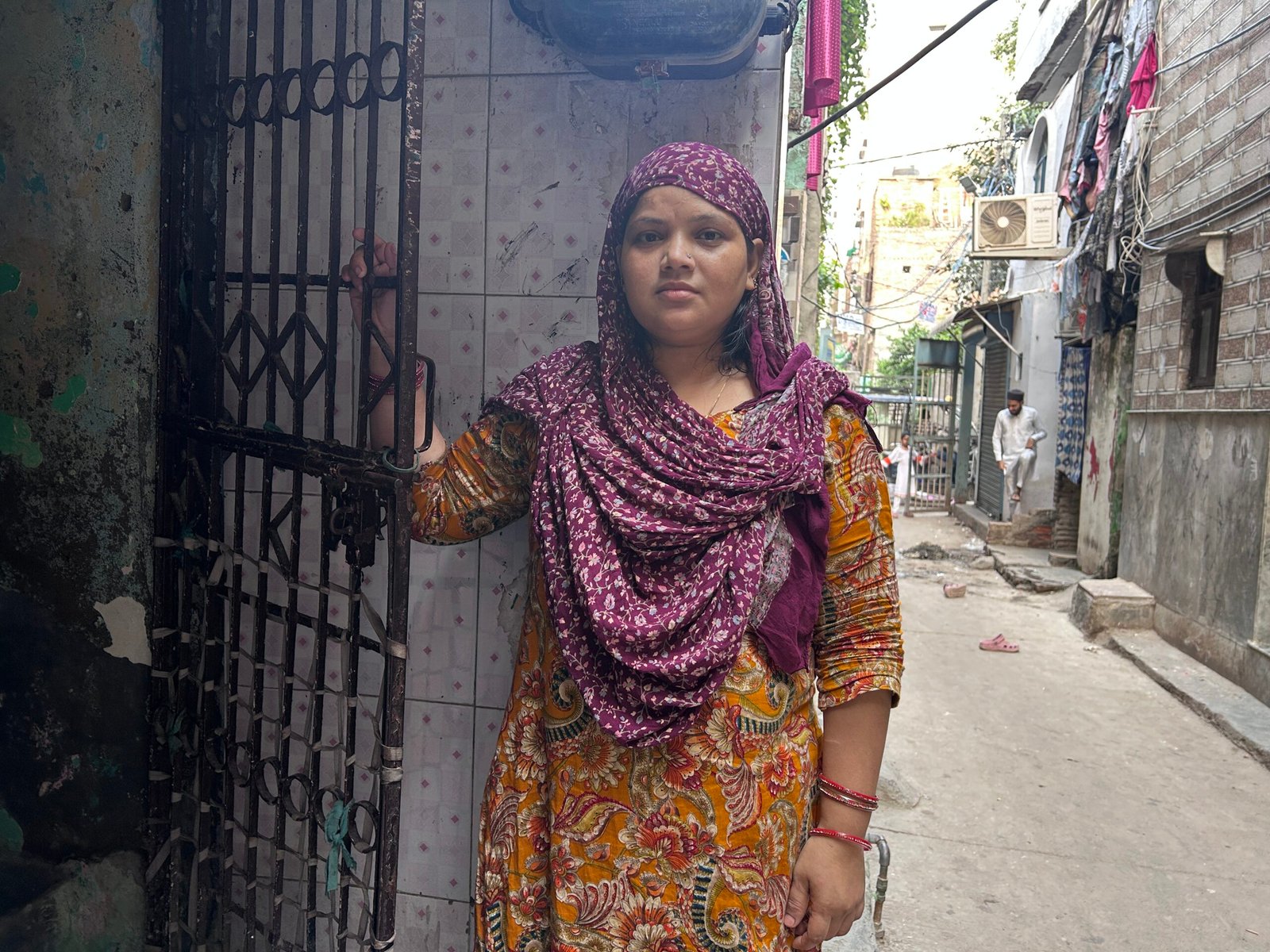
“My name too has been excluded from the electoral roll,” Haseena Khatoon yelled over the noise of her children playing nearby.
She was standing outside the house, where she lives with her husband and three school-going children. The family rents the first floor of the house for 4,000 rupees a month and has lived here for six years.
Before this, they lived in another rented home, house no. 1235 in the same block, “just one lane away,” Khatoon said.
“When the makaan maalik asks us to vacate the room, we have to do it. It is not that the house is ours and we can keep on staying. That’s the problem around here,” Khatoon added.
Khatoon, 33, is from Siwan, Bihar. As a teenager, she lived in Mangolpuri intermittently with her parents. When her father died, the family moved back to Bihar.
She returned to Delhi soon after her marriage in 2014.
Her husband, Murad Khan, who is from the same village as her, began repairing sewing machines in Mangolpuri. He earns 15,000 rupees a month. Some days, Khatoon decorates bangles and earns 100 rupees a day.
“We came here to earn a living and we stayed,” Khatoon said, dressed in a salwar kameez, her head covered with a printed dupatta.
“There are more tenants than homeowners here. Some people have been living here for 30 or 40 years. Most of them are from Uttar Pradesh and Bihar. They have settled here now. Some now have their own homes here, while others don’t. But they all vote from here. Everything is here now, so this is where they vote,” she added.
The first floor of house no. 1235 was the first home where Khatoon and her husband lived. It was from this address that she registered herself as a Delhi voter in 2020, using her Aadhaar card and an electricity bill, both bearing the same address. She also applied for a ration card, “but it has been pending since then.”
Her husband is a voter in Bihar. “He got himself registered there due to some family reasons and travels there to vote during elections,” Khatoon said.
Khatoon never received an enumeration form to fill in.
“Even if the landlord at that house received the enumeration form, it never reached me. I have been marked shifted,” Khatoon said. “I even called and asked the BLO for my form but was told I would get one when they had it. How could this be when I voted last year [in the Delhi Assembly election]?” Khatoon added.
Sometimes, Khatoon said, landlords do not pass on documents or forms to tenants.
“They don’t help us. They think, ‘Why should we help the tenants? The tenants might claim our house.’ So they tell people we don’t live there,” Khatoon said.
Khatoon has since filled Form 6 and submitted her PAN card, Aadhaar card and LPG bill receipt. She has also provided details showing that her mother was listed as a voter in Bihar in the 2002 electoral roll. But she remains unsure whether her name will return to the roll.
“If my name doesn’t come back, there could be problems later. People are saying I may not be able to access government welfare schemes and, who knows, they might send us somewhere else, like Bangladesh,” Khatoon said.
Stepping back into the narrow lane, Khatoon tilted her head back and shouted toward the second-floor: “Jannat! Your SIR hasn’t been done either, has it?”
“Who is there? Has the BLO come?” a voice came from the second-floor window.
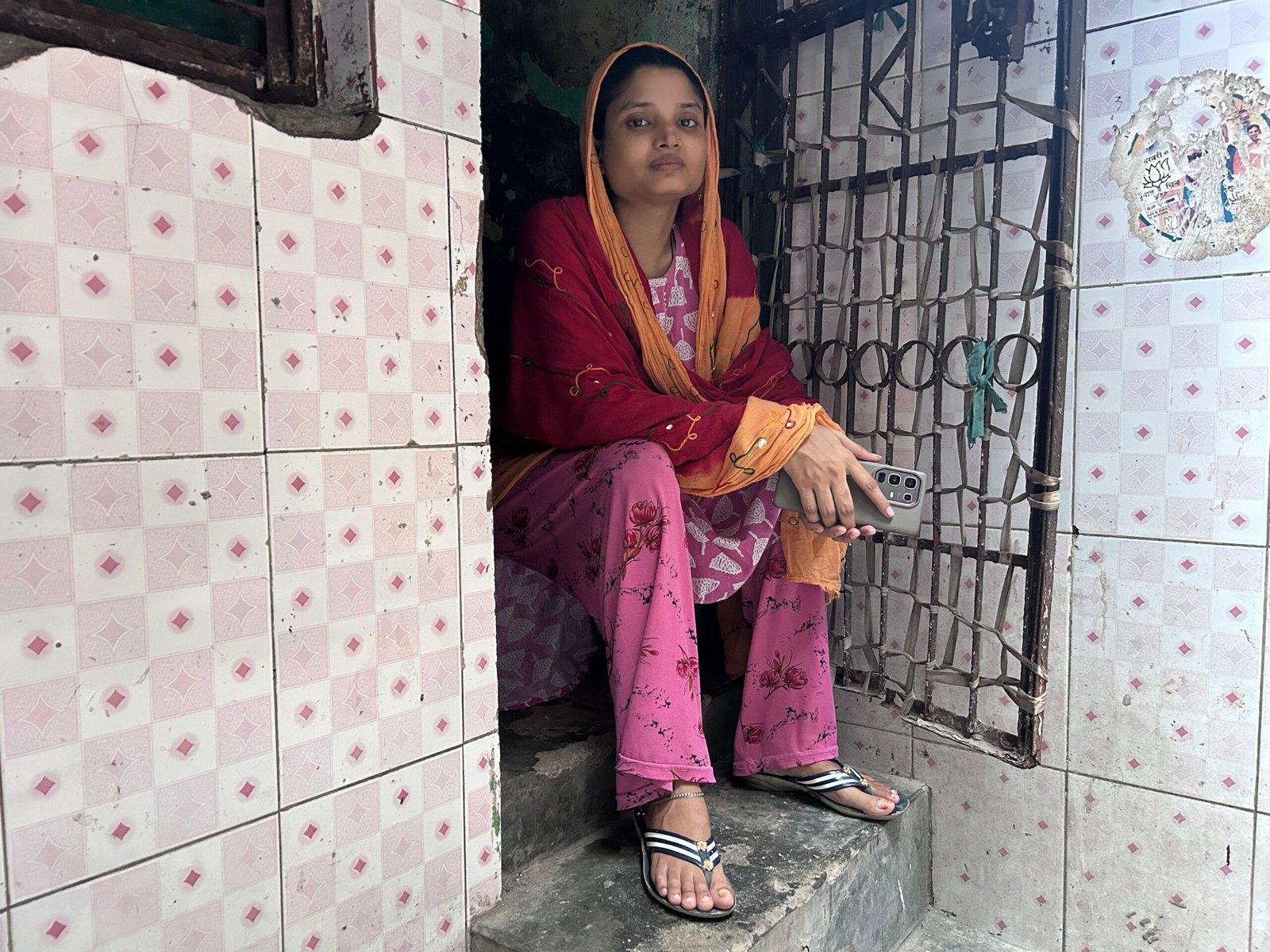
Soon, Noorjannat came downstairs.
‘THERE ARE TOO MANY FORMS TO SUBMIT’
Noorjannat had received her enumeration form on her address. However, she was unable to fill it on time because she was trying to trace her parents’ names to the 2002 electoral roll in Bihar.
“Other than my uncle (chacha) and his family, no one lives in the village,” Noorjannat said.
“I had asked my uncle’s son to send the details. He said he would have to get them from a cyber cafe and that it would take time. So I asked someone else to send the information. That is why it took a month,” Noorjannat added. She too has been marked “permanently shifted” in the ASDD list.
It was her father, Alauddin, who first came to Delhi from Baniyapur village in Bihar’s Saran district in the 1990s. He began working at a nearby shoe factory. Now 60, he earns between 8,000 and 10,000 rupees a month.
In 2008, her mother, Mirunisha, came to Delhi with their four children, two daughters and two sons. All four had been born in the village. Their fifth child, a daughter, was born in Delhi.
Over the years, the family moved from one rented home to another within the same block.
At one point, as Noorjannat’s parents considered settling permanently in Delhi, they registered themselves as voters here using the address of one of their rented homes. That house was in the same lane where they live today.
“On the day of voting, the landlord of that house tore their voter IDs apart,” Noorjannat recalled. “I don’t know why he did it. Maybe he feared our families would claim his house as ours,” she added.
The couple then registered themselves as voters in their native village. Their children, who grew up in Delhi, registered themselves as voters here.
When the SIR was conducted in Bihar last year, her parents went back there to complete the process. Noorjannat and her siblings chose to remain voters in Delhi.
“We did our education in Delhi. Our Aadhaar cards are also on the address here. My brothers have their work here,” Noorjannat said.
Both her brothers, Mohammad Babur and Mohammad Raza, did not receive enumeration forms, she said. They are registered voters at house no. 1168, where the family has lived since 2014, paying 3,000 rupees a month.
Noorjannat registered herself as a Delhi voter from this address in 2023. She also voted in the 2025 Delhi Assembly election.
Then, nine months ago, Noorjannat got married in Safiabad village in Bihar’s Siwan district.
“I didn’t know last year that I would be getting married.The SIR in Bihar had already been completed last year. So I thought, why not fill the form here?,” a soft-spoken Noorjannat said.
Her Aadhaar card, PAN card and other documents carry her Delhi address.
“SIR is important. If I had known I was going to get married there, I would have done it in Bihar,” Noorjannat said.
The 23-year-old has been staying at her parents’ home since June. She is in her second trimester of pregnancy and plans to return to Bihar after the delivery. She sat on the staircase as she spoke.
Noorjannat wants to eventually move her voter address to Bihar and apply for a ration card there. For now, she wants her name to appear on the electoral roll in Delhi.
“If my SIR isn’t done here, then nothing will happen there. If it gets done here, we’ll get the address changed, and then I can apply for a ration card there,” she said.
For now, she has filled Form 6 and submitted copies of her Aadhaar card, PAN card, Class 10 certificate and voter ID. She also submitted a gas connection document belonging to Haseena Khatoon as proof of her address.
When asked how many documents she had to submit, Noorjannat said, “Bohot saare [Too many].”
Sanskriti Talwar is an independent journalist based in New Delhi. Her work centres on in-depth storytelling about rural India and migration, with a focus on gender, labour, agriculture and social justice.